Execution date set for convicted killer James Pavatt

By Jason Burger

Click here for updates on this story

    OKLAHOMA CITY, Oklahoma (KOCO) — An execution date has been set for James Pavatt, one of the two people convicted of murdering Rob Andrew in 2001.

Brenda Andrew, who was the second person convicted of the murder, is the only woman on Oklahoma’s death row. Defense attorneys said her case plays a big role in their effort to stop the execution of Pavatt, arguing there was never enough proof presented in the last 25 years showing that Pavatt was the shooter.

“There’s absolutely no credible evidence that Jim shot and killed Rob Andrew, and that’s what he’s under a sentence of death for,” said Hunter Labovitz, the lead attorney and an assistant federal defender.

In a court filing Thursday, the Oklahoma Court of Appeals set Pavatt’s execution date for Nov. 12. But his own attorneys said there was never enough evidence presented showing that he deserves that punishment. His attorneys cited Brenda Andrew’s trial, as well.

“The last thing they told the jury was that the last thing Rob Andrew saw was his wife standing over him with a rifle about to shoot him again,” Labovitz said.

Rob Andrew was shot and killed in 2001. He and his estranged wife, Brenda Andrew, were separated and going through a divorce when Brenda Andrew began a romantic relationship with Pavatt, who was a life insurance agent at the time and helped Rob Andrew get an $800,000 policy.

“They’ll say Jim was having an affair with Brenda before the crime. Again, we don’t dispute that, but how does that prove that Jim was present at the crime scene, and shot and killed Rob Andrew?” Labovitz said.

Prosecutors argued that Brenda Andrew and Pavatt conspired to kill Rob Andrew so his estranged wife could benefit from the policy.

“The state will say that Jim helped Brenda Andrew go to Mexico with her children after Mr. Andrew was killed—we don’t dispute that. What we dispute is where was Jim the night in question?” Labovitz said.

Before the murder, an Oklahoma City detective took a report from Rob Andrew about how his car brakes were cut and that he believed Pavatt and Brenda Andrew were involved.

“They said at her trial, Brenda’s trial, the evidence is clear that she is the shooter. They just never bothered to tell Jim’s jury that,” Labovitz said.

Both of them eventually were convicted of the murder.

Now, attorneys are focusing on getting clemency for Pavatt, but they have less than a month to do that.

“Primarily, we’re focused on a clemency application to the Pardon and Parole Board, which is due Sept. 18,” Labovitz said.

KOCO reached out to members of Rob Andrew’s family but did not hear back.

The Oklahoma Pardon and Parole Board will have the chance to recommend clemency for Pavatt on Oct. 14.

Please note: This story was provided to CNN Wire by an affiliate and does not contain original CNN reporting. This content carries a strict local market embargo. If you share the same market as the contributor of this article, you may not use it on any platform.


High School assistant principal charged with sexual battery of student

By Fletcher Keel

Click here for updates on this story

    CINCINNATI, Ohio (WLWT) — An assistant high school principal in the Cincinnati Public Schools district has been charged after allegedly engaging in sexual conduct with a 16-year-old, court records say. Detectives say there could be more victims.

According to a complaint filed in Hamilton County Municipal Court, Steven Barton has been charged with one count of sexual battery.

Records allege Barton, who is an assistant principal at Aiken New Tech High School, touched the victim’s “erogenous zones” with “his exposed hand” for “several minutes.”

According to court records, the victim is an Aiken High student.

Documents say statements made by the victim were corroborated by video surveillance, as well as statements made by Barton.

In court, a detective with Cincinnati Police shared additional details on the investigation.

The victim told detectives Barton engaged in grooming behavior over the course of the 2025-26 school year.

At the start of the current 2026-27 school year, detectives allege Barton engaged in sexual contact and masturbation of the victim in a “close and confined space isolated from the rest of the school.”

“He’s a school leader who is trusted and supposed to protect students that he cares for,” Cincinnati Police Detective Soren Koch-Hutchinson.

Koch-Hutchinson said they are less than 24 hours into this investigation an say they believe there could be more victims. Victims are asked to reach out to police and community members are asked to share any information with police.

In a statement to WLWT, Cincinnati Public Schools says the district is “deeply concerned” by the allegations, that Barton has “been removed from duty” and that the district is “cooperating fully” with law enforcement.

CPS’ full statement can be seen below:

“Cincinnati Public Schools is deeply concerned by the allegations involving an Aiken New Tech High School assistant principal and a student.

When school administrators learned of the allegation, they immediately contacted Cincinnati Police. The employee has been removed from duty and will have no contact with students while the criminal and District investigations are underway.

CPS is cooperating fully with law enforcement. Our immediate concern is the student’s well-being and privacy. Because this involves a student and an active criminal investigation, we cannot provide additional details.”

Please note: This story was provided to CNN Wire by an affiliate and does not contain original CNN reporting. This content carries a strict local market embargo. If you share the same market as the contributor of this article, you may not use it on any platform.

A family’s weekend at lake turns into carbon monoxide nightmare

By Brianna Cook

Click here for updates on this story

    CULLMAN, Alabama (WVTM) — A fun family weekend at a Cullman lake suddenly turned into a life-or-death situation after an odorless, colorless gas called carbon monoxide (CO) began affecting the family overnight.

Channing Pettus and her family were staying at a lake house they have been to countless times before.

“We stayed in the water to like 9 p.m. So it was a great day. And then we’d go up and eat some ice cream cake. Just a normal little family fun night. And the storm came out of nowhere, and the wind was all crazy,” said Channing. “Around 10:00, the power went out, but you could hear the generator click on.”

Channing says they didn’t think too much of it and eventually all went to bed. The generator stayed on for several hours overnight.

Around 7 A.M., her niece, Ava, got up to use the bathroom, which also woke up Channing.

“I could hear noise like somebody kind of, you know, messing around. Then I heard a thump,” said Channing.

That thump was Ava experiencing the effects of carbon monoxide poisoning while in the bathroom.

“I basically couldn’t get out because my hands were shaking. So, I was basically hitting my head on the door, because I couldn’t use my hands,” Ava explained.

Channing, unaware of what was happening, went to investigate the noise.

“I was yelling. I’m like, ‘Hey, y’all, okay?’ Nobody was answering me. So I jump up, run out there, and she’s on the ground, which of course freaked me out. So I’m getting her up. She’s just limp in my arms, and it’s scary,” said Channing.

Channing’s daughter Millie was woken by all the commotion, and that’s when everyone started experiencing different symptoms.

“I woke up, and I heard mama saying, ‘Ava, wake up. It’s okay’. I got up, and as soon as I got out of the bed, my hands, my body, it just didn’t feel right. Then Oren, my brother, started to not feel right. He was saying, my head hurts so bad,” said Millie.

Channing soon began feeling sick as well.

“As I’m trying to help the girls, trying to be a brave mom, I ran back to the bedroom because I feel like I’m about to go down. I could just feel it coming on,” she said.

She began trying to figure out how everyone was sick all of a sudden.

“My husband’s like, ‘I think we’re fine. Like, let’s just sleep it off, just go back to sleep’. I don’t know, for some reason, I started googling, and that’s when I realized this is more than just food poisoning or heat or anything like dehydration, so I get the kids outside,” Channing said.

That quick thinking saved her family’s lives. They alerted poison control and the fire department. Channing, her children, niece, and husband were all treated for different levels of exposure to carbon monoxide at the hospital

Channing says they think the generator caused it all, but it is still a mystery being investigated.

She urges everyone to get carbon monoxide detectors, as the lake house did not have one.

“Get the detectors. It is basic precautions, because we were just a normal family having a good time, you know? We had no idea that would be what we woke up to the next morning…we were sick and dropping like flies,” said Channing

Carbon monoxide is an odorless and colorless gas, making it especially dangerous because people may not realize they are being exposed.

Channing says she hopes sharing her family’s experience will encourage others to install carbon monoxide detectors and recognize the warning signs before it’s too late.

Symptoms of carbon monoxide poisoning can include headache, nausea, vomiting, weakness, dizziness, confusion, sleepiness, shortness of breath, and fainting.

Please note: This story was provided to CNN Wire by an affiliate and does not contain original CNN reporting. This content carries a strict local market embargo. If you share the same market as the contributor of this article, you may not use it on any platform.
Bus stop shooting reopens old wounds for families of slain students

By DeAndria Turner

Click here for updates on this story

    LOUISVILLE, Kentucky (WLKY) — The shooting of a Valley High School student has renewed concerns about violence at Jefferson County Public Schools bus stops.

“Our city is at war,” Nicole Cowherd said.

It has been 2,789 days since Cowherd last saw her son, 18-year-old Richard Harper. When she learned that another Valley High School student had been shot at a bus stop on Beech Street Tuesday, she was taken back to the cold winter day when her son was killed.

“My heart just kept thinking about the mom,” Cowherd said.

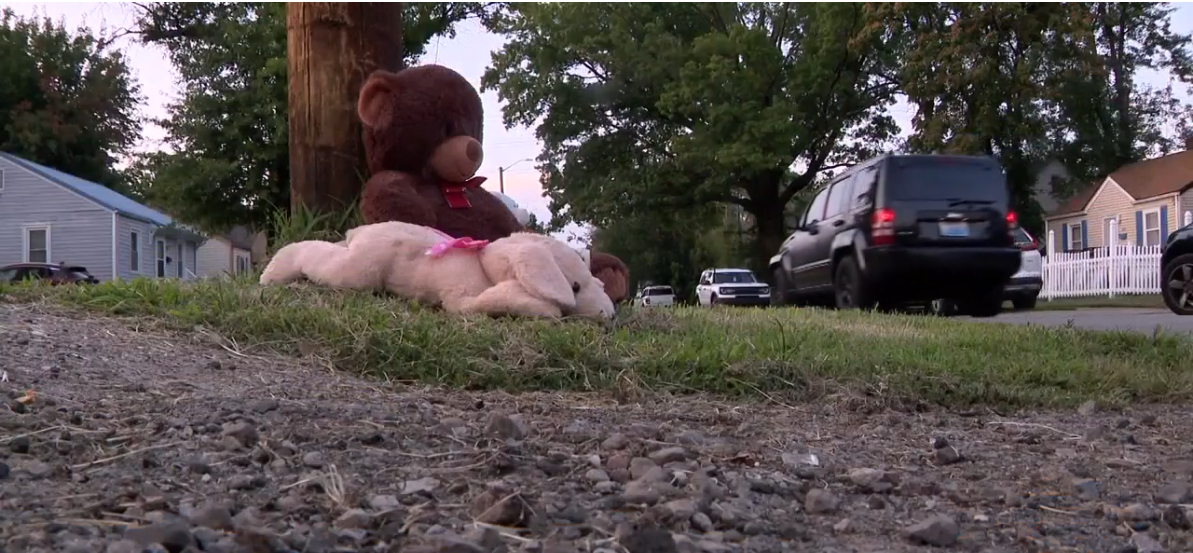
Harper was returning to Valley High School after Christmas break in January 2019 when he was shot while waiting at his bus stop. Cowherd said a friend shot him in a dispute involving a girl.

“My son wasn’t at the wrong place at the wrong time, and her child was not at the wrong place at the wrong time,” Cowherd said. “If you cannot stand on the bus stop to go get an education, if it’s not safe, then where can you be?”

Jefferson County Public Schools has about 10,000 bus stops. In the past seven years, two Valley High School students have been shot while waiting at their stops.

Six bus stop shootings have been reported across Louisville since 2019.

In August 2025, Redeja Williams was fatally shot while walking her daughter to a bus stop near West Chestnut and 11th streets. Four days earlier, gunfire at the same stop sent children running for cover.

“It’s just so sad for it to be on her heart, like she misses her mother,” Williams’ grandfather, Bruce Simmons, said. “And I miss my granddaughter.”

Williams’ family is still waiting for justice.

Another family marked a development in its case Wednesday, when one of two men convicted in the September 2021 killing of 16-year-old Tyree Smith was sentenced to 60 years in prison. Smith was killed at a school bus stop.

“I hate that they threw their life away, but I do think accountability needs to be taken,” said Tyree’s mother, Sherita Smith.

Smith and Cowherd have become friends, bonded by the similar circumstances of their sons’ deaths and the grief that followed. Both also supported Williams’ family after her killing.

Seven years after her son’s death, Cowherd said the pain remains.

“I’m not OK,” she said. “My food don’t taste the same no more. The sun don’t shine the same. Life for me every day without my child is not the same.”

Cowherd is now praying that the family of the student shot Tuesday does not experience the same loss.

“My message to the mom is to hold on to God,” she said. “He’s the only one that’s going to get her through this.”

Cowherd said the violence has become a crisis extending far beyond the families directly affected.

“Right now, this is a crisis for our whole city,” she said.

Please note: This story was provided to CNN Wire by an affiliate and does not contain original CNN reporting. This content carries a strict local market embargo. If you share the same market as the contributor of this article, you may not use it on any platform.
Man fined $620 for turtle deaths 1st to be convicted under new law

By Kelly O’Brien

Click here for updates on this story

    PORTSMOUTH, New Hampshire (WMUR) — A 78-year-old man who pleaded guilty to misdemeanor charges in connection with the deaths of several turtles found near his home was fined $620.

Charles Puccio pleaded guilty last week to charges of cruelty to wild animals, becoming the first person to be convicted of the crime since its 2022 inception.

“It’s very rare,” said Fish and Game Maj. David Welch. “In fact, I can only think of one or two cases in the last 10 years.”

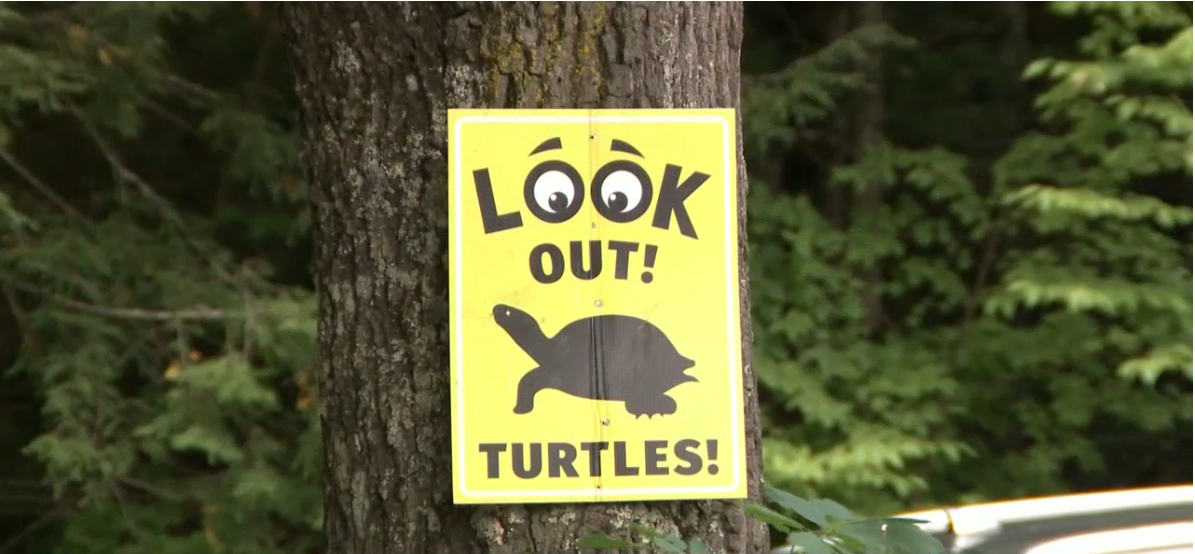
In June, calls started coming in from residents on Bog Road in Hillsborough after 15 turtles were found dead in the span of a week. Witnesses said they believed the deaths were intentional after seeing Puccio using an off-road vehicle to hit the turtles and, in one case, stomping on one.

A conservation officer with the Fish and Game Department went to the area and used a decoy turtle with surveillance and caught Puccio in the act, leading to an arrest on a charge of cruelty to wild animals.

“It’s rare,” Welch said. “It doesn’t affect anything to do with legal take of hunting. But this was the first time, I believe, that we were able to apply that law in such a manner. It carries a misdemeanor penalty and is a criminal act, and the defendant will have a criminal record.”

Puccio’s $620 fine is suspended pending good behavior, so he won’t have to pay it if he is not charged with another crime or violation in the next year.

“What’s interesting is that there is a felony-level provision for that,” said legal analyst Patricia LaFrance of Black, LaFrance and Bollinger. “The difference is only in the intent.”

LaFrance said charges can stem from the evidence on hand, and prosecutors must prove the crime beyond reasonable doubt.

“I don’t know what the evidence is, what his state of mind was at the time,” she said. “There could have been a lot of different factors that went into this plea deal that maybe we don’t know about.”

The turtle that was stomped on survived the attack. She is in the care of New Hampshire Turtle Rescue and is expected to be released in the spring.

Please note: This story was provided to CNN Wire by an affiliate and does not contain original CNN reporting. This content carries a strict local market embargo. If you share the same market as the contributor of this article, you may not use it on any platform.
Mom raises questions after young daughters charged with criminal mischief over broken swing

By Marcie Cipriani

Click here for updates on this story

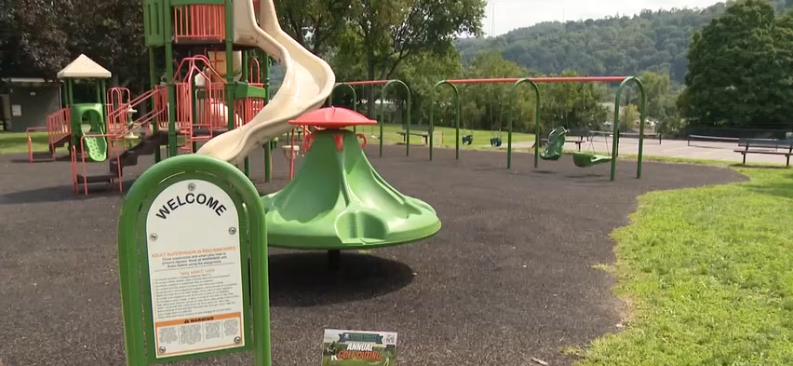
    SPRINGDALE, Pennsylvania (WTAE) — Katie Huss said her 10- and 12-year-old daughters were playing with other children at Veterans Memorial Park in Springdale when a swing broke.

According to Huss, two children were on the swing while others twisted it to make them dizzy, causing the chains to snap and the swing to fall.

Advertisement Shortly after, Huss said her daughters were charged with criminal mischief.

“They were super scared,” Huss said. “They’re good little girls. They go out and they play. They’re 10 and 12. They’re not doing anything crazy,” Huss said.

Huss said she was surprised by the charges but not entirely shocked. She said that after the swing broke, police came to her home and asked her to pay for the repairs. When she requested evidence that her daughters intentionally broke the swing and proof that the park equipment had been inspected beforehand, Huss said she was warned that the situation could escalate.

“They made a comment that they are just trying to resolve this civilly, and not jam the kids up with a citation or criminal charges,” Huss said.

In response to the case, the Springdale Police Chief and Borough solicitor stated, “The Department would never issue an ultimatum of ‘pay for the damage or your children will be charged.’ We simply don’t operate that way.”

The department added that their approach was consistent among the five juveniles involved in the incident, dividing the damage equally and offering an opportunity to resolve the matter through restitution rather than continuing juvenile proceedings.

Huss refused to pay, and eventually her girls went to court, where a Springdale police officer testified that the girls were not using the swing properly. Additionally, Springdale Borough Solicitor Craig Alexander told the judge, “People do things all the time for the thrill to get a kick out of something and knowing that they’re breaking the law.”

Ultimately, according to Huss and borough officials, the girls were found not responsible because there was no evidence of intent. However, Huss expressed concern that the matter might not be over, as she was informed the borough is considering filing a civil case.

“I’m still waiting to find out if they’re going to escalate it further as they promised,” Huss said. “I’m not going to give in.”

Huss said she is mostly disappointed in how the broken swing was handled.

“I would even have expected, like, a warning for them to come and talk to the kids and tell them this isn’t how we intend for you guys to play on the swings, just be more careful — you know, a warning or something. I never thought it was going to turn into actual crime charges against my children,” Huss said.

Below you can find the full response from the Springdale Solicitor and Police Chief about the case: “We believe there are several important facts that should be included in any fair and accurate presentation of this matter. In particular, the suggestion that a police officer simply demanded payment from one family and then charged two children because their family refused to pay does not accurately reflect the chronology of events, the objective evidence developed during the investigation, or the manner in which all five juveniles involved in the incident were treated.

Because this matter involves juveniles, law-enforcement records, and court proceedings, there are limitations on what the Borough and Police Department can appropriately disclose. With that understanding, we can provide the following responses.

Why was payment for the damaged swing discussed with the family before criminal charges were filed?

The Springdale Borough Police Department routinely makes reasonable efforts to speak with the parents or guardians of juveniles before filing charges involving their children. When circumstances permit, our preference is to involve the parents, explain what occurred, and determine whether an appropriate resolution can be reached without unnecessarily involving a child in the juvenile justice system.

That is precisely what occurred here.

Importantly, there were five juveniles involved in the incident, not simply the two juveniles referenced in your inquiry. The cost of the damage was divided equally among the five juveniles involved, which amounted to about $59.00 per child.

Before charges were filed, the investigating officer contacted the parents or guardians as part of an effort to resolve the property damage through accountability and restitution.

During the officer’s initial interaction with the mother of the two juveniles referenced in your inquiry, she was extremely apologetic and agreed to pay her family’s proportionate share of the damage. That conversation was documented on the officer’s body-worn camera.

Based upon that agreement, the Borough prepared an invoice reflecting the family’s proportionate share of the damage and subsequently contacted the mother regarding payment. She then advised the Borough that she would not pay.

The officer thereafter contacted the mother again to discuss the matter, at which time she confirmed that she was refusing to make the payment to which she had previously agreed.

The subsequent treatment of the five juveniles further demonstrates the purpose of the restitution discussions. Three of the five juveniles’ families paid their proportionate shares of the damage, and the charges involving those juveniles were subsequently withdrawn. The remaining two juveniles proceeded through the judicial process and exercised their right to a hearing.

Accordingly, this was not a situation in which one family was singled out or presented with an arbitrary demand for payment.

Was the family told that if it did not pay for the damage, the children would be criminally charged?

The Department would never issue an ultimatum of “pay for the damage or your children will be charged.” We simply don’t operate that way. Rather, the Department’s approach was consistent among the five juveniles involved in the incident: the damage was divided equally, and an opportunity was provided to address the matter through restitution rather than unnecessarily continuing juvenile proceedings. The Department’s approach was also consistent with other occasions where the Department desired to close out a matter and move on appropriately. Three families paid their respective portions of the damage, and the charges involving those juveniles were subsequently withdrawn.

With respect to the remaining two juveniles, their mother initially agreed to pay her family’s proportionate share. The Borough relied upon that agreement, prepared an invoice, and contacted her regarding payment. She subsequently declined to pay. The officer then contacted her again, and she confirmed her decision not to make payment.

The remaining two juveniles thereafter exercised their right to proceed to a hearing.

The Borough and Police Department respect that decision and the judicial process.

What evidence did police rely upon in determining that the 10- and 12-year-old children had committed criminal mischief?

The officer’s determination was not based merely upon playground equipment breaking while children happened to be using it.

There was objective evidence documenting the incident.

The investigation included surveillance video depicting the incident and the conduct of the juveniles immediately before and during the damage to the swing. Still photographs documenting the juveniles involved and relevant portions of the incident were also obtained and preserved.

Additionally, immediately upon entering the park, visitors encounter a prominent welcome sign displaying the Borough’s “Play Smart Rules.” Among those rules is the specific and explicit instruction: “Do not twist chains.”

That rule is directly relevant to the conduct documented on the surveillance footage.

The evidence considered by the officer therefore included:

Surveillance video depicting the incident and the conduct immediately preceding and resulting in the damage;

Still photographs documenting the juveniles involved and relevant portions of the incident;

The physical damage to Borough property;

A prominently posted park rule specifically stating “Do not twist chains”;

Statements and other information obtained during the investigation; and

The documented communications with the parents concerning the incident and restitution.

The investigation identified five juveniles involved in the incident, and the total cost of the damage was divided equally among those five juveniles.

Based upon the totality of the evidence, the officer believed there was an appropriate legal basis to submit the matter to the judicial process.

Police officers do not determine guilt. They investigate incidents, evaluate evidence, and determine whether there is a sufficient legal basis to initiate proceedings. The court independently determines the ultimate disposition.

In light of the court’s determination that the two children were not responsible, does the Borough still intend to seek payment from the family through a civil action?

First, the judge did not determine that the children were not responsible. The Judge took his time with his ruling. He said he could see the children twisting the swing and causing it to break. What he determined was that he was unable to find beyond a reasonable doubt that the children intended the swing to break from their conduct. He indicated that in his opinion, it was more of a civil matter for negligence. The mother had a court reporter present, so this should all be on the transcript. It is also important to recognize that there were five juveniles involved and that the Borough divided the cost of the damage equally among them.

Three families paid their respective shares, after which the charges involving those juveniles were withdrawn. The mother of the remaining two juveniles initially agreed to pay her family’s proportionate share, and the Borough prepared an invoice based upon that agreement. She subsequently declined to pay, and those two juveniles elected to proceed to a hearing.

Potential civil responsibility for damage to municipal property and the disposition of a juvenile proceeding involve separate legal questions and different legal standards.

Any decision regarding further civil recovery will be made by the Borough in consultation with the Borough Solicitor after consideration of the evidence and applicable law.

Has the Borough determined what caused the swing chain or related equipment to fail?

The Borough possesses surveillance footage documenting the incident. The video clearly depicts the conduct involving the juveniles and the swing immediately preceding and resulting in the damage, which the Judge recognized and mentioned during his ruling.

The video does not depict the equipment simply failing during ordinary or intended use. Rather, it documents conduct involving the swing and its chains immediately preceding the damage.

This is particularly relevant because the Borough’s prominently posted “Play Smart Rules” expressly instruct park users:

“Do not twist chains.”

The Borough therefore does not believe it would be accurate to characterize this incident simply as an unexplained equipment failure.

Were there any inspections, maintenance concerns, prior repairs, or complaints involving that swing or playground equipment?

The Borough’s records reflect that the playground equipment was subject to inspections, and there were no documented safety concerns, maintenance issues, prior complaints, or known conditions involving the swing that would have indicated the equipment was defective or unsafe prior to this incident.

The surveillance video clearly depicts the conduct involving the juveniles that resulted in the damage. It does not depict the equipment simply failing during ordinary or intended use.

The posted “Play Smart Rules” also expressly state “Do not twist chains,” directly addressing the conduct depicted on the surveillance footage.

Accordingly, the information available to the Borough includes inspections with no identified concerns, no prior complaints or known safety issues involving the swing, prominently posted rules specifically prohibiting the conduct at issue, and surveillance footage documenting the juveniles’ conduct and the resulting damage.

Based upon the totality of that information, the Borough has no evidence indicating that a pre-existing maintenance issue, defect, or unsafe condition caused the swing to fail. The available evidence, including the surveillance footage, documents the conduct that resulted in the damage.

Is there video of the incident or the area where it occurred?

Yes.

Surveillance video exists and depicts the incident, including the conduct involving the juveniles immediately before and during the damage to the swing.

Still photographs documenting the juveniles involved and relevant portions of the incident were also obtained and preserved as part of the investigation.

There is additionally body-worn-camera documentation associated with the police investigation, including the officer’s initial interaction with the mother of the two juveniles referenced in your inquiry, during which she was apologetic and agreed to pay for the damage, as well as subsequent contact concerning the matter.

The existence of a recording or photograph, however, is separate from the legal question of whether that particular record may lawfully be released. Records associated with law enforcement and juvenile matters are subject to applicable Pennsylvania law and confidentiality requirements.

Why have the family’s Right-to-Know requests for records related to the incident been denied, and does the Borough intend to release any of those records?

The characterization that the family’s Right-to-Know requests were simply ignored or summarily denied is not an accurate description of the Borough’s handling of those requests.

The requests were addressed promptly through the Borough Solicitor in accordance with Pennsylvania’s Right-to-Know Law. Where additional time was necessary to conduct the appropriate records and legal review, the requester was provided with the applicable 30-day extension notice.

The Borough evaluates each requested record individually under Pennsylvania law. Certain law-enforcement and investigative records are protected or restricted from public disclosure, and matters involving juveniles may implicate additional confidentiality considerations.

The Borough does not deny access to public records because their contents may be inconvenient or unfavorable. At the same time, the Borough cannot disregard statutory exemptions, confidentiality requirements, or other legal restrictions simply because a particular record has been requested.

The Borough will continue to process requests in accordance with Pennsylvania law and will provide records determined to be public and legally subject to disclosure.

Does the Borough believe the officer’s handling of the matter — including the discussion of payment followed by juvenile criminal charges — was consistent with Springdale Police Department policy and appropriate under the circumstances?

Absolutely. Based upon the information presently available, the Borough and Police Department believe the officer handled the matter appropriately, consistently, and reasonably. The Department made multiple efforts to resolve the matter, including on the day of the initial hearing, following the initial hearing, and on the day of the final hearing. The conversations on the record would all be included in the transcript of proceedings that the mother possesses.

The complete chronology is important.

The officer investigated an incident involving five juveniles and reviewed objective evidence, including surveillance footage and still photographs documenting the conduct at issue.

The Borough’s records reflected no documented prior safety concern or complaint indicating that the swing was defective or unsafe.

The park contains a prominent welcome sign displaying the “Play Smart Rules,” including the specific instruction “Do not twist chains.”

Rather than simply proceeding with charges and leaving the matter to the courts, an effort was made to involve the parents and provide an opportunity to address the damage through restitution. The total cost was divided equally among the five juveniles involved.

Three families paid their respective shares. The charges involving those three juveniles were subsequently withdrawn.

The mother of the remaining two juveniles initially told the investigating officer that she would pay her family’s proportionate share and was apologetic during that interaction. The conversation was documented on body-worn camera.

The Borough relied upon that agreement and prepared an invoice. When the Borough subsequently contacted the mother regarding payment, she advised that she would not pay. The officer thereafter contacted her again, and she confirmed her refusal.

The remaining two juveniles then exercised their right to proceed to a hearing.

That complete sequence is materially different from the suggestion that an officer singled out two children, appeared at their home without supporting evidence, demanded money, and charged them simply because their mother refused to pay.

There were five juveniles involved. The same proportional approach to restitution was applied. Three families elected to resolve their respective portions of the matter through restitution, and those charges were withdrawn. The remaining family elected not to proceed with that resolution, and those juveniles exercised their right to have the matter determined through the judicial process.

The Borough and Police Department fully respect the court’s ultimate disposition of that proceeding.

At the same time, the court’s subsequent determination does not retroactively change the evidence available to the investigating officer when the matter was initiated. Nor does it establish that the officer acted improperly in investigating the incident or submitting the matter for judicial review.

The Springdale Borough Police Department expects its officers to investigate matters fairly, evaluate objective evidence, communicate with parents when juveniles are involved, exercise appropriate discretion, treat similarly situated individuals consistently, and utilize the judicial process when warranted.

Based upon the information presently available, the Department believes that is what occurred here.

Finally, the Borough recognizes that this matter involves children and local families. We have no interest in publicly criticizing any of the juveniles or their parents. We do, however, believe it is important that the Borough’s actions and the actions of its Police Department be presented accurately, fairly, and with the complete factual chronology.

Please note: This story was provided to CNN Wire by an affiliate and does not contain original CNN reporting. This content carries a strict local market embargo. If you share the same market as the contributor of this article, you may not use it on any platform.
Pendleton’s mane event: Town roars over reported lioness sighting

By Cat Sandoval

Click here for updates on this story

    PENDLETON, Ind. (WRTV) — A reported sighting of a lioness and her cub prompted police to conduct an hourslong search Thursday through the farm fields of Madison and Hancock counties, in areas northeast of Indianapolis.

At 10 a.m. Thursday, the Madison County Sheriff’s Office received a tip about the exotic animals between Pendleton and Markleville, towns that are about a 50-minute drive northeast of downtown Indianapolis.

The news quickly spread through Pendleton, a town of about 6,000 people.

Mike Wagner, a Hancock County resident who was in Pendleton for lunch, said, “It’s not something you see every day in Indiana, and everyone was talking about it. Seems like someone would know who owns it.”

Madison and Hancock counties’ sheriff’s deputies joined Indiana State Police troopers to search the area. The lioness was reportedly wearing a blue collar.

Officers used heat-seeking drones but did not find any lions.

The possibility of a lion nearby excited and worried residents.

“It seems cool to have a lion here. We’ve never had something like this, but it also seems kinda scary because I don’t want to be chased by a lion,” said Palmer Hunt, a Pendleton High School student.

The story also gained a large online following. The Madison County Sheriff’s Office’s Facebook page received hundreds of comments and jokes, such as “In the jungle, the mighty jungle, the lion sleeps tonight,” and “Here, kitty, kitty.”

Dana Dale, a Pendleton resident, said she heard about the sightings all day at work and lives near the reported location.

Police could not confirm if the lions were actually roaming. Witnesses last saw the cats near Madison County Road 1100 South and Madison County Road 50 West, about a 10-minute drive southeast of Pendleton.

The heat-seeking drones briefly misled police when they spotted a pig instead of a lion.

Despite the false alarm, authorities were still trying to determine whether the report was legitimate.

“I really hope they find them so they’re safe,” Hunt said.

Authorities called off the search and were awaiting another lead before resuming.

Please note: This story was provided to CNN Wire by an affiliate and does not contain original CNN reporting. This content carries a strict local market embargo. If you share the same market as the contributor of this article, you may not use it on any platform.
Community members push back on Flock camera system

By Carlee Hogsten

Click here for updates on this story

    LEXINGTON, Kentucky (WLEX) — Community members and organizations gathered at a Lexington city council meeting to voice opposition to the city’s Flock camera system, with some calling for the contract to be canceled outright.

Noah Cornett, representing the Bluegrass Democratic Socialists of America, presented what he called a “demand letter” requesting the city cancel its contract with Flock. Cornett said there is no data supporting the cameras’ effectiveness.

“The right to privacy is necessary for a free society and ALPRS inherently contradict those rights,” Cornett said.

“Where do we let it stop, in the effort to ‘catch crime’?” Cornett said.

According to Lexington’s website, as of December 2025, there are 125 city-owned automated license plate readers in Lexington. Per the city’s contract with Flock, Lexington would need to provide 30 days’ notice before canceling.

Luke Allen said the city has the opportunity to lead by example.

“That’s what the council has the power to do. We’ve seen others do it,” Allen said.

Council Member Emma Curtis spoke before open comment, saying she does not support Flock but believes Lexington police have not used the system maliciously.

“These cameras have farther greater potential for collective harm then collective good,” Curtis said.

Clay Davis, of local coalition We See You Watching Lexington, said the cameras are not always being used to fight crime, pointing to a recent case of an officer misusing them in Kentucky.

“Tracked his girlfriend 2,000 times using Flock cameras,” Davis said.

Not everyone at the meeting opposed the cameras. Lisa Guess and Billy Mallory spoke in support of the system.

“They have repeatedly helped solve violent crimes,” Guess said.

“Since Flock has been instated, violence has gone down significantly in the east end,” Mallory said.

As of now, there are no upcoming council discussions scheduled on ending the Flock contract.

Please note: This story was provided to CNN Wire by an affiliate and does not contain original CNN reporting. This content carries a strict local market embargo. If you share the same market as the contributor of this article, you may not use it on any platform.
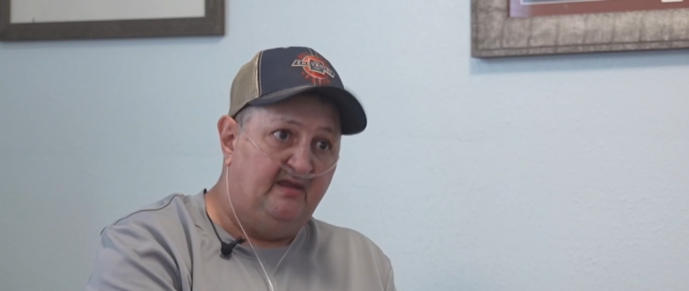
Black lung rates soar in Appalachia, residents say more needs to be done

By Evelyn Schultz

Click here for updates on this story

    WHITESBURG, Kentucky (WLEX) — James Cook, a retired coal miner from Letcher County, doesn’t go anywhere without his oxygen tank.

“I’m on it 24/7 now,” he said. “It started out, I was on it at nighttime.”

He brought it with him to the Appalachian Citizens’ Law Center in downtown Whitesburg, a constant reminder of the battle he’s fighting at 54 years old. Cook is suffering from the effects of black lung.

The progressive disease is caused by inhaling coal and rock dust, and rates of the illness in Appalachia are at the highest rate in 50 years, according to new data in a letter from the National Institute for Occupational Safety and Health (NIOSH).

“I just started getting short of breath,” Cook said. “The things I used to do like go wading and fishing. I can’t do it anymore, and I loved it, you know, I loved going fishing like that.”

Before Cook went underground, he was an ambulance driver. He said he got married, needed more money, and mining jobs paid better. He retired from mining in 2015 after a more than 20-year career.

“People that don’t work in the mines, they can go home and take their shirt off and shake it and nothing happens,” Cook said. “I take my shirt off or another coal miner’s shirt and shake it, a big cloud of dust, and you imagine what’s going in your lungs, and it’s in that shirt.”

Experts LEX News spoke with say the disease is striking miners younger and progressing faster than ever before. They blame silica dust, which is far more toxic than coal dust.

“We’re just mining so much more rock along with the coal,” said Wes Addington, the executive director of the Appalachian Citizens’ Law Center. “Because the coal seams are so small now, miners are getting exposed to much more deadly silica dust than they ever have in the past.”

Addington represents coal miners and their families, providing free legal services to help survivors of black lung, like Cook, get the benefits they are owed.

“Unfortunately, the United States has done a terrible job over the past couple of decades protecting them from overexposure to dust,” he said.

And when miners do get sick, he says, legal cases for black lung benefits can take years to resolve.

“Many of these cases can last a decade, and when you’re dealing with miners that are sick as some of our clients are, they may not have that kind of time,” Addington said.

Dr. Brandon Crum, a radiologist in Pike County who specializes in diagnosing black lung from X-rays, has tracked a disturbing trend over the last decade. He says his patients are getting younger, and the disease is progressing faster.

Data from his clinic shows complicated black lung, the severe stage of the disease, makes up 12 to 15 percent of cases across central Appalachia.

“I don’t know how many 1,000 guys I have to evaluate or how many 1,000 guys have to die, before we fix a simple solvable problem,” Crum said. “The only thing higher than our rates of black lung are excuses that we get here.”

Crum, a fourth-generation miner himself, says he’s been sounding the alarm for years, pushing for increased safety regulations and better benefits.

“There is no doubting it anymore,” he said. “It’s something that’s here to stay. If you never mined another lump of coal, you would have this problem for decades because of the men that already have it and will be diagnosed with it.”

Crum, and others we spoke with, want to see increased benefits for survivors through legislation like the Support Our Miners Act, which would raise the monthly disability benefit from about $800 to more than $1,200. Rep. Summer Lee of Pennsylvania introduced the bill in June.

In a letter this week, the Black Lung Association of Southeastern Kentucky asked Representative Hal Rogers of Kentucky to sign on as a co-sponsor of the Support Our Miners Act.

LEX News contacted a spokesperson for Rep. Rogers for comment and received the following statement.

“We all agree that the Black Lung Disability Trust Fund needs significant reform to ensure that our coal miners get their hard-earned benefits before this painful disease robs them from seeing a dime. I have dedicated caseworkers who advocate for coal miners in Eastern Kentucky to get their benefits every single day. Our local leaders are doing their part to advocate for our shared constituents as well.

In June, I voted for an $18 million increase for the Black Lung Disability Trust Fund in the FY27 federal funding bill for Labor, Health and Human Services and related agencies. The bill also requires the Department of Labor to speed up claims processing and increases oversight. As a senior appropriator, I helped advance the bill out of the full House Appropriations Committee and it now awaits consideration by the full House of Representatives.

Washington Democrats, led by the Obama and Biden Administrations, regulated coal mines out of business across the country, leaving us with only 3,600 coal miners in Kentucky today. They now want taxpayers to bail out the trust fund that they nearly decimated by fast-tracking coal operators onto bankruptcy and working to increase their fines from $1,000 per day to $25,000 per day. Democrats talk openly about their desire to increase benefits, but they aren’t being transparent about their movement to destroy the trust fund through their targeted War on Coal, and sticking taxpayers with the bill.”

-U.S. Rep. Hal Rogers At his office in Pikeville, Crum says mining isn’t going anywhere, so he’s calling for increased cooperation from mining companies, politicians, and healthcare professionals.

“People have to admit there’s a problem,” he said. “The coal companies and the people that represent them have to admit there’s a problem or maybe even admit there could be a problem. We have to get our government agencies, the regulators together. We have to get medical professionals.”

New safety rules for mines proposed in 2024 are currently held up in federal courts.

“We have to limit how much silica dust miners are breathing, and we haven’t done that yet,” Addington said.

Like many other families in Kentucky and across Appalachia, Cook and Crum know firsthand how deadly that dust can be.

Both men’s fathers died in October of last year. Both were suffering from black lung.

“Sick of going to funerals, sick of hearing about it,” Crum said. “Sick of seeing people with oxygen tanks at ball games and restaurants, sick of it.”

Nearly one year after his father’s death, Cook is still waiting for the federal black lung benefits he is owed. He says he is hopeful because of the legal aid he is receiving. He is proud of the work he did underground but says if he could do it all over again, he would have made a different choice.

“I would not have been a coal miner. I would have stayed, probably went and got my paramedic or something,” he said. “I would have just stayed with the ambulance service. I loved that job.”

Please note: This story was provided to CNN Wire by an affiliate and does not contain original CNN reporting. This content carries a strict local market embargo. If you share the same market as the contributor of this article, you may not use it on any platform.

Coffee culture is a class at University of Kentucky

By Annie Brown

Click here for updates on this story

    LEXINGTON, Kentucky (WLEX) — The University of Kentucky now offers undergraduate students a 12-credit-hour certificate program called Coffee Science and Culture, giving them the opportunity to explore the history, science, economics, and ethical issues surrounding one of the world’s most consumed beverages.

About 150 students are currently enrolled in the certificate, which launched this year with support from the Bill Gatton Foundation.

Dr. David Gonthier, who first began teaching a coffee course as an elective eight years ago, developed the program after his own personal connection to the crop drew him deeper into the subject.

“I really got into coffee as my way into agriculture. My cousin is a coffee farmer in Honduras, and I moved down there and learned all about production,” Gonthier said.

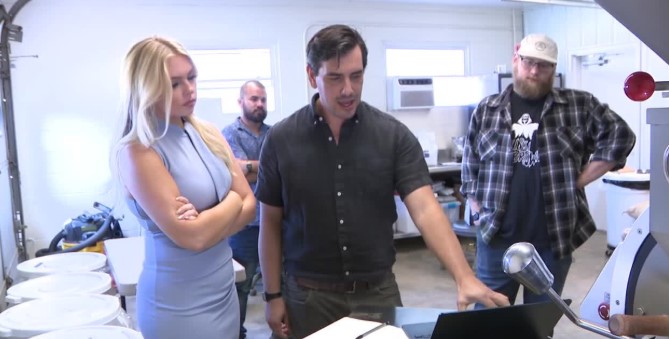
Students get hands-on experience inside UK’s Coffee Lab at the Horticulture Research Farm, where they learn how to brew coffee and explore the distinct flavor profiles different beans can produce.

“It’s like meditating, you have to be really focused. You can’t miss the first rack and things like that otherwise you’ll mess up what you’re doing so you have to be really focused,” Ph.D. student Mario Reyes said.

Head Roaster and Coffee Quality Specialist Bradley Bellman said the range of flavors coffee can offer has been eye-opening.

“I’ve seen coffees with notes of tomato and savory notes all the way to sweet fruity, jammy coffees,” Bellman said. Beyond brewing, the curriculum covers the economics and ethical issues that persist throughout the global coffee industry.

“This is an opportunity to study as a model for a lot of goods that are traded. And a lot of issues that appear in coffee appear in other goods. And it’s kind of a unique opportunity to kind of learn from origin or the farms that produce it all the way to the US where it finally is sold to consumers and that’s an eye-opening story, I think for just about anybody working in food or agriculture,” Gonthier said.

Coffee from UK’s Coffee Lab is available for purchase online here (Purchase Coffee | Coffee Lab) or at the Bluegrass Beans Coffee Shop in the Gatton Agricultural Science Building.

Please note: This story was provided to CNN Wire by an affiliate and does not contain original CNN reporting. This content carries a strict local market embargo. If you share the same market as the contributor of this article, you may not use it on any platform.