Mom raises questions after young daughters charged with criminal mischief over broken swing

By Marcie Cipriani
Click here for updates on this story
SPRINGDALE, Pennsylvania (WTAE) — Katie Huss said her 10- and 12-year-old daughters were playing with other children at Veterans Memorial Park in Springdale when a swing broke.
According to Huss, two children were on the swing while others twisted it to make them dizzy, causing the chains to snap and the swing to fall.
Advertisement Shortly after, Huss said her daughters were charged with criminal mischief.
“They were super scared,” Huss said. “They’re good little girls. They go out and they play. They’re 10 and 12. They’re not doing anything crazy,” Huss said.
Huss said she was surprised by the charges but not entirely shocked. She said that after the swing broke, police came to her home and asked her to pay for the repairs. When she requested evidence that her daughters intentionally broke the swing and proof that the park equipment had been inspected beforehand, Huss said she was warned that the situation could escalate.
“They made a comment that they are just trying to resolve this civilly, and not jam the kids up with a citation or criminal charges,” Huss said.
In response to the case, the Springdale Police Chief and Borough solicitor stated, “The Department would never issue an ultimatum of ‘pay for the damage or your children will be charged.’ We simply don’t operate that way.”
The department added that their approach was consistent among the five juveniles involved in the incident, dividing the damage equally and offering an opportunity to resolve the matter through restitution rather than continuing juvenile proceedings.
Huss refused to pay, and eventually her girls went to court, where a Springdale police officer testified that the girls were not using the swing properly. Additionally, Springdale Borough Solicitor Craig Alexander told the judge, “People do things all the time for the thrill to get a kick out of something and knowing that they’re breaking the law.”
Ultimately, according to Huss and borough officials, the girls were found not responsible because there was no evidence of intent. However, Huss expressed concern that the matter might not be over, as she was informed the borough is considering filing a civil case.
“I’m still waiting to find out if they’re going to escalate it further as they promised,” Huss said. “I’m not going to give in.”
Huss said she is mostly disappointed in how the broken swing was handled.
“I would even have expected, like, a warning for them to come and talk to the kids and tell them this isn’t how we intend for you guys to play on the swings, just be more careful — you know, a warning or something. I never thought it was going to turn into actual crime charges against my children,” Huss said.
Below you can find the full response from the Springdale Solicitor and Police Chief about the case: “We believe there are several important facts that should be included in any fair and accurate presentation of this matter. In particular, the suggestion that a police officer simply demanded payment from one family and then charged two children because their family refused to pay does not accurately reflect the chronology of events, the objective evidence developed during the investigation, or the manner in which all five juveniles involved in the incident were treated.
Because this matter involves juveniles, law-enforcement records, and court proceedings, there are limitations on what the Borough and Police Department can appropriately disclose. With that understanding, we can provide the following responses.
Why was payment for the damaged swing discussed with the family before criminal charges were filed?
The Springdale Borough Police Department routinely makes reasonable efforts to speak with the parents or guardians of juveniles before filing charges involving their children. When circumstances permit, our preference is to involve the parents, explain what occurred, and determine whether an appropriate resolution can be reached without unnecessarily involving a child in the juvenile justice system.
That is precisely what occurred here.
Importantly, there were five juveniles involved in the incident, not simply the two juveniles referenced in your inquiry. The cost of the damage was divided equally among the five juveniles involved, which amounted to about $59.00 per child.
Before charges were filed, the investigating officer contacted the parents or guardians as part of an effort to resolve the property damage through accountability and restitution.
During the officer’s initial interaction with the mother of the two juveniles referenced in your inquiry, she was extremely apologetic and agreed to pay her family’s proportionate share of the damage. That conversation was documented on the officer’s body-worn camera.
Based upon that agreement, the Borough prepared an invoice reflecting the family’s proportionate share of the damage and subsequently contacted the mother regarding payment. She then advised the Borough that she would not pay.
The officer thereafter contacted the mother again to discuss the matter, at which time she confirmed that she was refusing to make the payment to which she had previously agreed.
The subsequent treatment of the five juveniles further demonstrates the purpose of the restitution discussions. Three of the five juveniles’ families paid their proportionate shares of the damage, and the charges involving those juveniles were subsequently withdrawn. The remaining two juveniles proceeded through the judicial process and exercised their right to a hearing.
Accordingly, this was not a situation in which one family was singled out or presented with an arbitrary demand for payment.
Was the family told that if it did not pay for the damage, the children would be criminally charged?
The Department would never issue an ultimatum of “pay for the damage or your children will be charged.” We simply don’t operate that way. Rather, the Department’s approach was consistent among the five juveniles involved in the incident: the damage was divided equally, and an opportunity was provided to address the matter through restitution rather than unnecessarily continuing juvenile proceedings. The Department’s approach was also consistent with other occasions where the Department desired to close out a matter and move on appropriately. Three families paid their respective portions of the damage, and the charges involving those juveniles were subsequently withdrawn.
With respect to the remaining two juveniles, their mother initially agreed to pay her family’s proportionate share. The Borough relied upon that agreement, prepared an invoice, and contacted her regarding payment. She subsequently declined to pay. The officer then contacted her again, and she confirmed her decision not to make payment.
The remaining two juveniles thereafter exercised their right to proceed to a hearing.
The Borough and Police Department respect that decision and the judicial process.
What evidence did police rely upon in determining that the 10- and 12-year-old children had committed criminal mischief?
The officer’s determination was not based merely upon playground equipment breaking while children happened to be using it.
There was objective evidence documenting the incident.
The investigation included surveillance video depicting the incident and the conduct of the juveniles immediately before and during the damage to the swing. Still photographs documenting the juveniles involved and relevant portions of the incident were also obtained and preserved.
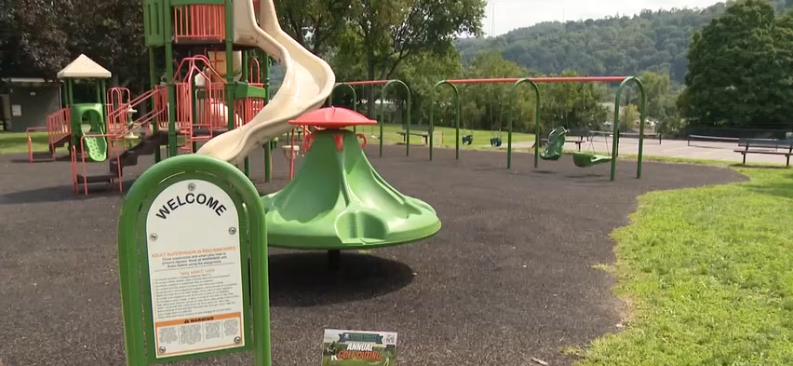
Additionally, immediately upon entering the park, visitors encounter a prominent welcome sign displaying the Borough’s “Play Smart Rules.” Among those rules is the specific and explicit instruction: “Do not twist chains.”
That rule is directly relevant to the conduct documented on the surveillance footage.
The evidence considered by the officer therefore included:
Surveillance video depicting the incident and the conduct immediately preceding and resulting in the damage;
Still photographs documenting the juveniles involved and relevant portions of the incident;
The physical damage to Borough property;
A prominently posted park rule specifically stating “Do not twist chains”;
Statements and other information obtained during the investigation; and
The documented communications with the parents concerning the incident and restitution.
The investigation identified five juveniles involved in the incident, and the total cost of the damage was divided equally among those five juveniles.
Based upon the totality of the evidence, the officer believed there was an appropriate legal basis to submit the matter to the judicial process.
Police officers do not determine guilt. They investigate incidents, evaluate evidence, and determine whether there is a sufficient legal basis to initiate proceedings. The court independently determines the ultimate disposition.
In light of the court’s determination that the two children were not responsible, does the Borough still intend to seek payment from the family through a civil action?
First, the judge did not determine that the children were not responsible. The Judge took his time with his ruling. He said he could see the children twisting the swing and causing it to break. What he determined was that he was unable to find beyond a reasonable doubt that the children intended the swing to break from their conduct. He indicated that in his opinion, it was more of a civil matter for negligence. The mother had a court reporter present, so this should all be on the transcript. It is also important to recognize that there were five juveniles involved and that the Borough divided the cost of the damage equally among them.
Three families paid their respective shares, after which the charges involving those juveniles were withdrawn. The mother of the remaining two juveniles initially agreed to pay her family’s proportionate share, and the Borough prepared an invoice based upon that agreement. She subsequently declined to pay, and those two juveniles elected to proceed to a hearing.
Potential civil responsibility for damage to municipal property and the disposition of a juvenile proceeding involve separate legal questions and different legal standards.
Any decision regarding further civil recovery will be made by the Borough in consultation with the Borough Solicitor after consideration of the evidence and applicable law.
Has the Borough determined what caused the swing chain or related equipment to fail?
The Borough possesses surveillance footage documenting the incident. The video clearly depicts the conduct involving the juveniles and the swing immediately preceding and resulting in the damage, which the Judge recognized and mentioned during his ruling.
The video does not depict the equipment simply failing during ordinary or intended use. Rather, it documents conduct involving the swing and its chains immediately preceding the damage.
This is particularly relevant because the Borough’s prominently posted “Play Smart Rules” expressly instruct park users:
“Do not twist chains.”
The Borough therefore does not believe it would be accurate to characterize this incident simply as an unexplained equipment failure.
Were there any inspections, maintenance concerns, prior repairs, or complaints involving that swing or playground equipment?
The Borough’s records reflect that the playground equipment was subject to inspections, and there were no documented safety concerns, maintenance issues, prior complaints, or known conditions involving the swing that would have indicated the equipment was defective or unsafe prior to this incident.
The surveillance video clearly depicts the conduct involving the juveniles that resulted in the damage. It does not depict the equipment simply failing during ordinary or intended use.
The posted “Play Smart Rules” also expressly state “Do not twist chains,” directly addressing the conduct depicted on the surveillance footage.
Accordingly, the information available to the Borough includes inspections with no identified concerns, no prior complaints or known safety issues involving the swing, prominently posted rules specifically prohibiting the conduct at issue, and surveillance footage documenting the juveniles’ conduct and the resulting damage.
Based upon the totality of that information, the Borough has no evidence indicating that a pre-existing maintenance issue, defect, or unsafe condition caused the swing to fail. The available evidence, including the surveillance footage, documents the conduct that resulted in the damage.
Is there video of the incident or the area where it occurred?
Yes.
Surveillance video exists and depicts the incident, including the conduct involving the juveniles immediately before and during the damage to the swing.
Still photographs documenting the juveniles involved and relevant portions of the incident were also obtained and preserved as part of the investigation.
There is additionally body-worn-camera documentation associated with the police investigation, including the officer’s initial interaction with the mother of the two juveniles referenced in your inquiry, during which she was apologetic and agreed to pay for the damage, as well as subsequent contact concerning the matter.
The existence of a recording or photograph, however, is separate from the legal question of whether that particular record may lawfully be released. Records associated with law enforcement and juvenile matters are subject to applicable Pennsylvania law and confidentiality requirements.
Why have the family’s Right-to-Know requests for records related to the incident been denied, and does the Borough intend to release any of those records?
The characterization that the family’s Right-to-Know requests were simply ignored or summarily denied is not an accurate description of the Borough’s handling of those requests.
The requests were addressed promptly through the Borough Solicitor in accordance with Pennsylvania’s Right-to-Know Law. Where additional time was necessary to conduct the appropriate records and legal review, the requester was provided with the applicable 30-day extension notice.
The Borough evaluates each requested record individually under Pennsylvania law. Certain law-enforcement and investigative records are protected or restricted from public disclosure, and matters involving juveniles may implicate additional confidentiality considerations.
The Borough does not deny access to public records because their contents may be inconvenient or unfavorable. At the same time, the Borough cannot disregard statutory exemptions, confidentiality requirements, or other legal restrictions simply because a particular record has been requested.
The Borough will continue to process requests in accordance with Pennsylvania law and will provide records determined to be public and legally subject to disclosure.
Does the Borough believe the officer’s handling of the matter — including the discussion of payment followed by juvenile criminal charges — was consistent with Springdale Police Department policy and appropriate under the circumstances?
Absolutely. Based upon the information presently available, the Borough and Police Department believe the officer handled the matter appropriately, consistently, and reasonably. The Department made multiple efforts to resolve the matter, including on the day of the initial hearing, following the initial hearing, and on the day of the final hearing. The conversations on the record would all be included in the transcript of proceedings that the mother possesses.
The complete chronology is important.
The officer investigated an incident involving five juveniles and reviewed objective evidence, including surveillance footage and still photographs documenting the conduct at issue.
The Borough’s records reflected no documented prior safety concern or complaint indicating that the swing was defective or unsafe.
The park contains a prominent welcome sign displaying the “Play Smart Rules,” including the specific instruction “Do not twist chains.”
Rather than simply proceeding with charges and leaving the matter to the courts, an effort was made to involve the parents and provide an opportunity to address the damage through restitution. The total cost was divided equally among the five juveniles involved.
Three families paid their respective shares. The charges involving those three juveniles were subsequently withdrawn.
The mother of the remaining two juveniles initially told the investigating officer that she would pay her family’s proportionate share and was apologetic during that interaction. The conversation was documented on body-worn camera.
The Borough relied upon that agreement and prepared an invoice. When the Borough subsequently contacted the mother regarding payment, she advised that she would not pay. The officer thereafter contacted her again, and she confirmed her refusal.
The remaining two juveniles then exercised their right to proceed to a hearing.
That complete sequence is materially different from the suggestion that an officer singled out two children, appeared at their home without supporting evidence, demanded money, and charged them simply because their mother refused to pay.
There were five juveniles involved. The same proportional approach to restitution was applied. Three families elected to resolve their respective portions of the matter through restitution, and those charges were withdrawn. The remaining family elected not to proceed with that resolution, and those juveniles exercised their right to have the matter determined through the judicial process.
The Borough and Police Department fully respect the court’s ultimate disposition of that proceeding.
At the same time, the court’s subsequent determination does not retroactively change the evidence available to the investigating officer when the matter was initiated. Nor does it establish that the officer acted improperly in investigating the incident or submitting the matter for judicial review.
The Springdale Borough Police Department expects its officers to investigate matters fairly, evaluate objective evidence, communicate with parents when juveniles are involved, exercise appropriate discretion, treat similarly situated individuals consistently, and utilize the judicial process when warranted.
Based upon the information presently available, the Department believes that is what occurred here.
Finally, the Borough recognizes that this matter involves children and local families. We have no interest in publicly criticizing any of the juveniles or their parents. We do, however, believe it is important that the Borough’s actions and the actions of its Police Department be presented accurately, fairly, and with the complete factual chronology.
Please note: This story was provided to CNN Wire by an affiliate and does not contain original CNN reporting. This content carries a strict local market embargo. If you share the same market as the contributor of this article, you may not use it on any platform.