William Shatner says his metal band is set to play at Coachella festival in 2027

Jesus Reyes

LOS ANGELES (KESQ) An iconic actor is announcing his future at one of the desert’s biggest music festivals. William Shatner, best known for playing Captain Kirk in Star Trek, says he is set to play at the 2027 Coachella Valley Music and Arts Festival.

The 95-year-old actor told CNN’s Elex Michaelson he is booked to play at the festival with his heavy metal band.

View this post on Instagram

A post shared by CNN (@cnn)

Coachella is set to return to the Empire Polo Club April 9-11, and April 16-18. Shatner will turn 96 in March.

Shatner’s band, The *uckers, will make its debut at Riot Fest in Chicago in September. The band also features Marcus Nand, Phil Soussan, Britt Lightning, and Fred Aching.

Shatner recently revealed he and his daughter were battling stage 4 cancer at the same time. Both are now cancer-free.

The actor also holds a record for being the oldest person to visit space, back in 2021 when he was 90 years old.

Click here to follow the original article.

Doña Ana County commissioners appoint 3 acting county managers

Gabrielle Lopez

DONA ANA COUNTY, N.M. (KVIA) — The Doña Ana County Board of County Commissioners appointed appointed three people to serve as a joint acting county manager as the county’s leadership transitions.

The decision comes after commissioners unanimously voted to end Scott Andrews’ employment contract June 21.

Friday, the county announced Deb Weir, Lucio Luttrell and Stephen Lopez will serve together.

As acting county managers, the three will provide leadership and support for county departments and employees while the board decides what’s next for permanent leadership.

“We are honored by the Board’s confidence in us and are committed to working together as a team to provide steady leadership, support our employees and ensure the County continues to operate effectively and efficiently,” the acting county managers said in a joint statement.

County Commissioner Manuel Sanchez said Scott Andrews approached the board about leaving his position as county manager, but his contract didn’t include a provision for an early departure. Terminating the contract without case was the only legal way to end the agreement.

Click here to follow the original article.

Boone County to temporarily pause 911 texting during system upgrade

Ryan Shiner

COLUMBIA, Mo. (KMIZ)

Residents in Boone County will temporarily lose access to the Text-to-911 service as the county transitions to a new emergency communication system.

Starting Aug. 5, Boone County Joint Communications will pause its Text-to-911 function while it works to transition to the next generation of the 911 system. Officials said the goal is to keep the outage as short as possible and restore the service by Sept. 1.

According to the press release the new network “will provide a more reliable and resilient 911 network while supporting future Next Generation 911 capabilities.”

For some people, texting 911 can be the safest or even the only way to reach emergency services. Christie Davis spokeswoman said the service is often used when making a voice call is not possible or safe, including situations involving people who are deaf, hard of hearing, or have a speech disability.

Davies said the agency only has two years of available Text-to-911 data.

Since Aug. 1, 2024, Joint Communications has processed 563 Text-to-911 sessions. Because the agency’s records only go back two years, officials said they do not know how many Text-to-911 messages were received before that timeframe.

Davies said residents can use Text-to-911 for any emergency they would normally call 911 about. However, she says the service is especially important for people who need an alternative way to communicate with emergency responders.

The agency said it is working with vendors and service providers to minimize the outage while the system transition is completed.

Voice calls will not be affected, and anyone who texts 911 during that period will receive an automatic response telling them to call instead.

The release says the new network “will provide a more reliable and resilient 911 network while supporting future Next Generation 911 capabilities.”

Click here to follow the original article.

Nearly 300 Three Rivers customers lose power in Gasconade County Friday night

Ryan Shiner

COLUMBIA, Mo. (KMIZ)

After severe storms went through the Mid-Missouri area on Friday evening, several parts of the area were without power.

Gasconade County saw 279 Three Rivers Electric Cooperative customers without power around 8 p.m. The county had seen two tornado warnings during the 6 p.m. hour. Power was restored across the area by 6 a.m. on Saturday.

Three Rivers Electric also saw 45 customers in Osage County without power while Franklin County had 241 without power. Full restoration was reported in Franklin County by 6 a.m. Saturday. Around 7:30 a.m., 53 were still without power in Osage County.

160 Boone Electric customers in the El Chaparral neighborhood east of Columbia saw their power go out after 5:49 p.m., its outage map showed. Reported outages in that area were resolved before 8 p.m.

An outage just north of Hallsville was reported at 7:23 p.m. and was affecting 50 Boone Electric customers.

Additionally, there were 76 City of Columbia customers without power, according to the city’s outage map. A pair of outages that affected 44 people was reported in a neighborhood south of East Nifong Boulevard near South Bearfield Road.

Another outage was reported in a neighborhood well north of Interstate 70 that affected 32 customers. ABC 17 News had reached out to the city, and a spokesman wrote that crews were working to resolve the issue.

The Association of Missouri Electric Cooperatives showed that 66 Callaway Electric customers were without power at around 6 p.m., and it was resolved by 8 p.m.

Down at the Lake of the Ozarks, there were 79 Ameren customers without power. That outage was reported at 6:47 p.m. and is expected to be restored by 10 p.m., according to Ameren’s map.

Click here to follow the original article.

Triple-digit heat slows Downtown Palm Springs traffic as businesses adapt

KESQ News Team

PALM SPRINGS, Calif. (KESQ) – Triple-digit temperatures are bringing the annual summer slowdown to downtown Palm Springs, where restaurants and shops say customer traffic has dropped as many people choose to stay indoors.

“It’s slower but we’re prepared for it,” said Aaron Raei, owner of La Bonita’s Mexican Restaurant.

Inside the restaurant, empty tables sat waiting for customers as Raei said the weather is the biggest reason for the slowdown.

“The weather always has an impact,” he said.

Just a few doors away, the usual line at Lappert’s Ice Cream was noticeably absent.

“It is 100 percent this heat,” said manager Angela Sublett. “At least the humidity has died down, but the heat right now it’s too hot to go out for anything, including ice cream.”

Rather than waiting for cooler temperatures, businesses are adjusting their operations to attract customers.

“We do of course lessen our hours. We try to have some promotions here and there,” Sublett said.

“Some of the things I like to do is have a happy hour, good air conditioning, cold beer and margaritas,” Raei added.

Owners say they were helped by a later start to the summer heat this year, and they’re hopeful upcoming events will bring more visitors downtown.

“We got lucky with the heat because it didn’t start until a little later,” Raei said.

“Of course we have Splash House coming and Thursday nights out here in the front, but our weekends not many people come into town,” Sublett said.

Until business picks up again, owners are encouraging residents and visitors to continue supporting local businesses.

Local efforts such as the “Love Local Palm Springs” gift card program are also encouraging residents to support downtown businesses during the slower summer months.

Click here to follow the original article.

Boone County Public Safety Childcare Center expected to open in 2027

Ellyse Edwards

COLUMBIA, Mo. (KMIZ)

Boone County

Boone County leaders say a childcare center under construction at the Regional Training Center is expected to help recruit and retain first responders by providing childcare for employees who work nontraditional hours.

The Regional Training Center has been operating since January, but construction continues on the childcare center. Boone County Sheriff Dwayne Carey said he hopes construction will be completed by the end of the year, with the facility opening in January.

“We took that challenge on,” Carey said. “It will hopefully be done by the end of this year and maybe opening in January.”

Carey said the childcare center will initially serve public safety employees working on the Regional Training Center campus before expanding to other first responder partners.

Captain Brian Leer with the Boone County Sheriff’s Office said the project is designed to address childcare challenges that can come with careers in public safety.

“When we talk about how hard it’s been to recruit in public safety over the last nearly decade, it’s been very difficult just to recruit people for jobs within the public safety sector,” Leer said. “You add the crazy hours that we work. We have employees working those odd shifts, and it’s really hard to find childcare outside of that Monday through Friday, 8 to 5, 8 to 6 p.m. type timeframe.”

Leer said officials hope the childcare center will make public safety careers more appealing while helping current employees balance work and family responsibilities.

The childcare center is part of the Boone County Regional Training Center, which serves law enforcement and other public safety agencies.

Click here to follow the original article.
IID responds to new Colorado River plan that will see steep cuts to water use in three states

Jesus Reyes

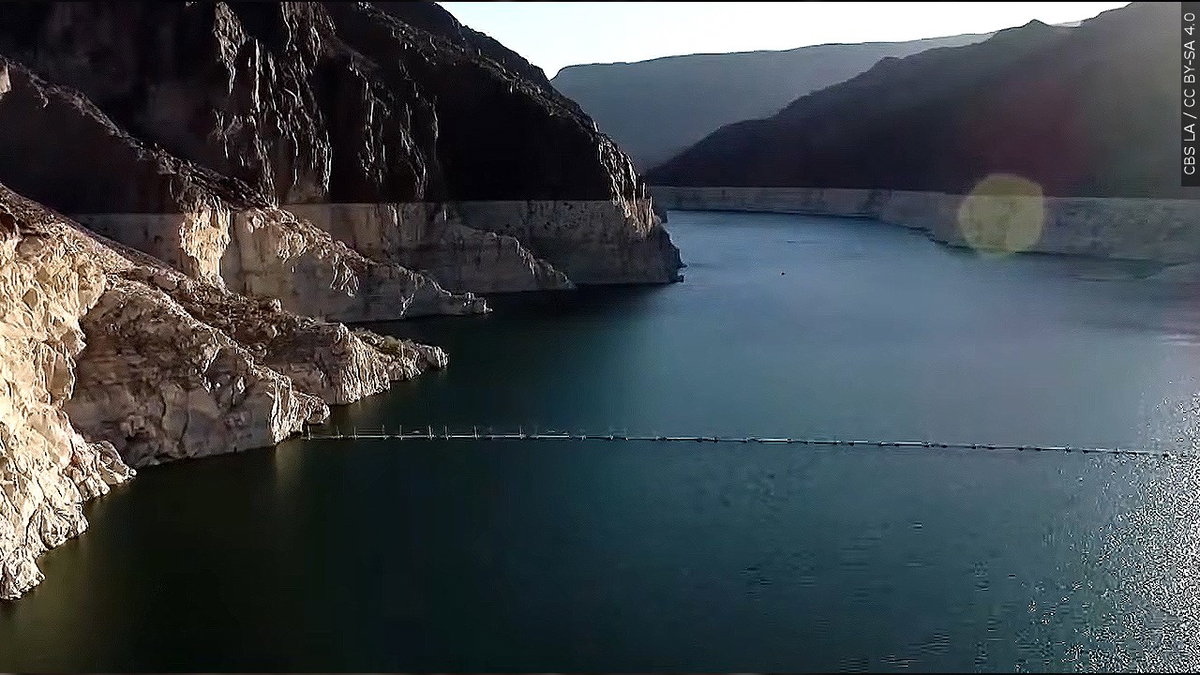
IMPERIAL, Calif. (KESQ) – The Imperial Irrigation District issued a statement responding to the announcement of a new Colorado River plan that will require three states to slash their water use by 16 to 20% through 2028 as the water levels reach new lows.

On Friday, the US Bureau of Reclamation published its final environmental impact statement, a 10-year operating framework for the waterway under which the lower basin states of California, Arizona and Nevada could face collective cuts of up to 3 million acre-feet per year — enough water to supply roughly 9 million average US families.

The framework provides for specific operating plans to be developed every two years. Federal officials are expected to publish the first of these in the coming days, which will specify the exact cuts required of states through 2028 — anticipated to be around 20% for the lower basin. The upper basin states of Colorado, New Mexico, Utah and Wyoming are not expected to face mandatory cuts.

Of particular importance to IID, the framework provides for Colorado River shortages to be distributed through agreement in the Lower Basin or, absent agreement, consistent with the Law of the River.

“Protecting the Imperial Valley and the Colorado River, our only water supply, is IID’s top priority during this process,” said IID Board Chairwoman Karin Eugenio. “The Final EIS recognizes that changes as to how shortages are shared must come through voluntary agreements. That respects senior water rights while allowing the states to work together voluntarily when the system needs help.”

IID officials said that since 2003, the company’s conservation programs have generated more than 9.2 million acre-feet of conserved Colorado River water through agricultural efficiency, system improvements and voluntary agreements.

IID’s most recent system conservation contribution includes up to an additional 100,000 acre-feet in 2026. Altogether, IID’s system conservation contributions are expected to total about 900,000 acre-feet over the last four years, adding more than 13 feet of elevation in Lake Mead.

“Imperial Valley has stepped up again and again,” Eugenio said. “For decades our farmers have helped protect the system and other Colorado River water users while continuing to grow food to feed the nation and sustain our rural communities. IID will continue to be open to help provided our rights are protected, the terms are fair and participation remains voluntary.”

District officials also added that IID continues to advocate for meaningful and verifiable Upper Basin contributions.

“The Lower Basin cannot stabilize the river alone,” Eugenio said. “A shared river requires a shared commitment, and every part of the basin must be actively involved.”

The Colorado River is the lifeblood of the Southwest. It irrigates more than 5 million acres of farmland, generates enough electricity to power around 700,000 homes and provides water for 40 million people. However, it has shrunk dramatically over the past 25 years after years of heavy use and as climate change delivers hotter, drier weather and dwindling snow. Today, 95% of the basin is in drought.

The combined water level in Lake Powell and Lake Mead — the most important Colorado River reservoirs and two of the biggest in the United States — fell to a historic low last week.

Check Out Angela Chen’s Series on the Colorado River Crisis

Colorado River water is divided between states under the 1922 Colorado River compact, which allots 7.5 million acre-feet of water yearly for the four upper basin states and another 7.5 million for the three in the lower basin. But as water levels dwindle, states have been trying to work out how to get by with less.

The lower basin states have historically used the most water, primarily to support their vast farms and booming cities. Over the past few years, the three states have proposed cuts in their water use but want the upper basin states to share in the pain.

The upper basin states — which, unlike the lower basin states, cannot be compelled by federal authorities to cut their water use — have resisted mandatory cuts, arguing that climate change has reduced water availability and the cuts should be shouldered by the more water-intensive states.

The current agreement governing the operation and management of the Colorado River, which came into force in 2007, expires this year and a February federal deadline for the states to reach a new agreement came and went with no deal.

Experts fear the current plan won’t be enough as the water crisis deepens. Last winter was one of the driest, warmest winters on record for the western US, leaving the region in a snow drought.

Lake Mead appears on track to tumble to its lowest level on record as early as next week, and Lake Powell may do so next month. Lake Powell could potentially fall so low by spring 2027 that it reaches “minimum power pool” level, meaning its dam will no longer be able to generate hydropower, according to a July report from the Bureau of Reclamation.

There are fears that the issue may end up the subject of lengthy and expensive court battles. Arizona in particular has been rattling the litigation saber. The state is likely to get saddled with the steepest cuts during times of shortage due to a deal it made in the 1960s, but its needs are huge to feed sprawling farms and industry.

The new framework “does nothing to elevate expectations around a coherent seven-state plan for shared sacrifice,” the Arizona Department of Water Resources said in a statement Friday, saying the reductions proposed “would devastate Arizona’s water users and its economy.”

States will still be able to carry on negotiations in the meantime, and any agreement could supplant the federal plan.

Click here to follow the original article.

Texas land commissioner sends cease and desist for alleged illegal land clearing in Hudspeth County

Gabrielle Lopez

EL PASO, Texas (KVIA) — A Texas state agency is pushing back on what it calls illegal entry and unauthorized clearing of more than a mile of state land near the Rio Grande. Texas Land Commissioner Dawn Buckingham sent a cease and desist letter Friday to U.S. Customs and Border Protection (CBP) and a contractor working on border wall construction.

In a release, the Texas General Land Office (GLO) said Buckingham sent the letter after finding that federal contractor Barnard Construction illegally entered and cleared more than a mile of state land.

The letter claimed the contractor CBP hired trespassed across and altered GLO-managed state lands in Presidio County without permission. The land at issue also partly falls under Hudspeth County.

The Texas GLO said its leases don’t allow land modifications, excavations or construction without the office’s written consent.

“Significant grazing acreage was disrupted by this unauthorized activity that has devalued our lease and diminished our ability to generate future revenue for the schoolchildren of Texas,” said Commissioner Buckingham in a news release.

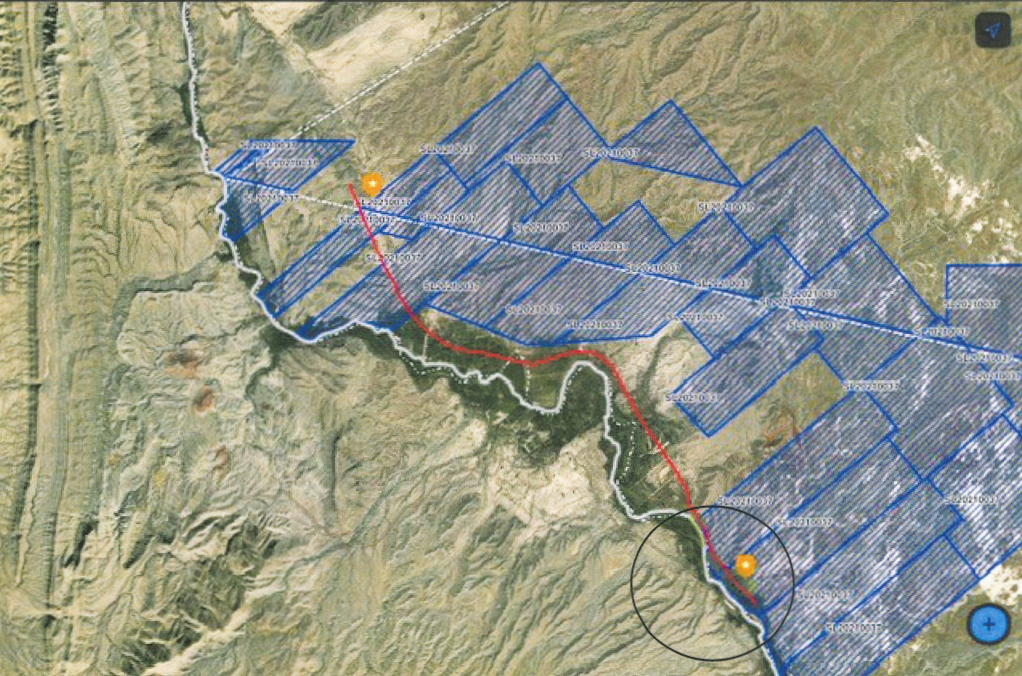
The letter included a map with areas that match an online property sale listing for the Moody Bennett Ranch, which extends across Hudspeth, Jeff Davis and Presidio counties.

Online Presidio County property records show that Trans Pecos Ice LLC owns parcels in that same area, which match the GLO’s map included in Buckingham’s letter.

The map included in Texas Land Commissioner Dawn Buckingham’s cease and desist letter.(Courtesy: Texas General Land Office)

The Texas GLO said Trans Pecos Ice LLC has been told they’re in breach of their lease agreement for allowing unauthorized access. The office told it to take immediate action.

Additionally, the GLO demanded any and all state land damaged by the reported activity be restored to its original condition.

Barnard was asked to work with the CBP and lessee to develop a reclamation proposal plan for the GLO to approve.

“The people of Texas entrusted the General Land Office with more than 13 million acres of state land, and we take that responsibility seriously,” Commissioner Buckingham said. “We will work with our federal partners to keep the southern border secured, but we will not compromise the integrity of Texas state property to do it. State land is damaged and it must be restored.” 

Texas State Senator Cesar Blanco shared his support for Buckingham’s letter Friday.

“I applaud Texas Land Commissioner Dawn Buckingham’s decision to order an immediate halt to land-clearing activities related to border wall construction and require a more transparent process. This is an essential step toward protecting Texas’ sovereignty and ensuring proper oversight,” the senator said in a statement.

Read the full cease and desist letter below.

lettersDownload

Click here to follow the original article.
Alleged assault at El Paso Starbucks leads to arrest

Gabrielle Lopez

EL PASO, Texas (KVIA) — Thursday, El Paso County Sheriff’s Office deputies arrested a 53-year-old woman on two outstanding assault warrants for an alleged physical altercation that happened at a Starbucks on Airway Boulevard.

EPCSO said Naomi Hernandez was wanted by the El Paso Police Department for the warrants stemming from the altercation that happened July 20.

At 12:15 a.m. Thursday, deputies went near the intersection of Eastlake Boulevard and State Street near the Eastlake Marketplace Center after learning about her location.

Deputies contacted her, confirmed her warrants and took her into custody.

Hernandez transported to the El Paso County Detention Facility, where she was booked on two warrants for assault causing bodily injury. Her bond totaled $10,000.

The reported incident at the Starbucks was posted on FitFam El Paso’s Instagram page. Deputies released a video posted by FitFam and bodycam footage of Hernandez’ arrest.

You can watch the videos below.

Click here to follow the original article.

California car thefts plummet 25% statewide, Imperial County numbers hold steady

Lynette Niebla

IMPERIAL COUNTY, Calif. (KYMA) – As National Vehicle Theft Prevention Month comes to a close this July, new data from the California Highway Patrol (CHP) reveals a massive 25% drop in vehicle thefts across the Golden State.

However, local law enforcement warns that the positive statewide trend is hitting a wall in Imperial County.

According to the CHP’s 2025 Vehicle Theft Fact Sheet, car thieves stole 133,372 vehicles statewide last year, averaging one theft every four minutes.

While that total is a substantial decrease from the 176,230 vehicles stolen in 2024, the numbers in Imperial County refused to budge. Local thefts held flat, shifting only slightly from 458 cases in 2024 to 456 in 2025.

State officials credit California’s overall decline to aggressive, state-funded crime suppression operations deployed by Gov. Gavin Newsom (D-Calif.)

Targeted enforcement operations utilizing specialized CHP teams helped drive major reductions in several counties last year.

While urban areas saw massive improvements, Imperial County’s unique border geography presents a distinct challenge that state suppression operations cannot easily wipe away.

“We’ve definitely seen a lot of the big trucks being stolen—Silverados, F-150s, the Jeeps…Jeep Wrangler and Gladiators,” said Capt. Ernesto Ruedas with CHP. “Those are big targets, and being so close to the border, we are a target because those vehicles end up in Mexico…a lot of them end up in Mexico.”

Investigators state that organized crime groups target these specific models for their powerful engines and rugged capabilities.

The vehicles are frequently used to cross rough border terrain to transport illegal narcotics or smuggled people. Once a vehicle crosses the international boundary line, owners rarely see them returned intact.

“Unfortunately, these vehicles are stolen sometimes to commit other crimes,” Capt. Ruedas warned. “You’re probably not gonna find your truck or your vehicle in the same condition that you left it.”

Despite the stagnant theft rates, local law enforcement teams are finding significantly more success in tracking down stolen property within Imperial County.

Vehicle recoveries within the county jumped an impressive 23.2% last year. Officers successfully tracked down 297 stolen vehicles in 2025, compared to just 241 recoveries the previous year.

Statewide, the CHP boasts an 84% recovery rate, with more than half of those 111,661 recovered vehicles returned to their rightful owners in drivable condition.

“Approximately 84% of the vehicles stolen, we do end up finding in some capacity,” Ruedas said. “The goal is to not have it happen at all, though.”

Law enforcement officials emphasize that car theft is overwhelmingly a crime of opportunity, taking a thief mere seconds to complete.

Drivers are urged to maintain strict security habits as the calendar turns to August.

The CHP recommends the following key prevention steps:

Never leave a vehicle running or unattended, even for a quick errand.

Always lock your doors and roll up windows completely.

Never leave keys or key fobs inside or hidden underneath the vehicle.

Keep valuables out of sight, including wallets, electronics, purses, and firearms.

Park in well-lit, heavily populated areas whenever possible.

Utilize visible anti-theft devices, such as steering wheel locks or GPS trackers.

If you witness a theft in progress, Ruedas reminds residents to follow the “Golden Rule” of safety: If you see something, say something.

“Immediately call 9-1-1,” Ruedas said. “Don’t get involved, but be a good witness and give us as much information as possible. The vehicle make, model, the color…the license plate if you can catch it. If you have a second to take a picture or video of the vehicle and suspect, fantastic.”

If your vehicle has already been taken, report it to local police or the CHP immediately. Ensure you have your license plate number, Vehicle Identification Number (VIN), and a precise vehicle description ready to upload into the statewide stolen vehicle system.

“The California Highway Patrol is committed to keeping our communities safe, but preventing vehicle theft starts with each of us,” Ruedas said. “Lock it, take your keys, hide your valuables, and help us keep Imperial County safe.”

Click here to follow the original article.