7-year-old boy and mother from Illinois, struck by lightning while camping in Wisconsin

By Jermont Terry

Click here for updates on this story

    ELGIN, Illinois (WBBM) — An Elgin boy and his mother were in a burn unit at a hospital in Minnesota after they were struck by lightning during a camping trip in a remote area of Wisconsin near Lake Superior.

Seven-year-old Finn Jorgenson and his mother, Brittany, were seriously injured and have a long road ahead.

Finn’s family has many questions after he suffered severe burns after lightning hit his campsite in northern Wisconsin, about 60 miles from the Minnesota state line.

“All of a sudden, the biggest blast you’ve ever heard, and then the explosion of light, and my initial first thought was, ‘Who is setting off a firework?’ And then I hear the screams,” said Amanda Glabus, a family friend who was camping with Finn and Brittany.

Those screams were coming from the tent Finn and his mother were sleeping in near Lake Superior in Herbster, Wisconsin.

“I go in there, and she screamed, you know, ‘We’ve been hit by lightning, my baby is dead, my baby is dead.’ I look in the tent, and he’s just lying there lifeless,” Glabus said. “I just ripped the tent open. At that time, I kind of, like, left my body, I guess.”

Glabus said she learned CPR as a child and those life-saving measures kicked in. She started chest compressions on Finn until he started breathing.

“Once he got the pulse back, you know, we stopped, and a little while after that, he lost it again, and that was the final time that I administered CPR,” she said.

By then, an ambulance arrived. Finn survived and was taken to a hospital in Duluth, Minnesota, with second-degree burns on 25% of his body. Some areas with third-degree burns will require surgery.

His father, Evan, is grateful Glabus remembered CPR.

“She’s the only reason he’s here right now,” Evan said. “He asks some really deep questions for his age, and, you know, everybody loves talking to him and hearing him talk.”

The family set up GoFundMe page to help with medical bills and Finn’s road to recovery. It will be months before he’s able to return to Elgin.

“You hear people say it, but you never know what’s gonna happen,” Glabus said. “Be prepared, don’t go to bed angry, love your kids.”

Please note: This story was provided to CNN Wire by an affiliate and does not contain original CNN reporting. This content carries a strict local market embargo. If you share the same market as the contributor of this article, you may not use it on any platform.

Georgia Gold Star mothers honored with service cleanup project at Marietta National Cemetery

By Rashad Williams

Click here for updates on this story

    MARIETTA, Georgia (WUPA) — The Department of Georgia American Gold Star Mothers was honored on Friday through a service cleanup project at the Marietta National Cemetery.

The Gold Star Mothers, a nonprofit organization, supports families who lost a son or daughter serving in the U.S. Armed Forces. It also provides community outreach, veteran support, and remembrance programs across Georgia.

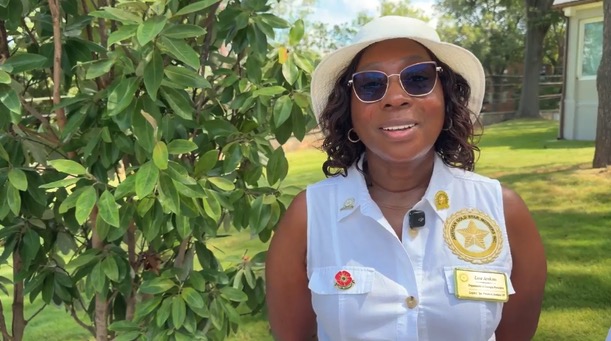
Lisa Jenkins, the organization’s president, said she was recently contacted by ABM, a facilities management company. ABM, through its Veterans at ABM sector, offered to clean up the Gold Star Mothers monument and surrounding areas at the Marietta National Cemetery.

“ABM reached out to us and say, ‘Hey, we found your monument. We’d love to do a service project to come out and do some maintenance and to clean it.'” Jenkins said. “They came out, they volunteered, they cleaned it up. It’s absolutely beautiful.”

Jenkins lost her son, SPC Frederick Jenkins III, who was a paratrooper in the Army.

“It is a way that we honor our children and carry their legacy while creating our own in service,” Jenkins said. “I needed purpose. I needed something positive out of my tragedy. I learned from my son, so I’m following his footsteps, and I am connecting my legacy with his.”

lisa-jenkins.png Gold Star Mothers president Lisa Jenkins lost her son, SPC Frederick Jenkins III, who was a paratrooper in the Army. CBS News Atlanta Carolyn Cagle is another Gold Star mother who turned her grief into a mission to serve others after losing her son, LCPL John Robert Franklin Cagle.

“I would never, never forget my son’s sacrifice,” Cagle said. “We’re just here so that Americans do not forget the price that is paid for our democracy.”

Kelly Yardley, the chair of Women for ABM, said Friday was all about supporting the Gold Star Mothers and providing a connection through service work done by some veterans at ABM.

“We want to support our community, show respect, show gratitude and thanks for the Gold Star Mothers for their loss and what they’ve gone through,” Yardley said. “Combining this with the Veterans at ABM, it means a lot and makes a lot of sense to support this kind of event. This is unifying.”

Jenkins said the Gold Star Mothers organization will meet with Georgia Gov. Brian Kemp next month at the Capitol to highlight the work they’re doing across the state.

Please note: This story was provided to CNN Wire by an affiliate and does not contain original CNN reporting. This content carries a strict local market embargo. If you share the same market as the contributor of this article, you may not use it on any platform.

6 hospitalized after possible mercury spill in Baltimore County

By Andrew Adeolu

Click here for updates on this story

    BALTIMORE (WJZ) — A possible mercury spill in Lutherville sent six people to the hospital on Friday.

According to Baltimore County Police, the spill occurred on the 8600 block of Tower Bridge Way.

Maryland Department of the Environment (MDE) officials say a contractor was working on a home in Lutherville when the spill was discovered. The contractor then drove to a hotel in Edgewood, Harford County.

Officials say nobody was injured; however, six people were transported to the hospital for evaluation and decontamination.

Both the MDE and the Baltimore County Department of Health responded to the scene in Lutherville.

The Joppa Magnolia Volunteer Fire Company was dispatched to the Quality Inn at 2112 Emmorton Park Road in Edgewood, where the Harford County Department of Emergency Services Hazardous Materials Team had also been requested.

The cause of the spill is under investigation.

Please note: This story was provided to CNN Wire by an affiliate and does not contain original CNN reporting. This content carries a strict local market embargo. If you share the same market as the contributor of this article, you may not use it on any platform.

Orphaned bear cub treated for beanbag round wound

By Peyton Headlee

Click here for updates on this story

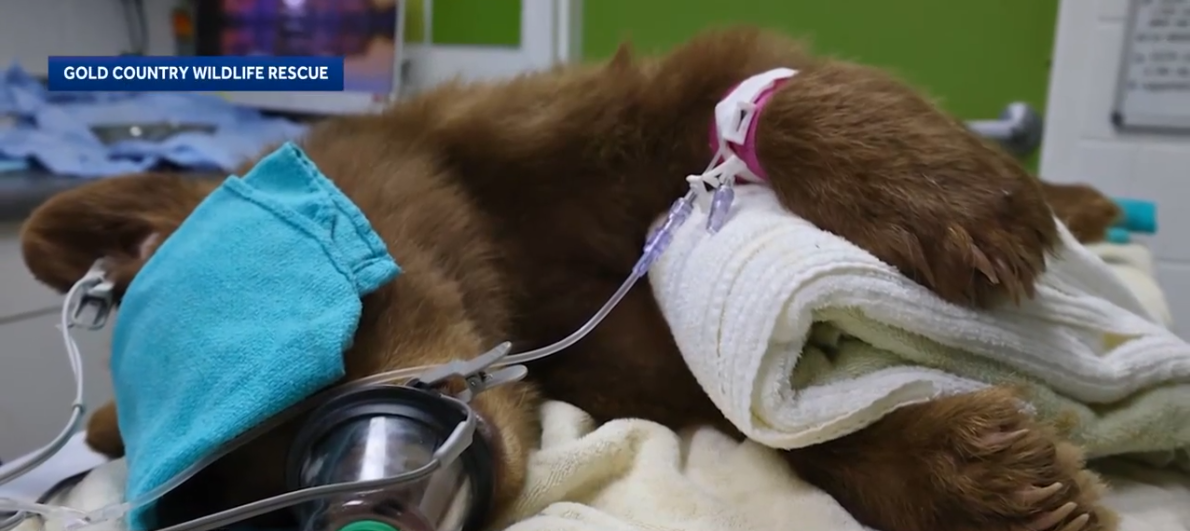
    AUBURN, California (KCRA) — A bear cub rescued as an orphan in El Dorado County underwent surgery at Gold Country Wildlife Rescue in Auburn, where doctors discovered a beanbag round and a plastic cap lodged in its injured hind leg.

Melissa McCartney, executive director of Gold Country Wildlife Rescue, said the California Department of Fish and Wildlife (CDFW) captured the cub after residents noticed it wandering alone for over a week.

“People had noticed a bear going on over a week and they could not find its mother. They were hoping she would reappear,” McCartney said. “So that’s when CDFW will step in. They’ll find a suitable rehabilitation center, in this case us.”

The cub arrived limping and with a visible wound on its hind leg. In an initial exam, X-rays revealed a cluster of small metal beads inside the leg.

“The radiographs initially showed us what looks like a very tight cluster of small metal beads,” McCartney said.

Initially, the team decided the safest course of action was to leave the foreign body in place, as the cub was active and the wound appeared to be healing. He was started on a course of medications and started to show steady healing.

“One of the things we’re always trying to balance in rehabilitation is we want these animals to stay wild. We want them to not be acclimated to humans. We want to give them every chance they have of getting back out into the wild,” McCartney said.

However, the wound reopened, prompting surgery. During the procedure, doctors found a beanbag round and plastic cap.

“Radiographs showed what looks like a cluster of pellets. Those cluster of pellets were inside of a little fabric bag for a beanbag round,” McCartney said. “That cloth doesn’t show up on a radiograph. It also didn’t show us that the plastic cap from the shell itself had penetrated the leg. So this poor little guy not only had the beanbag still in there, he had a plastic cap so that obviously all needed to be taken care of.”

The team was able to remove the less-lethal round in an extensive and challenging surgery. The cub is now recovering and the wound is healing nicely.

CDFW stated it is unclear how the cub sustained the injury. While law enforcement agencies are trained to use beanbag rounds to haze adult bears, the general public is not permitted to use them.

“There are tons of ways for us to learn to be in a region with bears safely that don’t have to come to this. But we also respect the fact that we don’t know the story or the situation. So we try not to pass judgment. We are just here to do what needs to be done for the bear at the end,” McCartney said.

Gold Country Wildlife Rescue hopes the bear will be able to join their three other orphaned cubs in the coming weeks and eventually return to its natural habitat in El Dorado County.

Please note: This story was provided to CNN Wire by an affiliate and does not contain original CNN reporting. This content carries a strict local market embargo. If you share the same market as the contributor of this article, you may not use it on any platform.

Surge in sick sea lions prompts investigation

By Michael Rosales

Click here for updates on this story

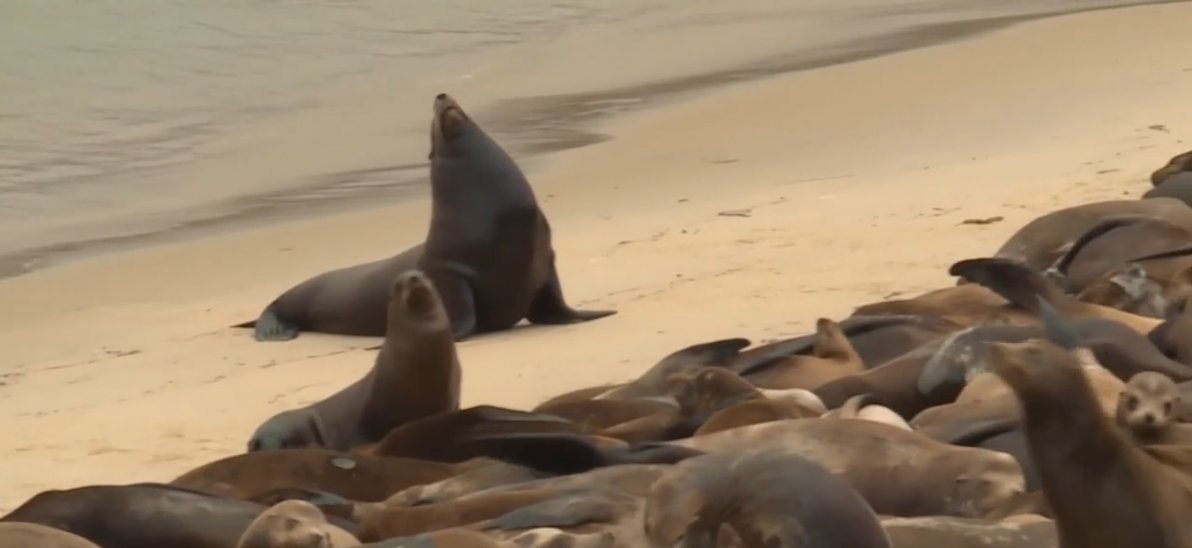
    MONTEREY COUNTY, California (KSBW) — A significant increase in sick sea lions along California’s central coast has prompted the Marine Mammal Center to deploy response crews and investigate whether toxins from harmful algal blooms, specifically domoic acid, are responsible.

The Marine Mammal Center reported rescuing 15 to 20 sick sea lions over a three-day period and anticipates the number to rise. Many of the animals are exhibiting symptoms of domoic acid toxicity, including seizures, disorientation, and abnormal behavior.

“You can see here on our big board, these are basically animals that have been called into our hotline,” said Giancarlo Rulli, a spokesperson for the Marine Mammal Center. “MBO means Monterey Bay operations. And it gives you an idea, as of 11:30 this morning with more calls coming in at the minute. The vast majority in terms of a hot spot of what we’re seeing right now, are large, subadult and adult California sea lions impacted with domoic acid poisoning.”

“They may have kind of ataxic movements. So uncoordinated movements that we’re seeing with them all the way up to an animal that is seizing on a beach is what we’re currently seeing with our patients,” said Laura Campbell, a veterinarian with the Marine Mammal Center.

While the exact cause of the spike in cases remains unclear, response crews are working to rescue affected animals and transport them to the center’s main hospital in Sausalito for further evaluation and care.

“Right now we have four sea lions currently in triage right here in Castroville,” Rulli said. “This was full yesterday and was mostly full the day before.”

At Moss Landing State Beach, three dead sea lions were discovered along the shore. While domoic acid poisoning is not new to the Central Coast, the recent increase in cases has led experts to emphasize the importance of public awareness.

“They are not their normal selves. Wild animals are already unpredictable, and especially so when they have an algal toxin that’s impacting both their memory and cognitive portion of how they behave, but also increases potentially unpredictable behavior,” Rulli said.

The Marine Mammal Center is preparing for additional cases and is urging the public to contact them if they encounter a sea lion in distress, rather than approaching the animal themselves.

Please note: This story was provided to CNN Wire by an affiliate and does not contain original CNN reporting. This content carries a strict local market embargo. If you share the same market as the contributor of this article, you may not use it on any platform.

Plaskett Fire near Gorda surges past 2,700 acres as Highway 1 stays closed

By Ricardo Tovar

Click here for updates on this story

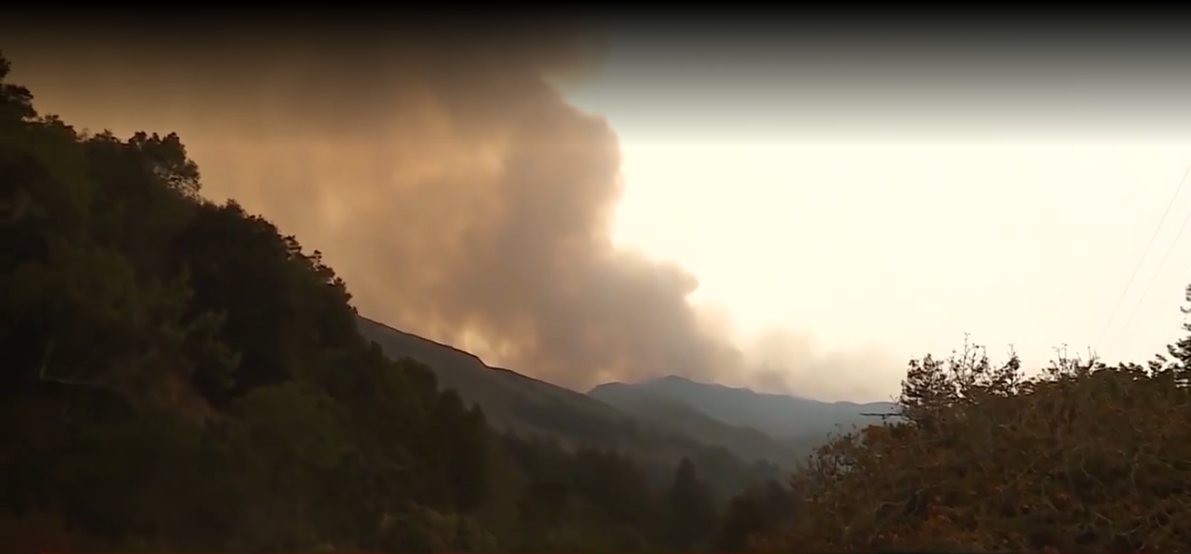
    GORDA, California (KSBW) — The Plaskett Fire near Gorda has grown to approximately 2,774 acres and remains at zero containment as of Friday morning, according to CAL FIRE.

That is an increase of roughly 1,000 acres since the previous acreage update.

Fire activity remained limited overnight, but firefighters expect conditions to become more active as fuels dry out, according to an incident report update on Friday morning. Crews are focused on structure defense and developing plans to protect threatened properties.

Heavy helicopters are being used for suppression efforts and targeted structure defense. Two dedicated air attacks have been assigned to the area, with Type 1 and Type 2 helicopters and uncrewed aircraft systems supporting firefighting operations. Air tanker availability may be limited because of high demand nationwide.

Cooler, moist conditions and light rain are giving way to drier weather Friday. A Red Flag Warning remains in effect because of the potential for isolated thunderstorms, which could produce erratic winds and gusts of up to 40 mph.

Firefighters are also preparing for possible spotting distances of approximately 0.1 to 0.2 miles as conditions worsen.

The cause remains under investigation.

Highway 1 remains closed from one mile south of the Little Sur River at Mile Marker 56 to north of Gorda at Mile Marker 10.2.

The closure covers nearly 50 miles and will remain in place until further notice. There is no estimated time for the highway to reopen.

The Plaskett Fire prompted an additional closure covering nearly 6 miles, from Milepost 16.0 north of Pacific Valley Ranger Station to Milepost 10.1 at Gorda By the Sea Mini Mart.

Evacuation orders mean there is an immediate threat to life and residents must leave. Warnings indicate a potential threat to life or property, and people who need additional time to evacuate should leave now.

For evacuees, a shelter is open at the Carmel Mission Inn Conference Room, 3665 Rio Road in Carmel.

For evacuation assistance, call the virtual Temporary Evacuation Point at 831-647-7760.

Please note: This story was provided to CNN Wire by an affiliate and does not contain original CNN reporting. This content carries a strict local market embargo. If you share the same market as the contributor of this article, you may not use it on any platform.

Two Systems of Justice: How Success Makes Leaders of Color Targets

By Dr. Benjamin F. Chavis Jr.

Click here for updates on this story

    August 28, 2026 (Houston Style Magazine) — Unless you have lived through it, it is easy to dismiss as racial paranoia the wariness and discomfort felt by many successful business leaders of color who have reached the elite ranks of the business world.

To outside observers, modern corporate America appears to be a meritocracy where performance dictates how far an individual can rise. Yet history reveals a far more sobering reality: No matter how much success an outsider of color accumulates, his or her place at the top is often accompanied by a question mark – by a lingering sense that acceptance is fleeting and the status earned over decades is more fragile than it appears.

Nowhere is that more evident than in moments of crisis and failure. When an established company led by white American executives’ falters, media pundits, investors, business analysts, regulators and other stakeholders follow a predictable script. Their failure is framed as the result of harsh economic cycles, bad timing, changing consumer preferences, miscalculation or bad luck. Rarely is the white executive’s integrity put on trial.

But African Americans and other people of color corporate leaders are rarely afforded the same benefit of the doubt when a damaging crisis erupts under their watch. Instead, people are often quick to assume that incompetence, poor work ethic, character flaws, dishonesty, or criminal intent was at the root of the problem.

The 2008 mortgage crisis vividly illustrated this double standard. Wall Street banks made enormous profits from a housing boom built on risky mortgages. When Americans began defaulting in staggering numbers, millions lost their homes, trillions in household wealth vanished, and the global economy neared collapse.

And how many of the overwhelmingly white Wall Street executives behind this scheme were criminally prosecuted? Virtually none. Instead, the financial system received billions in taxpayer bailouts while the institutions at the center of the crisis paid executives lavish bonuses.

The double standard hardly ends there. A few years later, global banking giant HSBC avoided criminal prosecution after admitting that its lax controls allowed Mexican drug cartels to launder hundreds of millions of dollars. Instead, federal prosecutors levied financial penalties against the bank. In the world of high finance, global breakdowns seem to be routinely treated as the cost of doing business.

Contrast this grace with the treatment reserved for outsiders who aren’t in the club, usually African American executives or other business leaders of color whose organizations come under strain — whether in municipal services, finance, or manufacturing. The institutional response is too often vilification, press leaks, and the immediate criminalization of business failure.

Consider a case I wrote about a few years ago involving Jack Brown III, a visionary African American entrepreneur who built CORE Services Group into one of New York City’s most effective social services providers. Yet when CORE demanded tens of millions in overdue payments from the cash-strapped city for services delivered, city officials launched a campaign of press leaks and innuendo, suggesting that Brown’s executive compensation was corrupt. It was a classic example of how leaders of color can be character demonized in an instant.

More recently, there’s a troubling case in the American heartland involving both the forced liquidation of First Brands Group, an auto parts manufacturer that anchored many communities with jobs, and the unfair aggressive prosecution of its founder, Patrick James.

James, an immigrant entrepreneur of color who arrived in Ohio in the 1980s, chose a path modern Wall Street had largely abandoned. Rather than relocating operations and shipping jobs overseas, James entered the struggling world of Midwestern manufacturing and worked to turn it around. Over three decades, he acquired numerous iconic but fading American auto-parts brands — like FRAM, Trico, and Raybestos — bringing them under an industrial giant in a vitally important American industry.

As an industry outsider with limited access to easy credit from giant mainstream banks, James funded this expansion through high-yield, high-risk private lenders that resemble the payday lenders found in urban neighborhoods. When the economy faltered — driven by historic interest rate hikes, inflation, and pandemic-era shipping bottlenecks — First Brands’ heavy debt burden became unsustainable.

In a fair system, staggering debt during an economic downturn triggers standard Chapter 11 protections: debt is reorganized, ancillary assets are sold, and the company continues to employ thousands. Instead, the private credit lenders who earned lucrative returns worsened the problem. To insulate themselves from their own bad bets, they ran to federal law enforcement, spinning a story of executive fraud out of a complex debt default they helped create.

The response from the U.S. Attorney’s Office for the Southern District of New York was swift. Prosecutors dusted off the “Financial Kingpin” statute, a drug-cartel-era law carrying a mandatory minimum sentence of 10 years to life.

Instead of stabilizing the business, court-appointed restructuring advisors collected large professional fees while liquidating plants, firing thousands of American workers, and selling off specialized manufacturing machinery. At the same time, they worked with the government to build an indictment against James, while prosecutors cut off his access to the corporate documents he needed to defend himself, according to court filings.

In the end, China has been the real beneficiary of this debacle, quickly stepping in to absorb the domestic market share First Brands once held. In that sense, the destruction of First Brands represents another example of Wall Street undermining Main Street by dismantling an effort to rebuild America’s hollowed-out manufacturing base.

Still, there is good reason to believe the ugly facts will finally be heard on the merits rather than through creditor-driven spin.

The James case is before U.S. District Judge Analisa Torres – a trailblazing Latina appointed by President Obama and veteran of the New York bench known for her impartiality, deep respect for working people and labor, and refusal to let institutional power tilt the scales. In a courtroom led by a judge who understands the challenges outsiders face, this corporate undoing may finally get the thorough scrutiny it deserves.

American democracy can only be sustained when African Americans and other people of color are treated fairly, equality, justly, and equitably. The racial targeting of successful corporate leaders of color must be stopped.

Reverend Dr. Benjamin F. Chavis, Jr. is President and CEO of the National Newspaper Publishers Association (NNPA) and Executive Producer of The Chavis Chronicles on PBS TV network across the nation, and can be reached at dr.chavis@nnpr.org

Please note: This story was provided to CNN Wire by an affiliate and does not contain original CNN reporting. This content carries a strict local market embargo. If you share the same market as the contributor of this article, you may not use it on any platform.

Kierra Lee
KIELEESTYLE@GMAIL.COM
3465287733

Gov. Lee proposes renaming Nashville International Airport in honor of Dolly Parton

By Holly Lehren

Click here for updates on this story

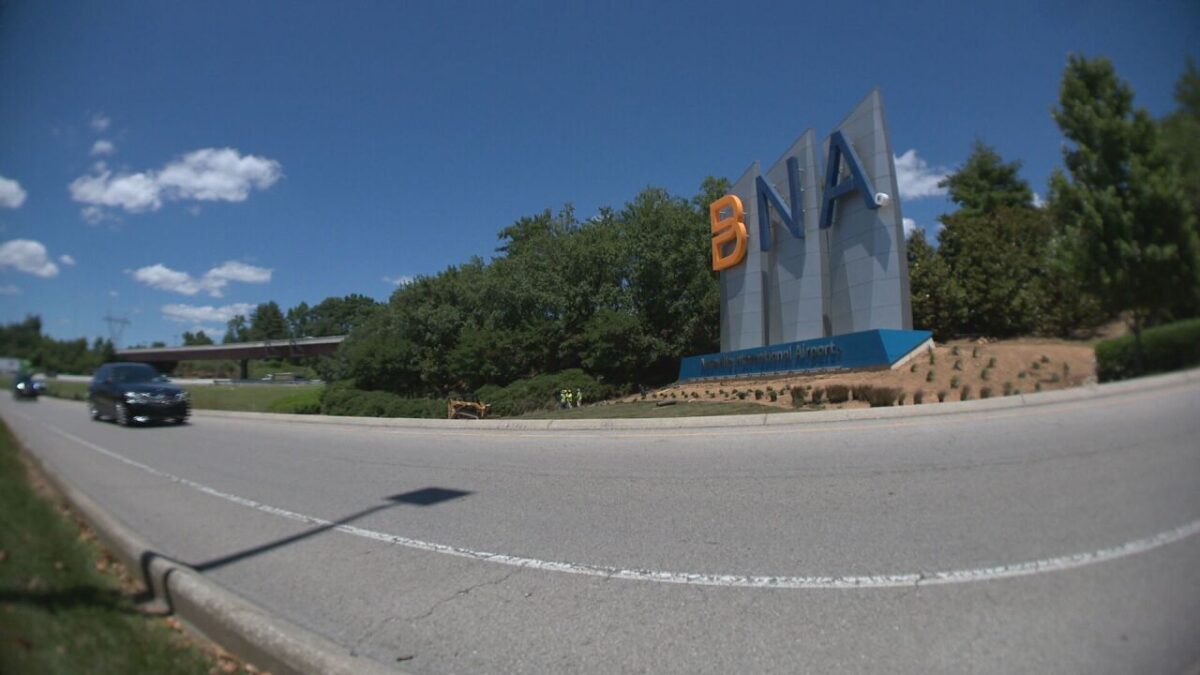
    NASHVILLE, Tennessee (WTVF) — Tennessee Gov. Bill Lee is proposing renaming Nashville International Airport in honor of Dolly Parton, joining a growing push to put the Tennessee icon’s name on BNA.

Lee and Nashville International Airport announced the proposal Friday, but the name change is not yet final. The Metropolitan Nashville Airport Authority’s current naming policy and Lee’s proposal are expected to be discussed at the authority’s Sept. 17 meeting.

The announcement comes as support for renaming the airport has surged following Parton’s death. As of Thursday afternoon, about 140,000 people had signed a Change.org petition calling for the airport to be named after her, including roughly 90,000 signatures added since her death.

The petition was launched in 2025 by Nashville residents who originally hoped to honor Parton while she was still alive.

State Rep. Todd Warner has also said he plans to introduce legislation to rename the airport when lawmakers return to session.

Lee spoke with Parton’s team about his proposal this week. According to the governor’s office, her team expressed appreciation for the outpouring of support and said they are open to continuing the conversation.

“Dolly Parton’s extraordinary life is forever woven into the fabric of our state,” Lee said. “From her rural mountain home in East Tennessee to global stages, Dolly carried the Volunteer Spirit with her.”

The proposal, however, is far from final.

The governor does not have the authority to rename the airport on his own. The decision would likely fall to the airport’s governing board, though there is an ongoing dispute over whether the state-appointed board or Metro Nashville’s board is ultimately in control.

The change could also require action from the Tennessee General Assembly or Metro Council.

The Metropolitan Nashville Airport Authority said Lee’s proposal and its current naming policy will be addressed at its Sept. 17 meeting.

Any name change could also come with a significant price tag. Previous estimates made during an earlier push to rename BNA after President Donald Trump put the cost of replacing airport signs and branding at about $10 million.

Parton was born in Sevier County and became a global music icon while maintaining deep ties to Tennessee. Her legacy also includes decades of philanthropy through efforts including the Dollywood Foundation and Imagination Library.

“BNA® is the front door to Music City, and with that comes a responsibility to reflect the very best of who we are as a community,” said Doug Kreulen, president and CEO of the Metropolitan Nashville Airport Authority.

The airport authority previously said its naming policy, originally adopted in 2010 and updated in 2024, lays out the formal process for naming its buildings, spaces, facilities and streets.

More details about the proposal are expected in the coming weeks.

Please note: This story was provided to CNN Wire by an affiliate and does not contain original CNN reporting. This content carries a strict local market embargo. If you share the same market as the contributor of this article, you may not use it on any platform.

Woman dies after tree falls on camper during severe storms

By Erin Lowrey

Click here for updates on this story

    MARINGOUIN, Louisiana (WDSU) — The Iberville Parish Sheriff’s Office confirmed a death Thursday morning connected to severe weather that moved over the state.

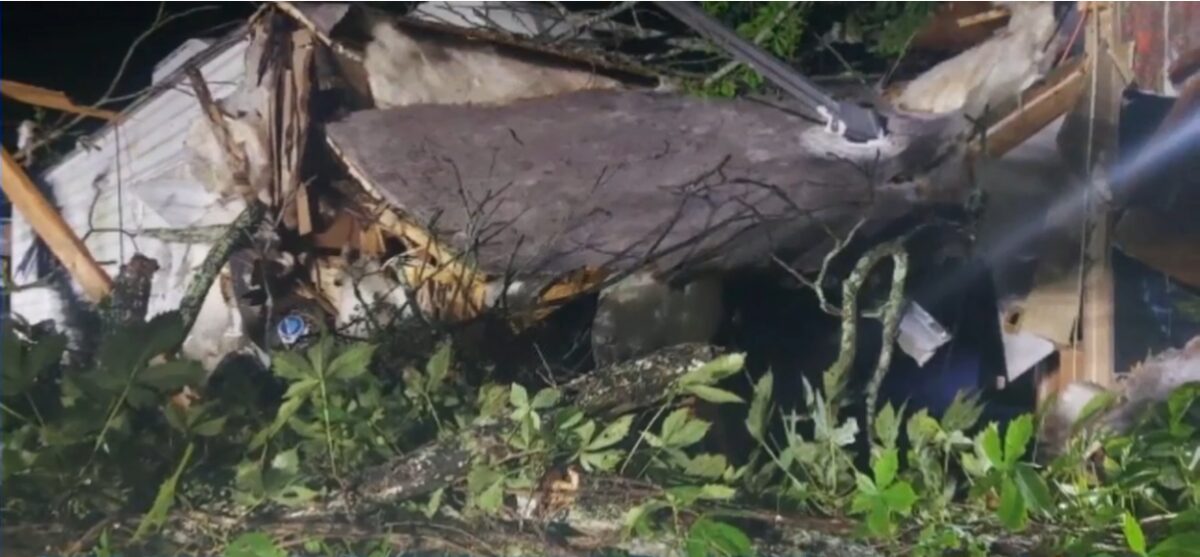
According to the sheriff’s office, around 4:30 a.m., a tree fell on a camper in Maringouin.

A woman, identified as Cindy Perritt, 33, died after the tree fell on the camper on Sparks Lane.

No one else was in the camper at the time of the incident, according to the sheriff’s office.

Please note: This story was provided to CNN Wire by an affiliate and does not contain original CNN reporting. This content carries a strict local market embargo. If you share the same market as the contributor of this article, you may not use it on any platform.

Warsh Says Fed Has Work to Do If Inflation Doesn’t Fall

By Jacqueline Policastro | Quincy News Correspondent

Click here for updates on this story

    Washington (Quincy News) — Federal Reserve Chair Kevin Warsh gave markets his clearest signal yet Friday about what could prompt a rate increase, warning that inflation remains too high and financial conditions show few signs of restraint.

In his first speech as Fed chair at the central bank’s annual economic policy symposium in Jackson Hole, Wyoming, Warsh stopped short of calling for an increase at the Fed’s Sept. 15-16 meeting. But he laid out an inflation test that suggests the Fed may still have work to do.

“We must be confident that underlying inflation is moving to our objective, clearly and at sufficient speed,” Warsh said, adding that otherwise the Fed still has work to do.

Policymakers voted 9-3 in July to leave the federal funds rate target range at 3.5% to 3.75%, where it has been since December.

By Friday afternoon, CME FedWatch put the probability of a quarter-point rate increase in September at nearly 60%, up from about 35% a day earlier. Short-term Treasury yields climbed sharply after the speech, with the two-year note, especially sensitive to Fed policy, reaching its highest level in about a month.

Warsh declined to preview a specific decision, consistent with his push for the Fed to provide less guidance about future policy moves.

He said the economy “appears to have strengthened” and the labor market remains broadly “consistent with full employment,” despite nonfarm payrolls falling by 23,000 in July. He argued that slower job gains are natural when the supply of available workers is barely growing, leaving inflation as the Fed’s predominant focus.

“There should be no misunderstanding,” Warsh said. “The Fed’s price-stability objective of 2 percent, as measured by the personal consumption expenditures (PCE) price index, is a firm, fixed target.”

The PCE price index rose 3.7% from a year earlier in July and at a 4.1% annualized pace over the past six months. Warsh said summer inflation reports had been better than expected but showed little improvement in the underlying trend. He noted that 54% of the 199 categories in the PCE index rose more than 3% over the past year, compared with 32% in the two decades before the pandemic.

Persistent inflation has also prompted some Fed officials to call for higher rates. Cleveland Fed President Beth Hammack, Minneapolis Fed President Neel Kashkari and Dallas Fed President Lorie Logan dissented from the July decision, favoring a quarter-point increase. Minutes from the meeting showed several officials supported an increase, while many saw further tightening as likely if inflation failed to decline.

Warsh backed waiting for more information in July. On Friday, he emphasized that short-term interest rates remain the Fed’s primary tool and placed responsibility for what he called 65 months of elevated inflation on the central bank.

Warsh also said that routine forward guidance, a practice he helped introduce during the 2008 financial crisis, has outlived its usefulness in normal times. Signaling too much, he said, can constrain future policy decisions and create a “hall of mirrors” in which investors follow the Fed while the Fed reads market prices.

That puts greater focus on the data ahead. The August jobs report arrives Sept. 4 and the CPI report follows Sept. 11, giving policymakers two major readings before the Fed’s September meeting.

Please note: This story was provided to CNN Wire by an affiliate and does not contain original CNN reporting. This content carries a strict local market embargo. If you share the same market as the contributor of this article, you may not use it on any platform.