Deshawndre Washington’s agent says he’s ‘stuck in Lebanon’

Max Zepeda

EL PASO, Texas (KVIA) — Former New Mexico State University men’s basketball player Deshawndre Washington delayed his hazing case twice in August. ABC-7 spoke with his agent, Kerry Carter, about his failures to appear in court.

“We tried to bring Deshawndre Washington home Saturday,” said Carter. “They took his passport again. He cannot leave Lebanon because of that warrant. So they took his passport and now he’s stuck.”

That warrant Carter is mentioning a bench warrant that was placed on Washington on August 5 by a Doña Ana County district judge Conrad Perea, following his second missed court appearance.

“When Judge Perea put a warrant out for this, he don’t know what he caused,” Carter argued. “He’s in a foreign country. When you’re in a foreign country like that, they take your passport. You can’t go through a commercial airport without a passport. So now he’s stuck in Lebanon.”

Washington’s accused of 15 felonies tied to an alleged hazing scandal that happened during the 2022-23 basketball season at NMSU.

Earlier this month, Washington delayed his trial by failing to appear in court on Aug. 3 and 5. On Aug. 3, he was later seen playing in a basketball tournament in Lebanon.

His agency and father told ABC-7 that Washington tried to return to Las Cruces for his case, but was held up by military conflict in the Middle East.

The New Mexico Department of Justice recently filed a motion requesting depositions for two other former players, Kim Aiken Jr. and Doctor Bradley. NMDOJ argued that Washington’s absence prevented them from testifying on Aug. 3.

Nearly three weeks after those missed court dates, Washington’s agent, Kerry Carter, arrived in the Borderland from his hometown of Houston to meet with local and national media to discuss his whereabouts.

View this post on Instagram

A post shared by The Crew Athlete Management (@thecrew_am)

Click here to follow the original article.

Oregon highlights paid family leave options for new parents this month

Adrielle Hasara

Bend, ORE. (KTVZ) — Paid Leave Oregon is highlighting paid family leave benefits available to new parents during National Breastfeeding Month this August. Eligible employees in Oregon can receive up to 12 weeks of paid family leave to bond with a child following birth, adoption or foster placement.

The program provides paid time away from work for parents to recover from childbirth, establish feeding routines and adjust to caring for a new child. A parent who is pregnant or has given birth may also qualify for up to two additional weeks of medical leave for limitations related to pregnancy or childbirth.

Leave can be taken in flexible increments, including a full week, several days or a single day at a time during the first year after a child’s arrival. Andrew R. Stolfi, director of the Oregon Employment Department, highlighted the program’s role in helping families maintain financial stability. “Parents should not have to choose between their family’s economic security and the time they need to recover, bond with and care for a new baby,” Stolfi said. “Paid Leave Oregon gives families more choices during a major life transition. It helps families make decisions about care and feeding not how quickly someone can afford to return to work.”

Bonding leave is also available to spouses, partners and other parents to share household duties, care for older children and assist a recovering parent. Juan Serratos, director of Paid Leave Oregon, outlined how paid leave helps families navigate child care decisions. “Paid Leave gives families time to recover, learn and make child care decisions based on what works for them, rather than having the immediate need for a paycheck make the decision for them,” Serratos said. “Welcoming a child affects the whole family and caring for one another is part of that transition. Paid Leave gives more parents the opportunity to be present, divide responsibilities and build the routines that will support their family after they return to work.”

In addition to paid leave, Oregon workplace laws provide continued support when employees return to work. Employers generally must provide reasonable rest periods for workers to express milk as needed until their child reaches 18 months old. Employers are also required to make reasonable efforts to provide a private location, other than a public restroom or toilet stall, where employees can express milk without being seen or interrupted.

Paid Leave Oregon covers additional qualifying events beyond welcoming a child, including recovery from a serious health condition, caring for a family member with a serious health condition or addressing issues related to domestic violence, sexual assault, stalking or harassment. The Oregon Employment Department offers free assistance for applicants, including language interpreters and accessible formats.

Click here to follow the original article.

Inside Palm Springs’ real-time intelligence center: police answer questions over cameras, privacy

Raymond Kalra

PALM SPRINGS, Calif. (KESQ) — As questions surrounding police surveillance technology and license plate reader cameras continue nationwide, the Palm Springs Police Department is opening its Real Time Intelligence Center to the public and creating a new committee that will give community members a role in reviewing how the technology is used.

Dozens of residents toured the center Thursday, getting a firsthand look at how officers use technology including Flock license plate reader cameras and drones during investigations.

The tour came as some residents continue to raise questions about privacy, how information is stored and who may ultimately have access to data collected by the department.

Palm Springs resident Brian Burch came to the tour looking for answers about what happens to information after an investigation ends.

“I think the biggest question for me is the data,” Burch said. “What happens after something is complete? What do they do?”

Burch said he sees the potential benefits of the technology but worries about how information collected for legitimate police work could potentially be used beyond its original purpose.

“I don’t like the feeling that I’m being compiled into a file of sorts,” Burch said.

What police say officers can and cannot do

During Thursday’s tour, Palm Springs police walked residents through a mock investigation, showing them how officers access the technology and what must happen before a search is conducted.

Lt. Mike Torres with the Palm Springs Police Department told News Channel 3 one of the biggest misconceptions surrounding the Real Time Intelligence Center is that officers are continuously monitoring people without cause.

Torres said officers must have reasonable suspicion before searching for a license plate in the system. Searches must also be associated with a case number and officers must provide a reason for conducting them.

“Everything we do, our officers need to have reasonable suspicion to be searching for any kind of license plate in our system,” Torres said. “Everything the officers do have to be attached to a certain case number, have to give a reason for doing so.”

Torres said searches are tagged, tracked and monitored. The department also conducts monthly audits of the system.

PSPD developed its policies after examining how other law enforcement agencies across California operate similar technology, according to Torres. He said the department intentionally developed strict policies because it understood the concerns the technology could create within the community.

The department is now considering making those policies even stricter.

Residents question where information could go

For Burch, seeing how Palm Springs police use the technology only addresses part of his concern.

He said he sees value in the technology itself, but questions whether information could eventually make its way outside the department or be used for purposes unrelated to the reason it was initially collected.

“I think the technology is brilliant,” Burch said. “It’s the jurisdictional application that’s the scary one. Is the information going to ICE? Is the information going to stuff that has nothing to do with the traffic ticket?”

Danny Hysell, another resident attending the tour said he had fewer concerns about the technology and viewed it as another resource available to officers.

“I think it’s smart to have anything that can help these guys take care of their business easier,” Hysell said.

Others came simply hoping to better understand what police are capable of doing with the technology and what limits are placed on its use.

PSPD creates new Community Technology Oversight Committee

As the department works to address those concerns, News Channel 3 learned Thursday that PSPD has created a new Community Technology Oversight Committee.

Torres said the committee was finalized Wednesday.

The department plans to bring community members from different demographics into its oversight process, including allowing committee members to participate in the monthly audits PSPD conducts of its technology systems.

Torres said the goal is to allow members to see the process from beginning to end, understand why officers are using the technology and provide feedback on the department’s policies.

PSPD is not limiting participation to people who already support the technology.

In fact, Torres said he specifically wants critics involved.

“I was looking for people that were actually somewhat against the whole process because I want the pushback,” Torres said.

He said hearing from people who approach the technology from a different perspective could help the department identify issues officers themselves may not recognize.

“If they give us the perspective that we don’t understand, or maybe we’re not seeing it from a certain angle, we want them to be involved to help us better our policies and make us the best version of ourselves with their help,” Torres said.

The department has not yet announced when the committee will hold its first meeting. News Channel 3 will provide that information when it becomes available.

How long should Flock data be kept?

Another issue PSPD is now examining is how long information collected through its license plate reader system should remain available.

Palm Springs police currently says its Flock data is deleted after 30 days.

Torres told News Channel 3 the department is reviewing whether that should change as Flock moves toward a new seven-day default retention period.

“We’re looking into it now,” Torres said.

He said one issue investigators are considering is that some crimes are not reported immediately. A shorter retention period could mean information investigators need is no longer available by the time police learn about a crime.

“We have to be real careful and utilize this data to the best of our ability,” Torres said. “We’re actually open to all things right now, and we’re just talking and deliberating as a team and figure out what makes the most sense for not only the police department, but more importantly, the community.”

55 license plate readers across Palm Springs

Torres also provided more information Thursday about the scope of the license plate reader network in Palm Springs.

He said PSPD currently has 55 license plate reader cameras across the city. According to Torres, those cameras are strategically positioned based on data and where the department believes they can best support its resources.

Torres pushed back on the idea that the cameras amount to constant surveillance throughout Palm Springs, saying the number of cameras is relatively small compared with the size of the city.

For PSPD, Thursday’s tours were an opportunity to show residents what happens behind the screens rather than simply asking the public to trust the department’s description of the technology.

For residents like Burch, the technology itself may not be the central issue. The larger question is how it is governed, who has access to the information it produces and what safeguards remain in place as law enforcement technology continues to evolve.

The newly created Community Technology Oversight Committee will now give some Palm Springs residents a direct role in asking those questions from inside the oversight process.

News Channel 3 will continue following the committee’s development and will update this story when information about its first meeting and membership becomes available.

Click here to follow the original article.

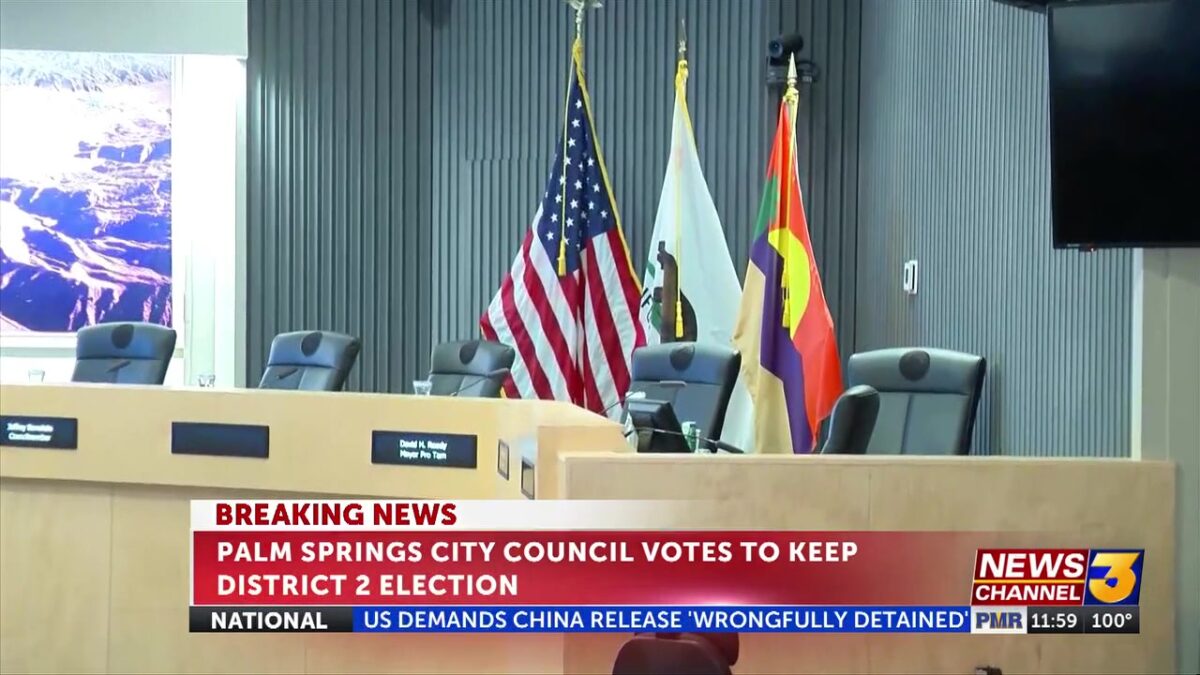
Palm Springs city council votes to keep District 2 election on Nov. 3

Tommy Gallegos

PALM SPRINGS, CA (KESQ) The Palm Springs City Council voted 3-1 at a special meeting Thursday to move forward with the Nov. 3 general municipal election for the District 2 seat, rejecting a proposal to appoint Councilmember Jeffrey Bernstein and cancel the election.

Mayor Naomi Soto cast the lone dissenting vote. Bernstein, who was the only candidate officially nominated for the seat when the nomination period ended Aug. 7, abstained from the vote.

Under the council’s decision, the District 2 election will proceed as scheduled. The write-in nomination period for the seat will run from Sept. 7 through Oct. 20.

Write-in candidates, like Palm Springs resident Tad Iwan, say they want to challenge Bernstein and were concerned that his appointment would have closed the door on that opportunity.

Bernstein has served on the City Council since November 2022 and previously served a one-year term as mayor. He is the founder and managing partner of Destination PSP, a retail business in downtown Palm Springs.

Before joining the council, Bernstein served as an elected member of the board of directors of the Palm Springs Hospitality Association, a member of the board of directors of Main Street Palm Springs and a member of the Bureau of the Tourism Strategic Advisory Committee, according to the city.

The council had been considering whether to appoint Bernstein because he was the sole candidate for the District 2 seat. If the council had approved the appointment, the November election would have been canceled and Bernstein would have begun his four-year term following the Nov. 3 election.

According to a staff report, proceeding with the District 2 election is expected to cost approximately $22,000.

Click here to follow the original article.

Micron announces plan to invest $10 billion for new research lab in Boise

Curtis Jackson

BOISE, Idaho (KIFI) — Micron Technology announced on Thursday it plans to invest $10 billion over the next decade to design and create a research lab in Boise.

Micron said in a news release, the Micron Research Lab will bring together researchers from industry, universities, and government and the broader semiconductor ecosystem to tackle some of the most challenging technology questions facing the AI era.

“The decisions we make today will determine who leads the AI economy of tomorrow, and America’s AI future will be built on American-made memory,” said Sanjay Mehrotra, Micron’s chairman, president and CEO.

Micron describes the lab as the first dedicated memory research hub of its kind in the United States.

Micron said the lab will focus on foundational research rather than near-term product development.

The institution is expected to examine technologies more than 10 years into the future while also helping train the next generation of memory researchers and technology leaders.

Micron believes advances in memory technology can make AI systems more powerful, scalable and sustainable, while expanding access to intelligent technologies across industries such as agriculture, healthcare and education.

Micron expects to break ground in 2027 on a state-of-the-art facility in Boise near it’s current campus.

Micron said the planned campus is expected to accommodate hundreds of researchers and serve as a gathering place for research conferences, workshops and innovation forums.

Click here to follow the original article.

Missouri school districts to get ‘first look’ at new A-F grading system this fall

Ellyse Edwards

COLUMBIA, Mo. (KMIZ)

Data from the 2024-25 school year will be used to give school districts a “first look” at a new A-F grading system for districts this fall.

The Missouri State Board of Education reviewed an updated proposal Tuesday that would assign A-F grades to public schools and school districts. The board also learned that the initial grades won’t include literacy scores, but those will be included in the full report card districts will receive in fall 2027.

The Missouri Department of Elementary and Secondary Education presented the framework as part of an executive order signed by Gov. Mike Kehoe. Kehoe signed the order in January, directing the department and State Board of Education to develop a simpler way for families to understand school performance.

The board did not vote on the proposal Tuesday. The department’s presentation says the framework is scheduled to return to the board as an action item in September.

The latest proposal includes a revised formula for high schools. Academic achievement and student growth would each account for 29% of a high school’s grade. The state’s Success-Ready Graduate measure and four-year graduation rate would each account for 21%.

The framework submitted to the governor in June had divided those categories differently, assigning 28% each to academic achievement and growth and 22% each to the Success-Ready Graduate measure and graduation rate.

For elementary and middle schools, academic achievement would account for 38% of the grade, value-added growth for 33%, and growth toward proficiency for 29%.

Growth toward proficiency would measure whether a student who is not proficient is on track to reach grade-level proficiency within three years.

Under the proposed scale, schools and districts scoring 89% or higher would receive an A. Scores between 76-88% would receive a B, while scores between 63-75% would receive a C. Scores between 50-62% would receive a D, and scores below 50% would receive an F.

The latest presentation also outlines a revised rollout schedule. The department anticipates releasing a “first look” in fall 2026 using data from the 2024-25 school year. That version would not include the proposed literacy measure.

A draft using data from the 2025-26 school year is anticipated sometime in 2027, although the presentation does not give a specific date. The department expects grade cards using all elements of the framework to be released in fall 2027 using data from the 2026-27 school year.

The executive order calls for schools and districts to receive their grade cards by Sept. 15 each year and publish them by Sept. 30. It also requires schools to test at least 95% of their students on state assessments. A school that does not meet that threshold would have its rating lowered by one letter grade.

The department said funding, staffing and collaboration among state agencies and school districts will be necessary to produce the grade cards and support school improvement efforts.

The Missouri State Teachers Association opposes the proposed system. Matthew Michelson, the association’s education policy director, said educators are concerned the grades could place more pressure on schools to focus on state testing.

“We are going to have an issue where teachers are teaching to the test, because the test is the only thing that matters,” Michelson said. “And the single test is going to determine whether or not students are going to be in an A school or an F school. And then all of the things, the stigma, the accountability, the buy in from the community that go along with that.”

The Missouri School Boards’ Association supports accountability and transparency but is concerned families could view a letter grade without considering other information about a school.

“I think it’s important to recognize that one letter cannot tell the full story of a school or the education an individual child is receiving,” Executive Director Melissa Randol said. “So it is just one piece of information alongside a lot of other pieces of data and a lot, you know, the experiences and opportunities that are provided by school to our students and to our families and communities.”

If your existing story does not already explain the system, add this below the interview reaction:

The proposed system would give each public school, public charter school and district an overall grade based on a 100-point scale. A score of 89% or higher would receive an A, while a score below 50% would receive an F.

Elementary and middle school grades would be based on academic achievement, student growth and whether students are on track to reach grade-level proficiency. High-school grades would also consider the state’s Success-Ready Graduate measure and four-year graduation rate.

A school that tests fewer than 95% of its students on required state assessments would have its rating lowered by one letter grade.

The department’s presentation also identifies several decisions that still need to be made, including whether every school should receive a grade, whether already-proficient students should be included in the growth-to-proficiency measure and whether the formula should account for demographic characteristics.

Click here to follow the original article.

Somerton PD investigates shooting on State Avenue

Skylar Heisey

SOMERTON, Ariz. (KYMA) – The Somerton Police Department (SPD) responded to reports of shots fired Wednesday morning.

In a post to Facebook, the shooting happened in the area of State Avenue and Washington Street at 10 a.m.

Reports said a man was seen running in the area, but were unable to share more information on his description.

SPD said more officers arrived and contacted people nearby if they knew anything about the shooting, but said no one heard anything.

Officers were unable to find any evidence related to the shooting in the area, but the investigation is ongoing.

If anyone has any information regarding the case, call SPD at 928-722-7411.

Click here to follow the original article.

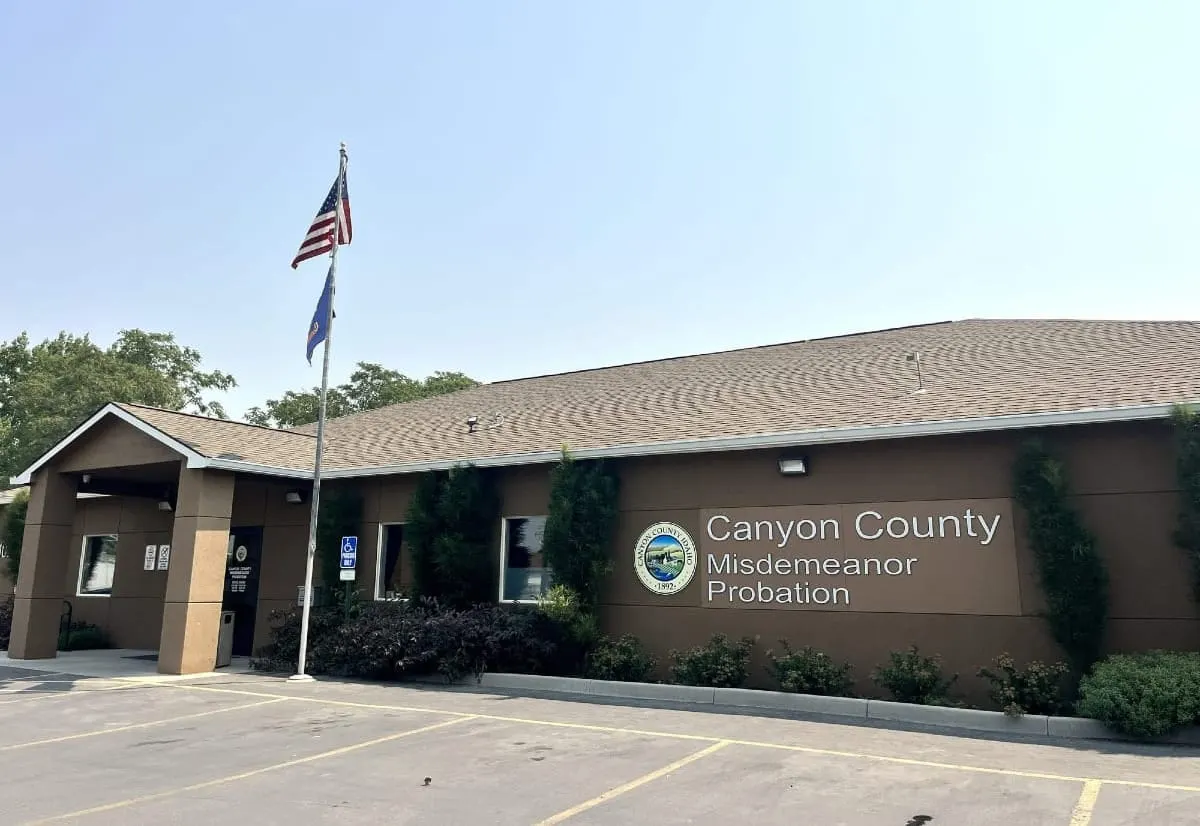
Idaho county’s probation office compiles ‘foreign born list’ for ICE

InvestigateWest

By Rachel Spacek / InvestigateWest 

In May, a southwestern Idaho probation officer emailed immigration authorities about a man she would meet the next day for his regular check-in. 

“His meeting has not changed and he is expected to be here tomorrow morning at

7:30 am,” Norma Naranjo, a senior probation officer for Canyon County’s misdemeanor probation department, wrote in a May 13 email to six Immigration and Customs Enforcement agents. 

The following day, the man arrived a few minutes early to his appointment, and Naranjo sent another email to the agents. 

“He is here are you guys on your way?” she wrote. 

It is unclear from the emails, which are heavily redacted, if ICE agents detained the man at his probation appointment. 

Naranjo’s messages are among over 140 emails between Canyon County probation officers and ICE agents, obtained by InvestigateWest, from May to July 2026. They show how the probation department has recently coordinated with ICE’s Boise office, including by combing through its case files to compile a list for ICE of foreign-born people on probation, apparently without validating that those people are in the country illegally. People born outside the U.S. include individuals with green cards or pending asylum applications and naturalized U.S. citizens.  

While Idaho law enforcement agencies have long worked with federal immigration agents to detain undocumented immigrants who are in jail or serving their sentence on probation, immigration attorneys and advocates are concerned that Canyon County’s “foreign born list” could lead to probationers with legal status getting detained, at a time when ICE agents have arrested U.S. citizens, people with pending green card applications and people with pending asylum claims.

Jeff Breach, the director of the county’s Misdemeanor Probation Department, declined to be interviewed for this story. In an email response to a list of questions, he said the list includes “individuals whose place of birth is a foreign country — and can also include individuals that have been previously flagged with an immigration hold.” 

“Verifying and determining legal presence/status, along with any related enforcement, is within the purview of federal authorities,” Breach added.

ICE has requested a list of people that could be in the country without authorization “typically on an annual basis and across administrations,” Breach said. Steve Cushman, director of constituent services for Canyon County, said he didn’t know exactly when “those lists were first requested and provided, but it is my understanding that it goes back as far as the Obama administration.” 

Breach said the probation department, which supervises misdemeanor offenders within the county, cooperates with ICE the same as it would any local or state law enforcement agency, by providing them “information to carry out their lawful duties.” 

The county has faced criticism before for its efforts to help ICE detain people. In 2019, the Idaho Press, a local newspaper that covers the Boise area, reported the Canyon County Sheriff’s Office had a policy where staff were instructed to notify immigration officials of “all foreign born inmates” who were booked into the jail. Some of the people they flagged were U.S. citizens, according to the Idaho Press. The sheriff’s office is also facing a lawsuit from the ACLU of Idaho alleging the county and other agencies that participated in an October 2025 ICE raid racially profiled Latinos at a horse race track for immigration enforcement when they detained them, regardless of their immigration status.

Nikki Ramirez-Smith, an immigration attorney with Ramirez-Smith Law in Nampa, Idaho, said  the county’s decision to compile and send ICE a list of foreign-born people on probation is “an invasion of privacy.” 

“It’s one thing to know that someone is undocumented, it’s another thing to just start targeting every single person who was born in another country,” she said. 

The “foreign born list” 

On June 3, Naranjo emailed five ICE officers that she would speak to Breach about “the foreign born list.” 

“We are working on a procedure to keep a list current for your agency,” Naranjo wrote. “I will get back to you on this as soon as we figure something out.”

Two days later, Breach sent an email to his staff: 

“ICE has requested a list of offenders who are in the country illegally,” he wrote. “I need you to go through your caseload this month and send me a list of names of offenders who you

believe are in the country illegally. I’ll review the names and put together a list that

can be sent to ICE so that they can look into if the person is in the country illegally

and if they want to take any action.” 

Although most of the over 400 pages of emails obtained by InvestigateWest from May 1 to July 10 are heavily redacted — emails from immigration authorities appear to be redacted entirely — they show how probation officers used information in their case files to compile the list. 

“That’s everyone in my cabinet that filled out [an] intake form and stated not born in US,” wrote Brandon Black, a Canyon County probation officer, in an email back to Breach on June 8. 

Another officer, Justin Donovan, told Breach that he only identified one person under his supervision who “may be here illegally.” That man “only had an ID from Mexico during his last arrest,” Donovan said. 

Naranjo, Black and Donovan did not immediately respond to requests for comment. 

Canyon County released to InvestigateWest a redacted version of the list, which contains information for 82 people on probation in Canyon County. It identifies the charges that people were placed on probation for, but blacks out names, addresses and dates of birth. Over half, or 54%, of the people on the list were on probation because of driving under the influence. Five people were on probation for drug-related crimes and nine people for disturbing the peace. Only seven people were identified as having an ICE hold, meaning ICE had already identified them for potential deportation. 

Between May and July, the emails show probation officers were regularly notifying ICE agents about the dates and times that certain probationers would be at their office. In some instances, probation officers asked ICE if a person who had missed check-ins was in their custody. On two occasions, officers emailed agents right before and during the appointments to verify they were coming to apprehend a probationer. One probation officer also gave ICE agents the home address and make, model and license plate of a probationer’s car. 

Breach estimated that in the last three months, ICE agents have “been present” at one or two probation appointments per month.

“All the law enforcement agencies we work with prefer to meet with offenders up in the office due to it being a controlled environment, which means it is safer for the offender, the officer, and the public,” he wrote. “There is an expectation from law enforcement agencies and the public that probation officers work cooperatively with law enforcement to ensure the safety of all parties involved.”

Asked whether the department is concerned that citizens or others with legal status might be included in the list, Breach referred to a previous statement that verifying a person’s status “is within the purview of federal authorities.”

Alycia Moss, an immigration attorney with Fennemore Law in Coeur d’Alene, said ICE agents should know if someone on the list is deportable or not, but she is still concerned they could mistarget someone on the probation department’s list. 

“ICE may still target someone if they think the conviction is a deportable or removal offense even if they [have legal] status,” she said. “Sometimes, ICE doesn’t get that right.” 

In Oregon, ICE agents arrested Juanita Avila, a 47-year-old legal permanent resident, last November. Last July, ICE agents also arrested and detained Mahdi Khanbabazadeh, a 38-year-old father who was married to a U.S. citizen and had a pending green card application, while he was dropping his child off at preschool in the Portland area. 

The U.S. Department of Homeland Security recently formed a new unit dedicated to reexamining immigrants who have green cards, according to the New York Times.

Ramirez-Smith, whose law firm is located in Nampa, Canyon County’s largest city, wasn’t surprised by how closely the Canyon County probation department was working with ICE. In previous years, Ramirez-Smith said she could often negotiate and get her client out of detention. But now ICE is quickly moving detainees out of state, leaving her little time to get clients out of detention. 

“I’m getting a lot of people picked up from probation to the point now where if they have probation, I just prepare a habeas [petition] just to get ready,” Ramirez-Smith said, referring to the process to challenge the legality of someone’s detention.

Canyon County has been a recent target for immigration authorities 

Canyon County is Idaho’s second-largest county by population, where Latinos make up about 27%. The county is an agricultural hub and one of the top five seed-producing regions in the world. Farms there rely heavily on an immigrant workforce. 

The county was also the location of a high-profile immigration raid in Wilder last October, where over 100 people were detained at a horse racetrack, a popular gathering spot for Latino families in the area. According to witnesses of the raid, local police and Canyon County sheriff’s deputies assisted ICE agents by zip-tying children and detaining people without asking about their immigration status. 

The raid shocked the community, leading to low attendance at the Wilder School District the day after the raid, according to reporting from the Idaho Statesman. The ACLU of Idaho also filed a lawsuit on behalf of three Latino families and their children, who are  U.S. citizens and legal permanent residents, who were detained for four hours, alleging federal and local law enforcement racially profiled them during the operation. 

Beyond the raid, Canyon County law enforcement has for years helped ICE by agreeing to hold people in jail for up to 48 hours past their release date. In 2019, the Idaho Press reported that Canyon County jail staff emailed ICE agents when they had booked someone into jail who they suspected was undocumented — in several cases flagging people who were U.S. citizens and holding them after they had posted bond. If inmates served jail time and posted bond, staff were instructed to contact immigration officials, the newspaper reported. 

That year, Canyon County faced three lawsuits from people who alleged they were illegally held in jail, despite posting bond, because the county refused to release them due to their undocumented immigration status. The county settled with at least one man for $13,000.

In an email, Breach said the probation department does not have a written policy addressing how to interact with ICE, but instead follows a “long-standing practice” of cooperating with federal law enforcement agencies. He said the department has worked with immigration authorities since at least 2008.

ICE has relied on county and state probation departments across the country to coordinate arrests of undocumented people, according to the Immigrant Legal Resource Center. Many states have passed laws barring this type of cooperation between probation departments and ICE, including Colorado and New Mexico, after probation departments were found to be flagging ICE agents about the appointment times for undocumented people.

Idaho Gov. Brad Little encouraged state and local law enforcement to cooperate with federal immigration agents in an executive order last year. Eleven Idaho law enforcement agencies have signed up to participate in a program to help with immigration enforcement, known as the 287(g) program, with some agencies receiving tens of thousands of dollars in incentive payments for their cooperation. 

In neighboring Washington and Oregon, immigration lawyers say the level of coordination happening in Canyon County would never fly, because of the states’ sanctuary laws barring local and state law enforcement from working with federal immigration agents to detain and deport people. 

“In Washington, this would never be allowed because the state has protections in place to prevent this kind of information sharing,” Aaron Korthuis, an attorney with the

Northwest Immigrant Rights Project, said in an email. “In Idaho, it’s permitted (and likely even encouraged). I think it is simply another tactic ICE has developed to identify easy and low-risk environments for the agency to detain people.”

InvestigateWest (investigatewest.org) is an independent news nonprofit dedicated to investigative journalism in the Pacific Northwest. Contact reporter Rachel Spacek, a Report for America corps member, at rachel@investigatewest.org.

Click here to follow the original article.

Ghost Listing: NMSU student loses months of savings to fake apartment listing

Mia Tricarico

LAS CRUCES, N.M. (KVIA) — With college classes returning this fall, some students scramble to secure an apartment. For one New Mexico State University nursing student, apartment hunting became a financial nightmare.

Marie’s parents and friends pressured her to find an apartment before they all filled up. As a first step, she searched “apartments near me.” Her mom helped her finance and sign off on an apartment.

Through common rental platforms like Zillow and Apartments.com, Marie eventually found a one-bedroom apartment. She said it was affordable and included all utilities except electricity.

Together, Marie and her mother co-signed the lease, sent $1,800 in rent and deposit payments and started ordering furniture for her new space.

“It all felt super real. We were about to order a bed and get it delivered here the day we were moving in. I had couches ready too,” Marie said.

Instead, Marie and her mother fell victim to a rental scam known as a “ghost listing.”

Marie’s mother told ABC-7 the scammer used the old landlord’s name and information on the application. You can see the original leasing documents sent to Marie below.

FRAUDULENT APPLICATIONDownload

What’s a ‘ghost listing?’

A ghost listing appears when scammers take legitimate information and pictures from real estate listings and clone them onto rental websites, social media or classified sites.

Scammers pose as property managers, landlords or out-of-town owners.

Since they don’t actually own the property, the listing is a “ghost.” It exists on line, but the rental opportunity is fake.

Scammers often create fake digital applications, lease agreements and payment portals. Their goal is to create a sense of urgency to send deposit money or the first month’s rent before they have a chance to step inside the unit.

The scam is common in college towns with a high demand for housing.

Marie saw the first red flag right before her move-in date. The person posing as her landlord suddenly demanded hundreds of dollars for a “key fee.”

Looking back, Marie said there were other red flags.

“They would call off different numbers from different area codes like New Jersey,” she said. “Some even said, ‘Scam Likely.'”

Marie said she sent the money electronically to the phone number on the lease.

During one of the calls from a New Jersey number, the caller aggressively addressed Marie about a payment, she said.

“She was all like, ‘You sent the money to someone else. Well, we can’t refund it. I don’t know why you did that,’” Marie said. “As soon as she said that, we knew. Usually when you are renting an apartment, they aren’t going to yell at you.”

Marie and her mother drove from Albuquerque to Las Cruces to see the unit. That’s when a maintenance worker explained the issue.

He told Marie and her mother that current tenants frequently complain to the landlord about people showing up.

The property’s actual owner confirmed he knew about scammers using the property’s details online. He expressed frustration over how difficult it is to stop them.

ABC-7 requested an interview with the landlord, but he declined.

“The only thing I know is secondhand. The people that you talk to are the firsthand victims,” the landlord told ABC-7. “This has happened several times. People show up to move in, and obviously someone is living there.”

The realization hit hard. Marie’s first thought went straight to her hard-earned money.

“I was like, ‘This cannot be real,’” Marie said. “I saved up all that rent for months.”

Marie said she used Apartments.com to communicate with the individual.

ABC-7 reached out to the platform for an interview. It provided the following statement:

“We are aware that scammers may target renters, including students and first-time renters, and common warning signs can include requests for money before a tour, communication outside of official channels, or individuals falsely claiming to represent a property.”

The company said that while it monitors its marketplace and uses fraud detection, scammers continually find ways to bypass security protocols.

Law enforcement said dealing with crimes like ghost listings can be challenging.

“These financial crimes are very difficult to track down,” said Las Cruces Police Department spokesman Dan Trujillo.

He said the department received reports of similar rental scams over the years.

Trujillo said victims of rental fraud should not hesitate to report the incident, regardless of how embarrassed they might feel.

“The biggest thing is don’t be ashamed, just file the report,” Trujillo said. “File all the info: text messages, contracts, any phone numbers you may have; provide it all to police.”

While Marie is working to recover from the loss, she hopes sharing her story serves as a warning to protect other students from falling into the same trap.

“I hope they know what they are doing is wrong and how many people they are hurting,” Marie said. “I’m lucky, but a lot of people can’t bounce back.”

Marie’s mother told ABC-7 that she works three jobs to support Marie’s education

“They’re targeting hardworking people, not the rich and famous,” she said.

Watch “Ghost Listing” Thursday on ABC-7 at 6.

Click here to follow the original article.

Former Bishop Miege president deemed ‘unsuitable’ for church employment after investigation

By Chloe Godding

Click here for updates on this story

    ROELAND PARK, Kansas (KMBC) — The former president of Bishop Miege High School, who has been at the center of an investigation for more than a year, has been deemed “unsuitable for ecclesiastical employment” by the Archdiocese of Kansas City in Kansas.

Following an independent investigation, Archbishop Shawn McKnight announced Thursday that Phil Baniewicz, the former leader of the Catholic high school, is not suitable for ecclesiastical employment, appointment, volunteer service or ministry involving minors within the Archdiocese of Kansas City in Kansas.

“The protection of minors and persons in vulnerable situations is fundamental to the mission of our church,” McKnight said in a news release. “As believers and followers of Jesus Christ, we have a sacred responsibility to safeguard the innate human dignity of every person and to hold one another, especially those who exercise authority and power in the Church, to the high moral standards of our faith.”

Baniewicz was placed on administrative leave from his role at Bishop Miege in June 2025 and officially let go a few months later.

He was restricted from all ministry shortly after being placed on administrative leave due to allegations of inappropriate behavior with a minor, the archdiocese said at the time.

The archdiocese conducted an independent investigation into Baniewicz’s conduct, examining 16 allegations spanning from 1985 to 2025. Over the course of those decades, he worked as a youth minister in Arizona, a senior officer of Life Teen, president of Maur Hill Mount Academy and president of Bishop Miege.

During the investigation, 68 people were interviewed, reports were analyzed and authorities were consulted. Most of the people interviewed were not evidently connected but had “a substantial consistency” in their accounts of Baniewicz’s conduct.

“The investigation disclosed serious concerns regarding Mr. Baniewicz’s conduct and determined a consistent pattern of imprudent professional conduct, repeated failures to maintain appropriate ministerial and professional boundaries with minors, deficient safeguarding practices and conduct incompatible with the standards expected of those entrusted with ecclesiastical service involving children and vulnerable people,” the news release said.

Because of that pattern, the archdiocese decided action needed to be taken, leading to the ministerial restrictions imposed upon him.

Baniewicz was interviewed and submitted a written statement during the investigation, the archdiocese said. What he said or wrote was not disclosed.

The archdiocese said Baniewicz’s current safety plan will remain in place, which in June 2025 was described as his agreement not to contact anyone “known to have made an accusation of abuse or misconduct against him, or who may be a witness known to him.”

No criminal charges have been filed.

The archdiocese advises anyone who would like to report misconduct involving a church volunteer, employee, or religious or clergy member to first contact authorities and then call or text the archdiocese’s confidential line at 913-276-8703 or report it online.

Please note: This story was provided to CNN Wire by an affiliate and does not contain original CNN reporting. This content carries a strict local market embargo. If you share the same market as the contributor of this article, you may not use it on any platform.