SBPAL Marks 26 Years of Helping Low-Income Families Afford Summer Camp

Patricia Martellotti

SANTA BARBARA, Calif. (KEYT) — Summer camp can bring new experiences, new friendships and a chance to learn outside the classroom, but the cost can put it out of reach for some families.

SBPAL has spent 26 years helping low-income families in Santa Barbara bridge that gap through summer camp scholarships.

The program works with community partners to give local children access to camps their families may not be able to afford on their own.

As another summer wraps up, SBPAL is bringing those partners together to recognize their work and look toward continuing the scholarship effort.

MOXI, The Wolf Museum of Exploration + Innovation, is being honored as SBPAL’s Agency of the Year for its role in giving local children hands-on summer experiences.

For families watching their budgets, the scholarships can make camp an option without adding another major expense.

The partnerships also determine the range of opportunities available to children each summer, from recreation to educational programs.

After 26 years, SBPAL is looking toward another summer of connecting Santa Barbara kids with camps across the community.

The Latest Breaking News, Weather Alerts, Sports and More Anytime On Our Mobile Apps. Keep Up With the Latest Articles by Signing Up for the News Channel 3-12 Newsletter.

Click here to follow the original article.

Back-to-School Costs Put Pressure on Santa Barbara Families

Patricia Martellotti

SANTA BARBARA, Calif. (KEYT) — As students head back to class, the cost of backpacks, notebooks and other school supplies can quickly add up for families.

More than 250 Housing Authority of the City of Santa Barbara families received some help through the 14th annual Tools for School event.

Students from kindergarten through 12th grade picked up free backpacks and school supplies at Presidio Springs. Families also had a chance to connect with local organizations offering education, health and youth services throughout the year.

“Every child deserves to walk into the first day of school feeling prepared, confident and ready to succeed,” HACSB Executive Director and CEO Rob Fredericks said.

The annual effort is designed to take some of the financial pressure off families as a new school year begins.

“For families facing financial challenges, the cost of getting ready for a new school year can add up quickly,” Fredericks said. “Tools for School helps ease that burden while connecting families with the people and resources in our community who are here to support them.”

Santa Barbara Unified School District, Santa Barbara Public Library, Santa Barbara City College, YouthWell, the Mental Wellness Center and several other community organizations took part.

Farmers & Merchants Bank provided financial support, while staff members volunteered their time.

The backpacks may help students through the first weeks of class, while the connections made through Tools for School can give families resources to turn to throughout the year.

The Latest Breaking News, Weather Alerts, Sports and More Anytime On Our Mobile Apps. Keep Up With the Latest Articles by Signing Up for the News Channel 3-12 Newsletter.

Click here to follow the original article.

SEE International Brings “Eyes Of Hope” To Santa Maria For National Eye Exam Month

Jarrod Zinn

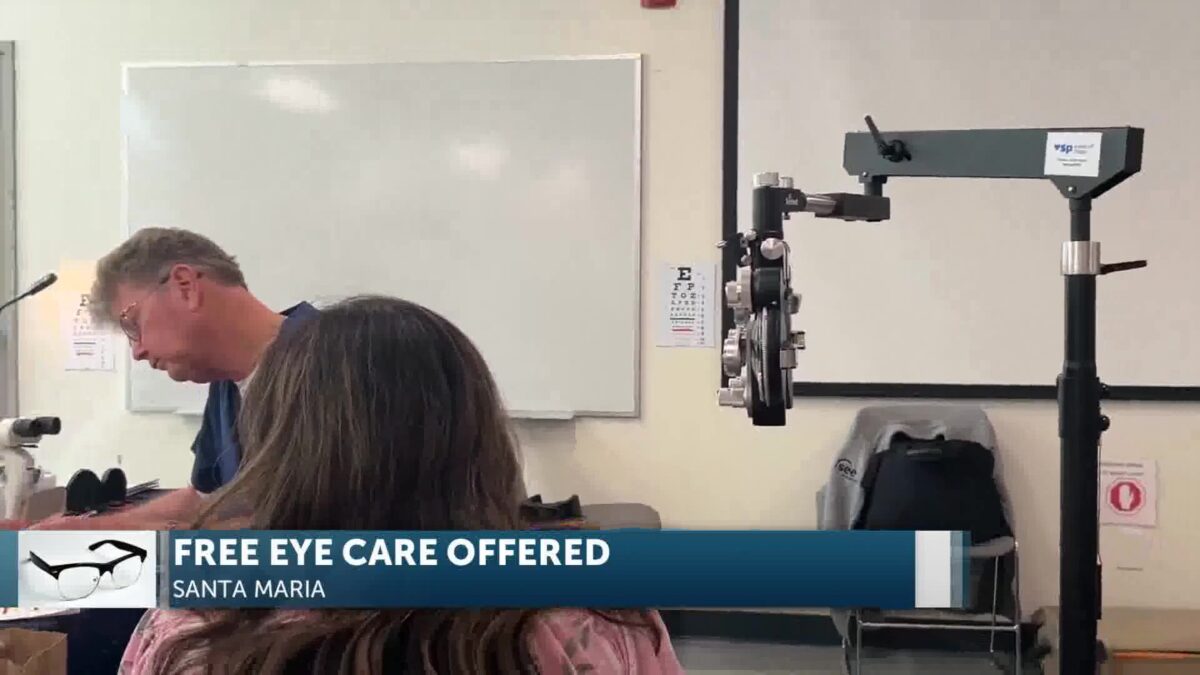
SANTA MARIA, Calif. (KEYT) – Roughly a hundred Santa Maria residents received free eye exams and eyewear today, courtesy of the VSP Eyes Of Hope mobile clinic.

August is national eye exam month.

“What we like to focus on especially with Back to School is getting as many kids in as possible, because we understand that 80% of learning in the classroom is visual based,” says Clark Jorgensen, VSP Vision’s Community Engagement Manager.

Santa Barbara County Public Health is collaborating with SEE International and VSP Vision to provide the services to qualifying residents.

“We’ve been around for 70 plus years, and our focus is to provide access to eyecare and eyewear across the country,” says Jorgensen.

Experts say both the risks of going without vision care, as well as the barriers to getting it, are worse for low income families, as well as anyone experiencing homelessness.

“We are seeing uninsured and underinsured patients today, meaning they don’t have vision insurance,” says Anisha Verdialez, SEE International’s director of local and domestic programs.

The 40-foot mobile clinic was set up at Centerpointe Parkway in Santa Maria from 9 to 5 Thursday.

“It’s not just glasses, it’s also checking for diabetes and glaucoma other things that, you know, can really be devastating to people,” says Rupert Chowins, Noor Foundation SLO’s Vision Clinic Director.

Event organizers say nearly 1 in 10 adults avoided healthcare during the previous year, because of the cost.

“If a child can’t see, they’re not going to do well in school,” says Chowins. “And that’s going to have a really a devastating effect on their life. If an adult can’t see, they can’t drive, they can’t work, they can’t take care of their family. So we’re really here to provide free exams and vision care just for those that really need it.”

VSP Eyes Of Hope mobile clinic will be setup at the Lompoc Health Center on North ‘R’ street on Friday from 9 to 5.

The Latest Breaking News, Weather Alerts, Sports and More Anytime On Our Mobile Apps. Keep Up With The Latest Articles by Signing Up for the News Channel 3-12 Newsletter.

Click here to follow the original article.

Highway call boxes could be on their way out of Santa Barbara County

Dave Alley

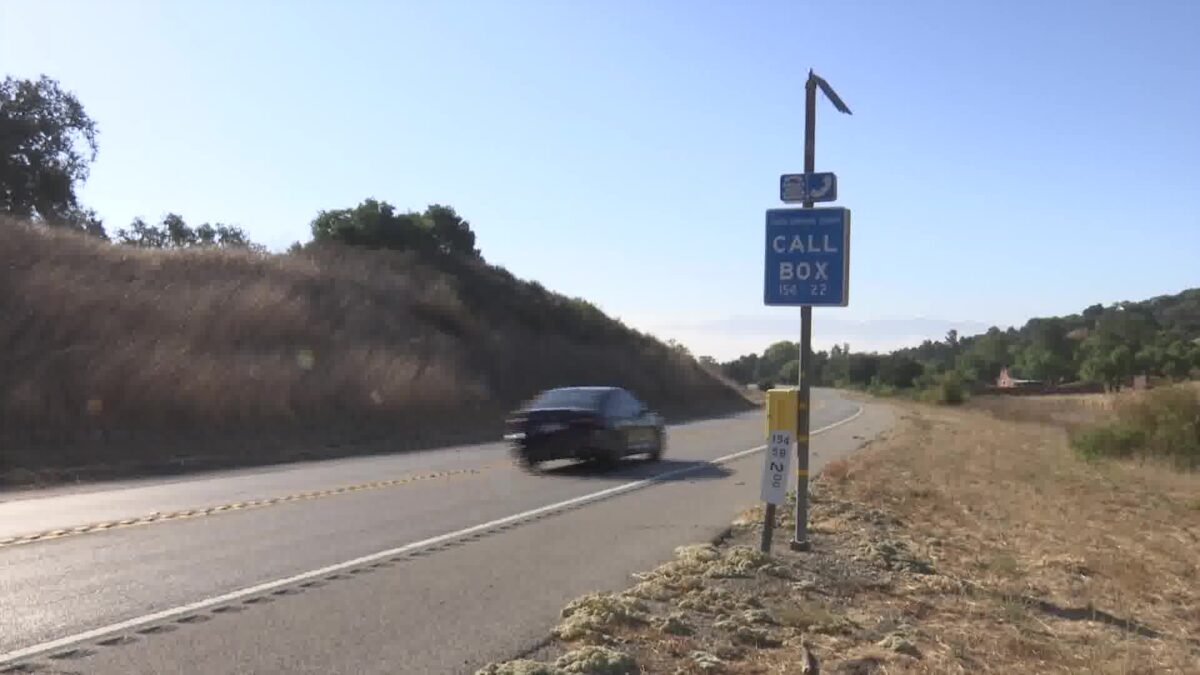
SANTA MARIA, Calif. (KEYT) – Highway call boxes that have provided a communication link for motorists in need for nearly 40 years in Santa Barbara County could be removed at some point in the future.

On Thursday, the Santa Barbara County Association of Governments (SBCAG) received an update on the Service Authority for Freeway Emergencies (SAFE) Highway Call Box Program.

During the discussion, the Board reviewed call box use and costs, statewide trends, emergency coverage considerations and potential alternatives.

Call boxes in Santa Barbara County date back to 1987 and since have provided a communication link to a 24/7 call center that assist with a variety of roadside emergencies.

“This program has been around since the 80s,” said Steve Lavagnino, SBCAG Board of Directors. “The general idea around it was back in the day when you broke down, they gave you an opportunity to make sure that you weren’t just standing out there in the middle of nowhere.” 

However, as cell phone ownership usage sharply increased over the past three decades, conversely the usage of call boxes have significantly decreased.

Data provided in an SBCAG staff report shows the call box system in Santa Barbara County has experienced an estimated 90 percent decline in call volume.

At one point there were more that 350 call boxes located throughout the county on a number of roadways.

Now, after a reduction took place in 2019, only 47 remain, all of them located on rural sections of Highways 101, 154 and 166.

There are now 12 on Highway 101, just south of Buellton and in the Gaviota area. Fifteen boxes are located on Highway 166 between Santa Maria and New Cuyama, while 20 are along Highway 154 on the San Marcos Pass between Los Olivos and Santa Barbara

In 1999, there were nearly 8,000 calls, but in 2024, the total amount had sunk below 200, and in the past year, some of the call boxes recorded zero calls.

Over the last fiscal year, the entire call box system received 153 total calls, for an average 12 calls per month, and each of the 47 remaining boxes row receive approximately 1.5 calls each year.

Due to the sharp decrease in usage, SBCAG reported the inflation-adjusted cost per call has increased from $0.42 in 1999 to an estimated $510 in 2025.

SBCAG reported asa call box usage has declined sharply, conversely program costs have continued to rise due to technology transitions, vendor consolidation, and increased call-answering and cellular service charges.

SBCAG reported funding for the system is currently just over $100,000, which is directed towards maintenance, staffing, California Highway Patrol (CHP) and other needs.

Board members must decide to either keep the system going in some capacity or to remove it altogether.

“Things have changed,” said Lavagnino. “The idea we’re looking at right now is, is it really time to move on from the call box, but at the same time, there’s areas out on the 166 where you don’t want to leave people in a lurch, so there’s that balance out there. When you only have 90 calls and the program costs us $100,000 a year, you start talking about, wow, we’re not sure that this is really making a lot of sense or is the best use of people’s money.”

Longtime Santa Maria Mayor Alice Patino, who also serves on the SBCAG Board, expressed her concerns Thursday about the potential removal of the call boxes, especially on Highway 166.

“166 bothers me because that is a road I do travel often and there are so many dead zones around there,” said Patino. “If someone has a battery go dead, if there’s a car accident, and maybe you forget to take your cell phone, or maybe if there is an accident, that really concerns me, and how far you have to walk to a call box. The maintenance of the call boxes are very, very expensive, but I think we have to weigh the safety issue.”

Over the past several years, many other counties across California have either discontinued call box service or significantly reduced it.

Neighboring Ventura County discontinued usage, while Monterey County has scaled back its system to include rural corridors only.

Other counties that have removed service includes Orange, Riverside, San Bernardino, Santa Cruz, and Merced counties, while San Diego and some of the Bay Area counties have had partial reductions.

San Luis Obispo County just recently decided to remove the few remaining call boxes along its roadways and will end the system at some point in within the current fiscal year.

No action was taken by the SBCAG Board since Thursday’s presentation was scheduled to be a “receive and file” agenda item.

After a discussion that lasted nearly 40 minutes, the SBCAG Board of Directors decided to revisit the issue again later this year in the fall.

“We’ll bring up different options and the Board may want to pursue a specific option,” said Peter Wiliamson, SBCAG Transportation Planner. “We’ll present probably the alternatives. The board may want to look at the budget as a whole beyond the call box program and how can we best support the users of our system and how can we get the best bang for the buck? They’ll take a vote on the path that makes the most sense for the region.”

The Latest Breaking News, Weather Alerts, Sports and More Anytime On Our Mobile Apps. Keep Up With the Latest Articles by Signing Up for the News Channel 3-12 Newsletter.

Click here to follow the original article.
More Train Service Could Be On Track For the 2028 Olympics

John Palminteri

SANTA BARBARA, Calif. (KEYT) – Planning is underway to add more train service on the Central Coast and beyond for the upcoming 2028 Olympics.

The work is underway now through several agencies including the Santa Barbara County Association of Governments (SBCAG). It has sent support to decision makers and the staff says it stands ready to help with community awareness as the games get closer.

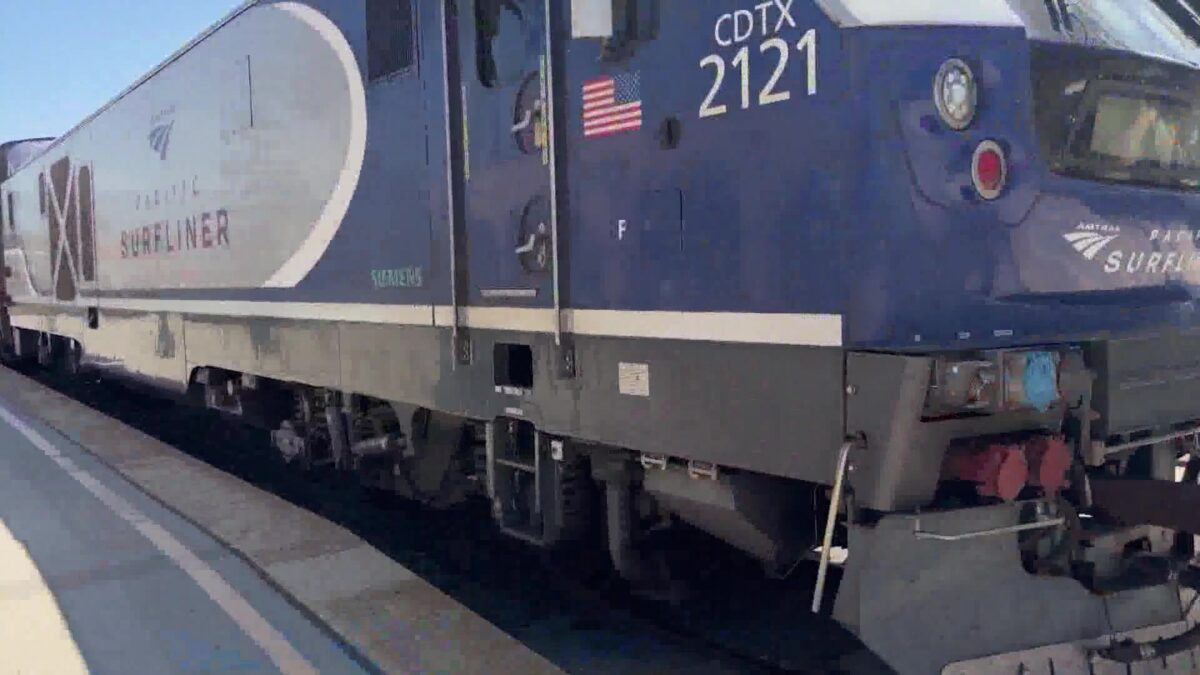
“Either a train provider in the bay area heading south as far as San Luis Obispo to meet the trains the comes from L.A. or  a train from Los Angeles, the Pacific Surfliner  run all the way to San Jose to pick people up from the bay area and bring them back,” said Aaron Bonfilio the SBCAG Director of Multimodal programs.

A test came during the World Cup recently. The Amtrak Pacific Surfliner added special late-night northbound services to Santa Barbara and reports good success from riders using the train to get to the 2026 FIFA World Cup.

There has also been an increase in the daily trips serving Santa Barbara and Goleta.

The 2028 Los Angeles Summer Olympic Games, will likely mean more train service from Los Angeles to the San Francisco Bay Area through Santa Barbara and San Luis Obispo. Work is also underway for a new train station stop in King City.

SBCAG plans to work with regional partners to prepare for 15 to 20-million visitors during the Olympics and address coastal rail corridor demands, reservations and reliability.

L.A. hosts the Olympic Games from July 14 to July 30, 2028, and then the Paralympic Games from Aug. 15 to Aug. 27. 

The increase in traffic is also a big worry for Los Angeles area residents who already have a tough drive every day.

One train passenger coming up from the south, Denis Jackson said, “have you seen the freeway out there in L.A.?  It is a madhouse! “

She was ready to support the plan now. “Don’t wait until the last minute.  Work on the system now.”

The train service will also be a key component for those visiting the Central Coast and is expected to be part of the economic boost for the area.

Christian Gutierrez was a train passenger from Burbank who got off in Santa Barbara saying, “we had an awesome train ride and we would definitely use it if there was more  available yes.”

A Camarillo resident Nicole Perdon said, she was more interested in going north than to L.A. “I think it would be really helpful.   It was a beautiful view driving on the coast so I think it would be enjoyable.”

Many train riders enjoy the freedom of not having to drive their cars.  “Better than driving. We could have fun and not worry about the drive back or sit in traffic,” said Gutierrez.

One review of the train ride instean of a car including the overall experience compared to the stress of driving. “This ride out here was safe, clean and enjoyable.    Adding more train schedules and times is going to be excellent,” said Jackson.

If the train expansion gets some traction it comes without a lot of build out. Bonfilio said, “that’s the great thing about adding this local service, there’s already tracks available  stations available and frankly riders interested in this service.”

Also coordinating with the future plan is the San Luis Obispo County Organization of Governments. (SLOCOG).

(More details, photos and video will be added here later today.)

The Latest Breaking News, Weather Alerts, Sports and More Anytime On Our Mobile Apps. Keep Up With the Latest Articles by Signing Up for the News Channel 3-12 Newsletter.


Click here to follow the original article.
Central Oregon youth seek mentors as new school year begins

Adrielle Hasara

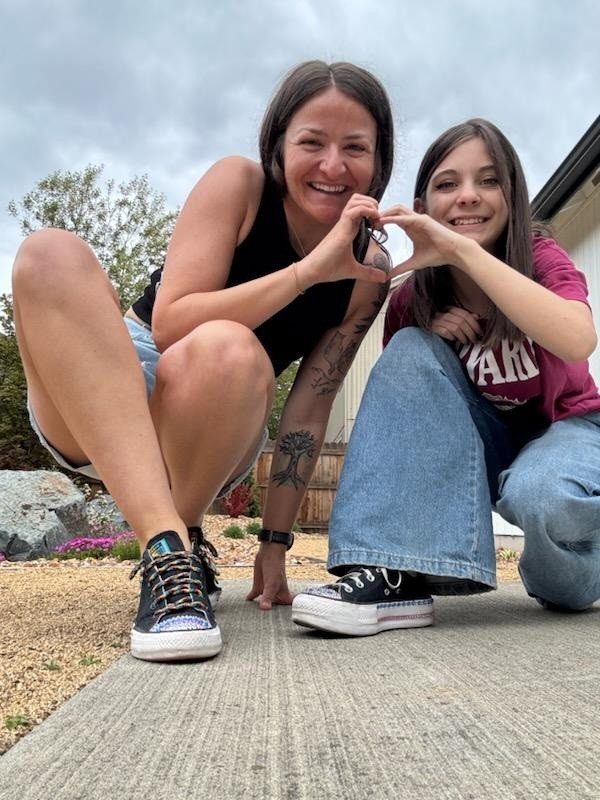
Bend, ORE. (KTVZ) — Big Brothers Big Sisters of Central Oregon is asking community members to become mentors as 78 local youth await matches for the new school year.

The organization, a program of J Bar J Youth Services, was founded in 1994 and serves more than 220 youth annually. The program creates one-to-one mentoring relationships connecting adult volunteers with local youth.

Mentors typically spend a couple of days each month with their matched youth. Jenn Davis, program director of Big Brothers Big Sisters of Central Oregon, emphasized the importance of supportive adults during the back-to-school season. “Back-to-school is such an important time for kids and we want every young person to know they have someone in their corner,” Davis said. “We have 78 kids who are eagerly waiting for a mentor to choose them. You don’t have to be a teacher, coach or youth expert—you just need to be willing to show up, spend a couple of days a month together and build a relationship.”

Mentoring activities include getting snacks, going on hikes, playing games, working on crafts, attending local events or talking. Davis noted that many community members hesitate because they overestimate the time commitment. “Sometimes people think they need to have a lot of extra time or know exactly what to do before they can become a mentor,” Davis said. “The truth is, our kids are looking for someone who will listen, have fun with them, encourage them and keep showing up. Those simple moments can have a lasting impact.”

In addition to seeking adult volunteers, the organization is enrolling Little Sisters ages 6 through 17 who reside in Bend. Families, caregivers, teachers and community supports can learn more or enroll a child by visiting www.bbbsco.org or calling 541-312-6047. Staff members assist volunteers throughout the matching process and provide ongoing support.

Click here to follow the original article.
Rain and thunderstorms comes to Yuma County

Moses Femino

YUMA, Ariz. (KYMA) – Yuma County experienced some rain and thunderstorms early Thursday morning.

Storms moved through parts of Yuma County bringing rain, lightning and gusty winds across the region.

While the storms moved through quickly, some residents say the combination of heavy rain and strong winds was enough to create problems around their homes.

For Charles Clark, preparing for the storm meant securing items around the house to keep them from being damaged or blown away.

“We had to go outside, make sure things were covered that needed to be covered. And that there was weights on top of the covers so that the wind wouldn’t blow them off,” Clark said.

For Debbie Clark, preparing for monsoon storms has become part of the routine. She says a recent storm brought enough rain to flood part of her backyard, making it important to prevent water from getting inside the home.

“Make sure it doesn’t come in the back door. Bring anything in that might get damaged and cover stuff,” Debbie Clark said.

Strong winds can also bring the possibility of power outages, making preparation even more important.

“You need to be prepared because your electrical may go off, which it has quite a few times. Then it takes a while for that to come on,” Clark said.

Residents say having things ready ahead of time can make it easier to deal with the impacts of storms as monsoon season continues through September.

In the Foothills, there was some moderate rainfall, lightning and thunder, as well as some winds.

There was also some rain in Somerton and San Luis.

The storms did clear out into the afternoon.

Click here to follow the original article.

Sonoran Prevention Works’ invites community members to honor Overdose Awareness Month

Adrik Vargas

YUMA, Ariz. (KYMA) – Sonoran Prevention Works is bringing the Yuma community together this month to remember loved ones lost to overdose and raise awareness about prevention.

The organization will hold its fourth annual Overdose Awareness Walk and Memorial Event Saturday, August 29.

The walk begins at the Yuma Heritage Library at 6:30 p.m, with registration starting at 6 p.m. It will end at Gateway Park at 7 p.m. with a memorial event to follow.

Organizers say the event gives families a place to grieve, remember their loved ones and connect with others without stigma or judgment.

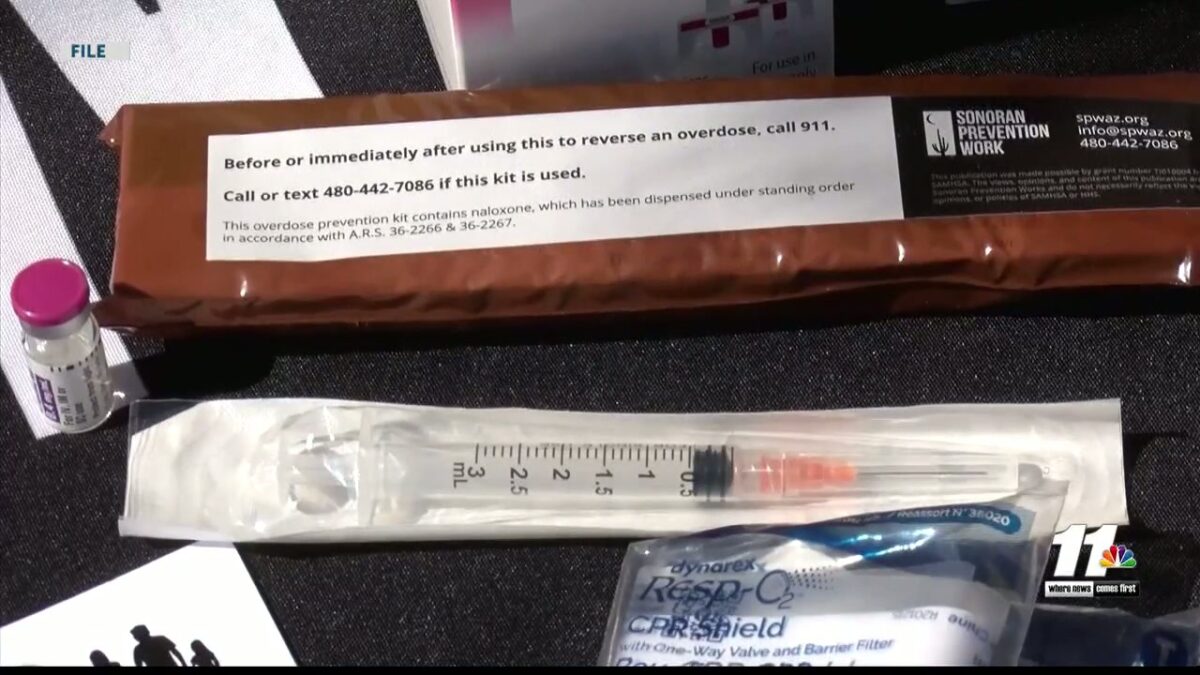
Sonoran Prevention Works also provides naloxone, overdose prevention training and other resources through its community sites.

The organization says it provided 150,000 doses of naloxone and helped reverse about 6,000 overdoses in 2025.

To find Sonoran Prevention Works locations, schedules and available resources, visit their Get Supplies page.

The organization currently lists Yuma locations and outreach events on its website, along with information about obtaining naloxone and other supplies.

Click here to follow the original article.
18 train cars derail in Central El Paso, cause road closures

Gabrielle Lopez

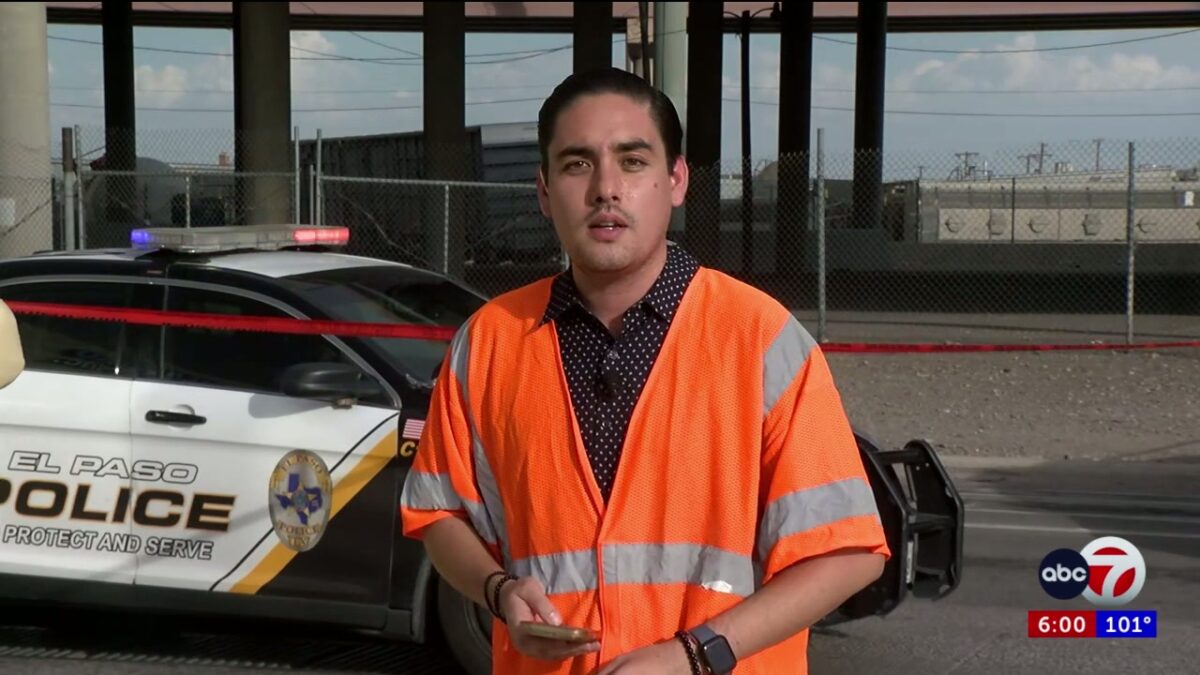
EL PASO, Texas (KVIA) — A train derailed Thursday on Cotton Street near Montana and Wyoming Avenue. The El Paso Fire Department said 18 train cars derailed, 10 of which overturned.

El Paso fire said it happened at 11:43 a.m.

EPFD and Union Pacific said no injuries were reported. EPFD is assessing the derailment. There’s no word on what caused the cars to derail.

“Union Pacific crews are responding to the incident, which is under investigation,” Union Pacific said.

Police said the following streets are closed:

I-10 East and West between Cotton and Downtown

I-10 West Cotton off ramp and Cotton/Missouri

Willow Street

Texas Avenue and Cotton

Cotton Street and Missouri

Plan an alternate route if you plan on driving in the area.

Seventeen EPFD units and 40 firefighters responded to the derailment. The El Paso Police and Fire departments used drones to monitor the scene.

EPFD’s Hazardous Materials Task Force determined there aren’t any hazardous materials of concern, and any spilled materials don’t pose a threat to the public.

Union Pacific took over the scene and will oversee the cleanup and derailed cars’ removal.

El Paso Mayor Renard Johnson said he’s been in contact with Union Pacific and the City of El Paso’s Office of Emergency Management.

On social media, the mayor posted the following statement:

“A train derailment occurred this afternoon near Missouri Avenue and Cotton Street in Central El Paso. Emergency crews responded immediately, and several streets in the area have been closed while crews work the scene.

I have been in direct contact with Union Pacific and the City’s Office of Emergency Management. The scene is contained, and at this time, there is no immediate threat to the health or safety of people in the surrounding area.

We will continue to monitor the situation closely and keep the community informed as more information becomes available.

Please avoid the area and allow emergency personnel to continue their work.”

Click here to follow the original article.

Fire restrictions stay in place on Oregon and Washington BLM lands

Adrielle Hasara

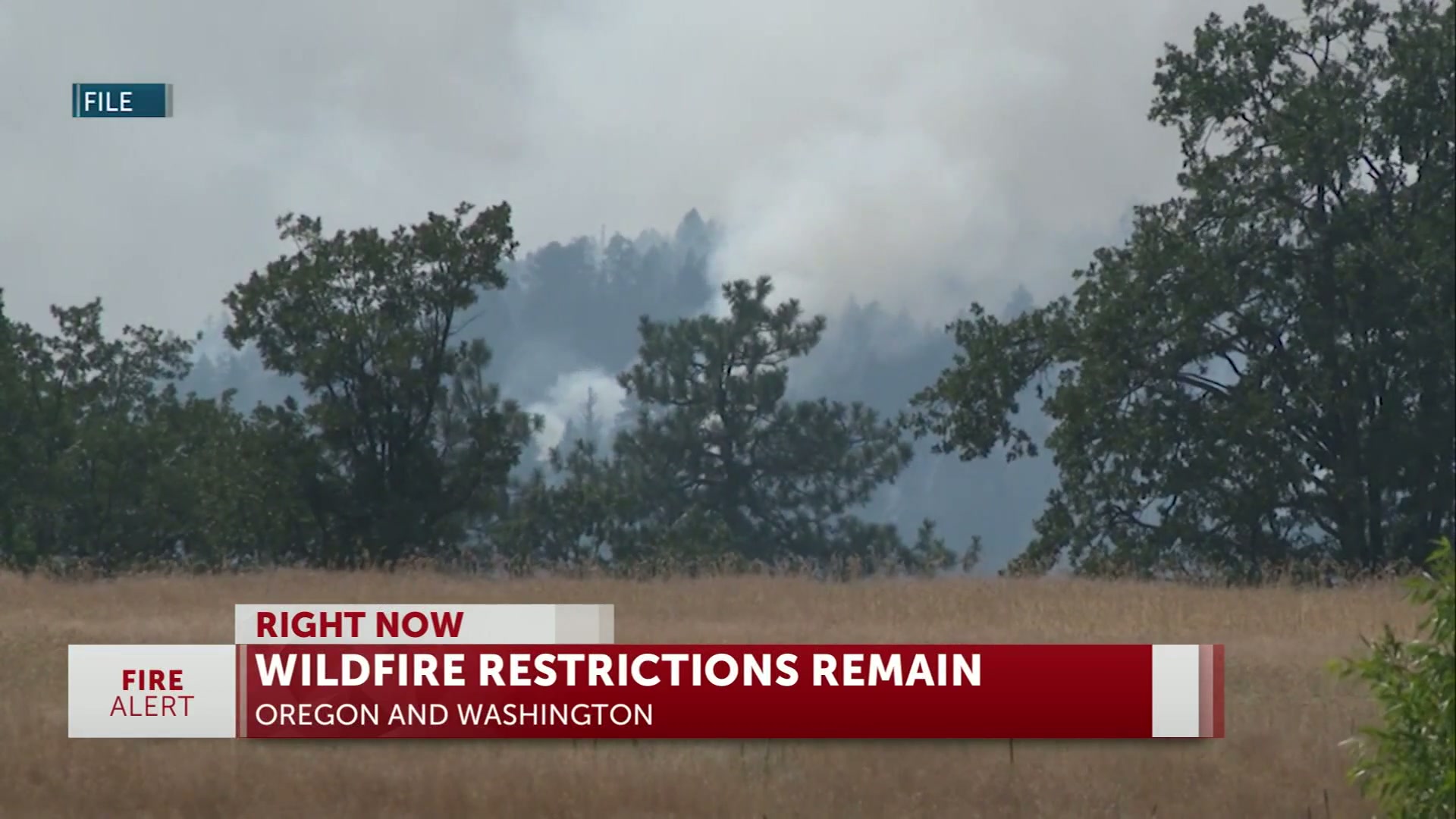
Bend, ORE. (KTVZ) — Fire restrictions remain in effect on all Bureau of Land Management public lands across Oregon and Washington today, as a record-setting wildfire season continues in the region. More than 2.5 million acres have already burned across the Northwest.

BLM officials are urging all public land visitors to exercise caution, follow local closures and adhere to fire safety guidelines to prevent additional human-caused fires.

Specific fire restrictions vary by location depending on local fire danger, weather conditions and fuel moisture. These regulations govern what types of ammunition visitors can use, whether campfires are permitted and what fire prevention equipment is required on public land.

Land managers establish restrictions and closures only when necessary to safeguard public safety. More than 99% of BLM lands nationwide remain open for recreation.

Kyle Hensley serves as the Prineville District Manager for the BLM. Hensley noted that hunting season is beginning as National Shooting Sports Month ends, creating a overlap with the ongoing wildfire season. “As National Shooting Sports Month draws to a close and we make our way into hunting season, we especially want to thank hunters for being responsible stewards of public lands,” Hensley said. “Hunting season and wildfire season overlap in the Pacific Northwest and we can all work together to keep each other and our shared public lands, safe.”

Jeff Fedrizzi is the Assistant Chief of Operations for the U.S. Wildland Fire Service Pacific Northwest Geographic Area. Fedrizzi emphasized that public cooperation directly assists emergency responders working throughout the region. “Please follow local restrictions to the letter,” Fedrizzi said. “Preventing even one human-caused wildfire makes a difference for our firefighters and our communities.”

Individuals responsible for starting wildfires face significant legal consequences under federal law. Penalties for causing a wildfire can include fines of up to $100,000, imprisonment for up to 12 months and financial liability for the total cost of wildfire suppression efforts.

Click here to follow the original article.