Inside Palm Springs’ real-time intelligence center: police answer questions over cameras, privacy

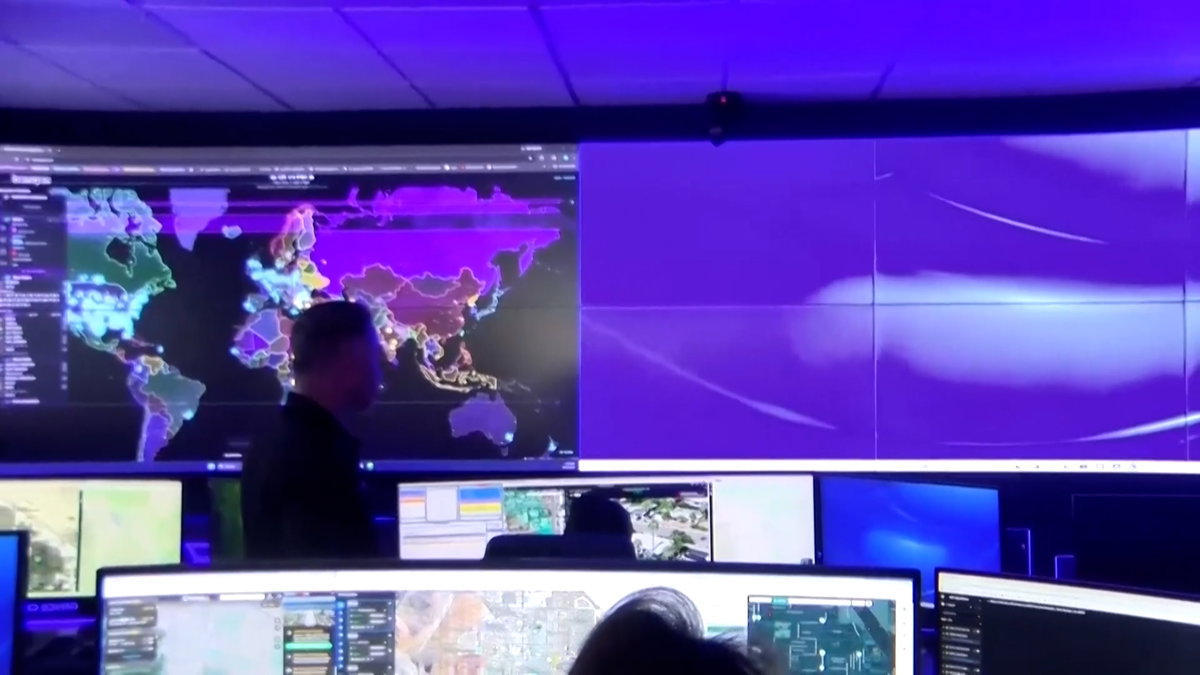
PALM SPRINGS, Calif. (KESQ) — As questions surrounding police surveillance technology and license plate reader cameras continue nationwide, the Palm Springs Police Department is opening its Real Time Intelligence Center to the public and creating a new committee that will give community members a role in reviewing how the technology is used.
Dozens of residents toured the center Thursday, getting a firsthand look at how officers use technology including Flock license plate reader cameras and drones during investigations.
The tour came as some residents continue to raise questions about privacy, how information is stored and who may ultimately have access to data collected by the department.
Palm Springs resident Brian Burch came to the tour looking for answers about what happens to information after an investigation ends.
“I think the biggest question for me is the data,” Burch said. “What happens after something is complete? What do they do?”
Burch said he sees the potential benefits of the technology but worries about how information collected for legitimate police work could potentially be used beyond its original purpose.
“I don’t like the feeling that I’m being compiled into a file of sorts,” Burch said.
What police say officers can and cannot doDuring Thursday’s tour, Palm Springs police walked residents through a mock investigation, showing them how officers access the technology and what must happen before a search is conducted.
Lt. Mike Torres with the Palm Springs Police Department told News Channel 3 one of the biggest misconceptions surrounding the Real Time Intelligence Center is that officers are continuously monitoring people without cause.
Torres said officers must have reasonable suspicion before searching for a license plate in the system. Searches must also be associated with a case number and officers must provide a reason for conducting them.
“Everything we do, our officers need to have reasonable suspicion to be searching for any kind of license plate in our system,” Torres said. “Everything the officers do have to be attached to a certain case number, have to give a reason for doing so.”
Torres said searches are tagged, tracked and monitored. The department also conducts monthly audits of the system.
PSPD developed its policies after examining how other law enforcement agencies across California operate similar technology, according to Torres. He said the department intentionally developed strict policies because it understood the concerns the technology could create within the community.
The department is now considering making those policies even stricter.
Residents question where information could goFor Burch, seeing how Palm Springs police use the technology only addresses part of his concern.
He said he sees value in the technology itself, but questions whether information could eventually make its way outside the department or be used for purposes unrelated to the reason it was initially collected.
“I think the technology is brilliant,” Burch said. “It’s the jurisdictional application that’s the scary one. Is the information going to ICE? Is the information going to stuff that has nothing to do with the traffic ticket?”
Danny Hysell, another resident attending the tour said he had fewer concerns about the technology and viewed it as another resource available to officers.
“I think it’s smart to have anything that can help these guys take care of their business easier,” Hysell said.
Others came simply hoping to better understand what police are capable of doing with the technology and what limits are placed on its use.
PSPD creates new Community Technology Oversight CommitteeAs the department works to address those concerns, News Channel 3 learned Thursday that PSPD has created a new Community Technology Oversight Committee.
Torres said the committee was finalized Wednesday.
The department plans to bring community members from different demographics into its oversight process, including allowing committee members to participate in the monthly audits PSPD conducts of its technology systems.
Torres said the goal is to allow members to see the process from beginning to end, understand why officers are using the technology and provide feedback on the department’s policies.
PSPD is not limiting participation to people who already support the technology.
In fact, Torres said he specifically wants critics involved.
“I was looking for people that were actually somewhat against the whole process because I want the pushback,” Torres said.
He said hearing from people who approach the technology from a different perspective could help the department identify issues officers themselves may not recognize.
“If they give us the perspective that we don’t understand, or maybe we’re not seeing it from a certain angle, we want them to be involved to help us better our policies and make us the best version of ourselves with their help,” Torres said.
The department has not yet announced when the committee will hold its first meeting. News Channel 3 will provide that information when it becomes available.
How long should Flock data be kept?Another issue PSPD is now examining is how long information collected through its license plate reader system should remain available.
Palm Springs police currently says its Flock data is deleted after 30 days.
Torres told News Channel 3 the department is reviewing whether that should change as Flock moves toward a new seven-day default retention period.
“We’re looking into it now,” Torres said.
He said one issue investigators are considering is that some crimes are not reported immediately. A shorter retention period could mean information investigators need is no longer available by the time police learn about a crime.
“We have to be real careful and utilize this data to the best of our ability,” Torres said. “We’re actually open to all things right now, and we’re just talking and deliberating as a team and figure out what makes the most sense for not only the police department, but more importantly, the community.”
55 license plate readers across Palm SpringsTorres also provided more information Thursday about the scope of the license plate reader network in Palm Springs.
He said PSPD currently has 55 license plate reader cameras across the city. According to Torres, those cameras are strategically positioned based on data and where the department believes they can best support its resources.
Torres pushed back on the idea that the cameras amount to constant surveillance throughout Palm Springs, saying the number of cameras is relatively small compared with the size of the city.
For PSPD, Thursday’s tours were an opportunity to show residents what happens behind the screens rather than simply asking the public to trust the department’s description of the technology.
For residents like Burch, the technology itself may not be the central issue. The larger question is how it is governed, who has access to the information it produces and what safeguards remain in place as law enforcement technology continues to evolve.
The newly created Community Technology Oversight Committee will now give some Palm Springs residents a direct role in asking those questions from inside the oversight process.
News Channel 3 will continue following the committee’s development and will update this story when information about its first meeting and membership becomes available.
Click here to follow the original article.