‘I really, really love this girl’: Reading program creates unlikely friendships across

By Pepper Purpura

Click here for updates on this story

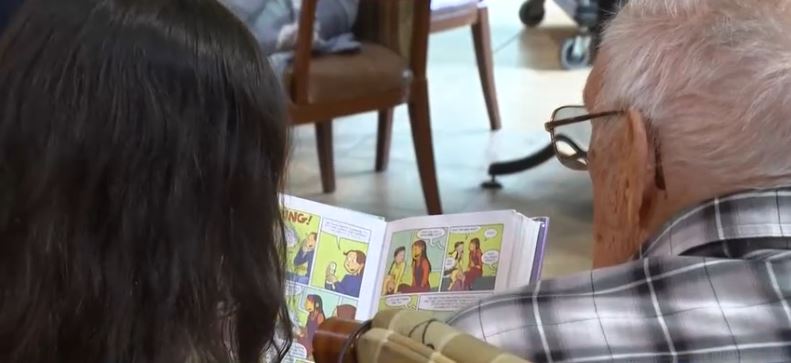
    DES MOINES, Iowa (KCCI) — At Valley View Village in Des Moines, Thursdays have become something residents and students alike look forward to each week.

Fourth and fifth graders from Phillips Elementary spend time reading with residents at the assisted living facility as part of a program designed to strengthen literacy skills and create connections across generations.

For fifth-grade student Nora Brown, the visits became about much more than books.

“I’ve always liked reading and doing reading clubs, and I thought it would be a great way to meet some new people,” Brown said.

One of those people was Nancy Hanson, a former East High School teacher, now resident at Valley View Village. Over the last two years, the pair has spent time reading together, talking about family and life, and building a friendship that now feels much deeper than a learning activity.

“The first day I came up to her, and I guess we just knew each other, and it kind of took off from there,” Brown said.

The program originally started as a way to encourage reading practice, but Phillips Elementary Principal Kristy Fitzgerald said it quickly evolved into something more meaningful.

“We thought at first it would be about practicing reading, and it really ended up being something about forging generations,” Fitzgerald said.

During visits, books can become secondary as conversations take over. Fitzgerald said many students form strong bonds with residents and even ask to be paired with the same person week after week.

“Over the year, a bond does absolutely build,” Fitzgerald said. “It’s kind of sad, too, when we graduate fifth-graders.”

For Hanson, the friendship with Brown has become one of the highlights of her week.

“I really, really love this girl. I really, really love her,” Hanson said.

Now, with the school year ending and Brown preparing to move on to middle school, the two know their weekly visits are coming to a close. Still, both hope the friendship continues long after elementary school.

“I want her to come back and visit me,” Hanson said.

For now, they’re focused on enjoying the time they are still guaranteed together, a chapter at a time.

Please note: This story was provided to CNN Wire by an affiliate and does not contain original CNN reporting. This content carries a strict local market embargo. If you share the same market as the contributor of this article, you may not use it on any platform.

Helping heroes in crisis: Guardian Response Unit works to save Iowa veterans from dying by suicide

By Ben Kaplan

Click here for updates on this story

    DES MOINES, Iowa (KCCI) — The newest data from the Department of Veterans Affairs shows nearly 15% of deaths by suicide in Iowa are veterans. The suicide rate amongst those who served is nearly double the rate of everyone else.

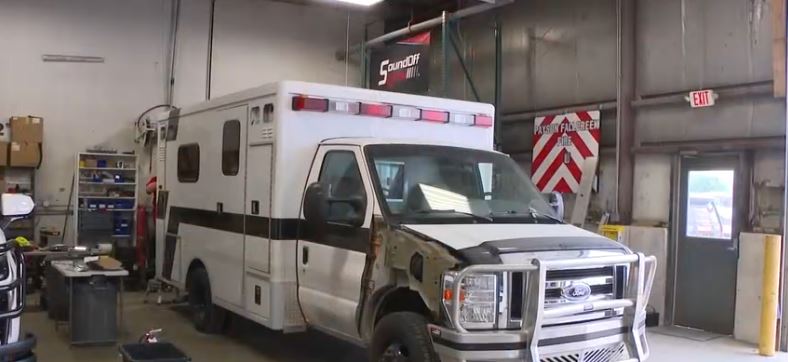
Veteran John Thompson started a nonprofit organization to help Iowa families navigate these unimaginable losses. Now, he’s trying to stop them from happening at all. And he’s using a beat-up old ambulance to help his cause.

“The goal of buying an ambulance is, an ambulance is used to help save lives,” Thompson said. “But it’s the medical side. Why can’t it be the mental side?”

Thompson has dedicated his life to this cause because he remembers when he felt he had reached the end of the road.

“When I got home out of the military, I was one of those that struggled severely with transition. Attempted suicide five times,” he told KCCI’s Ben Kaplan.

That was a decade ago.

In the years since, he and his wife, Misti, started the Cedar Rapids-based nonprofit Salute to the Fallen.

At first, the goal was to help families deal with the tragedy of losing a service member.

“We’ve assisted in 564 funerals in the last 6 years,” Thompson said.

More than 400 were tied to suicide.

“You see the Killed in Actions in the news,” Thompson said. “How many people show up to support the families. And a soldier that struggles with the injuries of war that comes back, and takes their life, no one shows up. It’s very somber to see the big difference.”

In the last two years, they’ve also been responding before tragedy happens, primarily in Eastern Iowa.

“This year alone, we’ve handled 342 crisis calls.”

And the Guardian Response Unit, which is what the ambulance will become, will traverse the entire state and is the next puzzle piece.

“When you step into it, it’s going to look like an industrial living room. It’s going to have a calming effect; it’s not going to look like a medical unit,” Thompson explains.

He says a therapist will occupy the chair in the front.

“We can actually seat up to three other individuals. So, the first responder or veteran or soldier that is struggling, and a support network, their spouse can be there if they choose to do that, that way they can help if they choose to with the process moving forward.”

Thompson says the GRU will also be “a mobile resource center because one of the issues we see across rural communities here in Iowa is people don’t know how to find out what resources are available or what events are going on across the state.”

Debra and Jerry Sanders say it never gets any easier.

“I say a prayer every night, when I say that prayer at the end of it, I say, dear lord, please let him know how much we still miss him.”

They think a resource like the GRU could have helped their son, Staff Sgt. Adam Sanders, who served two decades in the Iowa National Guard and died by suicide in April of 2020.

“We did not realize he was having problems,” Debra said.

“The length of stays we had with him weren’t long. I guess in a way, we should have noticed something then. Because we were close to him.”

The hulking 300-pound Hawkeye fanatic was a career soldier who deployed multiple times. His family was the first Salute to the Fallen helped through the tragedy.

“We were basically lost. We didn’t know what the next step was,” Jerry says.

Debra added, “John connected us with the people and the agencies that could help us get through any red tape that we needed to get through.”

They believe their son’s memory lives on when “Salute to the Fallen” helps others.

“His smile, his laugh, his bear hugs. We all have to remember those things,” Debra said with tears in her eyes.

John knows if something is beat up, it doesn’t mean it can’t be saved. He is proof that there can still be a lot of great roads ahead.

The Salute to the Fallen is about $8,000 short of its fundraising goal for the Guardian Response Unit.

And, if you’d like to utilize its services, you can contact the ‘Salute to the Fallen’ here: salutetothefallen.org

If you, or someone you know, needs help right now, you can call 988 24-7. Press 1 to reach the Veteran Crisis Line.

Please note: This story was provided to CNN Wire by an affiliate and does not contain original CNN reporting. This content carries a strict local market embargo. If you share the same market as the contributor of this article, you may not use it on any platform.
Dog saved by Iowa State vet students and doctors surprises everyone at commencement

By Kayla James

Click here for updates on this story

    AMES, Iowa (KCCI) — A dog who was brought in with devastating injuries after being hit by a car on Christmas Eve made a surprise appearance at Iowa State University’s College of Veterinary Medicine commencement ceremony to watch the students who helped save her life graduate.

You could hear and see the genuine shock as Honey took the stage during the ceremony. Right after Dr. Stephen G. Juelsgaard, Dean of Veterinary Medicine Dan Grooms announced Honey, along with her foster mom, were in attendance. For many of the new graduates, college staff and ISU’s Lloyd Veterinary Medical Center staff, her appearance serves as a full-circle moment in a journey that began in December.

Honey’s foster mom, Laura Bradner, said Honey was critically injured when she first arrived for treatment.

“She was hit by a car in Des Moines on Christmas Eve,” said Bradner.

Bradner told KCCI that at the time, Honey belonged to a man who was homeless. He wanted to save her, but could not afford the care she needed. Bradner says the man did not want Honey to be euthanized, so he surrendered her so she could receive care.

“She had fractures all over her skull. She had fractures in her sinus,” said Bradner.

Grooms tells KCCI the Lloyd Veterinary Medical Center team immediately began working to stabilize Honey before addressing her many injuries.

“Fixing fractures, fixing things that they could fix,” said Grooms, who organized the surprise at the commencement ceremony. “The most important thing was also trying to understand and manage the brain trauma as well.”

The day she arrived, one of the emergency doctors called Jan Erceg, the founder and medical director of Critter Crusaders of Cedar Rapids. The organization is a provider of advanced medical and surgical care for shelter and rescue pets throughout Iowa.

“We provide the funds, and we help guide the care, and we work directly with the doctors on treatment plans,” said Erceg. “We’re very adept at taking emergency cases. The vast majority of our cases are emergencies, just like Honey when she came in.”

Those procedures, along with Honey’s rehabilitation through the medical center that she receives five days a week, helped lead to her remarkable recovery.

Months after first coming into Lloyd Veterinary Medical Center, Honey is back on her feet and walking again.

Bradner said Honey’s personality has remained just as remarkable as her recovery.

“She has the sweetest disposition. She can literally — expect her to do anything, take her anywhere — and she just goes with the flow,” said Bradner.

Critter Crusaders of Cedar Rapids has raised more than $27,000 so far for Honey’s care. Bradner said that support, along with the work of the medical center’s doctors, residents, veterinary technicians and students, made Honey’s recovery possible.

Grooms said Honey’s story also gave this year’s graduates a meaningful example of the difference they can make.

“I think it just gives them a kind of peek into what they can do and the impact that they can have when taking care of animals,” Grooms said. “What was really special that Christmas Eve is how our community here at the Lloyd Veterinary Medical Center really came together to take care of Honey.”

As for Honey, Bradner said her joy is obvious.

“You can just see it in her eyes that she just loves life,” Bradner said.

Bradner tells KCCI that Honey may have only about a month of rehabilitation left.

Please note: This story was provided to CNN Wire by an affiliate and does not contain original CNN reporting. This content carries a strict local market embargo. If you share the same market as the contributor of this article, you may not use it on any platform.
Wildcat training dogs; Outstanding U of A graduate changing lives four paws at a time

By Claire Graham

Click here for updates on this story

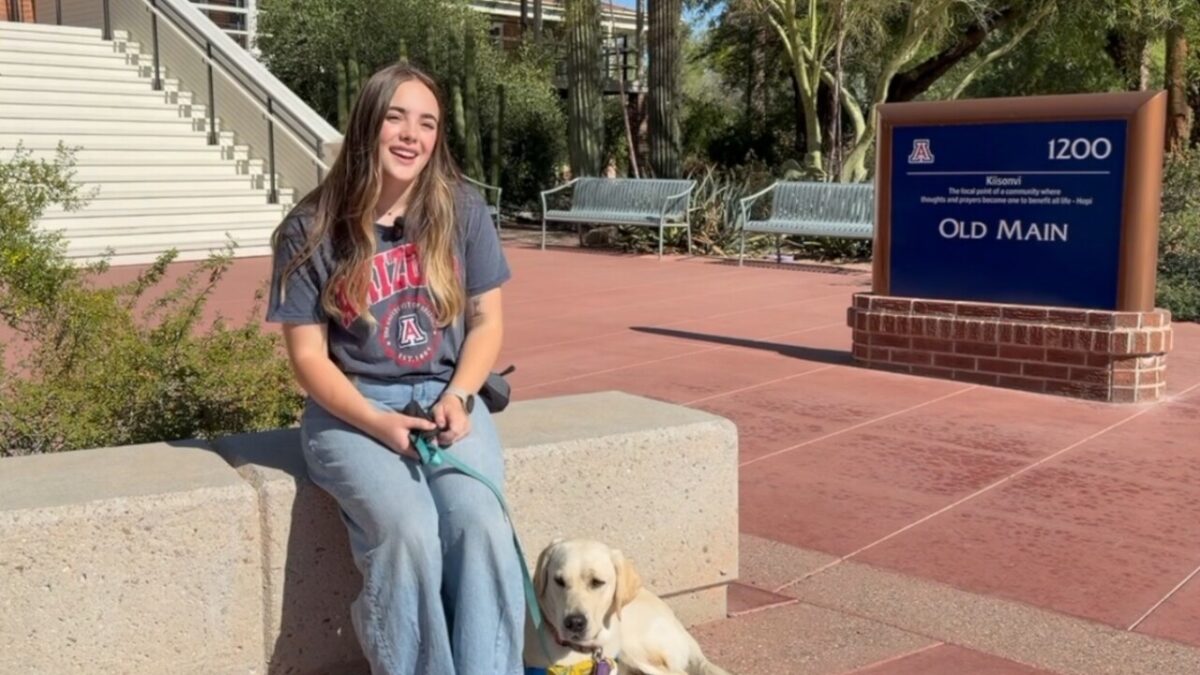
    TUCSON, Arizona (KGUN) — Jenna Bryant might be a wildcat, but she’s a dog person. She’s graduating from the University of Arizona, already on a path to changing the world, four paws at a time.

Graduating with a 4.0, with a major in psychology and a minor in criminology, she has had a special companion for her senior year — a canine companion. She is training Jelly (or Jelly IV as she is officially known) to someday be a service dog.

“So what we do in the puppy raising phase is we just train them to do a lot of basic obedience commands, to get them really ready for professional training, where they decide what they’re going to task train them for,” Bryant explained. But that’s downplaying her commitment. As a full time student, graduating in just three years, she spends a colossal amount of time on this particular extracurricular.

“I spend at least a couple hours every week at actual training classes, whether it’s at the prison where I’m co-raising her, or community classes. And then I also just schedule out several hours every day to just directly work on training,” she explained. “I wake up earlier than a typical college student would every morning to make sure I can get her outside and just get her day started. And then I also get to take her to classes with me.”

Bryant is now a founding executive member and the president of the U of A’s Collar Scholars Club, which is the Arizona branch of the national organization, Canine Companions. At the U of A, students in the club train dogs in collaboration with inmates at FCC, the minimum security prison camp in Tucson.

Jenna got Jelly as a puppy in April of last year, and now Jelly is graduating too, with a world of possibilities in front of her.

“Canine Companions has several different service dog routes she could take, so she could end up being a hearing dog, she could be a service dog with a facilitator, so working with a kid or an individual with needs that someone else would need to handle the dog for them. She could be a PTSD service dog for a veteran, she could be a mobility dog,” Bryant explained.

Their training is part of a bigger research project that Jenna’s honors thesis is part of in the BRAY Lab at Arizona, looking at how different environments impact the success of future service dogs. Their achievements together, are proof of their results.

“What we were actually able to find was that college dogs do have a significantly higher predicted probability of success compared to community raised dogs. So it really showed that what I’m doing here matters,” Bryant said with a smile.

Raising Jelly almost 50-50 with inmates at the prison camp, it’s connecting her love of dogs to where her next steps will take her, pursuing a master’s degree in forensic psychology at the University of Denver.

“My hope is to, after all of that, work as a clinician with people who are incarcerated or involved in the system in some way, which has also been why getting to work face to face with inmates has been so beneficial to me, because I’m really learning a lot about what I want to do later,” Bryant said.

The common thread of her work is changing lives, whether it’s the 87 dogs she has fostered through her hometown rescues in Colorado, her work with Jelly to become someone’s lifeline, or the inmates she’ll be helping along the way.

“It’s been a lot of work,” Bryant said. “I think it’s been something that’s super rewarding. It obviously took up a lot of my time, but it’s really made a difference on my experience as a student too, especially raising a dog. Having a dog to bring to lectures with me, I’ve met a lot of new people just talking about Jelly, so it’s just been incredible. And it also makes it feel like I really was doing something worthwhile while earning my degree.”

When Bryant leaves Tucson to go home after graduation, she’ll have to hand over Jelly, who will eventually go on to find her future owner through Canine Companions. She says it’ll be hard to leave the sweet dog she’s been working so closely with over the last year, but she’s confident Jelly will succeed and thrive as a service dog.

Please note: This story was provided to CNN Wire by an affiliate and does not contain original CNN reporting. This content carries a strict local market embargo. If you share the same market as the contributor of this article, you may not use it on any platform.

Bodycam video shows Osceola deputies wrangle alligator

By WESH Web Staff

Click here for updates on this story

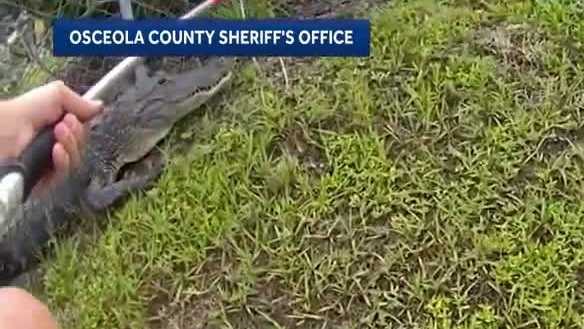
    OSCEOLA COUNTY, Florida (WESH) — The Osceola County Sheriff’s Office released body-worn camera footage Saturday showing deputies capturing an alligator.

The video shows the alligator twisting and turning as it tried to escape during the encounter on Thursday.

The sheriff’s office reminded residents to keep a safe distance from alligators and never attempt to feed them.

According to the Florida Fish and Wildlife Conservation Commission, alligator mating season begins with courtship in early April, with the real mating occurring in May and June, altogether resulting in heightened activity and potential territorial aggression.

Please note: This story was provided to CNN Wire by an affiliate and does not contain original CNN reporting. This content carries a strict local market embargo. If you share the same market as the contributor of this article, you may not use it on any platform.

Northern California winds topple trees, spread outages and raise wildfire concerns

By Denzen Cortez

Click here for updates on this story

    SACRAMENTO COUNTY, California (KCRA) — Strong winds swept across Northern California over the weekend, toppling trees, knocking out power to thousands and fueling fast-moving fires across the region.

“Any time we see winds of this magnitude, that definitely can impact outages,” SMUD spokesperson Sophia Gutierrez told KCRA 3.

The winds scattered downed trees and branches across Sacramento County, leaving utility crews responding to outages in multiple neighborhoods. At one point Sunday morning, SMUD reported nearly 17,000 customers without power in Sacramento County.

The windy conditions also heightened fire danger under Red Flag warnings issued for parts of Northern California. Along Watt Avenue, a vegetation fire burned about three acres and threatened nearby buildings before crews stopped the forward spread.

“We’ve already seen multiple fires just today alone in our county, and have really pressed our resources,” Sacramento Metropolitan Fire District Battalion Chief Parker Wilbourn told KCRA 3.

Fire officials said the department accelerated staffing plans because of the dangerous conditions, bringing in additional resources earlier than expected, including helicopters and bulldozers.

“We’ve actually went ahead and put those in today to make sure that we’re fully outfitted and fully capable to meet the needs today with these high winds,” Wilbourn said.

Officials are also urging residents to stay away from downed power lines, warning that strong winds can bring lines down and spark fires.

SMUD encouraged customers experiencing outages to report them through the utility’s mobile app or outage map online, where residents can also monitor restoration updates.

Please note: This story was provided to CNN Wire by an affiliate and does not contain original CNN reporting. This content carries a strict local market embargo. If you share the same market as the contributor of this article, you may not use it on any platform.

Carnival cruise rescues 9 from disabled boat near Sebastian Inlet

By Madilyn Destefano

Click here for updates on this story

    BREVARD COUNTY, Florida (WESH) — A Carnival cruise ship based out of Port Canaveral rescued nine people from a disabled boat off the coast of Sebastian Inlet Saturday.

A Carnival spokesperson said the ship’s crew noticed the boat flying a distress flag.

They notified the U.S. Coast Guard and rescued everyone on board that boat, the spokesperson said.

All nine people were safely brought aboard the Carnival ship.

They remained in the ship’s care until they arrived in Nassau, Bahamas, on Sunday, where they disembarked the vessel with Bahamian authorities, the spokesperson said.

The ship’s home port is in Port Canaveral.

Please note: This story was provided to CNN Wire by an affiliate and does not contain original CNN reporting. This content carries a strict local market embargo. If you share the same market as the contributor of this article, you may not use it on any platform.

Man possibly trapped for half a day in wall void space

By Ricardo Tovar

Click here for updates on this story

    SALINAS, California (KSBW) — A 30-year-old man found stuck in a wall void space near Brewjee and Maya Cinemas in Salinas was taken to the hospital after police responded to the scene around 6:15 a.m. Sunday.

According to initial information from the Salinas Fire Department, the man fell from the roof of Maya Cinemas near the lettering. It was estimated that he slid down at least 22 feet.

Officials said he was not an employee, and it remains unknown why he was on the roof.

Officers reportedly heard muffled calls for help while getting coffee Sunday morning, leading them to the man’s location. He told responders he had been stuck there since about 9 p.m. the night before, meaning he may have been trapped for roughly 12 hours.

Authorities said the man was found in what was described as a wall void space. There was a scuttle hatch nearby, and the man said he was stuck between metal beams and could not move. It remains unclear whether he slipped or fell into a 1-foot-by-2-foot opening.

Rescuers worked for about two and a half hours to extract him from the space. He was then taken to Natividad Medical Center with a minor back injury.

The breached wall was reportedly being patched afterward. The damaged area is located on the exterior wall between the two businesses.

Fire officials said it took them two and a half hours to get him out.

Authorities have not yet released additional details, and the incident remains under investigation.

Please note: This story was provided to CNN Wire by an affiliate and does not contain original CNN reporting. This content carries a strict local market embargo. If you share the same market as the contributor of this article, you may not use it on any platform.

Advocates call for restored funding to address contaminated water in rural California

By Michael Rosales

Click here for updates on this story

    WATSONVILLE, California (KSBW) — Advocates are urging the restoration of full funding for California’s Safer program, which aims to help rural communities address contaminated water issues and secure long-term solutions.

“Safer, funding. It was set at $130 million. And in the past, they had language that would backfill, any money that wasn’t brought in by the cap-and-invest program,” said Brandon Bollinger. “But the language for the backfill was taken out. And so we’re worried that communities like the one we’re in today aren’t going to have the resources to advance long-term solutions.”

The Community Water Center highlighted the struggles of residents in unincorporated areas such as Royal Oaks, Las Lomas, and Castroville, where contaminated wells have been a persistent issue.

“This is one of the pipes that one of the families was getting their water from their well to their household. This isn’t justice. This isn’t a reality that anybody in California should be living with,” Bollinger said.

Rosa, a local advocate, expressed her concerns about the situation.

“We think in other parts of the globe, Africa or Asia, that they don’t have clean water. We’re here in California when we have one of the biggest economies, for people that don’t have clean water. That’s not right,” Rosa said.

The Monterey County Public Health Bureau identified several contaminants in water across the state, including nitrate, TCP, PFAS, and chromium 6, all of which can cause cancer with prolonged exposure.

“It looks clean, but you can’t see many of these contaminants,” Bollinger said. Chromium 6 and nitrate are particularly prevalent on the Central Coast.

Advocates noted that advanced treatment for these chemicals can cost millions, making it unaffordable for small communities.

Bollinger explained that around 240 households are working together to find a long-term solution, with many relying on bottled water as a temporary measure.

“It’s around 240 households that are working together to find a long-term solution. And many of those households are also receiving bottled water as an interim solution, because bottled water should not be a solution for any household,” Bollinger said.

Rosa emphasized the need for permanent solutions.

“They’re not waiting for a small solution, temporary solution. They have the right to have a permanent solution in their houses,” she said.

Advocates continue to push for restored funding to ensure clean water access for rural communities in California.

Please note: This story was provided to CNN Wire by an affiliate and does not contain original CNN reporting. This content carries a strict local market embargo. If you share the same market as the contributor of this article, you may not use it on any platform.

Texas Supreme Court Draws the Line: Democracy Prevails as Gene Wu Defeats Abbott-Paxton Power Play

By Francis Page Jr.

Click here for updates on this story

    May 18, 2026 (Houston Style Magazine) — In a resounding affirmation of democracy, constitutional balance, and the power of the people’s vote, the all-Republican Texas Supreme Court unanimously rejected an aggressive attempt by Governor Greg Abbott and Attorney General Ken Paxton to remove Democratic State Representative Gene Wu from office following the dramatic 2025 legislative walkout.

The ruling sends a thunderous message across Texas and beyond: elected officials cannot simply be erased because those in power dislike dissent.

For Houstonians and defenders of democracy, the decision marks a critical victory for constitutional guardrails, separation of powers, and the sacred principle that voters — not political vendettas — determine who represents them. A Political Showdown That Tested Texas Democracy The controversy stems from the 2025 Texas legislative special session, when more than 50 Democratic lawmakers, led by Gene Wu, left the state to break quorum and temporarily block Republican-backed congressional redistricting maps widely criticized as politically engineered power grabs.

Rather than relying solely on the Texas House’s internal disciplinary tools, Abbott and Paxton escalated the conflict into an unprecedented legal offensive. Their argument? That lawmakers participating in the walkout had effectively “abdicated” their offices and should be removed through judicial action.

But the Texas Supreme Court firmly rejected that theory. Chief Justice Jimmy Blacklock wrote that the judiciary should not intervene in disputes that the Legislature itself has constitutional authority to resolve. The court emphasized that the Texas House already possesses mechanisms to compel attendance and discipline absent members.

Translation: the courts are not political weapons for governors seeking to silence opposition. Harris County Pushes Back Against Political Overreach Leading the charge in defense of constitutional integrity was the Harris County Attorney’s Office, which filed an amicus brief opposing the effort to remove Wu.

Harris County Attorney Jonathan Fombonne praised the ruling as a necessary defense of democratic institutions and constitutional boundaries.

photo HCA Logo Icon Navy

“The Texas Supreme Court’s unanimous decision reaffirms a fundamental principle of our democracy,” Fombonne stated. “Elected officials cannot be removed from office through political disagreement or by bypassing the legal limits set by our Constitution and state law.”

That statement resonated deeply in Houston, where communities have increasingly voiced concerns about political extremism, attacks on voting rights, and efforts to consolidate power at the expense of democratic norms. Gene Wu Emerges as a Symbol of Democratic Resistance For many Texans, Gene Wu’s leadership during the quorum break transformed him from a legislative figure into a statewide symbol of resistance against what critics call escalating authoritarian tactics in Austin.

Supporters argue that Wu and fellow Democrats used one of the few constitutional tools available to challenge controversial redistricting efforts they believed diluted minority voting power and undermined fair representation.

While Abbott and Paxton attempted to portray the walkout as dereliction of duty, the Supreme Court effectively reminded Texas leaders that political disagreement is not grounds for political erasure.

That distinction matters.

Democracy was never designed to be comfortable. It was designed to protect debate, dissent, and representation — especially when power becomes concentrated. Abbott and Paxton Face Growing Criticism The failed attempt to remove Gene Wu is likely to intensify criticism surrounding Abbott and Paxton’s increasingly aggressive use of state power.

Critics across Texas argue that the legal maneuver represented a dangerous precedent — one that could have allowed future governors to weaponize the courts against political opponents whenever legislative conflict arises.

Even more striking is that the rebuke came from a conservative Texas Supreme Court, not a liberal tribunal. The unanimous ruling underscores how far-reaching and legally fragile the removal effort appeared.

For many observers, the court’s decision wasn’t simply a victory for Gene Wu — it was a warning against executive overreach. Houston’s Voice in the Fight for Democracy Houston has long stood as one of Texas’ most diverse and politically engaged cities, and this ruling reinforces the region’s growing role in defending democratic participation, voting access, and representative government.

As debates over redistricting, voting rights, and political power continue nationwide, the Gene Wu case may ultimately be remembered as a defining moment when constitutional boundaries held firm against political pressure.

And for Houstonians watching closely, one message rings louder than ever:

Democracy still matters. The voters still matter. And no politician — regardless of title — stands above the Constitution.

Please note: This story was provided to CNN Wire by an affiliate and does not contain original CNN reporting. This content carries a strict local market embargo. If you share the same market as the contributor of this article, you may not use it on any platform.

Kierra Lee
KIELEESTYLE@GMAIL.COM
4096658446