Advocates call for restored funding to address contaminated water in rural California

By Michael Rosales
Click here for updates on this story
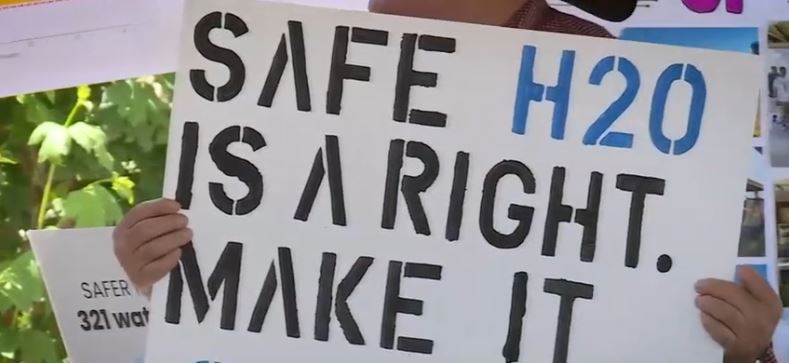
WATSONVILLE, California (KSBW) — Advocates are urging the restoration of full funding for California’s Safer program, which aims to help rural communities address contaminated water issues and secure long-term solutions.
“Safer, funding. It was set at $130 million. And in the past, they had language that would backfill, any money that wasn’t brought in by the cap-and-invest program,” said Brandon Bollinger. “But the language for the backfill was taken out. And so we’re worried that communities like the one we’re in today aren’t going to have the resources to advance long-term solutions.”
The Community Water Center highlighted the struggles of residents in unincorporated areas such as Royal Oaks, Las Lomas, and Castroville, where contaminated wells have been a persistent issue.
“This is one of the pipes that one of the families was getting their water from their well to their household. This isn’t justice. This isn’t a reality that anybody in California should be living with,” Bollinger said.
Rosa, a local advocate, expressed her concerns about the situation.
“We think in other parts of the globe, Africa or Asia, that they don’t have clean water. We’re here in California when we have one of the biggest economies, for people that don’t have clean water. That’s not right,” Rosa said.
The Monterey County Public Health Bureau identified several contaminants in water across the state, including nitrate, TCP, PFAS, and chromium 6, all of which can cause cancer with prolonged exposure.
“It looks clean, but you can’t see many of these contaminants,” Bollinger said. Chromium 6 and nitrate are particularly prevalent on the Central Coast.
Advocates noted that advanced treatment for these chemicals can cost millions, making it unaffordable for small communities.
Bollinger explained that around 240 households are working together to find a long-term solution, with many relying on bottled water as a temporary measure.
“It’s around 240 households that are working together to find a long-term solution. And many of those households are also receiving bottled water as an interim solution, because bottled water should not be a solution for any household,” Bollinger said.
Rosa emphasized the need for permanent solutions.
“They’re not waiting for a small solution, temporary solution. They have the right to have a permanent solution in their houses,” she said.
Advocates continue to push for restored funding to ensure clean water access for rural communities in California.
Please note: This story was provided to CNN Wire by an affiliate and does not contain original CNN reporting. This content carries a strict local market embargo. If you share the same market as the contributor of this article, you may not use it on any platform.