Family wants answers after 28-year-old woman dies just days before parole at Michigan’s only women’s prison

By Randy Wimbley

Click here for updates on this story

    PITTSFIELD TOWNSHIP, Michigan (WXYZ) — Khaira Howard was 28 years old and days away from being paroled when she died at Women’s Huron Valley Correctional Facility in Pittsfield Township. Now her parents are planning her funeral and demanding answers, as state lawmakers say her death is part of a much bigger problem inside Michigan’s only women’s prison.

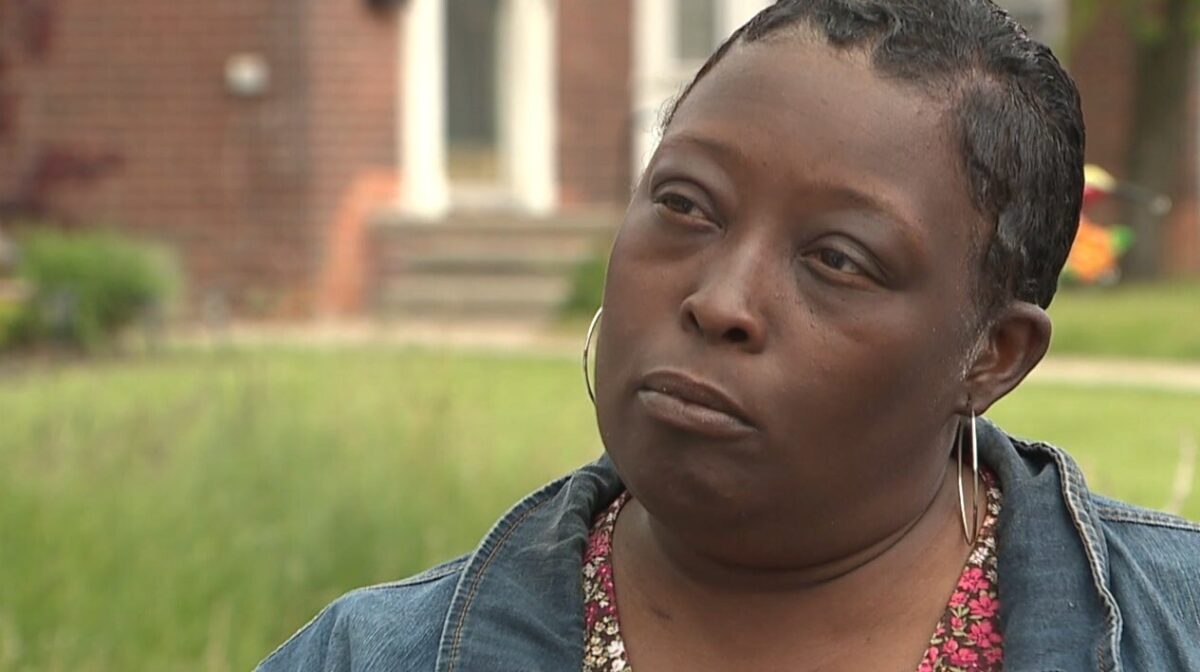
Howard’s mother, Shaquillia DeShields, said another inmate called her with details about her daughter’s final moments.

“She said my daughter was sitting in a room and she was screaming for help. She said she was complaining about her chest. And she said someone was sitting with her. They got up and left her there… 30 to 45 minutes… by herself. She was screaming for help, and when they came back — she was unresponsive,” DeShields said.

Howard was set to be paroled May 27.

Her parents say the prison failed to provide her medication for schizophrenia and that her health concerns were not taken seriously.

“You just… It’s like you never think that you would have to be burying your daughter. It’s supposed to be the opposite way around. I can’t even wrap my head around it. It’s hurtful,” Don Howard said.

Howard’s death is under investigation. Gov. Gretchen Whitmer’s press secretary, Stacey LaRouche, released a statement on the investigation.

“The Governor has directed MDOC, consistent with protocol, to conduct a swift, thorough, and transparent investigation of the recent tragic death in one of Michigan’s prisons. This process will include a careful assessment by an independent medical examiner. When this process is complete, we will release the results of the investigation,” LaRouche said.

State Rep. Laurie Pohutsky says Howard recently contacted her office about conditions at Huron Valley, saying she and other inmates were forced to clean mold without proper protective equipment. Pohutsky connected Howard’s death to a broader pattern of deaths in Michigan Department of Corrections facilities.

“We’re talking about Khaira today, but it’s been less than a month since a man died in another MDOC facility from a fall. This is inexcusable, and something needs to change,” Pohutsky said.

MDOC spokeswoman Jenni Riehle provided a statement saying:

I can confirm that Khaira Howard passed away at Women’s Huron Valley Correctional Facility on May 13. Life saving measures were initiated by onsite staff and EMS was called where they continued life saving measures upon arrival to the facility, but attempts were unsuccessful. The death is currently under investigation.

The department takes the safety and security of its facilities, staff, and those under our supervision very seriously and has comprehensive processes and medical protocols for health emergencies. This includes processes for assessing patient health by qualified onsite staff, requesting outside emergency medical services if needed, and conducting life saving measures such as CPR. All incarcerated individuals are provided a consistent community standard of care which includes access to regular medical checkups and emergency services.

The Michigan Department of Corrections has established itself as a national leader in evidence-based corrections under the direction of Director Heidi E. Washington. Over the last decade, the department has safely reduced the prison population, worked to modernize our facilities and operations, increased opportunities that support long-term public safety and self-sufficiency, and achieved the lowest recidivism rates in our state’s history. We appreciate our officers, healthcare employees, and all other MDOC staff for their dedication to our core missions of public safety and preparing people for success.

Howard was serving one to 15 years for receiving and concealing stolen property.

Her death comes months after whistleblowers testified before a state legislative committee about black mold, inadequate medical care, drug trafficking, recorded strip searches, and retaliation against inmates who speak out at Women’s Huron Valley.

Pohutsky said MDOC leadership has repeatedly dismissed concerns about the facility.

“Director Washington has said time and time again that there are no issues at Women’s Huron Valley, and I don’t understand how anybody can say that in good conscience after a woman just died,” Pohutsky said.

Inmates also wrote letters to 7 News Detroit highlighting what they describe as serious problems at the prison.

Please note: This story was provided to CNN Wire by an affiliate and does not contain original CNN reporting. This content carries a strict local market embargo. If you share the same market as the contributor of this article, you may not use it on any platform.

Mother speaks out after settling federal civil rights lawsuit against former neighbor

By Carli Petrus

Click here for updates on this story

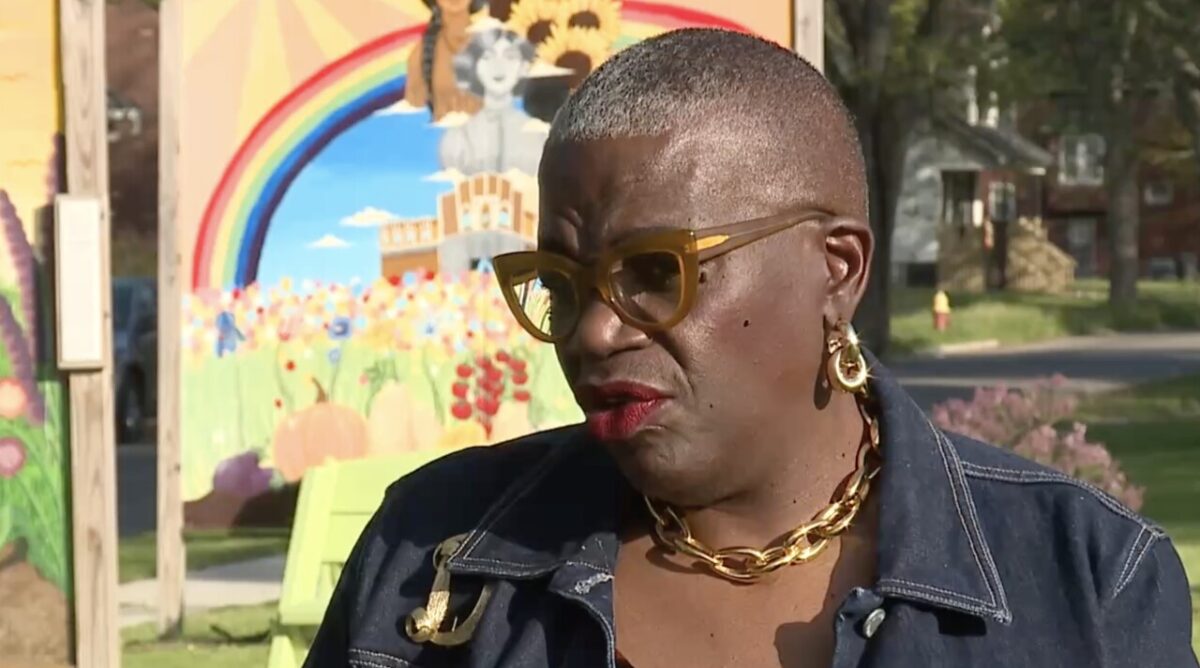
    GROSSE POINTE PARK, Michigan (WXYZ) — A metro Detroit mother is speaking out after settling a federal civil rights lawsuit against her former neighbor, saying what her family experienced is still painful to relive.

JeDonna Dinges says the situation began when her then-husband noticed a KKK flag hanging in the window of a neighboring home — directly facing the family’s dining room.

“My ex-husband went to take the trash out, and when he came back in, he noticed a Klan flag in the window of our neighbor’s home,” Dinges said.

Dinges says she had already been dealing with disturbing incidents involving the neighbor before that moment in 2021, but says seeing the flag changed everything.

“To not feel safe in your own home. To have your child think someone’s going to shoot through the window and kill them,” Dinges said.

The family eventually left the Grosse Pointe Park neighborhood they had called home for more than a decade.

“Our primary responsibility is to keep our child or children safe, and I would tell her you’re safe, it’s going to be okay, you’re fine, but she didn’t believe it and neither did I,” Dinges said.

We first covered this story back in 2021 when the Wayne County Prosecutor’s Office denied a display warrant request against Dinges’ former neighbor, determining no crime had been committed.

“The prosecutor said that there was no crime committed, so there was nothing that we could do there, but we knew what happened to us wasn’t right,” Dinges said.

In 2023, the Civil Rights Litigation Initiative at the University of Michigan contacted Dinges and filed a federal civil rights lawsuit on her behalf, accusing her former neighbor of racial intimidation and harassment.

“I was extremely excited when I got the call U of M was going to take the case,” Dinges said.

Court records show a federal judge later ruled Dinges had enough evidence to move forward under the Fair Housing Act, finding the alleged conduct could reasonably be viewed as a pattern of racial harassment.

The case has since been settled. The terms of the agreement have not been released.

“If someone came and put $7 trillion on my porch and shrink-wrapped it so it wouldn’t get wet, that would not be enough for what we went through,” Dinges said.

Dinges says she is now using her experience to help others, including working to revise Michigan’s ethnic intimidation law.

“So that we could change the laws so that we could help protect everyone in the state of Michigan from ethnic intimidation and hate-based crime,” Dinges said.

The defendant’s attorney has not yet responded to a request for comment.

This story was reported on-air by a journalist and has been converted to this platform with the assistance of AI. WXYZ verifies all reporting on all platforms for fairness and accuracy.

Please note: This story was provided to CNN Wire by an affiliate and does not contain original CNN reporting. This content carries a strict local market embargo. If you share the same market as the contributor of this article, you may not use it on any platform.
Women connected to Virginia Beach-based $31M counterfeit coupon scheme sentenced to prison

By Margaret Kavanagh

Click here for updates on this story

    NORFOLK, Virginia (WTKR) — Four women connected to a $31 million counterfeit coupon scheme were sentenced in Norfolk Federal Court.

Amber Teague received 6 months, Cindi Swindle received 12 months, Jennifer Snyder received 15 months, and Melissa Apodaca received 18 months.

A fifth defendant, Sherise Williams, is still waiting to be sentenced.

The judge allowed all four to serve their sentences in low-security prisons in their home states.

The women were the top buyers in an illegal coupon operation led by Lori Ann Talens and her husband Pacifico, who designed fake coupons and sold them on the internet from their Virginia Beach home.

Lori Ann Talens is serving a 12-year sentence. Pacifico Talens is serving 7 years. The scheme is considered one of the largest coupon fraud operations ever discovered.

The case first came to light in 2021.

Bud Miller, Executive Director of the Coupon Information Corporation, was integral to the investigation.

“There’s a misconception out there, on the dark side, as they call it, that only the big fish are being prosecuted. Now, you can be a customer and not the actual head person of a criminal organization and be prosecuted,” Miller said.

Miller explained how the scheme typically worked.

“Generally, how these things work is that people will purchase counterfeit coupons, they generally know that they’re counterfeit coupons, and they’ll buy a large number of them. Then they will use the counterfeits to steal products and then, frequently, they will resell those products and that’s how they make their money at that point,” Miller said.

Miller said those losses have a broad impact.

“The losses are devastating both for the retailers and the manufacturers, so they have to raise their prices and sell more product just to make up for the losses,” Miller said.

Miller offered a straightforward warning to consumers.

“Consumers can protect themselves almost completely by never paying money for coupons. We’ve said that before, but as soon as you start charging money for something that is given away for free, you bring in the criminal element at that point so never, ever pay for coupons,” Miller said.

Miller said he hopes the sentences will deter others from committing similar crimes.

Please note: This story was provided to CNN Wire by an affiliate and does not contain original CNN reporting. This content carries a strict local market embargo. If you share the same market as the contributor of this article, you may not use it on any platform.
Ink Society Tattoo Collective helping community through Mental Health Awareness Month

By Giselle Valentin

Click here for updates on this story

    JENISON, Michigan (WXMI) — A Jenison tattoo studio is using art and conversation to help support people struggling with addiction, grief and mental health during Mental Health Awareness Month.

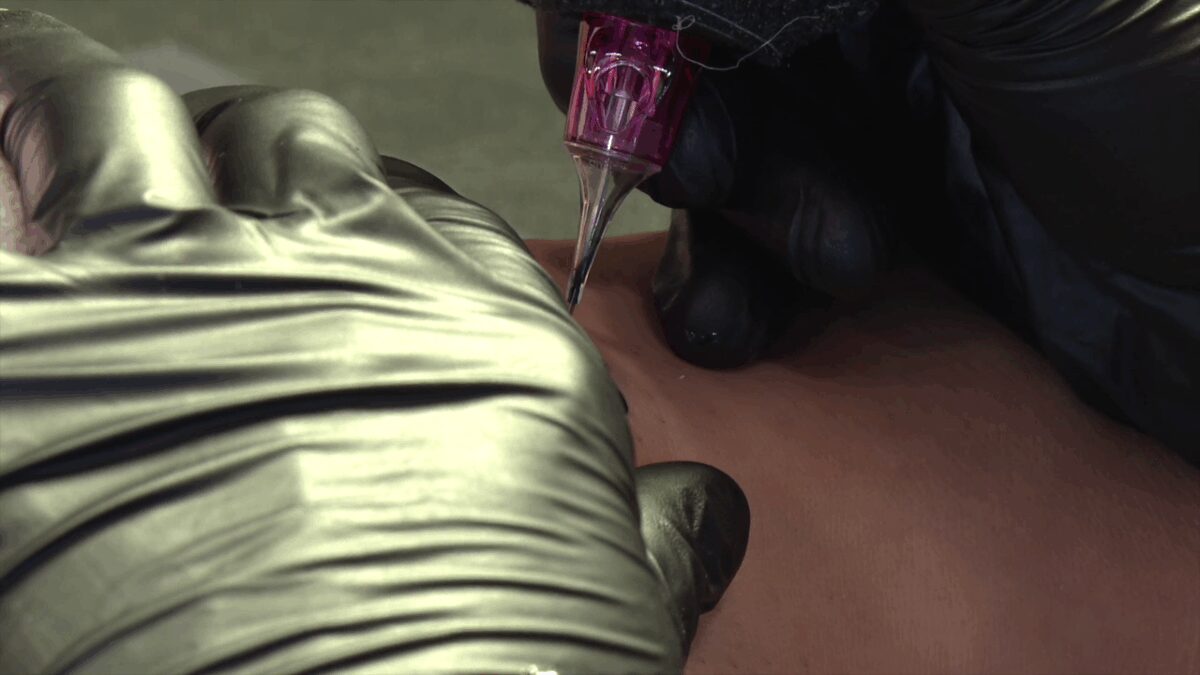
Inside The Ink Society Tattoo Collective, owner Noize Pierce says the stories shared during appointments often run deeper than the ink itself. Pierce says his own struggles with addiction inspired him to create a different kind of tattoo shop — one where people feel safe, welcomed and heard.

“It’s my goal to make sure that people understand that it’s okay to be heard,” Pierce said.

Pierce says the studio has become a place where people feel comfortable opening up about grief, sobriety, trauma and mental health struggles.

During Mental Health Awareness Month, tattoo artist Victor Cameron says many clients walk through the doors carrying emotional weight.

“Me helping the community or helping the person with their life struggles, it’s pretty important to me,” Cameron said.

For some clients, the tattoos themselves symbolize healing, recovery and growth.

“The phoenix, because of being a rising phoenix rising from the ashes and rebirth and renewal is huge,” client Lindsay Misenar said while getting tattooed during the shop’s mental health awareness event.

Others say simply having a safe environment to talk about mental health can make a difference.

“I’ve struggled with mental health myself, and I know a lot of people that have struggled, so it’s really nice that they’re doing something like this,” first-time client Mitchell Cheyne said.

Pierce says conversations surrounding mental health and addiction are especially important because many people struggling often feel alone.

“Be able to show people that there’s hope that your past does not have to define who you are, and that there’s a bright future if you just seek it and work for it,” Pierce said.

Pierce also hosts “The Tatted Addicts” podcast, where guests openly discuss addiction recovery and mental health struggles.

If you or someone you know is struggling with mental health, help is available by calling or texting 988.

This story was reported on-air by a journalist and has been converted to this platform with the assistance of AI. WXMI verifies all reporting on all platforms for fairness and accuracy.

Please note: This story was provided to CNN Wire by an affiliate and does not contain original CNN reporting. This content carries a strict local market embargo. If you share the same market as the contributor of this article, you may not use it on any platform.

Students walk out over racism concerns, say issue is ongoing

By Makaylah Chavez

Click here for updates on this story

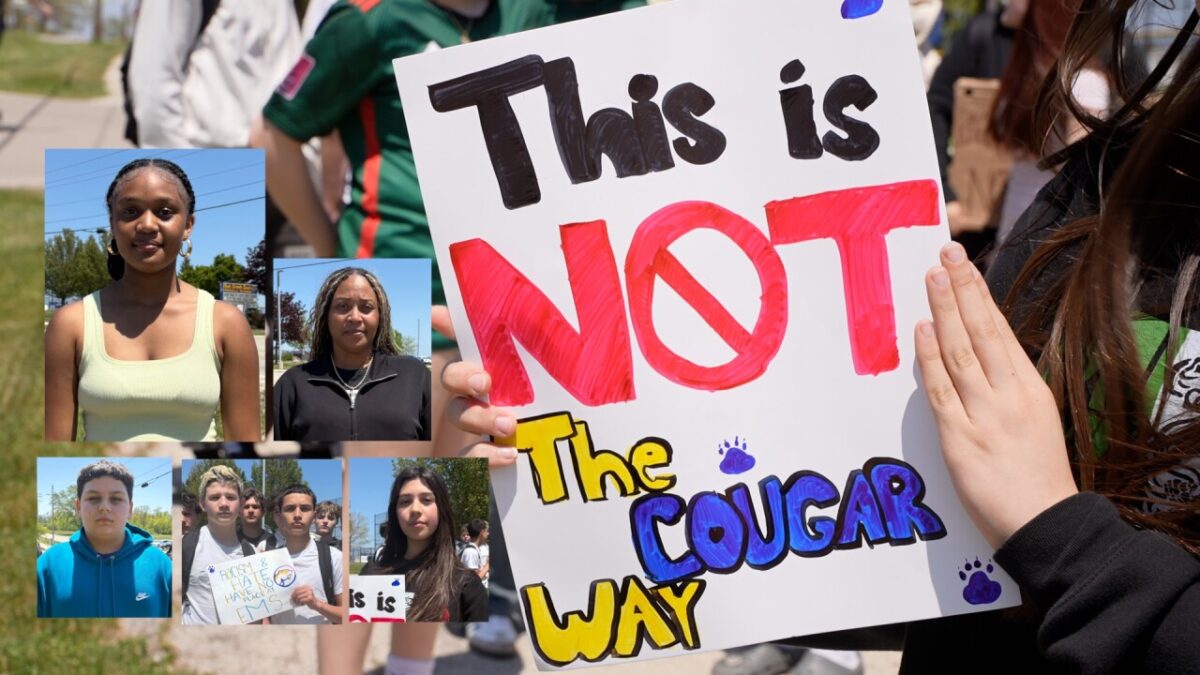
    OAK CREEK, Wisconsin (WTMJ) — Students at Oak Creek East Middle School walked out of class Friday, protesting what they say is ongoing racism inside the school and frustration with how administrators have handled complaints.

The walkout comes after eighth grader McKenzie McCoy said another student used racial slurs toward her and her friends earlier this week.

“Another student was telling people, ‘Oh I’m going to call the KKK on you guys,’ following me and my friends around,” McCoy said.

McCoy said the incident quickly escalated, leaving students upset and emotional throughout the school day.

“These words mean so much. It’s not just a word. It has some serious background around it,” she said.

McKenzie’s mother, Patrice McCoy, said her daughter called her from school after the incident happened.

“Yesterday my daughter called me from school saying that a young lady said the n word,” Patrice McCoy said.

She said she later went to the school to speak with administrators but left feeling dismissed by the response.

“She basically said that if you want to go to school from home for the rest of the year you can do that,” McCoy said administrators told her.

But McCoy said keeping her daughter home would not solve the larger issue.

“Absolutely not,” she said. “She is going to be here every single day because staying home won’t solve the problem.”

After sharing her daughter’s experience in a Facebook post Thursday night, McCoy said the response from students and families across the district was overwhelming. By Friday morning, students had organized a walkout outside the school.

Standing alongside dozens of classmates holding signs, McKenzie said this was not an isolated incident.

“No one should have to come to school scared of people coming up to them calling them a slur,” she said.

She also said she felt the situation could have been handled differently by school leaders.

“I just feel like this could’ve been handled in a different way,” McKenzie said.

Other students at the walkout said they have experienced similar incidents for years.

“Ever since I was in 6th grade through 8th grade, I’ve experienced multiple cases of racism. Basically, every single day, from multiple people,” said eighth grader Sofia Rojo.

Rojo said many students have avoided reporting incidents because they do not believe enough action will be taken.

“I’ve never felt comfortable enough to go up to administration and talk about it because I’ve heard about experiences that other people have had, and they haven’t done anything about it,” she said.

She added that many students wanted to participate in Friday’s walkout but could not because they lacked parental permission.

“There was also a lot of people who couldn’t come out here because they didn’t have parent permission, but I know there’s a lot of people inside that would’ve loved to come out here and walk,” Rojo said.

Rojo said she hopes the demonstration pushes the district to pay closer attention to the issue.

“Nothing has really been fixed and I feel like with more people speaking up more things will happen,” she said.

Students themselves helped organize the event, making signs the night before the protest.

“I’ve always wanted to do something like this, but I was never confident enough to bring it up,” Rojo said. “But recently there’s been a lot of things happening all in one day yesterday, so we all grouped up and decided to do the walkout.”

Seventh grader Daniel Navarro said the racism he has experienced at school has deeply affected him emotionally.

“I’m Mexican, and I’ve been called names, slurs, and I’ve actually cried myself to sleep because of the slurs that people call me,” Navarro said.

Navarro said the problem has become so severe that he is now transferring schools.

“It’s actually the reason I’m moving schools,” he said.

He said some students downplay racist comments, but he believes the impact is much more serious.

“Sometimes people say it’s not that big of a deal, but it is that big of a deal,” Navarro said. “It’s that big of a deal that people feel they can say those things and want to say those things.”

Navarro also said he has been disappointed by his experience at the school.

“Since I came here in sixth grade, I’ve heard great things about this school, but I cannot back them up,” he said.

Other students who joined the walkout said they wanted to support classmates affected by racism, even if they were not personally targeted.

“Even though it wasn’t directed towards my race or my ethnicity, I just didn’t think it was cool because there’s no reason to be doing that,” said eighth graders Nicholas and Caden De Leon.

The two friends also said they felt the punishments given to the students involved were not enough to address the issue.

“They never got the point. All they got was detention, and they never got the point,” they said.

Parents and students said they understand racism is not a problem that can be solved overnight, but they want the district to begin working with families toward meaningful solutions.

“I get it’s not going to be solved overnight but at least say let’s come to the table and find some solutions,” Patrice McCoy said.

TMJ4 News reached out to both the school and the district for comment but has not yet heard back.

Please note: This story was provided to CNN Wire by an affiliate and does not contain original CNN reporting. This content carries a strict local market embargo. If you share the same market as the contributor of this article, you may not use it on any platform.
Robot sifter joins volunteers at Klode Park beach to pull plastic from Lake Michigan shoreline

By Gideon Verdin

Click here for updates on this story

    MILWAUKEE COUNTY, Wisconsin (WTMJ) — Volunteers and Milwaukee Riverkeeper are working to keep plastic out of Lake Michigan — and this time, they have a robot helping them do it.

Milwaukee Riverkeeper deployed its beach-cleaning robot, known as a “BeBot” and affectionately nicknamed “Mister Sifter,” at Klode Park beach in Whitefish Bay. The machine sifts through sand to remove microplastics before they reach Lake Michigan.

Katie Rademacher, Milwaukee Riverkeeper’s research and restoration manager, said the robot allows the team to measure exactly what they’re collecting.

“We quantify and kind of characterize the waste that we collect to know how many small pieces of plastic we’re picking up.”

Mister Sifter shakes out sand while larger material — rocks, trash, and plastic — collects in the back, then gets released for volunteers to sort through by hand.

“It doesn’t sound like a lot, but usually we’re getting about one pound of plastic. But all these pieces are teeny tiny… if you were at the beach doing a hand cleanup, it would take forever to find all those little bits and pieces,” Rademacher said.

The robot’s haul typically includes single-use plastics such as straws, cigarette butts, and bottle caps.

“That can include cigarette butts, straws, and little tiny fragments of plastic that were once something big,” Rademacher said.

Operating the machine has its lighter moments, too.

“It’s like you drive it like a Mario Kart thing. It’s fun to drive,” Rademacher said.

The stakes, however, go well beyond litter. Millions of people rely on Lake Michigan for drinking water, and plastic pollution poses a direct threat to human health.

Leah Holloway, education and sustainability manager, said the problem extends far beyond what people can see.

“We tend to think of plastic as an environmental problem, and it is… but it also is harming human health too. We are ingesting it. It’s in our water, it’s in our air, it’s in our food.”

Holloway said the longer plastic stays in the environment, the more dangerous it becomes.

“The longer it’s in the environment, the smaller pieces it can break down into.”

She also warned of broader consequences tied to plastic production.

“Plastic is going to be a bigger driver of climate change than coal in the very near future.”

For Holloway, the issue is deeply personal.

“I’m eating all this plastic too. It’s in my body… there’s endocrine disruptors, there’s carcinogens in this plastic that’s going to impact my health and my family’s health.”

Her message to beach goers is straightforward.

“Finding something that is single-use plastic that you are using, but that maybe there’s an alternative… that’s really helpful.”

Rademacher said the Great Lakes region carries a responsibility to protect its freshwater resources.

“We drink Lake Michigan water… we’re really lucky where we live that there’s so much fresh water, but that’s not the case across the United States or across the world, so we just have to protect this freshwater system.”

She said her commitment to the work runs deep.

“I’ve always cared about the environment ever since I was a little kid… I feel like it really fills my cup to work on this.”

The connection between everyday habits and the health of the lake is something Rademacher wants people to understand.

“Everything that happens on the land is connected to the water… if you take some time and don’t leave your juice box on the soccer field, it’s not going to end up here eventually.”

Rademacher said she hopes the effort inspires people to rethink their daily choices.

“I hope people take away that plastic is a big problem, right? But we can be part of the solution. Choices we make every day to use less plastic or use reusable products really makes a difference.”

Milwaukee Riverkeeper plans to deploy the BeBot weekly at area beaches throughout the summer as the organization continues tracking the types of plastic pollution appearing along Lake Michigan’s shoreline. Holloway encouraged the community to get involved.

“We’ll be doing more beach cleanups throughout the summer… come join us.”

This story was reported on-air by a journalist and has been converted to this platform with the assistance of AI. WTMJ verifies all reporting on all platforms for fairness and accuracy.

Please note: This story was provided to CNN Wire by an affiliate and does not contain original CNN reporting. This content carries a strict local market embargo. If you share the same market as the contributor of this article, you may not use it on any platform.

Norfolk sailor surprises daughters with fire truck homecoming

By Jay Greene

Click here for updates on this story

    NORFOLK, Virginia (WTKR) — Military homecomings are a familiar sight in Hampton Roads, especially following the return of the USS Gerald R. Ford Carrier Strike Group to Naval Station Norfolk this weekend.

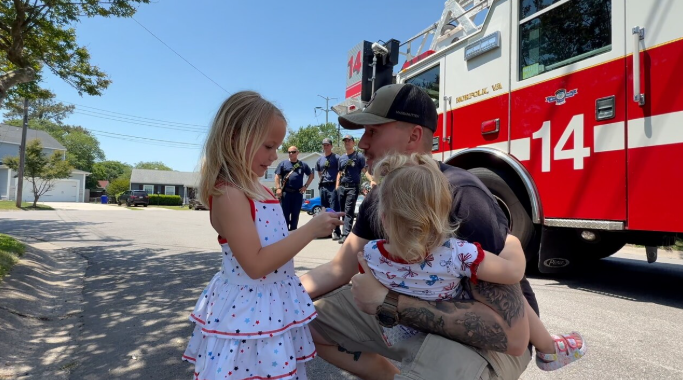
But for one Norfolk sailor, the reunion with his family came with flashing lights, sirens and a surprise his two young daughters will likely never forget.

Damage Controlman 2nd Class Jeffery Zimmerman, who serves aboard the USS Mahan (DDG-72), returned home Sunday after nearly 11 months deployed with the Gerald R. Ford Carrier Strike Group. Instead of a traditional pier-side reunion, Zimmerman partnered with Norfolk Fire-Rescue Station 14 to create a special neighborhood homecoming for his children.

News 3 was the only station there as a Norfolk fire truck turned into Zimmerman’s neighborhood near Sewells Point Road, carrying the sailor home to surprise his daughters, 5-year-old Stella and 2-year-old Scarlett.

As the truck came around the corner, the girls ran toward their father, screaming and hugging him after months apart.

“Oh I’m excited, so happy to have my girls,” Zimmerman said moments before the reunion.

Zimmerman serves as a firefighter aboard the USS Mahan and previously worked as a firefighter and EMT in Henry County before joining the Navy. During the reunion, he handed out USS Mahan patches to the Station 14 firefighters who helped make the surprise happen.

Zimmerman said his daughters love fire trucks and stop to watch every time they hear sirens — making the fire truck escort the perfect way to come home.

For his wife, the reunion marked the end of a long and emotional deployment that included extensions overseas.

“It’s a lot,” she said. “You get your hopes up and then it doesn’t happen, but we have great friends and a great support system.”

The USS Gerald R. Ford (CVN-78), USS Bainbridge (DDG-96) and USS Mahan (DDG-72) returned to Naval Station Norfolk this weekend following a record deployment.

Please note: This story was provided to CNN Wire by an affiliate and does not contain original CNN reporting. This content carries a strict local market embargo. If you share the same market as the contributor of this article, you may not use it on any platform.

One Election After Another: Why Showing Up Still Matters More Than Ever

By Francis Page Jr.

Click here for updates on this story

    May 18, 2026 (Houston Style Magazine) — In America, democracy has never been a spectator sport — especially for Black Americans. From the earliest fights for freedom to today’s battles over voting rights, representation, and political power, progress has always depended on one thing: people showing up. And in 2026, amid growing voter fatigue and renewed legal challenges surrounding access to the ballot box, that truth remains as urgent as ever.

There is no denying the exhaustion many voters feel today. Another campaign season. Another flood of political ads. Another round of promises, frustrations, and calls to action. For many communities — particularly Black communities — the emotional burden can feel especially heavy. Too often, the same voters who are asked repeatedly to “save democracy” are also the same communities forced to battle systems that appear designed to limit their influence.

But history offers a powerful reminder: disengagement has never protected progress. Participation has.

As civil rights icon John Lewis once declared, “The vote is precious. It is almost sacred.” That statement still echoes loudly today as debates surrounding the Voting Rights Act, redistricting battles, polling access, and representation continue unfolding across the nation.

These issues are not abstract legal conversations taking place somewhere far away in courtrooms and capitol buildings. They directly affect neighborhoods in Houston, Harris County, and communities across America. They determine who sits at decision-making tables discussing education funding, healthcare access, affordable housing, public safety, transportation, infrastructure, and economic opportunity.

Representation matters because policy matters.

When districts are redrawn in ways that dilute Black voting power, or when voting becomes more difficult through reduced polling locations or administrative barriers, communities lose more than convenience — they risk losing influence. And historically, Black Americans understand that political influence has never been freely handed over. It has always been fought for.

The reality is sobering. Black Americans have been legally free for less than 200 years. Meaningful access to voting rights has existed for barely six decades. Even after emancipation, generations endured literacy tests, poll taxes, intimidation, violence, and institutional suppression specifically designed to silence Black political participation.

Yet despite those barriers, Black communities persevered. As Martin Luther King Jr. famously reminded the nation, “The arc of the moral universe is long, but it bends toward justice.” The important part of that quote is often overlooked: the arc does not bend on its own. People bend it through sacrifice, organizing, advocacy, persistence, and participation.

And progress has happened.

Since the Civil Rights Movement, America has witnessed transformational change once thought impossible. Schools desegregated. Black voter registration surged. Black Americans rose to leadership positions as judges, mayors, university presidents, military leaders, Fortune 500 executives, members of Congress, and ultimately, President of the United States.

None of that progress happened accidentally.

It happened because ordinary people did extraordinary things. They marched. They organized. They challenged unfair laws. They registered voters. They attended school board meetings. They built institutions. And election after election, they kept showing up.

As former President Barack Obama once stated, “Change will not come if we wait for some other person or some other time.” Those words resonate deeply today as communities wrestle with frustration, disappointment, and political fatigue.

Yes, progress can feel painfully slow. Sometimes elections fail to inspire excitement. Sometimes outcomes disappoint. Sometimes it may appear easier to tune out entirely. But history repeatedly demonstrates that rights are most vulnerable when people become disengaged.

The rollback of progress rarely announces itself loudly at first. It often arrives gradually — through court rulings, procedural changes, district maps, reduced access, and growing public apathy.

That is why every election matters.

Not just presidential elections. Not just high-profile races. Local elections matter. Judicial races matter. School board elections matter. County elections matter. State elections matter. Primaries matter. Runoffs matter.

Because power is never absent. If one group disengages, another group fills the vacuum.

Legendary educator and activist Fannie Lou Hamer perhaps said it best when she declared, “Nobody’s free until everybody’s free.” Her words remain a warning and a challenge for modern America.

Democracy survives through consistent participation, not occasional outrage.

That means showing up even when the process feels repetitive. Showing up even when change feels incomplete. Showing up because future generations deserve the same opportunities previous generations fought to secure.

Houston has always been a city shaped by resilience, activism, diversity, and forward movement. From the Civil Rights era to modern community organizing efforts, this city understands the power of collective engagement. Houstonians know that transformation does not happen overnight — but it never happens at all without participation.

And so, as another election season arrives, the message remains clear: stay engaged. Stay informed. Stay involved. Because democracy is not maintained by comfort. It is sustained by commitment.

For the readers of Houston Style Magazine, the assignment is simple but essential: keep showing up. Our communities, our future, and our collective voice depend on it.

photo HSM LOGO

Please note: This story was provided to CNN Wire by an affiliate and does not contain original CNN reporting. This content carries a strict local market embargo. If you share the same market as the contributor of this article, you may not use it on any platform.

Kierra Lee
KIELEESTYLE@GMAIL.COM
4096658446

Decision 2026: Low voter turnout trails Oregon primary as Rep. Bynum leads fundraising

Tracee Tuesday

BEND, Ore. (KTVZ) — With just days until Oregon’s May 19 primary election, voter turnout remains modest statewide, prompting renewed reminders for residents across Central Oregon to return their ballots on time.

According to the Oregon Capital Chronicle, election officials had received about 357,000 ballots as of Tuesday, roughly 12% of the 3.1 million sent to registered voters. While that pace is not far off from previous election cycles, it remains relatively low heading into the final stretch.

For voters in Deschutes, Crook and Jefferson counties, the message is clear: ballots must be dropped off at an official drop box by Tuesday night to be counted. Ballots sent by mail at this point risk arriving too late.

State leaders are also emphasizing confidence in Oregon’s vote-by-mail system. Officials say elections remain secure, even as they push back against federal pressure they argue could interfere with state and local control of elections.

Meanwhile, attention is also building around key races on the ballot. The Oregon Capital Chronicle reports that Democratic U.S. House candidate Janelle Bynum has outpaced other candidates in fundraising and spending in the final weeks leading up to the primary.

Election results are expected to begin coming in Tuesday evening, with counts continuing into the late-night hours across the state.

KTVZ will provide extensive coverage of the primary. KTVZ News will be closely tracking every development in these races. To get the latest, viewers can scan the QR code your see here:

That code links to a page dedicated to the races on the ballot. You can also find updates by clicking “Decision 2026.”

Click here to follow the original article.

At least 4 Georgians sick as multistate salmonella outbreak linked to backyard poultry grows

By WUPA Staff

Click here for updates on this story

    Georgia (WUPA) — Four Georgians are among 184 people across 31 states who have gotten sick in a growing multistate salmonella outbreak tied to contact with backyard poultry, according to the Centers for Disease Control and Prevention.

The CDC is investigating three separate but related outbreaks involving Salmonella Enteritidis, Mbandaka and Saintpaul strains. As of May 4, illnesses have been reported from 31 states, with cases dating back to January 17. Of the 154 people who reported symptoms, 53, about 34%, have been hospitalized. One death has been reported in Washington state.

Since the CDC’s last update on April 23, 150 new illnesses have been reported, including two new outbreak strains.

Officials say the link to backyard poultry is clear. Of 141 people interviewed, about 78% reported contact with backyard chickens, ducks or other poultry in the week before they got sick. The largest of the three outbreaks has an unusually high number of patients reporting contact with ducks, specifically Pekin ducks.

More than a quarter of those sickened are children under 5 years old, the CDC says.

Health officials say the true number of cases is likely much higher than what has been reported, since many people recover without seeing a doctor and are never tested.

Backyard poultry can carry salmonella even when they appear perfectly healthy. The bacteria can spread to anything in the areas where the birds live and roam. People typically get sick by touching poultry or their environment and then touching their mouth or food without washing their hands.

Symptoms of salmonella include diarrhea, fever and stomach cramps, usually beginning six hours to six days after exposure. Most healthy adults recover on their own within four to seven days, but children under 5, adults 65 and older and people with weakened immune systems are at higher risk for serious complications.

The CDC is urging anyone who keeps backyard poultry to wash hands thoroughly after handling birds or anything in their environment.

Please note: This story was provided to CNN Wire by an affiliate and does not contain original CNN reporting. This content carries a strict local market embargo. If you share the same market as the contributor of this article, you may not use it on any platform.