Raju Mehta named Grand Marshal of 20th anniversary Paint El Paseo Pink

Jesus Reyes

PALM DESERT, Calif. (KESQ) – Raju Mehta, owner of El Paseo Jewelers, will be the Grand Marshal of the 20th Anniversary Paint El Paseo Pink, the Desert Cancer Foundation (DCF) announced on Tuesday.

Paint El Paseo Pink will take place Saturday, October 10, 2026, on El Paseo in Palm Desert. The event supports the Desert Cancer Foundation, uniting the Coachella Valley in the fight against cancer. Thousands of participants are expected to join.

Organizers said Mehta was selected for the honor in recognition of his years of dedication, generosity and philanthropic support of Desert Cancer Foundation and the local residents it serves.

“Raju has been an incredible friend and supporter of Desert Cancer Foundation for many years,” said Mark Scheibach, Executive Director of Desert Cancer Foundation. “His generosity and genuine compassion for our community embody everything Paint El Paseo Pink represents. As we celebrate this milestone 20th Anniversary, we could not think of anyone more deserving to lead us down El Paseo.”

Through El Paseo Jewelers and his personal philanthropy, Mehta has a longstanding history of giving back to the Coachella Valley. His support of DCF has helped the Foundation continue its mission of ensuring that local residents facing cancer can access the care and treatment they need, regardless of their ability to pay.

“It’s an honor to be Grand Marshal of Paint El Paseo Pink 2026 for a cause that is near and dear to my heart. Cancer is a terrible disease that affects not only the patients but also their families. Desert Cancer Foundation does amazing work supporting patients with any type of cancer throughout their treatment, and in turn lessens the burden to the families allowing them to be present for their loved ones”, Mehta expressed.

Proceeds benefit Desert Cancer Foundation, a 100% donor-funded nonprofit providing financial assistance for cancer-related medical care to residents of the Coachella Valley and surrounding communities. To register for Paint El Paseo Pink, please visit www.desertcancerfoundation.org

Click here to follow the original article.

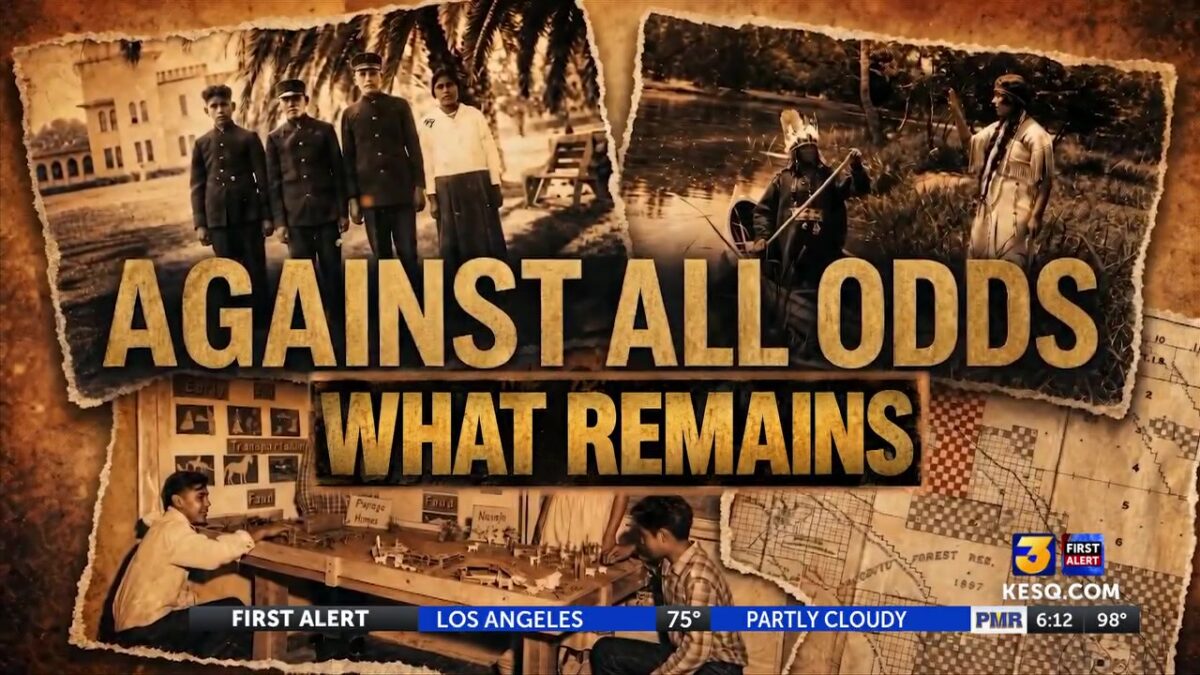
Against All Odds: What Remains — The challenges facing our local Tribes

Angela Chen

PALM SPRINGS, CA (KESQ) – In Part 1 of Against All Odds, we looked at the role that tribal casinos have played in the Coachella Valley and how they have become a major part of the region’s economy and identity. But the pain behind the prosperity remains, with the bands now grappling to honor the culture and language.

Ravaged by disease in the 1800s, the Augustine Band of Cahuilla Indians in Coachella were federally recognized as the smallest tribe in the entire United States at just one woman in 1972 — Roberta Augustine. The numbers grew when she had children. But it was to be short-lived, because Roberta died, and all of her children died soon after.

Except for one — her daughter Mary Ann Martin.

And so, it was again, the weight of an Indian nation, solely on one woman’s slim shoulders.

“My mom’s biggest struggle was being alone. She didn’t have elders to rely on. She didn’t have people to guide her,” said Amanda Augustine, the Chairwoman of the Augustine Band of Cahuilla Indians.

Amanda, as a child, watched her mother grapple with that isolation.

“She missed her family. She struggled with having to learn everything by herself and understand everybody is not your friend,” said Augustine. “”The tribes are here. They’ve been here. They’re not going anywhere. We can’t go anywhere.”

Now, in 2026, they have boosted their numbers to 20, to become the second smallest tribe in the U.S.

Augustine is one of 9 bands of the Cahuilla tribe who have been here in the Southern California desert area — for decades — centuries — ruling the Coachella Valley long before white settlers — before Spanish conquistadors — before all else —

The Cahuilla are grouped into nine different bands; there are the Mountain Cahuilla, with the Ramon, Cahuilla, Santa Rosa and Los Coyotes bands and the Pass Cahuilla which encompasses the Morongo Band and the Agua Caliente as well as the Desert Cahuilla, which includes the Torres Martinez, the Cabazon Band of Cahuilla Indians, and the Augustine Band of Cahuilla Indians, whom Coachella Valley residents are most familiar with.

These bands spoke different dialects, but shared the same cultural traditions.

“Cahuilla clans spread out all over Southern California, and those independent clans would join together for different ceremonies and social gatherings, and Cabazon, both Cabazon the Elder and Cabazon the Younger, in this photo, they negotiated lands,” said Arkamez Blankenship, the Director of Cultural Affairs for the Cabazon Band of Cahuilla Indians.

For the past century, language and culture have been in danger of becoming lost to history entirely.

In the 1800s, kids were ordered to attend Indian assimilation boarding schools, like the Sherman Institute in nearby Riverside, where cultural eradication was the goal. The guiding philosophy by the founder of these schools, Richard Pratt, was “Kill the Indian in him and save the man.”

Native Americans today are still suffering the effects after being forced on to reservations about a century ago, facing the highest poverty rate at 19.3% of all racial groups, according to 2024 U.S. Census data. Reservations across the nation are often on isolated land that can be difficult to develop with few employment opportunities.

The wealth gap based on land location is apparent here in the Coachella Valley.

“One thing that I do want to say is that we’re Augustine, not Agua. I always get that,” said Augustine.

Most recently, young Indigenous people have lost interest. For some, it’s been an uneasy lifelong identity struggle, with elders sometimes refusing to teach the next generation. When asked about the resistance, Michael Mirelez, a lineal descendant of the Torres Martinez Desert Cahuilla, pinpointed one particular reason:

“Shame,” said Mirelez. “They were ashamed because they couldn’t answer once I got to a certain point of asking more in-depth questions. They were ashamed because they couldn’t answer, and it made them feel bad. They didn’t realize what they had was for us. We considered it gold. We do consider it gold. For them, they think ‘it’s not enough, it’s not enough,’ and so shame takes over, and then they get angry, and all it was a reminder of what they don’t know.”

The director of cultural affairs for the Cabazon Band is one of a handful of people in the world right now who can still speak Cahuilla.

“It’s a lot of loss, and over the years, you lose more and more, and eventually there aren’t a lot of people left to speak to or use the language,” said Blankenship.

But, in recent years: some hope. Blankenship says that young people here have begun expressing an interest in learning the Cahuilla language again.

As bands grapple with preserving tradition while managing modern living, misconceptions by outsiders are still rampant.

“And still to this day, people still think that we live in tipis and we all wear feathers, and that that one image encapsulates us all, and it’s not,” said Mirelez.

“I’ve been asked the questions: Where’s your long hair? How do you get your food? Do you live in a tent?” said Doug Welmas, the Chairman of Cabazon Band of Cahuilla Indians. “Certain things like that. I go to the store just like. I live in a house. I got to tell them they’re kind of shocked or surprised.”

“I think that most people think because there are so many casinos out here that we’re just bathing in money, we’re like Scrooge McDuck, just swimming in a vault of money, that is not true,” said Augustine.

These desert bands, who all own casinos, contribute robustly to the Coachella Valley with back-to-school drives, Thanksgiving meals and more.

“We also do a lot of donating, Martha’s Village, Coachella Valley Rescue Mission, Ophelia Project. We do a lot of donating around this valley, and so it’s not that we’re just enriching ourselves, but we’re enriching the families around us,” said Augustine.

“We try and help out as much as we can. We’ve helped with the Ronald McDonald House, the Hanson House, which is local, Martha’s Village and Kitchen,” said Welmas.

Still, in the face of so much loss of culture and history and language, there is resilience.

Amanda has been carrying out her mother’s dream. No longer the last of the Augustine — Amanda has led the expansion of the Augustine Casino in Coachella, opened Temalpakh Farms, and built a solar panel field.

“She just saw a vision, and she went for it. I know a lot of tribes do the resorts and big casinos,” said Augustine. “She wanted to do something else that would help strengthen our sovereignty, standing alone, not needing any other entity.”

A note from News Channel 3: the valley’s largest tribe, the Agua Caliente, is missing from this story.

They agreed to an interview in September, but canceled. They have rescheduled for mid-October.

To see more on the impact of the tribes on Coachella Valley’s history and economy — watch part 1 of anchor Angela Chen’s series “Against All Odds” — now online at kesq.com.

Click here to follow the original article.

IID board unanimously approves large load tariff

Tommy Gallegos

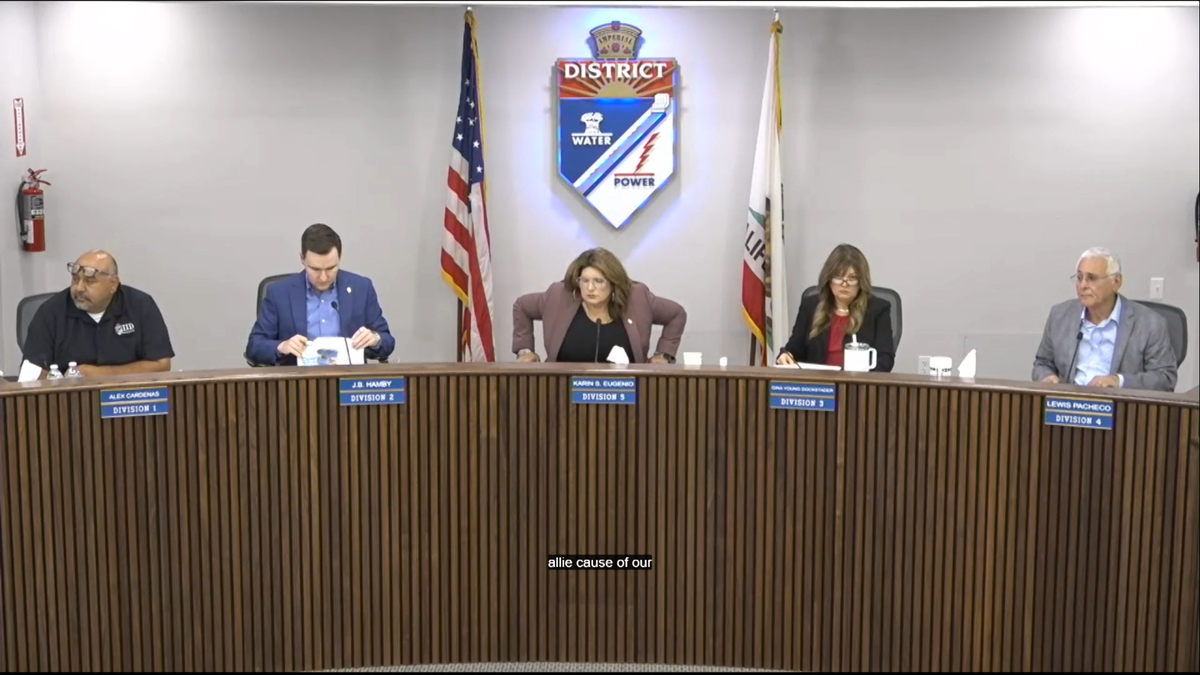
IMPERIAL, Calif. —(KESQ) The Imperial Irrigation District Board of Directors unanimously approved a new Large Load Tariff Tuesday, establishing a formal framework for how the utility will evaluate and serve very large electricity users, including data centers and other high-demand projects.

The tariff applies to customers seeking at least 20 megawatts of electric demand and meeting an 80% minimum load factor.

Under the new framework, large-load customers will be responsible for the costs and financial risks associated with serving their projects. That includes infrastructure, power supply and other system improvements that may be necessary to provide electric service.

IID said the approach is intended to prevent costs associated with large new loads from being shifted to existing ratepayers while allowing the utility to evaluate opportunities for economic development.

The board’s action follows months of public review. IID received 243 comments on the proposed tariff before revising the proposal for consideration by the board.

The tariff also creates a formal process for determining whether IID can reliably serve a proposed large-load customer and what improvements to the electric system may be required before service can be provided.

IID’s review will focus on its ability to provide electric service and the conditions under which that service could be delivered. Decisions involving land use, zoning and project siting remain under the authority of local cities and counties.

The new policy comes as IID has seen increasing interest from customers requiring substantial amounts of electricity. When the draft tariff was released in May, the District reported nine large-load proposals or inquiries at various stages of evaluation.

The tariff builds on principles adopted by the IID Board in December 2025, including protecting existing customers, maintaining system reliability and ensuring that costs associated with new large loads are recovered while continuing to support economic development opportunities.

With Tuesday’s unanimous vote, IID now has a formal process for evaluating large electricity users and determining the financial and infrastructure requirements associated with serving them.

Click here to follow the original article.

Board declines to adopt majority of grand jury’s recommendations for jails

City News Service

RIVERSIDE (CNS) – Riverside County supervisors today signed off on an Executive Office report — and a separate one filed by Sheriff Chad Bianco –that asserted the county will not implement some recommendations from a grand jury to improve jail operations, but will take others under consideration.

“The action of the Board of Supervisors today does not create or reject a specific oversight model,” county CEO Jeff Van Wagenen said Tuesday.

“The county’s position is that transparency and accountability matter.”

The Executive Office and Sheriff’s Department each issued responses to the 19-member civil Grand Jury’s findings, published in June, that emphasized the need for a change in how the county’s five detention facilities are operated, and what policy measures are overdue to ensure deficiencies thatjurors believe contributed to fatalities in previous years are resolved.

“An alarming number of in-custody deaths, combined with questions about internal investigative practices and the absence of independent oversight, has raised ongoing concerns about safety, transparency and accountability of Riverside County jail operations,” the grand jury said in its 26-page report. “Failure to implement independent oversight and custodial reforms exposes the county to significant civil liability, particularly in cases involving in-custody deaths.”

Jurors determined through their own comprehensive investigation that the county would benefit from an inspector general’s office to monitor and report on correctional operations, or a civilian oversight board empowered to conduct independent investigations and make recommendations to the board — all of which is authorized, but not mandated, legislatively.

The Executive Office said the recommendation for an independent body “requires further analysis.” Officials further touted the formation in July of an ad-hoc committee to scrutinize jail policies and practices, saying the panel will likely achieve some of the results that the grand jury advocated.

The sheriff’s report replied that the proposal “will not be implemented because the recommendation is not warranted.”

Jurors also supported creation of a “five-year strategic plan for jail operations that includes measurable benchmarks, data transparency goals (and) compliance auditing procedures.” The sheriff’s department called the idea a “blatant disregard for current operating procedures and shows the complete bias of this supposed (grand jury) investigation to develop the report.”

The Executive Office’s response was tepid, saying that while a long-range plan might be appropriate, the ad-hoc committee would likely have a better answer on how to go about establishing operational objectives when it returns with findings for the board in January.

The Executive Office and Bianco jointly rejected jurors’ recommendation for dissolving the Sheriff’s Advisory Committee, which has been around since the prior decade, because SAC “has not demonstrated measurable advisory output” and has never published meeting minutes, “formal findings or written recommendations” accessible to the public, according to the jury.

It highlighted the National Association for Civilian Oversight of Law Enforcement’s components for achieving effective watchdog processes, recommending that NACOLE’s best practices be implemented.

The Executive Office answered that adoption of NACOLE’s standards is “not warranted or reasonable.” While officials acknowledged protocols might be “useful” at times, they don’t necessarily justify a new “operational framework,” officials said. The sheriff’s report went further, saying NACOLE does not “have any influence, control or ability to direct operations within the constitutionally formed office of the sheriff.”

The Executive Office was non-committal on jurors’ recommendation for hiring an “independent correctional health and custodial operations expert” to audit jail intake operations and procedures, imparting that the proposal might be worth considering. The sheriff’s department dismissed therecommendation entirely, insisting the grand jury’s effort was “a predetermined attempt to force or intimidate the board and the sheriff to comply with the demands of activists.”

Jurors’ recommendation for a quarterly online “dashboard” where the public can view data on in-custody deaths, use-of-force incidents, suicide attempts and medical emergencies was not opposed by the Executive Office, and the sheriff signaled acceptance of the proposal, saying it “will be implemented in the future.”

Citing “systemic deficiencies” in jail operations, the grand jury pointed to instances where the county had been successfully sued, with multimillion-dollar payouts to families of inmates who died in custody. The county ranks in the top three statewide for correctional system fatalities that occurred over the previous decade, according to published reports. The year 2022 was particularly bad, with around 20 documented deaths in county lockups.

The sheriff’s report countered that during that year, 110 inmates were resuscitated by deputies or medical personnel after they had ingested deadly drugs, while 96 suicide attempts were “thwarted,” and correctional staff “intercepted drugs on 438 occasions,” potentially savings hundreds more lives.

None of the supervisors offered individual responses to the grand jury, Executive Office or sheriff’s reports.

Click here to follow the original article.
Board OKs final budget for Sheriff’s new desert dispatch center

City News Service

RIVERSIDE (CNS) – The Board of Supervisors today approved the final budget for an upgraded dispatch center focused on Riverside County Sheriff’s Department operations in the Coachella Valley.

In a 5-0 vote without comment Tuesday, the board authorized the department to use $3.3 million in redevelopment agency funds to total out the spending blueprint for the Palm Desert Station Expansion Project at $17.81 million.

“Dispatch communication centers are staffed 24 hours a day, 365 days a year,” according to a sheriff’s statement posted to the board’s agenda.“The sheriff has two communication centers: Central Dispatch in Riverside, and the Coachella Valley Dispatch Center, located in Palm Desert.”

In 2023, supervisors approved $8.5 million in countywide development impact fee revenue for the expansion project, followed by an additional $4.5 million in DIF money appropriated in October 2025.

The remodeled dispatch center will create sufficient space to accommodate 911 personnel and east county patrol teams at 73705 Gerald Ford Drive, where a sheriff’s facility has existed since February 1991.

They’re conducting operations out of a rented building on Fred Waring Drive for now.

The expansion is slated for completion in the current fiscal year.

Click here to follow the original article.
Palm Desert DMV office to temporarily close

Tommy Gallegos

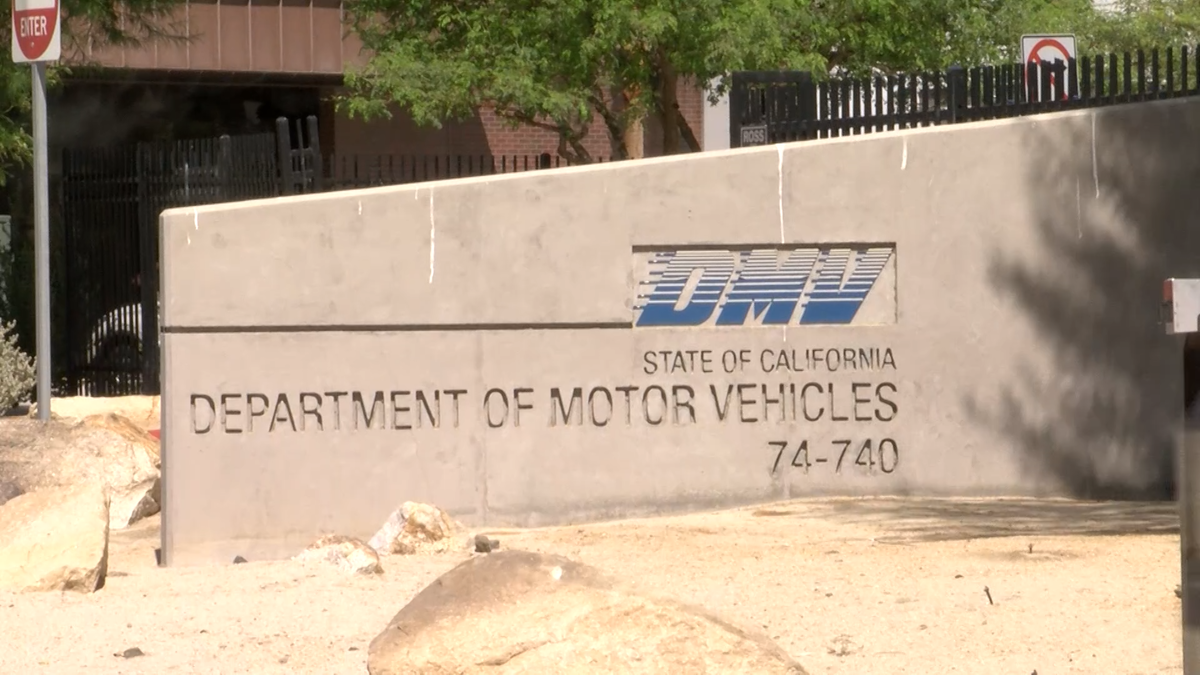
PALM DESERT, CA (KESQ) – The California Department of Motor Vehicles (DMV) will temporarily close its Palm Desert office at 74-740 Technology Drive for interior painting.

The office will close at 5 p.m. Friday, September 18, and is expected to reopen at 8 a.m. Monday, September 28.

During the closure, customers can visit nearby DMV offices in:

Indio: 44480 Jackson St. — 11 miles away Palm Springs: 950 N. Farrell Drive — 13 miles away Hemet: 1200 S. State St. — 56 miles away Twentynine Palms: 3668 Adobe Road, Suite G-J — 64 miles away; open Tuesdays and Thursdays only

The DMV encourages customers to use its online services whenever possible. Many transactions, including eligible driver’s license and vehicle registration renewals, can be completed online.

Customers can also use the DMV’s Service Advisor to find the best way to complete their transaction without visiting an office.

Click here to follow the original article.

Set times announced for Head Trip Festival in Indio

City News Service

INDIO (CNS) – Set times were announced for Head Trip, a two-day electronic music festival scheduled for next month in Indio.

The festival will run from 3 p.m. to 1 a.m. Oct. 10-11 at the Empire Polo Club, 81-800 51st Ave.

Saturday’s lineup will include Calvin Harris, Peggy Gou back-to-back with Four Tet, Seth Troxler back-to-back with Ben Sterling, Fisher and Chris Lake.

Sunday’s lineup will feature Skrillex, DJ Harvey, the Blessed Madonna, Dom Dolla back-to-back with Kettama and Swedish House Mafia.

The festival is being produced by Goldenvoice, the organizer behind Coachella and Stagecoach.

More information, including set times and passes, is available at headtripindio.com.

Click here to follow the original article.

Riverside Sheriffs’ Association names William Hutchinson Executive Director

Tommy Gallegos

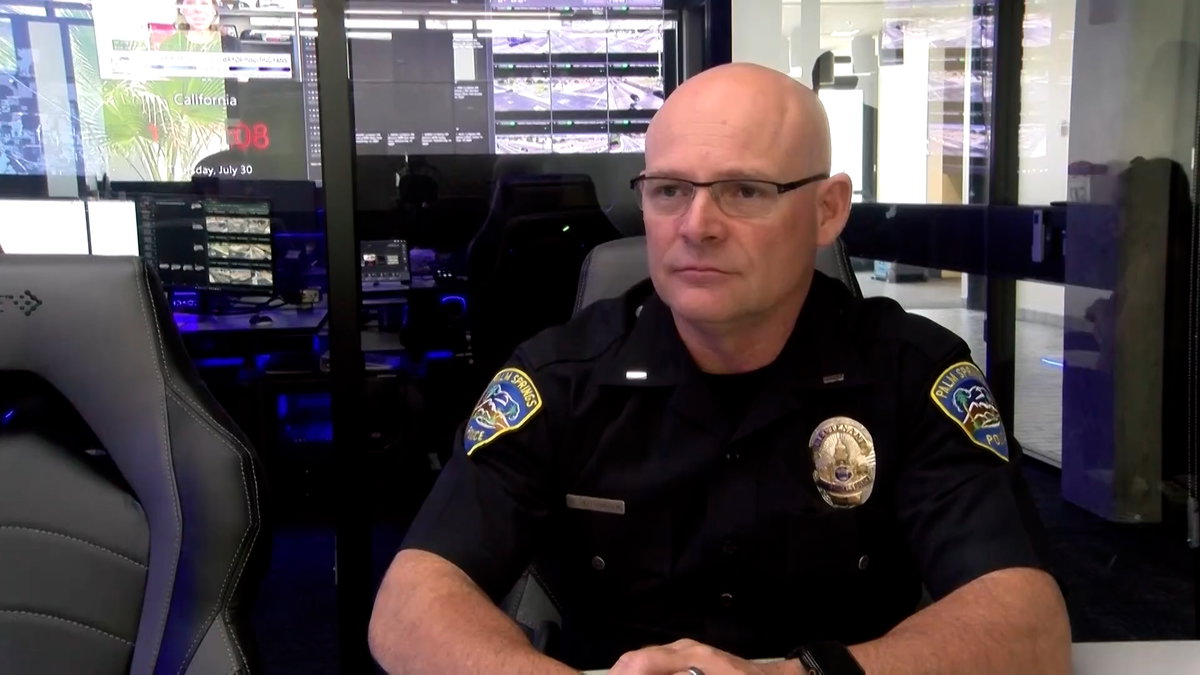
RIVERSIDE, Calif. (KESQ)— The Riverside Sheriffs’ Association (RSA) has named former Palm Springs Police Lieutenant William Hutchinson as its new executive director, bringing 28 years of law enforcement, labor representation and organizational leadership experience to the role.

He joins RSA after a 28-year career with the Palm Springs Police Department, where he most recently founded and led the Coachella Valley Real Time Intelligence Center, a regional law enforcement intelligence-sharing program. His career also included patrol, narcotics investigations, supervisory positions and command of the department’s Investigations Bureau.

Hutchinson will oversee RSA’s day-to-day operations and a staff of 20 while reporting to the association’s Board of Directors.

Hutchinson has also held leadership positions with the Palm Springs Police Officers’ Association and Police Management Association, gaining experience in labor negotiations, advocacy and organizational governance.

“I’m honored to bring what I’ve learned over 28 years in law enforcement to support this membership and build on that legacy,” Hutchinson said.

RSA President Jose Santos said Hutchinson’s combination of law enforcement, labor and administrative experience will support the association’s continued work on behalf of its members.

Hutchinson began his new role Sept. 14. Founded in 1943, RSA represents thousands of Riverside County public safety professionals across three bargaining units.

Click here to follow the original article.
Murder charge refiled against Billy Rodriguez in fatal Cathedral City hit-and-run

Tommy Gallegos

INDIO, CA (KESQ) — A murder charge has been refiled against former Palm Springs advertising agency CEO William “Billy” Rodriguez, who is accused in the hit-and-run death of a woman riding a scooter in Cathedral City two years ago.

Rodriguez appeared in court Tuesday as prosecutors renewed their effort to pursue a murder case against him in connection with the death of 60-year-old Christina Barrington.

Last month, a judge dismissed the murder charge following a preliminary hearing, but ordered Rodriguez to stand trial on charges of felony hit-and-run causing death and driving with a suspended license.

The Riverside County District Attorney’s Office has now filed the murder charge again, saying prosecutors remain confident in their case and believe the evidence presented during the preliminary hearing is sufficient to move forward with the charge.

The defense disputes the allegations and plans to challenge the renewed murder charge, asking the judge to review the evidence.

“(The District Attorney’s Office) elected to still file a murder charge even though the judge disagreed with that. We as his defense team absolutely assert his innocence,” said Molly Tucker, Rodriguez’s defense attorney.

Rodriguez has pleaded not guilty to the charges.

He was released from custody on $2 million bail and is required to wear a GPS monitor and an alcohol-monitoring device.

Barrington was killed in Cathedral City after the collision involving the scooter. Prosecutors allege Rodriguez was involved in the hit-and-run.

Tuesday’s hearing was continued until October 15.

The renewed murder charge is expected to be challenged by the defense as the case moves forward.

Click here to follow the original article.

National Voter Registration Day puts voting access in focus as mail-in ballot debate continues

Raymond Kalra

THOUSAND PALMS, Calif. (KESQ) – September 15th marks National Voter Registration Day, a nationwide nonpartisan effort encouraging eligible Americans to register to vote, check their registration status and prepare for upcoming elections.

But with the November midterm elections just weeks away, some Coachella Valley voters told News Channel 3 their concerns go beyond simply registering.

Questions about the voting process, political division and confidence in mail-in voting are all weighing differently on voters as Election Day approaches.

For Coachella Valley resident Kim Bechtel, the frustration begins with the country’s political divide.

“Everything’s so messed up in the air,” Bechtel said. “Each side’s blaming the other side and neither side can get back together and vote to improve this country. They’re out for themselves.”

That political divide is now colliding with another national legal fight over how Americans cast their ballots.

On Monday, the U.S. Supreme Court declined to allow the Trump administration to enforce new U.S. Postal Service requirements for mail ballots before the November midterms.

The proposed rule would have required states to provide certain voter information to the Postal Service and use USPS-approved, uniquely barcoded envelopes for mail ballots. The Trump administration argued the requirements would strengthen election integrity. States and voting-rights groups challenging the rule argued the changes could disrupt legitimate mail voting and exceeded the federal government’s authority over elections.

The Supreme Court’s action leaves lower-court orders blocking the requirements in place while the broader legal challenge continues.

For California voters, that means the existing process remains in place for the November 3 election.

Every active registered voter in California will automatically be mailed a ballot. Voters can return that ballot through the mail, take it to an official drop box or voting location, or choose to vote in person instead.

Coachella Valley resident Dan Arguien said he still plans to vote by mail.

“We’re going to vote by mail. It’s easier for us,” Arguien said. “We don’t have to worry about going out or going anywhere.”

When asked about confidence that a mailed ballot would be counted, Arguien acknowledged the debate but said it has not changed his plans.

“I’m hoping it is,” Arguien said. “Mail-in voting has been going on for a long time, so I don’t see an issue really, not as far as that’s concerned.”

For Donovan Knott, he said that he is still looking into registering to vote. If he does cast a ballot this November, he said he would be more comfortable doing it in person.

“I don’t know, I think I’d have to go in person,” Knott said. “I’m an in-person kind of guy.”

Those different preferences are part of the range of options California voters have heading into November.

Veronica Triano said she prefers to personally drop off her ballot, in part because a drop-off location is convenient to where she lives. But she said the national debate surrounding mail voting does not change what she considers most important.

“I think you just have to do what feels best for you,” Triano said. “There’s no right or wrong so long as you vote.”

National Voter Registration Day is intended to bring attention to that first step in the process. The annual effort began in 2012 and brings together election officials, nonprofits, schools, businesses and other organizations to help eligible voters register or update their information.

In California, the regular deadline to register online or have a registration application postmarked for the November 3 general election is October 19. People who miss that deadline can still use California’s conditional voter registration process through Election Day.

Counties must begin mailing ballots to active registered voters no later than October 5. Secure ballot drop-off locations begin opening October 6, with additional early and in-person voting options becoming available as Election Day approaches.

Election Day is Tuesday, November 3.

Click here to follow the original article.