Western Riverside County confirms cases of west nile virus, spraying planned

Tommy Gallegos

NUEVO & MURRIETA, RIVERSIDE COUNTY (KESQ) Riverside County Vector Control Program has confirmed two detections of West Nile virus (WNV) during this mosquito season, in unincorporated areas of the county.

The first detection came from a mosquito pool collected during routine surveillance in Nuevo. The second was confirmed through laboratory testing of a dead bird found near Spencer’s Park in unincorporated Murrieta. No mosquito samples from the district’s service area where the bird was found have tested positive for WNV at this time.

In response to the positive mosquito pool, Vector Control will conduct an ultra-low-volume (ULV) ground treatment in parts of Nuevo on Tuesday, August 25, from 4:30 to 7 a.m. Truck-mounted sprayers will apply Aqua Reslin, an EPA-approved mosquito-control product, at a rate designed to be safe for people, pets and crops.

Residents and pets should remain indoors and keep windows closed for 15 minutes following the application. Treatment-area signs will be posted beginning Friday, August 21.

Treatment zones include:

Mystic Field Area: 49.5 acres

West Nuevo Area: 172 acres

East Nuevo Area: 77 acres

Following the positive bird detection, Vector Control is increasing surveillance in Murrieta, identifying mosquito-breeding sites and conducting larval control where needed.

County officials are urging residents to take precautions, including using insect repellent containing DEET, picaridin, oil of lemon eucalyptus (PMD), or IR3535; wearing long sleeves and pants; avoiding mosquito exposure around dawn and dusk; and eliminating standing water around homes.

Residents should also maintain window and door screens and regularly clean or replace water in birdbaths, pet bowls and other outdoor containers.

To report mosquito problems, ask questions or request mosquito-eating fish, residents can contact Riverside County Vector Control at 951-766-9454.

More information is available through the Riverside County Vector Control Program.

Click here to follow the original article.

Palm Springs announces speaker lineup for inaugural extreme heat summit

Peter Daut

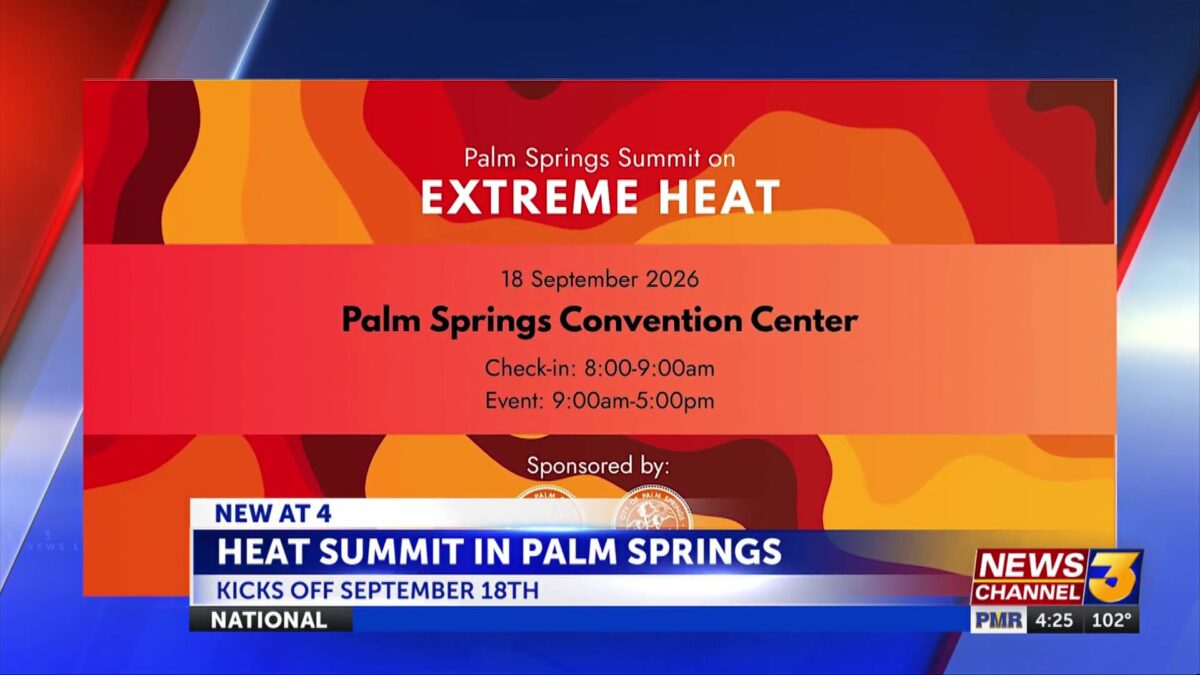
PALM SPRINGS, Calif. — (KESQ) The City of Palm Springs has announced the speaker lineup for its inaugural Extreme Heat Summit 2026, bringing together experts to discuss how communities can prepare for rising temperatures.

The full-day summit is scheduled for Friday, September 18, from 8 a.m. to 5 p.m. at the Palm Springs Convention Center. The event, organized by the city’s Department of Sustainability in partnership with the Office of Emergency Management, will focus on practical strategies for building resilience to extreme heat.

The summit, titled “Heat as Infrastructure: Designing Systems, Cities, and Services for Resilience,” will feature specialists in climate resilience, public health, emergency management and urban planning. Discussions will examine ways communities can adapt to extreme temperatures, including cooling infrastructure, emergency response and protecting vulnerable populations.

Palm Springs Sustainability Director Jasmine Fields says climate projections point to a hotter future for the Coachella Valley, making adaptation an important part of the city’s long-term planning.

“Climate projections do indicate that the Valley will become hotter. I am concerned about it, so that’s why we are also incorporating adaptation and resiliency strategies in our climate action efforts.”

The summit comes as the Coachella Valley continues to experience periods of dangerous summer heat. Recent temperatures have climbed into the 110s, with extreme heat warnings issued across the region.

City officials say the summit is intended for both professionals and community members interested in learning more about preparing for extreme heat and creating safer, more resilient communities. Registration for the event is currently open.

The city is also recruiting volunteers to help support the event.

For registration, volunteer information and the complete speaker lineup, click here.

Click here to follow the original article.

New Cathedral City Police Chief talks about goals, department’s future

Matthew Pearce

CATHEDRAL CITY, Calif. – (KESQ) After nearly 20 years with the Cathedral City Police Department, Rick Sanchez has been appointed the city’s next police chief.

City Manager Andrew Firestine selected Sanchez following a national search that included community input and an interview panel of civic leaders, community representatives and law enforcement professionals.

Sanchez, who has served as acting chief since former Chief George Crum retired in December 2025, will become the first Latino to lead the Cathedral City Police Department.

View this post on Instagram

A post shared by Discover Cathedral City (@discovercathedralcity)

Sanchez joined the department in 2006 and has served in patrol, investigations, SWAT and other assignments. He spent 13 years with Desert Regional SWAT, including time as a team leader, and later served as a sergeant, commander and deputy chief overseeing the department’s Operations, Investigation and Support bureaus.

“I’ve spent a significant part of my career with this department and serving this community,” Sanchez told News Channel 3. “So I am humbled by the trust that the city and the public has placed in me.”

He holds a master’s degree in organizational leadership from California Coast University and a bachelor’s degree in criminal justice from California State University, San Bernardino. He has also completed several law enforcement leadership programs.

Firestine said Sanchez stood out among a competitive field and demonstrated the leadership qualities the community was seeking, including a commitment to public trust, collaboration, accountability and community-oriented policing.

As chief, Sanchez will oversee a department with 81.5 sworn and professional employees serving more than 52,000 residents. He said he plans to build on the department’s existing foundation while emphasizing professionalism, transparency, innovation and community partnerships.

Click here to follow the original article.

Thirsty or drowning? How to tell what your desert plants need

Kiera McKinney

THOUSAND PALMS, CALIF. (KESQ)- With triple-digit temperatures, it’s tempting to water your plants more often. But in the desert, too much water can actually damage some plants.

We’ll talk to local experts about how to tell the difference between a plant that’s thirsty and one that’s being overwatered and what homeowners should be doing differently during extreme heat.

Data from specific desert cities (such as the City of Palm Desert) confirm that up to 70% of local residential water consumption is driven entirely by outdoor landscaping and turf irrigation.

Randy Meyers, owner of Randy G Myers Nurseries, cautioned against reacting solely to high outdoor temperatures. “Our minds immediately say, oh, it’s 100 degrees. It’s warm. We need to add water. But it’s not necessarily true,” Meyers said.

He recommends a simple soil squeeze test to determine moisture levels. “If you can squeeze the soil and let go and it stays in a ball, that’s perfect. If you squeeze it and it squishes, that’s way too much. If you squeeze it and it falls apart, that’s not enough,” Meyers said. Without proper air space in saturated soil, root health rapidly declines. “Basically, they’ll sit there and rot,” Meyers said.

Water conservation specialists emphasize that efficient techniques are just as important as watering schedules. Nisha Ajamani, a senior public affairs specialist with the Desert Water Agency, explained that plants do not require continuous hydration to survive.

“People think that they should be constantly watering their plants to keep them alive. But actually, the plants here don’t need constant watering,” Ajamani said. She noted that effective care depends on water penetrating deep into the soil.

“What’s really important is to make sure you’re watering deeply so that the water is getting the roots,” Ajamani said. Utilizing drip irrigation systems can deliver water directly to root systems while reducing loss through evaporation.

Click here to follow the original article.

Palm Springs City Council to discuss temporary ban on data centers

Tommy Gallegos

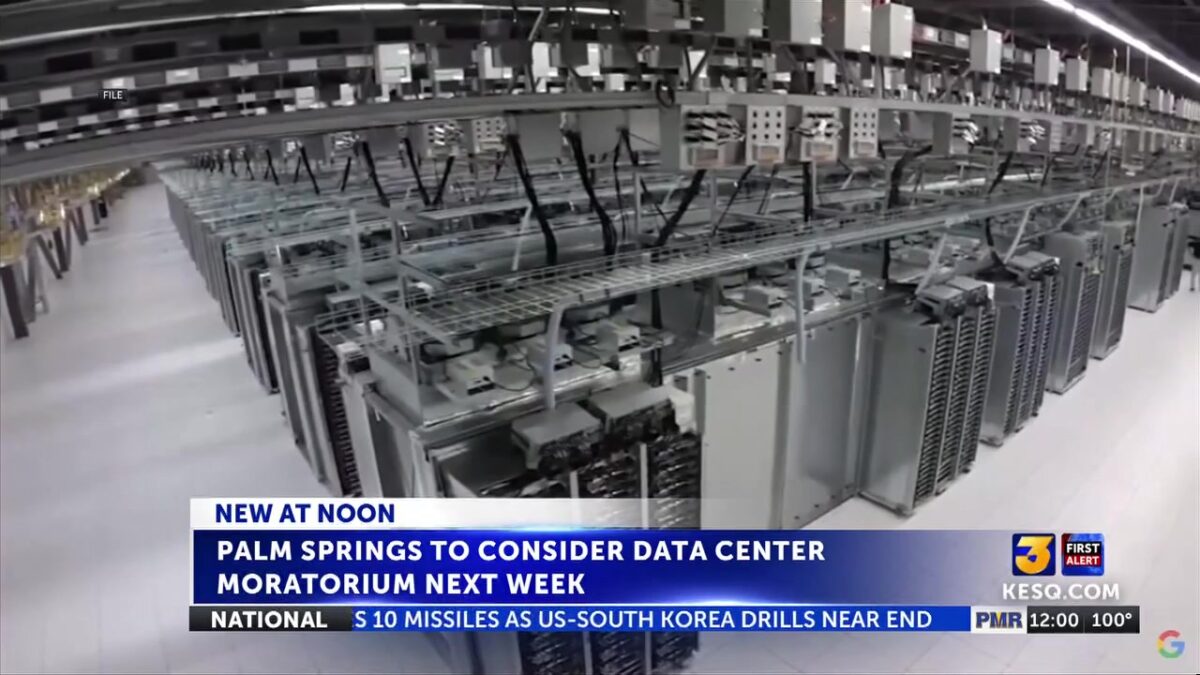
PALM SPRINGS, Calif. (KESQ)— The Palm Springs City Council is set to consider a temporary moratorium on new data center development at its meeting Wednesday, Aug. 26, as cities across the Coachella Valley continue to grapple with the potential impacts of large-scale computing facilities.

The proposed measure would establish a 45-day pause on new data center development in Palm Springs, giving city officials additional time to study the potential effects of the facilities and consider whether new regulations are needed.

Palm Springs City Council agenda for Wed. August 26th

The proposal comes as several other cities in the region have taken similar steps. Desert Hot Springs and Indio have approved temporary moratoriums, while Coachella has moved further toward a permanent prohibition on data centers.

The issue has become increasingly prominent across the Coachella Valley following public opposition to a proposed large-scale technology campus in Coachella. The Coachella City Council approved a 45-day moratorium in June and later extended it while officials worked on a permanent ban. The council unanimously approved the first reading of that ban earlier this month, with a final vote scheduled for Aug. 26.

In Desert Hot Springs, city officials approved a 45-day moratorium in June, temporarily blocking new data center development while staff examined issues including water use, electricity demand and potential effects on surrounding communities.

Indio has also been moving toward tighter restrictions. The city extended its initial 45-day moratorium to give officials additional time to develop regulations, with city planning officials recommending that data centers ultimately be prohibited.

For Palm Springs, the discussion on Aug. 26 could mark another significant step in the region-wide debate over whether the desert is an appropriate location for energy-intensive data centers.

Data centers can require substantial amounts of electricity and, depending on their design and cooling systems, water. Supporters of the industry have pointed to potential economic development and tax benefits, while opponents have raised concerns about infrastructure capacity, environmental impacts and the use of scarce desert resources.

The proposed Palm Springs moratorium would not necessarily represent a permanent ban. Instead, the 45-day period would give the city an opportunity to evaluate the issue and determine what, if any, long-term rules should apply to data center projects.

The City Council meeting will take place at Palm Springs City Hall, 3200 E. Tahquitz Canyon Way. Residents and members of the public will have an opportunity to follow the council’s discussion and participate through the city’s public-comment process.

With Coachella, Indio and Desert Hot Springs already taking action, Palm Springs’ decision could add another chapter to a rapidly developing regional debate over the future of data centers in the Coachella Valley.

Click here to follow the original article.

Inside Palm Springs’ real-time intelligence center: police answer questions over cameras, privacy

Raymond Kalra

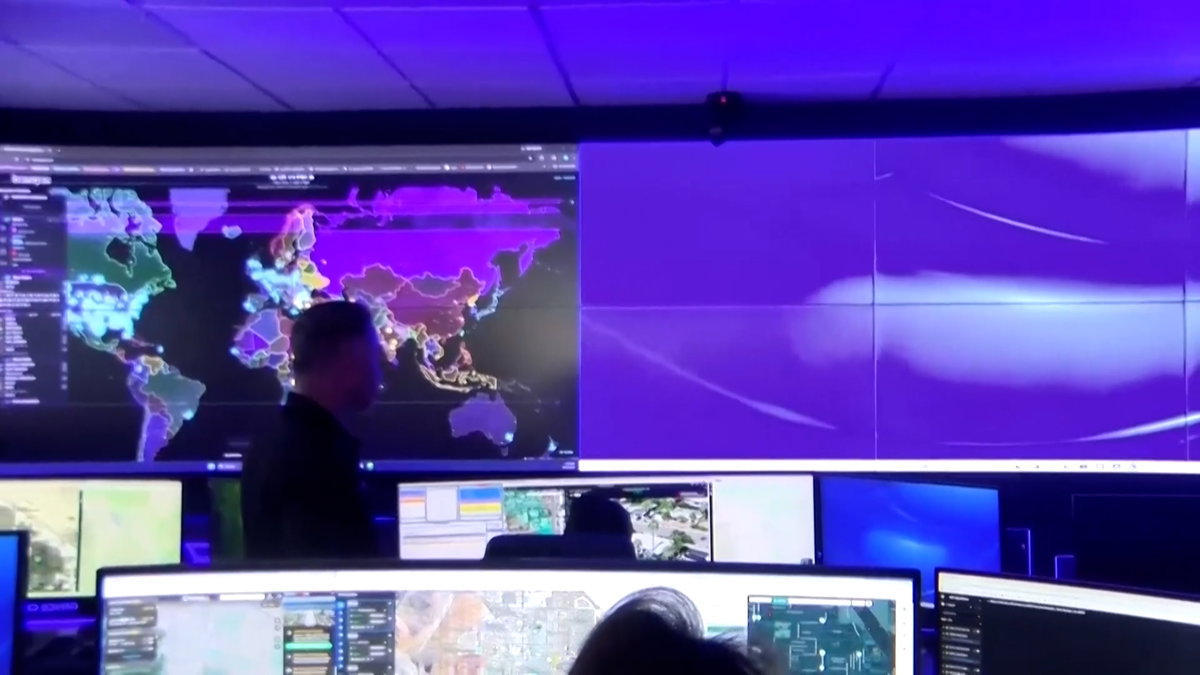
PALM SPRINGS, Calif. (KESQ) — As questions surrounding police surveillance technology and license plate reader cameras continue nationwide, the Palm Springs Police Department is opening its Real Time Intelligence Center to the public and creating a new committee that will give community members a role in reviewing how the technology is used.

Dozens of residents toured the center Thursday, getting a firsthand look at how officers use technology including Flock license plate reader cameras and drones during investigations.

The tour came as some residents continue to raise questions about privacy, how information is stored and who may ultimately have access to data collected by the department.

Palm Springs resident Brian Burch came to the tour looking for answers about what happens to information after an investigation ends.

“I think the biggest question for me is the data,” Burch said. “What happens after something is complete? What do they do?”

Burch said he sees the potential benefits of the technology but worries about how information collected for legitimate police work could potentially be used beyond its original purpose.

“I don’t like the feeling that I’m being compiled into a file of sorts,” Burch said.

What police say officers can and cannot do

During Thursday’s tour, Palm Springs police walked residents through a mock investigation, showing them how officers access the technology and what must happen before a search is conducted.

Lt. Mike Torres with the Palm Springs Police Department told News Channel 3 one of the biggest misconceptions surrounding the Real Time Intelligence Center is that officers are continuously monitoring people without cause.

Torres said officers must have reasonable suspicion before searching for a license plate in the system. Searches must also be associated with a case number and officers must provide a reason for conducting them.

“Everything we do, our officers need to have reasonable suspicion to be searching for any kind of license plate in our system,” Torres said. “Everything the officers do have to be attached to a certain case number, have to give a reason for doing so.”

Torres said searches are tagged, tracked and monitored. The department also conducts monthly audits of the system.

PSPD developed its policies after examining how other law enforcement agencies across California operate similar technology, according to Torres. He said the department intentionally developed strict policies because it understood the concerns the technology could create within the community.

The department is now considering making those policies even stricter.

Residents question where information could go

For Burch, seeing how Palm Springs police use the technology only addresses part of his concern.

He said he sees value in the technology itself, but questions whether information could eventually make its way outside the department or be used for purposes unrelated to the reason it was initially collected.

“I think the technology is brilliant,” Burch said. “It’s the jurisdictional application that’s the scary one. Is the information going to ICE? Is the information going to stuff that has nothing to do with the traffic ticket?”

Danny Hysell, another resident attending the tour said he had fewer concerns about the technology and viewed it as another resource available to officers.

“I think it’s smart to have anything that can help these guys take care of their business easier,” Hysell said.

Others came simply hoping to better understand what police are capable of doing with the technology and what limits are placed on its use.

PSPD creates new Community Technology Oversight Committee

As the department works to address those concerns, News Channel 3 learned Thursday that PSPD has created a new Community Technology Oversight Committee.

Torres said the committee was finalized Wednesday.

The department plans to bring community members from different demographics into its oversight process, including allowing committee members to participate in the monthly audits PSPD conducts of its technology systems.

Torres said the goal is to allow members to see the process from beginning to end, understand why officers are using the technology and provide feedback on the department’s policies.

PSPD is not limiting participation to people who already support the technology.

In fact, Torres said he specifically wants critics involved.

“I was looking for people that were actually somewhat against the whole process because I want the pushback,” Torres said.

He said hearing from people who approach the technology from a different perspective could help the department identify issues officers themselves may not recognize.

“If they give us the perspective that we don’t understand, or maybe we’re not seeing it from a certain angle, we want them to be involved to help us better our policies and make us the best version of ourselves with their help,” Torres said.

The department has not yet announced when the committee will hold its first meeting. News Channel 3 will provide that information when it becomes available.

How long should Flock data be kept?

Another issue PSPD is now examining is how long information collected through its license plate reader system should remain available.

Palm Springs police currently says its Flock data is deleted after 30 days.

Torres told News Channel 3 the department is reviewing whether that should change as Flock moves toward a new seven-day default retention period.

“We’re looking into it now,” Torres said.

He said one issue investigators are considering is that some crimes are not reported immediately. A shorter retention period could mean information investigators need is no longer available by the time police learn about a crime.

“We have to be real careful and utilize this data to the best of our ability,” Torres said. “We’re actually open to all things right now, and we’re just talking and deliberating as a team and figure out what makes the most sense for not only the police department, but more importantly, the community.”

55 license plate readers across Palm Springs

Torres also provided more information Thursday about the scope of the license plate reader network in Palm Springs.

He said PSPD currently has 55 license plate reader cameras across the city. According to Torres, those cameras are strategically positioned based on data and where the department believes they can best support its resources.

Torres pushed back on the idea that the cameras amount to constant surveillance throughout Palm Springs, saying the number of cameras is relatively small compared with the size of the city.

For PSPD, Thursday’s tours were an opportunity to show residents what happens behind the screens rather than simply asking the public to trust the department’s description of the technology.

For residents like Burch, the technology itself may not be the central issue. The larger question is how it is governed, who has access to the information it produces and what safeguards remain in place as law enforcement technology continues to evolve.

The newly created Community Technology Oversight Committee will now give some Palm Springs residents a direct role in asking those questions from inside the oversight process.

News Channel 3 will continue following the committee’s development and will update this story when information about its first meeting and membership becomes available.

Click here to follow the original article.

Palm Springs city council votes to keep District 2 election on Nov. 3

Tommy Gallegos

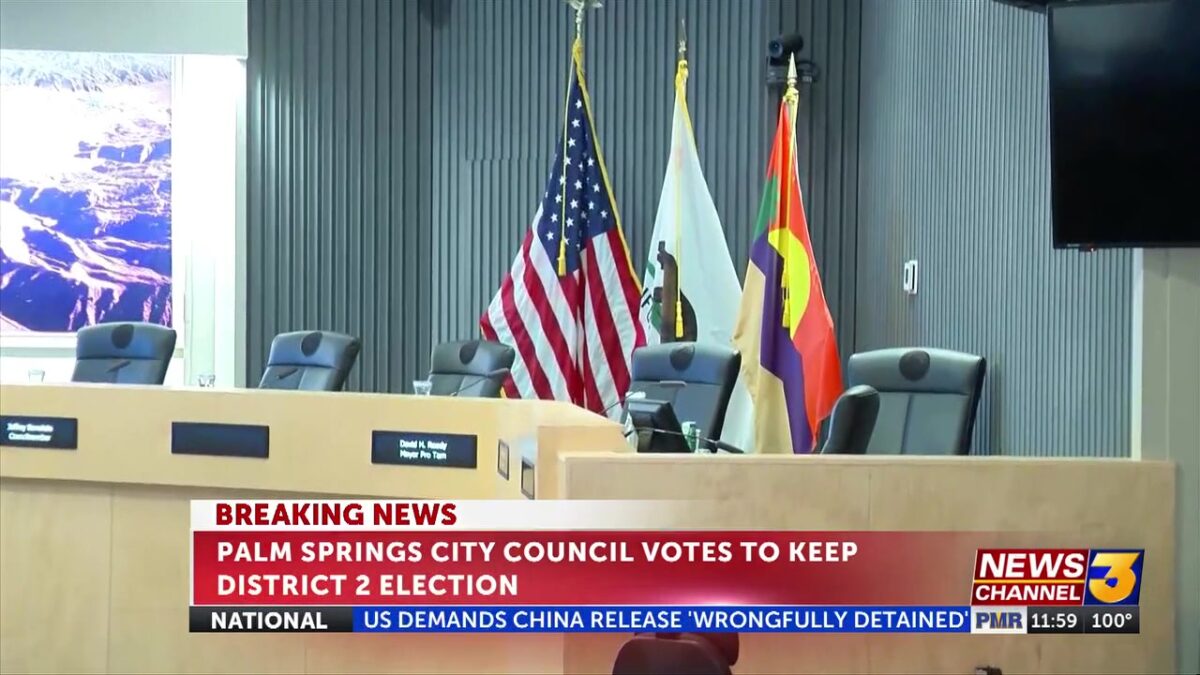
PALM SPRINGS, CA (KESQ) The Palm Springs City Council voted 3-1 at a special meeting Thursday to move forward with the Nov. 3 general municipal election for the District 2 seat, rejecting a proposal to appoint Councilmember Jeffrey Bernstein and cancel the election.

Mayor Naomi Soto cast the lone dissenting vote. Bernstein, who was the only candidate officially nominated for the seat when the nomination period ended Aug. 7, abstained from the vote.

Under the council’s decision, the District 2 election will proceed as scheduled. The write-in nomination period for the seat will run from Sept. 7 through Oct. 20.

Write-in candidates, like Palm Springs resident Tad Iwan, say they want to challenge Bernstein and were concerned that his appointment would have closed the door on that opportunity.

Bernstein has served on the City Council since November 2022 and previously served a one-year term as mayor. He is the founder and managing partner of Destination PSP, a retail business in downtown Palm Springs.

Before joining the council, Bernstein served as an elected member of the board of directors of the Palm Springs Hospitality Association, a member of the board of directors of Main Street Palm Springs and a member of the Bureau of the Tourism Strategic Advisory Committee, according to the city.

The council had been considering whether to appoint Bernstein because he was the sole candidate for the District 2 seat. If the council had approved the appointment, the November election would have been canceled and Bernstein would have begun his four-year term following the Nov. 3 election.

According to a staff report, proceeding with the District 2 election is expected to cost approximately $22,000.

Click here to follow the original article.

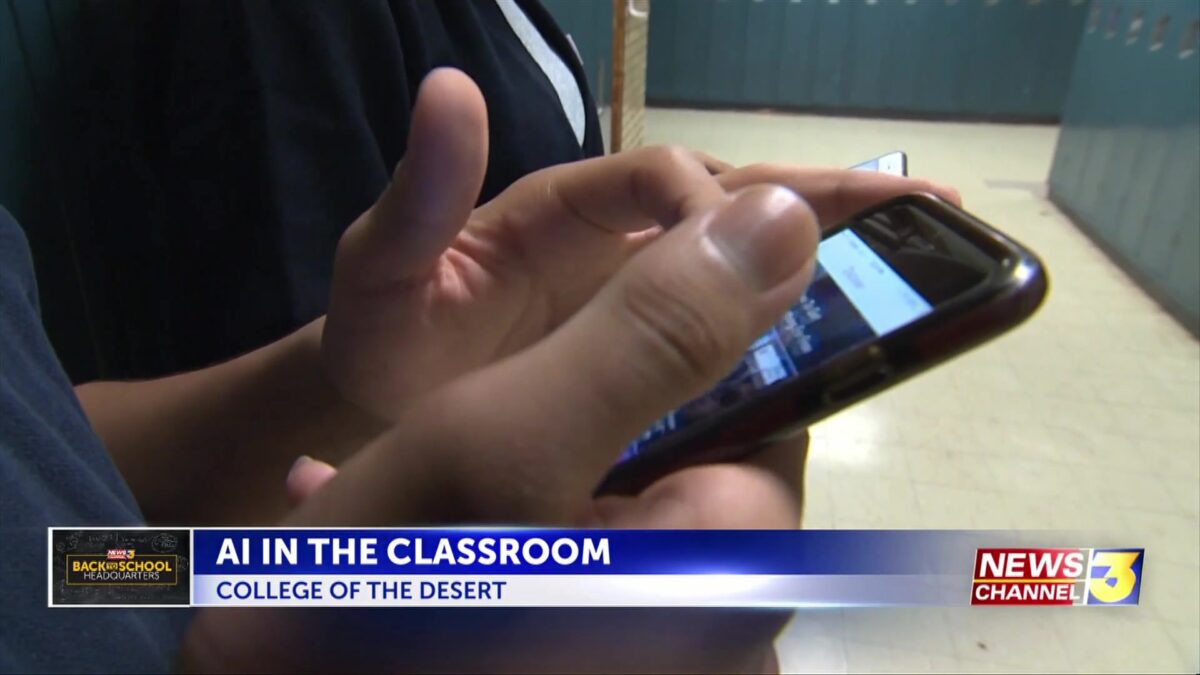
College of the Desert professor on how students should use AI this school year

KESQ News Team

PALM DESERT, Calif. (KESQ) Students heading back to class at College of the Desert this month are bringing artificial intelligence with them. Their professors already know it.

“Oh, yeah, of course they are. Everyone is,” Dr. Corbyn Wild said when asked whether students are using AI.

“Students are using AI in the classroom. And that’s not necessarily a bad thing.”

Wild teaches English at College of the Desert and serves as president of the college’s Academic Senate, the faculty body responsible for academic standards on campus.

As part of News Channel 3’s back-to-school coverage, we sat down with her to talk about how the college is handling a technology already in nearly every backpack.

The conversation revealed a divide most families may not realize exists.

For K-12 schools, California lawmakers stepped in. A 2024 law, Assembly Bill 2876, directs the state commission that writes curriculum frameworks to weave AI literacy into math, science and history-social science standards at their next revision. No comparable law exists for the state’s community colleges. There, curriculum decisions rest with faculty on each campus.

At College of the Desert, that puts professors like Wild at the center of the question.

“It depends on the discipline,” Wild said. “What I don’t want is a nurse who only uses AI. But in an English classroom, things are a little different.”

Rather than banning the technology or leaning on detection software, Wild said she hands her English students a set of structured prompts, questions designed to make AI sharpen their thinking instead of replacing it. Examples include asking a chatbot to strengthen a thesis or point out what an argument is missing.

“It’s all about empowering our learners to feel strong in their own thoughts and use AI instead to help them get those thoughts on paper better,” she said.

Wild said the technology can also fill a gap no professor can.

“If a student emails me at 4 a.m. for help with an essay, I’m asleep. I’m not answering that email,” she said. “But ChatGPT is awake and it can give them some good feedback.”

She acknowledged a learning risk if students simply ask AI to write an essay and copy the result. The college’s answer, she said, is teaching students how to ask, not pretending they won’t.

Faculty on campus have also created displays promoting responsible and ethical AI use, including respecting privacy and intellectual property and disclosing when the technology is used.

Wild said some students and staff still feel a stigma around admitting they use AI.

“That comes with any new technology,” she said. “It can be scary, it can be intimidating, and we can also be a little bit worried about what we might lose.”

Her message as the semester begins: “AI is not the enemy. But if you’re not sure what you’re doing with it, ask. We have lots of people on campus who are working with AI. Ask a person, and then they can help you use the machine.”

Fall classes at College of the Desert begin Aug. 31.

Click here to follow the original article.

PSP prepares for a busy fall travel season

Dakota Makinen

PALM SPRINGS, Calif. (KESQ) – Palm Springs International Airport is preparing for a busy fall and winter travel season after welcoming more than two million passengers so far this year.

Several seasonal nonstop flights are also returning earlier this year, including Alaska Airlines’ service to Santa Rosa on September 10. Flights to Houston, Minneapolis, Boise and Austin are also returning.

PSP is also making improvements around the airport, including replacing the Bono Concourse escalators and adding 80 new electric vehicle charging ports in Lot B.

Stay with News Channel 3 for the latest updates.

Click here to follow the original article.

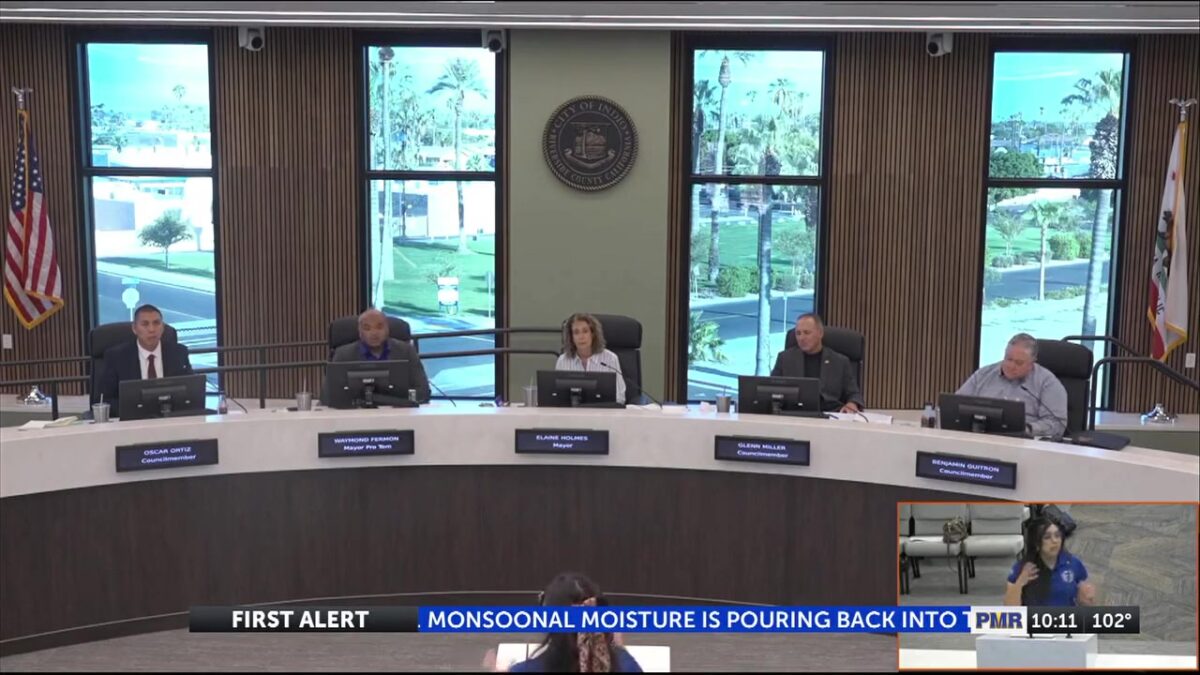
TODEC shares immigration enforcement updates with Indio City Council

KESQ News Team

INDIO, Calif. (KESQ) – Immigration enforcement concerns are taking center stage in Indio as advocates warn of ongoing detentions across the Coachella Valley.

Representatives from TODEC Legal Center told council members they’re not seeing large-scale immigration raids — but say they continue to receive reports of daily enforcement activity across the valley.

The organization says it has documented almost two dozen local detentions through its emergency hotline and claims some people are being detained while attending immigration court hearings or appointments.

“Daily, we have over 20 detentions in only the Coachella Valley. That’s the data that we receive in our emergency lines. But we have other types of data from other spaces that could be bigger than, the data,” said Sandra Reyes, TODEC’s project manager.

TODEC also outlined free resources available to immigrant families, including legal assistance, emergency response services, food support, mental health resources, and family preparedness plans.

Several council members voiced support for the group’s outreach efforts and pledged to continue advocating for local immigrant communities.

Click here to follow the original article.