Lewis and Clark made Missouri the starting point for westward expansion

Haley Swaino

COLUMBIA, Mo. (KMIZ)

It’s one of America’s defining origin stories— the Lewis and Clark Expedition. And Missouri was at the center of it all.

The nearly three-year journey began up the Missouri River 222 years ago.

“The goal in leaving from St. Louis and going up the Missouri River was to find, as they hoped, some sort of waterway that links the Mississippi River Valley to the Pacific Ocean,” said Sean Rost, assistant director for research at the State Historical Society of Missouri. “They weren’t going to find that, obviously. But the hope was that some sort of series of waterways would link the two bodies of water and thus provide easier navigation for people to go back and forth.”

The expedition came out of the Louisiana Purchase in 1803, when the United States doubled in size by acquiring territory from the French First Republic. Most of that land consisted of what is today the Mississippi River Valley, all the way out west to portions of the Rocky Mountains.

After the $15 million purchase, then-President Thomas Jefferson wanted the more than 800,000 square miles of uncharted territory explored. He called on Meriwether Lewis to gather a group to head out west. And Lewis chose William Clark as his co-commander.

“Thomas Jefferson had known Meriwether Lewis. This had been his private secretary before he became president. And both he [Lewis], as well as William Clark, had experience and involvement with the military and been involved with various kinds of expeditions in the past,” Rost said.

The men’s knowledge was crucial to a successful venture into the unknown.

“They had this familiarity with different elements of the landscape, although they had to still be trained for this new environment,” Rost said.

He said that as the leader of the expedition, Lewis had to be well prepared before traveling to the new land.

“So he goes actually to Philadelphia before he ever leaves and embarks from St. Louis to get a kind of quick education in astronomy, how to follow the stars and how to map your route,” Rost said.

An astronomy journal kept by Meriwether Lewis (circa 1799), predating the Lewis and Clark Expedition. Contains sets of formulae prepared by Robert Patterson of Philadelphia for Lewis to use in determining geographical locations by astronomical observation. The State Historical Society of Missouri showed ABC 17 News some of Lewis and Clark’s original journals on June 9, 2026. The full journal can be viewed on the State Historical Society of Missouri’s website.

The expedition begins

On May 14, 1804, the expedition, also known as the Corps of Discovery, headed west from Camp Dubois in Illinois.

“They’re departing from St. Louis, and they’re heading out up the Missouri River, which is daunting in and of itself,” Rost said. “We can think of today, the ability to move, airplanes and trains and automobiles and everything. But this is an era before there is even movements of water easily. This is before the steamboat comes into play, the revolution of the waterway.”

Rost said the group of 30 likely traveled 10 to 20 miles on a good day.

“The Missouri [River] filters down in the Mississippi River. So you’re going against the current the entire way,” Rost said. “You’re encountering waters that are impassable, you’re encountering low water situations. If you’re encountering, as they do, mountains and you can’t go any further, you’re having to essentially get out of the water and carry your supplies up land, over mountains, through passes, before you find another waterway to continue on.”

A word that Rost continually mentioned when thinking back on Lewis and Clark’s expedition was determination. Mapping out a wilderness they weren’t familiar with was a challenge and led them to look to many indigenous people for help along the way.

A Lemhi Shoshone or Hidatsa teen named Sacagawea joined the expedition in the fall of 1804. She was around 17 years old, according to Discover Lewis and Clark, and played a vital role in the Corps of Discovery’s success.

“She kind of becomes the center point of a lot of history,” Rost said.

Sacagawea is one of the most notable indigenous people to connect with Lewis and Clark.

“Her role was not only helping to identify certain locations and elements of travel, but also helping them in saving things whenever there’s a miscommunication with indigenous tribes or trying to help them bridge relationships between indigenous tribes, too,” Rost said.

Sacagawea was mentioned in Lewis and Clark’s journals four times before her name was given, according to Discover Lewis and Clark. Many other indigenous people were also mentioned.

The first page in Meriwether Lewis’ astronomy notebook (circa 1799) includes a “sketch given us by Yallept, the principal chief of the Wollah-wollah nation.” The State Historical Society of Missouri showed ABC 17 News some of Lewis and Clark’s original journals on June 9, 2026.

At the same time, some of the first American settlers were moving in.

“The Missouri River Valley that Lewis and Clark would have been going up, it would already have existed with people settling on both sides of the river,” Rost said.

The further away the group got from St. Louis, the less populated it would have been by settlers. But further up the river, Rost said they were encountering fur trapping outposts.

“Indigenous populations have been in this area for thousands of years. There are already fur trappers and traders who have gone along this area as well. So it’s already been traversed,” Rost said. “But this is going to be a scientific expedition that not only works on identifying new flora and fauna, mapping out the territories, but also working in some elements of relationships with the indigenous populations that will be along these various routes.”

Rost said the expedition laid claim to the newly acquired territory largely by naming the area’s plants and animals.

“Of course, in the process of that, they’re kind of doing away with the indigenous names that have been given to the same places in favor of these kind of Americanized names.”

Early on in the expedition, Lewis and Clark started sending shipments of their findings to Washington, D.C. Samples include plant and animal material, including animal pelts.

Reaching the Pacific Ocean

In November 1805, after about 18 months of travel, the group finally arrived at the Pacific Ocean.

“In a lot of ways, this is a slow-moving expedition that kind of goes up the river, eventually crosses the mountains,” Rost said. “We have to remember that in the course of winter, they’re not really moving very much.”

The group spent the winter of 1804 to 1805 in the Dakotas. They then hunkered down for the next winter in what is today Oregon, after reaching the Pacific.

“They actually hope when they get to Oregon, or what becomes Oregon, that there is going to be a boat somewhere out in the Pacific Ocean,” Rost said. “They hope that there is going to be traders and travelers out there and that they could get a kind of abbreviated trip back.”

Though it would have been a long trip going all the way around the southern tip of South America by boat, the journey back would have been less strenuous.

“They kind of wait for a while, realize that no boat is in the area, no other people are in the area for them to get on a ride with, so then they turn around after a couple of months and then head back to St. Louis.”

Rost said while they had to traverse the land again, their journey back was easier as it went down the river.

On Sept. 23, 1806, the 8,000-mile journey across the continent ended. The group was met with a hero’s welcome. The information they gathered and wrote in their journals and maps they charted would help lay the foundation for a new America.

“I think that legacy of it becomes really significant in how it affects American identity and the way that Americans viewed themselves in the larger portions of North America over the course of the 19th century,” Rost said.

A lasting legacy

Many people learn about Lewis and Clark in grade school. The Louisiana Purchase and the subsequent expedition are part of the U.S. curriculum.

“This exploration provides a lot of things to this very new and young United States. It provides new lands for people to settle in. It provides new elements of familiarity with things they had not heard about,” Rost said. “So the kind of excitement behind that of new animals, new plants, new people that they encounter along the way, too. It’s remembered as one of those major moments of American history, even from the very beginning.”

But the story of the Lewis and Clark Expedition is also a pillar of Missouri history.

“We think about the 250 [Anniversary of the United States]. When you think about the bicentennial, you think about even Missouri’s bicentennial, Missouri’s centennial, the story of Lewis and Clark becomes one of those key chapters that’s often referenced in a lot of ways,” Rost said. “It becomes something that gets built into Missouri history, even before Missouri becomes a state.”

The expedition’s jumping off point brought St. Louis’ claim of the “Gateway to the West.”

People can be reminded of the history today through landmarks like the Gateway Arch in St. Louis and many others in Mid-Missouri.

Monuments at the Lewis and Clark Trailhead Plaza near the corner of Jefferson Street and Capitol Avenue in Jefferson City, MO, on June 8, 2026.

In an effort to memorialize the famous route the Lewis and Clark expedition took through Missouri, the state built highway markers in the mid-20th century.

“As the rise of the automobile occurs, as highways and interstates are being built out, there’s an effort to bring people into an element of history and to kind of stop along the way and reflect on this history,” Rost said.

A Lewis and Clark National Historic Trail marker in Missouri. [Courtesy: Daniel Boone Regional Library]

Donated 24 years ago by the Norton family, the Clark’s Hill/Norton State Historical Site is another significant piece of Missouri history that can be traced back to Lewis and Clark’s journey.

“Based on the short but very accurate description in the journals [of Lewis and Clark], this area was able to be roped in as what is now called Clark’s Hill,” Park Superintendent Anthony Orazio said.

Located at 1816 Osage Hickory St. in Jefferson City, the 14-acre park includes a half-mile trail that leads to a lookout point used during the expedition.

Journals kept by the men in June 1804 detail the campsite they set up in the area. The group camped at the hill both there and back, according to what historians have gathered from their journals.

“They must have liked the area somewhat. Seldom were their campsites so close together [there and back],” Orazio said. “They said at the top of the hill there was a nice flat area to survey the two rivers, the Missouri and the Osage.”

Taking a walk in the footsteps of Lewis and Clark, hikers can still see many things mentioned in the expedition journals.

Orazio said he’s walked the Clark’s Hill trail more than 50 times, and it is still powerful every time he reaches the lookout where Lewis and Clark stood.

“It’s kind of grounding as a person on the grand time scale of life to see other people were here long before me,” Orazio said.

Interpretive panels along the trail provide historical images and descriptions about Lewis and Clark’s travels through the area.

An interpretive panel details how the Lewis and Clark Expedition relied on fruit from pawpaw trees at Clark’s Hill/Norton State Historical Site in Jefferson City, Mo., on June 10, 2026.

Another reason Clark’s Hill was confirmed as the spot mentioned in Lewis and Clark’s journals is because of two Native American burial mounds they described.

A Native American burial mound at Clark’s Hill/Norton State Historical Site in Jefferson City, Mo., on June 10, 2026.

“You can see, over the years, trees have grown up near the burial mounds and above them. But you can see the obvious outline of the mounds,” Orazio said.

Cottonwood trees also now grow to cover the view Lewis and Clark would have overlooked from atop the hill. Orazio said people visiting in the winter will see a more similar view to what was seen on the expedition.

A photo of Clark’s Hill/Norton State Historical Site in Jefferson City, Mo. in 2000.

Clark’s Hill/Norton State Historical Site in Jefferson City, Mo., on June 10, 2026.

“There’s a quote from the journals along the lines of, ‘The land was quite a beautiful prospect,’ … ‘Atop this hill that commands the two rivers is a beautiful prospect,’” Orazio said.

The ability to see what’s ahead was crucial for explorers on the Lewis and Clark Expedition.

“When you’re on the water, you can see the bluffs in the distance, you can see the tree line, you can see animals, everything like that. But you can’t see much beyond where the river bends or where the horizon comes about,” Rost said.

It was important to find sizable hills or high points along the way to survey the area.

“A place like Clark’s Hill becomes important because as you find these major elements of terrain, you can climb up there, and you can see quite a distance away,” Rost said. “Missouri lacks those sizable mountains where you can see very far. So a notable hill becomes important, especially for them to see what’s coming up on the river down the way.”

Looking down from the hill today, hikers will notice a large rock. A carving on that rock was mentioned by Lewis and Clark in their journals. It appears to read J.O.B. or J.O.P. Higgens with the date 1801 or 1804. Orazio said historians are not sure who that is, but it was not linked to the expedition, just mentioned as a spot Lewis and Clark noted.

The photo of the carving on the rock at Clark’s Hill/Norton State Historical Site in Jefferson City, Mo., in 2000.

The rock carving seen faded at Clark’s Hill/Norton State Historical Site in Jefferson City, Mo., on June 10, 2026.

The Missouri River that Lewis and Clark would have encountered is much different than the Missouri River we see today.

“In the 20th century, there’s an effort to deepen the channel for transportation and the movement of goods. Thus, as you deepen it, you kind of restrain the river within levees and boundaries and things like that, too. So the river today is much deeper and much more compact than it would have been then. At that point in time, it would have gone from bluff to bluff. It would have been a shallow river. It would’ve been more free-flowing, and it would have been much wider in a lot of ways,” Rost said.

While the Lewis and Clark Expedition was successful in many ways, the group ultimately did not find a waterway that connected the Mississippi River Valley to the Pacific Ocean as they’d hoped.

“But what they do discover is a way that the river traverses its way, or kind of comes down, to the Mississippi River Valley. They kind of find the continental divide,” Rost said.

The Rocky Mountains were also a significant finding of the expedition.

“One of the notable stories is that they hope as they climb one of these first mountains they uncover, that they’re going to see on the other side, ‘Oh, it’s not very much farther to get to the Pacific Ocean,’” Rost said.

But when they found a clearing at the top of one of the mountains, that’s not what they saw.

“They see that the range continues on into the horizon, and they realize that it’s going to be a much more arduous journey than they perhaps originally thought in a lot of ways,” Rost said. “So it becomes a key element of this early moment in the 19th century.”

Rost said the Lewis and Clark expedition lives on as a story of resilience and the turning point of great change for a young America.

“The opening of the 19th century, the doubling of the size of the United States, the movement of people west. But also early scientific discovery and the legacy of that becomes important because it makes Missouri into an ideal destination for people to settle over the course of the 19th century,” Rost said.

It also becomes a key celebratory point for both Lewis and Clark and sets them up to become American leaders. Lewis was made governor of the Louisiana Territory, and Clark was later appointed governor in the Missouri Territory.

As America celebrates 250 years, Orazio encourages people to reflect on the country’s roots. And rich American history can be found right in the heart of Missouri.

“It’s good for you in general to be outside. Pulling in the cultural history aspect of it, we [at Clark’s Hill/Norton State Historical Site] have the interpretive panels provided along the way. It gets folks who may have never learned about Lewis and Clark over the years, or forgotten about it from past teachings long ago in elementary school, gives you an idea to kind of rethink on the history. And being in Missouri, think of the people that came before us.”

Click here to follow the original article.

Suspect takes plea deal in Columbia McDonald’s drive-thru killing

Matthew Sanders

COLUMBIA, Mo. (KMIZ)

A man originally charged with murder in a deadly shooting in the drive-thru of a Columbia McDonald’s was sentenced to prison Thursday.

Correy Greene, 36, pleaded guilty to illegal transfer of a weapon and illegal gun possession in the 2020 shooting death of Marqukis Hayes at a McDonald’s on Clark Lane in Columbia. A second-degree murder charge and an armed criminal action charge were dropped in exchange for the plea, court records show.

Judge Brouck Jacobs sentenced Greene to seven years on the illegal transfer charge and 10 years in prison on the illegal gun possession charge. Sentences in Missouri usually run concurrently unless specified by a judge.

Police alleged that Greene had bought the gun that was used to kill Hayes. Court documents claim Hayes and Greene were in a truck with Angelica Benitez when Benitez shot Hayes. Greene allegedly told police he didn’t know the reason for the shooting, but Benitez reportedly said Hayes had “snitched” on Greene.

An abadoned truck containing Hayes’ body was found three days after the shooting.

Benitez was sentenced to 28 years in prison.

Click here to follow the original article.
Two taken to hospital after five-vehicle pileup in Boone County

Gabrielle Teiner

COLUMBIA, Mo. (KMIZ)

A five-vehicle crash on Interstate 70 in Boone County caused traffic backups late Thursday.

According to a Missouri State Highway Patrol crash report, the crash happened around 9:30 p.m. at the 121-mile marker in the westbound lanes.

Four cars were stuck in traffic due to a lane closure when a 2026 Peterbilt 589 semi-truck, driven by a 35-year-old Bunceton man, failed to slow down and hit the back of a 2010 Toyota FJ Cruiser, driven by a 32-year-old Cape Girardeau man.

The crash caused a domino effect. The Toyota was pushed forward into the back of a 2021 Chevrolet Silverado, driven by a 50-year-old Columbia man. The Chevrolet was pushed into the back of a 2026 Mercedes Sprinter van, driven by a 43-year-old man from Cooper City, Florida. The van then hit the back of a 2025 Honda CRV, driven by a 64-year-old woman from Lexington, Kentucky.

The crash caused the semi-truck, the Toyota and the Chevrolet to end up in a ditch. The other two vehicles involved came to a controlled stop on the right shoulder of the interstate.

The Toyota driver and Chevrolet driver were both taken to University Hospital by ambulance with moderate injuries.

The other drivers were not hurt.

The Highway Patrol’s Troop F posted on social media about the crash at 10:17 p.m., stating that the road was blocked.

Click here to follow the original article.

Camdenton woman serious hurt in Camden County crash

Jazsmin Halliburton

COLUMBIA, Mo. (KMIZ)

A 70-year-old Camdenton woman was seriously hurt in a Camden County crash Thursday evening.

According to a Missouri State Highway Patrol crash report, the woman was stopped waiting to turn left at the intersection of U.S. 54 and Cedar Heights Dr. at 6:38 p.m Thursday. The woman’s 2015 Toyota Rav4 was hit from behind by a 2006 Chevrolet Silverado driven by a 21-year-old Camdenton man.

The woman was taken to Lake Regional Hospital by Mercy ambulance with serious injuries. The man was not hurt, according to the report

Both drivers were wearing seatbelts at the time of the crash. Both vehicles were totaled.

Click here to follow the original article.

Man charged in 2024 Columbia shooting case set to face new judge

Jazsmin Halliburton

COLUMBIA, Mo. (KMIZ)

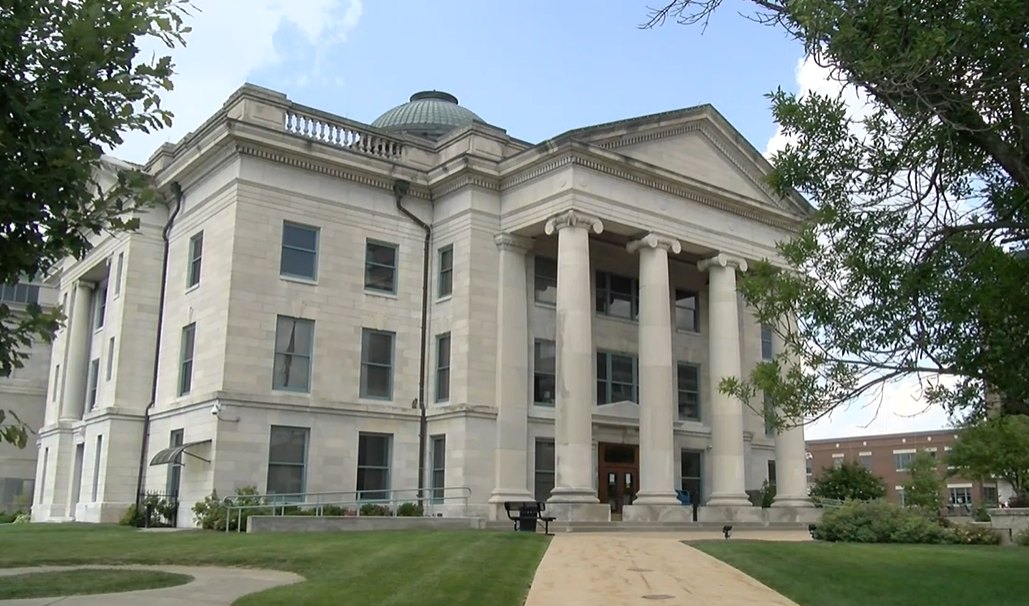
A man charged in connection with a deadly 2024 shooting in Columbia will be in front of a new judge at the Boone County Courthouse Friday afternoon.

Jordan Brantley will be in the courtroom at 1:30 p.m. for a status hearing. Brantley is charged with first-degree assault, second-degree murder and armed criminal action for the shooting death of Travon Ashcraft in 2024. He is being held at the Boone County Jail without bond.

A new judge was assigned to Brantley’s case after the defense filed a motion to disqualify his original judge, Judge Jeff Harris. The motion was filed because Harris is presiding over cases involving Brantley’s mother.

The court denied the motion, but Harris still stepped down from the case “to avoid even the appearance of bias in light of the disclosure to the Court last week,” court filings show. Judge Brouck Jacobs is now presiding over Brantley’s case.

Brantley is one of three people who were charged in the death of Trevon Ashcraft. Cordero Riley Jr. pleaded guilty last year to unlawful use of a weapon and second-degree assault and was sentenced to 15 years in prison.

Quanina Lambert pleaded guilty to second-degree assault and child endangerment in 2025. She was sentenced to 10 years in prison.

According to previous reporting, a home on Rice Road was apparently targeted by a group of shooters who pulled up in an SUV in May of 2024. Police found Ashcraft shot in the head and he later died at an area hospital.

Brantley was allegedly part of the group targeting the house and was seen on video wearing a black ski mask, police wrote in the probable cause statement. He was allegedly seen on video shooting down Boyd Lane during the shootout. Police believe he fired the fatal shot, previous reporting indicates.

Click here to follow the original article.
Plea agreement reached in Fulton man’s federal child porn case

Ryan Shiner

COLUMBIA, Mo. (KMIZ)

Federal court filings from Wednesday show a man who ran a daycare at his Fulton home will plead guilty to multiple charges related to child sex abuse material.

Jacob Stockglausner, 39, entered a plea agreement on May 31 to producing child sex abuse material, distributing child sex abuse material and possessing child sex abuse material. He is currently being held at the Callaway County Jail without bond. His next federal hearing was not listed in federal court records.

He is still charged in Callaway County with three counts of statutory sodomy of a person younger than 12 years old. A county court filing from June 5 shows his prior charges of first-degree promoting child sex abuse material were dropped “to allow for federal prosecution.”

Court documents in previous reporting in the Callaway County case say a computer with an IP address registered to Stockglausner uploaded child pornography to an online platform. When a search warrant was being served in July 2024 at the daycare, a parent was able to identify their child in an image showed by law enforcement, court documents say

Court information claims Stockglausner sexually assaulted a toddler, filmed it and shared it online. Additional material of other children was also found, filings in previous reporting say.

A hearing in his Callaway County case is scheduled for 9 a.m. Monday, July 27.

Click here to follow the original article.
Nearly 300 without power in Audrain County

Ryan Shiner

COLUMBIA, Mo. (KMIZ)

There were 280 Consolidated Electric Cooperative members without power in Audrain County on Thursday afternoon after storms rolled through Mid-Missouri.

The outages were reported on the Association of Missouri Electric Cooperative’s map. It also shows 37 customers in Callaway County without power, with 35 being Consolidated Electric Cooperative members.

There were 94 members of Missouri Rural Electric Cooperative in Shelby County experiencing an outage.

Check back for updates.

Click here to follow the original article.
Mizzou Athletics announces new concessions vendor

Ryan Shiner

COLUMBIA, Mo. (KMIZ)

Mizzou Athletics will have a new concessions vendor this upcoming school year for all of its sports and athletic venues.

The athletic department announced in a Thursday morning press release that it has picked Sodexo Live! as its new hospitality partner.

The release from MU claims Sodexo will use local food partners.

According to its website, Sodexo is used at a number of NFL and MLB stadiums, including for teams such as the Tennessee Titans, Indianapolis Colts, Miami Dolphins and Seattle Mariners.

ABC 17 News has requested a copy of the contract between Mizzou Athletics and Sodexo.

Click here to follow the original article.
Salem man sentenced to nine consecutive life sentences in child sex crime case  

Ryan Shiner

COLUMBIA, Mo. (KMIZ)

A Salem, Missouri, man was sentenced to nine consecutive life sentences on Thursday in a child sex crime case, the Phelps County prosecuting attorney announced in a social media post.

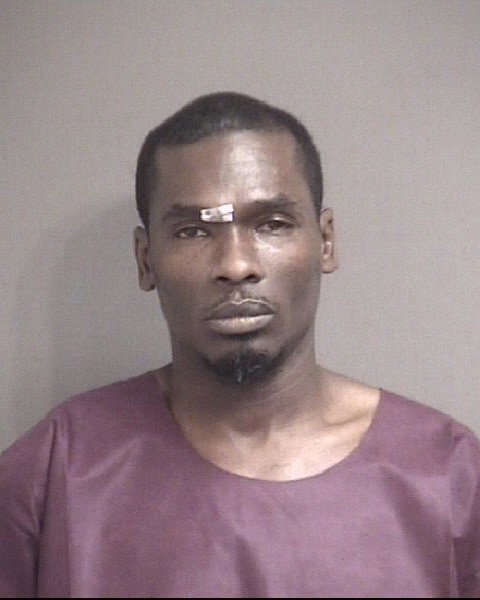
Dustin Drennan, 37, was found guilty by a Texas County jury on April 29 to five counts of first-degree statutory sodomy, two counts of first-degree statutory rape, one count of first-degree rape, one count of first-degree sodomy and a count of second-degree child molestation.

Dustin Drennan

Previous reporting shows he was originally charged with 11 counts of statutory sodomy, two counts of first-degree statutory rape, one count of first-degree rape and two counts of first-degree sodomy. 

The prosecutor’s post says Judge Zachary Armfield gave Drennan the maximum sentence after hearing statements from the victim and the victim’s mother.

According to a grand jury indictment in previous reporting, Drennen was accused of sexually assaulting a child or children between June 1, 2018-Jan. 16, 2021.

Click here to follow the original article.
Colorado woman dies, 3 others injured in head-on Climax Springs crash

Ryan Shiner

COLUMBIA, Mo. (KMIZ)

A 45-year-old Colorado woman died in a crash Thursday afternoon on Highway 7 in Climax Springs, north of Route Z, according to a crash report from the Missouri State Highway Patrol.

The report says the Edgewater, Colorado woman drove a 2008 Chevrolet Silverado northbound when her vehicle crossed the center line and hit a 2012 Ford F450 head-on. She was pronounced dead at the scene and her body was brought to Allee-Holman-Howe Funeral Home, the report says.

The driver of the Ford – a 29-year-old Lake Ozark man – had moderate injuries, while two occupants were also injured. A 40-year-old Camdenton man had serious injuries, while a 34-year-old Newburg man had moderate injuries, according to the report. All three people were brought to Lake Regional Hospital by ambulance.

No one in the crash wore a seatbelt, according to the report. Both vehicles were totaled.

MSHP reports do not name those involved in crashes.

MSHP’s Troop F – which covers much of Mid-Missouri – wrote in a 3:43 p.m. social media post that one person was pronounced dead at the scene of the crash on Highway 7 and that multiple people were injured.

The Camden County Sheriff’s Office shared in a 3:32 p.m. social media post that the vehicles crash head-on on Highway 7 at Gypsum Drive in Climax Springs near the Dollar General.

Check back for updates.

Click here to follow the original article.