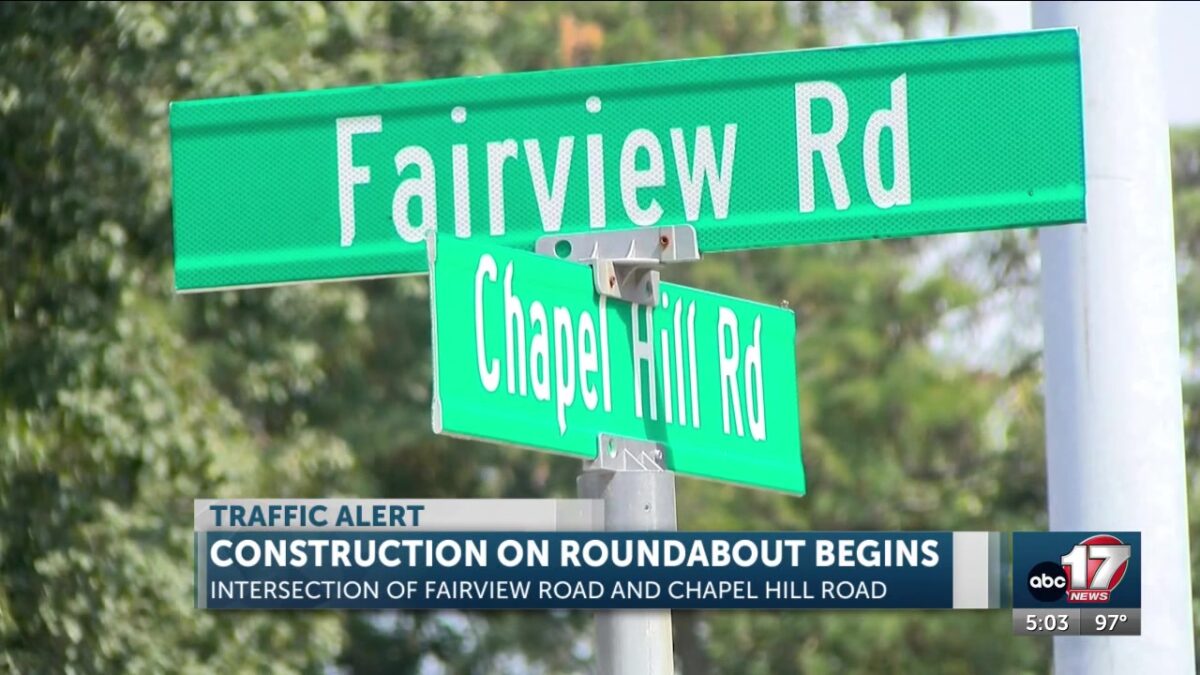
Proposed apartment complex would involve tearing down University Place Apartments, other nearby buildings

Euphenie Andre

COLUMBIA, Mo. (KMIZ)

A major redevelopment project could reshape downtown Columbia and replace several existing buildings near the University of Missouri’s campus.

Developers asked the Planning and Zonning Comission during at Thursday night’s meeting to rezone property between Paquin Street and College Avenue to make way for a new apartment complex called “Theory Sterling Mizzou.”

The commission unanimously approved the proposal Thursday night. It now moves on to the City Council for consideration.

According to plans submitted to the city, the development would include 305 units with a maximum occupancy of about 970 residents.

The project would span 2.91 acres and require the demolition of several existing buildings, including University Place Apartments family homes and a personal services building.

“The entire block bounded by College, University, Matthews, and Paquin will be demolished if the project is approved,” according to a Wednesday statement from Development Services Manager Patrick Zenner.

For current residents of University Place, leases will end in late July. Residents scheduled to move in this August will be allowed to remain through the Spring 2027 semester before being required to relocate.

“The goal is to let that semester conclude,” architect Todd Gaines said. “Which I think is May 17 of 2027, and give them a week until May 24th of 2027 before they need to vacate.”

Gaines acknowledged that nearby residents outside University Place have not yet been notified about the project. He said the project is still in the early stages and developers were not sure whether it would move forward.

Developers plan to keep Como Spa and the barbershop located on the property.

Co-owner Cari Nichols attended Thursday’s meeting and said she is pleased developers intend to preserve the business, which has served Columbia for more than 90 years.

 “We’re grateful that building ownership proactively communicated with us their  desire to keep both Campus Barbershop and Campus Spa a part of this property’s future. We look forward to collaborating with the development team to preserve our presence in our hometown.” Nichols said.

The apartment complex would be accessible from both Matthews Street and College Avenue, per city documents.

Locator Maps U PlaceDownload

Developers said the proposed 85-foot apartment building would exceed what’s typically allowed under current zoning rules, but argue the added height fits the site’s location near downtown and the University of Missouri.

Contractors believe the taller design would allow more student housing in a walkable area and reduce pressure to build farther from campus. While the structure would cast shadows on nearby properties, the impact would be limited to a small number of buildings and only during certain times of day.

The developer is also requesting a reduction in required landscaping, lowering it from 15% to 10%. They argue the site’s urban setting and proximity to downtown make the change appropriate and would help maximize housing without increasing building height.

The plan calls for reducing required buffers from as much as 25 feet down to 10 feet. Documents show the change is intended to better match the surrounding urban character, while also creating a more pedestrian-friendly design and maximizing space for housing and infrastructure.

Overall, city staff said the project aligns with Columbia’s comprehensive plan by adding higher-density housing in an already developed area near downtown and Mizzou. While sewer upgrades will be needed to support the development, those improvements would have to be approved before construction can move forward.

Traffic Impacts

As part of the proposal, developers submitted a traffic impact study examining how the project could affect nearby roads and intersections.

The study estimates the development would generate up to 215 vehicle trips during the busiest periods of the day. Most traffic is expected to enter and exit the property directly from College Avenue.

Engineers found some traffic movements along Matthews Street would experience slightly longer delays during peak hours. However, those delays are expected to increase by fewer than five seconds, and the study concluded nearby roadways would continue operating at “acceptable” levels.

The study identified several intersections that could experience additional traffic from the development, including:

College Avenue and University Avenue

College Avenue and Paquin Street

University Avenue and Matthews Street

Paquin Street and Matthews Street

College Avenue and the proposed site driveway

Matthews Street and the proposed site driveway

The study also identified off-site improvements that may be needed to accommodate the project. Parking would be included as part of the development. According to documents, Theory Sterling Mizzou would provide 579 parking spaces.

Developers compared the proposal with other student housing developments in downtown Columbia and found Theory Sterling Mizzou would offer the most parking spaces while also housing the largest number of residents in the downtown area, with a projected capacity of 961-970 people.

Parking AnalysisDownload

Click here to follow the original article.

Columbia violence prevention consultant breaks down ongoing work

Sutton Parker

COLUMBIA MO. (KMIZ)

The National Institute of Criminal Justice Reform provided updates on the progress of the ongoing work to prevent violence around the City of Columbia.

The group was contracted in early January to explore ways the city can curb violent crime.

Since the NICJRs contract started the group has been working on 2 reports. Each of which are designed to look into prevention and intervention strategies the city can take.

The “Gun Violence Analysis” report explores fatal and non-fatal shootings in an attempt to find the drivers of gun violence around the city.

Shantay Jackson, the Director of the National Offices of Violence Prevention Network says that this report is trying to help the city figure out what stratigies they can use to help lower gun violence.

“At the end of the day, the report will help determine what evidence informed model the city should employ to continue to reduce violence,” She said.

The report is currently in the beginning stage while the institute waits on data from local law enforcement agencies regarding crime.

“We are waiting on some approvals from your law enforcement agencies here locally in regard to sharing data so that we can begin that work,” She said.

Once that data is shared with the NICJR says it could take them up to 6 months to review it.

The “Community Violence Landscape Analysis” report will look at how community and city based organizations can better help with the reduction of violence.

Jackson said their goal is to help the city identify what is already working and what the city can improve on.

“We can help you all determine where there are strengths in what we call community violence intervention ecosystem so you can build out the right support for those at the highest risk.” she said.

As for when this report will be complete, Jackson said it should be done in the next few months.

“Typically those reports take anywhere from 5-6 months in order to complete so we are looking forward to coming back here at the end of August or early September to share those public findings out.” She said.

After both reports are finished the institute plans to deploy a multi-year plan that incorporates all of the research in an effort boost violence reduction and intervention.

Click here to follow the original article.

Columbia Fourth Ward candidate juggles being a lobbyist, running for office

Alison Patton

COLUMBIA, Mo. (KMIZ)

A Columbia Fourth Ward city council candidate is running for office while continuing her work as a lobbyist, creating an extra challenge for funding her campaign.

Missouri law prohibits a candidate from creating or maintaining a candidate committee if they’re a lobbyist.

However, a new law that takes effect at the end of August would eliminate that requirement when a lobbyist is running for a local office, including a county, municipal or school board office, according to the bill summary, as long as the candidate isn’t lobbying the office they’re running for.

Candidate Sharon Jones said the law is supposed to prevent people from running for office at the state level.

“It was meant to prevent that sort of conflict of interest, where you are lobbying the same people that you are wanting to become,” Jones said.

Jones is a registered lobbyist for seven organizations, including the Missouri Association of Trial Attorneys, the Missouri NAACP State Conference, Jones Advocacy Group, Missourians for Alternatives to the Death Penalty, Madsen-Wright Inc., PROMO and the Missouri Voter Protection Coalition, according to the Missouri Ethics Commission.

She’s also a civil rights attorney and worked on the NAACP lawsuit against the state, trying to overturn the 2025 congressional map.

The Fourth Ward election is Aug. 4, and while Jones waits for the new law to pass, a couple of her colleagues formed a political action committee that she won’t manage as a way to get around the roadblock the current law poses.

“It’s important to note that this PAC is not ran by Sharon,” PAC deputy treasurer Dustin Bax said. “Candidates can have PACs created and ran by friends, but those, in most instances, are controlled by that candidate. This PAC isn’t controlled by Sharon.”

Jones said she also could have unregistered as a lobbyist and registered again once the law kicks in.

“I chose not to do that because that didn’t feel transparent and authentic to me, and I would rather just look at the people of the Fourth Ward and say this is what I do for a living, this is the work I do, these are the people I represent. If you want to be a part of that, you can vote for me,” Jones said.

This isn’t the first time a lobbyist has run for office in Columbia. Former Mayor Brian Treece was told to extinguish his campaign committee in 2021, according to previous reporting. Treece worked as a lobbyist while also maintaining a campaign committee for mayor, which has existed since 2016.

In 2023, First Ward residents petitioned for a recall vote against former councilman Nick Knoth because he accepted a position as director of government affairs and regional advocacy for the Missouri Association of REALTORS, according to previous reporting. While the Missouri Ethics Commission didn’t see a legal issue, some residents said it was an ethical issue.

Jones said her situation is different.

“The major difference between what happened with Nick Knoth and my candidacy is that I have never lobbied the city council. I only lobby the legislature and the governor for things like clemency and permit vetoes,” Jones said.

Click here to follow the original article.

Columbia P&Z Commission to potential discuss housing projects

Jazsmin Halliburton

COLUMBIA, Mo. (KMIZ)

The Columbia Planning and Zoning Commission is set to meet Thursday night to discuss a potential housing project near the University of Missouri campus and another on the south side of town.

The first development up for discussion will be “The Retreat at Columbia,” located 350 feet north of Gray Oak Drive. If approved, the 194-unit multi-family development would be built on 32.7 acres, according to the meeting agenda.

This development had been tabled during the commission’s May 7 and June 4 meetings.

A landscape plan, along with a Rock Quarry Road special plan, was conducted for this potential multi-family unit.

Another potential development to be discussed is near the University of Missouri campus. It would be built northwest of the intersection of University and College Avenues. It would include the address 1205 University Ave. The development will be on an approximately 2.91-acre lot and hold 320 dwelling units.

A tree preservation plan, parking analysis, and a shadow study have been completed for the development.

A traffic impact study was also conducted for both potential developments.

Public comment will follow those discussions, according to the meeting agenda.

Click here to follow the original article.

QUESTION OF THE DAY: Do you know someone with alpha-gal syndrome?

Matthew Sanders

Awareness of alpha-gal syndrome is growing.

The disease can affect people bitten by lone star ticks, and those bites are growing in frequency, as shown by the increase in emergency room visits related to tick bites.

Alpha-gal syndrome leads to an allergy to mammal products, food and otherwise. Its presence in Missouri is known, but not its magnitude.

Do you know someone with alpha-gal syndrome? Let us know by voting in the poll.

Click here to follow the original article.

Number of roads in Macon, Chariton counties closed due to flooding

Ryan Shiner

COLUMBIA, Mo. (KMIZ)

A number of roads in Macon and Chariton counties are closed because of flooding after storms went through the area on Wednesday evening.

The potential threat of storms and heat led to the ABC 17 News Stormtrack Weather Team to issue a Weather Alert Day for Wednesday, and the most-northern counties in the station’s viewing area were under a tornado watch in the evening.

The Traveler Map from the Missouri Department of Transportation shows Routes DD and PP between Macon and Shelbina were closed because of flooding. Route Y was closed, but “road damage” was cited as the reason why on the map.

Route HH near Macon was closed because of flooding, according to MoDOT and the Kansas City office of the National Weather Service.

Route E near Rothville in Chariton County was also closed from flooding, per the NWS.

The Missouri State Highway Patrol’s Troop B — which covers areas just north of Boone County — had given residents a reminder earlier in the day on social media to not drive through floodwaters.

“With all the storm cells working through the Troop B region and heavy rainfall please don’t drive through flood waters. Plan accordingly turn around don’t drown,” the post says. “Please report any traffic conditions to your local authorities.”

Not too many people were without power around 10 p.m. in our viewing area, with Macon County seeing 11 customers of the Tri-County Electric Cooperative Association without power.

However, just north of the viewing area, Adair County saw 850 Tri-County Electric members without power and another 21 Ameren customers without power.

Check back for updates.  

Click here to follow the original article.
Moberly man pleads guilty in federal fraud cause

Ryan Shiner

COLUMBIA, Mo. (KMIZ)

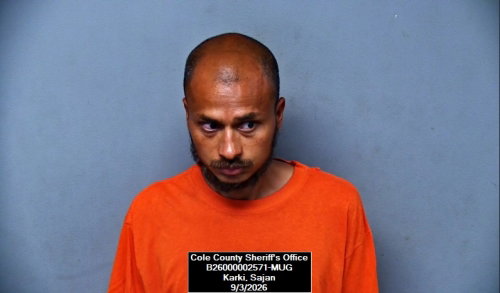
A Moberly man pleaded guilty on Wednesday to fraudulently obtaining $284,840 through COVID-19 pandemic-era financial assistance, according to a press release from the Department of Justice.

Steven Hendren, 33, pleaded guilty in St. Louis to one count of wire fraud. He will be sentenced on Tuesday, Sept. 8.

Hendren was indicted in December 2024 and was previously charged with three counts of wire fraud and a count of aggravated identity theft, previous reporting shows.

Previous reporting shows that Hendren had applied for rental assistance through the Missouri Housing Development Commission, had listed himself as a landlord and included fake lease agreement, financial statements and inflated rent amounts.

He faces up to 20 years in prison, the release says.

Click here to follow the original article.
Public input meeting held on Columbia’s proposed irrigation ordinance

Mitchell Kaminski

COLUMBIA, Mo. (KMIZ)

Columbia residents had an opportunity to weigh in on a proposed irrigation ordinance Wednesday night that city officials say is necessary to manage growing water demands.

A public hearing was held at 6 p.m. at City Hall, where City of Columbia Utilities officials presented details of the ordinance to 13 residents in attendance, including Ward 6 Councilwoman Betsy Peters.

Under the ordinance, lawn watering would be restricted to designated days and times. If approved, even-numbered addresses would be allowed to water their lawns on Sunday, Tuesday and Thursday, while odd-numbered addresses would have irrigation days on Monday, Wednesday and Saturday.

The ordinance would apply to in-ground irrigation systems and unattended hose-end devices.

“The proposed schedule would permit irrigation on your scheduled day before 10 a.m. and after 7 p.m. for a maximum of 30 minutes per irrigation zone,” according to information from the city.

The proposal is designed to reduce strain on the water system by limiting when outdoor irrigation can occur and requiring water-saving technology on certain irrigation systems.

According to city officials, daily peak water usage during the summer can exceed 170% of winter demand, while the highest hourly demand during summer months can reach roughly 240% of peak winter hourly use.

Joe Strodtman, Columbia Water Utility engineering supervisor, said the city’s goal is not to reduce overall water consumption but to spread demand more evenly throughout the week.

“The thought process behind the ordinance is, looking to spread irrigation water usage out across, multiple days, multiple hours, to reduce the, system impact at the at our peak usage,” Strodtman told ABC 17 News. “We’ve been looking at this, seriously for a few years now. The first impacts for started, looking at the need for something was back in 2016 and then we really picked up the efforts, probably two years ago, in order to get an ordinance drafted.”

The proposal would also require moisture-sensing technology on new irrigation systems to prevent watering when sufficient rainfall has occurred.

“On initial review of the ordinance, people don’t like requirements, but as they look more into the details, I think a lot of people are finding that there’s a lot of reasonableness built in. We’re not looking to reduce water usage; we’re looking to spread that out. Tonight, a lot of the questions were based on more specific areas of the city, where we’re really trying to focus on a more citywide approach,” Strodman said when asked about feedback the city has received.

However, the proposal has drawn criticism from the COMO Safe Water Coalition, which says the ordinance leaves several important questions unanswered.

Julie Ryan, co-founder of the coalition, said the group supports efforts to manage irrigation but believes some parts of the proposal need additional clarification.

“I do think that there are more opportunities to improve upon this, especially where it connects to what our, needs are for the infrastructure in our community,” Ryan said.

One concern involves language in the ordinance regarding irrigation schedules.

“One of the things was maybe just a language piece,” Ryan told ABC 17 News. “When it talked about the days and times of weeks for schedules for people to abide by, it specifically said residential and it did not include commercial.”

The coalition has also questioned proposed requirements for irrigation meters and smart sensors tied to certain system upgrades or repairs.

“The big thing, I think, too, is really the idea of the meters and the upgrading sensors,” Ryan said, adding that she questioned who would determine what qualifies as a significant upgrade and whether irrigation meters are intended primarily to generate additional revenue.

Enforcement remains another major concern. Under the ordinance, violations could be identified through city staff observations, public reports and water meter data. Penalties would include a $50 fine for a first offense, a $250 fine for a second offense and a $350 fine and water service disconnection for a third offense.

City officials said Wednesday that no fines would be issued in 2026. Instead, the city would focus on public education and warnings.

“We don’t want a situation, I think, in Columbia where we have neighbors calling about other neighbors to tell on something that they’re doing,” Ryan said. “I do know that the staff we have with Water in Light are exceptionally busy, and we need them to be doing things besides monitoring who’s running the irrigation and when they’re running it.” 

Another concern raised during the meeting centered on future growth and whether additional changes to the ordinance could become necessary as Columbia’s population expands.

Questions were also raised about exemptions included in the ordinance.

According to the coalition, commercial agricultural operations are specifically exempted under portions of the proposal, while residential and community gardens may not receive the same treatment unless watering is done by hand.

The group also wants more clarity regarding an exemption allowing irrigation to preserve turf subject to heavy public use, including how that determination would be made and who would establish the criteria.

Ryan said the coalition believes broader infrastructure concerns should be addressed alongside conservation efforts.

“We have actually talked about an irrigation ordinance with city leaders in the past, primarily because if we want to hold certain areas of the city accountable for a day in a time of the week voluntary irrigation schedule, we felt that that needs to be done throughout the system,” Ryan said.

She added that the city also needs to address questions about future infrastructure needs as development continues in growing areas of Columbia.

Instead of the current proposal, the coalition is urging city leaders to consider a drought-stage approach similar to policies used in other communities, where watering restrictions become more stringent during periods of drought and relax when water supplies are adequate.

City officials maintain that reducing peak water demand is critical to maintaining reliable service and avoiding costly future infrastructure investments.

A second public input meeting is scheduled for 6 p.m. June 17 at the Activity and Recreation Center.“Whenever the feedback is detailed and constructive, that’s very helpful to us,” Strodtman said. “I got a couple of tips tonight that I’ll go back and also review the actual language of the ordinance. We might make a couple small adjustments based on that. We really prefer feedback that’s detail based and can be constructive rather than just saying, we get a lot of comments that ‘we don’t want this, you’re just trying to control us.’”

Click here to follow the original article.
Missouri attorney general emphasizes World Cup human trafficking prevention

Olivia Hayes

COLUMBIA, Mo. (KMIZ)

Human trafficking is believed to impact at least 27.6 million people globally, according to the Department of Homeland Security.

Large sporting events like the upcoming FIFA World Cup create a prime environment for traffickers, with big crowds helping them fly under the radar.

Missouri Attorney General Catherine Hanaway said Wednesday that her office is sounding the alarm about the threat of trafficking coming to Missouri with six FIFA World Cup matches taking place in Kansas City and at least 650,000 visitors expected to the area. The first match in Kansas City will see Argentina and Algeria battle it out on Tuesday.

However, the official kick-off is on Thursday in Mexico City between Mexico and South Africa.

“We’re concerned that this is going to be the Super Bowl times at least 10,” Hanaway said. “They’re staying here longer, they have a lot of disposable income, this is a very expensive endeavor to travel to a game and to buy tickets, and it’s very male-dominated.”

Kansas City also has an international airport in its backyard, which may ease travel struggles for many, but that provides another avenue for potential trafficking. The Kansas City Aviation Department reported more than 900,000 passengers arrived and departed through Kansas City International Airport’s gates in April.

Hanaway’s office has partnered with It’s a Penalty and the Safe House Project to combat potential trafficking efforts. Part of the collaboration includes promoting the app Simply Report. Hanaway is urging those who see anything concerning to say something.

“Don’t be afraid to overreport — law enforcement can figure out if it’s a good tip or not,” Hanaway said. “If you see young people who are in the control of an adult that they don’t seem to have a natural relationship with, if you’re at a hotel and there’s a lot of traffic in and out of a particular room, just report it. If the hotel room turns out to just be a party, the hotel is probably aware of it.”

Hanaway detailed warning signs that potential targets of traffickers should look out for.

“If they talk to you about modeling or traveling or something that pays really well for the kind of work that it is. Particularly if they start to talk to you about coming to a hotel or a house of some kind,” Hanaway said.

Scams

The Attorney General’s Office is also focusing on consumer scams ahead of the Kansas City matches. Specifically, rental, parking and towing and ticket scams. Hanaway said her office has already been alerted to reports of scams tied to the World Cup events.

“Hotel rooms as far out as Columbia and St. [Joseph] are now all booked up. So if you’re hearing about some last hot deal, you’re going to want to make sure it’s not just somebody taking your money who doesn’t have housing to provide to you,” Hanaway said.

Hanaway suggested using a credit card with fraud protection for purchases or bookings you may be unsure about. As for ticket purchases, she urged people to use reputable sites, or if you’re buying from a person, make sure it’s someone you know and trust.

Parking and towing scams could also be prominent throughout the games. Hanaway is reminding people to double and triple-check the area where they leave their cars during the World Cup events.

“Make sure that either the sign is permanent or that it’s has some indication of being official. Anything that looks like it’s haphazard and put up at the last minute, you want to watch out for,” Hanaway said.

With hundreds of tow companies in the Kansas City area, Hanaway also cautioned drivers to proceed with caution — make sure they actually have your car.

“Don’t start paying anyone until you’ve gone to their tow lot and confirmed that they have your car,” Hanaway said.

Federal, state, county and local safety agencies are all taking part in prevention and security measures.

Click here to follow the original article.
Man drowns at Lake of the Ozarks

Ryan Shiner

COLUMBIA, Mo. (KMIZ)

A 31-year-old man from Lebanon, Missouri, drowned at the Lake of the Ozarks on Wednesday afternoon, according to a report from the Missouri State Highway Patrol.

The report says the man entered the Niangua River, “just off big Niangua Arm” became trapped in a low-head dam and drowned.

The man was pronounced dead by the Camden County medical examiner.

MSHP’s Troop F – which covers much of Mid-Missouri – wrote in a 3:15 social media post that the man was found unresponsive “a short time later” after entering the water.

The man’s body was brought to Hedges-Scott and Millard Funeral Home in Camdenton, the report says.

MSHP reports do not name those involved in drownings.

🚨Drowning at Lake of the Ozarks🚨

Troopers are investigating a drowningat the 8MM of the Big Niangua Arm of Lake of the Ozarks.

An adult male entered the water and a short time later, was found unresponsive.

More information will be released as it becomes available. pic.twitter.com/KjtDAEJPdZ

— MSHP Troop F (@MSHPTrooperF) June 10, 2026

Click here to follow the original article.