Jackson County judge upholds new ‘Missouri First’ congressional map

Matthew Sanders

COLUMBIA, Mo. (KMIZ)

EDITOR’S NOTE: A misattributed quote has been corrected.

A Jackson County circuit judge ruled Thursday that a new congressional map drawn last year amid a nationwide push by Republicans to gain an advantage in the U.S. House can remain in effect.

The map, which Gov. Mike Kehoe dubbed “Missouri First,” splits up the Democrat-safe Fifth District and is the subject of multiple lawsuits and an initiative petition. Opponents argue that congressional maps can only be drawn every 10 years after the national census, per the Missouri Constitution.

Thursday’s ruling came in two combined lawsuits. Circuit Judge Adam Caine stayed a ruling on one count pending a Missouri Supreme Court decision in a separate case challenging the new map, but he found for state officials on the other counts.

Wise et al and Healey et al v State Order and JudgmentDownload

Caine wrote in his ruling that the plaintiffs challenging the map failed to show that its districts did not meet legal standards for being “compact and contiguous.”

Richard von Glahn with the group created to challenge the new map, People Not Politicians, said the bigger challenge remains whether legislators can draw a new map in the middle of the decade. That’s the question at the center of the case pending before the Missouri Supreme Court, he said.

“Our position is that the details of the map are not the relevant question. Either way, politicians are trying to seize power from the people and center themselves, and not voters, in our democracy. That is wrong,” von Glahn said.

Attorney General Catherine Hanaway, whose office defended the map in court, called the ruling a victory for the people of Missouri and their elected representatives. The ruling, Hanaway’s office said in a news release, reaffirms the legislature’s sole power to redraw congressional maps.

The Missouri General Assembly approved the map, which busts up Democrat Emanuel Cleaver’s Kansas City district, last summer as the White House pushed for Republican-dominated states to squeeze out more seats. Some states led by Democrats followed with similar moves.

Filing for the August primary election began last month under the new map.

Click here to follow the original article.

Developers repurposing old buildings to add to housing supply

Marie Moyer

COLUMBIA, Mo. (KMIZ)

As the housing gap continues across the nation, developers are increasingly looking to old buildings through a growing trend called adaptive reuse.

Adaptive reuse sees non-residential buildings, such as hotels, offices, and schools, converted into apartments. RentCafe reported that, in 2024 alone, close to 25,000 new apartments were completed nationally from adaptive reuse projects. This is over, 8,000 more units than the prior year.

According to Realtor.com, new home construction fell short of demand last year, leaving the U.S. housing supply gap at around 4.03 million homes in 2025.

The National Low Income Housing Coalition also reported a shortage of over 127,000 affordable rental homes in Missouri.

“Much of what’s been in the headlines has talked about the demand side of housing, which does very little for addressing the cost and the supply side,” said Doug Ressler, manager of business intelligence at Yardi Matrix.

The National Association of Home Builders reported that inflation in the global economy has increased the costs of building materials. They found construction costs for a new home accounted for 64.4% of the average price of a new home in 2024, compared to 60.8% in 2022.

A separate study found that the average cost of a single-family home in 2024 was over $428,000. In 2019, the same home cost around $296,000. Despite that sharp increase in prices, the report says builders’ profits rose only slightly over the same period from 9.1% to 11%, a range similar to where construction profits were even two decades ago.

“So the housing demand or the household formation continues to increase, so what’s happening is that people are beginning to look at underutilized or vacant properties,” Ressler said. “What we have found is that governments that work in collaboration with business, the community, are much better suited to be able to provide housing in those areas that are under a lot of stress.”

RentCafe reported that of the 2024 adaptive reuse projects,37% of structures started as hotels, followed by office spaces at 24% and industrial buildings at around 19%.

The Construction Management Association of America also reported that existing buildings account for about 42% of global carbon emissions. Using existing properties helps keep emissions down and gives builders opportunities to add eco-friendly facilities to dated buildings.

“I’d say we’ve been involved in a half a dozen and multiple states,” said Jason Maddox, the president of Midwest-based MACO Development Company. “We’ve done a hotel, we’ve done downtown buildings, a bank conversion, but it seems like the school buildings work a little better.”

Ressler said the historic context of buildings even helps with more affordable housing projects.

“There’s a lot of vacant buildings and many of those buildings are quite old; they can qualify for historical preservation loans,” Ressler said. “What we see, especially in affordable housing, is you can stack loan monies in terms of being able to pencil out, make it affordable.”

A MACO project, the Carver School Apartments in Fulton, which added 33 affordable senior apartments to the city’s housing stock in December of last year, used $766,000 in federal historic preservation tax credits. Maddox said the construction cost around $8 million and the project received around $8.2 million in federal housing credits and $3.7 million in state housing credits.

Other recent adaptive reuse projects in Mid-Missouri include the Tannehill Apartments in Moberly that added 40 affordable senior housing units in Feburary and the Benton School project in Marshall, which is expected to add 17 apartments.

“We are able to determine if there’s a housing need there and if we’re able to do this and help to meet that housing need and also to preserve that structure at the same time,” Maddox said. “It’s a win-win.”

Tune in to ABC 17 News at 10 p.m. Sunday to get a behind-the-scenes look at how these adaptive reuse projects develop.

Click here to follow the original article.

Missouri House approves Kehoe’s tax elimination bill

Alison Patton

JEFFERSON CITY, Mo. (KMIZ)

After less than an hour of debate, the Republican-led Missouri House approved Gov. Mike Kehoe’s income tax elimination bill with a 98-54 vote.

It will now be sent to the Senate, and that chamber is likely to pick it up after spring break, which starts Friday, and legislators will be back in session March 23.

House Joint Resolutions 173 and 174 would phase out the income tax, with the goal of eliminating it by 2032. Lawmakers plan to expand the sales tax base to include services and online purchases as a way to make up for the massive revenue cut.

Income tax makes up about two-thirds of the state’s revenue.

Republican lawmakers argue that the state’s tourism will make up for the revenue loss because out-of-state consumers will have to pay sales tax. The GOP also argues Missourians will take more home in their paycheck, and could choose to spend more, generating more sales taxes.

However, Missourians will have to pay that back at the grocery store, online subscriptions and purchases, and when they pay for services like haircuts or pet care.

Voters will have the final say at the ballot if the bill makes it through the Senate.

In final arguments on the House floor Thursday, Rep. John Martin (R-Columbia) reiterated the need for his colleagues to keep public safety, schools and infrastructure in mind while adjusting the state’s budget.

“We have a historic opportunity to help Missourians to have more take-home pay, and they can choose to spend that,” Martin said. “We also need to evaluate our state budget at this time, a good time to look at the target, as people are wondering how we’re going to make up the difference.”

The bill language said it would protect public school funding. However, Traci Gleason from the Missouri Budget Project said that might not be possible when legislators intend to cut the state budget by a million dollars this year and even more next year, and are already underfunding public schools.

“In that environment where we’re already underfunding, legislators are already making cuts and considering more drastic cuts next year, we’re talking about eliminating a huge source of funding for everything in our budget,” Gleason said.

The Department of Elementary and Secondary Education is also working to adjust the foundation formula for school funding.

Schools could also see shortfalls in local funding.

If the bill makes it through the general assembly and voters give the OK, it would provide a boost to local sales tax revenue. The bill would require local governments to lower property taxes to account for that increase, but that’s where many public schools get a chunk of their funding.

“Schools would be hit by an inability to handle real-world dynamics that any locality faces with population growth, demographics and things like that,” Gleason said. “It would really be a 1-2 punch at both state and local funding levels.”

Click here to follow the original article.

Jury recommends max sentence on reduced assault charge in Columbia restaurant shooting

Olivia Hayes

COLUMBIA, Mo. (KMIZ)

A Boone County jury made its recommendation on how much prison time a Florida man should face for opening fire in a Columbia restaurant.

The jury recommended a seven-year sentence for second-degree assault, the maximum allowed under the law. The jury also recommended and eight-year sentence for armed criminal action after about four hours of deliberation on Thursday afternoon.

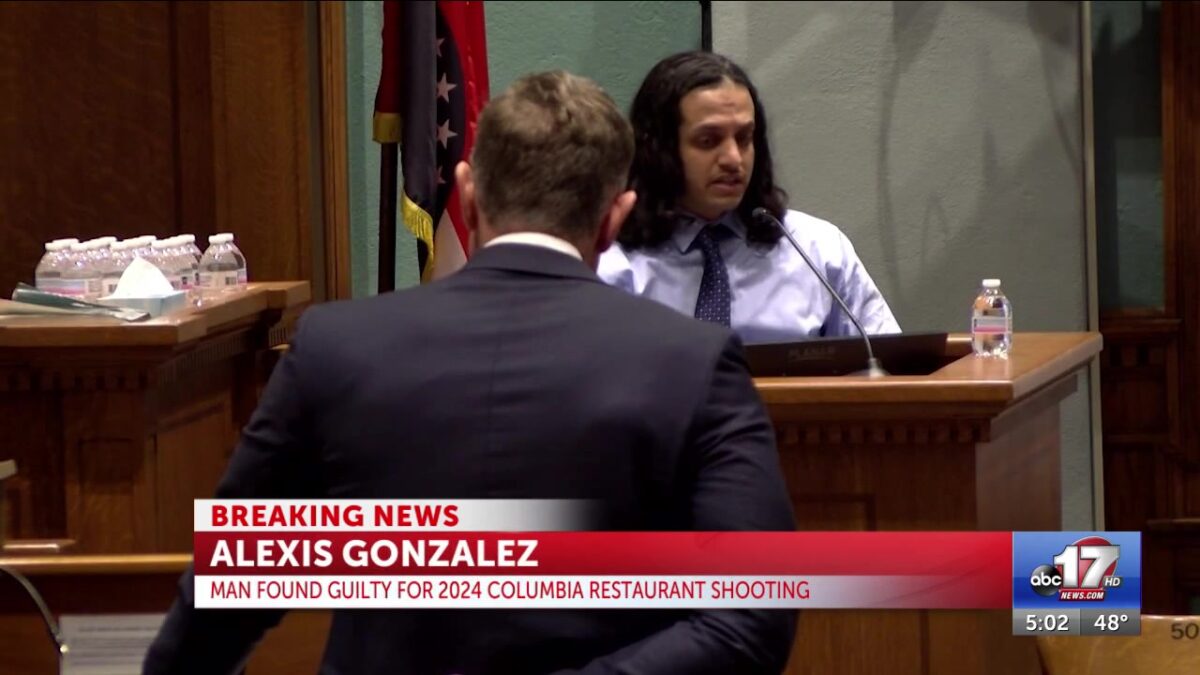
Alexis Gonzalez, 38, was found guilty of second-degree assault and armed criminal action Wednesday. He was acquitted on one charge of unlawful use of a weapon. Gonzalez was accused of shooting Gary Bitsicas in the face on Aug. 17, 2024.

Prosecutors originally charged Gonzalez with first-degree assault, which has a maximum sentence of 30 years. The jury convicted him instead of the lesser offense of second-degree assault, and deliberated the sentence recommendations for most of Thursday.

Judge Stephanie Morrell will decide the final sentence on May 4. Morrell cannot exceed the jury’s recommendations when deciding on a prison sentence.

The state asked the jury to consider the maximum sentence for both counts. The defense asked for one year in the Boone County Jail for the assault conviction and three years in the Missouri Department of Corrections for the armed criminal action.

The state argued that Gonzalez went back into a restaurant with a gun and the intention to harm Bitsicas after an argument outside over a bar tab. Gonzalez claimed he was acting in self-defense and in defense of his girlfriend. Gonzalez expressed his regret one final time on the stand Thursday before deliberations.

“I regret the injuries that Gary had to suffer, I regret the things that people had to go through in that bar, I still do think about it each and every night,” Gonzalez said.

Boone County Prosecutor Roger Johnson said the verdict will send a message to the public on whether Columbia tolerates crime or stands up to it. He asked the jurors to make an example out of Gonzalez and his actions that night. Johnson said being a gun owner comes with a responsibility that Gonzalez failed to uphold.

“Gun violence on our community is not going to be tolerated,” Johnson told ABC 17 News after court Thursday.

The defense highlighted Gonzalez’s character in closing statements to jurors. His attorney, Jeff Hilbrenner, said Gonzalez is a military veteran who worked as a pharmacy technician before his arrest. Hilbrenner said Gonzalez has no criminal history and no reports of poor behavior while being held in jail since Aug. 18, 2024.

Hilbrenner wasnot available for comment Thursday.

Bitsicas also shared a statement after court on Thursday calling for stricter gun law in the state.

“When the laws are weak, the violence becomes easier,” Bitsicas said. “When the violence becomes easier, more families suffer.”

Bitsicas did not want to share his thoughts on the jury’s sentencing recommendation.

Click here to follow the original article.

Jefferson City Public Works to discuss options for High Street viaduct

Jazsmin Halliburton

JEFFERSON CITY, Mo. (KMIZ)

The Jefferson City Public Works Committee is set to meet Thursday morning to discuss options regarding the aging High Street viaduct.

In February, the Public Works department shut down the viaduct after what was initially reported as a pothole turned out to be a significant structural issue. The damaged area has since been covered with a steel plate.

In Thursday’s meeting, the committee will go over options for reopening and fixing the viaduct. The city can reopen the bridge and cover the hole with a steel plate or keep the bridge closed. Repairing the bridge would cost around $34,400.

The committee will also discuss options to protect pedestrians and traffic underneath the viaduct if the city decides to reopen it. Those options include:

Regularly knocking loose concrete off

Place canopies under the bridge to catch falling concrete

Attach falsework, netting or steel mesh to the bridge to catch falling concrete.

The Public Works Committee recommends that a full-depth repair be made to the viaduct. However, the bridge can be reopened as long as regular inspections and spot repairs are done until the full-depth repair can be made.

To fully replace the viaduct, it would cost the city around $17 million.

Click here to follow the original article.

Missouri House committee moves forward with bill tying state funding to students at public universities, colleges

Alison Patton

JEFFERSON CITY, Mo. (KMIZ)

The Missouri House of Representatives budget committee voted to move forward with a bill Wednesday that would link state funding to student enrollment at public universities and colleges.

This means universities that educate lots of students, like the University of Missouri System and the Missouri State University, would receive millions in additional state funding.

Governor Mike Kehoe recommended giving MU about $291.4 million for the financial year 2027, according to a spreadsheet from the committee. House Bill 2003, sponsored by the budget committee chair Rep. Dirk Deaton (R-Seneca), recommends giving MU about $449.5 million.

MU has more than 53,000 students across all four campuses, whereas MSU educates a little more than 17,000 students, the second largest state school, according to the committee spreadsheet.

Kehoe proposed funding MSU with $114.9 million, and Deaton’s bill proposes an increase that would total $145.1 million, according to the spreadsheet.

“The current funding model has not kept pace with enrollment growth since it was established in the early 1990s, and Missouri State currently receives the second-lowest per-student allocation among Missouri’s public four-year institutions,” Missouri State University President Richard Williams said in a statement to ABC 17 News.

President and CEO of the Missouri Community College Association Brian Millner said the current funding formula gives universities and colleges a set amount of funding each year.

Millner said the state currently separates funding for universities and community colleges.

Community college enrollment is rising, according to Millner; they educate about 33% of Missouri students and receive about 19% of the funding. If lawmakers go through with the proposed plan, and enrollment continues to increase, some colleges might receive less funding under the proposed plan than under the current one.

“The community colleges are actually really supportive of the idea of moving away from the status quo and taking a look at how we’re funding higher education,” Millner said. “We just think it’s a really big shift all at once.”

This new funding plan could be harmful to smaller universities, and some could lose funding.

For example, Lincoln University in Jefferson City would stand to lose about $8.9 million, dropping the uniersity to $14.8 million, which is down from the governor’s proposed $23.7 million. The university also voted to raise tuition by 5% across the board Tuesday.

Truman State University would see its funding cut by over half. The university would go from what it was proposed by the governor $50.9 million to $23.8 million, according to the spreadsheet. Truman has about 2,800 students studying at the university this year.

“As the proposed change has already been met with bipartisan opposition, it is unlikely to become a reality,” university spokesperson Travis Miles wrote in an email to ABC 17 News. “It does not account for Truman’s state-mandated role as a public liberal arts and sciences university, nor does it take into consideration Truman consistently has among the state’s highest retention and graduation rates.”

At Wednesday’s committee hearing, there was bipartisan opposition, with a few Republicans speaking out against the bill when Democrat Raychel Proudie (D-Ferguson) proposed an amendment that would change the bill back to what the governor proposed.

“I think that for the entire amount of the money to be allocated for one year based on this FTE [the proposed funding formula] is not beneficial, other than as a wake-up call,” Rep. Ed Lewis (R-Moberly) said.

“I love the idea of making a switch, but I’m concerned with some of the costs of those programs being weighted just on students,” Rep. Jeff Vernetti (R-Camdenton) said.

Lindsey Baker, a research director from the Missouri Budget Policy, said some students are more costly to educate because of their program.

“So, tying it directly to just student enrollment can be tricky because there are certain programs that are more expensive than other programs, whether it’s medical schools or different types of things are more costly than others,” Baker said.

MU spokesperson Christopher Ave sent ABC 17 News a statement on the proposed funding bill, and asked to run the statement in full.

“The University of Missouri is grateful for the strong support of the governor and legislature.  We achieve excellence with the resources provided to us from the citizens of the state, our students and their parents. The University of Missouri has the highest graduate rates and job placement rates in Missouri and we continue to bring research breakthroughs that impact the lives of Missourians.  This is reflected in MU being the No. 4 Best Value among all flagships by US News and World Report and among the world’s top universities by Time Magazine. We appreciate the legislature considering new approaches to provide state funding to Missouri’s public universities.  We look forward to working with the governor and legislature on funding approaches that focus on performance and outcomes that benefit Missourians,” Ave wrote.

Click here to follow the original article.

Cole County EMS sees increase in calls for service in 2025, breaks record again

Nia Hinson

COLE COUNTY, Mo. (KMIZ)

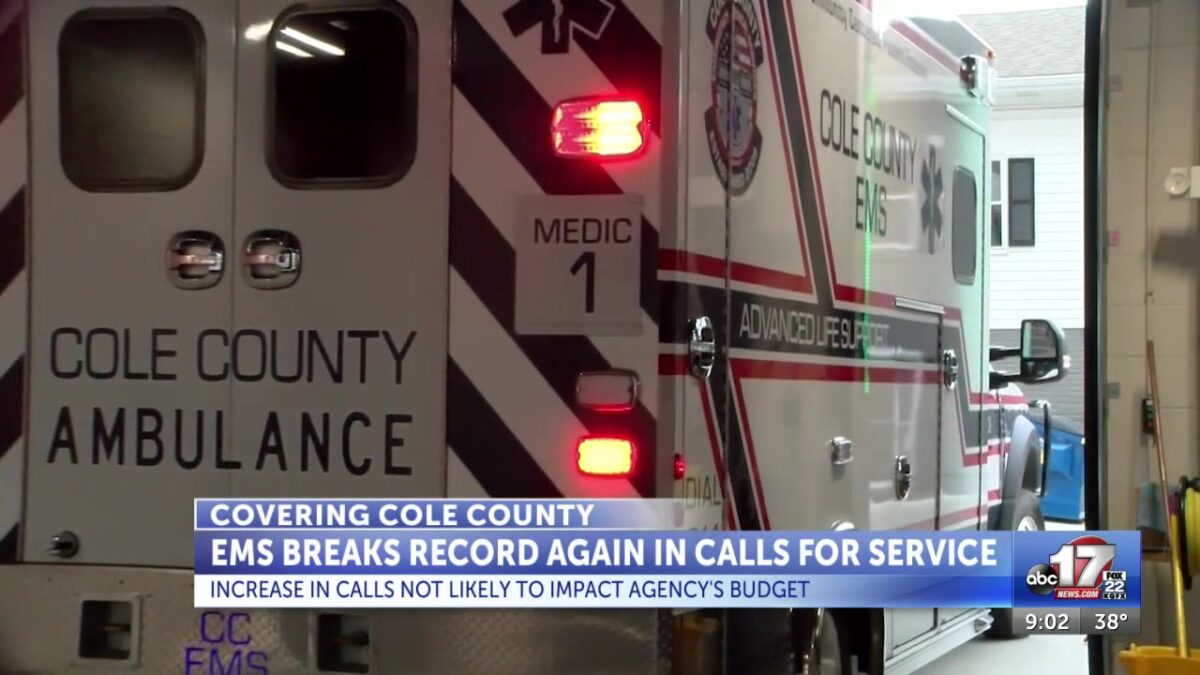
Cole County EMS responded to more calls in 2025 than the year prior, once again setting a new record.

According to the county’s annual report, first responders responded to 14,071 calls in 2025, an increase of 445 calls compared to 2024, when they responded to 13,626 calls. This also marks a 60% increase in calls for service since 2019, when they were only responded to 8,762 calls, and paints an overall trend of an increase in calls for service since 2019, with the exception of 2023, which saw a slight decrease.

“We don’t really have any identifiable trends, other than the community is more reliant in our services,” EMS Chief Eric Hoy said. “I think the most logical explanation is that Jefferson City is a suburban community with an average age extending more towards that retirement age, and we see them more reliant on emergency services and health care in general.”

A break down in calls for service since 2019 is as follows:

2019: 8,762

2021: 11,912

2022: 12,595

2023: 12,315

2024: 13,626

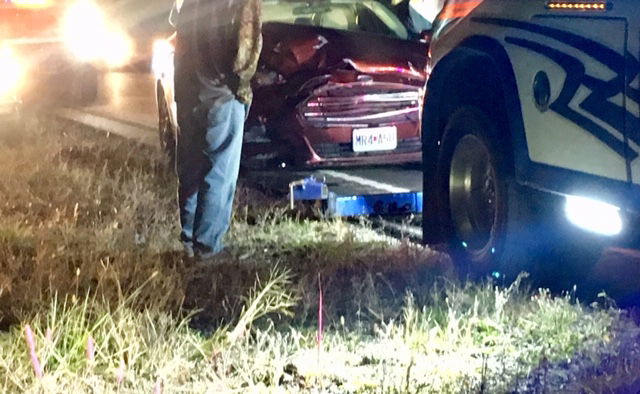
According to the report, EMS responded to traffic accidents the most out of any other incident, in 2025, responding to 1,022 accidents. That marks a slight increase from 2024, when they responded to 985.

Cardiac arrest calls claimed the second spot for the most calls received at 131 calls, while EMS responded to 29 opioid overdoses and 26 weapons offenses. The report also highlights a slight decrease in the average response time, coming in at 7 minutes and 4 seconds. In 2024, the response time sat at 7 minutes and 19 seconds.

The average on scene time was 19 minutes and 3 seconds. The average transport time was 12 minutes and 10 seconds, marking a significant decrease from the year prior, when the average time sat at 18 minutes and 19 seconds.

EMS’ new headquarters could be to thank for that.

The new building– located on Adams Street in downtown Jefferson City– opened in November 2024. The county opened up the building to help improve response times in an area where the majority of EMS calls come from.

Hoy said that data shows call volumes were more evenly dispersed among the county’s different stations in 2025. Their busiest medic unit– which is located in the building on Adams Street– saw a decrease of about 400 calls in 2025, meaning that resources are being spread out and one single station is not getting the overwhelming majority.

“It’s been very gratifying to see that because that was one of the main strategic plans with building this facility (the new headquarters) and bringing on the two ambulances that we see here,” Hoy said.

The report also states that 98% of 911 calls were answered within 10 seconds and that the county processed 26,738 calls.

Hoy expects EMS will see another increase in calls in 2026, something he said is being seen across the nation.

But how does this impact budgeting? Cole County Presiding Commissioner Sam Bushman said it doesn’t have much of one.

“We have a half cent sales tax that is partially used and then with their calls we are dealing with insurance and Medicare and Medicaid, so it’s usually pretty equal so it’s not going to impact their budget this year, we should be good,” Bushman said.

Hoy also said that the growth in call volume can make it more difficult to be able to accomplish bigger strategic capital items, such as building a new station or buying more ambulances. However, he said they’re in a good spot financially and have been able to maintain a high level of service, despite an increase in operating costs.

“I can’t say that we wont run into some budget issues at this point, but we do a very good job of being conservative,” Hoy said. “For the 2026 budget we anticipated no growth in sales tax based on the current economic factors and we’re still able to balance our budget and return cash reserves to an acceptable level, so we don’t have any concerns.”

Hoy said that they’ll also continue constantly monitoring data and performance metrics to ensure they’re financially solvent.

According to the report, EMS’ total revenue in 2025 was $9,759,512, a slight decrease from 2024, when it was $10,640,297. 59% of that money in 2025 went toward fees for service, also marking a jump from 2024.

Hoy also said that EMS has the staff needed to respond to the increase in calls and that there have not been any instances where they’re unable to answer calls due to a lack of staffing. However, there are sometimes instances where call volume exceeds the amount of resources and mutual aid from other agencies is required. That has not created a delay in service, though, Hoy said.

12 students graduated from the EMT program at the headquarters at the end of 2025, something Hoy said has been a huge recruitment and retention tool . Six of them are currently employed with Cole County EMS, according to Hoy.

Click here to follow the original article.

Boone County Fire Protection District names new assistant chief

Steven Lambson

COLUMBIA, Mo. (KMIZ)

The Boone County Fire Protection District named a new assistant chief for its operations bureau on Wednesday, according to a news release posted on Facebook.

Chuck Doss was named the new assistant chief and brings “a leadership style that adapts to the situation, clear and decisive during emergency operations, while focusing on coaching and leadership development outside of incident response,” the news release said.

Doss started his firefighter career in Greene County in 1997 and joined BCFPD in 1999, according to the release. From 2004 to 2011 Doss worked for the Olathe Fire Department before returning to BCFPD where he was eventually promoted to battalion chief.

In 2021, Doss started working for MU Health Care’s EMS operations until the present time.

“Throughout his career, he has focused not only on emergency response but also on improving training, strengthening organizational systems, and developing future leaders, ensuring that the service delivered to the community is professional, prepared, and compassionate every time,” the district said in the release.

““The work we do matters, and the people who do it matter,” Doss said in the release. “My commitment is to provide clear expectations, steady leadership, and support as we continue to raise the standard together.”

Click here to follow the original article.
Columbia teen gets 15 years for shootings

Madison Stuerman

COLUMBIA, Mo. (KMIZ)

A Columbia teen pleaded guilty Wednesday to multiple Columbia shootings.

Justin Lumley Jr. pleaded guilty to three amended charges, including second-degree assault, admitting to shooting one person in December 2024.  He also admitted to shooting a gun from a car that caused property damage in January 2025, according to court records.

The 17-year-old was sentenced to 15 years in prison. Prosecutors dropped 12 felonies in exchange for Lumley’s plea.

The charges he pleaded guilty to were also amended from first-degree assault and armed criminal action.

In the December 2024 incident, deputies were called to El Chaparral Avenue after two youths arrived at a hospital with gunshot wounds. The probable cause statement says a shooting occurred at East Broadway and South Keene Street.

Court documents in the January 2025 incident say one person was injured after being shot at. Police found a Chevrolet Malibu with multiple bullet holes and shot-out windows. One of the victims was taken to University Hospital.

Lumley was certified as an adult last May.

Click here to follow the original article.

MoDOT identifies Mid-Missouri roads with most wildlife crashes

Josie Anglin

JEFFERSON CITY, Mo. (KMIZ)

Three Mid-Missouri roads have landed on a high-priority list for reducing wildlife-related crashes after a Missouri Department of Transportation study.

The study releaed in February showed 19% of animal crashes statewide have happened in Mid-Missouri in the last 10 years. Most of those crashes were with deer. MoDOT put three Mid-Missouri roads on a high-priority list for improvements.

Those are Route DD in Johnson County, Highway 36 in Macon County and Highway 17 in Pulaski County. 

In Pulaski County, MoDOT is focusing on the the stretch of road near Waynesville in the Roubidoux Creek Conservation Area. The study says that a fourth of all the crashes between mile marker 139 and 141.5 on Highway 17 are wildlife crashes. MoDOT recommended lowering the speed limit in that area, installing signs warning drivers of wildlife and putting up fences to discourage animals from going toward the road.


Click here to follow the original article.