Camden County sheriff says hundreds of pounds of drugs seized in connection with Gathering of the Juggalos

Matthew Sanders

COLUMBIA, Mo. (KMIZ)

EDITOR’S NOTE: The spelling of Pradhan’s name has been corrected.

The Camden County Sheriff’s Office said Thursday that deputies have seized hundreds of pounds of drugs from people associated with the Gathering of the Juggalos festival at Macks Creek.

The busts were made in partnership with the Mid-Missouri Drug Task Force, the sheriff’s office said in a news release.

The release, signed by Sheriff Chris Edgar, says the festival has brought an influx of out-of-state visitors bringing “illegal drugs to our community.” Edgar wrote that authorities were working to make the event as “painless” for locals as possible.

The gathering, the 26th festival of its kind headed by musical act Insane Clown Posse, began Wednesday.

One of the arrests listed in the sheriff’s release is Kevin M. Jones, 45, of Easton, Pennsylvania, who is known at the festival as “Bluntman.” He was allegedly busted with 128 pounds of marijuana and 2.5 pounds of mushrooms. Jones was charged with first-degree drug trafficking and felony drug distribution, and remained jailed Thursday without bond.

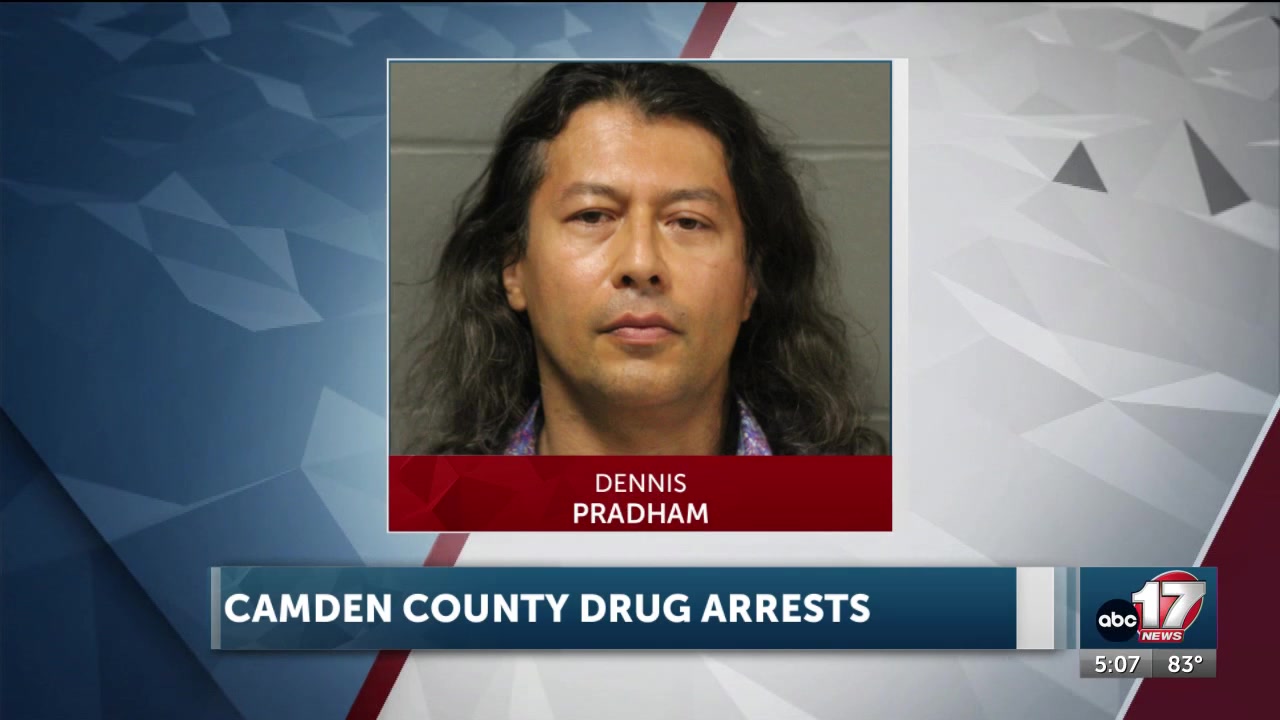
Dennis A. Pradhan, 49, of Silver Springs, Maryland, was arrested and charged with first-degree trafficking and three counts of drug distribution after deputies found 93 pounds of marijuana, 124 pounds of mushrooms, 135.5 grams of ketamine, 33 grams of a ketamine/fentanyl mixture, and 66.5 grams of MDMA, according to the release.

The sheriff says Robyn W. Weiford, 34, and Jesse A. Williams, 38, both of Bear, Delaware, were charged with drug distribution and released on $50,000 bond after deputies found 40 pounds of THC edibles.

The event at Mother Nature’s Riverfront Retreat takes place through Saturday.

Click here to follow the original article.

Missouri school districts to get ‘first look’ at new A-F grading system this fall

Ellyse Edwards

COLUMBIA, Mo. (KMIZ)

Data from the 2024-25 school year will be used to give school districts a “first look” at a new A-F grading system for districts this fall.

The Missouri State Board of Education reviewed an updated proposal Tuesday that would assign A-F grades to public schools and school districts. The board also learned that the initial grades won’t include literacy scores, but those will be included in the full report card districts will receive in fall 2027.

The Missouri Department of Elementary and Secondary Education presented the framework as part of an executive order signed by Gov. Mike Kehoe. Kehoe signed the order in January, directing the department and State Board of Education to develop a simpler way for families to understand school performance.

The board did not vote on the proposal Tuesday. The department’s presentation says the framework is scheduled to return to the board as an action item in September.

The latest proposal includes a revised formula for high schools. Academic achievement and student growth would each account for 29% of a high school’s grade. The state’s Success-Ready Graduate measure and four-year graduation rate would each account for 21%.

The framework submitted to the governor in June had divided those categories differently, assigning 28% each to academic achievement and growth and 22% each to the Success-Ready Graduate measure and graduation rate.

For elementary and middle schools, academic achievement would account for 38% of the grade, value-added growth for 33%, and growth toward proficiency for 29%.

Growth toward proficiency would measure whether a student who is not proficient is on track to reach grade-level proficiency within three years.

Under the proposed scale, schools and districts scoring 89% or higher would receive an A. Scores between 76-88% would receive a B, while scores between 63-75% would receive a C. Scores between 50-62% would receive a D, and scores below 50% would receive an F.

The latest presentation also outlines a revised rollout schedule. The department anticipates releasing a “first look” in fall 2026 using data from the 2024-25 school year. That version would not include the proposed literacy measure.

A draft using data from the 2025-26 school year is anticipated sometime in 2027, although the presentation does not give a specific date. The department expects grade cards using all elements of the framework to be released in fall 2027 using data from the 2026-27 school year.

The executive order calls for schools and districts to receive their grade cards by Sept. 15 each year and publish them by Sept. 30. It also requires schools to test at least 95% of their students on state assessments. A school that does not meet that threshold would have its rating lowered by one letter grade.

The department said funding, staffing and collaboration among state agencies and school districts will be necessary to produce the grade cards and support school improvement efforts.

The Missouri State Teachers Association opposes the proposed system. Matthew Michelson, the association’s education policy director, said educators are concerned the grades could place more pressure on schools to focus on state testing.

“We are going to have an issue where teachers are teaching to the test, because the test is the only thing that matters,” Michelson said. “And the single test is going to determine whether or not students are going to be in an A school or an F school. And then all of the things, the stigma, the accountability, the buy in from the community that go along with that.”

The Missouri School Boards’ Association supports accountability and transparency but is concerned families could view a letter grade without considering other information about a school.

“I think it’s important to recognize that one letter cannot tell the full story of a school or the education an individual child is receiving,” Executive Director Melissa Randol said. “So it is just one piece of information alongside a lot of other pieces of data and a lot, you know, the experiences and opportunities that are provided by school to our students and to our families and communities.”

If your existing story does not already explain the system, add this below the interview reaction:

The proposed system would give each public school, public charter school and district an overall grade based on a 100-point scale. A score of 89% or higher would receive an A, while a score below 50% would receive an F.

Elementary and middle school grades would be based on academic achievement, student growth and whether students are on track to reach grade-level proficiency. High-school grades would also consider the state’s Success-Ready Graduate measure and four-year graduation rate.

A school that tests fewer than 95% of its students on required state assessments would have its rating lowered by one letter grade.

The department’s presentation also identifies several decisions that still need to be made, including whether every school should receive a grade, whether already-proficient students should be included in the growth-to-proficiency measure and whether the formula should account for demographic characteristics.

Click here to follow the original article.

Pulaski County discontinues the use of Flock Cameras

Demetra Alarcon

COLUMBIA, Mo. (KMIZ)

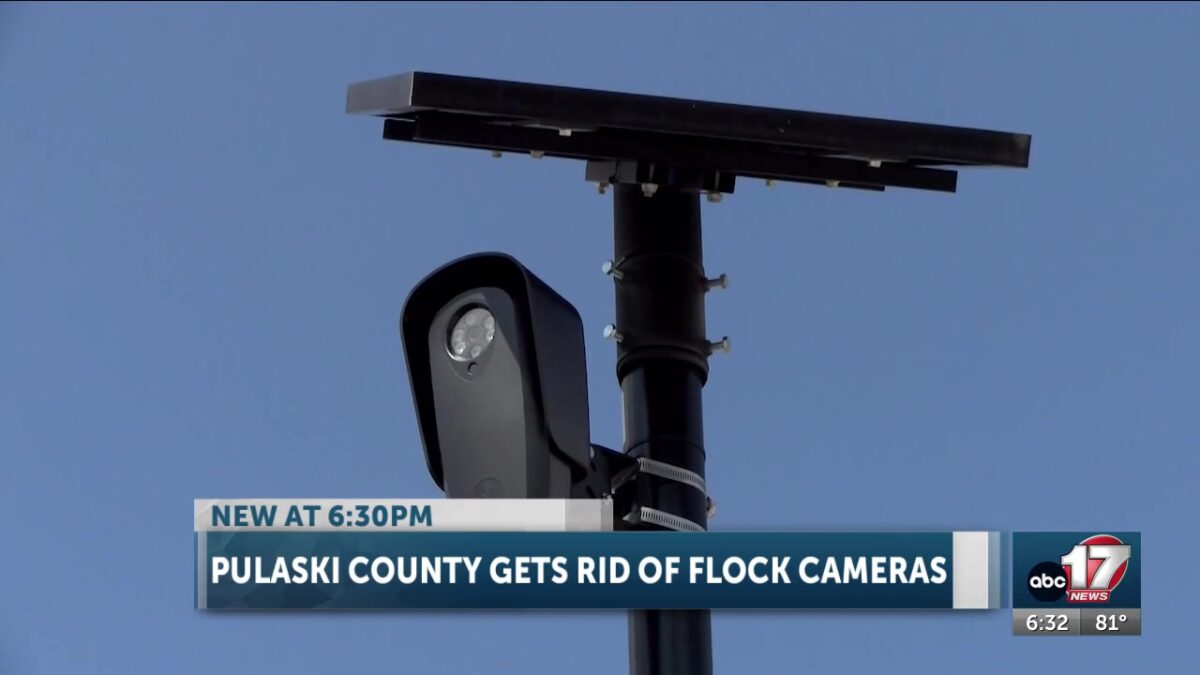
The Pulaski County Sheriff’s Office has announced that it will discontinue the use of Flock automated license plate reader cameras.

In a statement on Facebook, posted by the sheriff’s office Thursday morning, Sheriff Stacy Ball said that he took an oath to support and defend the Constitution, and that his responsibility is to protect the community.

“My responsibility is not only to protect you and your families from crime, but also to protect and respect your constitutional rights and individual liberties,” said Ball.

Ball goes on to say that there have been genuine concerns about privacy, misuse and what the technology could mean for the future. He says that he has heard the concerns.

“Sometimes leadership means listening to the people you serve,” Ball wrote.

Ball told ABC 17 that he did not want to take a change on violating anyone constitutional rights.

“I don’t want to take a chance of violating anyone’s constitutional rights for the purpose of capturing a picture of their vehicle,” said Ball.

Ball said that this does not mean the sheriff’s office is going backwards, and that they will be coming for criminals with or without Flock.

“Our deputies and detectives were doing damn good police work long before Flock ever showed up, and they’ll be doing damn good police work after it’s gone,” said Ball.

Flock has come under nationwide criticism after multiple reports of police abusing the system. Opponents also express more general worries about civil rights and the cameras’ ability to do more than just read license plates.

An advocacy group has formed in Columbia to oppose the police department’s use of the cameras.

Ball said that the sheriff’s office will continue protecting Pulaski County while finding the right tools.

“Aggressively when it comes to criminals, professionally when it comes to our duties, and constitutionally when it comes to your rights,” said Ball.

Ball ends the statement by saying that although people may not always agree, he will listen and make the decisions he believes are right for the citizens of Pulaski County.

“Your voice matters. Your rights matter. Your trust matters,” said Ball.

Ball followed the original post with a second one showing an email chain with a Flock representative canceling the county’s contract.

The Pulaski County Sheriff’s Office held a Community Forum on Thursday, where this announcement was first made

ABC 17 spoke with Ball, he said that after all of the complaints, issues, and concerns from citizens, he wants the citizens to trust him.

“I want to do what’s best for Pulaski County, because that’s what I’m concerned with. And that was my decision to discontinue a flock, ” said Ball.

Although there is no set date when the cameras will be down, Ball said there was a talk about getting them covered up.

“I had a gentleman that volunteered to make some covers for me if it’s going to take a long time. That I will put up versus having somebody put a trash bag,” said Ball.

Click here to follow the original article.

MoDOT evaluating rural highways for potential 75 mph speed limits

Euphenie Andre

JEFFERSON CITY, Mo. (KMIZ)

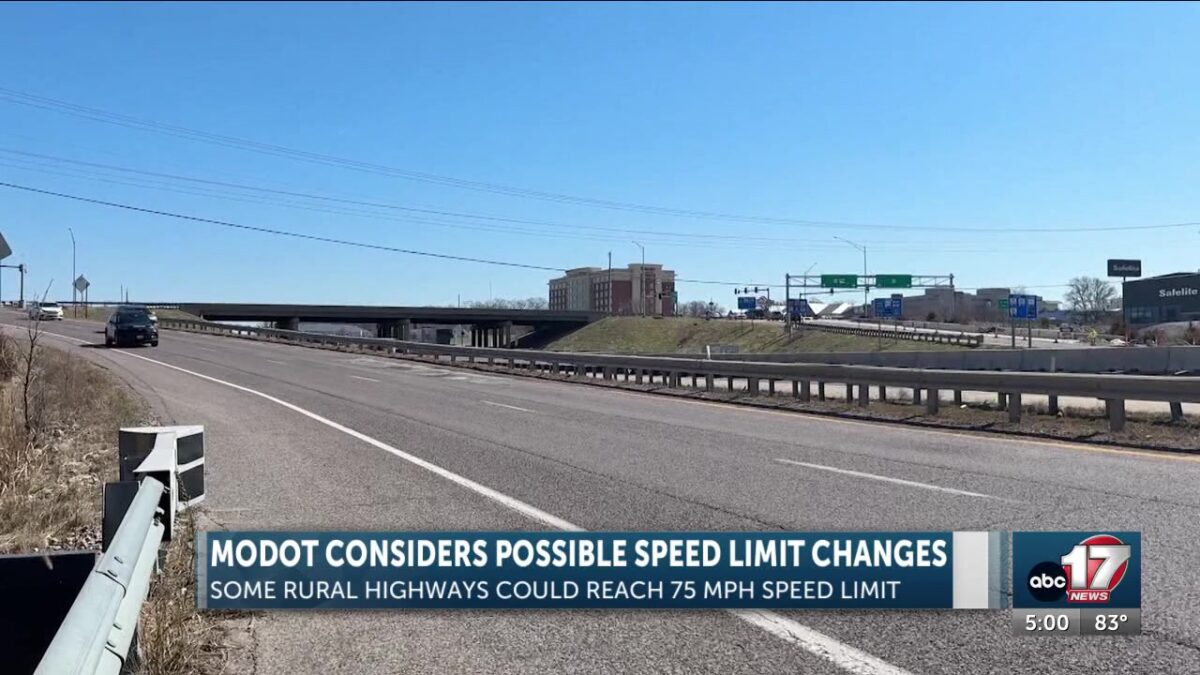
A new Missouri law allowing higher speed limits on certain rural highways is set to take effect Aug. 28, but drivers will not see immediate changes.

Gov. Mike Kehoe signed Senate Bill 1408 in July, giving the Missouri Department of Transportation the authority to raise speed limits from 70 to 75 mph on eligible rural highways and interstate freeways.

The Missouri Department of Transportation is evaluating eligible highways to determine where speed limits could potentially increase to 75 mph. MoDOT said no speed limit changes will take effect until that review is complete.

MoDOT Director Ed Hassinger said effective date does not mean drivers can automatically start driving 75 mph.

“Don’t think on August 28th that automatically I can drive faster than the posted speed limit. The sign that’s up is the speed limit until it changes,” Hassinger said.

MoDOT is evaluating individual highways to determine where a higher speed limit could be implemented safely.

“There definitely are places where it does not make sense to do so,” Hassinger said.

According to the National Highway Traffic Safety Administration, 11,288 people were killed in speeding-related crashes in 2024.

The agency said traffic congestion can be one factor that contributes to speeding and other aggressive driving behaviors. When drivers become frustrated or impatient in heavy traffic, they may be more likely to speed, frequently change lanes or become angry with other drivers they believe are slowing them down.

In a news release, MoDOT Director Ed Hassinger said the department is working to balance traffic efficiency with safety.

“There’s a balance to be struck here between efficient traffic movement and safety, so we’re taking careful consideration of any potential location, what the roadway is like there and how people use it,” Hassinger said.

Under the new law, MoDOT will continue to determine speed limits and must consider whether a higher limit would be reasonably safe for each roadway.

The department said its evaluation will include several factors, including:

Current traffic volumes

Truck traffic volumes

Crash history

Terrain

Road design and existing safety features

Speed limits in neighboring states near the Missouri border

Hassinger said the department wants to carefully evaluate each location before making any changes.

“We basically made people aware that this could have negative impacts,” Hassinger said. “That’s why we’re being really careful.”

Interstate 70 will not see its speed limit increase while construction continues through MoDOT’s Improve I-70 Program. The department said it will reevaluate the corridor once the rebuild and expansion project is complete.

“We’re not going to do anything on I-70,” Hassinger said. “We’ve got most of that under a work zone speed limit anyway, and we’re actually having trouble getting people to drive the workzone speed limits,”

Hassinger said MoDOT hopes to complete its review of eligible locations by the end of the year and provide an update on which highways could see higher speed limits.

Until then, MoDOT is reminding drivers to continue following posted speed limits, particularly in work zones across the state.

Click here to follow the original article.

Several state politicians to attend Missouri State Fair Governor’s Ham Breakfast

Jazsmin Halliburton

COLUMBIA, Mo. (KMIZ)

The Missouri State Fair will host the annual Governor’s Ham Breakfast Thursday morning, with multiple politicians from across the state expected to attend ahead of the midterm elections.

The breakfast will be in the NUCOR Director’s Pavilion at 8 a.m. at the Missouri State Fair in Sedalia. Governor Mike Kehoe, Lt. Governor David Wasinger, state politicians, farm families, and community leaders are expected to attend to celebrate Missouri agriculture.

State politicians are preparing for the midterm elections in November, as the redrawn state congressional map will remain in effect.

A Cole County judge sided with Secretary of State Denny Hoskins and Republicans Wednesday over a vote on whether the maps should be placed on the ballot. The state argued that state and federal law prohibit a referendum on a map, that it’s too late to change the districts voters are tied to for the November election and that Missouri lawmakers were within their rights to redistrict mid-decade.

The judge also sided with Hoskins and republicans to reject an initiative petition looking to check the General Assembly’s power to change voter-approved policy. The judge wrote that the initiative petition was overly broad, violating Missouri’s provision that ballot measures address only one subject.

Click here to follow the original article.

QUESTION OF THE DAY: Should lawmakers have the power to undo voter-approved laws?

Matthew Sanders

A Cole County judge ruled Wednesday that a ballot issue to limit lawmakers’ power to undo laws approved by voters is not legally fit for the November ballot.

The case is sure to be appealed, and it’s one of several racing toward a conclusion ahead of a September deadline to certify November ballots. The case, however, raises interesting questions about Missouri’s novel system of allowing citizens to enact laws and change the state constitution by a direct vote, known as the initiative petition process.

That process has frequently been used to enact policy, including a requirement that employers give their workers paid leave. That was shot down by the legislature the following year, and signed into law by Gov. Mike Kehoe.

Do you think lawmakers should be able to overturn laws enacted by a direct vote of the people? Let us know by voting in the poll.

Click here to follow the original article.

Thousands descend on Macks Creek for ‘Gathering of the Juggalos’

Melissa Houston

MACKS CREEK, Mo. (KMIZ)

Emergency responders across Camden County are staging resources as thousands of attendees arrived for the annual Gathering of the Juggalos festival on Wednesday.

The four-day event, hosted by the rap group Insane Clown Posse, runs through Saturday at Mother Nature’s Riverfront Retreat. Officials expect total attendance to reach 10,000 people throughout the weekend, with approximately 3,000 attendees on site on Wednesday morning.

Local emergency medical services, fire departments and law enforcement agencies have coordinated regional resources to handle the increased population.

While media access inside the venue was restricted Wednesday, local officials confirmed that emergency medical personnel are stationed directly on the property. Police and fire personnel are operating out of a joint command center located three miles away to manage call volume without straining local emergency capacity.

“We’re stressing the entire region’s capabilities as far as available transport ambulances,” Southwest Camden County Fire Protection District Chief John Scheper.

Camden County Chief Deputy Scott Hines said there were a large number of first responders in the area.

“Because we’re going to have such an influx population that includes more than 30 medical personnel, a dozen or so firefighters. We’ve got numerous deputies,” Hines said.

Hines said law enforcement officers have already made multiple drug-related arrests connected to the event.

Among those taken into custody was a man known as “Bluntman,” who was allegedly found with 128 pounds of marijuana products and more than 2 pounds of psilocybin mushrooms. A second narcotics arrest was made Tuesday night; further details have not been released due to an active investigation, Hines said.

Despite the initial arrests, Hines said interactions between officers and attendees have remained polite and respectful, advising visitors to leave illegal substances behind so everyone can safely enjoy the festival.

“Any of the folks here at the festival have been polite and respectful,” Hines said. “We want you to be able to be here and have a good time. But leave that stuff at home.”

Attendees told ABC 17 News the event isn’t what some people may think it is and that the reason people celebrate the festival is due to the love that is shared within the community.

“I’ve been here 13 times and I’ve been nothing but picked up every single time and that’s why we come back for the love of the Insane Clown Posse and what they have given us,” said Christopher Harris, who is a regular attendee of the Gathering of the Juggalos. “It’s all about love you cant do anything wrong here.”

Harris said the perceptions from the public of the festival is due to people not understanding the people attending. Another fan, Amber Stewart, said during her first time attending the festival, she was pregnant and faced nothing but kindness from attendees.

“Nobody was pushing me around or throwing me around,” Stewart said. “Everybody was making sure I was OK.”

Harris said the the whole festival is about love and it is just a different form of expression.

“That’s what it’s about: People who care,” Harris said. “Nobody here doesn’t care. There’s never been so much care in my life. Ever since I was a little boy, I’ve been coming here, and it’s nothing but love.”

Another long-time attendee, Jae Kast, said he has met people from other countries at the fest.

“He’s sleeping in the tent; he’s not in an RV; he just wants to be here,” Kats said of another attendee he met. “He’s never been here before; he made it from Australia to come here to do this.”

Click here to follow the original article.

3 hurt in Howard County crash

Ryan Shiner

COLUMBIA, Mo. (KMIZ)

EDITOR’S NOTE: This story was updated after the Missouri State Highway Patrol added information to its crash report.

Three people were seriously injured in a three-vehicle crash Wednesday afternoon on Highway 87 in Howard County, according to a crash report from the Missouri State Highway Patrol.

The report says a 2013 Ford Explorer – driven by a 32-year-old Mendon man – was heading southbound on Highway 87 near Highway 187 when it crossed into the northbound lane and hit a 2016 Chevrolet Equinox. The Chevrolet was driven by a 75-year-old Salisbury woman.

The Ford overturned and the Chevrolet went off the side of the road and was hit by a 2011 Ford Fusion – driven by a 22-year-old Glasgow man – according to the report.

The report says the Salisbury woman and Glasgow man had serious injuries and were taken to University Hospital by ambulance, while the Mendon man had serious injuries but refused transportation.

The Chevrolet and the Ford Explorer were totaled, while the Ford Fusion had moderate damage, the report says.

MSHP reports do not name those involved in crashes.

Click here to follow the original article.

Jefferson City officials tout public safety sales tax election as police, fire ask for slight increase in spending from last year

Mitchell Kaminski

JEFFERSON CITY, Mo. (KMIZ)

With Jefferson City facing a budget shortfall, city officials have told departments to prepare to make changes to their proposals if a proposed public safety sales tax fails at the ballot box in November.

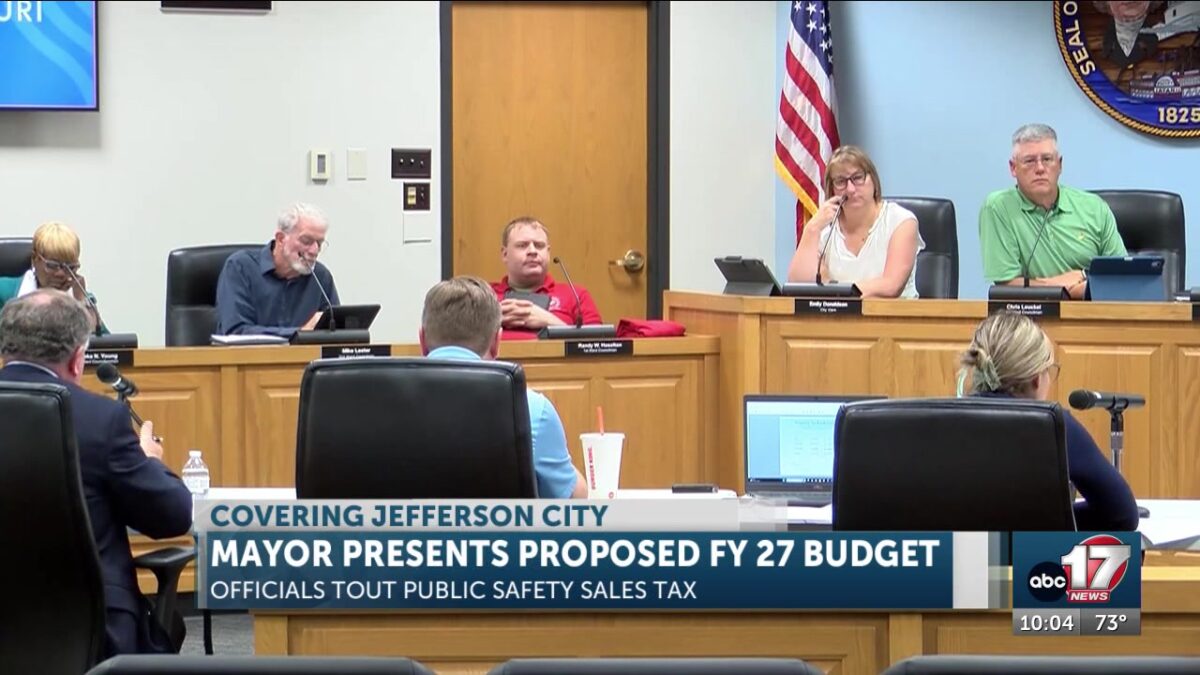
Mayor Ron Fitzwater presented his proposed fiscal year 2027 budget to the City Council on Wednesday, outlining a balanced $88.4 million spending plan that includes a $45.4 million General Fund and a 2.5% pay increase for city employees. That’s a roughly $2 million increase from last year’s budget.

The city is required to present a balanced budget, with total proposed revenues matching total expenditures at $88.4 million.

The proposed budget comes as the city prepares for a potential $400,000 shortfall tied to the public safety sales tax. City Administrator Steve Crane said the city would either have to find another source of revenue or make cuts if voters reject the tax in November.

If the tax passes, the city would be able to maintain its current level of funding. If it fails, police and fire officials have been notified they will need to make changes to their proposed budgets.

Ward 4 Councilman Chris Leuckel said the outcome of the November vote could have implications beyond public safety.

“It’s impactful, hugely impactful. Really, not only does it have an impact from a public safety standpoint, but if it doesn’t pass, then it affects general revenue, and general revenue then affects the rest of the city budget. So it’s significant for sure,” Leuckel said. 

Personnel costs make up the largest portion of the proposed General Fund budget, accounting for $33.2 million, or about 73% of the $45.4 million total.

The budget also includes a 6% increase in health and dental insurance costs for employees, along with the proposed 2.5% pay increase.

Leuckel said continuing to invest in city employees is a major priority despite the financial constraints.

“It’s extremely important to take care of our staff and put our best foot forward with them,” Leuckel told ABC 17 News. “Two and a half [percent raise] doesn’t quite keep up with inflation, but it’s certainly better than zero and we continue to try to figure out ways to meet all demands, and personnel is a big part of that demand and it’s a big part of the budget of 73%, in fact. It’s a rising cost, we all deal with it. But mainly we will continue to invest in our most prized resource, and that’s our people.”

Police and fire account for the largest portions of General Fund departmental spending. The police department is budgeted for $14.1 million, or about 31%, while the fire department is budgeted for $10.8 million, or 23%. Public Works accounts for $8.4 million, or about 18.6%.

Last year, police spending made up $13.9 million and fire services were budgeted at $10.7 million, previous reporting shows.

Sales tax is the largest source of General Fund revenue at $15 million, accounting for about 33% of the fund. Other major sources include franchise and utility taxes at $7.8 million, property taxes at $6.3 million, fees and charges at $4.9 million and transfers at $4.4 million.

Across all city funds, sales tax is projected to generate $29.7 million, or about 33.6% of total revenue. Fees and charges account for $27.1 million, or about 30.6%.

The city has changed how it develops its annual budget in recent years, moving away from the previous “pink sheet” process and using new budgeting software.

Under the new system, departments initially enter the expenses and funding requests they believe they need before city officials review and reduce the requests over the following several weeks.

Leuckel said the new process has made it easier for the council to understand the city’s finances and track decisions made by previous councils.

“I’ve been witness to both, and this is much, much easier to work through. All the historical data that we’re building with our new software will allow councils from now on to be able to go back and look at a given year as to what happened financially or some reasons why or some inputs why and allow them to see historically why councils made the moves and transitions the way that they did,” Leuckel explained. 

The budget committee unanimously moved forward with the revenue projections Wednesday. However, Leuckel said the city still faces significant financial needs despite the balanced proposal.

“We’ve all got shortfalls, we know that. There’s a lot of unfunded things out there, $12 million worth, and there are some things that are needed, frankly. But you got to balance the budget and we had to make some tough decisions,” Leuckel said. 

Compared with last year’s budget, the city’s overall financial outlook remains relatively flat.

“Obviously, there’s not much difference based on forecasts from last year to this year, but pretty similar,” Leuckel told ABC 17 News. “That part’s really basically flat. It’s not much different.”

The City Council will continue reviewing the proposed budget in the coming weeks, with council members serving as the Budget Committee during the annual budget process.

Public hearings will also be held to allow residents to comment on the annual budget, property tax levy and Gross Receipts Utility Tax rate.

The City Council must approve the annual property tax levy by Aug. 31, with the ordinance then submitted to Cole and Callaway counties as required by state law.

The full council is expected to vote on the final budget ordinance at the end of the budget process. The council can amend the budget throughout the process before final passage.

Jefferson City’s new fiscal year begins Nov. 1.

Click here to follow the original article.

Man seriously injured in Macon County crash

Ryan Shiner

COLUMBIA, Mo. (KMIZ)

A Jackson, Missouri, man was seriously injured in a crash on Tuesday evening on Hagar Street, about 3.5 miles southwest of Bevier in Macon County, according to a crash report from the Missouri State Highway Patrol.

The report says the man rode his Yamaha Banchee westbound and lost control of it as it overturned. He was not wearing a helmet, according to the report.

He was brought to University Hospital by ambulance. The ATV had minor damage. MSHP reports do not name those involved in crashes.

Click here to follow the original article.