Hadley Bodell
POCATELLO, Idaho (KIFI) – Residents near Downey have spoken out about the new draft ordinance for Land Use and Development, stating their concerns for the integrity and fairness of the document when it comes to allowing renewable energy sources into the area. Bannock County Commissioners, Balanced Rock Power attorney Dustin Manwaring, and several locals supporting the new ordinance have discussed their reasoning why south Bannock County may be the right place for an industrial solar farm.
The History
In 2024, surrounding counties were faced with developers interested in Idaho land for renewable energy resources including solar, wind, battery storage and others. Bannock County didn’t have an ordinance in place to govern such projects and went into action drafting regulations.
Originally, a moratorium was put in place for 180 days while county commissioners and the Planning and Development Council worked to draft an ordinance. The county also held public hearings and workshops, but commissioners couldn’t agree on a particular ordinance, and ended up banning industrial solar projects all together.
Dustin Manwaring, attorney for Balanced Rock Power has had a seat at the table throughout the process for the new ordinance, and explained the last two years have been full of multiple drafts and changing decisions. He said the county decided to combine all of the land use ordinances into one, larger document for a comprehensive rewrite.
“There’s been a lot of effort at this point that has gone into this from the county’s perspective,” Manwaring ensured. “There’s been a lot of opportunity to show up and provide input.”
The public input doesn’t stop here, as the county will provide notice for future public hearings on the new 2026 Land Use and Development Ordinance (LUDO) in the coming months.
“Not having an ordinance to me is a limitation on a private property,” Manwaring said. “It’s to say you can’t use it at all, we have some state code in place that says you can’t limit the utilities development of an energy resource.”
The Area
The area most appealing for energy resource developers in Bannock County is near Downey, adjacent to the Populus Substation. Transmission lines included in the Gateway West project run in from Wyoming and connect through Idaho to Oregon. There’s also a south and north line that comes up from Utah and connects at the Populus Substation.
Looking at a map for energy development, companies are likely to want parcels closest to the energy source.
“It’s a huge opportunity for Bannock County to do this right,” Manwaring said. “The future land use map is designated in that area to be industrial or at least light industrial and commercial district.”
He added that county commissioners, along with the P & Z Council, are looking at the future of development in Bannock County and what could bring positive growth to the area. Without a specific project in mind, the new draft ordinance serves as a guide, with regulations to ensure any future applicant abides by Bannock County development standards.
Bannock County Commissioner Jeff Hough echoed that sentiment, stating, “Bannock County is open for business, we just want it to be the right kind of business,” and said the same goes for a potential AI data center on county land.
“We intially look for robust transmission infrastructure,” said Melanie Falls, Vice President of Development at Balanced Rock Power. “But in addition, we look for relatively flat, constructible land, low impacts and conflicts, and a jurisdiction that will work with us to responsibly site the project.”
She added the land near Downey is mostly held by landowners that are ranchers and farmers who determined the land for the project is no longer viable for their operations. They instead see the long term revenue coming from the solar project as a way to continue sustaining their farmland on other properties.
The Opposition and Easing Concerns
Several local farmers in Downey have testified why they disagree with the new ordinance and feel the ban should stay in place. To read more on their story, click HERE.
Manwaring clarified the purpose of an ordinance is to protect the property owners and ease fears about their home value and rights to land use.
“Those closest to it [the development] have the most reason to be concerned and that’s fair and usually the way it is,” Manwaring said. “But that’s why we have ordinances. We have them to protect property owners and make sure that if you’re applying for a permit, that you check the boxes and that you’ve protected everybody around you.”
Many of the locals who oppose overturning the ban and rewriting the LUDO believe it’s in support of a particular project from Balanced Rock Power. Manwaring shot down that misconception, stating the rewrite doesn’t approve a particular project, it’s simply the preventive and first step in the process of ensuring each development in Bannock County is safe and catered to the county’s regulations.
The new ordinance also doesn’t automatically give permits to companies who apply with development proposals. They will be conditional use permits, much like the process one company has had to apply for in the City of Pocatello regarding an AI data center.
Another common concern among residents is the decrease in their property value should an industrial solar farm come into the area near their property.
“The facts don’t support that,” Manwaring said. “They don’t support that there’s a devaluation in land value, so they can make that accusation and we can show all day long that that is not what happens actually next to these projects.”
Idaho is also a net importer of electricity, meaning the state pulls in more power than it produces to go out across state lines. The default when it comes to these projects is that power will go where it’s needed and where it is bought and sold. It will go to the closest area first where it’s needed and out further if neccessary with a demand and purchase.
Similar backlash has occured decades ago when wind turbines suddenly became commonplace to see dotting the hills across Idaho. There have been changes to state policy over time to address public concerns such as the flashing lights on windmills at nighttime, catering to the public’s opinions on interference with their property. The same will go for the new LUDO for Bannock County when it comes to other renewable energy resources. Manwaring ensured the county is committed to public hearings and adjustments they believe are best for the county and its residents.
“We can’t be a ‘no’ county,” he said. “We’ve got to be part of the solution, if we want to have business and opportunities here. We have to figure out how to get more energy online, that’s critical to the development.”
Whether there’s a concern over wildfire danger, solar panel lifespan and removal, or others, Manwaring says the new LUDO addresses each concern in the renewable energy resources section. “The county isn’t ready for the right kind of development until you have a condition in place for each one of those concerns,” he said. “That’s where I think the county is trying to get to.”
“Currently, the estimated lifespan of a solar plant is about 40 years,” Falls said. “That’s based on today’s technology. Most ordinances provide regulations around decommissioning and have requirements so that the land is returned to its previous state.”
She explained the goal is to have a successful and useful life of the project, get the facilities removed and utilize their crews to return the land back to its original position. When asked if farmers could return the land to its original farming and ranching use following leasing to a solar plant, Falls said that it is possible.
No “Leaked” Documents
Locals opposing the ordinance also felt a sense of distrust with their county commissioners when one group discovered the draft ordinance had been shared with third party interests throughout the drafting process over the last two years. Immediately, Commissioner Hough and Bannock County made the document public.
Manwaring explained the use of the term “leaked” is incorrect in this context, ensuring that it is common practice for counties and cities to seek outside expertise from developers when drafting new ordinance.
“The ordinance was shared with a range of stakeholders in advance of broadly sharing the document with the public,” he said. “This provided early input and expertise from community members, industry and local government stakeholders. It is common practice for counties to seek input from renewable energy developers, along with other parties that have expertise.”
In Power County, the council asked Renewables Northwest to help draft their ordinance and held a workshop to hear from energy experts. Nothing about the collaboration between Balanced Rock Power and Bannock County Commissioners is unlawful.
“Even when that accusation came out, the commissioners immediately published it, to make sure if there was even an appearance of that, they’ll correct it,” Manwaring said. “There was always going to be a draft coming out, it was going to have public hearings, it would’ve corrected itself anyway. But I think they did a good job of making sure there’s just no appearance of that because it’s just been a long process.”
He added countless drafts have come out over the past two years. He said it’s become harder as time goes on to continue drafting as the county receives pressure from opposing citizens.
“It’s just very normal for a developer that has an active interest in the county to be the one at the table,” Manwaring said. “But they’re trying to bring folks in from all sides and make sure they are getting that input.”
Manwaring added on the topic of the accusations to the county commissioners that he believes they’ve done everything possible to keep the entire rewrite process fair, and correct immediately when accusations are brought up. “I don’t know what more to ask of them,” he said. “These are incredibly difficult and contentious decisions to make. They’re doing their very best to get through the process and to make it fair.”
The Project
Manwaring confirmed Balanced Rock Power’s involvement in the ordinance rewriting process, as the county has sought its expertise in renewable energy development and the company seeks to apply for a conditional use permit. Developers spend significant money in the preliminary phase before an ordinance in Bannock County is even set, including Balanced Rock.
“They want to work in ordinance so that they can get to the application phase,” he said. “There’s been other developers interested but not willing to put forth the effort, not willing to spend and invest. So there’s a lot of committment there from them from the start.”
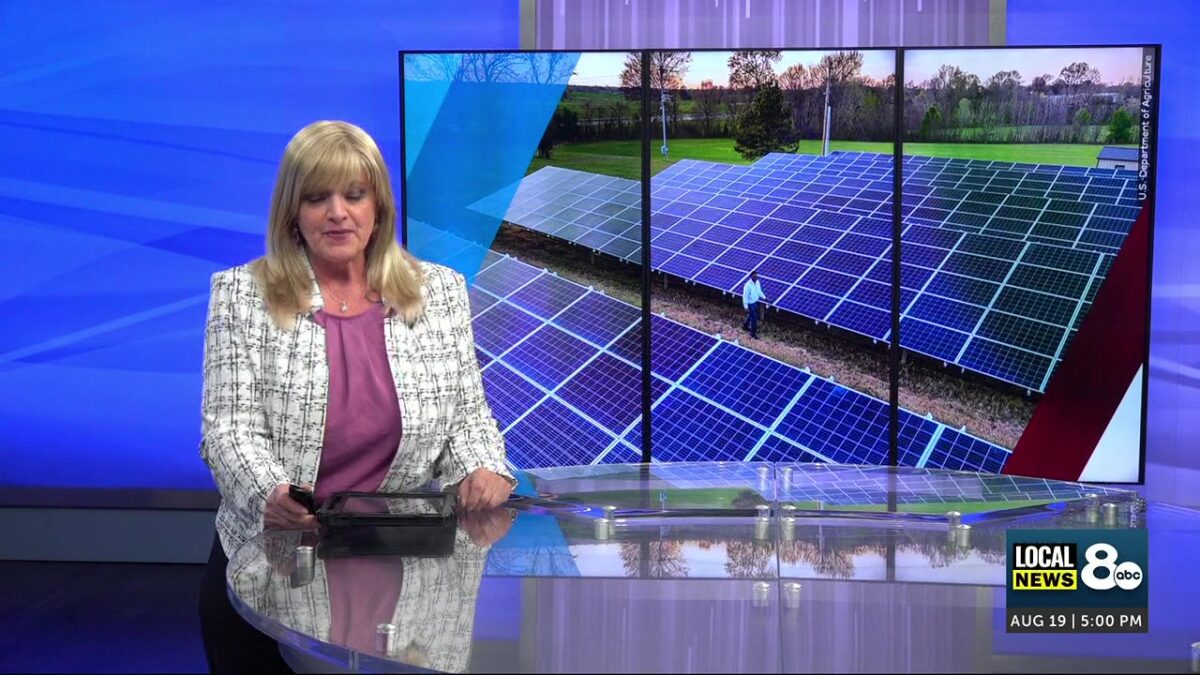
The project, in early proposal stages by Balanced Rock, is called the Harmon Solar Project. It’s a 300-megawatt solar photovoltaic project with battery energy storage.
“It’s proposed to be on 2,600 acres of private property,” said Melanie Falls, Vice President of Project Development at Balanced Rock. “Of the 2,600 acres we anticipate a little more than half to be covered in solar panels and related infrastructure. The remaining acreage will be set aside for wildlife corridors, setbacks, utility easement and roads.”
Falls added that based on the current proposal, a lot of the project won’t be visible from neighboring property lines primarily as a result of the topography of the site and low lying nature of the solar arrays.
“Should the ordinance pass, we will also have a toolbox to work with alongside the county to further refine the location of the facilities to minimize impacts as much as possible,” she said.
Balanced Rock has a portfolio of approximately 5.5 gigawatts under advanced developments in renewable energy projects countrywide. Falls explained that each project is different depending on the jurisdiction, whether it’s private property or is near a substation, etc.
She said when working with land owners, Balanced Rock puts in front of them financial terms to give them a sense of whether or not leasing their land for solar panels would be financially worth their while. Commercial negotiations follow if a land owner is interested.
“Solar projects tend to be a passive use of land, they don’t produce much noise,” Falls said. “They have no odor and have very limited onsite activity. So long term, they’re quiet neighbors.”
Benefits to Solar Power in Bannock County
Residents in the area rightfully ask, “What benefits are there to a solar farm in my county?” There are several direct benefits provided by those involved in the ordinance writing process.
“They pay a kilowatt hour tax on the energy produced to the state of Idaho,” Manwaring explained. “It’s centrally assessed by the State Tax Commission. It comes out proportionally to the individual taxing districts in Idaho. The School District down there, the Library District, the Fire District down in the south county area will get an increased proportion coming back to them from these projects.”
Idaho has limitations that require benefits to come back to taxpayers in the form of tax relief. This means that if new funds come in from a project like the proposed solar farm and go back to a local district, they have to pass the savings on to property taxpayers.
“They can’t create a new line item in their budget and go buy something new, they have to pass on that savings to the property owner,” Manwaring explained. “It’s a significant benefit coming back in the whole to the county and to the property tax benefits.”
Secondary benefits to the project mostly include build out and overall growth to the county. The power generation from the solar farm would drive future growth of other industries in the area. It’s called co-locating a project, meaning building out a commercial or industrial district based on a neighboring development like a power-generating plant. Manwaring included more jobs and economic opportunity in the list of potential benefits to a renewable energy resource project in south Bannock County.
Talking to farmers was and continues to be a top priority for parties involved in this rewriting process. Manwaring says he’s heard all kinds of testimony, including those who wouldn’t be in the area on their property without the help of leasing their private property to a renewable energy company.
“One farmer in Power County told me he didn’t know how they would’ve made their land payment on their farm this year without that additional income,” Manwaring said.
Southeast Idaho Energy and Property Alliance (SEIEPA) and the Portneuf Resource Council are two local organizations working to pass the energy portion of the new ordinance. Board member Linda Engle emphasized several major benefits to allowing solar farm companies the ability to apply for Bannock County land.
“It preserves agricultural land for future generations, and solar power can be built on unused land and or low quality land and it brings a steady income for farmers in the area,” Engle said. “By leasing their land, it brings a reliable, long term income that in some cases will simply keep the farm alive.”
SEIEPA has 250 local residents who have already signed in support of the 2026 Land Use and Development Ordinance. Some are farmers who are struggling because their land is less productive than it once was and see leasing to solar companies as their way to stay afloat.
“The new ordinance also regulates many community concerns like safety, decommissioning, wildlife issues, fire and so on,” Engle said. “Every project will still have to have a conditional use permit evaluation.”
Engle reiterated that solar farms are quiet, non-permanent structures that could bring economic opportunities to the Downey area.
What Now?
Several weeks ago, the county planning development staff presented the latest draft of the ordinance to the commissioners. Throughout this week, the council is making technical corrections and tidy up the comprehensive LUDO document. Once the final version is ready, notice will be posted for public hearings and the draft published for everyone to see.
The Council will hold a hearing to take public comment and feedback and make recommendations. The county commissioners then have to hold a second public hearing in which the commissioners have the final say.
Bannock County is hoping to have a final ordinance approved by October of this year. According to Balanced Rock Power, their application for the Harmon Solar Project will be submitted as soon as they determine how their project aligns with the new ordinance. They will still have to seek approval for a conditional use permit from the county before any construction or further project approval processes could begin.
“As soon as the ordinance is finalized and approved, then we’ll have a roadmap of what our application needs to look like,” Falls said. “It’s hard for us to have everything pulled together until we know exactly what the requirements are.”
Balanced Rock Power wants to encourage residents to go to their website to learn more about the project. At www.harmonsolarproject.com, there is available information about the solar farm proposal as well as an email to send questions.
“We’re really interested in engaging in open and honest conversation, and we love to meet with folks who do have concerns to see if there’s a way for us to make adjustments to really address those concerns,” Falls said.
She also reiterated that approval of this new LUDO doesn’t de facto mean the Harmon Solar Project, or any other project, is automatically approved. The question at hand isn’t whether Balanced Rock is building a solar farm in Downey, rather, will the new ordinance be passed in the next few months that reopens Bannock County’s doors to industrial business ventures?
Local News 8 will continue following this story as it progresses and more details become available following public hearings for the new 2026 LUDO.
Click here to follow the original article.