Yucca Valley man arrested after attempted kidnapping of 13-year-old

Tommy Gallegos

YUCCA VALLEY (KESQ) – A 33-year-old Yucca Valley man was arrested Tuesday, October 13, after allegedly attempting to kidnap a 13-year-old boy at a local gas station, according to the San Bernardino County Sheriff’s Department.

Deputies responded to the ARCO gas station in the 56000 block of Twentynine Palms Highway at approximately 6:47 p.m. Monday, October 12. Investigators determined that the man allegedly approached the juvenile inside the business and attempted to forcibly remove him. The boy escaped, and the suspect fled in a waiting vehicle.

Deputies used Automated License Plate Reader (ALPR) technology to help identify the vehicle and develop investigative leads. Follow-up investigation led authorities to identify the 33-year-old as the vehicle’s registered owner.

The man was located the following day, arrested on suspicion of attempted kidnapping, and booked into the Morongo Basin Jail.

Anyone with information about the incident is encouraged to contact the Morongo Basin Station at (760) 366-4175. Anonymous tips can be submitted through We-Tip or by texting REPORT to (844) 909-3006.

Click here to follow the original article.

Drivers react to MapQuest new ‘surveillance layer’

Matthew Pearce

THOUSAND PALMS, Calif. (KESQ) — MapQuest, a digital mapping service, launched a new feature in its mobile app Oct. 15 that allows drivers to see automated license plate readers and other cameras on their maps and along their routes.

The company announced the feature Thursday on social media platform BlueSky.

“The roads have eyes,” MapQuest wrote. “Turn on the Surveillance Layer in Map Options to see known license plate readers from Flock Safety, Motorola Solutions (Vigilant), Genetec, Axis Communications, Axon, Leonardo (ELSAG), Neology, Rekor, PlateSmart, Ubicquia, Verkada and other outdoor surveillance cameras.”

The surveillance feature is currently restricted to MapQuest’s mobile application. Users access the data by opening the application, selecting the layers icon and choosing the surveillance cameras option to display nearby camera locations on the map interface.

Law enforcement officials expressed surprise regarding the tool. Lt. Michael Torres of the Palm Springs Police Department said he was not previously aware of the mapping layer.

“We had no idea that was going to be coming. I at least didn’t,” Torres said. “But I guess the question is for Google or MapQuest, whoever decided to do this, what the intent is…”

Torres expressed other concerns like criminals using this feature to pre-meditate an “escape plan.”

“If a criminal were to have decided to commit a crime in any city that contains these cameras… potentially they could find a potential getaway route… in order to get away with the crime,” Torres said.

But Desert Hot Springs resident Joshua Handrich offered a different perspective, arguing that motorists deserve to know where surveillance infrastructure is located.

“Everyone who lives here and who drives past them day to day, going to work, going to visit Grandma, whatever it is, they deserve to know how they’re being used, where they are and why we think they’re required,” Handrich said.

The Coachella Valley has more than 700 automated license plate readers spread across eight of its nine cities, giving the region one of the highest camera-to-person ratios in California.

Click here to follow the original article.

Home sales slow across Riverside County, Statewide

City News Service

RIVERSIDE (CNS) – The pace of home sales dipped across California and Riverside County last month as rising mortgage rates and persistent affordability challenges weighed on buyer demand, the California Association of Realtors said today.

Sales of existing, single-family homes in California totaled 260,410 in September on a seasonally adjusted annualized rate, down 3.4% from 269,620 in August and down 6.5% from 278,540 in September 2025.

Southern California recorded the largest annual decline at 9.1%, according to C.A.R.

In Riverside County, sales were down 12.7% from one year ago and 6.4% from last month. The Inland Empire as a whole saw decreases of 10.2% year-over-year and 2.9% from last month.

The county numbers are not seasonally adjusted.

As we move into fall, the market feels a little less rushed, giving buyers more time to carefully consider their options,” said C.A.R. President Tamara Suminski, a Southern California broker and realtor. Mortgage rates and affordability remain challenging, but with competition easing, well-prepared buyers may have more room to explore their options, negotiate and focus on finding the right home rather than simply hurrying to make an offer.”

Prices also declined in September both statewide and in Riverside County.

The average price of an existing, single-family home in California fell from $901,420 in August to $899,720 in September. In Riverside County, the average price went from $632,990 in August to $620,000 last month, a 2.1% decrease.

The Inland Empire’s average price rose slightly last month, from $600,000 to $601,030.

The county with the highest median home price in California in September was Mateo County at $2.327 million. The lowest median price was Lassen County’s $237,500.

Click here to follow the original article.

Tribal leaders gather in Palm Springs to raise concerns over proposed federal changes to sacred site protections

Raymond Kalra

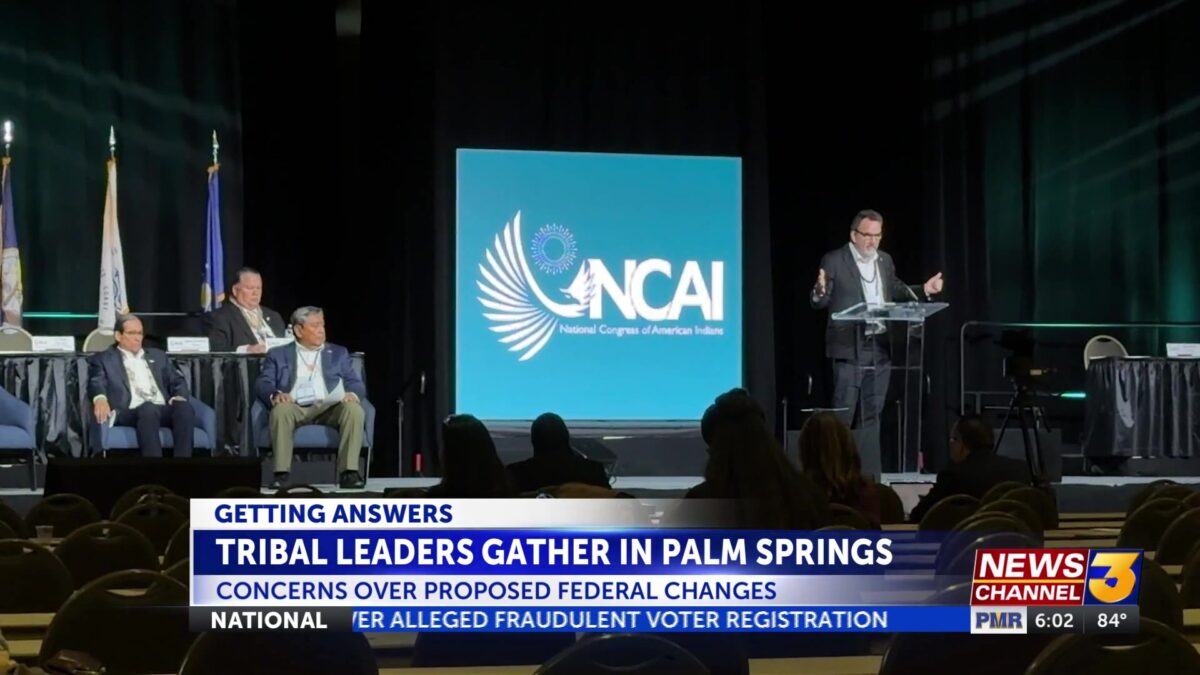
PALM SPRINGS, Calif. (KESQ) – Tribal leaders from across the country gathered in Palm Springs Monday, raising concerns over proposed federal changes they say could weaken protections for sacred sites, ancestral lands and generations of cultural history.

The National Congress of American Indians (NCAI) held a news conference Monday afternoon at the Palm Springs Convention Center as part of its 83rd Annual Convention and Marketplace, bringing together Tribal leaders to discuss proposed changes to Section 106 of the National Historic Preservation Act.

The federal law requires agencies to consider how certain federally involved projects could affect historic properties and consult with Tribal Nations when those projects could impact places of religious or cultural significance.

Tribal leaders warn that proposed changes in Washington could reduce their involvement in decisions about development and infrastructure projects, potentially putting culturally significant places at risk.

Pueblo of Acoma Governor Charles Riley told News Channel 3 that preserving these places goes far beyond protecting physical landmarks.

“It’s part of us. It’s not an object. It’s not a landscape. All those things are part of who we are. And that’s what people fail to understand,” Riley said.

“Our ancestors were there a long time ago, wherever it’s at, and they placed all their prayers, hopes and dreams in those places for us to have a better life later on, for those that are unborn to have a better life later on,” Riley added.

Riley said protecting those places is a responsibility passed down through generations.

“We have to be good ancestors for those unborn into the future,” he said.

What is Section 106, and why are Tribal leaders concerned?

Section 106 is part of the National Historic Preservation Act of 1966. It establishes a process for federal agencies to identify and consider the effects of certain projects on historic properties, including archaeological sites, traditional cultural places and locations significant to Tribal Nations.

The process requires consultation with affected Tribal Nations when applicable, allowing them to identify culturally significant places and raise concerns before federal decisions are made.

The proposed Bipartisan American Affordability and Jobs Act of 2026, introduced in the U.S. Senate as S. 5653, includes provisions that Tribal organizations say would weaken those requirements.

NCAI and other Tribal organizations are calling on Congress to withdraw Title III of the legislation.

According to NCAI, the proposed changes could narrow the circumstances requiring historic preservation reviews, reduce opportunities for Tribal consultation, increase federal oversight of Tribal Historic Preservation Offices and limit legal challenges to certain federal decisions.

Supporters of federal permitting reform have emphasized the need to streamline regulatory reviews and help infrastructure and development projects move forward more efficiently.

However, Tribal leaders argue that reducing consultation requirements could create additional conflict and potentially threaten important cultural resources.

Suquamish Tribe Chairman Leonard Forsman, who also serves as president of the Affiliated Tribes of Northwest Indians, told News Channel 3 that the consequences of insufficient consultation can be permanent.

“Burial grounds have been desecrated, important archeological places have been destroyed, and also important sacred landscapes have been altered and desecrated,” Forsman said.

Forsman explained that many culturally significant places are connected to Tribal identity, spirituality, ceremonies and histories spanning thousands of years.

He said Tribal Nations have a responsibility to protect those places for future generations.

Tribal leaders say development and preservation can work together

Despite their opposition to the proposed changes, Tribal leaders emphasized that they are not against infrastructure development.

Instead, they say early and meaningful consultation can help developers identify culturally significant locations, avoid disturbing sacred sites and complete projects without unnecessary delays.

During Monday’s news conference, Governor Riley described a pipeline project involving Kinder Morgan that he said demonstrated the benefits of early Tribal involvement.

Riley said the project involved a roughly 214-mile pipeline crossing trust lands.

Rather than attempting to stop construction, he said Tribal representatives worked with the company to make relatively small adjustments to the project’s route, helping protect sacred sites.

Cultural monitors also worked alongside company archaeologists and anthropologists to identify areas of concern.

According to Riley, that cooperation helped reduce project costs and allowed construction to finish earlier.

“We don’t hold up projects. We try and make it much more easier for us to communicate, show them, take them on the field, show them the different places so that we can talk about those places even before the project begins,” Riley told News Channel 3.

Forsman also described examples where consultation helped Tribal communities and developers identify and protect archaeological resources while allowing construction to proceed.

He said Section 106 creates opportunities for collaboration rather than automatically preventing projects from moving forward.

During the news conference, Forsman emphasized that the consultation process has been used successfully on thousands of projects.

He also argued that problems can arise when Tribal Nations are contacted too late in the planning process, after important decisions have already been made.

What could the proposed changes mean for the Coachella Valley?

News Channel 3 submitted a question during Monday’s news conference asking how the proposed changes could affect Tribal Nations in California, particularly here in the Coachella Valley.

NCAI President Mark Macarro addressed the question, connecting the national debate to decades of development across Southern California.

Macarro, who also serves as Tribal Chairman of the Pechanga Band of Indians, pointed to population growth and the expansion of residential developments, transportation corridors and energy infrastructure throughout the region.

He said those projects have transformed landscapes that hold cultural and religious significance for Tribal Nations.

Macarro specifically referenced development across the Coachella Valley and toward the Salton Sea, including transportation infrastructure, wind energy and solar projects.

He explained that many sacred and ancestral places extend beyond the boundaries of modern reservations, meaning federal consultation can be especially important when development occurs on lands outside a Tribe’s direct jurisdiction.

Macarro said protecting those places is not always as simple as identifying a single location on a map.

Entire mountain ranges, ridgelines and landscapes can hold cultural and religious importance.

He described how early consultation can allow Tribal representatives to work with developers on alternative routes for projects such as power lines, helping avoid significant places while still allowing needed infrastructure to be constructed.

Macarro warned that moving forward without those conversations could result in additional damage to culturally significant landscapes.

“We end up with this erasure of our cultural landscapes. And so that’s what’s at stake,” Macarro said.

He argued that consultation provides an opportunity for Tribal Nations to explain the significance of places that federal agencies or developers might not otherwise recognize.

Macarro also acknowledged the demand for new infrastructure in Southern California, but emphasized that development should not come at the expense of Tribal cultural heritage.

The discussion raises questions about how proposed federal changes could affect preservation efforts across the Coachella Valley, home to multiple Tribal Nations with deep ancestral and cultural connections to the surrounding desert landscapes.

However, the precise impact on individual local projects would depend on the circumstances of each project and whether federal historic preservation requirements apply.

Concerns over Tribal sovereignty and historic preservation offices

Governor Riley also raised concerns about proposed changes affecting Tribal Historic Preservation Offices, which play an important role in identifying, documenting and protecting cultural resources.

During his interview with News Channel 3, Riley expressed concern that proposed funding and oversight requirements could place additional pressure on offices already operating with limited resources.

He said new deadlines and federal oversight provisions could potentially diminish Tribal control over preservation activities.

In his remarks at the news conference, Riley also warned that the proposed legislation could change how federal agencies evaluate impacts on historic and culturally significant places.

He argued that limiting consideration of certain indirect or cumulative impacts could fail to account for how Tribal communities understand sacred landscapes.

For some Tribal Nations, he explained, the significance of an ancestral mountain or cultural landscape cannot necessarily be reduced to one specific location where an event occurred.

He also emphasized that early consultation can help prevent disputes that might otherwise delay development projects.

What happens next?

The Bipartisan American Affordability and Jobs Act of 2026 was introduced in the U.S. Senate on September 30 and referred to the Senate Committee on Energy and Natural Resources.

The proposed changes have not been enacted into law.

NCAI and other Tribal organizations are urging Congress to reconsider the historic preservation provisions and consult directly with Tribal Nations before moving forward with changes to the federal review process.

Tribal leaders say they support practical permitting reforms but want those changes to preserve meaningful consultation and protections for culturally significant places.

For Forsman, the issue ultimately comes down to preserving history and ensuring future generations maintain a connection to their ancestral lands.

He told News Channel 3 that Tribal Nations have a responsibility to protect those places in honor of generations that came before them and those who will follow.

As discussions continue in Washington, Tribal leaders gathering in Palm Springs say protecting sacred places and allowing responsible development do not have to be competing priorities.

They argue that early consultation can help accomplish both.

The National Congress of American Indians’ 83rd Annual Convention and Marketplace continues through October 22 at the Palm Springs Convention Center.

Click here to follow the original article.

National Teen Driver Safety Week highlights risks for young drivers

Dakota Makinen

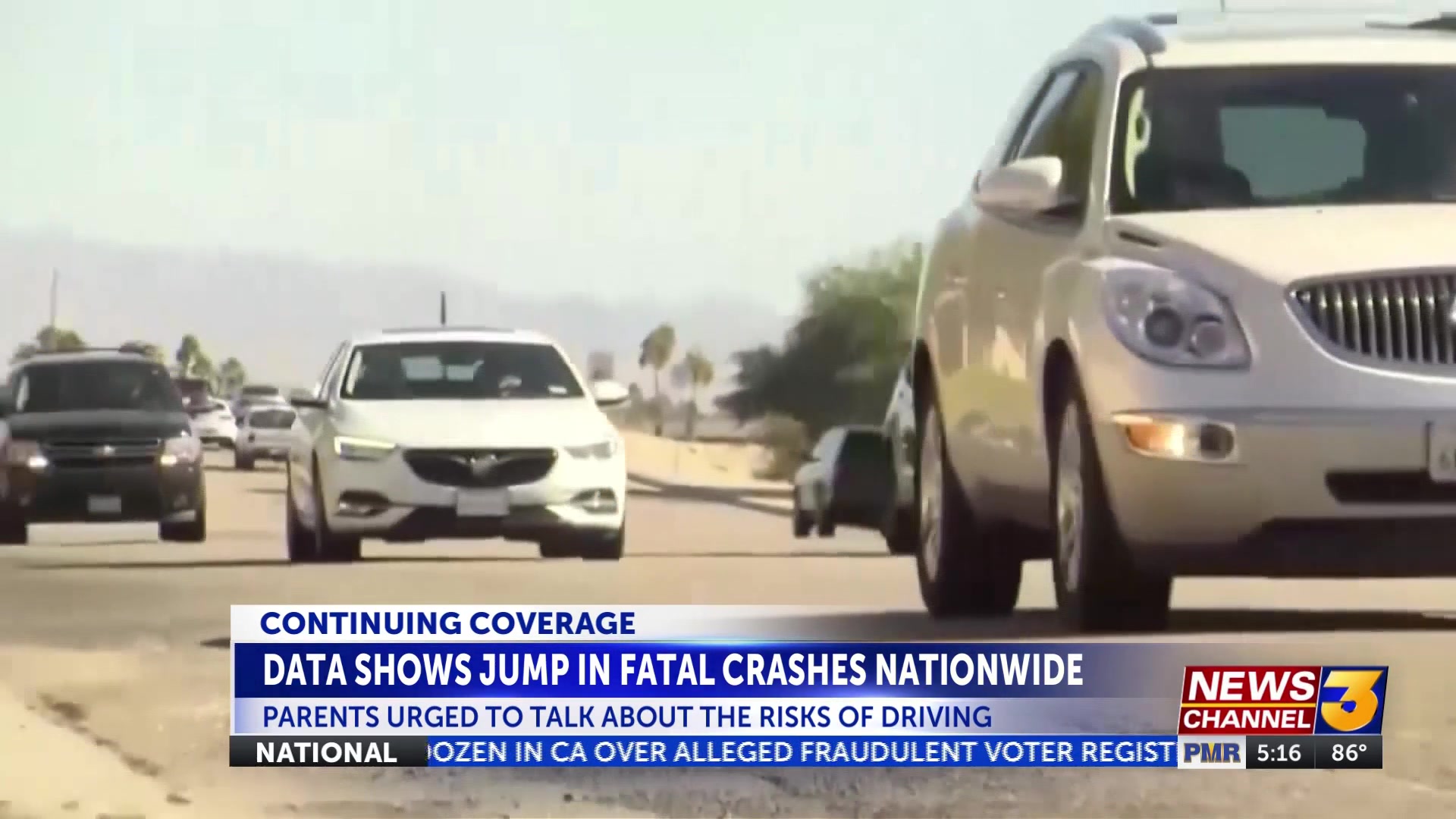
COACHELLA VALLEY, Calif. (KESQ) – National Teen Driver Safety Week is underway, bringing attention to the risks young drivers face on the road, including speeding and distracted driving.

Riverside County Public Health data shows 2,744 fatal and nonfatal crashes involving drivers ages 13 to 18 from 2022 through 2024. The county also reported 48 fatal crashes involving drivers in that age group during the same period.

Tammy Gweedo McGee, executive director of the Gweedo Memorial Foundation, is working to prevent similar tragedies after losing her son, Connor, in a crash.

McGee urges parents to talk with their teens about risky driving, set clear expectations and watch for warning signs.

Experts are also highlighting technology designed to help reduce speeding among new drivers. Michael Travers, president of LifeSafer, discussed intelligent speed assistance (ISA), which can use speed-limit information to restrict how fast a vehicle travels.

Travers says parents can use available technology and driving reports to monitor their teens’ behavior and reinforce safe habits.

McGee says recognizing patterns like repeated speeding or failing to wear a seat belt can give parents an opportunity to intervene before a crash occurs. National Teen Driver Safety Week encourages families to have ongoing conversations about safe driving and the consequences of risky behavior.

Click here to follow the original article.
Custom bikes give Coachella Valley children new ways to ride

Kiera McKinney

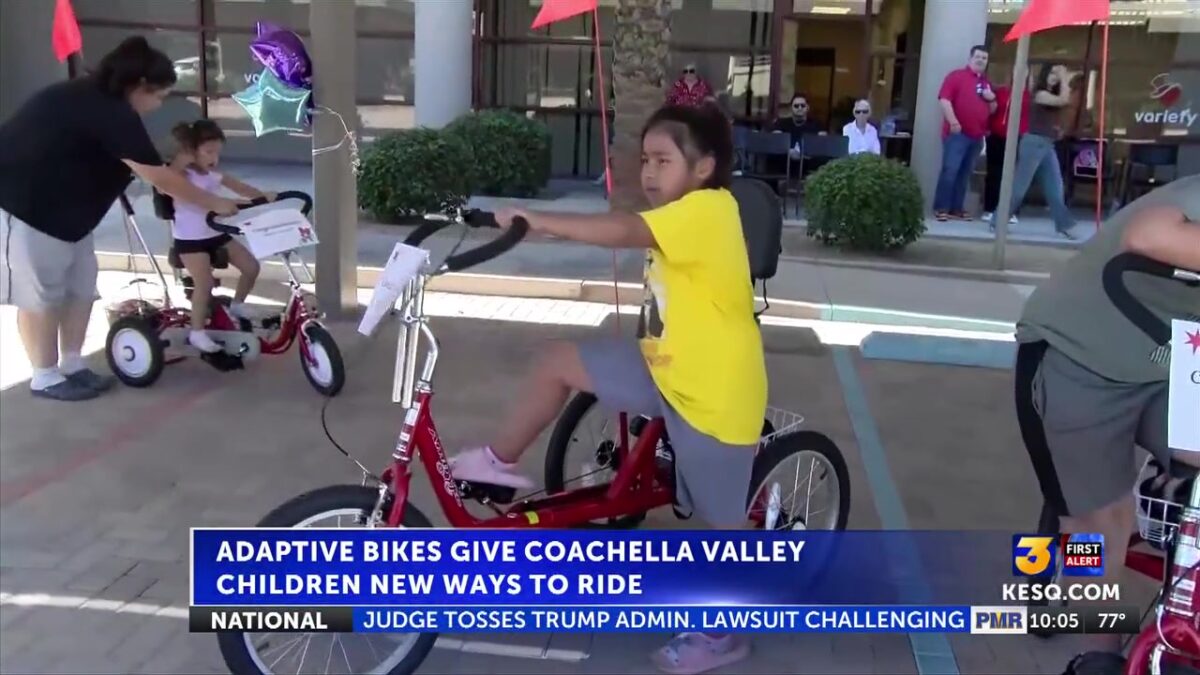
PALM DESERT, Calif. (KESQ) — Local children with disabilities will receive bikes fitted to their individual needs Sunday through Variety Children’s Charity of the Desert’s Freedom Program.

Three Coachella Valley siblings have a new way to ride together after receiving adaptive bikes through Variety Children’s Charity of the Desert.

Jayden Verduzco, Princess Verduzco and Precious Verduzco were among children from five families receiving bikes Sunday at the nonprofit’s Palm Desert Resource Center.

Their mother, Perla Verduzco, said all three children have autism. Bikes they received last Christmas were difficult for them to use because they struggled with balance.

“They weren’t able to use them because they don’t have balance on their feet,” she said. “So when they would ride them, they would fall sideways.”

The new bikes are fitted to their individual needs through Variety’s Freedom Program. For Precious, the presentation also brought an early birthday gift. She turns 8 on Monday.

“I was really happy because tomorrow was my birthday and it was like my birthday present, and I love it,” she said.

How the bikes are fitted

Adaptive bikes offer support for children who cannot comfortably or safely use a standard bicycle.

Depending on the child’s needs, features may include supportive seating, harnesses, hand and foot straps, hand-crank pedals or a stable three-wheel frame. Some have rear steering and braking controls so a parent or caregiver can help guide the bike.

Joe Krissoff, Variety’s director of development, said therapists help determine the right fit.

“They’re custom designed and they’re custom built for the kids,” Krissoff said. “And we have a group of therapists and physical therapists that work with us to make sure they’re fit exactly for the child in need.”

The bikes cost about $2,500 each on average, according to Krissoff. Sponsors help support the program and cover the cost.

“Most of these families won’t be able to afford this, or they’ve tried to get their insurance to pay for it, and insurance has denied it,” he said. “So they’ve come to us for help.”

More support for local families

The Freedom Program also helps families access other adaptive equipment, including specialized strollers, wheelchairs and car seats.

Variety’s other core programs include:

Care: Health care access, developmental and autism screenings, family wellness support and help finding resources.Future: Inclusive recreation, enrichment, education and youth activities.Outreach: Family referrals, food support, parent education and connections to community resources.

According to figures provided by Variety, the nonprofit:

Serves more than 7,000 children and families annually. Operates three community office locations across the Coachella Valley. Has provided 152 adaptive and mobility devices for children with disabilities since 2010. Has presented 9,480 standard bicycles since 1996. Has provided 1,002 developmental and autism screenings to at-risk children since 2022. Has distributed 16,827 pounds of food to families in need since 2025. Has impacted more than 100,000 children since its founding in 1987.

Upcoming bike giveaway and fundraiser

Krissoff said Variety plans to give away 150 standard bicycles, along with safety equipment, on December 5. The bikes will go to Coachella Valley fourth graders selected by their schools.

A radiothon is scheduled for November 13 on participating local radio stations to help fund the nonprofit’s work.

“Every dollar, every penny you donate makes a difference,” Krissoff said.

How to get help or support the programs

Families can contact Variety to ask about adaptive equipment, screenings and other services. Community members can also contact the nonprofit about donating or supporting its programs.

Website: https://varietyofthedesert.orgPhone: 760-773-9800Palm Desert Resource Center: 42600 Cook Street, Suite 150, Palm Desert, CA 92211Development contact: Joe Krissoff, joe@varietyofthedesert.org, 760-773-9800, extension 3

Click here to follow the original article.
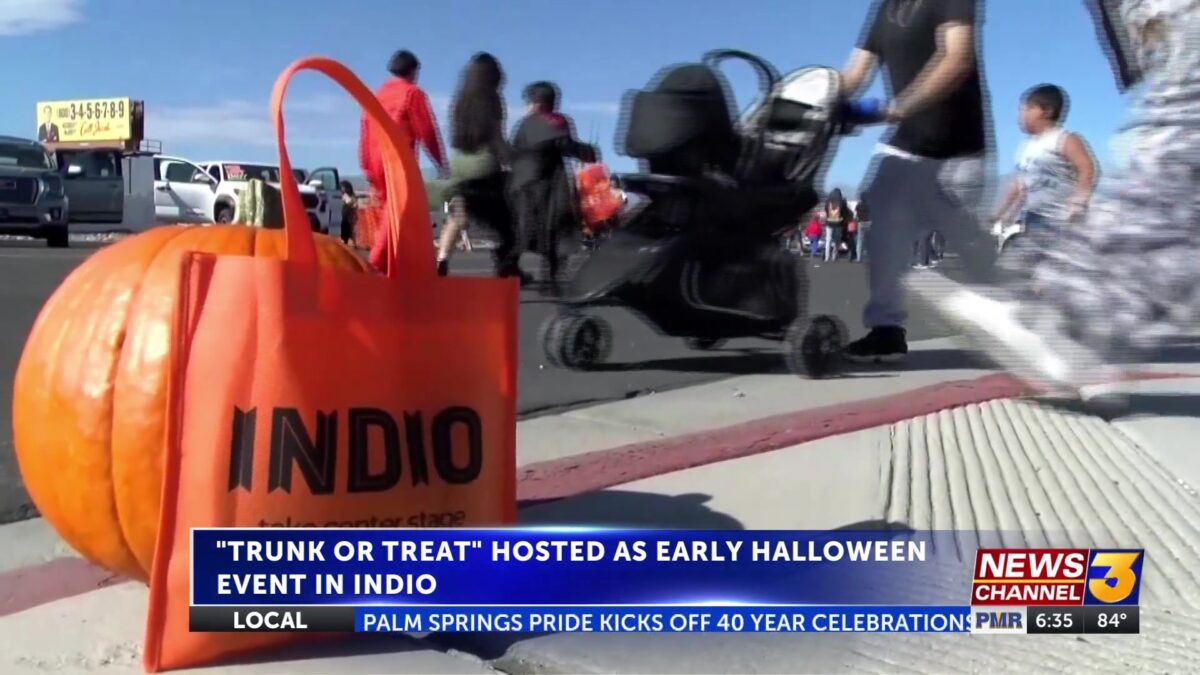
Candy, costumes and community: Halloween celebration kicks off in Indio

Matthew Pearce

THOUSAND PALMS, Calif. (KESQ) — The I-10 Auto Mall is hosting a family Halloween celebration today from 9 a.m. to noon, closing down Varner Road in Indio for the event.

The event features trunk-or-treating, bouncy houses, face painting, food trucks, music and candy, bringing family-focused halloween themed entertainment to Indio.

There will be live DJs playing music and numerous chances for giveaways.

Stay with News Channel 3 for more.

Click here to follow the original article.

Becerra joins Obeso-Martinez for campaign rally in Indio

Kiera McKinney

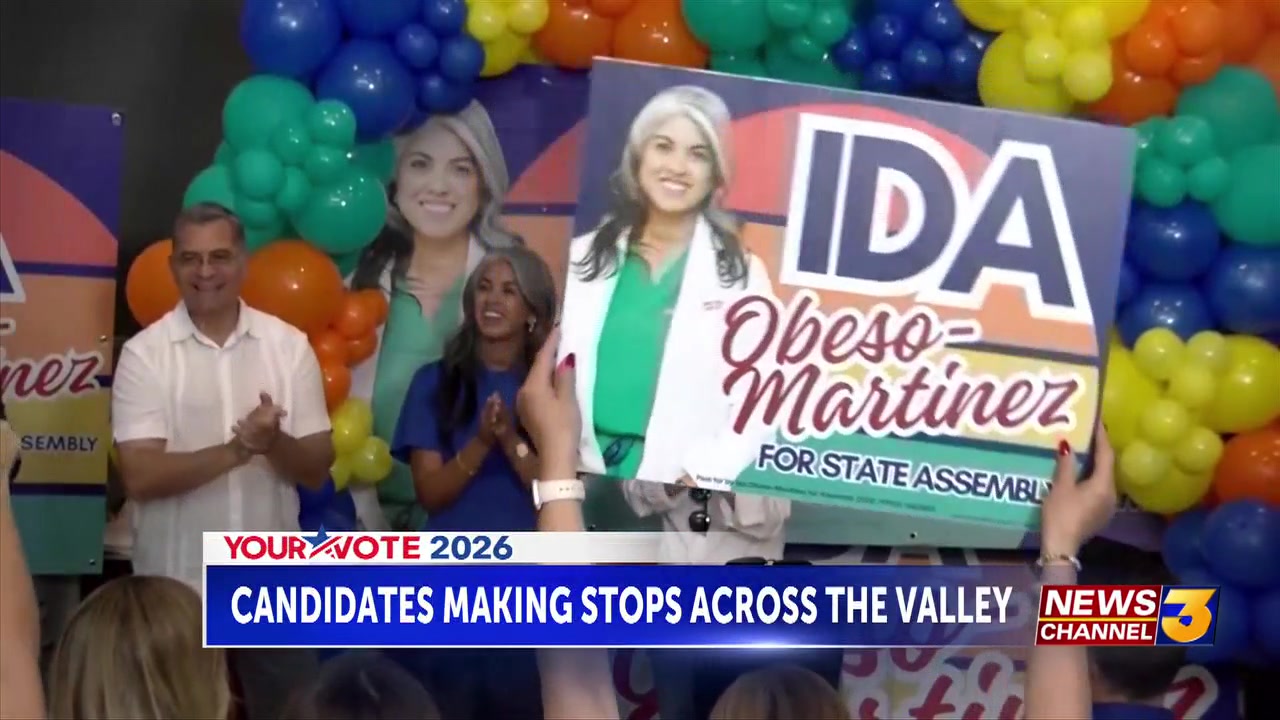
INDIO, Calif. (KESQ) — Democratic candidate for governor Xavier Becerra joined Assembly candidate Dr. Ida Obeso-Martinez for a campaign rally in Indio Saturday, encouraging supporters to make their voices heard ahead of the November 3 election.

The event brought candidates, local leaders and supporters together as campaigns work to reach voters in the Coachella Valley.

Obeso-Martinez is running to represent Assembly District 36. Becerra, a former U.S. Secretary of Health and Human Services and California attorney general, is running against Republican Steve Hilton for governor.

During the rally, speakers emphasized working together and encouraged attendees to return their ballots. Supporters also urged voters to pay attention to local races, including city councils and special districts.

News Channel 3 spoke with candidates and attendees about their priorities for the valley, including housing and access to health care.

Watch News Channel 3 tonight for more on the concerns attendees shared and what the candidates had to say.

Click here to follow the original article.
Palm Springs hosts voter registration, ballot drop-off event head of Nov. 3 election

Matthew Pearce

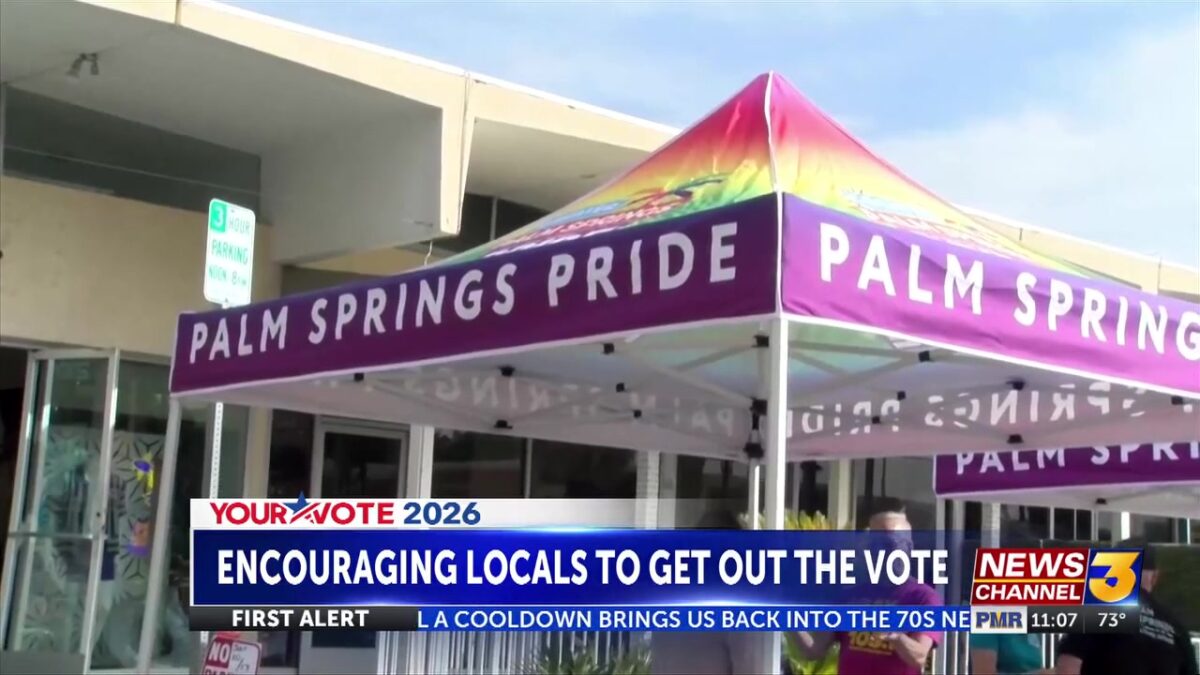
PALM SPRINGS, Calif. (KESQ) — The City of Palm Springs partnered with the Riverside County Registrar of Voters to host a “Get Out the Vote” event. The event provided residents with voter registration assistance and early voting ballot drop-off services ahead of the Nov. 3, 2026, General Election.

The event aims to support early voting, which opened on Oct. 5, 2026, by offering accessible voter services in one location.

Services at the event will be provided by staff from the Palm Springs Office of the City Clerk alongside the Riverside County Registrar of Voters outreach team. Attendees will be able to register to vote, receive registration assistance and drop off completed early voting ballots. Staff members will also be available to provide information and address voter questions.

Residents seeking more information regarding the event or voter services can contact the City Clerk’s Office by email at cityclerk@palmspringsca.gov or by phone at (760) 323-8204.

The General Election will take place on Nov. 3, 2026.

Stay with News Channel 3 for more information.

Click here to follow the original article.
Palm Springs Pride kicks off 40 year celebrations with equality walk

Matthew Pearce

PALM SPRINGS, Calif. (KESQ) — Greater Palm Springs Pride hosted its Pride Equality Walk today in the Arenas District of downtown Palm Springs, marking the official kickoff of the organization’s 40th anniversary celebrations.

The walk serves as a fundraising event to keep Greater Palm Springs Pride’s signature community programming free and accessible. Funds raised by walking teams directly support upcoming events, including the flagship Pride Festival and Parade in November.

The walk route featured live entertainment, including performances by the Desert Winds Freedom Band, A Cabbello and the Flaggers of the Desert. Organizers also established a Blue Zones Water Stop and a DJ Dance Zone along the course.

Following the walk, participants returned to the Arenas District for a community block party featuring food, drinks and live DJs.

Stay with News Channel 3 for more information

Click here to follow the original article.