Tanner Horner sentenced to death penalty for 2022 kidnapping, murder of 7-year-old Athena Strand

By Briauna Brown, CBS Texas Staff

Click here for updates on this story

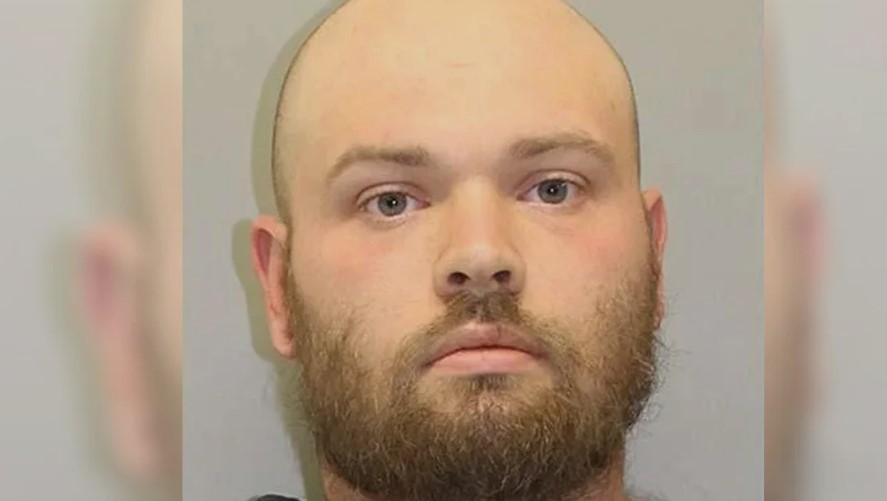
    TARRANT COUNTY, Texas (KTVT) — A Tarrant County jury has sentenced Tanner Horner to death in the 2022 kidnapping and murder of 7-year-old Athena Strand on Tuesday.

Horner pleaded guilty to the crime just moments before his trial began last month. The judge ordered that the trial transition into the sentencing phase, in which the jury had been hearing emotional testimony, watching and listening to graphic video and audio of Strand’s last moments as prosecutors made their case for the death penalty.

Among heart-wrenching testimony, the jury heard testimony from both of Strand’s parents.

After prosecutors wrapped their case, the defense presented its case in an effort to keep Horner from being executed. They called numerous expert witnesses to testify about Horner’s mental health and medical history. Horner’s mother and grandmother also took to the stand to speak on his childhood.

The defense rested its case on Monday.

In closing arguments on Tuesday morning, Wise County District Attorney James Stainton told jurors that the only just outcome of the trial is the death penalty. Horner’s defense attorneys argued that he should be sentenced to life in prison without the possibility of parole.

The jury deliberated for over two hours before returning its verdict.

After the judge read the verdict, he said Horner would remain in the Tarrant County jail until he’s transported to the Texas Department of Corrections in Huntsville.

Athena’s uncle shares impact statement Elijah Strand, whose brother is Athena Strand’s father, stood to read an emotional impact statement on behalf of the family. As tears began to stream down his face, he told the courtroom, “There are no words that truly capture the devastation that Tanner Horner caused us.”

He said Horner not only took a daughter from this world, but a granddaughter, sister, niece, cousin and friend.

“She had dreams she will never get to chase, she’ll have birthdays that she will never celebrate, a life she will never get to live, because of his actions,” Elijah Strand said as he pointed to Horner.

He said Horner stole a sense of safety from his family and that they had been scared to let their children play outside.

“He’s robbed of us safety, peace and our trust in the world and forever changed who we are as a family,” Elijah Strand said as Horner stared back at him.

Then, Elijah Strand had a direct message for Horner:

“You did not just take a life; you destroyed a family. You took a little girl who trusted the world and repaid that innocence with violence. You chose to cause pain that will last generations. You say you found God, but what you did to Athena stands in direct opposition of everything you claim to believe,” he said.

Elijah ended the impact statement by quoting a scripture, and told Horner he would be judged.

“You will face the wrath of God,” Elijah Strand continued. “I want you to know you are a footnote in Athena’s story. Her name will forever be remembered. Her name will be forever celebrated, and everyone will forget you.”

The murder of Athena Strand According to an arrest affidavit, Horner was working as a FedEx delivery driver when, on Nov. 30, 2022, he went to Strand’s home to deliver a package containing a Christmas gift. Investigators said Horner accidentally struck the child with his delivery truck while backing out of the driveway.

Authorities allege Horner told investigators that Strand did not appear seriously injured, but said he panicked, placed her into his van and strangled her out of fear that she would tell her father what had happened.

Horner was ultimately tracked down through digital evidence.

Two days later, Strand’s body was found about 9 miles away from her home, southeast of Boyd.

Please note: This story was provided to CNN Wire by an affiliate and does not contain original CNN reporting. This content carries a strict local market embargo. If you share the same market as the contributor of this article, you may not use it on any platform.
Crime survivors to rally at California Capitol for better victim support

By James Taylor, CBS13 Photojournalist

Click here for updates on this story

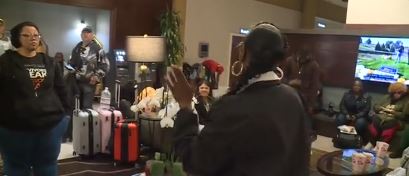
    SACRAMENTO, California (KOVR) — More than 200 crime survivors and family members will be rallying at the California State Capitol on Tuesday, demanding better support and services for victims across the state.

These advocates are traveling from as far away as San Diego and Los Angeles. Their message is clear: Stop denying compensation to people and families who have suffered from violent crimes.

Bridgett Montoya was just 21 years old when she was gunned down while walking on a Southern California street.

“I was in the hospital for about 28 days and in a coma for about a week,” Montoya said.

The state offers funding for victims of violent crime to pay for expenses like physical therapy and mental counseling. It’s distributed by the California Victim’s Compensation Board, whose funding comes from restitution paid by people convicted of crimes.

Bridgett said she applied for financial help, but her request was denied.

“There are a lot of people like me that don’t have the support, and we struggle,” Montoya said.

She’s now one of the survivors and victim advocates coming to Sacramento this week – demanding the state reform it’s compensation criteria.

Tinisch Hollins, with the nonprofit Californians for Safety and Justice, said that about one in three applications are approved.

Hollins said the state needs to make it easier and quicker for victims to get financial assistance.

“When you become the victim of a crime, you’re already traumatized. You need immediate support,” Hollins said. “Most people don’t have the resources on hand and can’t go through a long application process.”

Her organization says the state gave out 27% less compensation last year than in 2019.

“There are dollars that are unspent,” Hollins said. “There are dollars that are not going out to crime victims that should be going out.”

CBS News Sacramento reached out to the victim compensation board, but they would not comment on camera.

Data from the compensation board shows that last year, they received more than 34,000 applications and paid out nearly $45 million in compensation. The agency says the majority of the denials were due to a lack of evidence that a crime occurred.

Bridgett said she has given up on getting state funding for her recovery, but she’s still fighting to make sure other victims don’t have the same problem.

“Unfortunately, we struggle on a day-to-day basis, and our lives have become way more harder because of this,” she said.

Tuesday’s rally begins at 9 a.m., with a march from Fremont Park in Downtown Sacramento to the California State Capitol.

Please note: This story was provided to CNN Wire by an affiliate and does not contain original CNN reporting. This content carries a strict local market embargo. If you share the same market as the contributor of this article, you may not use it on any platform.
Man mourns dog’s death after leaving him in care of pet sitter who remains missing

By Gabriela Vidal

Click here for updates on this story

    AURORA, Colorado (KCNC) — An Aurora man whose dog was stolen while he was on military deployment is now grieving the loss of his furry friend.

“I was hoping that Maverick was still alive. I need my buddy back,” said Beckham.

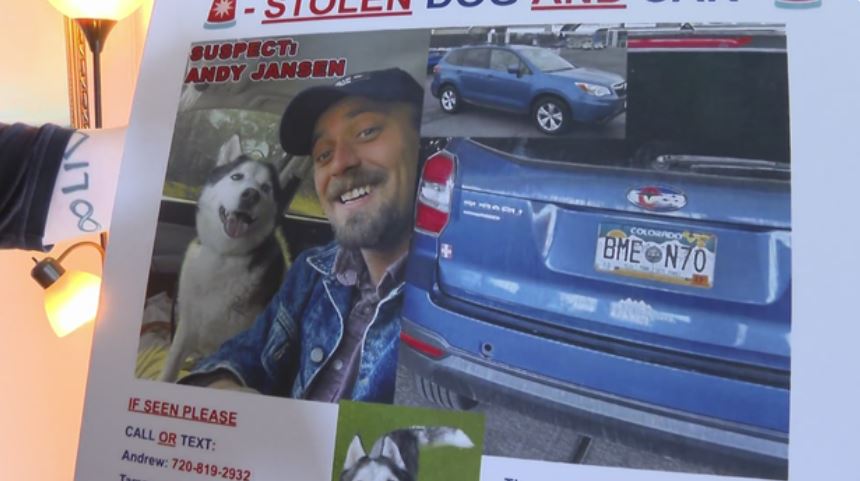
Maverick is Beckham’s 11-year-old Siberian Husky, whose story went viral on social media after Beckham, a military airman, said a man he entrusted to watch Maverick disappeared with his dog and car.

Beckham was deployed for three months with the Colorado Air National Guard. Prior to his deployment, he said he went online to TrustedHousesitters.com where he hired Andrew Jansen to take care of Maverick at his home in Aurora. At first, Beckham said Jansen sent updates and photos, but after a month he went silent. In early April, security cameras captured Jansen leaving with Maverick in Beckham’s Subaru- he never returned.

“Maverick was a really good friend. He wasn’t necessarily a howler husky. He was talkative. He would talk sentences to you sometimes,” said Beckham.

On Saturday, Beckham got the call that Denver police located his vehicle in a parking garage off Logan Street. Maverick’s body was inside.

“He was trapped in the car for a long time,” said Beckham. “He had a lot of blood on his face. They’re still trying to figure out why and what happened.”

Beckham says he’s grateful for those across social media who showed their support for Maverick’s safe return.

“I know that there are people who care. I just have a hard time dealing with it right now,” he said.

While he focuses on honoring his best friend’s life, he’s also determined to work with the police to find the dog sitter he entrusted to keep Maverick safe.

“If he were house-sitting again, I think people need to know. If he’s using other agencies, people need to know. Because he made Maverick suffer a lot,” he said.

Beckham hopes other dog owners practice caution when hiring anyone to care for their best friend.

“Do yourself a favor and just pay some extra money to do a background check on somebody,” he said.

Please note: This story was provided to CNN Wire by an affiliate and does not contain original CNN reporting. This content carries a strict local market embargo. If you share the same market as the contributor of this article, you may not use it on any platform.
Family forced to wait as court error postpones murder sentencing

By Mythili Gubbi

Click here for updates on this story

    OGDEN, Utah (KSTU) — A family thought they could close a tragic chapter of their life on Monday when the woman accused of murdering their loved one was supposed to be sentenced. But a mix-up in court led to the family having to wait a little longer for justice.

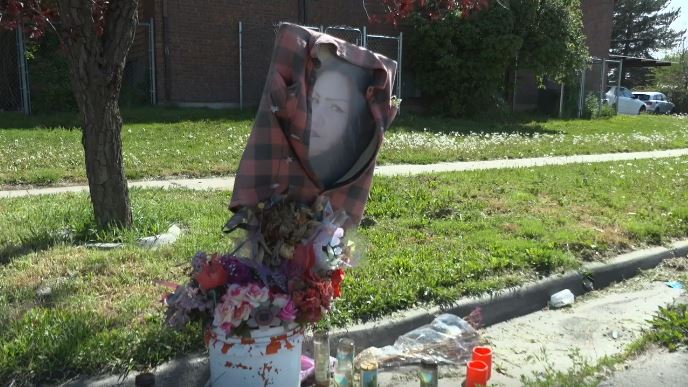
“Anything that a son-in-law could ask for, really, she was a protector, she was always there for me whenever I needed her,” described Shiloh Alires about his mother-in-law, Nakeena Youngman. “She was the mom I never had and I wished for.”

Youngman was a beloved mother, aunt, grandma, cousin and friend.

In April 2025, she was found with a gunshot wound on 800 North in Ogden. She died at the hospital. Since then, her family has been trying to cope with her loss.

“We’re hoping today we could get it so it could ease up the little ones a little bit more,” Alires added. “Now it’s just a lot harder.”

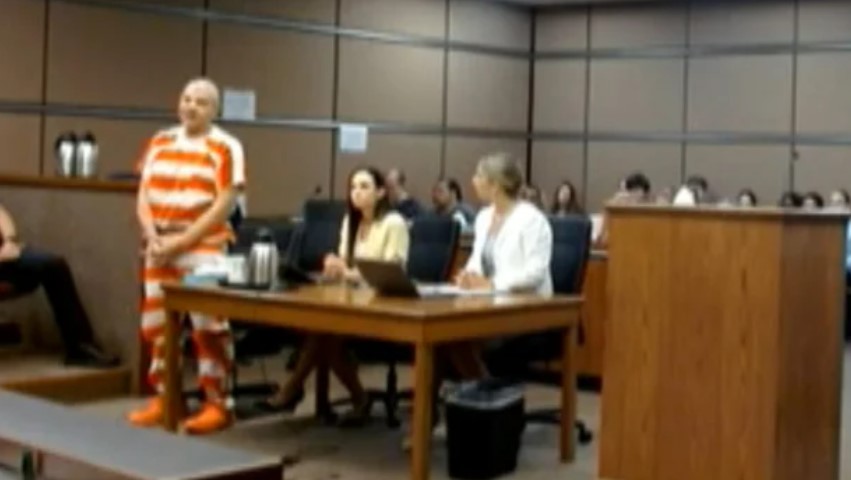
Ana Maria Zaragoza, 38, was scheduled to be sentenced for Youngman’s murder on Monday. She pleaded guilty to murder in March of this year and had charges dropped for weapon possession and obstruction of justice.

But after loved ones were already in the courthouse, the procedures were postponed because Zaragoza was not transported from jail.

“We apologize for not being able to proceed,” Judge Craig Hall said. “We just can’t proceed without the defendant being here.”

Stephanie Wilkinson is a longtime friend of the family.

“I used to babysit Nakeena, anytime mom went somewhere, I was the older kid,” Wilkinson recalled. “A lot of laughs and ups and downs throughout, but she was a beautiful, beautiful person.”

She said having to leave the courtroom on Monday without the sentencing was tough.

“The family has had to emotionally and mentally prepare for this. We have been preparing for this for 13 months, but really for two months, just waiting for the sentencing to be today,” she said. “We have taken off work, we have redone our whole schedules, but to listen to the children cry knowing this day was supposed to sort of be the end and it is not because they failed to get her to the courthouse is absolutely unacceptable.”

Zaragoza is currently being held at the Davis County Jail. FOX 13 News spoke to the Davis County Sheriff’s Office about why she wasn’t brought to court. An official there said it was the Weber County Sheriff’s Office’s responsibility to transport the defendant since the courthouse is in their jurisdiction. But, they also said that both sheriff’s offices did not get the paperwork from the court notifying them of the hearing, so they did not know they had to transport her.

The sentencing was moved to Friday, May 15, at 1:30 p.m.

“We’re processing throughout the weeks, that we’d have justice and stuff, and today, now, they can’t bring her here,” Alires added.

Through Mother’s Day and over the next 10 days, they will continue to wait for justice.

“Quite bugged, honestly, quite frustrated, quite bugged,” Alires said.

Please note: This story was provided to CNN Wire by an affiliate and does not contain original CNN reporting. This content carries a strict local market embargo. If you share the same market as the contributor of this article, you may not use it on any platform.

Nurse sentenced in death of friend who claimed to have cancer

By Jeff Tavss

Click here for updates on this story

    PROVO, Utah (KSTU) — A former Santaquin nurse convicted of manslaughter in the death of a friend who claimed to have cancer was sentenced to up to 15 years in prison Monday.

Meggan Sundwall was found guilty in March of both manslaughter and obstruction of justice in the 2024 death of 38-year-old Kacee Lyn Terry.

Speaking during her sentencing hearing, Sundwall admitted to playing a part in Terry taking her own life.

“If it wasn’t for my role, Kacee likely would still be alive,” Sundwall said.

On the manslaughter charge, Judge Sean Peterson sentenced Sundwall to 1-15 years in prison, and 0-5 years for the obstruction charge, with both sentences to run concurrently.

Sundwall assisted in Terry’s suicide through an overdose of promethazine and insulin.

On August 12, 2024, Terry’s uncle found her unconscious and struggling to breathe, while Sundwall was in the room and failed to ask for help or administer aid. Although Sundwall said Terry had a do-not-resuscitate order, investigators never uncovered that paperwork.

While Terry claimed to have been suffering from several ailments, including cancer, an autopsy showed no signs of cancer and no medical history of the disease.

“Whether I believed that she was suffering so immensely or not, encouraging her and supporting her in committing suicide was morally wrong, and I’m so sorry,” Sundwall said. “I know these are just words, and they can’t bring her back, but I am truly so sorry for the role that I played in her death, and I wish I could take it back.”

During Sundwall’s trial, prosecutors showed how she had financial issues and believed she was the beneficiary of a $1.5 million life insurance policy that Terry had taken out.

Please note: This story was provided to CNN Wire by an affiliate and does not contain original CNN reporting. This content carries a strict local market embargo. If you share the same market as the contributor of this article, you may not use it on any platform.
2 dead, 3 injured after shooting at Carrollton Koreatown shopping center; suspect in custody, police say

By Briauna Brown

Click here for updates on this story

    CARROLLTON, Texas (KTVT) — Two people are dead, and three people are hospitalized after a shooting in the Koreatown area of Carrollton on Tuesday morning, police said.

During a news conference Tuesday afternoon, Carrollton Police Chief Roberto Arredondo confirmed the suspect, 69-year-old Seung Han Ho, was arrested in connection with the shooting.

Arredondo said just before 10 a.m., officers responded to the shooting at the K Towne Plaza in the 4000 block of Highway 121.

CBS Texas Chopper captured the large law enforcement response involving multiple agencies, including Carrollton Police and DPS.

When officers arrived, they found five victims — two were pronounced dead, and three were transported to the hospital in unknown conditions. Their names haven’t been released.

Arredondo said the incident began as a business meeting and the crime was “not a random act.” He said undercover officers located Han Ho’s vehicle and, when they tried to make contact, a short foot pursuit began. Han Ho was arrested in the area of 2625 Old Denton Road.

At this time, his charges haven’t been revealed. The investigation is ongoing.

Please note: This story was provided to CNN Wire by an affiliate and does not contain original CNN reporting. This content carries a strict local market embargo. If you share the same market as the contributor of this article, you may not use it on any platform.
Boulder firebombing suspect to plead guilty, asks that family remain in United States as witnesses

By Christa Swanson, Anna Alejo

Click here for updates on this story

    Colorado (KCNC) — A court filing over the weekend says the suspect in the Boulder firebombing attack intends to plead guilty to all state charges later this week and is asking that his family stay in the country as material witnesses in his case.

Mohamed Soliman is accused of attacking a group at Pearl Street Mall in June 2025 while they were walking to raise awareness for Israeli captives held by Hamas. Boulder police say that Soliman threw two Molotov cocktails at the group, injuring at least 10 people and killing another.

Soliman faces 12 federal hate crime charges and 118 state criminal charges in connection with the attack.

After the attack, Soliman’s now ex-wife, Hayam El-Gamal, and their five children were questioned by law enforcement and then taken into Immigrations and Customs Enforcement custody. After which, they were detained at the South Texas Family Residential Center in Dilley, Texas, for more than 10 months.

Soliman and his family members are Egyptian Citizens who moved from Kuwait to the United States in 2022 on B-2 visitor visas. They applied for asylum after arriving.

There have been multiple efforts to deport the family from the United States. DHS says the family overstayed their visas and “Under President Trump, DHS will continue to fight for the removal of those who have no right to be in our country, especially national security threats.”

On Friday, May 1, attorneys for the Department of Homeland Security asked the federal court in Denver to dissolve the stay of removal of Soliman’s ex-wife and five children from Colorado. The government argues that the family’s case belongs not in Colorado, but rather with the Fifth Circuit Court of Appeals, given the family’s detention in Texas, and the pending claims before that court. The stay was issued on April 25th, when ICE attempted to deport Hayam El Gamal and her kids.

It argues regarding the Colorado district court, “This court’s stay thus interferes with the public interest by interfering with a final order of removal, in a manner that violates the statutory scheme established by Congress, which, as discussed, provides the exclusive authority to grant such a stay to the appropriate court of appeals.”

The El Gamal family’s attorneys, meanwhile, filed new motions on Monday, May 4, including a motion for a temporary restraining order prohibiting the re-detention and removal of the five children and their mother. The filing argues that the government must start a new removal case against the family, as it effectively removed them and then paroled them when it attempted to fly the family out of the country on April 25th. It further argued that the family would face a “severe persecution risk in Egypt” if they were to be sent there.

The motion for a TRO also argued the children’s mother has serious health conditions, so placing her on a removal flight would endanger the children. They “would be effectively orphaned, because their other biological parent abandoned them and will likely be incarcerated the rest of his life.”

It argues regarding the Colorado district court, “This court’s stay thus interferes with the public interest by interfering with a final order of removal, in a manner that violates the statutory scheme established by Congress, which, as discussed, provides the exclusive authority to grant such a stay to the appropriate court of appeals.”

The El Gamal family’s attorneys, meanwhile, filed new motions on Monday, May 4, including a motion for a temporary restraining order prohibiting the re-detention and removal of the five children and their mother. The filing argues that the government must start a new removal case against the family, as it effectively removed them and then paroled them when it attempted to fly the family out of the country on April 25th. It further argued that the family would face a “severe persecution risk in Egypt” if they were to be sent there.

The motion for a TRO also argued the children’s mother has serious health conditions, so placing her on a removal flight would endanger the children. They “would be effectively orphaned, because their other biological parent abandoned them and will likely be incarcerated the rest of his life.”

In a court filing on May 3, his lawyers stated that Mr. Soliman intends to plead guilty to all state charges on May 7. If accepted, the Boulder County District Court would be required to sentence him to life without parole and at least 400 years based on the plea.

They said Soliman also offered to plead guilty to the federal charges against him and accept a life sentence. However, the government has not yet accepted the offer because it is considering pursuing the death penalty. The court filing states that, under the law, Soliman has the right to call live witnesses to testify in person during the presentation of capital sentencing evidence.

It asserts that, “The United States Government has made its intentions abundantly clear: it will never give up its effort to deport Mr. Soliman’s ex-wife and children. If the government removes these key witnesses and seeks the death penalty against Mr. Soliman, the ensuing proceedings will violate Mr. Soliman’s Fifth, Sixth, and Eighth Amendment rights.”

The Fifth and Sixth Amendments provide protections for those in legal proceedings and guarantee rights to individuals facing prosecution. The Eighth Amendment prohibits courts from imposing excessive bail, fines, or cruel and unusual punishment.

Although investigators found no evidence that the family was aware of Soliman’s plans ahead of the attack, his lawyers argue that they lived with him for years and shared close relationships, so they have information that is material to his guilt or punishment.

Please note: This story was provided to CNN Wire by an affiliate and does not contain original CNN reporting. This content carries a strict local market embargo. If you share the same market as the contributor of this article, you may not use it on any platform.

Pittsburgh artist accuses clothing company of using his artwork without permission

By Meghan Schiller

Click here for updates on this story

    PITTSBURGH, Pennsylvania (KDKA) — An artist in Pittsburgh said a clothing company used his artwork without his permission.

Artist Chris Deighan said Steel City sold shirts with his artwork in its stores and online. Deighan said Steel City watered down his design.

“None of the buildings are really where they are, and there are some things from the past in there that don’t exist anymore,” he said.

Deighan said that after his attempts to get in touch with Steel City resulted in getting blocked, he took to social media to plead his case. KDKA Investigates reached out to Steel City, which said:

“We were made aware of similarities several weeks ago and addressed it at that time by updating the artwork. The shirt is no longer in use or available.”

But Deighan claims the company heavily advertised and made money selling a shirt that relied on his design instead of asking to work with him and support local.

“It’s nice someone liked the image enough to use it, but I would have rather worked with them instead of having it go this way,” Deighan said.

When KDKA Investigates asked Steel City if it intends to offer any compensation to Deighan, the company said he had not asked. Deighan said his attorney is now going to reach out.

Please note: This story was provided to CNN Wire by an affiliate and does not contain original CNN reporting. This content carries a strict local market embargo. If you share the same market as the contributor of this article, you may not use it on any platform.

Meet the early pioneers who shaped the future of today’s self-driving cars

By Pamela Parker, Juan Carlos Guerrero, Lyanne Melendez

Click here for updates on this story

    SAN FRANCISCO (KGO) — The race to develop driverless cars long predates Silicon Valley and the high-profile tech companies that dominate the industry today.

Decades before autonomous vehicles competed in high-speed desert challenges, a small group of engineers in Germany and the United States were quietly building the foundations of self-driving technology.

Many credit figures, such as Karl Benz, Henry Ford, and Enzo Ferrari, have shaped the modern automobile.

But when it comes to self-driving vehicles, a different set of names emerges, including Ernst Dickmanns, Red Whittaker, Sebastian Thrun, Chris Urmson and Anthony Levandowski.

Several of these innovators first gained widespread attention during the DARPA Grand Challenges, a series of autonomous-vehicle races launched by the U.S. Department of Defense in 2004 to accelerate progress in self-driving technology.

Years before those competitions, however, Dickmanns and his team were already testing autonomous vehicles on public roads.

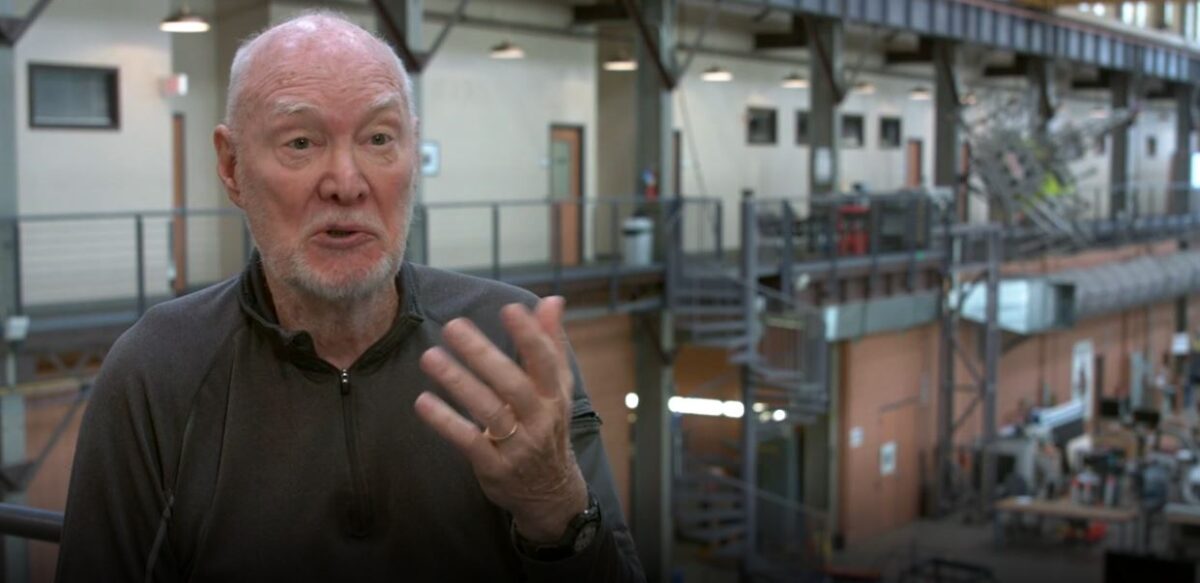
“I’m Ernst Dickmanns, and I was the first who put a self-driving car on the road in the early 1980s,” he said.

Now nearly 90, Dickmanns lives in a small town near Munich, far from the technology centers of the United States. He rarely speaks publicly about his work, but his contributions helped shape how autonomous vehicles “see” the world.

Dickmanns pioneered dynamic computer vision, the technology that allows machines to interpret moving images in real time.

In the 1960s and 1970s, he worked with the German Aerospace Research Establishment, analyzing rocket trajectories, applying image-processing techniques at a time when computer power was severely limited.

“Well, in Oberpfaffenhofen, I’ve been the acting director of the Centre in 1974/75,” Dickmanns said, describing his early exposure to image evaluation from satellites and aircraft. As microprocessor performance rapidly improved, he concluded that real-time image analysis for vehicles would become possible within his lifetime.

By the mid-1980s, Dickmanns and a small engineering team south of Munich converted a Mercedes-Benz van into a self-driving vehicle. Using early Intel processors and multiple cameras, the van could evaluate images 10 to 12 times per second.

“And we were the first to really run these vehicle controls in real time in 1986,” Dickmanns said. His team later demonstrated autonomous driving at highway speeds of up to 96 kilometers per hour on a stretch of the autobahn, far faster than comparable projects at the time.

Across the Atlantic, progress was slower initially.

Interest in autonomous systems surged again after the 1979 nuclear accident at Three Mile Island, where hazardous conditions made human cleanup dangerous. In 1983, researchers at Carnegie Mellon University developed semiautonomous robots to analyze radioactive contamination.

“The development of field robots is motivated by the need to remove humans from hazards and to increase productivity, effectiveness and quality,” said a researcher in a 1987 archival recording.

That work was led by roboticist William “Red” Whittaker, another key figure in autonomous vehicle history.

Whittaker and his team at Carnegie Mellon University developed the Terregator, an early pioneering autonomous vehicle capable of navigating sidewalks using a single camera and laser sensors, though at very slow speeds.

This was part of CMU’s early NavLab project, which included key researchers Takeo Kanade, Charles Thorpe and Dean Pomerleau who worked on the first NavLab vehicle, a modified Chevy van that eventually produced 11 generations of autonomous vehicles.

However, the first iterations of the NavLabs moved at slow speeds using computer vision. While early 1980s prototypes existed, German researcher Ernst Dickmanns is often credited with high-speed autonomous driving in 1986.

“The Terregator was a little bit like a big desk with six wheels,” Whittaker said.

By 1986, Carnegie Mellon engineers introduced the first self-contained NavLab1, a Chevy van equipped with generators, sensors and computers that allowed researchers to ride inside as it drove itself. The first version topped out at about 20 miles per hour, but later versions reached highway speeds.

“It was the first one to really look like a car,” Whittaker said.

In 1995, a NavLab vehicle drove nearly the entire distance from Pittsburgh to Washington, D.C., under autonomous control, using cameras, cruise control and a laptop computer.

Dickmanns continued to advance his approach, which differed sharply from most U.S. systems. While many American teams relied heavily on lidar, radar and GPS – what he calls “confirmation vision” – Dickmanns developed “pathfinder vision,” which relies primarily on analyzing the visible road ahead.

“Our system does the entire recognition of the environment, both where the roads are and how far you are off the roads,” he said, noting that his vehicles operated without GPS data that U.S. teams relied on during early DARPA races.

He compared his system to human vision, explaining how motion compensation and predictive models can stabilize images even when cameras move.

“We did everything just by vision, so we had a complete vision. Systems like humans do,” Dickmanns said.

Despite Germany’s early lead, large-scale commercial development shifted to the United States, where venture capital and government funding were more abundant.

The DARPA Grand Challenges brought together many of the scientists who would later define the industry.

Sebastian Thrun, who led Stanford University’s team to victory in the 2005 DARPA race, later co-founded Google’s self-driving car project, which became Waymo. Anthony Levandowski and Chris Urmson were also prominent competitors before joining Google.

“I think it’s fair to say Ernst Dickmanns is the godfather of the self-driving car, but there might be multiple godparents,” Thrun said, describing Dickmanns as the leading figure in the field during the 1990s.

Levandowski agreed that there is no single pioneer.

“There’s no pioneers. Look, it’s a continual effort,” he said. “It’s like, it’s a team sport.”

Urmson, credited with helping transform Google’s autonomous car research into a commercial operation, also points back to the German engineer.

“I would look to someone like Ernst Dickmanns,” Urmson said. “Who was well ahead of the time in the work he was doing in Germany.”

As autonomous vehicles continue to expand in cities such as San Francisco, the technology’s roots trace back decades – to underfunded labs, early experiments and researchers who pursued the vision of a car that could drive itself long before the idea captured the world’s attention.

Please note: This story was provided to CNN Wire by an affiliate and does not contain original CNN reporting. This content carries a strict local market embargo. If you share the same market as the contributor of this article, you may not use it on any platform.

Brown pelicans starving, dying in Bay Area due to Marine heat wave, wildlife experts warn

By Cornell Barnard

Click here for updates on this story

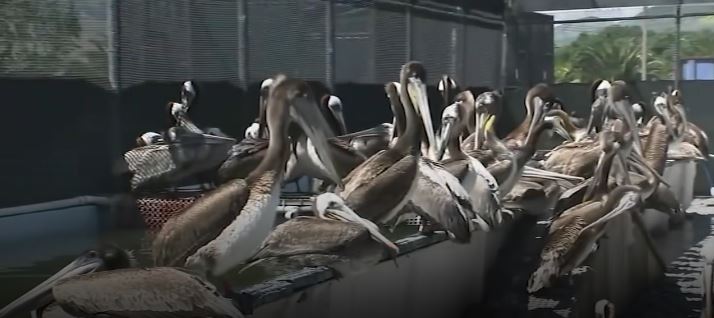
    FAIRFIELD, California (KGO) — A climate-driven marine heat wave off the West Coast is taking a devastating toll on California seabirds, with brown pelicans increasingly found weak, starving, and dying along Bay Area shorelines.

Wildlife experts say rising ocean temperatures are disrupting the pelican food chain, forcing fish to scatter or swim deeper – out of reach for the diving seabirds.

At the International Bird Rescue Center in Fairfield, staff are caring for about 20 pelicans suffering from starvation. Nearly 50 more are receiving treatment at the organization’s Southern California hospital in San Pedro.

“For some of these birds, this is the first nutritious meal they’ve had in weeks,” said Kelly Beffa, wildlife center manager at International Bird Rescue.

This spring, hundreds of brown pelicans have been discovered dead or severely weakened up and down the West Coast. The situation mirrors a crisis in 2024, when hundreds of pelicans were rescued and rehabilitated. While many survived and were released back into the wild, at least one previously rescued bird – identified by a blue band – was found starving again earlier this week.

Experts point to a persistent marine heat wave as the root cause. “As ocean temperatures rise, fish move to cooler, deeper waters,” Beffa explained. “The birds simply can’t reach them.” Climatologists warn the heat wave may not dissipate anytime soon.

“Marine heat waves are rarely gone in days or weeks,” said Dr. Daniel Swain, a climate scientist with the California Institute for Water Resources. “They typically take months to weaken as atmospheric conditions slowly break them down.”

Because of that, wildlife rescue teams are bracing for an influx of additional patients. Other seabirds, including cormorants and common murres, are also being affected. Wildlife officials urge the public not to approach sick or starving birds. Instead, they recommend reporting them to a local wildlife rescue center so trained responders can help.

Please note: This story was provided to CNN Wire by an affiliate and does not contain original CNN reporting. This content carries a strict local market embargo. If you share the same market as the contributor of this article, you may not use it on any platform.