Brown pelicans starving, dying in Bay Area due to Marine heat wave, wildlife experts warn

By Cornell Barnard
Click here for updates on this story
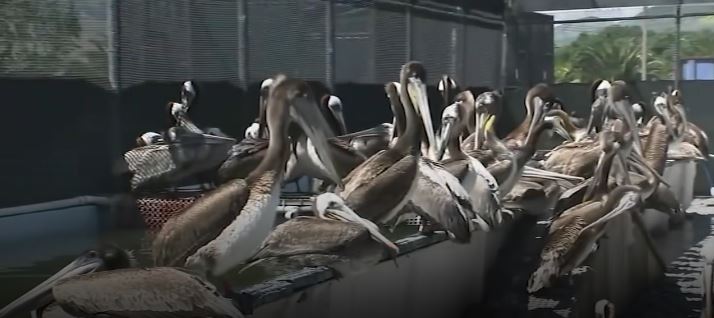
FAIRFIELD, California (KGO) — A climate-driven marine heat wave off the West Coast is taking a devastating toll on California seabirds, with brown pelicans increasingly found weak, starving, and dying along Bay Area shorelines.
Wildlife experts say rising ocean temperatures are disrupting the pelican food chain, forcing fish to scatter or swim deeper – out of reach for the diving seabirds.
At the International Bird Rescue Center in Fairfield, staff are caring for about 20 pelicans suffering from starvation. Nearly 50 more are receiving treatment at the organization’s Southern California hospital in San Pedro.
“For some of these birds, this is the first nutritious meal they’ve had in weeks,” said Kelly Beffa, wildlife center manager at International Bird Rescue.
This spring, hundreds of brown pelicans have been discovered dead or severely weakened up and down the West Coast. The situation mirrors a crisis in 2024, when hundreds of pelicans were rescued and rehabilitated. While many survived and were released back into the wild, at least one previously rescued bird – identified by a blue band – was found starving again earlier this week.
Experts point to a persistent marine heat wave as the root cause. “As ocean temperatures rise, fish move to cooler, deeper waters,” Beffa explained. “The birds simply can’t reach them.” Climatologists warn the heat wave may not dissipate anytime soon.
“Marine heat waves are rarely gone in days or weeks,” said Dr. Daniel Swain, a climate scientist with the California Institute for Water Resources. “They typically take months to weaken as atmospheric conditions slowly break them down.”
Because of that, wildlife rescue teams are bracing for an influx of additional patients. Other seabirds, including cormorants and common murres, are also being affected. Wildlife officials urge the public not to approach sick or starving birds. Instead, they recommend reporting them to a local wildlife rescue center so trained responders can help.
Please note: This story was provided to CNN Wire by an affiliate and does not contain original CNN reporting. This content carries a strict local market embargo. If you share the same market as the contributor of this article, you may not use it on any platform.