From substance abuser to college graduate: Lori Anderson completes long journey at HCC

By Francis Page Jr.

Click here for updates on this story

    May 18, 2026 (Houston Style Magazine) — There are many gospel songs that Lori Anderson hums to stay connected to her faith. One song in particular, “I’m Blessed,” includes the lyrics, “I’m blessed. God knows I’m blessed. As I look all around me, I realize, I’m blessed.” The song became her daily reminder to persevere and accomplish her longtime goal of graduating college.

On Friday, May 8, Anderson walked across the commencement stage earning her associate degree in multidisciplinary studies from Houston City College (HCC)—more than three decades after she first enrolled.

The 63-year-old Houston native initially enrolled at HCC in 1988. At the time, she said, she was “a full-blown crack addict.” “I tried going to class, but I was still actively using crack, so eventually I left and didn’t come back,” she said.

Anderson admits she used the financial aid money to fund her addiction.

“The drugs consumed most of my attention and my emotional state,” she explained. “Nothing else really mattered but the next fix or high.”

After dropping out, her substance abuse caused her life to spiral, fracturing her relationship with her children and eventually leading to Anderson becoming homeless.

“After being drug-free for 17 months, I relapsed and became homeless, living under an underpass under Interstate 610 and Airline Drive,” she said. “Over the next several years, I was in and out of rehabilitation centers, never fully committing to treatment.” For eight months, she lived among a homeless community of other addicts peddling for money to buy food and drugs. During that time, she battled denial, depression and despair while cycling in and out of treatment. It wasn’t until 2023, after three decades of addiction, that Anderson fully devoted herself to changing her life.

Thirty-six years after first enrolling, she returned to HCC, determined to succeed despite her fears of being a recovering addict over the age of 60.

“It was scary,” she said. “I gave myself reasons why I couldn’t go back to school, but I never looked at why I could. I made the decision to stay because, with education, I could get a job for something I’m passionate about.”

Her fears subsided as she received an outpouring of love and support from classmates and faculty who encouraged her throughout her studies. In an English course, Anderson found her voice, sharing her story with peers and Professor Susan Oslund. “When we introduced ourselves, I shared that I was a returning student and how life took me down some wrong roads because of drug use,” Anderson said. “I wasn’t ready for the positive reaction from my classmates—especially the younger ones.”

Oslund described Anderson as a self-motivated, enthusiastic learner who was engaged from the start.

“Ms. Anderson’s story is one of those that really stays with you,” Oslund said. “It’s special. She was open about her struggles with addiction, and that honesty created an atmosphere of trust.”

Oslund said that Anderson’s story reinforced her commitment to teaching and supporting students from all backgrounds.

“She demonstrated that determination and courage can transform a person’s path,” Oslund said.” Witnessing that kind of growth is one of the greatest rewards of teaching. Seeing her succeed reaffirmed my belief that every student deserves the chance to pursue their goals, no matter where they start.”

Reaching this milestone in her education journey has also helped Anderson repair her relationship with her daughter LaShonda O’Neal, who graduated from HCC in 2019. After years of pain, distrust and limited communication, O’Neal is proud of her mother.

photo HCC Primary Horizontal LOGO

“I believe that great things and blessings are going to happen for her,” she said. “My mother has many flaws, and don’t we all? I admire her tenacity and determination she’s shown over the past three years. I look forward to her earning her bachelor’s degree in the future.”

Anderson will continue her education at Texas Southern University (TSU), where she’ll pursue a bachelor’s degree in social work. It will be her second time at TSU. She previously attended the university on a track scholarship in 1982.

She says she plans to keep sharing her story to inspire others. “I know God saved and delivered me for this moment—to walk across the stage with my degree with no guilt or shame,” Anderson said. “I’ve used the resources to get me through that storm in my life with grace and dignity. This is an awesome feeling of redemption and I’m grateful that I got another opportunity.” And blessed.

Please note: This story was provided to CNN Wire by an affiliate and does not contain original CNN reporting. This content carries a strict local market embargo. If you share the same market as the contributor of this article, you may not use it on any platform.

Kierra Lee
KIELEESTYLE@GMAIL.COM
4096658446

Graduate student known for runs through Chicago gets to stay in U.S. after visa concerns

By Victor Jacobo, Natalie Goldstick, Michelle Sproat

Click here for updates on this story

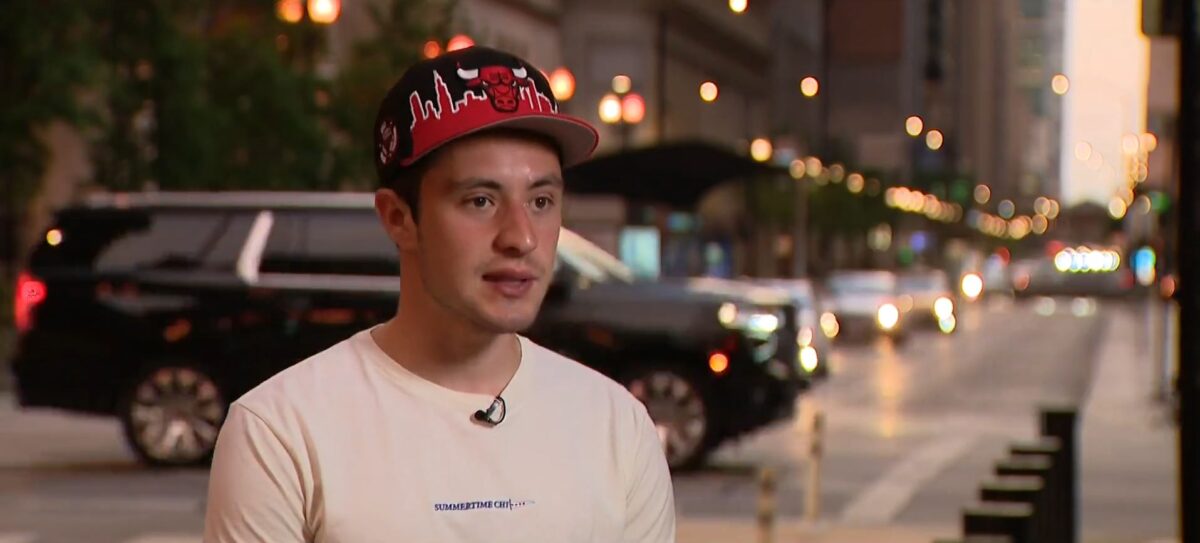
    CHICAGO (WBBM) — A graduate student from Brazil who went viral on social media for his quest to run every street in Chicago will get to stay in the U.S.

Joabe Barbosa was able to secure another training year at Roosevelt University following concerns about his visa status.

A native of Brazil, Barbosa came to the city in 2022 to get his clinical doctorate in psychology at Roosevelt University. Safe to say, Barbosa made himself right at home, embracing the neighborhoods that make Chicago special — all 77 of the city’s community areas.

Barbosa made it his mission to see every single mile and run every single block of every single street. He has also set a Guinness World Record for the fastest time visiting every ‘L’ station.

His visa was set to expire at the end of July.

CBS News Chicago caught up with Barbosa after he ran the Life Time Spring Half Marathon on Sunday, while wearing a bee suit.

“The university, as well as everyone in Chicago like had a bunch of DMs, like when everyone heard the news, everyone collectively helped me extend by visa, and I’m able to stay for another year,” Barbosa said.

Barbosa’s final stretch of his Chicago run is scheduled for June 14. He will run from Oak Street and Michigan Avenue to Buckingham Fountain.

Please note: This story was provided to CNN Wire by an affiliate and does not contain original CNN reporting. This content carries a strict local market embargo. If you share the same market as the contributor of this article, you may not use it on any platform.

Teacher starting new school using tech to give students more time to pursue passions

By Ryan Fish

Click here for updates on this story

    VAIL, Colorado (KMGH) — A Vail teacher is starting up a new kind of school he says will give students less time sitting in a classroom and more time to pursue their passions, whether that be athletics, music, entrepreneurship or other aspirations.

Samuel Bennett has spent more than a decade as a teacher at the high school and college level in the Vail area.

“I saw the trade-offs that students had to make,” he told Denver7. “They need additional time… [The pressure] was crushing at some times… I personally experienced it with my kids. I thought, you know, ‘These kids need a different way of learning.’”

Bennett said the Vail Performance Academy rejects the idea that those trade-offs are necessary because technology can optimize students’ time in school. He said that can allow them to be truly elite inside and outside the classroom.

“We use AI to leverage the exact right lesson for each kid,” Bennett explained. “Teachers are there for critical thinking and for life skills and entrepreneurial skills and public speaking skills and seminars and elements like that. But the core skills, those are self-paced, adapted, personalized by AI for the student.”

The school — designed for 5th-graders through high school seniors — is partnering with Arizona State University Prep, Khan World School and The Levitt Lab, which provide the non-traditional education models.

John Slevin, who is about to graduate from Battle Mountain High School in Eagle County, has been working with Bennett to provide a student perspective on what the school could look like.

“I think the model is great: meeting kids where they’re at, instead of kids having to meet the system where it’s at,” he explained.

Slevin said he is attempting to start two companies, and that this model would have afforded him more time for his entrepreneurial goals.

“I think that that would be something that I definitely would have chosen to enroll in,” he said.

“ASU Prep is excited to partner with Vail Performance Academy to help create a school model that combines rigorous academics with the flexibility students need to pursue excellence in athletics, the arts, entrepreneurship, or other high-performance pathways. By drawing on ASU Prep’s Khan World School and Levitt Lab models, we are supporting a learning experience that is personalized, mastery-based, and grounded in high expectations.” – Amy McGrath, CEO of ASU Prep Academies & ASU Prep Global

Bennett said tuition is $32,000 per year, adding that 10 students have committed to the school’s fall launch so far with a goal of 30 students for the school’s inaugural class.

The school’s building is on Westhaven Drive in Vail, near Vail Ski Resort.

Please note: This story was provided to CNN Wire by an affiliate and does not contain original CNN reporting. This content carries a strict local market embargo. If you share the same market as the contributor of this article, you may not use it on any platform.

Woman’s clinical trial may bring hope for autoimmune disorder patients

By Ethan Carlson

Click here for updates on this story

    DENVER (KMGH) — Aimee Ward had no symptoms until 2022.

“Lots of symptoms, and feeling icky, but mainly my fingers were swollen, all my joints hurt, and I went to several doctors. Couldn’t figure out what was going on,” Ward said.

She was eventually diagnosed with systemic sclerosis, a rare and progressive autoimmune disease.

“You can imagine like you’re turning into basically a statue, and it’s very frightening,” Ward said.

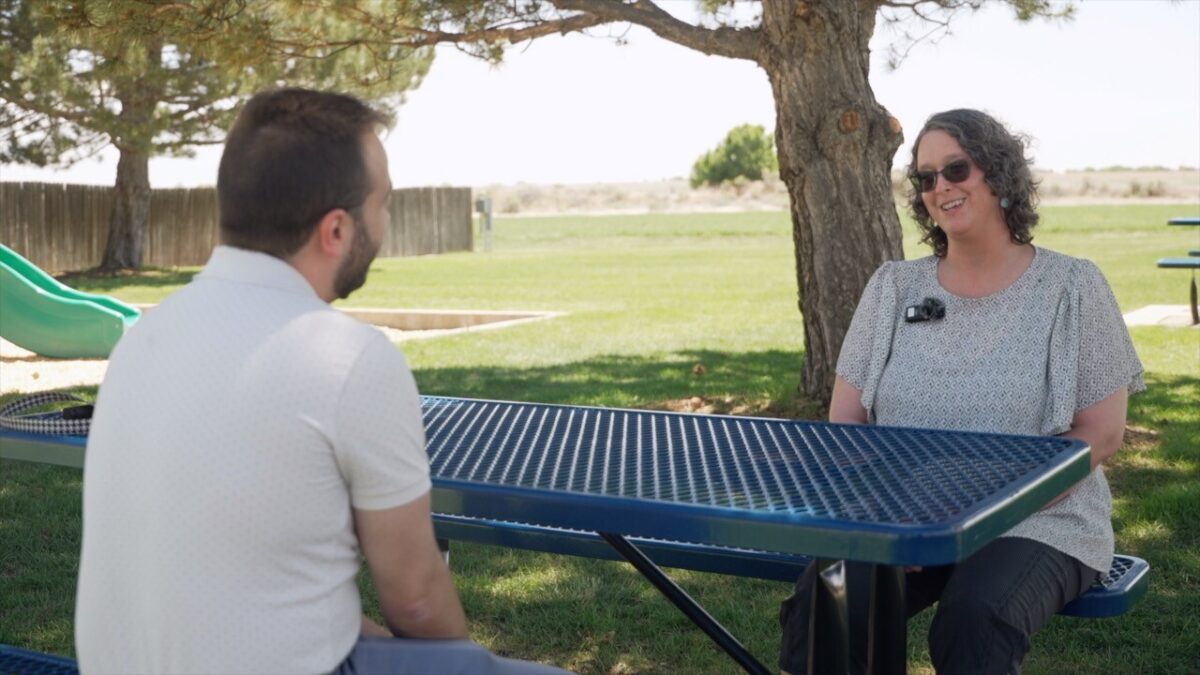
Dr. Richard Nash, transplant physician at HCA HealthONE Presbyterian St. Luke’s Colorado Blood Cancer Institute, met with Ward to discuss treatment options.

“This is a condition where the skin starts to get tight and, at its worst, patients can be basically trapped within their skin,” Nash said. “There’s a significant mortality risk as well, and many of these patients have significant pain in their extremities.”

A study out of Germany suggested that CAR-T cells, which are taken from a patient’s body and genetically modified to fight their own malfunctioning immune system, could be effective not only for treating blood cancers, but also for treating patients with autoimmune disorders.

The treatment, however, was still part of a clinical trial, which carries inherent uncertainty.

“There are risks,” Dr. Nash said. “There’s always the possibility that as we do the clinical trial, we may see safety issues, and clinical trials can be shut down. Or, we can complete the clinical trial, and no safety issues are seen, but we don’t see… any significant improvement in patients.”

Ward weighed those risks carefully before deciding to participate.

“I wanted to contribute, but also there was this part of desperation,” Ward said. “Things were rapidly progressing. I felt like this might be kind of a gift for me.”

She endured weeks of treatment. Two years later, the results speak for themselves.

“My symptoms have improved. They’re not completely gone, but I am incredibly lucky to have been part of this trial,” Ward said.

Nash said the medical community is grateful for patients like Ward who are willing to take that step.

“We can’t do these clinical trials without patients actually agreeing to participate. The scientists, the investigators, the clinicians, we always have to be very thankful for patients’ participation in clinical trials,” Nash said.

For Ward, the decision ultimately came down to the people around her.

“The support of my family and the encouragement of all those people that I hold dear in my heart… helped me make that decision and move forward,” Ward said.

Ward was one of the first patients to participate in this clinical trial, which is now advancing to Phase 3. If that is successful, it could eventually be approved by the FDA as a standard treatment method for autoimmune disorders.

Ward is currently fundraising in support of the Stepping Out to Cure Scleroderma event. You can click here if you would like to learn more about scleroderma and systemic sclerosis.

This story was reported on-air by a journalist and has been converted to this platform with the assistance of AI. KMGH verifies all reporting on all platforms for fairness and accuracy.

Please note: This story was provided to CNN Wire by an affiliate and does not contain original CNN reporting. This content carries a strict local market embargo. If you share the same market as the contributor of this article, you may not use it on any platform.

Colorado lawmakers pass bill requiring quicker access to police body cam video for families

By Micah Smith

Click here for updates on this story

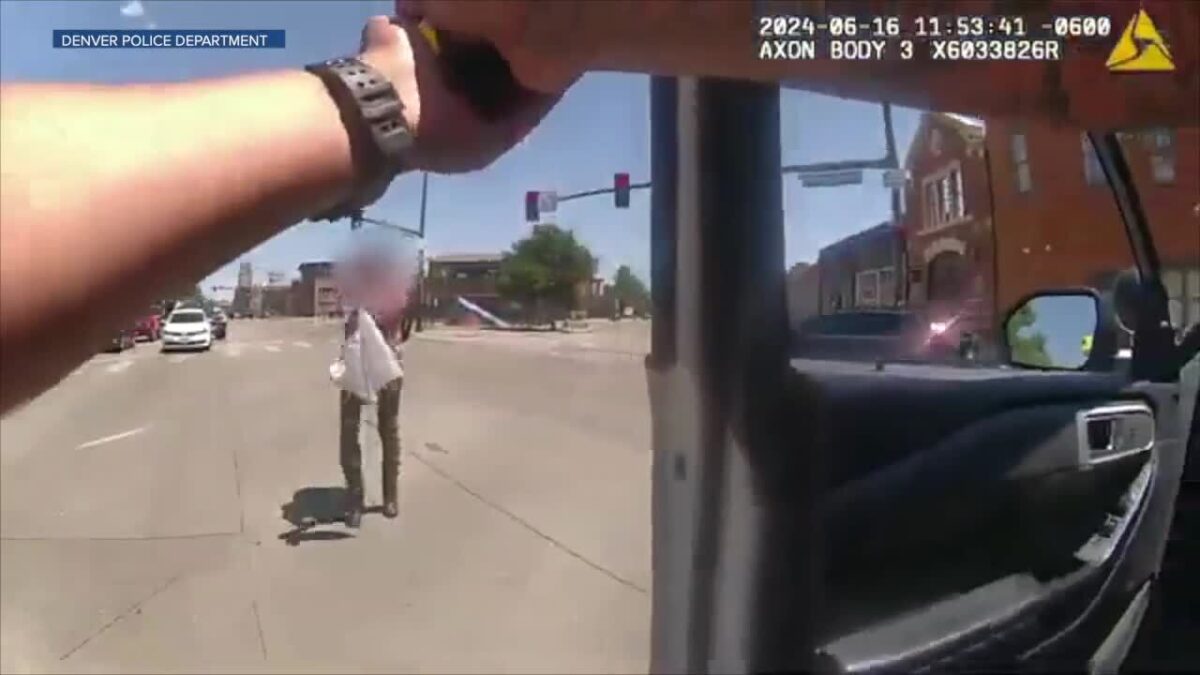
    COLORADO (KMGH) — On Wednesday Colorado lawmakers passed Senate Bill 26-190 requiring law enforcement agencies to share recordings of deadly police shootings with the family members of the person killed before sharing them with the public.

The legislation also requires police departments to make every effort to notify the family of the person who died in a police shooting within 24-hours. It requires law enforcement agencies to proactively provide relevant unedited video and audio recordings when officers kill a person to their immediate family within 21 days of the incident.

In addition, families would have to be notified of their right to view the footage at least 72 hours before it is released to the public and requires officers to refrain from using subjective statements about the person killed.

“We were able to create statutory language around police no longer being able to make subjective observations or extrajudicial statements when they are giving those public updates. Additionally they can no longer just simply pull prior criminal history and make that a part of the narrative. It wasn’t relevant at the time of the incident, so it’s not relevant in the time of the update. So we now have a law that requires police to give facts, the facts that they have at the time,” said MiDian Shofner, CEO of The Epitome of Black Excellence & Partnership.

Shofner helped draft the legislative proposal for the bill.

“We have multiple families in our own community that have suffered in agony because these systems have not shown compassion or care, and so, because of that, we were able to leverage the lived experiences of the family of Kilyn Lewis, Jalin Seabron people impacted by the Rajon Belt-Stubblefield killing, Kory Dillard,” Shofner said. “All of those families have lived their pain out loud in order to seek change, because they know what it means to not have answers, they know what it means to hear your loved one being criminalized, and you’re trying to manage the grief that comes with the loss. So we were able to truly leverage real time lived experiences.”

But there was some push back to the bill. In the first hearing for SB26-190, Republican lawmakers on the Senate State, Veterans and Military Affairs committee voted against advancing the legislation.

The Colorado Association of Chiefs of Police has also shared concerns with portions of the bill they believe could “create legal ambiguity and unintentionally discourage timely, factual communication with the public during critical moments”.

The bill still needs Governor Polis’s signature before becoming law.

Please note: This story was provided to CNN Wire by an affiliate and does not contain original CNN reporting. This content carries a strict local market embargo. If you share the same market as the contributor of this article, you may not use it on any platform.

Ladybugs, libraries and love: How this grandma weathered a stage 4 cancer diagnosis

By Arianne Brown, KSL

Click here for updates on this story

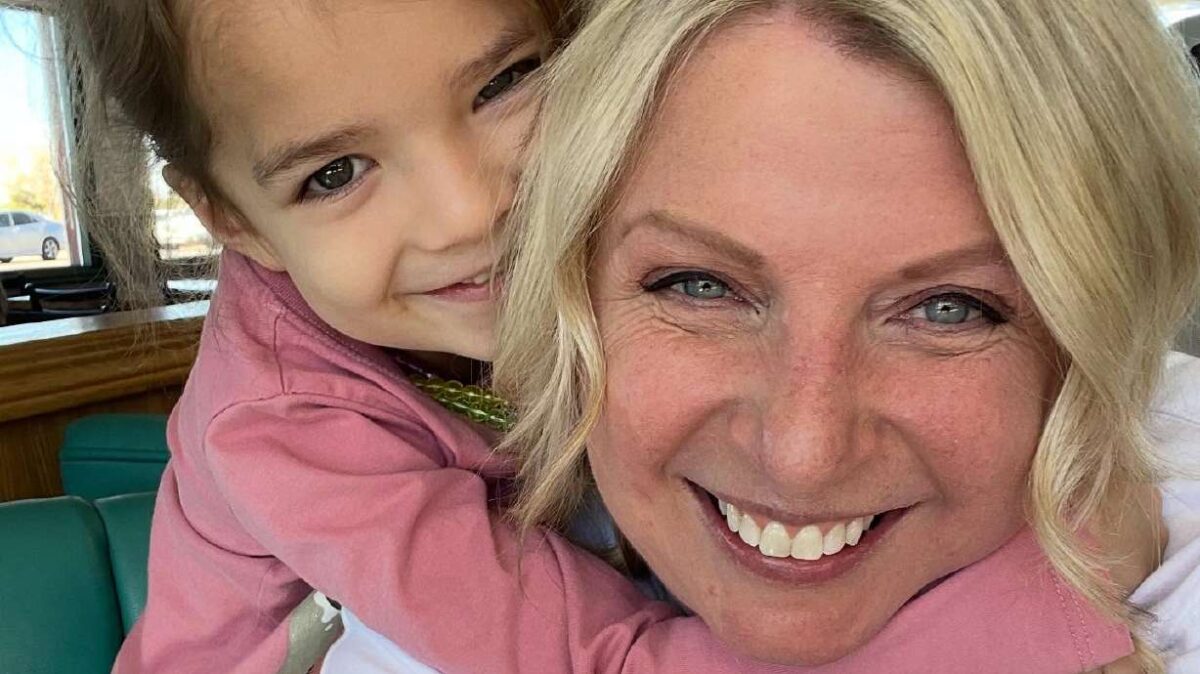
    PAROWAN, Iron County, Utah (KSL) — When Cori Adams sees a ladybug, it’s a reminder that she’s not alone in a world where people around her have left far too soon.

And when her youngest daughter brought her a picture of a ladybug while she was lying in the hospital with Stage 4 ovarian cancer, she knew it wasn’t her time just yet.

“My mom died at 42, and her mom died at 41,” Adams said. “My biggest life goal was to make it to 50.”

In April 2024, that “life goal” was threatened when Adams, then 47, felt a persistent pain in her mid-section that was caused by the twisting of her ovaries due to a large cancer growth.

“The cancer was the size of a 25-week fetus,” she said. “It attached to my ovaries. Even though I had a hysterectomy 15 years ago, I left my ovaries in. They said if it wouldn’t have twisted, I would have been dead within two weeks because my cancer levels were so high.”

The cancer diagnosis came on the heels of what Adams described as a “perfect day.”

“I got up early to coach 3- and 4-year-old soccer with my daughter,” Adams recalled. “Her kids are on the team, and we came home, and I had a big barbecue with my kids, and then we went out to the local farm to help dock lambs because it was lambing season.

“It was just a big, beautiful day.”

Through the use of laparoscopic retrieval bags, doctors were able to isolate the cancer during the retrieval process to ensure it didn’t spread. Today, there are no new cancer growths to treat.

Adams said her near brush with death caused her to see life through a different lens.

“It’s given me a whole different perspective on life,” Adams said. “I had a rough childhood. I got pregnant with twins at 17. I had a rough divorce. I struggle with religion, and I struggle fitting in. But none of that matters anymore.

“Because when you’re laying in a hospital bed and the doctor is telling you and your family that you’re probably not going to make it, I thought of all the Christmases I was going to miss and all the grandkids I wasn’t going to kiss. … It’s why there are bunnies in my library. It’s why I look for ladybugs.”

Adams is the library director at the Parowan City Library and has spent decades creating a safe place for children, adding that she spent much of her childhood with her grandmother, having grown up with a mother who suffered from the effects of drug abuse.

“To be on this earth was very difficult for my mom, and she overdosed,” Adams said. “They said it was accidental, but I’ll never know.”

Adams’ grandmother would call her “Ladybug,” and when she passed away from multiple sclerosis, Adams held onto not only the nickname but also adopted it as a symbol that would carry her through some very hard times.

“Every time I see a ladybug, I know that somebody is with me and I’m going to be OK, and I’m not alone,” Adams said. “When I got sick, people were sending me all these random pictures of ladybugs and I still get them to this day.”

Two years after the perfect day turned into a fear-filled night, Adams still looks for ladybugs and finds ways to bring joy to her life and the lives of others. Working at the library, she said, has given her the chance to do two of her very favorite things — spend time with children and read children’s books.

“Children’s books are so innocent and colorful,” she said. “If I’m having a bad day, I go and take six children’s books off the shelf and just read.”

Adams has recently written her own children’s book, titled “The Adventures of Bronco and Willie,” that highlights her life with her two Bernedoodles.

She said writing this book is on her list of ‘Why nots?”

“The thing is, I didn’t tell a soul. I didn’t tell anyone I was writing this book until it was done,” she said. “I just wanted something for me, and I didn’t want anybody’s opinion. I just wanted something to leave behind.

“It was just another one of my ‘why nots?’ I don’t know how long I’m going to be here. Why not? Let’s just write a book. Why not go get a bunny and bring it to the library?”

Another one of her ‘why nots?’ was to get a tattoo.

“I have a tattoo of a ladybug that’s climbing up a wishing flower — a dandelion that turns to seed,” she said. “(The seeds) are the wishes that I hope I get to make. It’s on the arm that doctors always draw blood from because I’m always getting tested. I have it there to remind me that I still have wishes to make.”

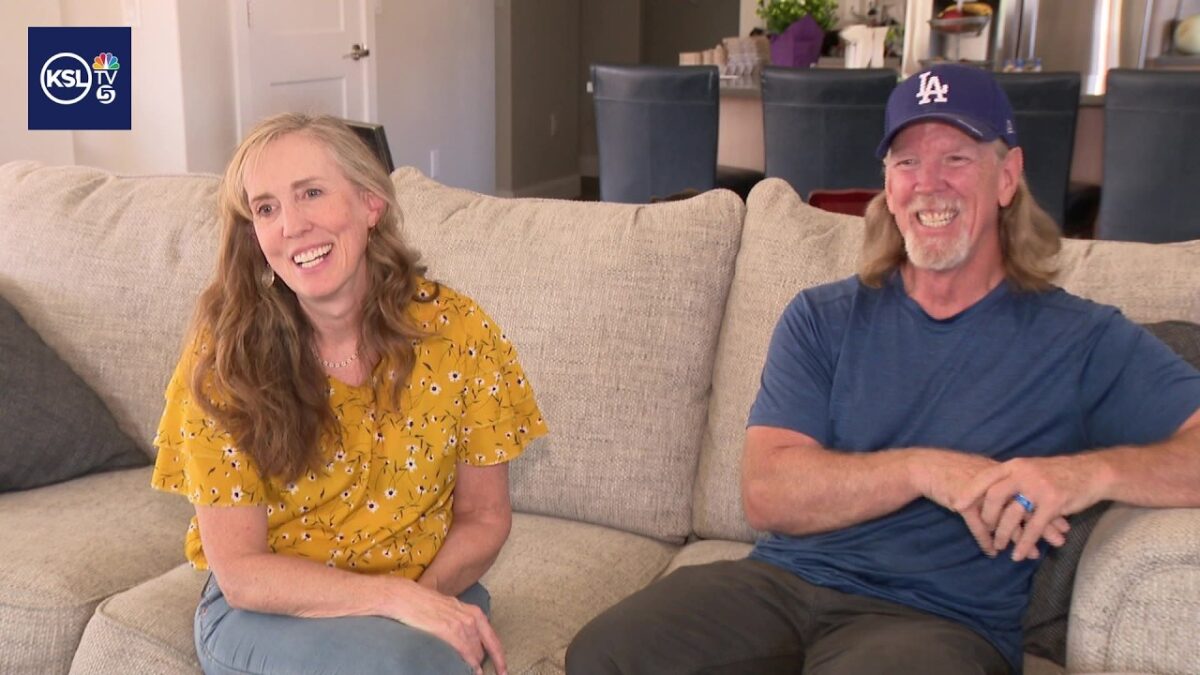
Adams will turn 50 at the end of this year, and her daughter, Megan Morales, told KSL that she is grateful her mom is still alive.

“She is so resilient and just talking to her, you would never know all the horrible things that have happened in her life,” Morales said. “She never uses it as an excuse to have a bad attitude.

“Growing up, she was exactly who I wanted to be. I am so blessed that she’s the woman that I get to look up to and my daughter gets to look up to.”

The Key Takeaways for this article were generated with the assistance of large language models and reviewed by our editorial team. The article, itself, is solely human-written.

Please note: This story was provided to CNN Wire by an affiliate and does not contain original CNN reporting. This content carries a strict local market embargo. If you share the same market as the contributor of this article, you may not use it on any platform.

Utah attorney performs life-saving CPR mid-hearing, credits time in Boy Scouts

By Arianne Brown, KSL

Click here for updates on this story

    LAS VEGAS (KSL) — Attorney David Winterton was cross-examining the opposing counsel’s client in bankruptcy court on May 11 when his heart stopped. Within seconds, opposing counsel Matt Johnson jumped to his aid, using life-saving skills he learned in Boy Scouts more than 45 years ago.

“Right after my client answered a question, David just dropped to the floor right in front of me,” Johnson, of Eden, Weber County, told KSL. “I jumped down and noticed he was breathing, but it sounded almost like he was snoring. His eyes rolled up into the back of his head, and I jumped down and was asking him, ‘Are you OK, David? Are you OK?’ with no response whatsoever.

“That probably went on for 10 to 20 seconds, and then he stopped breathing … and then I checked his pulse on both wrists and both sides of his neck. Nothing. He was not breathing, and no heartbeat. So, I started doing CPR.”

Johnson had never performed CPR before, but learned it as a Boy Scout when he was 11 years old. He said he continued CPR for 10 minutes until a manual defibrillator was brought in to assist. When things weren’t improving, and they were awaiting the arrival of first responders, Johnson recalled something else he had learned from his time as a Scout.

“We were taught, ‘When he’s red, lift his head. When he’s pale, lift his tail,’ meaning if you see that their face is very white, you need to lift their legs up. If you see that his head is really red, you put their legs down to get the blood flowing. David was completely white.

“I told the other attorney who was in the room, ‘Lift his tail! Lift his tail! I mean, lift his legs!’

“When there were points when I thought he was gone, I told myself, ‘Do not stop. You just keep pumping until the ambulance gets here.’ So, I kept pumping.”

When the ambulance finally arrived, Johnson said it took only a few shocks with the automated defibrillator to get Winterton breathing again, and he was able to answer one very important question — the name of his wife. After trying several different ways to get his wife’s phone number, Johnson was able to call her and explain what was happening.

“I got a call from our secretary who said that Dave was at the courthouse and they were giving him CPR,” said Nickie Winterton, David Winterton’s wife. “When I heard that, I couldn’t even think. I was like, ‘Heavenly Father, don’t take my husband from me. Please, I need him.'”

Winterton was visiting the couple’s children in Utah County when she got the call, adding that a few minutes after the initial call, Johnson called with the news she had been praying for.

“Matt called me and said, ‘I wanted you to know that I’ve been giving your husband CPR and the paramedics are here,'” she recalled. “He said, ‘I think everything will be fine. I just want you to know, so you don’t worry.’ He was so nice to call me to let me know that Dave’s had CPR and is breathing again.”

Nickie Winterton and her two daughters immediately drove to Las Vegas to meet David Winterton at the hospital. She said that had Johnson not been there that day, the outcome would have been very different.

“To think that if it would have happened anywhere else — on the drive to the courtroom — he would have never gotten the help he needed,” Winterton said. “If it happened at home, I would have headed home to bury my husband and not visit him in the hospital.”

The judge presiding that day was 9th Circuit Appellate Judge Gary Spraker, and, according to Johnson, there were some profound statements made in the courtroom.

“After the incident, we were in the courtroom, and the judge said how impressed he was and said that what happened really put things in perspective,” Johnson said. “The judge told us, ‘On one hand, we have life. On the other hand, we have a trial. What’s really more important than life and humanity?'”

“As attorneys, we’re on the other side of the table from one another, and we’re at each other’s throats,” Johnson added. “Even though we are opposing, I’ve always thought it was wise to treat opposing counsel with kindness. It was a pleasure to be able to assist someone on the other side and help them survive what could have been their last day on Earth.”

David Winterton is at home resting with his family in Las Vegas and is expected to make a full recovery from what they were told was a fluke stop of his heart. Nickie Winterton said doctors also told her the CPR Johnson performed kept her husband alive that day.

“The nurses and doctors said that Dave went 15 minutes without any oxygen, but it didn’t affect his brain or any of his limbs because the CPR kept pumping that blood into his body,” she said. “The CPR and chest compressions circulated the blood through the body and kept him alive.

“Matt is our hero,” she continued. “I was thinking that if everybody was like Matt, we would not have any strife in the world. Everybody would watch out for everybody. I can’t tell you how many times throughout the day I think of how thankful I am for Matt Johnson, and I haven’t even met him yet.”

Please note: This story was provided to CNN Wire by an affiliate and does not contain original CNN reporting. This content carries a strict local market embargo. If you share the same market as the contributor of this article, you may not use it on any platform.

Utah couple biking 4,000 miles for their 40th wedding anniversary

By Sarah Martin

Click here for updates on this story

    SALT LAKE CITY (KSL, KSL TV) — Washington state to New Jersey in a little more than three months; this ride would be the most ambitious Bliss and Robert Sawyer attempted.

The Saratoga Springs couple began road biking seriously about 25 years ago. One long haul at a time, they rode all over the country and all over the world, taking their bikes to the UK, Norway and Switzerland.

Bliss said she was most excited for the challenge of the trip.

“Seeing our own country from a bicycle,” Bliss said “Because to me, that’s kind of the magic of it is that you see things differently.”

They planned to camp often and stay in road-side hotels every few nights, biking daily through all kinds of weather.

Robert said in the early days, they were concerned about how fast they rode and how far each day, but by now they’ve learned to enjoy the journey.

“This is just us to enjoy being together, enjoy the scenery, listen to music,” Robert said.

Through their ride, the couple was working to raise money for two charities, Tabitha’s Way Food Pantry and Habitat for Humanity. They’ve had a few sponsors to help with gear, but said for the most part they would fund this trip themselves.

Follow their journey and donate to the cause on their website, Hope Across the USA.

Please note: This story was provided to CNN Wire by an affiliate and does not contain original CNN reporting. This content carries a strict local market embargo. If you share the same market as the contributor of this article, you may not use it on any platform.

Utah Museum and BLM partnership honored for work to recover 100-thousand Indigenous cultural items

By DEANIE WIMMER

Click here for updates on this story

    SALT LAKE CITY (KSL, KSL TV) — A major recognition for an Utah partnership working to repair the damage of a widespread looting case.

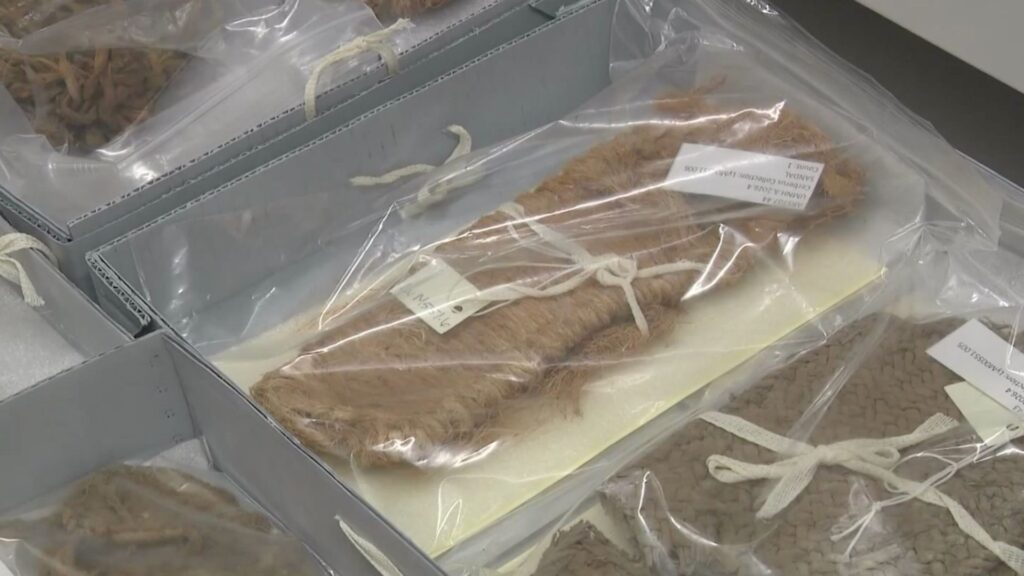
The Natural History Museum of Utah and the Utah Bureau of Land Management are being honored for their work to recover, preserve, and return more than 100-thousand Indigenous cultural items, some of them finally going back where they belong.

More than 100,000 Indigenous cultural objects, once illegally taken from public land, Tribal land, and burial sites, are now being carefully preserved, cataloged, and returned.

The Natural History Museum of Utah and the Utah Bureau of Land Management are being recognized for their decade-long partnership on what’s known as the ‘Cerberus Project,’ the largest and most archaeologically significant recovery ever made by the federal government.

“The society for American Archeology Award was for the partnership between the BLM Utah and the Natural History Museum of Utah to right some wrongs. This was a really tragic looting case, and we worked hard to return the objects to where they belong,” said Lisbeth Louderback, curator of archaeology at the Natural History Museum of Utah.

After the objects were recovered through a federal undercover operation, BLM partnered with the museum to inventory, research, and determine where each item should go, whether to Tribal nations, or appropriate repositories.

The process takes years.

“It took a lot of time to unpack, repack, making sure things were good for travel,” said Annie Lawlor anthropology collections at the Natural History Museum of Utah. “It was a tremendous amount of time. You just have to make sure that you’re doing really accurate work.”

The collection includes stone tools, baskets, sandals, and other organic materials — items rarely found intact in archaeology today.

While much of the collection is still being processed, organizers said the work represents a shift in how archaeology serves the public, focused on responsibility, collaboration, and repair.

“I’m really proud of the fact that the museum we can show the public how the museum isn’t just a building full of exhibits,” said Lawlor. “It’s here to serve the people of Utah.”

Please note: This story was provided to CNN Wire by an affiliate and does not contain original CNN reporting. This content carries a strict local market embargo. If you share the same market as the contributor of this article, you may not use it on any platform.

Snake bite victim describes ‘excruciating pain’

By Lisa Crane

Click here for updates on this story

    BIRMINGHAM, Alabama (WVTM) — We’ve entered snake season in Alabama. Snakes of all kinds bite, but in our state, you’ll find snakes that can cause some of the most dangerous venomous bites in the country.

There are about 50 different species in Alabama, and most of us will walk by one, even step over one, without even realizing it. Out of all those species, there are only a few that are venomous, and now and then, people here are bitten. We’ve seen a few cases of that already this year.

The copperhead at the Birmingham Zoo is almost invisible in its enclosure. Its camouflage makes them practically invisible. Andy Scott is the Reptile Manager at the zoo. He said, “Copperheads are the most common bites. And that’s kind of the problem with them. Instead of acting big and scary like a rattlesnake does. Copperheads warning, unfortunately, is usually just to bite you.”

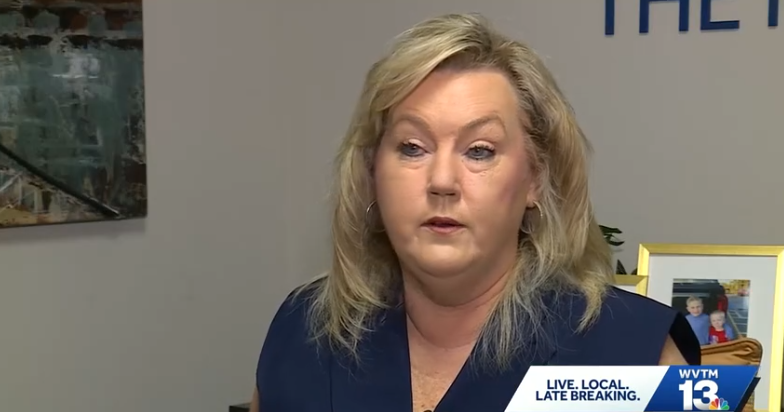
Donna Lowery from Trussville found that out the hard way. In late April, Lowery stepped one foot out of her door and was immediately bitten by a copperhead. She never even saw it. She said, “As soon as the snake bit me, the burning sensation, like I said, I just knew it’s a snake. And then, immediately, it started swelling up, turning blue. And then by the time I got to the hospital, it was very large.”

She did the right thing and got help quickly. Scott said 99% of snake bites are not deadly, just stay calm and get to a hospital. He added, “You want to remove anything restrictive like jewelry, rings that would, that would swell because your body’s going to swell. And call 911.”

Lowery said it’s been an excruciating ordeal. After receiving four vials of anti-venom and spending a night at UAB Hospital, she was released. But she’s not fully recovered- physically or emotionally. She added, “It was so traumatic. I really do think I went into shock. And the other thing about the snake for me is the PTSD is so real. Like when I pull up at home, even in the daytime, but I do not go outside at night. Now, before I go outside, I’m looking out my door, opening the door, I’m looking everywhere.”

Experts say don’t try to catch or kill a snake that bites you, as that increases the risk of being bitten again. If you can, take a picture of it, so they can identify it at the hospital. That’s important because if it’s not one of those few venomous snakes, you won’t need anti-venom, which can cost up to $10,000 a dose. The good news is that, in most cases, health insurance covers that cost.

Please note: This story was provided to CNN Wire by an affiliate and does not contain original CNN reporting. This content carries a strict local market embargo. If you share the same market as the contributor of this article, you may not use it on any platform.