Colorado’s wildlife crossings can reduce animal-vehicle crashes by 90% — would you pay $5 to build more?

By Stephanie Butzer

Click here for updates on this story

    GRAND COUNTY, Colorado (KMGH) — In the pre-dawn darkness south of Kremmling, a lone deer followed a long fence along Highway 9 as it led her up to one of the first wildlife overpasses ever built in Colorado. She would cross safely, quietly, quickly. Drivers would never even know she was above them.

Lawmakers now have a bill before them that would help build more of these wildlife crossings by asking Coloradans if they would give an extra $5 to the cause when they register their vehicle. The state’s data shows its success: Wildlife crossings, paired with long stretches of wildlife fencing to funnel the animals to the safe passageway, work. Reductions in wildlife-involved crashes hover around 90% in most cases.

For Grand County residents like Mike Ritschard, a fourth-generation rancher who leaves his home in Kremmling to travel on Highway 9 on a near daily basis, improving safety on the stretch of road is an obvious win.

And not just for him, but for his entire Grand County community, the whole state, and all its visitors, he said.

He understands just how dangerous it can be.

Ritschard’s parents, Gene and Miriam, taught him the value of community early on, and the importance of doing what is right. Giving back was part of life. He had to rely on that after tragedy struck on a snowy, windy day on Dec. 3, 1985.

His parents were driving back home from Colorado Farm Bureau meetings in Colorado Springs on slick and snow-covered roads. Headlights appeared through the windshield, and they were hit head-on by another driver, Ritschard said. It’s not clear if, or how, wildlife was involved in that crash — nobody knows for sure, he said.

Gene and Miriam never made it home.

Ritschard, who was 23 at the time and playing basketball with friends, had gone to a local pub, where the chief of police found him and broke the news. His parents were gone. Brokenhearted, he called his three sisters to tell them what had happened.

In the days afterward, the community that the Ritschard family had supported for so long turned their attention to the four young siblings to help them navigate their new, painful reality.

Now, that’s the same community Ritschard hopes to protect with infrastructure keeping wildlife and drivers separated.

“I think that’s why you give back: You give back because they gave back,” he explained. “It was ingrained into us (by my parents) that no matter where you were, no matter what you were doing, you became involved, and that was the biggest thing. We learned to grow up and be part of it, as opposed to sticking our head in the sand and leaving.”

The Colorado Department of Transportation (CDOT) reports about 4,000 wildlife-involved crashes every year on average, but these incidents are immensely underreported. Estimates have found the actual number may be closer to 14,100.

In September 2024, Denver7 published an in-depth report on how Colorado was quickly becoming a leader in constructing wildlife crossings. As of then, the state had built more than 40 wildlife underpasses and three overpasses — the first two of which were constructed along Highway 9. Since that story, Colorado has also completed the largest wildlife overpass in North America, which spans over Interstate 25 in Douglas County. As Denver7 reported earlier this month, more crossings are planned by the end of the year across Interstate 70 at Vail Pass.

Under Senate Bill 26-141, Coloradans would pay an additional $5 when they register their vehicle to support the construction of future wildlife crossings, similar to the way Coloradans can already pay for a discounted state park pass through that registration. The $5 would go to the Collision Prevention Fund, which helps the CDOT and Colorado Parks and Wildlife build the projects. An opt-out option will be available.

“We’ve seen the places on the highway where you put in this infrastructure — it reduces collisions by over 90% almost overnight,” said Sen. Dylan Roberts, a Democrat who sponsors the bill. “So, they are incredibly successful… They prevent animal vehicle collisions, which prevents human death, human injury, as well as animal deaths, and they help save drivers money, because fewer wrecks mean fewer insurance claims, which brings down insurance costs for everybody.”

These crashes come with a cost — anything from a bill for vehicle repairs to the serious injury or loss of a loved one. CDOT and the Colorado Wildlife & Transportation Alliance report that Coloradans who crash into large wildlife pay about $80 million in property damage and $66.3 million in medical expenses each year.

The bill has received support from across the state and both political parties, Roberts said.

“People are realizing, from some of the testimony we’ve heard and some of the data that’s presented, that this is a statewide issue,” he continued. “We have animal-vehicle interactions in every part of the state — in cities, in suburbs, and, of course, in the rural areas. And this is a way to collectively solve a problem that our state has.”

That is why Ritschard jumped at the chance to learn more about the Colorado Highway 9 Wildlife Crossing Project — right in his backyard — more than a decade ago.

“In the back of your mind, you’re always like, ‘What can we do to help be part of this process, to maybe help alleviate those types of crashes and concerns?'” he said.

For that project, CDOT needed $45 million within a tight window. Towns, cities and county commissioners stepped up with large dollar figures, but Ritschard said a different kind of donation made a bigger impact on him.

“The ones that were probably the best and we were most appreciative of (were)… $5 donations from young kids,” he said. “Because they traveled the road, and they said, ‘Well, we want to protect the wildlife.'”

Completed in 2016, the project encompassed two overpasses — the first two in the state — five underpasses, more than 60 wildlife escape ramps, 29 wildlife guards and nine pedestrian walk-throughs over 10 or so miles between Green Mountain Reservoir and Kremmling. The effects were immediate: A 90% reduction in wildlife-vehicle collisions and more than 112,000 instances of mule deer using the seven structures to cross the highway, CDOT previously told Denver7.

“Deer use them. Elk use them. Pronghorns use them. They’ve got bear using them. Coyotes using them,” Ritschard said. “I mean, all species have used them… It was the best thing that could have happened. It truly was.”

Now, he hopes Senate Bill 26-141 will become law to provide funding for more crossings to be built in other wildlife-heavy areas. As of publishing time, there is no organized registered opposition to it. Ritschard, a Republican, said that is because all drivers benefit from the crossings.

“I truly believe in the projects. I believe in the wildlife fencing and the corridors for everyone’s safety,” he said.

So, would he pay the extra $5 on his vehicle registration if the bill passes?

“There’s no doubt about it, we would — we will — do that,” Ritschard said.

It’s just the price of a cup of coffee, he smiled, and he’d willingly give up one morning brew.

“Make it better for everyone as well as the wildlife that would be crossing, but truly for the people that are driving those roads,” he said. “I know that that animal is safe because it’s behind the fence. I know I’m safe because I’m on the road.”

Denver7’s Colette Bordelon contributed to this report.

Please note: This story was provided to CNN Wire by an affiliate and does not contain original CNN reporting. This content carries a strict local market embargo. If you share the same market as the contributor of this article, you may not use it on any platform.
Grand jury indicts 4 Cleveland officers, 4 former employees for alleged PPP fraud

By Courtney Shaw

Click here for updates on this story

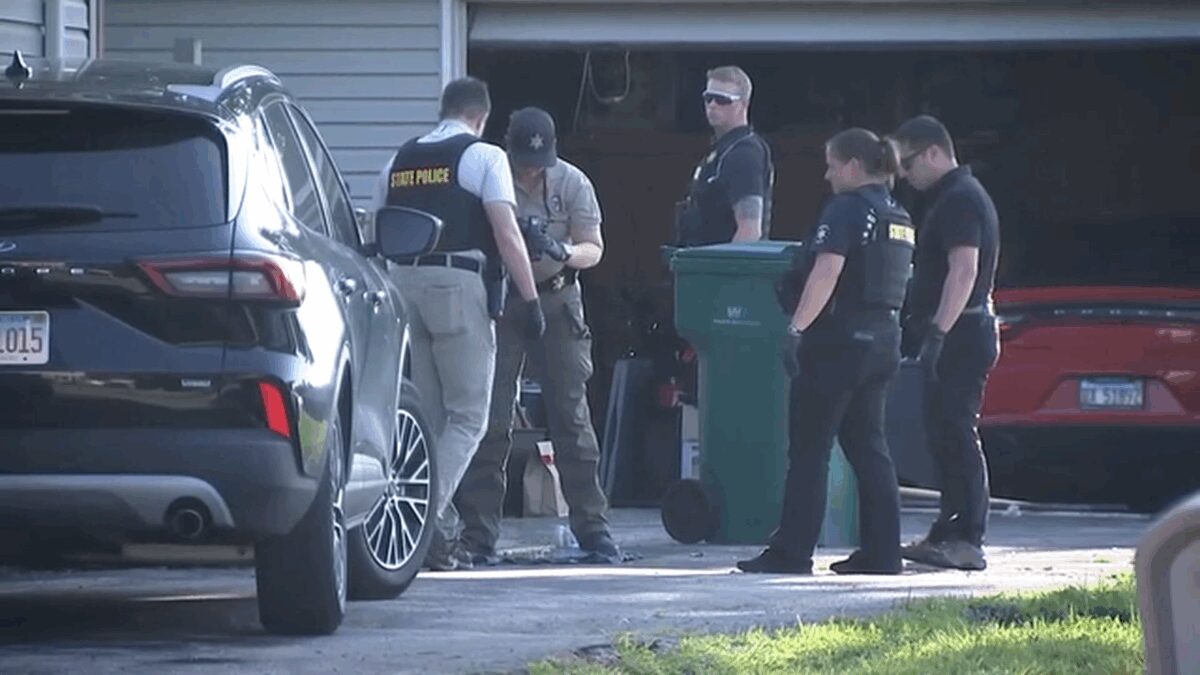
    CLEVELAND (WEWS) — Cleveland Police said that four current officers and four former employees have been indicted by the Cuyahoga County Grand Jury on multiple charges relating to the pandemic Paycheck Protection Program.

They’re accused of getting tens of thousands of dollars from COVID-19 loans, but prosecutors say they never had legitimate businesses.

Prosecutors say each received federal pandemic loans through the Paycheck Protection Program, ranging from $15,000 to $21,000.

But prosecutors say they never filed taxes for their businesses.

News 5 Investigators ran the names through multiple federal loan trackers, which claim the police officers and employees ran a barber shop, beauty salons, retail, child care, performing arts and security.

According to federal records, the loans were later forgiven.

According to a news release, the Cleveland Division of Police Internal Affairs received a complaint in November 2023 about possible criminal misconduct involving fraud.

During the initial investigation, two former officers were identified as potential participants. They both left the department in 2024, and their cases have already been adjudicated.

Former officer Anthony Shumpert was placed in the Cuyahoga County Diversion Program, and former officer Mackenley Weaver got 3 years’ probation.

According to Cleveland Police, another complaint was filed in June 2025 involving eight other individuals, four of whom are still employed as officers with Cleveland.

The grand jury returned indictments on charges including telecommunications fraud, grand theft and tampering with records.

Cleveland Police said the following current officers charged are:

Marcelous Fox, 35 (hired July 2021) Sierra Morris, 39 (hired July 2021) Andreaa Renshaw, 35 (hired January 2019) Tamara Smith, 41 (hired August 2019)

The current officers were all placed on unpaid leave.

Additionally, the former employees who have been charged are:

Kimmona Miller, 44 (hired January 2019) (Separated March 2019) TySean Darden, 32 (hired January 2020) (Separated August 2020) Devon Gresham, 29 (hired January 2019) (Separated March 2019) Terence Rouse, 27 (hired January 2020) (Separated March 2022)

Prosecutors say Miller, Darden and Gresham resigned before completing the police academy. Rouse resigned from Cleveland Police in 2022, and records show Rouse currently works part-time for Highland Hills police. News 5 Investigators have reached out to Highland Hills Police for comment.

“These indictments serve as a serious reminder that law enforcement officers are not exempt from the law,” said Cleveland Division of Police Chief Annie Todd. “As in all criminal matters resulting in indictments, the Division remains committed to due process and will take appropriate action following adjudication.”

Please note: This story was provided to CNN Wire by an affiliate and does not contain original CNN reporting. This content carries a strict local market embargo. If you share the same market as the contributor of this article, you may not use it on any platform.
World’s oldest nun, Sister Francis Dominici Piscatella, celebrates 113th birthday on Long Island

By Krista McNally

Click here for updates on this story

    AMITYVILLE, Long Island (WABC) — Born in 1913, Sister Francis Dominici Piscatella is the world’s oldest nun, according to Guinness World Records.

On Sunday she celebrated her 113th birthday.

“I have given up counting my years,” said Piscatella.

Piscatella joined the order of the Sisters of St. Dominic in Amityville in 1931 at the age of 17.

“I was a teacher and a Dominican sister, I had to show them that the fact I had half an arm couldn’t in any way impede me in any way, there was nothing I couldn’t do that a person with two hands could do,” Piscatella said.

An accident in her childhood left part of her arm amputated, but she was determined to succeed as a nun. She would not only keep up with the sisters, she would go on to teach countless others.

The Sister has spent nine decades serving the church — she taught high school students and was a professor at Molloy College for 52 years.

“She’s very sweet, has a lot of great life advice,” said her great-great-niece Alexa Grimley.

On Sunday, her family threw her a big birthday bash, to celebrate the milestone.

“It’s very kind of everybody who came and made this a lovely day,” Piscatella said.

A proclamation was given from Pope Leo at the party — he is the tenth pope to serve in Piscatella’s lifetime.

She says faith, family, and good fortune have given her a beautiful life.

Please note: This story was provided to CNN Wire by an affiliate and does not contain original CNN reporting. This content carries a strict local market embargo. If you share the same market as the contributor of this article, you may not use it on any platform.
Thieves steal airbags, leave at least a dozen cars trashed in New Jersey

By Sonia Rincón

Click here for updates on this story

    TEANECK, New Jersey (WABC) — Dozens of car owners are facing hundreds of dollars in repairs after thieves left a trail of destruction in a town in New Jersey.

Several Honda drivers across Teaneck woke up to broken locks and torn apart steering wheels on Wednesday morning.

“Airbag was gone, completely gone. And then I went in the house and I’m almost crying,” said Teri Barnes, who found her airbag stolen. “And I told my youngest daughter. And she comes out and she looks at her sister’s car, her airbag is stolen, and then she looks at hers. Her airbag is stolen.”

Three cars in one family were left damaged despite being parked on the safe, residential street of Madison Avenue.

“I feel hurt. That somebody came, and we don’t know who, we don’t know where they’re from, came and violated, my two daughters and myself and my neighbor,” Barnes said.

A neighbor’s camera captured footage, showing how fast the culprits were able to rip the airbag out of her car.

The thieves broke the locks but sometimes smashed the windows on Lucy Avenue.

One college student said it ruined her day.

“Yeah, I cried. Because, like, I had an early morning class,” Hyojin Jeon said.

Teaneck Mayor Mark Schwartz says he’s confirmed 11 incidents between 1 and 2 a.m., but police are taking reports of dozens more.

“One car was actually stolen, and the reason why it was stolen was when they go to grab the bag, to check, to see if the car is on or could be turned on in. And the fob was in the car,” Schwartz said.

Honda airbags seem to be the new Hyundai catalytic converters.

A club across the steering wheel can serve as a deterrent, so can cameras.

“Make sure your cameras are there. Perhaps park in the driveway,” Schwartz said. “It shouldn’t be the way people live, but unfortunately, that’s a time that we’re dealing with right now where cars are expensive, repair pricing is expensive, and of course, airbags are in need after every accident.”

Barnes said she filed a claim.

“I don’t know how much it’s going to be, but I know the deductible is $500,” Barnes said.

Without insurance, properly replacing an airbag can set you back a couple thousand dollars.

Teaneck’s mayor told Eyewitness News the thieves, in most cases on Wednesday morning, picked cars on streets that were close to Route 4, where they could make a quick getaway.

Please note: This story was provided to CNN Wire by an affiliate and does not contain original CNN reporting. This content carries a strict local market embargo. If you share the same market as the contributor of this article, you may not use it on any platform.
Off-duty officer saves goalie who went into cardiac arrest before hockey game

By CeFaan Kim

Click here for updates on this story

    HACKENSACK, New Jersey (WABC) — An off-duty officer attending a hockey game in Hackensack jumped into action when one of the goalies collapsed and went into cardiac arrest.

Oradell Police Officer Frank Stefano is proof that being a cop is a 24/7 job.

They regularly undergo CPR and AED training.

And after almost a decade on the job, he’s had to spring into action several times.

But never while off duty, until last night.

Stefano plays in a hockey league at the Ice House in Hackensack.

During warm-ups, the opposing team’s goalie collapsed after being dizzy and nauseous.

He was alert and conscious, but within minutes, the goalie was not breathing and went into cardiac arrest.

That’s when Stefano’s training kicked in.

“A person will turn white, almost grey, you know, their skin tone is completely flushed. He was unresponsive, not breathing. He didn’t have a pulse and then I quickly started CPR test compressions at that time,” Stefano said.

His wife called 911 and screamed for someone to grab the AED off the wall.

Stefano shocked him once.

“Gave him another shock and resumed chest compressions, and he shortly came back to us again. He started blinking his eyes and I started asking him, ‘What’s your name, what’s your name?’ He was able to with some trouble, he was able to tell me what his name was,” Stefano said.

He said seconds matter.

The goalie is recovering in the hospital and is grateful to Officer Stefano for saving his life.

Please note: This story was provided to CNN Wire by an affiliate and does not contain original CNN reporting. This content carries a strict local market embargo. If you share the same market as the contributor of this article, you may not use it on any platform.

‘Million-dollar tip’ leads former musician to olive oil glory

By Richard Gearhart

Click here for updates on this story

    California (KSBY) — Tucked into the West Hills of San Miguel, 1,100 Tuscan olive trees are about to bloom, and their owner is checking every branch.

“We look for the spacing on the leaves and how everything is spaced. If they stay, we’ll have a beautiful harvest,” said Richard Meisler, San Miguel Olive Farm owner.

Meisler and his wife, Myrna, have turned what were once ten vacant acres into one of the most decorated olive farms in America. This past winter, they won five more medals at the New York International Olive Oil Competition — three gold and two silver.

“With all due respect to everybody else that wins awards, we are number two in the United States,” Meisler said.

San Miguel Olive Farm is also ranked number seven in the world, according to the Olive Oil Times.

But Meisler didn’t originally come to the Central Coast to farm. How he ended up here is part timing and part luck.

He was a drummer and played in a band in Southern California, mostly at country clubs, weddings, and holiday parties. But then, at one of those parties, a home builder handed him what he still calls the tip of a lifetime.

“He says, you need to retire someday, you must buy a piece of property. He says, this tip you can put in your pocket. It’s a million-dollar tip,” Meisler explained.

That turned out to be true. The tip sent him north to San Miguel. Later, a family member suggested olive trees. Richard and Myrna planted their first tree in 2006, and they learned the rest as they went along.

“We harvest by hand. Everything is done by hand. Once they’re cleaned and iced, to the mill as fast as you can go — within three hours.”

The result of 20 years of learning is a chemistry that wins gold, low acidity and high polyphenols, the compounds linked to olive oil’s health benefits. But maybe, the most important ingredient is passion.

“The passion that people should have is missing,” Meisler said. “I dream how to get to the next level. If I don’t make a gold, I’ll make a silver.”

Lots of awards and medals later, their biggest problem now is the best problem a small farm can have.

“He says, ‘I’d like to buy your oil.’ And I said, ‘We have nothing to sell. We’re out of oil.'”

The next harvest and the next chance to buy some oil are in November. Until then, Meisler is pruning, running the tasting room with Myrna, and focusing on what’s next.

“The secret to good business is the passion. You have to be ‘steady Eddie.’ You can’t waver. If you waver, it’s over.”

Oil from San Miguel Olive Farm is sold exclusively online. And if you want some, you may want to pre-order.

Please note: This story was provided to CNN Wire by an affiliate and does not contain original CNN reporting. This content carries a strict local market embargo. If you share the same market as the contributor of this article, you may not use it on any platform.

Couple convicted in ‘kill list’ manifesto case

By KIVI Staff

Click here for updates on this story

    BOISE, Idaho (KIVI) — A married Boise couple who wrote a manifesto that included a “kill list” have been found guilty by an Ada County jury of a combined 122 counts of stalking, witness intimidation, and threats involving multiple victims.

According to the Ada County Prosecutor’s Office, 43-year-old Daniel Harms and 39-year-old Lynn Harms sent an email to thousands of recipients that included a 277-page manifesto, which they referred to as a “kill list.” In the document, the couple calls for killing several persons, including members of Table Rock Church, a church that the Harms previously attended. The documents also called for the deaths of police officers and public officials.

The document included a direct command to its recipients that states: “Go. Hunt. Kill.” followed by the names and addresses of the targeted individuals.

The manifesto was also posted on various social media platforms.

Twenty of those named in the manifesto obtained civil protection orders. However, those orders were repeatedly ignored. The couple is said to have sent certified mail to the victims following the orders and continued to post the manifesto to social media.

In court, 20 victims testified to that harassment, saying it resulted in psychological and emotional harm.

“This case involved repeated, deliberate, malicious threats by the defendants that had more than 20 victims fearing for their lives,” said Ada County Prosecutor Jan Bennetts. “The jury’s verdict reflects the seriousness of that conduct and the impact it had on the victims involved. Protections for victims exist for a reason, and violations of them will be prosecuted.”

Daniel and Lynn Harms represented themselves throughout the case.

Ada County Judge Cynthia Yee-Wallace revoked bail for the couple and has ordered psychological evaluations.

Sentencing is scheduled for July 20. The defendants face up to more than 200 years in prison. They are being held in Ada County Jail.

Please note: This story was provided to CNN Wire by an affiliate and does not contain original CNN reporting. This content carries a strict local market embargo. If you share the same market as the contributor of this article, you may not use it on any platform.

Idaho couple donates 330 acre ‘oasis’ to land trust to create a nature preserve instead of subdivisions

By Lorien Nettleton

Click here for updates on this story

    TWIN FALLS, Idaho (KIVI) — The breakneck pace of growth in Southern Idaho has seen more and more open spaces transform into subdivisions, but one couple has a different vision for the future of their land.

Melody and Charlie Lenkner, who have owned a 330-acre property south of Twin Falls since the 1980s, chose to donate their land to the Magic Valley Land Trust rather than sell it to developers.

The parcel, located at the base of the South Hills, will become the Cottonwood Canyon Nature Preserve.

“Several developers have approached us to buy it because they’re purchasing land all around it. We [realized] would be rolling over in our graves if we saw that… if we heard in our little graveyard that it turned into a development,” said a laughing Melody Lenkner.

“It’s really a way of keeping a little piece of what used to be,” added Melody.

The property is covered in sagebrush, with Cottonwood Creek forming a canyon and a pond through the center of it all.

The couple wanted the land preserved as a place where the public could gently interact with wildlife.

“And I guess in the back of our minds, we have that as an idea. So bless the land trust, that they have taken that responsibility on,” Melody Lenkner said.

Charlie Lenkner seconded the sentiment, saying, “It’s like a godsend as far as our aspirations.”

Karl Ruprecht, a board president of the Magic Valley Land Trust, has visited the property the past couple of years to prepare the land for its future as a preserve.

“And really, what we found— it’s a nice oasis in the desert,” explained Ruprecht. “It attracts a surprising amount of wildlife.”

“Lots of mule deer, coyotes, badger, river otter, wood rats, kangaroo rats, two kinds of skunks, porcupine— they’re a pretty big variety of stuff is out here— so that’s really neat,” Ruprecht said.

The Magic Valley Land Trust has helped landowners secure conservation easements on 15 properties, mostly farming properties with scenic or historic value, to protect them from being developed into subdivisions. However, the Cottonwood Canyon Nature Preserve will be different.

“We are going to own and manage it with public access so the people of the Magic Valley can enjoy it indefinitely,” added Ruprecht.

“My whole life growing up there in southern Idaho, I have gotten so much benefit from— you know— the canyons, the parks in the canyons, and the public land,” Ruprecht said.

“The Magic Valley is growing so quickly right now, and there are a lot of wonderful things that come with that,” said Ruprecht. “We want people to live here and have great places to live, but it’s also important to preserve a few of the special places. And they’re going to become more and more valuable as the population grows.”

A few things need to get ready before the preserve can open to the public, including parking and gates. Ruprecht expects it to be open to the public within a year. “It’s just going to be a quiet, peaceful place to walk on trails and observe wildlife.”

This story was initially reported by a journalist and has been, in part, converted to this platform with the assistance of AI. KIVI’s editorial team verifies all reporting on all platforms for fairness and accuracy.

Please note: This story was provided to CNN Wire by an affiliate and does not contain original CNN reporting. This content carries a strict local market embargo. If you share the same market as the contributor of this article, you may not use it on any platform.

Scam stopped: UPS Store employee saves resident from $15,000 loss

By Don Davis

Click here for updates on this story

    GREEN VALLEY, Arizona (KGUN) — A Green Valley resident was spared a $15,000 loss after a vigilant UPS Store employee flagged suspicious activity April 16, prompting Pima County Sheriff’s Department (PCSD) detectives to intervene before the cash was shipped.

Deputies say the GV resident arrived at the UPS Store at 190 W. Continental Road seeking to send the cash. Detectives tell KGUN that sending cash through parcel services is a major red flag for fraud, and the employee was also aware of this, so they contacted the PCSD Fraud Unit hotline.

When questioned by investigators, the victim reported being contacted by someone posing as a bank employee who instructed them to wire money and send cash to another individual, claiming bank staff were distributing counterfeit currency and asking the resident to assist in an “investigation.” PCSD added the suspected fraudster was most likely not local, and officials have found no evidence of a local connection.

Because of the store employee’s report, detectives were able to stop the shipment and recovered the $15,000; the money was returned to the resident on April 20. During follow-up interviews, fraud detectives also learned the GV resident had previously wired $17,274.71 as part of the suspected scam. PCSD detectives are actively working to recover those wired funds.

The case remains under investigation, and no arrests have been made. PCSD said similar schemes have been reported in the area and that, while some have been prevented, many victims only learn they’ve been scammed long after money has been sent.

PCSD urged residents to remain vigilant: banks will not call customers asking them to help with internal investigations, and people should never send cash through any parcel delivery service. Anyone who suspects they may be the target of a scam is encouraged to contact the Pima County Sheriff’s Department Fraud Unit for guidance.

Please note: This story was provided to CNN Wire by an affiliate and does not contain original CNN reporting. This content carries a strict local market embargo. If you share the same market as the contributor of this article, you may not use it on any platform.

Second border wall construction underway in Southern Arizona

By Athena Kehoe

Click here for updates on this story

    NOGALES, Arizona (KGUN) — More than 13 miles of a new secondary border wall have been built along the southern border since Jan. 20, according to U.S. Customs and Border Protection, with more construction now underway in southern Arizona.

Crews are already working in remote areas near Nogales. The second barrier is part of what CBP calls a “Smart Wall,” which will create an enforcement zone.

The project is funded through the One Big Beautiful Bill Act, which includes $46.5 billion for Smart Wall construction. The funding is being used to build new primary barriers, add secondary walls and waterborne barriers, and install system components such as detection technology, cameras, lighting and patrol roads.

CBP says the goal is to create multiple layers that slow crossings and guide people toward ports of entry, where agents can respond more easily.

Secondary barriers are not new. CBP began building them in the San Diego area in 2018, creating space between two walls. Similar plans are now in place for more than 60 miles of border in southern Arizona, including areas between Nogales and Naco and extending toward Douglas.

But, the expansion is drawing some criticism.

“A secondary wall will create a dead zone that will affect most of our public lands,” said Erick Meza of the Sierra Club, a grassroots environmental organization. He said the group has pushed for wildlife crossings in the region and worries animals could become trapped between the two barriers.

“So now if a creature is even able to make it to one of these wildlife passages, it’s going to be trapped in between these two walls,” Meza said.

I reached out to Santa Cruz County Sheriff David Hathaway for a statement.

Neither a primary wall nor a secondary wall is necessary. This is un-American and is a symbol of oppression that harkens back to the oppressive days of the Stasi ruthlessly enforcing the Berlin Wall in East Germany until President Reagan rightfully insisted that the wall be torn down. Americans should be jealous of their freedoms and should realize that Americans are now being searched by American authorities as they leave the U.S. going into Mexico. Walls are ostensibly intended to keep people out, but they can also keep people in.

Sheriff David Hathaway

CBP says that border barriers and related infrastructure remain a key part of its strategy and says tools like its Smart Wall Map track construction and planning along the approximate 1,954-mile U.S.-Mexico border.

Concertina wire is being implemented in some parts. According to CBP, concertina wire is what the military uses. It is designed to snag clothing and prevent somebody from going through it, or to significantly slow them down.

Some of the construction is taking place on Coronado National Forest land. I reached out them asking how construction works on their land.

The Forest Service’s role is limited to managing the surrounding forest lands outside the construction footprint and has no approval or decision-making authority over border barrier construction. Temporary closures are in place for certain roads and trails in the border region for public safety and visitors should check the Coronado National Forest website [fs.usda.gov] for more information.

USDA Spokesperson

Construction in southern Arizona is expected to continue for the better part of the next two years.

Please note: This story was provided to CNN Wire by an affiliate and does not contain original CNN reporting. This content carries a strict local market embargo. If you share the same market as the contributor of this article, you may not use it on any platform.