Mexico faces critical USMCA talks as manufacturing shifts threaten Juárez

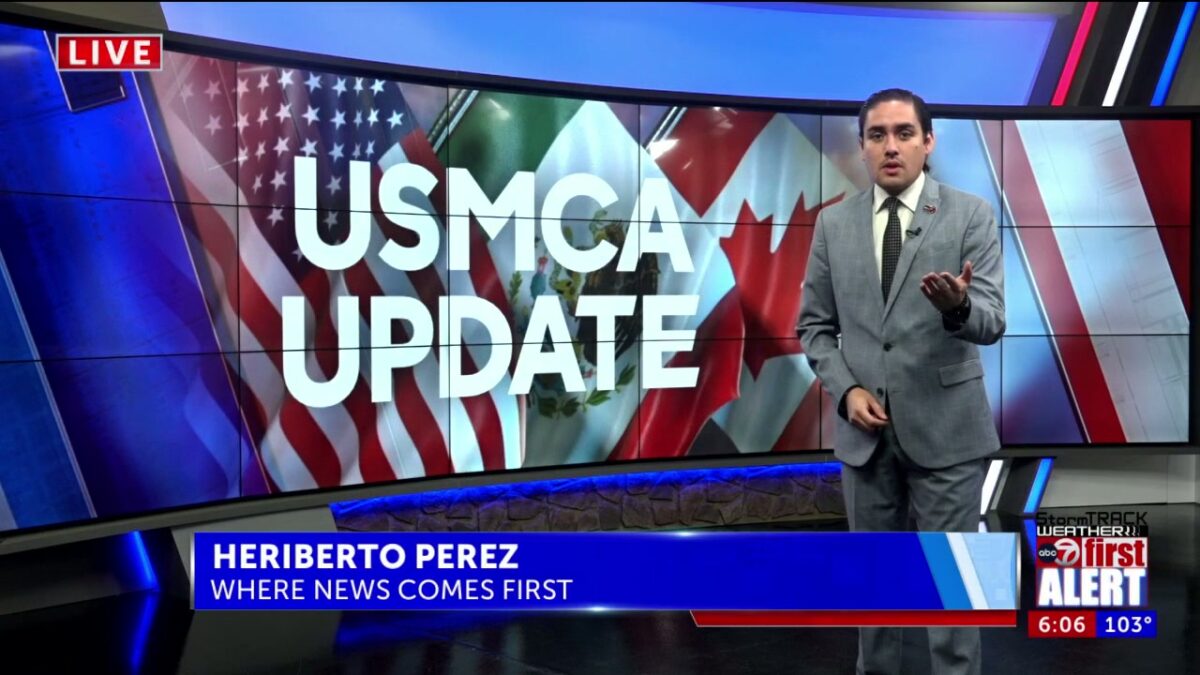
UPDATE (3:30 p.m.): A joint call from the Mexican presidency and U.S. Trade Rep. Jamieson Greer to strengthen supply chains has prompted a “rallying cry” for domestic sourcing within Ciudad Juárez, Chihuahua.
This initiative comes during the third round of USMCA renegotiations, highlighting the maquiladora industry’s annual expenditure of more than 540 billion pesos on inputs, predominantly sourced from Asia.
Industrial production across the region largely operates under the maquiladora model. However, Mexico historically failed to establish local production of inputs as originally envisioned, allowing Asia to become the primary supplier.
As a result, more than 70% of the inputs used by the maquiladora industry in the Juárez area originate from Asia, with less than 4% of the total currently sold locally.
Marcelo Vázquez Tovar, delegate for the National Association of Importers and Exporters of the Mexican Republic (ANIERM) in Chihuahua, noted that the United States is now seeking Mexican inputs instead of Asian ones.
“Today, the United States no longer wants Asian inputs; it wants Mexican inputs, yet there are no manufacturers,” delegate Vázquez Tovar said.
He explained that due to an ongoing tariff war, it is no longer profitable for manufacturers to continue importing components from Asia, where quality was often inferior to what Mexico previously offered.
The maquiladora industry in Ciudad Juárez represents a colossal market, valued at more than 540 billion pesos annually.
Vázquez Tovar highlighted that necessary factories were never developed and the few that existed in the 1980s ceased innovating as Asian imports became cheaper.
“This USMCA renegotiation represents a crisis that can turn into an opportunity to do what we failed to do for nearly 40 years: sell inputs to the maquiladora industry,” Vázquez Tovar also said.
To address this historical lag, Tovar proposed focusing initial efforts on components that are easier to produce and are in high demand.
These include simple parts, machined components, stampings and circuit boards for the electronics sector, which is currently experiencing a boom in the region. Delegate Vázquez Tovar also outlined a coordinated strategy to achieve this shift.
The first step involves enlisting support from the government and maquiladoras to precisely determine needed products and components that are no longer cost-effective to import from Asia.
The second aspect calls for strategic working sessions with the federal Secretariat of Economy and the State Government’s Secretariat of Innovation and Economic Development (SIDE) to facilitate the creation and expansion of Mexican factories jointly.
Finally, the strategy emphasizes consolidating lobbying efforts, agreement-building and investment to instill confidence in the business community and foster necessary dialogue between the private sector and authorities.
“Juárez has faced many crises of all kinds and has overcome them all and now is the time to take whatever steps are needed to create and strengthen factories that produce inputs,” delegate Vázquez said. “It is not impossible; here in Juárez, anything is possible.”
CIUDAD JUÁREZ, Chihuahua (KVIA) — As the third round of United States-Mexico-Canada Agreement (USMCA) renegotiations begins in Mexico City, ANIERM delegate Marcelo Vázquez Tovar warned of critical challenges facing Chihuahua’s industries.
To counter U.S. pressure and labor disputes, experts urge Mexico to prioritize domestic input substitution and technological development to reclaim industrial sovereignty.
The third bilateral round of USMCA renegotiations between Mexico and the United States took place this past Tuesday, Wednesday and Thursday in Mexico City.
This week, the U.S. Trade Representative/Ambassador Jamieson Greer testified in front of the Senate Finance Committee, where he said during the review process, it is clear from President Trump’s perspective that if the US wants to have a beneficial trading relationship with Mexico and other arrangements, this must happen:
“They also need to be playing ball on this issue; obviously, there are border security issues, there are a variety of issues that aren’t right in my wheelhouse, but the president is going to have a hard time agreeing to renewal or even revisions if Mexico isn’t playing ball and all areas in the water treaty are one of them.”
Ambassador Greer then traveled to Mexico City to meet with Mexican Secretary of Economy Marcelo Ebrard and with Mexican President Claudia Sheinbaum.
Negotiating teams addressed critical issues including metal tariffs, automotive sector rules of origin, transshipment and labor conditions; other key issues include declining automotive exports affecting local maquiladoras.
These discussions hold significant implications for local economies in regions like Juárez and Chihuahua.
Marcelo Vázquez Tovar, delegate for the National Association of Importers and Exporters of the Mexican Republic (ANIERM) in Chihuahua, called for an analysis of the risks and opportunities facing the local industry ahead of the negotiations.
According to Vázquez Tovar, the agenda’s key topics directly impact the region’s economic stability.
The trade in steel and aluminum, along with their derivative products, has significantly impacted maquiladoras and local workshops south of the border.
These entities, which produce machined parts and other inputs for export or local supply chains, are struggling to source these materials because Asia remains the primary supplier.
The automotive industry in Juárez and Chihuahua has seen its exports fall directly due to tariffs; this has led to a sharp decline in automotive employment in Juárez.
Japanese automakers like Honda and Toyota have modified operations to avoid these tax burdens.
North American economic security and the issue of transshipment are also under discussion.
The United States seeks to prevent inputs from outside the USMCA region from indirectly benefiting from the agreement.
More than 80% of the inputs imported into Juárez originate in Asia, making the region a significant bridge between Asian inputs and finished products for the United States.
The United States aims for everything to be produced within the USMCA region, which requires Mexico to rebuild its domestic industry, as almost half of Mexico’s industrial employment is within the maquiladora sector.
In Juárez, maquiladoras account for more than 70% of industrial employment, a trend that Mexico needs to reverse as the domestic industry has eroded due to the growth of this sector, according to Vázquez.
Labor conditions and compliance with union commitments are another key negotiation point.
A study by the Baker Institute for Public Policy indicates that a worker in the United States earns $307 a day, while the same job in Mexico pays only $32 a day.
The United States has invoked a Rapid Response Mechanism 48 times and prevailed in every instance, resulting in rising wages and benefits in Mexico.
U.S. Trade Rep. Jamieson Greer made it clear that Washington will seek greater benefits for U.S. manufacturers, farmers, ranchers, workers, service providers and companies. For Mexico, the negotiations put at stake millions of jobs, investments, exports, automotive plants, agricultural enterprises and industrial supply chains that depend on favorable USMCA conditions.
The automotive industry, once a source of pride in Juárez, could face new demands regarding component origin.
The steel and aluminum sectors will remain under scrutiny and agricultural producers will need to comply with stricter controls.
Mexican companies and maquiladoras may be required to prove their goods genuinely meet North American rules of origin; this third round will serve as a test of strength for both governments.
“Mexico needs to defend its exports and jobs, while the United States seeks to tighten rules and protect its own industry,” said ANIERM delegate Vázquez. “Regardless of the negotiation outcomes, Mexico’s path forward involves relearning to produce by revitalizing its industry, starting with simpler inputs like plastics, springs and screws, and developing technological capabilities to supply U.S. companies.”
Click here to follow the original article.