State auditor urges Kehoe to balance budget as Missouri continues to cut into reserves

Marie Moyer
JEFFERSON CITY, Mo. (KMIZ)
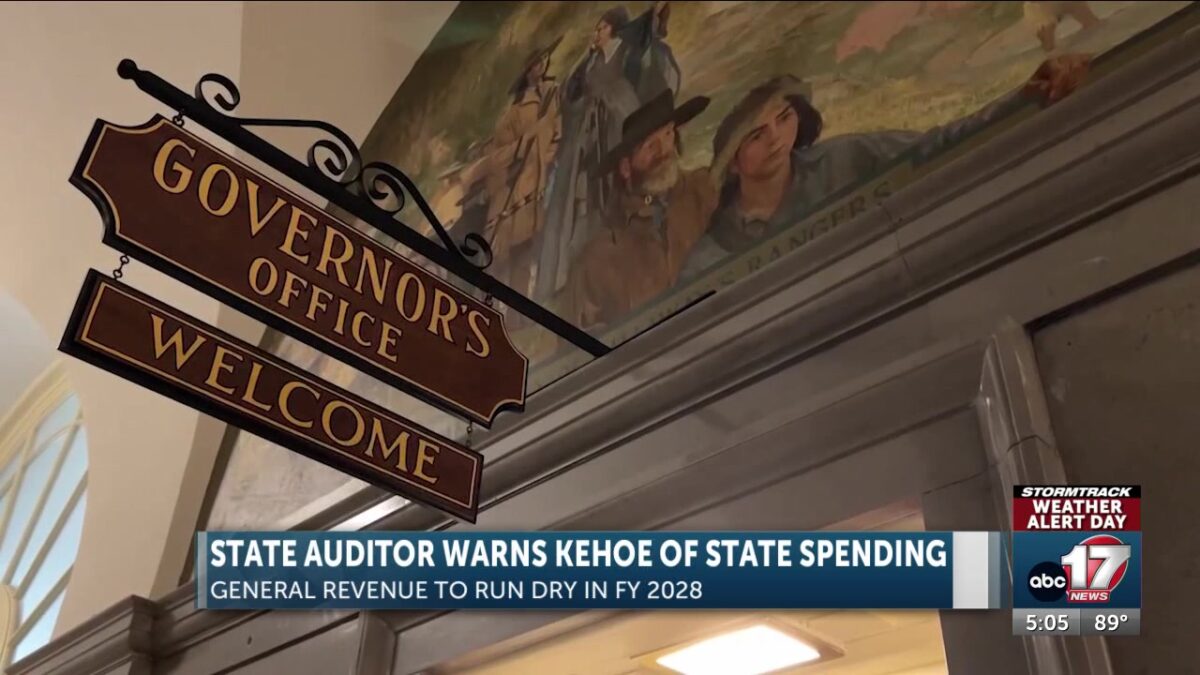
State Auditor Scott Fitzpatrick on Wednesday urged Gov. Mike Kehoe to balance the state’s budget, saying current spending is jeopardizing Missouri’s fiscal health.
Fitzpatrick stated in a news release that the fiscal 2027 budget increased spending from the state’s general revenue fund. The state is expected to spend more than $1.7 billion for the year. At this rate, Fitzpatrick expects the fund to shrink from around $5.8 billion in fiscal 2023 to around $600 million by the end of fiscal 2027, with the fund being fully depleted by early fiscal 2028.
“Missouri’s budget is broken,” Fitzpatrick wrote in his report. “Expenditures are projected to be nearly $2 billion more than revenues for FY 2026 and instead of reducing appropriated amounts to correct this, appropriations increased.”
State auditor’s general revenue fundDownload
“The numbers are right there in black and white, and unfortunately lots of red, and they show a trend of deficit spending that cannot be sustained and that continues to jeopardize our state’s financial health,” Fitzpatrick wrote.
Kehoe is reviewing the budget approved by the state legislature last month. Missouri’s governor enjoys line-item veto power over the budget.
According to a statement from Kehoe’s office, “All legislation, including appropriations bills, sent to the Governor’s desk receives a thorough review by Governor Kehoe and his team. This review is underway now.”
The statement added that Kehoe previously used budget restrictions during the last budget.
Fitzpatrick adds his office is advising Kehoe in reducing state spending with the state’s top areas of spending being Medicaid, K-12 education, higher education and corrections.
“When you end up in a situation like we’re in right now, there are going to be difficult decisions that have to be made and everything is going to be on the table,” Fitzpatrick said. “Now, instead of going 100 mph to a brick wall, maybe we’ll bump into it if we slow down the spending this year instead of waiting until next year.”
Fitzpatrick’s report includes warnings for the state if Missouri’s tax revenue fails to perform. He also warns of increased costs to balance the budget.
“In FY 2028 and beyond, there will likely be hundreds of millions of dollars in additional ‘mandatory’ increases throughout the state budget,” according to the report. “Examples of mandatory increases include Medicaid utilization, funding for children with disabilities, and utility cost increases for state government.”
Opponents agree with Fitzpatrick’s statement on action being taken to change the budget now. However, they argue that cuts aren’t the only solution.
State nonprofit group Missouri Budget Project, and Ranking Minority Member of the House Budget Committee Betsy Fogle (D-Springfield), argue this is also a state revenue issue.
“We really have a revenue problem that ties back to years and years of tax cuts that have been heavily weighted toward the wealthy and corporations,” Missouri Budget Project Research Director Lindsey Baker said. “We can choose to close many of those loopholes and roll back those tax cuts in order to address that funding shortfall so we don’t have to cut those services.”
Lindsey also touched on financial relief given out during the COVID-19 pandemic era drying up, which the state leaned on in previous budgets.
“Just like in your home, you have to have an income to pay your bills, state government is no different, you can’t separate out the conversation of the budget from revenues,” Fogle said.
The budget approved by the Missouri General Assembly includes $4.3 billion set aside for the state’s Foundation Formula that funds public schools, falling short of what the Missouri Department of Elementary and Secondary Education requested by around $190 million.
The Department of Mental Health gets about $1.7 billion in general revenue in the legislature’s budget. The Department of Health and Senior Services is also getting about $614 million from general revenue.
Fogle adds that during budget talks, several one-use funds like the blind pension fund and capital commission dollars, helped keep the budget afloat.
“Those options will become limited in the years to come,” Fogle said. “I think this is the time for us to take a good hard look at what are the things that are working for our state.”
Before the budget discussion, Kehoe’s proposed budget included about $600 million in cuts to the core operating budget, reducing total spending from $55.1 billion in fiscal year 2026 to $54.5 billion in fiscal year 2027.
The warnings come as Missouri’s Republican majority is pushing to phase out the income tax, making up the gap with increased taxes on goods and services. The question will appear on the August primary ballot.
Fitzpatrick warned in December that changes to the budget were needed or else the state’s budget would run dry in the next few years.
The 2027 fiscal year begins July 1.