13 indicted, accused of transporting stolen vehicles to Mexican cartels

Heriberto Perez Lara

EL PASO, Texas (KVIA) — Thirteen people face federal charges in El Paso for allegedly transporting stolen vehicles from the U.S. to Mexico, U.S Attorney Justin Simmons announced Monday.

Monday, Simmons hosted a press conference at the U.S. Attorney’s Office in El Paso to announce the charges. Officials from Homeland Security Investigations, the FBI and other federal agencies attended. Together, the agencies united as part of the Homeland Security Task Force (HSTF).

The HSTF started this spring after federal agencies and prosecutors noticed a trend of stolen private and rental vehicles allegedly being transported to criminal organizations in Mexico, the U.S. Attorney’s Office said.

Prosecutors said the stolen vehicles were driven to El Paso and delivered across the border to Mexico.

The U.S. Attorney’s Office said the investigation led to the recovery of 29 vehicles, valued at $1,137,000.

During the investigation, authorities indicted two U.S. citizens: Kimberly Aguilar and Marty Gerardo Jr. Both are in state custody, officials said.

Eleven others have been federally indicted and arrested 11 others, nine who are U.S. citizens:

David Monarrez Cesar David Diaz Sinuhe Baltizar Lopez Christopher Rene Reyes Angel Antonio Flores Aaron Fernando Luna-Evans Amy Foote James Dewey Garrett Hilario Abraham Morales

The remaining two are Mexican citizens, according to officials:

Pablo Frias Pilar Bernabeth Mendez Rivas

Watch a recording of the HSTF’s press conference in El Paso above.

Click here to follow the original article.

Sheriff’s office requests over $17 million for tech amid budget shortfall

Mia Tricarico

EL PASO, Texas (KVIA) —  The El Paso County Commissioners Court is expected to tackle financial decisions regarding the El Paso County Sheriff’s Office on Monday. However, commissioners voted to cancel the item.

Commissioners were set to consider balancing a multi-million-dollar operating deficit, technology acquisition requests and grant applications.

Financial presentations on the agenda show that the Sheriff’s Office’s salary and benefits budget reached 108% usage as of Oct. 14, driven primarily by staffing shortages and mandatory overtime required to staff county detention facilities.

County budget and finance staff are expected to present an updated plan to resolve the deficit as commissioners review both the FY 2026 and FY 2027 department budgets.

Despite the operational shortfall, the Commissioners Court will also consider several major expenditure items and multi-year funding requests:

More than $17 million in safety and communications technology: Commissioners may consider approving a $5,178,467 contract with Axon Enterprise, Inc. for body cameras and safety technology, as well as an estimated $11,999,495 system contract with Motorola Solutions, Inc. for sheriff and constable operations. DOJ grant applications: The Sheriff’s Office is seeking authorization to apply for a $500,000 federal DOJ ANGEL grant and a $337,720 Patrick Leahy Bulletproof Vest Partnership grant, which would require a $168,860 local county match. Routine budget amendments: Two internal budget transfers are on the table to reallocate existing funds: $22,323 to cover Sheriff’s Department medical expenses for FY26, and $8,515 to cover courthouse security overtime during elections for FY27. Neither amendment increases the county’s overall budget.

The sheriff’s office told ABC-7 it’s evaluating staffing assignments and identifying opportunities to improve efficiency.

“Our focus is making responsible financial decisions without compromising safety,” the sheriff’s office said.

County Commissioner Iliana Holguin said she’s optimistic the deficit will level out. Commissioners are considering bringing in a third-party consultant to help with the deficit.

The county said it plans to present and address the deficit on Nov. 30.

Click here to follow the original article.

Cole County deputy injured in Missouri Boulevard crash

Matthew Sanders

COLUMBIA, Mo. (KMIZ)

A 31-year-old deputy was injured in a crash on Missouri Boulevard in Jefferson City on Sunday.

Cole County Sheriff John Wheeler said in response to an email that the male deputy was treated for injuries that were not life-threatening and released from the hospital.

The Jefferson City Police Department, which is investigating the crash, would NOT release the sex of those involved.

According to a JCPD news release, the deputy was driving a Ford Explorer in the 3500 block of Missouri Boulevard when a Dodge Journey cut the deputy’s cruiser off by trying to pass another vehicle using a left-turn lane. The Explorer rear-ended the Journey, spun and hit a Jeep Compass that had pulled over to let the deputy pass, according to the release.

The deputy was responding to a call with lights and sirens activated, JCPD reported, but was not wearing a seatbelt.

The deputy was taken to a hospital for moderate injuries, according to the release.

Two people in the Compass — one 61 years old and one 67 years old — were evaluated at hospitals for minor injuries, the release states. Two people in the Journey — ages 51 and 71 — suffered minor injuries.

JCPD is still investigating the crash, according to the release.

Click here to follow the original article.

Columbia celebrates $37 million water treatment plant upgrade, but not everyone is taking a victory lap

Mitchell Kaminski

COLUMBIA, Mo. (KMIZ) 

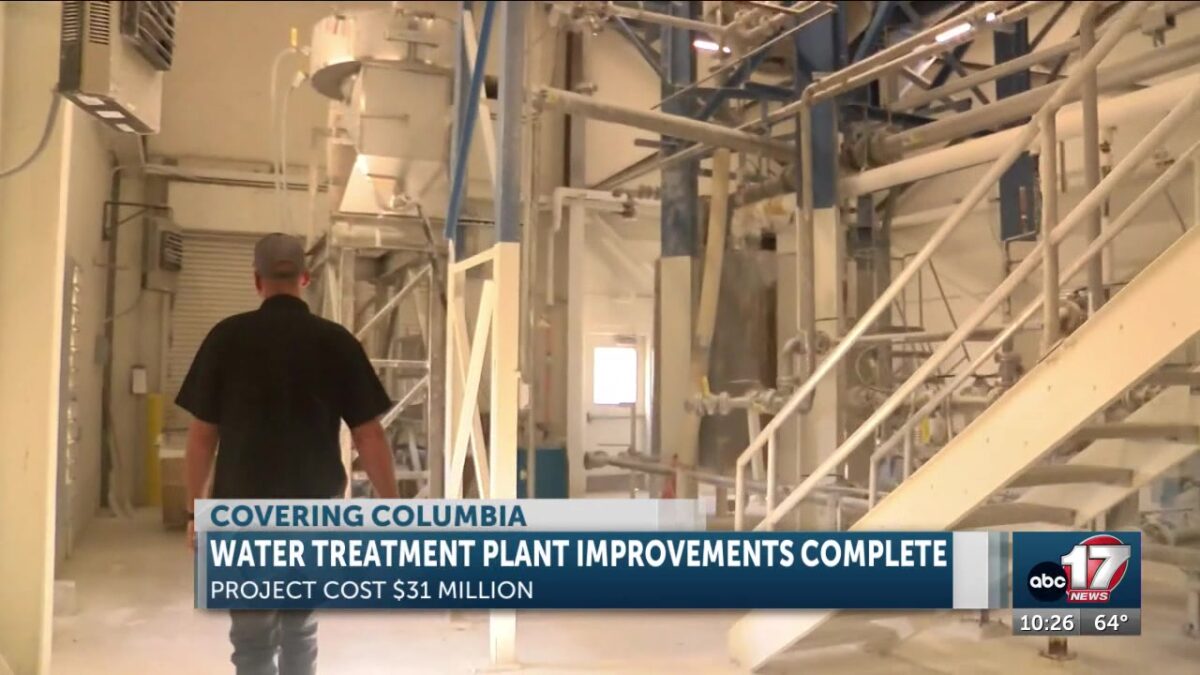
The City of Columbia celebrated the completion of a $37 million upgrade to its water treatment plant Monday, restoring the facility’s ability to treat 32 million gallons of water per day.

But while city officials touted the improvements, the COMO Safe Water Coalition questioned the project’s timeline and said additional work is needed to address water quality concerns.

The ribbon-cutting ceremony marked the completion of improvements at the McBaine Water Treatment Plant, which was built in 1970 and had not undergone a major equipment upgrade until now. The project included rehabilitating and replacing aging equipment, as well as constructing a new chemical building with additional safety features and efficiency improvements.

Columbia Utilities Director Erin Keys said the upgrades will allow the plant to better meet the needs of the growing community for decades to come.

“Some of the equipment and things that we had, we weren’t able to produce our full 32 million gallons a day,” Keys said. “With this upgrade, we have that capability now.”

Keys added the new chemical building brings chemicals closer to where they are added during the treatment process and provides more safety mechanisms for staff.

Columbia Mayor Barbara Buffaloe said the project represents a critical investment in the city’s ability to provide reliable drinking water.

“As the sole provider for most of our residents for clean, reliable drinking water, this is obviously a reinvestment in that infrastructure that is so important to everybody and everyone’s home,” Buffaloe said.

She added residents should not notice a difference in the water coming from their taps, as the upgrades primarily affect the treatment process behind the scenes. Buffaloe also credited city officials with maintaining safe drinking water throughout construction.

“I think the important thing is that the residents won’t see a difference. They turned on their faucet yesterday. They turned on their faucet today. There’s no change. They’re still getting clean, drinking water. But it was all on the back end, making sure that we were able to continue that service,” Buffaloe said.

The project traces back to a 2018 bond vote, when voters approved funding for utility improvements. Work on the water treatment plant project began in 2023.

“Appreciate the voters. Because they approved the bonds in 2018, and that’s what helped fund this project,” Keys said.

The project’s price tag increased from an earlier $24 million estimate discussed in 2022. The total cost was approximately $37 million, including $4.7 million for engineering and $32.4 million for construction.

Buffaloe said the COVID-19 pandemic delayed design and construction, while rising costs afterward contributed to the need to sell bonds to fund the work.

“Sometimes government moves slow, but that’s because it has to make sure that we get this right. This is a major investment from our ratepayers and our taxpayers,” Buffaloe said. “This started with the 2018 bond vote. Obviously, the pandemic put a big pause in the construction, or even just the design of it. Then obviously everything got more expensive after the pandemic. Everyone had that experience, and so we had to sell some of those bonds.”

The cost of utility infrastructure has also affected customers’ bills. The Columbia City Council approved a 10% water rate increase in August. Keys previously told ABC 17 News that inflation contributed to the increase.

Buffaloe said the city’s utilities operate as nonprofits, meaning rates are intended to recover the cost of providing service rather than generate a profit. She said the city reviews the financial information behind rate requests to justify increases to residents.

But not everyone was taking a victory lap Monday. Julie Ryan, co-founder of the COMO Safe Water Coalition, said the group does not view the ribbon cutting as a reason to celebrate without reservations.

“This might be a ribbon cutting, but it’s a ribbon cutting on a deficient process and what the city has accomplished so far,” Ryan said. “So this really isn’t something that we are super excited about, especially because there were a number of things that were deferred.”

Ryan acknowledged that replacing aging equipment should help the plant’s performance but said the improvements do not address all of the coalition’s concerns about water quality.

“The process units that have been switched out are definitely going to help. We were dealing with some very old equipment and so things were not being processed the way they should have,” Ryan told ABC 17 News. “The problem, though, is that even with all of that shiny new equipment, we’re still having to use a secondary disinfection method. We can’t accomplish it with chlorine only, and that is indicative of the fact that we still have too much dirt in the water.”

Ryan pointed to turbidity, or cloudiness caused by particles suspended in water, as a concern. She said the treatment process has struggled to remove enough of those particles before disinfection.

Ryan said the coalition wanted granular activated carbon filters to help remove contaminants and improve water quality. She argued the plant’s continued reliance on a secondary disinfection method, rather than chlorine alone, reflects shortcomings in the treatment process.

She also challenged the city’s emphasis on restoring the plant’s capacity, arguing the facility should have maintained its ability to treat 32 million gallons per day in the first place.

“We had to, as ratepayers pay for the city’s lack of improvement, getting us back to capacity. So the fact that the capacity has become such a piece of the discussion, the city allowed the plant to lose its capacity rating. Nobody ever had to answer for that and they’ve made a big deal about being really excited about restoring the capacity,” Ryan said. “That’s not an improvement. That’s fixing a problem that happened.”

Ryan said the plant’s peak demand had been close to 24 million gallons per day, below its rated capacity of 32 million gallons per day. She argued that restoring the full capacity should not be treated as the end of the city’s work.

“The city was told that it was rated over 10 years ago, and nobody had to answer for it,” Ryan said. “Just patting ourselves on the back because we made that fix is not what citizens are looking for. We want to know that the infrastructure we have is not only protected, but that we’re looking for what’s next.”

Ryan also disputed the city’s explanation that the pandemic contributed to the project’s lengthy timeline. She pointed to other cities, including Hannibal, that completed similar projects during the pandemic.

“I don’t find that COVID is what caused it. I find the inefficiencies and just the ineffectiveness of the city’s ability to manage water utility, is what got us to this. They needed to wait to sell off that second set of bonds from the funding,” Ryan said. “All of these things kind of combined to show that it wasn’t just COVID, it was a complete lack of ability to manage and get projects of this size done.”

Ryan also criticized how the city handled the project’s rising costs. She said funding was shifted from other projects approved as part of the 2018 bond package, including a planned southeast pump station, to cover the higher cost of the water treatment plant improvements.

Ryan said the coalition believes the city will need another bond issue to pay for deferred work.

“The thing that the city has done has played whack-a-mole at every step of the way and just try to quiet the little bits of things that keep happening and get them done,” Ryan said. “Unfortunately, I think this is new equipment that will help us, but it really isn’t the end, and they are going to need another bond to fund the rest of what was deferred. For me, as a voter, I’d tell people not to vote for another bond because they did not do their due diligence and execute stewardship with what they were given with this one.”

Click here to follow the original article.

Traffic stop leads to discovery of 72 exotic animals, animal cruelty arrest

Armando Ramirez

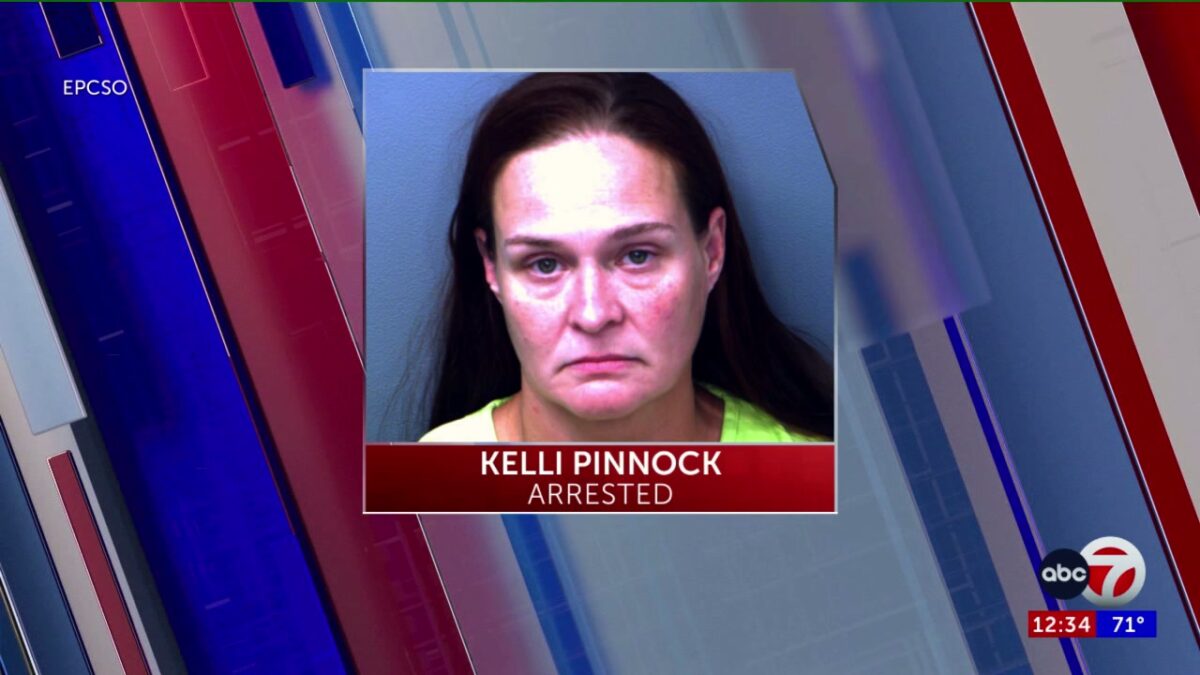
EL PASO, Texas (KVIA) — The El Paso County Sheriff’s Office (EPCSO) says 48-year-old Kelli Pinnock is facing 5 charges of animal cruelty after officials found 72 exotic animals being transported in inhumane conditions.

According to officials, on October 22, 2026, around 7:30 p.m., El Paso County Sheriff’s Office deputies performed a traffic stop along I-10 East near mile marker 48.

When deputies spoke with the driver of a black Chrysler Pacifica, later identified as Pinnock, they discovered 56 tortoises, two kinkajous, 11 hedgehogs, two guinea pigs, and one caracal, which is an exotic wild cat, inside the vehicle.

According to EPCSO, several animals were confined in overcrowded or undersized containers that restricted their movement. Deputies also observed accumulated feces and urine, inadequate ventilation, and a lack of accessible food and water.

Further investigation revealed Pinnock had traveled through multiple states while transporting the animals. Deputies also identified licensing violations and restrictions associated with a previous animal cruelty arrest in Florida. Federal wildlife authorities were contacted to determine whether additional violations had occurred.

Officials say all 72 animals were voluntarily surrendered and, with assistance from the El Paso County Animal Welfare Unit, safely transported to facilities equipped to provide appropriate care.

Pinnock was arrested and charged with five counts of Cruelty to Non-Livestock Animals. She was booked into the El Paso County Downtown Detention Facility with a total bond of $10,000.

Click here to follow the original article.

Residents gather together for recovery efforts after West El Paso floods impact 16 homes

Mikey Tongko

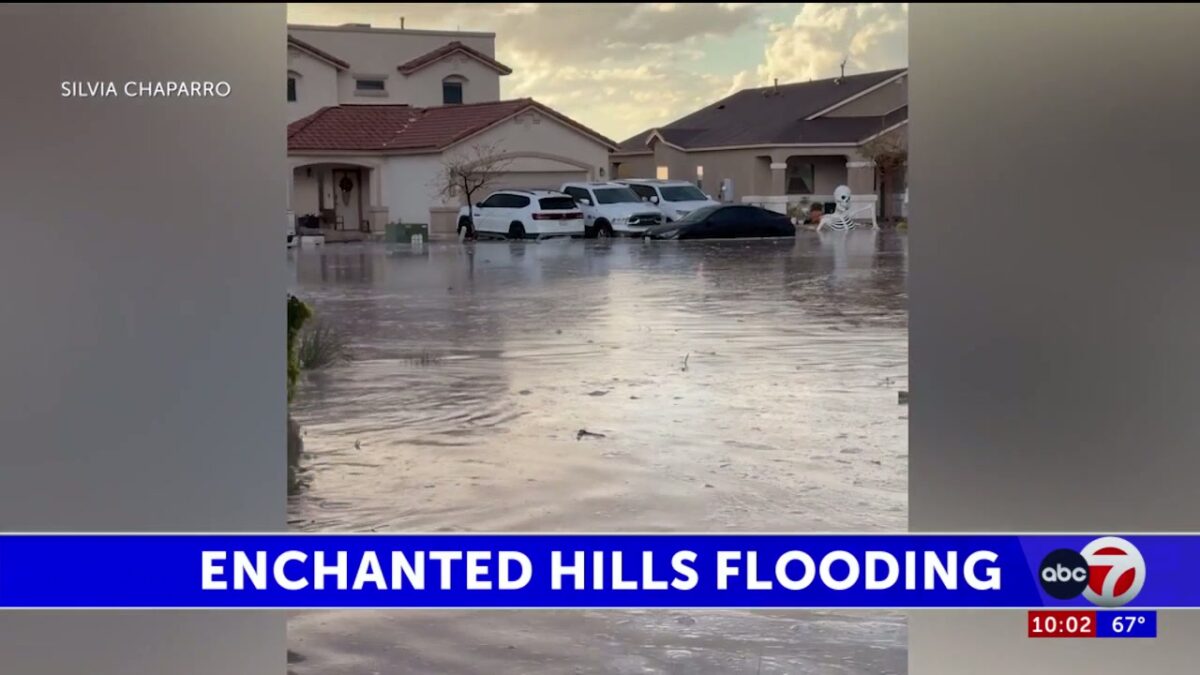
EL PASO, Texas (KVIA) — Floodwaters swept through a West El Paso neighborhood Saturday evening, leaving streets covered in debris and forcing residents to begin extensive cleanup efforts.

The flooding left mud and rocks scattered across local properties, with floodwaters reaching waist height as residents attempted to clear a drain in the neighborhood.

In response to the aftermath, neighbors came together to assist one another with clearing debris, sharing food and providing temporary shelter.

Luis Chaparro, a resident living in the impacted neighborhood, described the severe disruption to what would normally be a restful weekend.

“It should be a normal daily routine, a daily Sunday. But this just heartbreaking to see your street just covered like this, that you can’t even go out or can’t even enter. And instead of enjoying a good Sunday, you’re out here.” Chaparro said.

Jaylene Placencia, a resident, was working a nursing shift in nearby Las Cruces when she received word that her family had to be evacuated from their property. Placencia expressed her emotions to ABC-7 upon witnessing the flooding conditions, uncertain if she would have a home to return to.

“We built our house. We’ve lived here for three years. We saw it go from the ground up,” Placencia said.

While Placencia noted that her home appears to have sustained less damage than some neighboring houses, the entire block faces extensive recovery work.

To aid in the neighborhood recovery efforts, Placencia asked the surrounding community for donations of essential household items.

“If anybody can come donate any cleaning supplies, mops, rags, Pine-Sol, anything you can bring Clorox. It’ll be a great help,” Placencia said.

Click here to follow the original article.

ServerDome Global meets with Hudspeth County residents about data center

Nina Gallegos

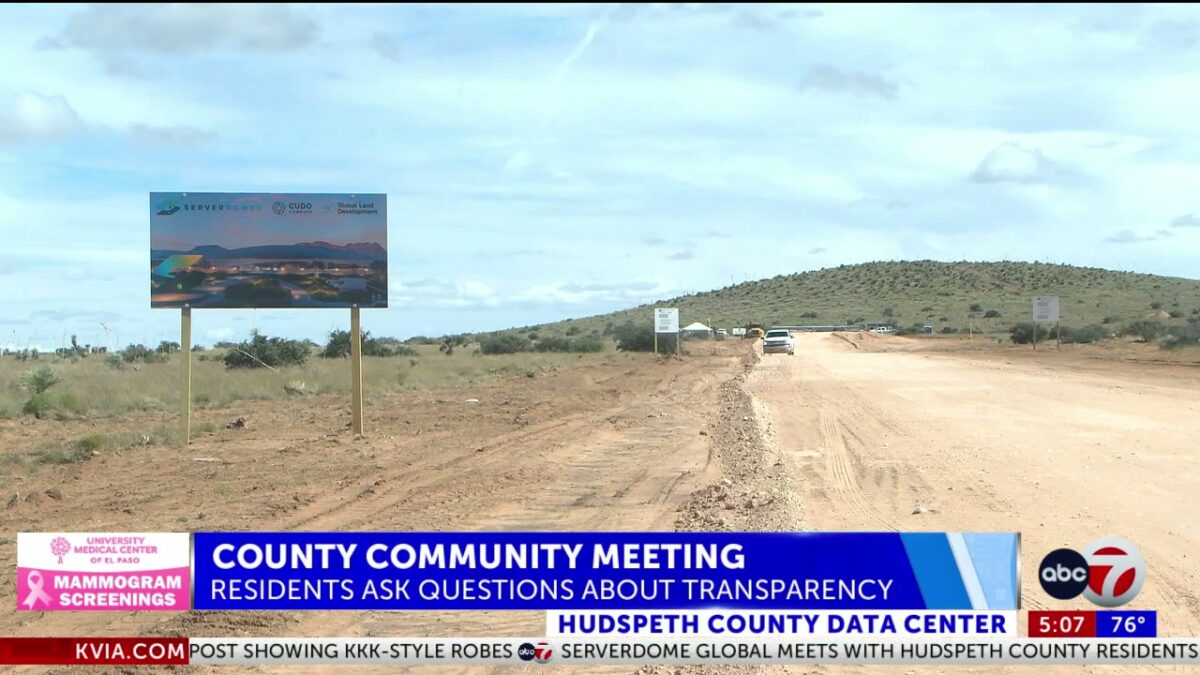
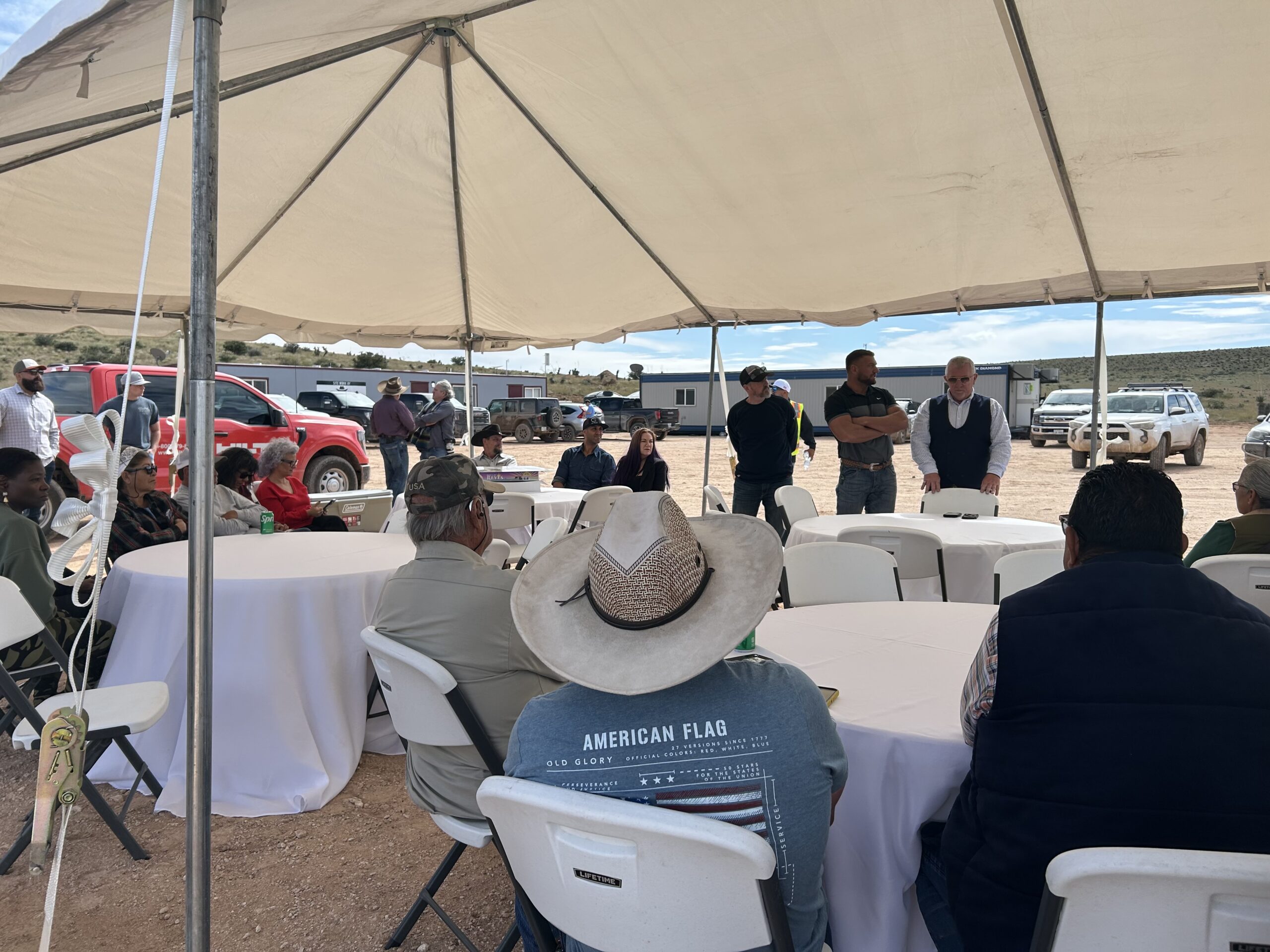
HUDSPETH COUNTY, Texas (KVIA) – ServerDome Global, the company behind the Hueco Ranch Data Center project, will hosted a community meeting Monday at the Hueco Ranch site.

Hudspeth County residents said they were shocked to learn about a hyperscale artificial intelligence-powered data center being built in the area, according to Sembrando Esperanza Coalition organizer Veronica Carbajal.

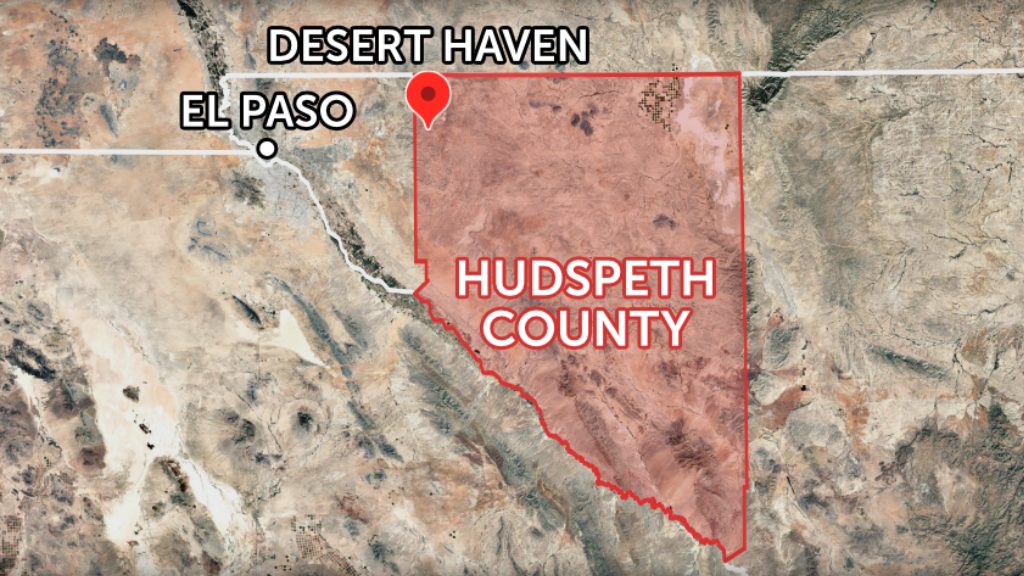
A map of where a new data center in Hudspeth County will be built.(Courtesy: Google Maps, KVIA)

“Seeing a data center be built in our rural community is devastating. The impact it will have on our wild life and plant life is irreplaceable especially when Hueco Tanks national park is right behind this data center. My ancestors hunted and foraged on these lands and for a data center to be built right on top of it is heart breaking,” said Jessica Macias, one of the leaders of the newly formed group of members of the Desert Haven Community in Hudspeth County. 

Residents said they’re worried the small infrastructure won’t withstand the data center’s needs.

Hudspeth County community members gather at ServerDome Global’s public meeting about its new data center.(Courtesy: KVIA)

Hudspeth County Judge Joanna MacKenzie said the data center is expected to bring 800 construction jobs that would take four to five years. After completion, an estimated 200-300 permanent jobs will be available

On Oct. 10, ServerDomes CEO David Keegan addressed county residents in a letter apologizing for the lack of notice about the data center.

“We will not hide behind gates, and you will always be treated with the respect you deserve,” Keegan wrote in the letter.

Keegan said the data center will stretch 2,00 acres on a privately-owned property. The project will consist of 10 buildings powered by a behind-the-meter gas solution that will have no impact on residents’ power costs.

Keegan also said the project will use minimal water. He also said the project’s team will attend the county commissioners court meeting Tuesday to answer questions about the project.

ServerDomes said it’s been working to repair roads after recent flooding in the area. Residents say the repairs won’t last.

“All the work they did on my road has gone. We have residents that are that are stuck right now out in the community because of the water and the water, but the growth that got washed down from the road repair,” said Paul Arteche.

ServerDomes said it’s committed to working with the community and keeping the roads operational.

Click here to follow the original article.

Red Kettle Run Gives Back While Bringing Community Together

Nichole Gomez

EL PASO, Texas (KVIA-TV) — The Salvation Army is inviting the community to lace up their running shoes and take part in the annual Red Kettle Run, an event aimed at raising support for programs that help individuals and families in need throughout the community.

Chris Stewart, a member of The Salvation Army Advisory Board, discussed the upcoming event and highlighted the organization’s mission of serving those facing difficult circumstances. Stewart shared his involvement with The Salvation Army and emphasized the importance of community engagement through fundraising efforts such as the Red Kettle Run.

The Red Kettle Run serves as both a community event and a fundraiser, helping support Salvation Army programs and services. According to the Salvation Army, this event gives participants an opportunity to support the organization’s work while promoting health and community involvement.

In addition to his work with The Salvation Army, Stewart also participates in community outreach activities involving animals through a private foundation. He described efforts to provide educational experiences for children facing challenges including autism, cancer, and bullying by allowing them to interact with animals in a safe and supportive environment.

The Salvation Army encourages residents to participate in the Red Kettle Run and support programs that provide assistance to those in need throughout the year.

For more information about The Salvation Army and the Red Kettle Run, community members can contact the organization directly or visit its official website. https://www.salvationarmyusa.org/

Click here to follow the original article.

Las Cruces police investigate couple’s murder-suicide

Gabrielle Lopez

LAS CRUCES, N.M. (KVIA) — A murder-suicide that happened in Las Cruces Saturday is still under investigation, according to police.

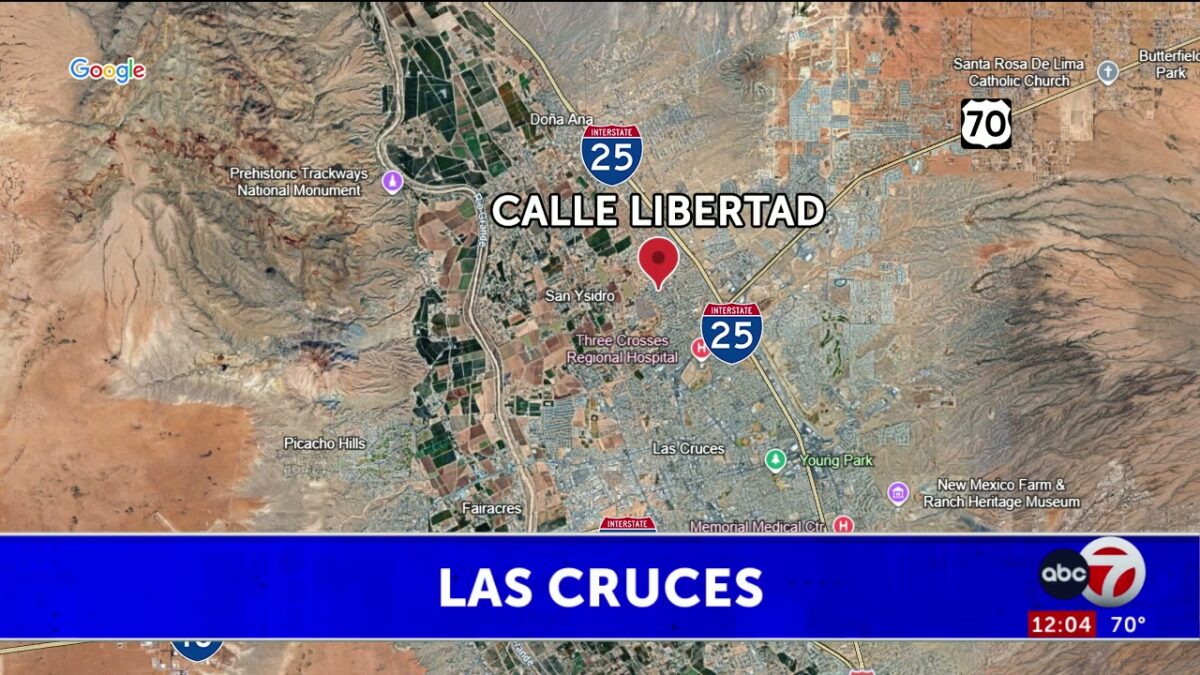
The Las Cruces Police Department said that around 8:30 a.m., officers went to a home on Calle Libertad. The shooting happened at a home in a neighborhood off Elks Drive.

Police found a 30-year-old woman and a 46-year-old man dead. LCPD identified the woman as Angelica Aguirre and the man, her boyfriend, as Shane Perez.

LCPD said Perez shot Aguirre before shooting himself. Police said the couple had five children, ranging in age from 3-14. The children were in the home during the shooting.

New Mexico’s Children, Youth and Families Department placed the children in temporary custody of a relative.

Click here to follow the original article.
Cold weather increases risk of respiratory illness in eastern Idaho

Kaelyn Blessinger

IDAHO FALLS, Idaho (KIFI) – When you were a kid, your parents may have told you to put on your coat or you’d catch a cold. Catching an illness from low temperatures alone is not possible, but there is a correlation between getting sick and the cold weather.

“So normally here in eastern Idaho we hit our peak around early January,” said Esmy Quintero, the clinical services manager for Eastern Idaho Public Health. “And so we have seen an increase in influenza like illnesses in the area, but we’re still not at our peak level yet.”

The Mayo Clinic states you cannot catch a cold, the flu, or other illnesses without a virus present. However, when it’s cold outside, we start spending more time inside with poor ventilation, which lets germs pass easily from person to person. So getting sick can be the indirect cause of the cold weather.

The Cleveland Clinic found that the cold, dry air dries out your nasal passages and mucus membranes, which are your body’s first line of defense against trapping and stopping viruses. Meaning it is easier to catch these illnesses and get sick.

“We always encourage people to stay home when they’re sick,” Quintero said. “They should cover their coughing, sneezes, and then disinfect any frequently touched surfaces throughout this respiratory season. Also get vaccinated.”

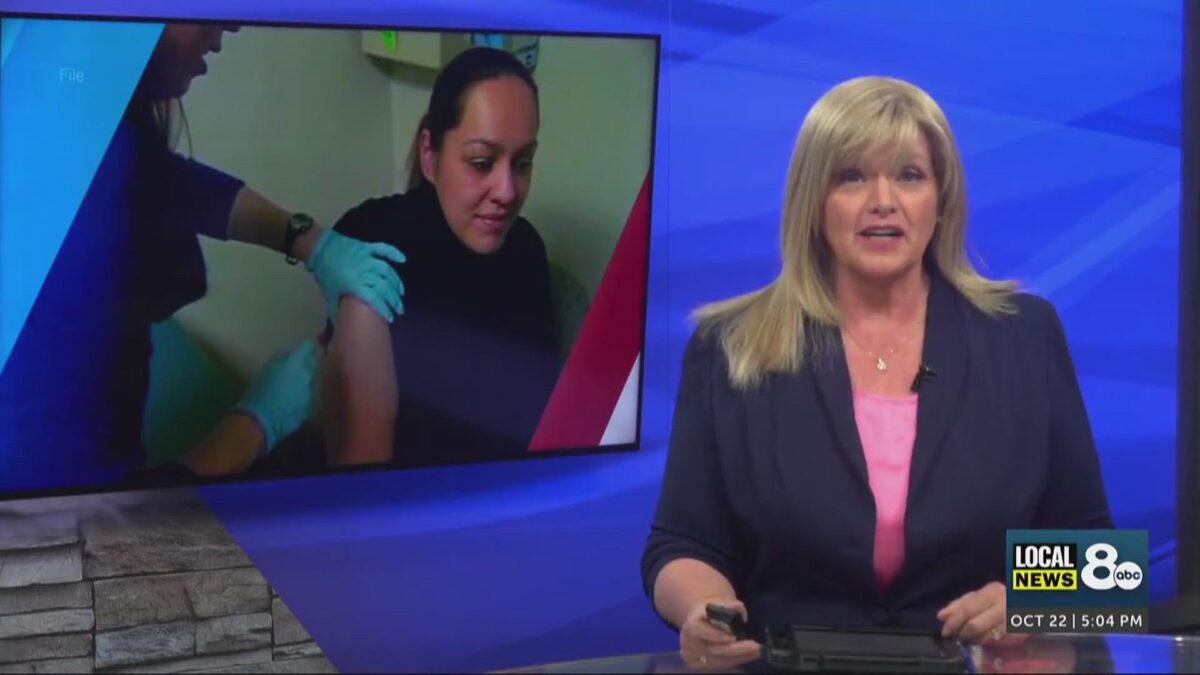
Getting vaccinated for the Flu, Covid, RSV, and other illnesses can prevent them spreading. Eastern Idaho Public Health states getting a vaccine isn’t just beneficial to you, but to our entire community.

“The flu vaccine is recommended every year just because there are various strains of the influenza virus that circulate,” Quintero explained. “Anybody over the age of six months is eligible to receive this flu vaccine, especially if you’re immunocompromised or, or have or live with a family member who’s immunocompromised. It’s just very important to give vaccinated to help prevent the spread not only to yourself, but to the community.”

Someone who is immunocompromised has an immune system that isn’t working as well as it should, making illnesses easier to contract and harder to fight off. They get sick more often and severely.

Eastern Idaho Public Health is offering free vaccinations for Covid, the Flu, RSV, and many other vaccines if your insurance covers it. You just have to call to schedule your appointment.

They have 9 office locations in Eastern Idaho:

Bonneville County Office (208) 522-0310 Clark County Office (208) 533-3220 Custer County Office (208) 522-8064 Fremont County Office (208) 522-8065 Jefferson County Office (208) 745-7297 Lemhi County Office (208) 756-2123 Mackay Office (208) 522-8064 Madison County Office (208) 356-3239 Teton County Office (208) 522-8066

For more information about the immunizations and Eastern Idaho Public Health, here is the link to their website.

Click here to follow the original article.