Columbia celebrates $37 million water treatment plant upgrade, but not everyone is taking a victory lap

COLUMBIA, Mo. (KMIZ)
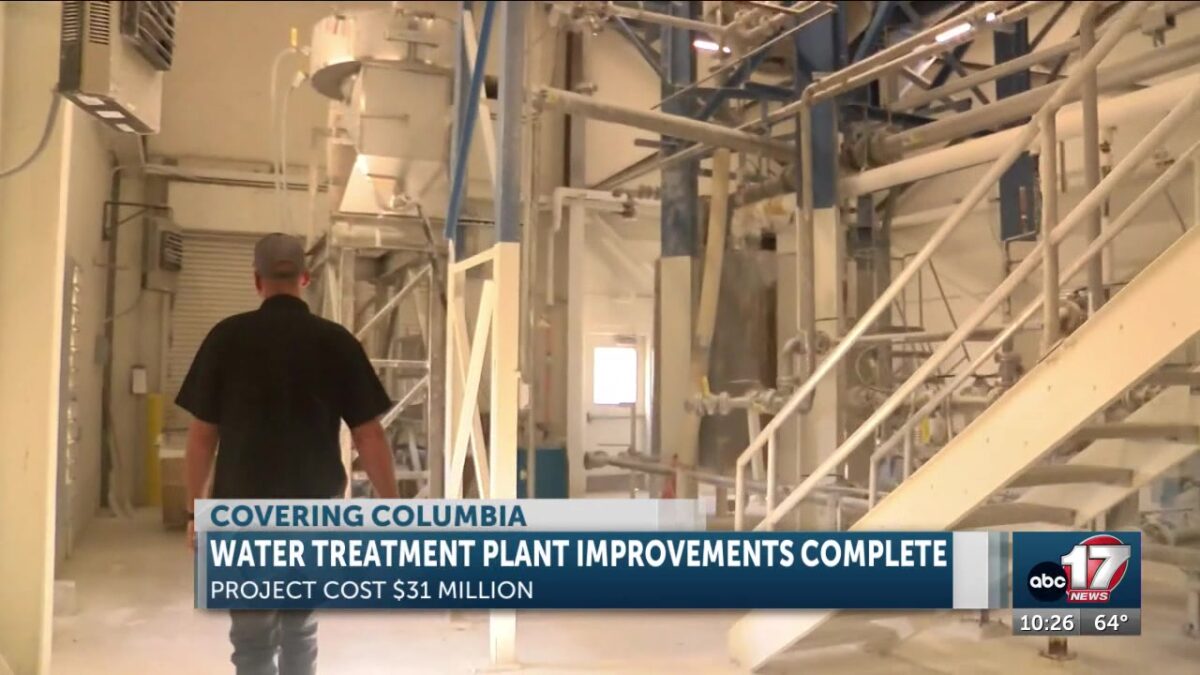
The City of Columbia celebrated the completion of a $37 million upgrade to its water treatment plant Monday, restoring the facility’s ability to treat 32 million gallons of water per day.
But while city officials touted the improvements, the COMO Safe Water Coalition questioned the project’s timeline and said additional work is needed to address water quality concerns.
The ribbon-cutting ceremony marked the completion of improvements at the McBaine Water Treatment Plant, which was built in 1970 and had not undergone a major equipment upgrade until now. The project included rehabilitating and replacing aging equipment, as well as constructing a new chemical building with additional safety features and efficiency improvements.
Columbia Utilities Director Erin Keys said the upgrades will allow the plant to better meet the needs of the growing community for decades to come.
“Some of the equipment and things that we had, we weren’t able to produce our full 32 million gallons a day,” Keys said. “With this upgrade, we have that capability now.”
Keys added the new chemical building brings chemicals closer to where they are added during the treatment process and provides more safety mechanisms for staff.
Columbia Mayor Barbara Buffaloe said the project represents a critical investment in the city’s ability to provide reliable drinking water.
“As the sole provider for most of our residents for clean, reliable drinking water, this is obviously a reinvestment in that infrastructure that is so important to everybody and everyone’s home,” Buffaloe said.
She added residents should not notice a difference in the water coming from their taps, as the upgrades primarily affect the treatment process behind the scenes. Buffaloe also credited city officials with maintaining safe drinking water throughout construction.
“I think the important thing is that the residents won’t see a difference. They turned on their faucet yesterday. They turned on their faucet today. There’s no change. They’re still getting clean, drinking water. But it was all on the back end, making sure that we were able to continue that service,” Buffaloe said.
The project traces back to a 2018 bond vote, when voters approved funding for utility improvements. Work on the water treatment plant project began in 2023.
“Appreciate the voters. Because they approved the bonds in 2018, and that’s what helped fund this project,” Keys said.
The project’s price tag increased from an earlier $24 million estimate discussed in 2022. The total cost was approximately $37 million, including $4.7 million for engineering and $32.4 million for construction.
Buffaloe said the COVID-19 pandemic delayed design and construction, while rising costs afterward contributed to the need to sell bonds to fund the work.
“Sometimes government moves slow, but that’s because it has to make sure that we get this right. This is a major investment from our ratepayers and our taxpayers,” Buffaloe said. “This started with the 2018 bond vote. Obviously, the pandemic put a big pause in the construction, or even just the design of it. Then obviously everything got more expensive after the pandemic. Everyone had that experience, and so we had to sell some of those bonds.”
The cost of utility infrastructure has also affected customers’ bills. The Columbia City Council approved a 10% water rate increase in August. Keys previously told ABC 17 News that inflation contributed to the increase.
Buffaloe said the city’s utilities operate as nonprofits, meaning rates are intended to recover the cost of providing service rather than generate a profit. She said the city reviews the financial information behind rate requests to justify increases to residents.
But not everyone was taking a victory lap Monday. Julie Ryan, co-founder of the COMO Safe Water Coalition, said the group does not view the ribbon cutting as a reason to celebrate without reservations.
“This might be a ribbon cutting, but it’s a ribbon cutting on a deficient process and what the city has accomplished so far,” Ryan said. “So this really isn’t something that we are super excited about, especially because there were a number of things that were deferred.”
Ryan acknowledged that replacing aging equipment should help the plant’s performance but said the improvements do not address all of the coalition’s concerns about water quality.
“The process units that have been switched out are definitely going to help. We were dealing with some very old equipment and so things were not being processed the way they should have,” Ryan told ABC 17 News. “The problem, though, is that even with all of that shiny new equipment, we’re still having to use a secondary disinfection method. We can’t accomplish it with chlorine only, and that is indicative of the fact that we still have too much dirt in the water.”
Ryan pointed to turbidity, or cloudiness caused by particles suspended in water, as a concern. She said the treatment process has struggled to remove enough of those particles before disinfection.
Ryan said the coalition wanted granular activated carbon filters to help remove contaminants and improve water quality. She argued the plant’s continued reliance on a secondary disinfection method, rather than chlorine alone, reflects shortcomings in the treatment process.
She also challenged the city’s emphasis on restoring the plant’s capacity, arguing the facility should have maintained its ability to treat 32 million gallons per day in the first place.
“We had to, as ratepayers pay for the city’s lack of improvement, getting us back to capacity. So the fact that the capacity has become such a piece of the discussion, the city allowed the plant to lose its capacity rating. Nobody ever had to answer for that and they’ve made a big deal about being really excited about restoring the capacity,” Ryan said. “That’s not an improvement. That’s fixing a problem that happened.”
Ryan said the plant’s peak demand had been close to 24 million gallons per day, below its rated capacity of 32 million gallons per day. She argued that restoring the full capacity should not be treated as the end of the city’s work.
“The city was told that it was rated over 10 years ago, and nobody had to answer for it,” Ryan said. “Just patting ourselves on the back because we made that fix is not what citizens are looking for. We want to know that the infrastructure we have is not only protected, but that we’re looking for what’s next.”
Ryan also disputed the city’s explanation that the pandemic contributed to the project’s lengthy timeline. She pointed to other cities, including Hannibal, that completed similar projects during the pandemic.
“I don’t find that COVID is what caused it. I find the inefficiencies and just the ineffectiveness of the city’s ability to manage water utility, is what got us to this. They needed to wait to sell off that second set of bonds from the funding,” Ryan said. “All of these things kind of combined to show that it wasn’t just COVID, it was a complete lack of ability to manage and get projects of this size done.”
Ryan also criticized how the city handled the project’s rising costs. She said funding was shifted from other projects approved as part of the 2018 bond package, including a planned southeast pump station, to cover the higher cost of the water treatment plant improvements.
Ryan said the coalition believes the city will need another bond issue to pay for deferred work.
“The thing that the city has done has played whack-a-mole at every step of the way and just try to quiet the little bits of things that keep happening and get them done,” Ryan said. “Unfortunately, I think this is new equipment that will help us, but it really isn’t the end, and they are going to need another bond to fund the rest of what was deferred. For me, as a voter, I’d tell people not to vote for another bond because they did not do their due diligence and execute stewardship with what they were given with this one.”
Click here to follow the original article.