AZGFD asks Arizonans to be on lookout for screwworms

Connor Emery

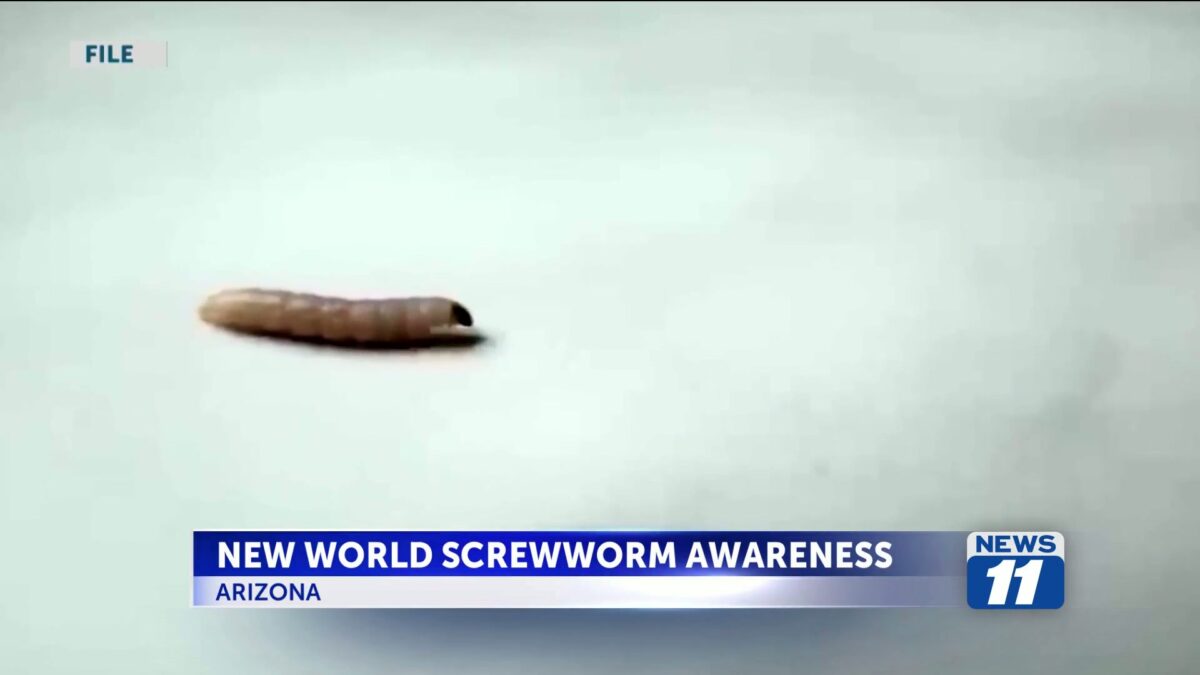
YUMA, Ariz. (KYMA) – The Arizona Game and Fish Department (AZGFD) is asking to be on the lookout for the “New World screwworm” after a recent case of it in New Mexico. 

New World screwworms are a type of fly larvae that eat on living tissue. It has mostly been found in animals with 51 reported cases across the U.S since June.

There has only been one confirmed case of an individual from the U.S contracting after traveling to El Salvador last year.

“Everyone is doing a lot of work to minimize the spread and to slow it down and minimize the density of these flies. So the good news is that most likely you’re not going to encounter adult flies,” Ann Fan, AZGFD Assistant State Wildlife veterinarian.

Screwworms are normally found in animals with open wounds or with a foul odor. AZGFD also wants to reassure that it’s not something to panic over but still be on the lookout for.

“We want people to be aware but not be worried. This is not something that will cause a mass depopulation of any of our animals in any industry. If it happens within our livestock or household pets, it’s very treatable,” Fan said.

For more information on screwworms and how to identify them, click here.

Click here to follow the original article.

Young artists have a chance to represent Yuma

Adrik Vargas

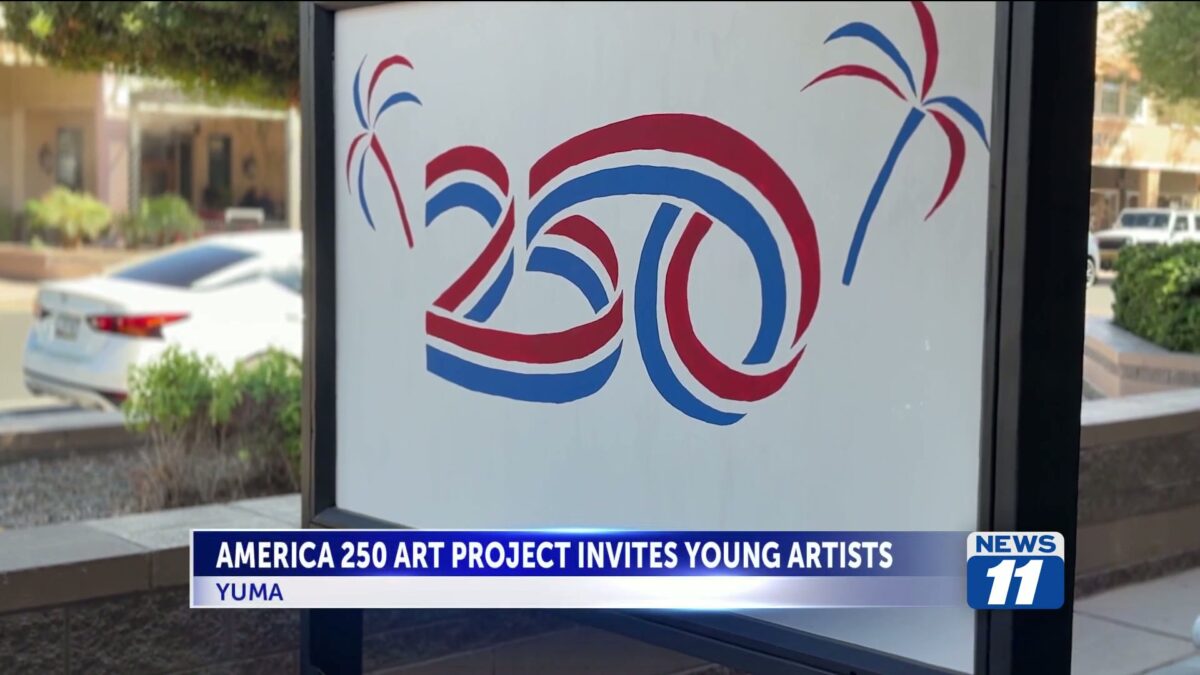
YUMA, Ariz. (KYMA) – Young artists in Yuma have a chance to have their work displayed on a national stage as part of the city’s America 250 celebration.

The City of Yuma is inviting K-12 students to create artwork showing what America’s 250th anniversary means to their community.

The project is part of an annual display by the U.S. Conference of Mayors, where participating cities will showcase artwork representing their communities and their celebrations.

In addition, the City said students have plenty of room to get creative. Artwork could highlight aspects of life in Yuma, such as the Colorado River, agriculture, the military or other parts of the community.

Submissions must be 24 by 32 inches, include the words “Yuma” and “America 250,” and have a patriotic theme. Political artwork will not be accepted.

Artwork is due October 23 and can be dropped off at Yuma City Hall at One City Plaza.

The City will select one piece to represent Yuma at the national display. City officials may also display other submissions at City Hall.

The project is open to K-12 students, including students who attend public school, private school or are homeschooled.

Click here to follow the original article.

State puts ‘cold case playing cards’ in Missouri prisons to generate leads through inmates

Olivia Hayes

JEFFERSON CITY, Mo. (KMIZ)

In a new effort by Missouri law enforcement to try and generate tips through inmates, 2,000 decks of playing cards that feature dozens of victims in unsolved crimes are now in every state prison.

Each card features a photo and details about an unsolved homicide, missing person, or unidentified remains case adding up to a total 52 cases. The initiative encourages offenders with information to come forward and assist investigators with new information.

Ten of the cases featured are from Columbia. Nine cold cases are unsolved homicides out of the 17 total CPD is currently investigating including:

James Hickem Virginia Davis James Hundle George Showalter Timothy Jones Antonio Houston and Danielle Marine Michael J. Walker Jr. and Jeffery D. Jones Mark Dailey Bryant Wilkes ll

The 10th case featured from CPD is the October 1994 disappearance of Kristina Bishop.

The Missouri State Highway Patrol also unveiled a new cold case investigative unit on Wednesday. Two dedicated investigators from the Division of Drug and Crime Control will work cases at the request of local police departments. This process similar to how the FBI takes on its cases to investigate.

Chris Ormerod, the special agent in charge of Kansas City’s Field Office, said the office has recently fully cleared their DNA backlog.

“If you look today, there’s a lot of cases with rapid DNA and genealogy back, so we look at the family trees on some of these, DNA that we don’t have in CODIS to help solve some of the cases,” Ormerod said. 

Click here to follow the original article.

TikTok cracks down on ‘get-paid-to’ scam ads on the platform

Marie Moyer

COLUMBIA, Mo. (KMIZ)

Advertisements seemingly part of TikTok’s company have been popping up in users’ feeds, leading people to third-party apps with the promise of payment.

The ads appear differently than typical TikTok Shop or other mainstream retailers.

The font and graphics are in a similar style to TikTok’s app design and often prevent users from returning to the app by taking up the full screen and removing the app’s bottom menu options.

The advertisement explicitly refers to itself as a “partner app.” It also suggests that users 13 years old and older are eligible to earn more than $100 per hour through the app.

Screenshots of a ‘get-paid-to’ advertisement on TikTok.

The Better Business Bureau has seen similar ads trying to blend into other platforms and calls similar ploys “get-paid-to” scams. Users may be encouraged to play games, take surveys or use a social media platform to earn money.

“You’re scrolling and you’re into your phone or whatever you’re doing, and then this ad pops up in a kind of seamless way, announcing that, ‘Oh, congratulations, we saw your resume or we saw your profile somewhere and you’re going to be awarded this job,'” BBB’s Columbia Region Director Khesha Duncan said. “It’s flexible, it’s remote, you’ll get to use your phone and like, follow, subscribe, boost videos, etc., and then you find out it’s not real.”

An ABC 17 News peporter downloaded the suggested app from the viral ad, Freecash, which focuses on tracking and earning money from third-party game apps that the user has to also download. These games included Pixel Flow, Monopoly GO and Solitaire Doll.

On Freecash, users will be prompted to input their age and connect either PayPal, Visa, Amazon or bank account to the app to receive “payouts.” Similar activity management apps like Freecash included “Just Play” and “Swagbucks.”

Simple interactions like navigating either the Freecash app or game apps resulted in low payouts, around 10 cents to around $10. Payouts increase to around $15 to thousands if the user pays to enter a leaderboard with other players. Users can then play the games to earn the most points to win the leaderboard prize.

On both the Freecash app and game apps, the user often needs to earn a preset amount of money before they are able to cash out, which is where users typically lose their winnings.

The BBB’s scam tracker has several reports on Freecash. The most recent post was from Sept. 28, with a user reportedly losing $916.

“I was able to make $700 doing this. However, as I continued to use my time and money to be successful on this app and make some income, my cashouts were suddenly put on hold. Now, they’re saying there’s nothing I can do to fight it or prove my identity, so over $900 that I made through their tasks are inaccessible to me,” a user wrote in the report.

“You’re ready to get your payout, they tell you they can’t pay you because you went through the levels ‘too quickly’ or you violated a policy of some kind that you didn’t even know existed in the first place, or worse, they’ll ask you to send them money to be able to cash out,” Duncan said.

Smaller payouts can sometimes go through, but it depends on the app and should not be relied on.

“There are some scammers out there that may be just barely walking up to the line of what’s a legal employer versus isn’t,” Duncan said.

Duncan added that interaction is often the main goal for scammers.

“Your personal information is just as valuable to them, and they see that as currency, just like they do actual money,” Duncan said. “They want to get your name, any information they can, where you live, phone number, anything that they can get to, maybe plan to use it in an identity theft situation.”

TikTok confirmed in a statement Wednesday that the Freecash ad is not their brand or part of a product campaign.

“We’ve removed content and accounts for violating our policies against deceptive practices and misleading content, and are continuing to take action against this content. TikTok prohibits fraudulent activity in both advertising and user-generated content, and we continuously remove such content and accounts as they’re detected or reported,” a TikTok spokesperson said in a statement.

Duncan advises users who run into a suspected ad to turn off their phone or reset the app. She adds that most scams involve companies leading users to a third-party, off-platform app.

Officials also report that TikTok’s monetization program for video creators is the only form of payment users can participate in.

Parents can also use UNICEF’s Digital Parenting initiative as a resource when informing their children on internet safety.

“Anything that you see on your phone or text or even email, it sounds too good to be true, it usually is too good to be true, and if it requires such urgent language and they’re trying to force you to make a deal, make a decision to participate right now, or the opportunities is going to go away, that’s usually a scam as well,” Duncan said.

Click here to follow the original article.

New art exhibit highlighting life along the border opens in Calexico

Carolina Garcia

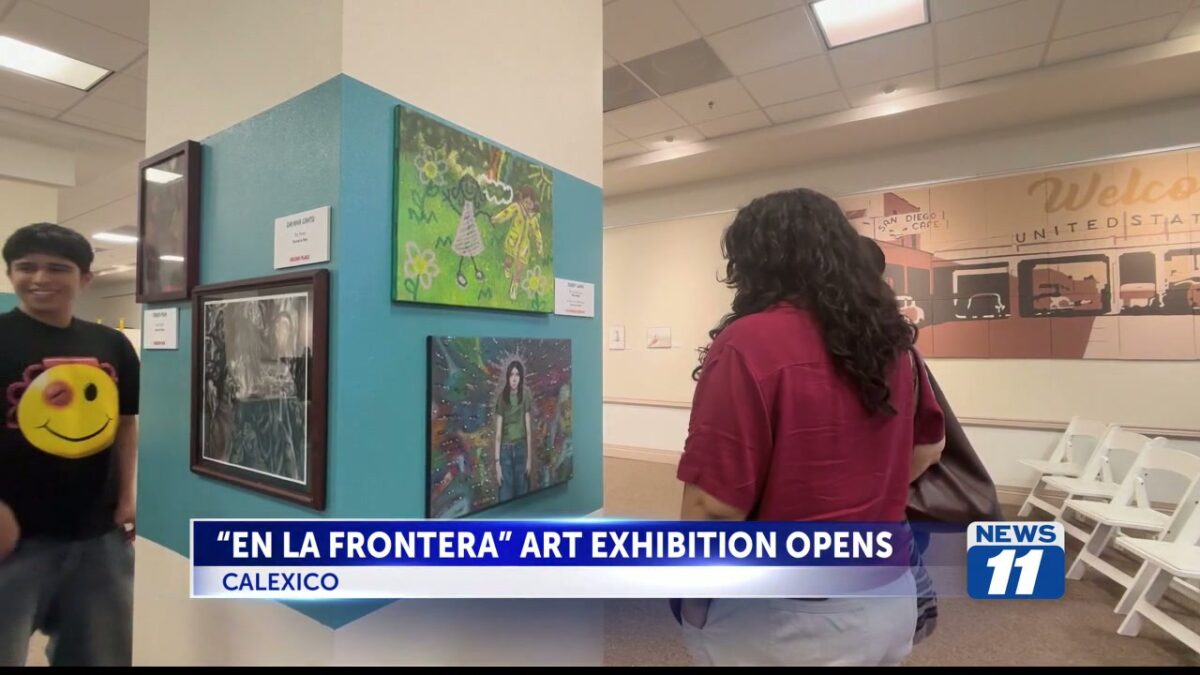
CALEXICO, Calif. (KYMA) – An art exhibit highlighting life along the border opened Wednesday in Calexico.

The “En La Frontera” Art Exhibit is being shown at the Carmen Durazo Cultural Center, with a total of 65 pieces by 41 young artists being selected.

There were cash prizes from several sponsors to encourage more young artists to submit their work.

“We hope to have it biannually. This was possible through our sponsors. It was the Calexico Arts Council and the Elias Elias Fontes Collection. They were the ones who provided the funds so that we could do,” said Norma Gerardo, Recreation Manager for the City of Calexico.

Funding was also provided by the California Arts Council.

Click here to follow the original article.
Yuma County officials breakdown election security measures

Adrik Vargas

YUMA, Ariz. (KYMA) – Yuma County election officials are highlighting security measures in place ahead of the upcoming general election.

County officials said all tabulation equipment used to count ballots operates completely offline and is not connected to local networks or Wi-Fi.

The equipment is also tested before an election to make sure it accurately records votes.

“We also do logic and accuracy testing on our equipment just to verify that it accurately records votes and tabulators correctly,” an election official said. “So we also have those additional layers in place.”

The local focus on election security comes as the Defense Department said it is stepping up efforts to protect U.S. election infrastructure from foreign cyberattacks and interference.

County officials said their security measures follow state guidelines, election procedures and legal requirements.

Click here to follow the original article.
MU Health Care adds urology services to Capital Region Medical Center

Ryan Shiner

COLUMBIA, Mo. (KMIZ)

MU Health Care announced on Thursday that it is expanding specialized care to Capital Region Medical Center in Jefferson City to include urology services.

A press release from MU Health Care says the new clinic will be located on the third floor of the Madison Street Medical Building and surgeries can begin as early as Thursday.

“One of the promises we made through the integration was that patients in Jefferson City and surrounding communities would gain access to more specialized care close to home,” MU Health Care CEO Ric Ransom was quoted in the release. “The addition of urology services is a tangible example of that commitment. By expanding both clinic and surgical capabilities locally, we’re making it easier for patients to receive the care they need without traveling to Columbia.”

New surgical technology, including a laser system, can be used there for procedures procedures for kidney stones, benign prostatic hyperplasia, prostate enlargement and certain tumor treatments.

Click here to follow the original article.

Hawley announces bill targeting license plater readers

Demetra Alarcon

COLUMBIA, Mo. (KMIZ)

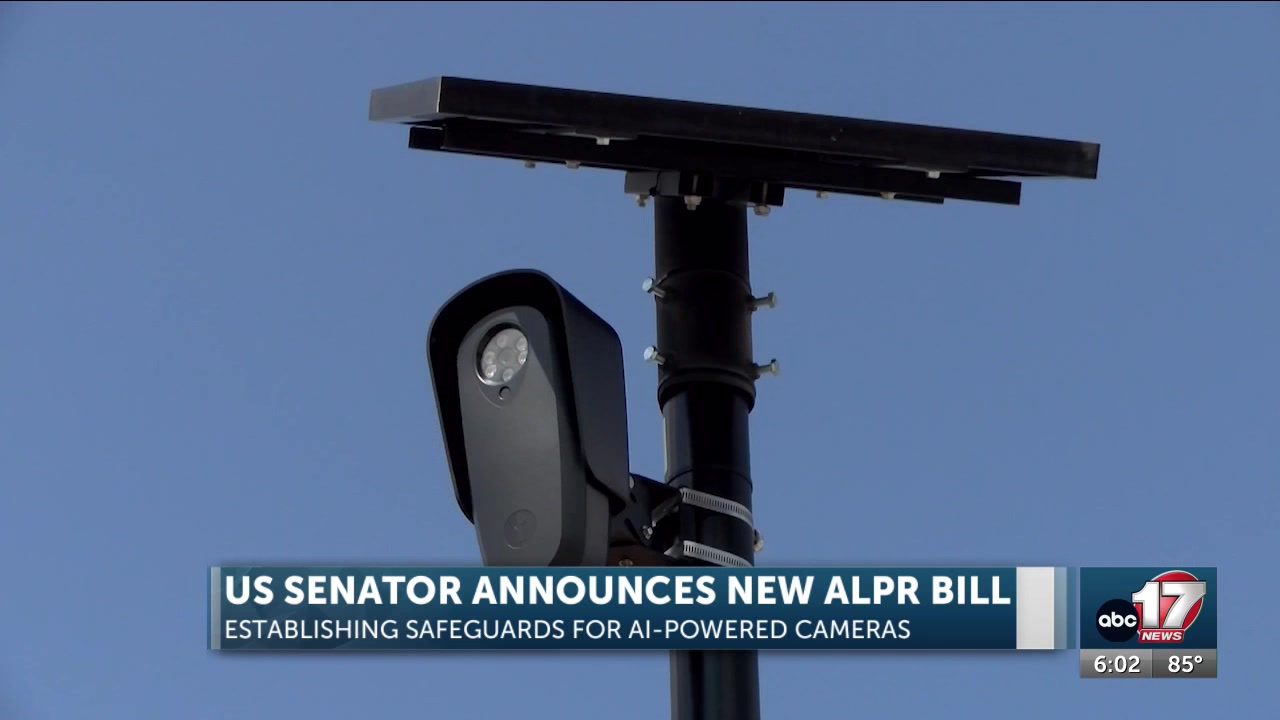
A Missouri senator announced on Wednesday he is introducing a new bill related to automatic license plate readers like Flock.

Sen. Josh Hawley (R-Mo.) introduced the “Stop Flock Abuse Act” to establish basic safeguards for AI-powered cameras and to “protect Americans’ fundamental constitutional rights,” Senator Hawley said.

This comes as use of the technology has come under scrutiny. Concerns over Flock cameras have continued to grow, with more than 150 cities across the country canceling their contracts or deactivating the cameras. That includes the Pulaski County Sheriff’s Office, which announced it would deactivate its Flock cameras last month.

“AI-powered cameras produced by Flock and its competitors are tracking and creating digital footprints of everyday Americans — a nightmare for individual liberties unless Congress enacts meaningful rules and accountability. Last week, my hearing on Flock brought to light the threat that these AI-powered cameras pose to national security and the privacy of everyday Americans,” Hawley said. 

Hawley’s website says that this bill would establish the following common-sense guardrails:

Never sell data, meaning that local government cannot sell or share data with non-governmental third parties. Next is no rogue searches, meaning that an approval must be written to authorize a search. A search log must be preserved, showing who searched it, why, and who approved it Data must be encrypted and must not leave the United States Limit on data retention: agencies must permanently delete data after ten days No hardware or software from foreign adversaries Prohibition on facial recognition technology

Jefferson City renewed its agreement with Flock in August, with Police Chief Eric Wilde publicly saying the use of Flock cameras has helped the department solve three homicides. Columbia has stated it will hold a public meeting regarding Flock.

Gov. Mike Kehoe signed an executive order earlier this month to put stricter restrictions on automatic license plate readers like Flock cameras. The order requires the Department of Public Safety to issue best practice guidelines for ALPRS.

A Wednesday evening press release from the Department of Public Safety says it spent two weeks speaking with law enforcement agencies around the state. Some recommendations it made include making sure:

A legitimate law enforcement purpose for any ALPR data search; Individual accountability for anyone with access to ALPR data; Independent verification of ALPR alerts before enforcement; Limited (30 days in most cases) retention of ALPR data; Routine auditing (at least monthly) and targeted reviews of ALPR use; and Prohibiting the integration of artificial intelligence facial recognition technology with ALPR systems.

The DPS’ document regarding its recommendations can be viewed below.

alpr-best-practices-guideDownload

Columbia Police Department declined an interview regarding Flock cameras.

Click here to follow the original article.

Highway 95 construction project underway in San Luis, Arizona

Abigahil Padilla

SAN LUIS, Ariz. (KYMA) – Drivers using Highway 95 in San Luis, Arizona should expect traffic restrictions beginning this week as construction gets underway on a new raised median.

The project will take place between County 21st Street and County 22nd Street, and is expected to last about six months.

During construction, the inside lanes in both directions, as well as the center lane, will be closed. Drivers could also see reduced speed limits and temporary lane closures.

The City of San Luis said it’s all to decrease the number of serious crashes on the highway. 

The latest fatal crash was reported two months ago when one woman was killed after another vehicle veered off it’s lane and struck her car near County 22nd Street.

“The main purpose of this project is to improve the road safety for all drivers. The project consists of adding a medium from County 22nd Street to County 21st Street,” said Francia Alonso, Public Information Officer for the City of San Luis. “This will help reduce the head-on collisions that we’ve had in the past.”

The project is in collaboration with Arizona Department of Transportation, who will provide updates as work continues, including information on construction hours and traffic impacts.

Click here to follow the original article.

New imaging tech gives doctors another tool to help detect and track prostate cancer

Connor Emery

YUMA COUNTY, Ariz. (KYMA) – As Prostate Cancer Awareness Month wraps up, about one in eight men will be diagnosed with prostate cancer in their lifetime.

In recent years, new imaging technology, including pet scans, has given doctors another tool to help detect and track prostate cancer.

When found early, prostate cancer can often be treated effectively, and doctors said advances in technology are giving patients more options.

“Prostate cancer is a concerning diagnosis, hope is there. There’s a lot of options. Things are getting better each and every day. And again, it’s making sure that people get checked,” said Dr. Brandon Mancini, Medical Director for BAMF Health. “They follow up with their physician every year, get that PSA blood test, follow through with the recommendations to ensure that their health and safety is prioritized.”

Dr. Mancini is also encouraging men to see a physician if they are experiencing any signs or physical pain in order to get the best treatment.

Click here to follow the original article.