Richard Barrera runs for California State Superintendent of Public Instruction

Jessamyn Dodd

HEBER, Calif. (KYMA) – Richard Barrera is one of two candidates running for State Superintendent of Public Instruction in the November 3 election.

Barrera, a longtime San Diego Unified School Board member, met with residents of Imperial County to discuss his vision for public education.

“From 18 years’ experience on the San Diego Unified School Board, which is the second largest school district in California, and we have a track record over nearly two decades of investing in our educators, investing in our school facilities, and that has produced the highest academic outcomes of any large urban district in the country,” Barrera told Newsl 11 in an interview.

Barrera saw a lack of resources as one area that is lacking right now in all California schools, especially in the Imperial Valley.

“We don’t have enough resources in our public schools, which really doesn’t make sense when you consider that California is the fourth wealthiest economy in the world,” he said. “We should be investing that wealth back into our public schools and particularly in communities like Imperial County.”

He said in San Diego, he has already helped boost benefits for educators.

“We have raised teacher salaries by 50% in the time that I’ve been on the board we provide fully paid family health benefits. We’re now starting a strategy of building affordable housing for our teachers, but also our bus drivers and food service workers, special education aides,” he explained.

Barrera will face Republican candidate Sonja Shaw at the ballot box on November 3.

Click here to follow the original article.

Downtown Yuma bar to host stand-up comedy show Saturday

Moses Femino

YUMA, Ariz. (KYMA) – A locally owned bar in downtown Yuma is bringing a night of live entertainment to Main Street with a stand-up comedy show scheduled for Saturday evening.

The Austin Train and Friends Show, hosted by Demi, will take place at The First Round, located at 333 S. Main Street, at 8 p.m. Tickets cost $10.

San Diego native Austin Train will headline the event. Train has been performing stand-up comedy for more than 15 years.

The show is part of The First Round’s efforts to bring comedy and live entertainment to downtown Yuma. Over the past year, the venue has hosted several comedy open mics in 2026, along with another show featuring comedians from San Diego and Tucson.

This event marks the first paid event at the venue.

Train said the upcoming show will be an opportunity to introduce local audiences to the venue and encourage the community to come out and enjoy the show.

“We’re going to kind of christen this new venue,” Train said. “It’s going to be a great time. You know, it’s going to be a lot of fun. So come out and join us. No reason to be on the fence. Just come on out, have a great time. You won’t regret it.”

For more information and details on how to purchase tickets, click here. Attached below is the event flier:

Click here to follow the original article.

ADOT installs new EV charging station in Wellton

Connor Emery

WELLTON, Ariz. (KYMA) – The Arizona Department of Transportation (ADOT) has installed a new electric charging station in Wellton right off Interstate 8.

Wellton was one of three stations that were recently installed across the state to reduce range anxiety.

This is part of the National Electric Vehicle Infrastructure (NEVI) program to develop a nationwide of fast-charging stations.

When installing these chargers, ADOT planned to put them three miles off the highway.

“These stations are part of a nationwide system with the concept that drivers of electric vehicles can drive not just around arizona, but nationwide, and have a reliable network of stations. Generally within 90 miles or less,” Garin Groff, ADOT Public Information Officer, said.

ADOT says Wellton was chosen based on the convenience for the drivers.

“ADOT evaluated where existing charging stations are and then where there are gaps in the network. And then also we looked at where it was feasible to develop stations, since these are owned and operated by private entities,” Groff said.

One driver who was traveling from San Diego, Ryan Alvarez, said he was surprised to see a station that charged his car quickly.

“Well, I was curious how people would drive from San Diego to Phoenix, and it seems like you need to have stops wherever you can. So, I’m glad this one is here. I’m glad it’s new and it’s available,” Ryan Alvarez explained..

For more information about the program and the charging station, click here.

Click here to follow the original article.

Coach Dan Devine’s complicated legacy in Mizzou football’s integration

Mitchell Kaminski

COLUMBIA, Mo. (KMIZ) 

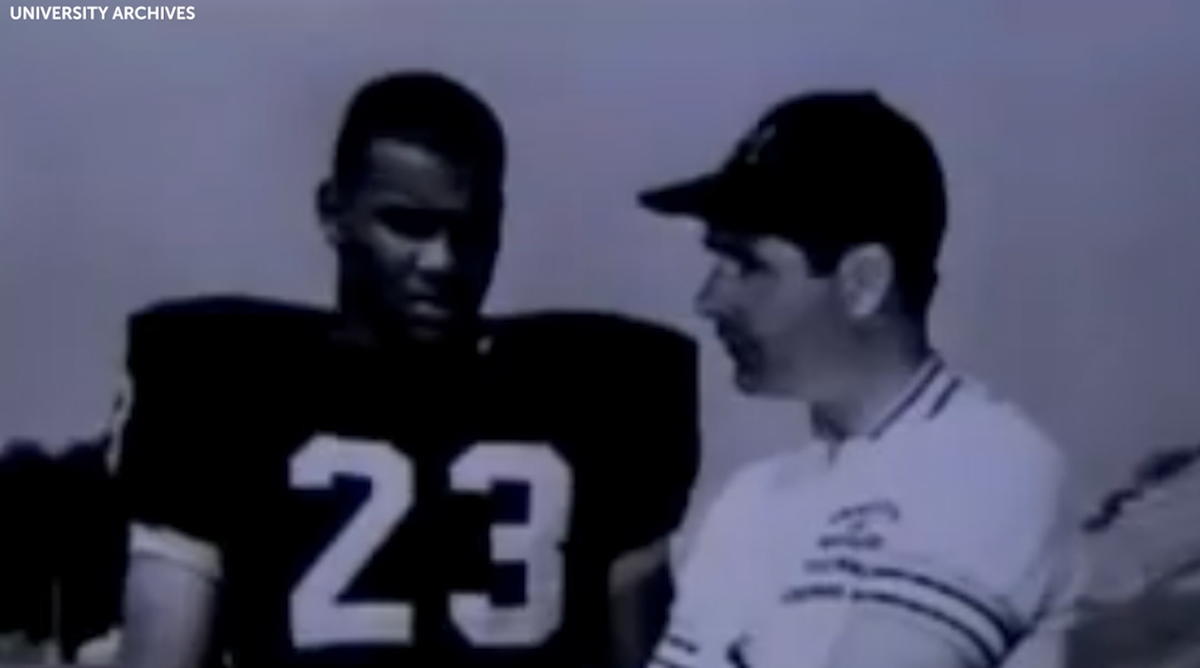
When a restaurant owner refused to serve two Black players on the University of Missouri football team, coach Dan Devine faced a decision.

The Tigers were returning from a game at the University of Kansas when they stopped for dinner in Missouri. Jerry Wallach, a tackle who played for the Tigers from 1959 to 1962, recalled watching some of his teammates leave the restaurant, followed by a woman.

“You don’t have to be Dick Tracy to figure out what was going on,” Wallach told ABC 17 News. “Some woman comes out and says, ‘Those boys aren’t coming in here.’ And she’s irate. Dan Devine bragged it was one of his finest moments and frankly it was.”

As the woman kept demanding to know who was going to cover the bill, Devine reached into his pocket, threw money down to cover the food that had already been ordered, and directed the team back onto the bus.

“He really has reason to be proud of his record on civil rights. But he would talk about that incident, and he said he reached in his pocket, pulled out a $100 bill,” Wallach recalled. “I would always follow him in the after-dinner speeches by saying, ‘I was there, I saw it happen.’ Which was basically true, except it wasn’t a $100 bill; it was a $50 bill. The guy had to up it to $100. It made a better story.”

If you attend a game at Memorial Stadium, you’ll find Dan Devine’s name along the visitors’ sideline. During his 13 seasons in Columbia, Devine transformed Missouri from a dormant program into a national contender, compiling a 93-37-7 record — the third-most wins in program history. He led the Tigers to four bowl victories, including the program’s first in the 1961 Orange Bowl, two conference titles, and its first No. 1 ranking.

In the 1960s, his teams never lost more than three games in a season, making Missouri the only team in the country to accomplish that feat.

But Devine is remembered for more than the Tigers’ dominance on the field. He also oversaw a pivotal period in program history: the integration of Missouri football.

That process was already underway when Devine arrived. Missouri became one of the last Big Eight Conference football programs to integrate when Norris Stevenson joined the team in the winter of 1957. Mel West followed six months later, becoming the program’s second Black player. Both were recruited by Frank Broyles, who left for the University of Arkansas in 1958 before coaching either player.

Devine was coming off a perfect 10-0 season as Arizona State’s head coach when Missouri offered him the job in December 1957. His arrival in Columbia got off to a rocky start. Engine trouble delayed his flight by six hours, and he arrived at his interview in a suit covered in hot chocolate after a flight attendant accidentally spilled a drink on him.

When Devine took over in 1958, Stevenson and West faced discrimination that extended well beyond the football field.

“They were both really embraced by their teammates,” Steenbergen said. “But it was 1960. I think a lot of the players didn’t have a sense of what those guys were going through.”

Stevenson’s daughter, Jennifer, said her father grew up in a predominantly Black neighborhood in St. Louis. Moving to Columbia, a town of roughly 30,000 people at the time, was a culture shock. At Missouri, he had to navigate an unfamiliar environment where he encountered racial barriers in ways he had not experienced before.

“He didn’t really have a lot of opportunity to interact with white individuals and deal with discrimination and things like that. That was all new,” Jennifer Stevenson said. “When he went to Mizzou, it was something he had to learn.”

The University of Missouri had yet to hire any Black educators or administrators, and many downtown businesses allowed Black students inside only if they presented their university IDs.

“When he talked about it, even though the discriminatory things that happened to him were painful, what defined him was the fact that he overcame it,” Jennifer Stevenson said.

Those challenges followed the Tigers on the road.

“Those were rough days,” Wallach said. “It was not easy to go to a hotel and have somebody meet the team plane and take the Black players somewhere else because they couldn’t go to our hotel.”

Devine made an effort to support his players, challenging discrimination when it threatened the unity and well-being of his team.

“Dan definitely did a lot of things that helped Mel and Norris,” Brendon Steenbergen, author of “Respectable Roughnecks,” told ABC 17 News. “When they played at Texas A&M, the hotel restaurant wouldn’t allow the Black players, and so Dan Devine made sure that the whole team was not going to eat someplace that wouldn’t allow two of his players to eat.”

Despite those acts of support, Stevenson’s relationship with Devine was not without tension.

Stevenson became a key contributor as Missouri rose to national prominence. In 1960, he rushed for 169 yards and two touchdowns in a 41-19 victory over Oklahoma, helping the Tigers earn their first win in Norman since 1936 and climb to No. 1 in the national rankings.

Despite that production, Stevenson was not always given a role that reflected his contributions. He finished his Missouri career with 1,184 rushing yards and seven touchdowns over three seasons but was considered the second-string halfback.

Following Stevenson’s death in 2012, Gerald Stevenson recounted a conversation his brother Norris had with a former assistant coach in 2009. According to Gerald, the assistant coach told Norris that influential boosters had prevented Devine from starting two Black running backs together.

Steenbergen also pointed to the Tigers’ 1961 Orange Bowl trip as a source of tension. Despite Missouri’s 21-14 victory in front of President-elect John F. Kennedy, the postgame banquet left a lasting impression on Stevenson, his daughter Jennifer said.

The banquet took place at Miami Beach Convention Hall, but due to the hotel’s segregated policies, Stevenson and West were escorted off the island, while Devine did nothing to intervene.

“He loved his coach. It was painful. There were some painful things that happened,” Jennifer Stevenson said. “It’s like when you have a complicated relationship with anyone. Sometimes it’s just you love them, but then there are those hard points in life.”

Still, Jennifer said, the relationship endured.

“When Dan Devine passed away, his son was given the instruction to go talk to Norris and see if he would be willing to speak at his service,” she said. “So it’s like that pain was there, but that relationship was never broken.”

For Johnny Roland, who arrived at Missouri after Stevenson and West had already begun breaking barriers, Devine was first and foremost a demanding football coach.

Roland, a highly recruited halfback from Corpus Christi, Texas, initially committed to Oklahoma before a visit to Columbia helped change his mind. Devine played a key role in convincing him to choose Missouri.

“Coach Devine worked his magic on me,” Roland said. “He had a pretty good knack of schmoozing the mothers.”

Once Roland arrived, however, Devine did not give him special treatment.

“He’d treat me just like he would treat anybody else. He’d coach you up, he’d ball you out. He didn’t take mercy on me,” Roland said.

Wallach described Devine as “the biggest asshole in town”, but added that his coach was not always that way. When the two would go to postseason banquets after the season, he saw another side of Devine. 

“I’m sitting next to him one night, and this is a guy we treated with reverence. He was like God or something. I’m sitting next to him, and I say, ‘Hey, can I call you Dan?’”

“Sure, of course,” Devine replied.

“I got a question, Dan? When I played for you, you were the biggest asshole in town. But coming to these banquets and talking to you, you’re really a pretty nice guy. How do you square that?”

“It’s not easy every day waking up the biggest asshole in town,” Devine responded. “But if you want to win major college football games, that’s what you got to do.”

But Roland said Devine’s intensity was also what made him such an effective leader.

“He scared the hell out of you,” Roland said. “He just built a culture that we’re all in this together. We’re either going to sink together or swim together.”

Roland became one of Missouri’s biggest stars, playing multiple positions before becoming the program’s first Black team captain in 1965.

“He was, in my opinion, the first real superstar from Mizzou,” Steenbergen said. “Obviously, there were great players at Missouri before that, but in the television era, Johnny Roland was a real star and a great, great football player, and his opinion mattered. He was a player who recognized that his success and his popularity as an athlete could translate into making real change.”

According to Wallach and Steenbergen, that change included ending a long-standing tradition at Mizzou that had bothered many Black students.

“When Missouri would score a touchdown, the fans would wave big Confederate flags, huge Confederate flags, and the band would play ‘Dixie,’” Wallach said. “There was a big Confederate rock right outside the law school with a big plaque dedicated to the heroes of the Confederacy. Boone County was called Little Dixie.”

Before the Tigers’ 1960 Orange Bowl matchup against Georgia, activists with the Congress of Racial Equality urged Missouri’s band not to play “Dixie.” The tradition ended before 1970. Although no single, definitive account establishes exactly when it ended, historical accounts place its demise around 1964, while Roland was attending school.

“The story goes that Johnny Roland told Dan Devine, ‘If you want me to score touchdowns at Missouri, you’re not going to have this music, which is an insult to my people,’ and that Dan Devine did listen, and he talked to the band director and athletic director at the time, and they got that stopped,” Steenbergen said. “Now, this is 60-some years later, and I have heard different accounts of it, but that’s kind of the version that I’ve heard from Johnny and from others.”

Wallach offered a similar account.

“John Roland went into Devine’s office, I’ve heard the story often, and I believe it, and said, ‘Coach, here’s what you can do. You can continue to play me, and I’ll continue to play, or you can have that Confederate rock and play ‘Dixie’ and wave the Confederate flag all you want, and I’m gone,’” Wallach said. “Devine always bragged he was a big civil rights guy, but it was John Roland who backed him down.”

When ABC 17 News asked Roland about the story, he downplayed having any role in ending the tradition.

“Yeah, they played ‘Dixie.’ It didn’t bother me,” Roland said. “I was singing ‘Dixie’ too if we scored a touchdown.”

Devine’s legacy at Missouri cannot be measured by wins and championships alone. He helped build a national contender while supporting Black players who faced discrimination on and off the field, but their experiences also revealed the limits of that support.

More than six decades later, the stories of Stevenson, West and Roland serve as a reminder that integrating a football program meant more than putting players on the field; it meant confronting the barriers that followed them there.

Click here to follow the original article.

Gravois Fire District asks voters for 1% sales tax after two measures failed

Ellyse Edwards

MORGAN COUNTY, Mo. (KMIZ)

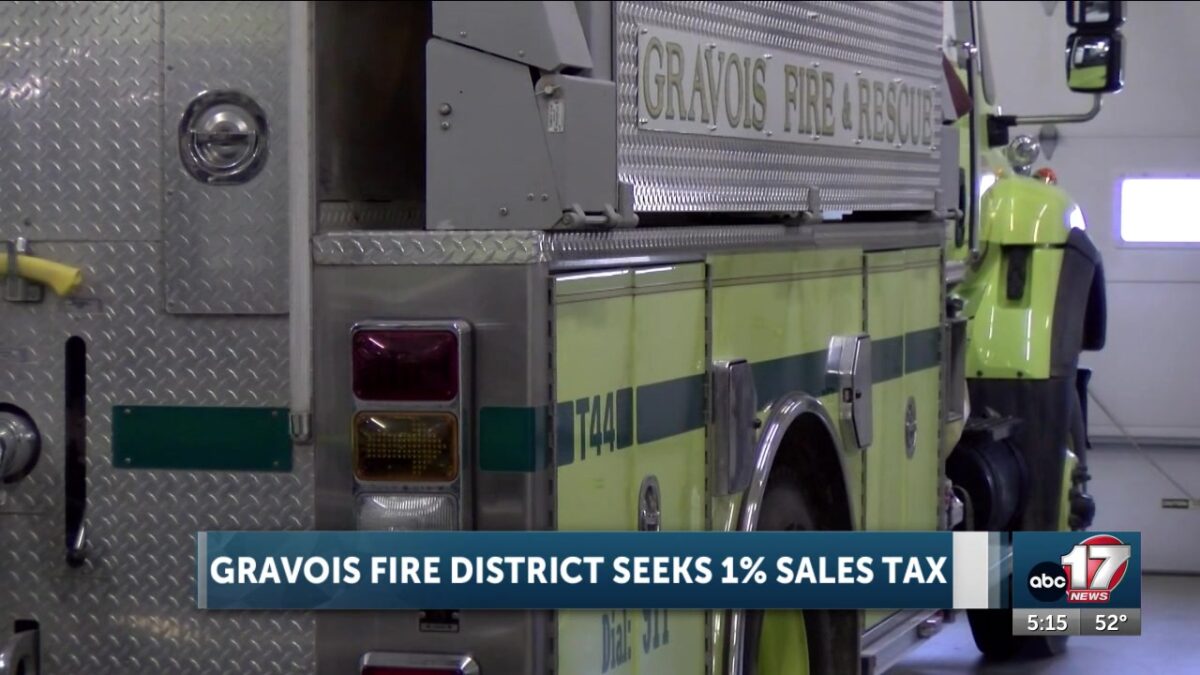
Voters in the Gravois Fire Protection District will decide on Nov. 3 whether to approve a one-percent sales tax known as Proposition Fire.

Fire Chief Dustin Hancock said the district needs more revenue as calls increase, costs rise and positions remain unfilled.

The district serves parts of Morgan and Camden counties. Hancock said it handled about 800 calls a year in 2016 and about 1,500 a year now. The district is down about five positions, Hancock said. The jobs went unfilled after employees left or retired, and the district could not afford to replace them.

“We just didn’t fill those positions because we couldn’t afford to, and we just had to keep shuffling that money into that,” Hancock said.

Hancock also said workers’ compensation costs rose 117%. He said the district had about $2,600 left in its fuel budget for the rest of the year.

How Proposition FIRE would work

Proposition FIRE would add a one-percent sales tax to taxable purchases within the district. That is an additional cent for each dollar spent on a taxable purchase. The ballot also requires the district to reduce property-tax revenue by an amount equal to 50% of the previous year’s sales-tax revenue. That reduction applies to the district’s property-tax revenue; it does not automatically cut each property owner’s bill by 50%.

Hancock estimated the sales tax could bring in about $600,000 a year. Under the proposal, the district would have to reduce property-tax revenue the following year by half the sales-tax revenue collected in the prior year. If collections remained near $600,000, Hancock estimated the district would keep about $300,000 in net additional revenue after that reduction.

Hancock said the district’s first priority would be maintaining current staffing and new equipment. Most of their equipment is nearly 20 years old, according to Hancock. Any additional money could go toward capital reserves. He said he hopes the revenue could help the district hire more people in the next two to three years.

What voters rejected in 2025

On April 8, 2025, voters considered two separate funding proposals. One was an $8 million bond for firestations, equipment and infrastructure. The other would have allowed a property-tax levy of up to 20 cents per $100 of assessed valuation.

The bond received 189 “yes” votes and 162 “no” votes across Morgan and Camden counties. It needed a four-sevenths supermajority at the general municipal election, or 201 yes votes, and fell just 12 votes short.

The proposed property-tax levy received 148 yes votes and 205 no votes, a 57-vote difference.

The district covers about 150 square miles and 63 miles of Lake of the Ozarks shoreline.

Click here to follow the original article.

SportsZone Football Friday highlights and scores: Week 8

ABC 17 News Team

COLUMBIA, Mo. (KMIZ)

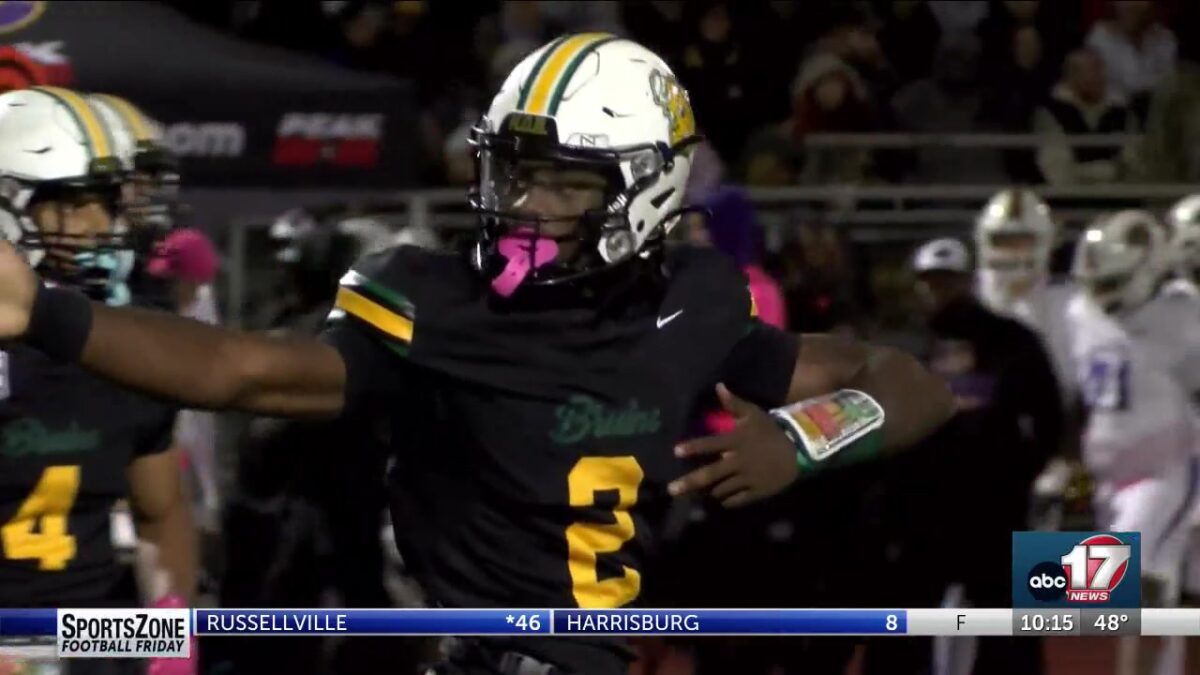
Week 8 of the Missouri high school football season kicked off on Friday night.

You can find scores from all of your Mid-Missouri teams below, as well as highlights in the video player above.

Click here to follow the original article.

Palm Springs Fire Chief reflects on 35-Year career ahead of retirement

KESQ News Team

PALM SPRINGS (KESQ)- Palm Springs Fire Chief Paul Alvarado announced his retirement after 35 years in the fire service, including the past three and a half years leading the Palm Springs Fire Department.

His retirement will take effect Monday, November 2.

Alvarado joined the city in 2023 after previously serving with the Long Beach Fire Department.

During his time in Palm Springs, Alvarado led the department through several major emergencies, including Tropical Storm Hilary in 2023 and the terrorist bombing at the American Reproductive Centers fertility clinic in May 2025.

“Chief Alvarado has dedicated 35 years of his life to protecting communities, and we are grateful for his outstanding leadership and service to Palm Springs,” said City Manager Scott Stiles. “I thank Paul for his dedicated service and wish him all the best in his well-deserved retirement.”

Alvarado also reflected on his time with the department.

“Serving as Fire Chief of Palm Springs has been one of the most rewarding experiences of my career, and I am incredibly proud of what we have accomplished together,” Alvarado said.

As the department prepares for the leadership transition, Deputy Chief Jeff Van Lierop has been named interim fire chief. Van Lierop has served with the Palm Springs Fire Department since 2002 and will lead the department while the city determines its next steps in selecting a permanent chief.

Alvarado said he is confident Van Lierop will continue moving the department forward, citing their years of working together on administrative duties, operations and budgeting.

“I’ve worked with Deputy Chief Van Lierop since I’ve been here, and he’s a veteran of the Palm Springs Fire Department. And as my deputy chief, we’ve had an opportunity to work alongside each other through administrative duties, operational, budget. So I’m confident he’s going to take the department to the next step,” Alvarado said.

The city has not yet announced a timeline for selecting a permanent fire chief.

News Channel 3 will continue to follow developments as the city prepares for the leadership transition.

Get the News Channel 3 app here. Click here to follow the original article.

Assemblyman Jeff Gonzalez speaks out on crime

Jessamyn Dodd

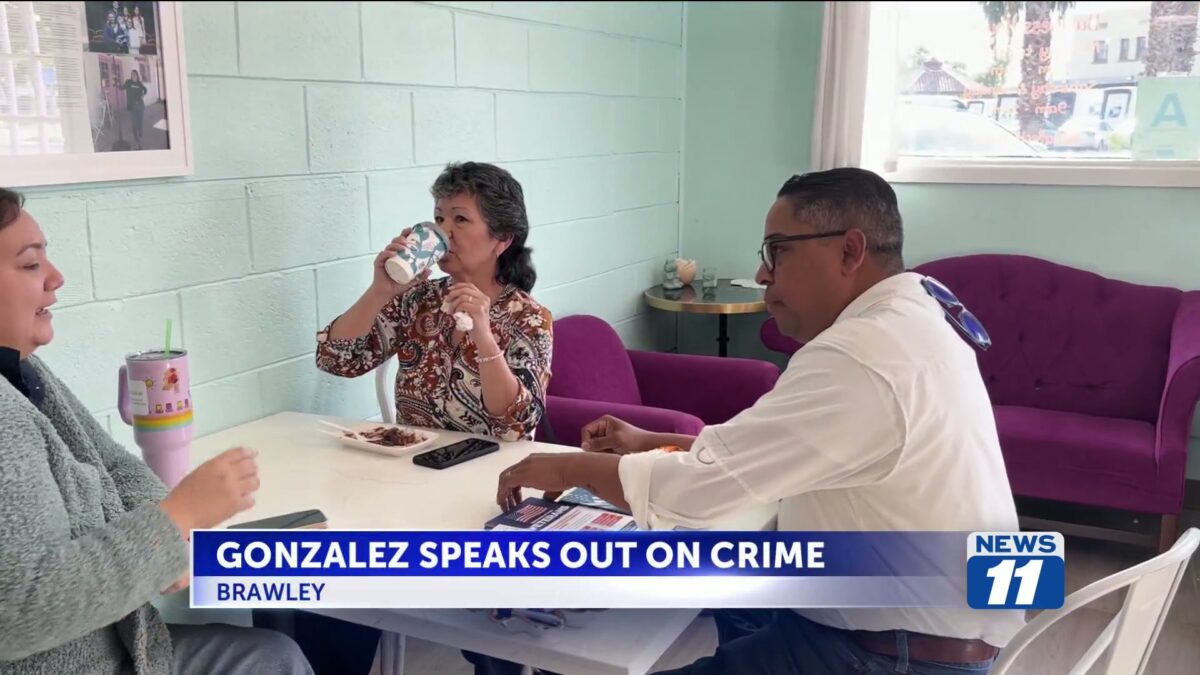
IMPERIAL COUNTY, Calif. (KYMA) – Assemblyman Jeff Gonzalez sat down with members of the Brawley community over coffee to talk about the recent uptick in crime.

Assemblyman Gonzalez discussed solutions to keeping children safe, like after-school programs and mentoring opportunities.

Gonzalez spent time with the teen who was recently shot outside her home as he called on residents to come together and help find the person responsible for the crime.

“I had the opportunity to talk to the young lady who was who was shot in the neck. By the grace of God, she survived [and] talking with city leadership in talking with law enforcement,” Gonzalez shared. “They absolutely need the help of the community to identify the individual who did this that’s the first piece it takes a community to speak up if they know who it is they need to speak up.”

Gonzalez is up for reelection and will face Democratic nominee Ida Obeso-Martinez on November 3 for the midterm elections.

Click here to follow the original article.

El Centro unveils new $51.5 million police headquarters

Lynette Niebla

EL CENTRO, Calif. (KYMA) – The City of El Centro celebrated a historic milestone on Thursday night, officially cutting the ribbon on a brand-new, $51.5 million police department headquarters.

City officials, local residents, and law enforcement departments from across the Imperial Valley gathered along 11th Street, near Main Street, to commemorate the completion of the modern, two-building facility.

For decades, the El Centro Police Department operated out of an aging facility that originally housed the city’s Chamber of Commerce.

The newly completed campus marks a massive technological and structural leap forward, trading inadequate space for a facility built to serve the community for generations to come.

“Tonight it is a proud moment,” said El Centro Police Deputy Chief Rene McNish. “It’s a proud moment for our department, our city, and the community we serve.”

The grand opening carried deep personal significance for some of the city’s top leadership. Both El Centro Mayor Michael Crankshaw and City Manager Robert Sawyer spent decades serving within the ranks of the police department long before stepping into their current roles.

“I’m not gonna lie… I got a little bit emotional,” Sawyer shared during the ceremony. “I started here when I was 16 years old, so I grew up in what was the old police department.”

Mayor Crankshaw echoed those sentiments, reflecting on his own law enforcement career in the valley.

“I spent 26 years not in this, but in that first one over there,” Crankshaw said. “I am so happy for all the employees, a little bit jealous for all the employees that get to work in this beautiful building.”

Bringing the state-of-the-art facility to reality was a years-long effort that spanned multiple city councils, administrative changes, and police chiefs.

“This project was carried by more than one city council, more than one chief of police, and more than one city manager,” noted Public Works Director Abraham Campos. “Staff changed priorities, were tested along the way, but the goal stayed the same.”

The finished campus introduces several major features never before seen in the area, providing law enforcement personnel with critical resources to combat modern crime.

“An indoor shooting range, the first in the valley for a law enforcement agency, and then we have a real-time crime center,” El Centro Police Chief Kelly Brown said. “We also have some interview rooms that are off the lobby, so if somebody comes in to make a report and they need to speak to a police officer in private, they have that opportunity now, whereas we didn’t have it before.”

The massive $51.5 million capital project was largely funded by Measure P, a half-cent sales tax approved by El Centro voters in 2016, and supplemented by impact fees and asset forfeiture funds.

City leaders emphasized that the department is delivering on a decade-old promise made to the community.

“We work for the community and they entrusted us with a lot of money. They entrusted us with their hard-earned money, and today, we’re delivering those commitments,” Sawyer said. “What we stand here today and tell you will come into fruition in two, three, four, ten and 20 years from now, and that’s a commitment that the city of El Centro has made.”

With the physical infrastructure now complete, city leaders are already pivoting from building the headquarters to staffing it.

While Measure P proved what local voter support can build, city officials are hoping residents will trust them again this November.

El Centro voters will decide on Measure T on the upcoming ballot, a new half-cent sales tax proposal aimed at securing the revenue needed to hire more personnel and fully pack the new headquarters.

Click here to follow the original article.

USDA, Housing America Corportation team up for tree planting event in San Luis, Arizona

Abigahil Padilla

SAN LUIS, Ariz. (KYMA) – The United States Department of Agriculture (USDA) and Housing America Corporation (HAC) partnered Friday morning for a tree planting event in San Luis, Arizona in recognition of National Day of Service.

The event, which took place at a home under construction on E. San Diego Street, highlighted the importance of community involvement, affordable homeownership and building stronger rural communities.

In addition, the home is being built through the USDA’s Section 502 Direct Loan Program, which helps eligible families achieve homeownership in rural communites.

“The main goal today is for us to get out of the office and to integrate in the community and provide a Day of Service, and in this particular case, we’re here to celebrate with the homeowner and planting this plant out here,” Alesia Stanley, Deputy State Director of USDA.

Stanley said the tree planting activity reflected their shared commitment to supporting rural families, strengthening neighborhoods and creating opportunities for future generations.

Click here to follow the original article.