Columbia’s COLT Railroad awarded $16.2 million federal grant for modernization

Ellyse Edwards

COLUMBIA, Mo. (KMIZ)

The City of Columbia has been awarded $16.2 million in federal funding to modernize the Columbia Terminal Railroad, including a project to test self-driving trains.

U.S. Rep. Mark Alford (R-Raymore) announced the Federal Railroad Administration grant Thursday. The grant, awarded through the Consolidated Rail Infrastructure and Safety Improvements program, will support upgrades to the 21.4-mile COLT railroad connecting Columbia and Centralia.

The total cost of the COLT Railroad Modernization Program is $20.8 million. The remaining $4.62 million will come from the City of Columbia and private-sector partners, according to Alford’s office.

The project plan includes self-propelled autonomous railcars and a Federal Railroad Administration-approved test program. The program would move in phases, with eventual demonstrations of the self-driving technology. The project summary says those demonstrations would take place across 57 at-grade crossings.

A Department of Transportation spokesperson said the work will include research and workforce development for the phased rail technology program. The office also said the grant money has been awarded, but the funds will be sent at a later date. It did not provide a timeline for that step.

The project also calls for installing 36,000 composite rail ties, tamping about six miles of track, replacing three switches and building two charging units. It would create a training curriculum for remote operators, field engineers and maintenance technicians. DOT said the project is intended to stabilize the track, increase service frequency and ultimately support autonomous freight service.

Alford’s office described the project as the first documented demonstration of autonomous railcar operations on a regulated short-line railroad in the United States. It also said the corridor generates $670 million in sales and supports 243 jobs.

“The COLT railroad is a critical economic lifeline for Mid-Missouri,” Alford said in the news release, citing its role connecting manufacturers, agricultural producers and building-material suppliers to the national freight network.

The release and DOT’s response did not specify where testing would begin or when construction or operations would start.

The COLT line operates freight service between Columbia and Centralia and interchanges with the Norfolk Southern Railroad, according to the City of Columbia’s website. The line generally runs along Route B to Hallsville and along Highway 124 to Centralia.

Click here to follow the original article.

Anime Mundo brings pop culture fans to El Paso Convention Center

Armando Ramirez

EL PASO, Texas (KVIA) — Anime Mundo brought anime, gaming, and pop culture to the El Paso Convention Center on Saturday, Oct. 17, and Sunday, Oct. 18.

The event featured voice actors from a variety of shows, Q&A panels, workshops, cosplay opportunities, and family-friendly activities.

Attendees were able to meet the guests and obtain signatures during the event, buy merchandise from vendors, and dress in cosplay representing characters from a variety of shows and movies.

The convention hosted more than 100 vendors inside the El Paso Convention Center. Featured guests included voice actors Brandon Rogers, Ben Diskin, Luci Christian, and Emi Lo.

For more information on the event, click the link here.

Click here to follow the original article.

‘Operation Pumpkin’ returns for a 25th year

Carpio Griego

EL PASO, Texas (KVIA) – The Lee and Beulah Moor Children’s Home brought back it’s ‘Operation Pumpkin’ fundraiser for the 25th year on Saturday.

The children’s home is hosting the event at the Coronado Country club and sold out tickets for the second year in a row according to CEO Renee Tanner.

One by one the doctors who agreed to participate filled their seats and broke the seal of the carving tools to get started even using their own accessories with each pumpkin showing the creativity translated from the doctor’s heads to the skin of the pumpkin.

This was not the only way the Children’s house raised money, with silent auctions also used to give away tables full of items and even various gift baskets.

The doctors who agreed to carve their pumpkins made the most of the time they were given before one by one each was sold to the highest bidder with all the proceeds going toward continuing the Children’s Home.

Tanner said the organization relies on the money from fundraisers like this because it doesn’t receive federal or state funding.

For the people that participated in the carving like Pediatric and Fetal Cardiologist Dr. Fernando Molina Berganza, it was a good way to mix a fun afternoon with a good cause.

“I think that’s what community means,” Berganza said. “It’s getting together with these events and having fun and at the same time doing something for the people in our community that are most in need and doing it in a fun way.”

Berganza said this was the first time he had done something like Operation Pumpkin, and had such a good time he plans on returning next year already making plans on what he’ll make.

As the time expired and the finishing touches were added the auction phase helped the Children’s Home with every raise of a paddle from a member of the sold out crowd willing to make an offer.

One pumpkin went for $700, another for $350, and each time the word ‘sold’ came from the auctioneer’s mouth the room filled with applause.

The fact that the fundraiser has had enough support to continue for 25 years shows Orthopedic Surgeon Dr. Tom Alost, another carving participant, this is something he’s proud to have been a part of for 10 years.

“I think the most important thing is that somebody had an inspiration back in the day, Lee and Beulah, to come up with a place to take care of children that needed help,” Alost said. “That gradually has built up to a situation where now we have El Pasoans across the city, not just what we do, but everybody that’s over here right now does this to support children that need love, need support. They need to have a place to sleep, a place to live, a place to grow. It’s a beautiful thing.”

Click here to follow the original article.

Police seek information on deadly Northeast El Paso crash

Armando Ramirez

UPDATE (Oct. 19, 2026): A 36-year-old man died in a Northeast El Paso crash on Saturday morning, according to police. The El Paso Police Department is asking for the public to share any information they may have about the crash.

It happened at 12000 Gateway North Blvd. just after 6:30 a.m., according to police.

EPPD said the man drove a Lincoln Town car at a high rate of speed. At the same time, someone drove a 2017 Fontaine T880 Truck Tractor in the lane next to the Lincoln.

The driver of the Lincoln lost control and slid sideways, crashing into the rear of the tractor truck, police said.

Police said a third car, a red sedan, was possibly involved and didn’t stay on the scene.

Investigators asked the public for information. The public can send information to the El Paso Police Department at 915-832-4400 or, to remain anonymous, contact Crime Stoppers of El Paso at 915-566-TIPS (8477).

Police said this is the 54th traffic death of 2026.

EL PASO, Texas (KVIA)– The El Paso Police Department says its Special Traffic Investigations Unit STI responded to a crash in Northeast El Paso.

Officials say the crash occurred at Gateway North and Mesquite Hill involving a semi and a vehicle around 6:31 a.m.

Officials have not released any information regarding the condition of the drivers or any passengers involved in the crash.

Once we learn more information, we will update you on air and online.

Click here to follow the original article.

Fire at encampment burns billboard along Highway 50 in Jefferson City

Matthew Sanders

COLUMBIA, Mo. (KMIZ)

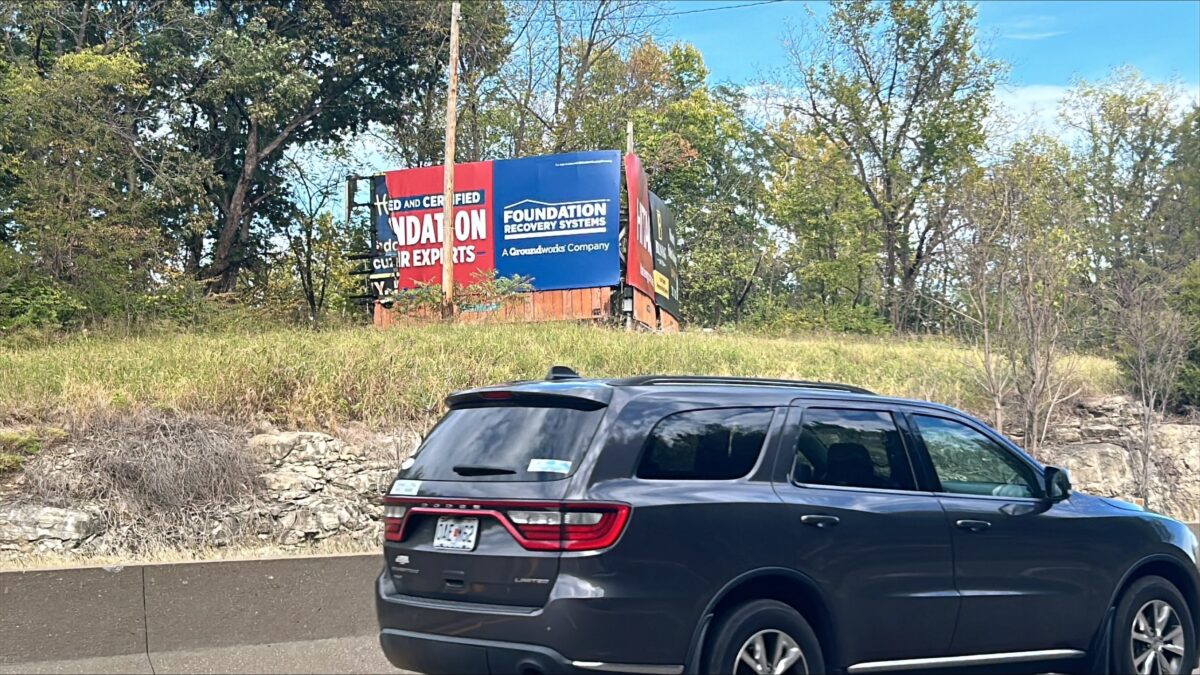
A fire that started in an encampment damaged a large chunk of an advertising billboard along Highway 50 in Jefferson City on Sunday night, according to the fire department.

Firefighters were called out at about 11:30 p.m. to a camp in the 1400 block of westbound Highway 50, the Jefferson City Fire Department stated in a news release. They found a fire “involving materials and a small structure” at the camp, JCFD stated.

About 20% of the billboard was burned in the fire, and electrical service to the board was disconnected because of damage to the wiring, according to JCFD.

Firefighters used a drone with thermal imaging to examine the camp for people, but no one was located. The cause of the fire is being investigated.

Open burning is illegal in Jefferson City limits.

Click here to follow the original article.

Tribal leaders gather in Palm Springs to raise concerns over proposed federal changes to sacred site protections

Raymond Kalra

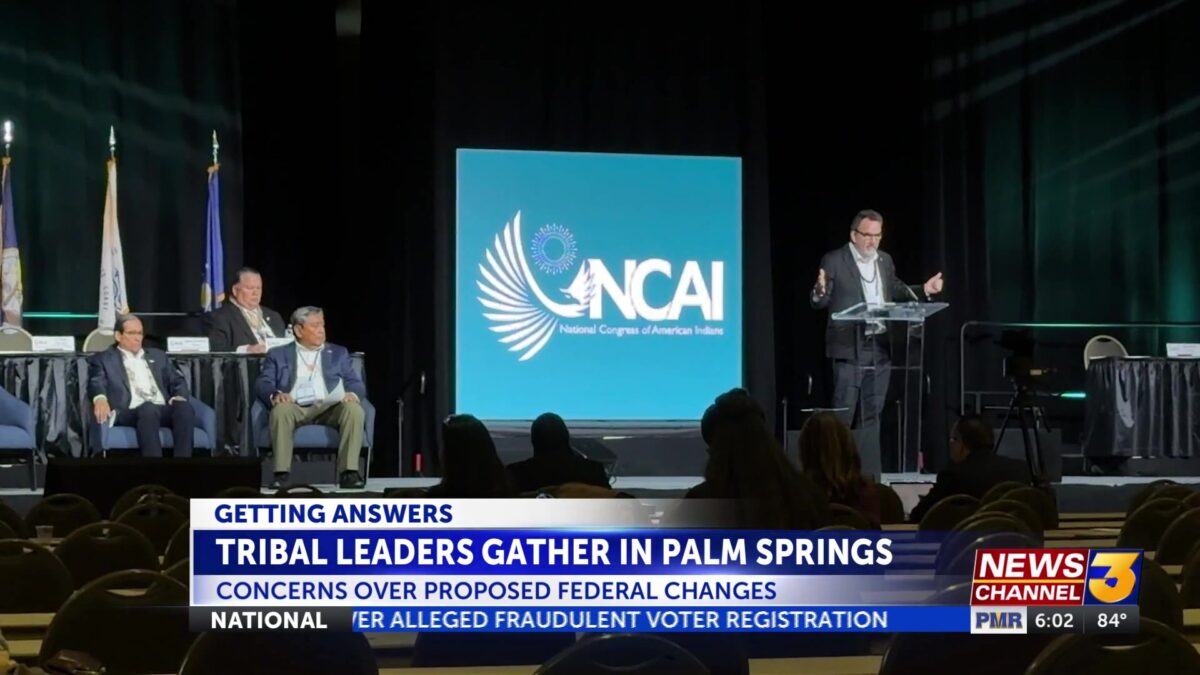
PALM SPRINGS, Calif. (KESQ) – Tribal leaders from across the country gathered in Palm Springs Monday, raising concerns over proposed federal changes they say could weaken protections for sacred sites, ancestral lands and generations of cultural history.

The National Congress of American Indians (NCAI) held a news conference Monday afternoon at the Palm Springs Convention Center as part of its 83rd Annual Convention and Marketplace, bringing together Tribal leaders to discuss proposed changes to Section 106 of the National Historic Preservation Act.

The federal law requires agencies to consider how certain federally involved projects could affect historic properties and consult with Tribal Nations when those projects could impact places of religious or cultural significance.

Tribal leaders warn that proposed changes in Washington could reduce their involvement in decisions about development and infrastructure projects, potentially putting culturally significant places at risk.

Pueblo of Acoma Governor Charles Riley told News Channel 3 that preserving these places goes far beyond protecting physical landmarks.

“It’s part of us. It’s not an object. It’s not a landscape. All those things are part of who we are. And that’s what people fail to understand,” Riley said.

“Our ancestors were there a long time ago, wherever it’s at, and they placed all their prayers, hopes and dreams in those places for us to have a better life later on, for those that are unborn to have a better life later on,” Riley added.

Riley said protecting those places is a responsibility passed down through generations.

“We have to be good ancestors for those unborn into the future,” he said.

What is Section 106, and why are Tribal leaders concerned?

Section 106 is part of the National Historic Preservation Act of 1966. It establishes a process for federal agencies to identify and consider the effects of certain projects on historic properties, including archaeological sites, traditional cultural places and locations significant to Tribal Nations.

The process requires consultation with affected Tribal Nations when applicable, allowing them to identify culturally significant places and raise concerns before federal decisions are made.

The proposed Bipartisan American Affordability and Jobs Act of 2026, introduced in the U.S. Senate as S. 5653, includes provisions that Tribal organizations say would weaken those requirements.

NCAI and other Tribal organizations are calling on Congress to withdraw Title III of the legislation.

According to NCAI, the proposed changes could narrow the circumstances requiring historic preservation reviews, reduce opportunities for Tribal consultation, increase federal oversight of Tribal Historic Preservation Offices and limit legal challenges to certain federal decisions.

Supporters of federal permitting reform have emphasized the need to streamline regulatory reviews and help infrastructure and development projects move forward more efficiently.

However, Tribal leaders argue that reducing consultation requirements could create additional conflict and potentially threaten important cultural resources.

Suquamish Tribe Chairman Leonard Forsman, who also serves as president of the Affiliated Tribes of Northwest Indians, told News Channel 3 that the consequences of insufficient consultation can be permanent.

“Burial grounds have been desecrated, important archeological places have been destroyed, and also important sacred landscapes have been altered and desecrated,” Forsman said.

Forsman explained that many culturally significant places are connected to Tribal identity, spirituality, ceremonies and histories spanning thousands of years.

He said Tribal Nations have a responsibility to protect those places for future generations.

Tribal leaders say development and preservation can work together

Despite their opposition to the proposed changes, Tribal leaders emphasized that they are not against infrastructure development.

Instead, they say early and meaningful consultation can help developers identify culturally significant locations, avoid disturbing sacred sites and complete projects without unnecessary delays.

During Monday’s news conference, Governor Riley described a pipeline project involving Kinder Morgan that he said demonstrated the benefits of early Tribal involvement.

Riley said the project involved a roughly 214-mile pipeline crossing trust lands.

Rather than attempting to stop construction, he said Tribal representatives worked with the company to make relatively small adjustments to the project’s route, helping protect sacred sites.

Cultural monitors also worked alongside company archaeologists and anthropologists to identify areas of concern.

According to Riley, that cooperation helped reduce project costs and allowed construction to finish earlier.

“We don’t hold up projects. We try and make it much more easier for us to communicate, show them, take them on the field, show them the different places so that we can talk about those places even before the project begins,” Riley told News Channel 3.

Forsman also described examples where consultation helped Tribal communities and developers identify and protect archaeological resources while allowing construction to proceed.

He said Section 106 creates opportunities for collaboration rather than automatically preventing projects from moving forward.

During the news conference, Forsman emphasized that the consultation process has been used successfully on thousands of projects.

He also argued that problems can arise when Tribal Nations are contacted too late in the planning process, after important decisions have already been made.

What could the proposed changes mean for the Coachella Valley?

News Channel 3 submitted a question during Monday’s news conference asking how the proposed changes could affect Tribal Nations in California, particularly here in the Coachella Valley.

NCAI President Mark Macarro addressed the question, connecting the national debate to decades of development across Southern California.

Macarro, who also serves as Tribal Chairman of the Pechanga Band of Indians, pointed to population growth and the expansion of residential developments, transportation corridors and energy infrastructure throughout the region.

He said those projects have transformed landscapes that hold cultural and religious significance for Tribal Nations.

Macarro specifically referenced development across the Coachella Valley and toward the Salton Sea, including transportation infrastructure, wind energy and solar projects.

He explained that many sacred and ancestral places extend beyond the boundaries of modern reservations, meaning federal consultation can be especially important when development occurs on lands outside a Tribe’s direct jurisdiction.

Macarro said protecting those places is not always as simple as identifying a single location on a map.

Entire mountain ranges, ridgelines and landscapes can hold cultural and religious importance.

He described how early consultation can allow Tribal representatives to work with developers on alternative routes for projects such as power lines, helping avoid significant places while still allowing needed infrastructure to be constructed.

Macarro warned that moving forward without those conversations could result in additional damage to culturally significant landscapes.

“We end up with this erasure of our cultural landscapes. And so that’s what’s at stake,” Macarro said.

He argued that consultation provides an opportunity for Tribal Nations to explain the significance of places that federal agencies or developers might not otherwise recognize.

Macarro also acknowledged the demand for new infrastructure in Southern California, but emphasized that development should not come at the expense of Tribal cultural heritage.

The discussion raises questions about how proposed federal changes could affect preservation efforts across the Coachella Valley, home to multiple Tribal Nations with deep ancestral and cultural connections to the surrounding desert landscapes.

However, the precise impact on individual local projects would depend on the circumstances of each project and whether federal historic preservation requirements apply.

Concerns over Tribal sovereignty and historic preservation offices

Governor Riley also raised concerns about proposed changes affecting Tribal Historic Preservation Offices, which play an important role in identifying, documenting and protecting cultural resources.

During his interview with News Channel 3, Riley expressed concern that proposed funding and oversight requirements could place additional pressure on offices already operating with limited resources.

He said new deadlines and federal oversight provisions could potentially diminish Tribal control over preservation activities.

In his remarks at the news conference, Riley also warned that the proposed legislation could change how federal agencies evaluate impacts on historic and culturally significant places.

He argued that limiting consideration of certain indirect or cumulative impacts could fail to account for how Tribal communities understand sacred landscapes.

For some Tribal Nations, he explained, the significance of an ancestral mountain or cultural landscape cannot necessarily be reduced to one specific location where an event occurred.

He also emphasized that early consultation can help prevent disputes that might otherwise delay development projects.

What happens next?

The Bipartisan American Affordability and Jobs Act of 2026 was introduced in the U.S. Senate on September 30 and referred to the Senate Committee on Energy and Natural Resources.

The proposed changes have not been enacted into law.

NCAI and other Tribal organizations are urging Congress to reconsider the historic preservation provisions and consult directly with Tribal Nations before moving forward with changes to the federal review process.

Tribal leaders say they support practical permitting reforms but want those changes to preserve meaningful consultation and protections for culturally significant places.

For Forsman, the issue ultimately comes down to preserving history and ensuring future generations maintain a connection to their ancestral lands.

He told News Channel 3 that Tribal Nations have a responsibility to protect those places in honor of generations that came before them and those who will follow.

As discussions continue in Washington, Tribal leaders gathering in Palm Springs say protecting sacred places and allowing responsible development do not have to be competing priorities.

They argue that early consultation can help accomplish both.

The National Congress of American Indians’ 83rd Annual Convention and Marketplace continues through October 22 at the Palm Springs Convention Center.

Click here to follow the original article.

El Paso’s Día de los Muertos Festival Returns October 24, 2026

Nichole Gomez

El Paso, TX(KVIA-TV) — The city is gearing up for its 9th annual Día de los Muertos Desfile & Festival, set to take place on Saturday, October 24, 2026, in the heart of the Downtown Arts District.

The beloved celebration honors the lives of those who have passed and the rich traditions that keep their memories alive. This year’s event promises a full day of family-friendly activities, including free arts and cultural exhibits, vibrant altars, live performances, local vendors, and more.

A highlight of the festivities is the iconic parade, proudly presented by GECU, which will wind through Downtown El Paso and showcase 60 entries featuring colorful floats, local organizations, and talented performers.

Organizers, including the MACC, MCAD, the City of El Paso, and Visit El Paso, emphasize that the entire event is free to attend.

Festival activities will run from 11 a.m. to 9 p.m., with the parade beginning at 4 p.m. Visitors are encouraged to join in honoring the legacy of loved ones and celebrating El Paso’s vibrant culture.

Below is the map for the event:

https://www.epmacc.org/documents/DDLM-Parade-Map.pdf?1792430306

Click here to follow the original article.

Columbia City Council approves new animal control facility

Demetra Alarcon

COLUMBIA, Mo. (KMIZ)

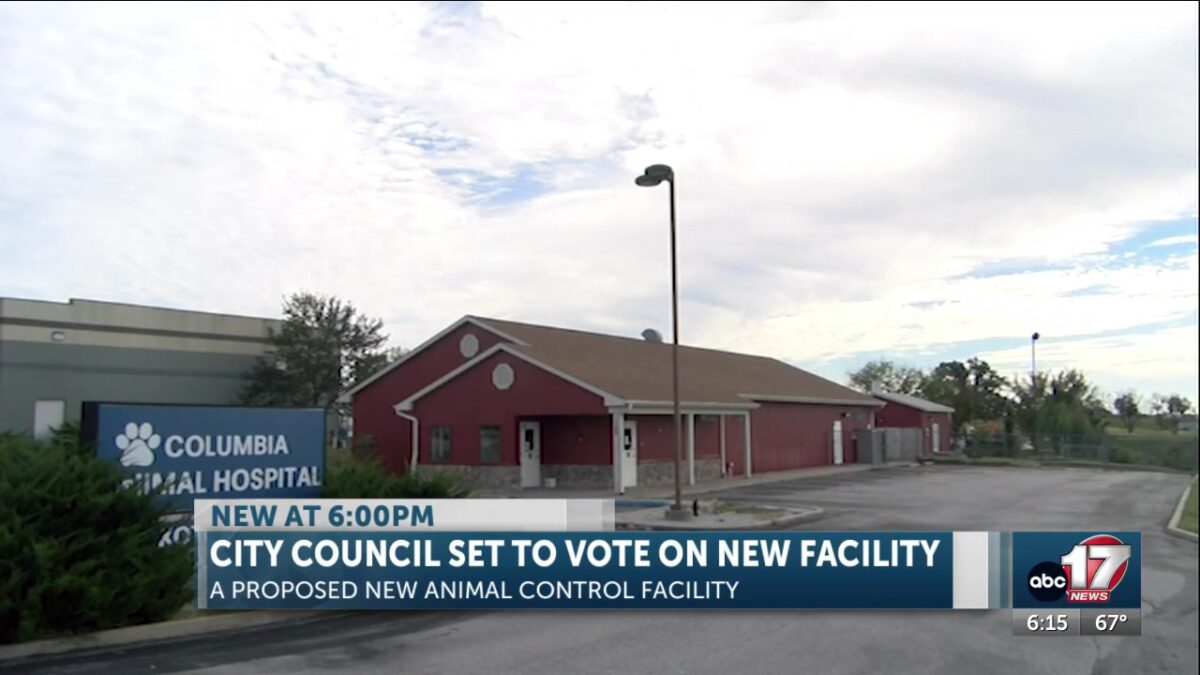
The Columbia City Council unanimously approved purchasing a new animal control facility at its meeting Monday night.

The former site of Columbia Animal Hospital, located at 1300 Boone Industrial Drive will house animal control operations. Operations will include animal shelter services, veterinary care and facility maintenance.

The property at 1300 Boone Industrial Drive costs $995,000. In a council meeting on Sept. 21, the proposal was for the City of Columbia to pay $595,000 and Boone County to pay $400,000. But documents set for a meeting on Oct. 5 show that the city will now take the full total out of reserves, and Boone County will contribute $400,000 at a later date.

Veterinary care for animal control is currently provided through a contract with the Central Missouri Humane Society, by Animal Control staff, and by the University of Missouri Veterinary Health Center.

Just recently, the Central Missouri Humane Society ended its contract with Boone County and Columbia’s animal control, making 2027 its final year providing services under the current contract. All other providers will continue to provide services, according to a memo from Monday’s meeting.

According to the memo, the Department of Public Health and Human Services plans to request proposals for new non-profit or private organizations to take over these services starting in 2028.

Currently, animal control relies on the Central Missouri Humane Society to house its animals; however, the new facility will bring those operations in-house.

Click here to follow the original article.

Bonneville teachers required to certify their ‘biological sex’

Sean Dolan

IDAHO FALLS, Idaho (IdahoEdNews) — Teachers in Bonneville School District will soon be required to sign a form certifying that they are either a biological male or female.

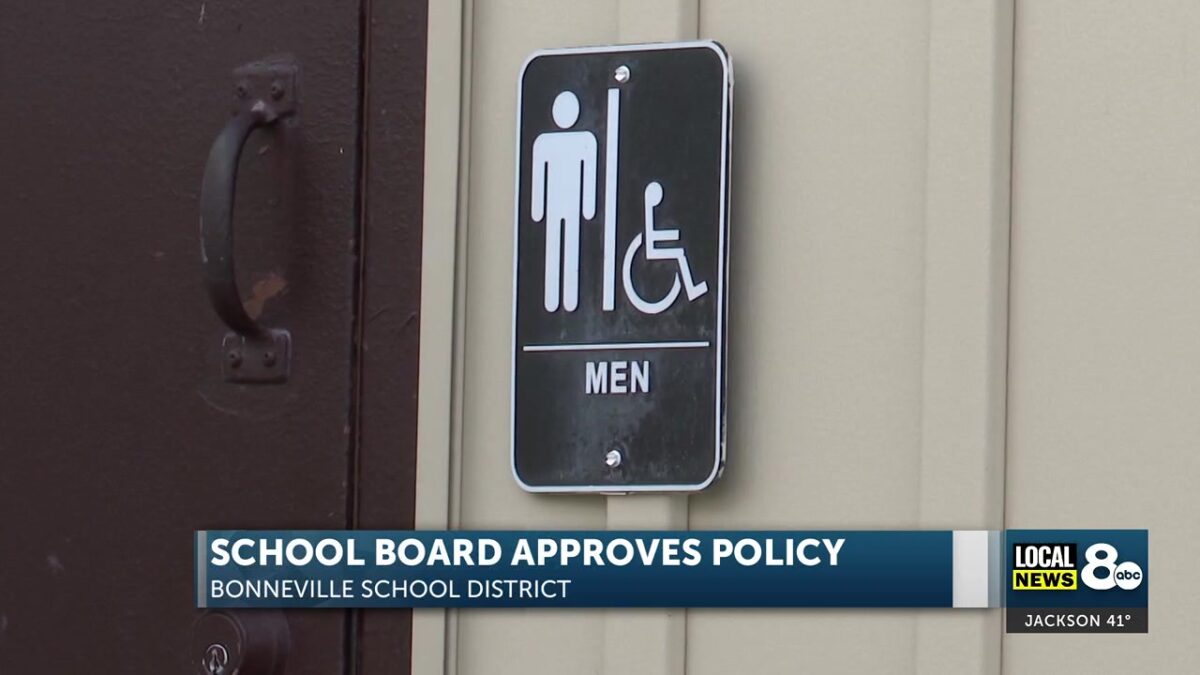
District leaders say the new requirement will ensure compliance with state law governing public school bathroom usage. Multi-occupancy school restrooms must be designated for either males or females and only members of those biological sexes are allowed to enter, as required under Senate Bill 1100, passed in 2023.

“As a public school district, we have a responsibility to comply with Idaho law, regardless of our individual perspectives about it,” Superintendent Scott Woolstenhulme wrote in a letter to employees on Thursday.

Woolstenhulme asked the school board to establish a “consistent process for employee verification.”

Trustees on Wednesday night approved a resolution(opens in new tab) directing the superintendent to create a form that district employees must sign certifying their biological sex, as defined in Idaho code:

“Male” means an individual who has, had, will have, or but for developmental or genetic anomaly or historical accident, would have the reproductive system that at some point produces, transports, and utilizes sperm for fertilization.

“Female” means an individual who has, had, or will have, or but for developmental or genetic anomaly or historical accident, would have the reproductive system that at some point produces, transports, and utilizes eggs for fertilization.

Idaho law — as established through 2024’s House Bill 421 — also declares that in human beings there are only two sexes, male and female. It was sponsored by Rep. Julianne Young, R-Blackfoot, and Rep. Bruce Skaug, R-Nampa.

“An individual’s sex can be observed or clinically verified at or before birth; Rare disorders of sexual development are not exceptions to the binary nature of sex; In no case is an individual’s sex determined by stipulation or self identification,” Idaho law states.

Scott Woolstenhulme, superintendent of the Bonneville School District

In Woolstenhulme’s letter, he said employees provided information during the hiring process “without necessarily being asked to verify that it aligns with these specific statutory definitions.”

“That creates a practical challenge for the district,” he wrote. “We are responsible for following state law, but we cannot make assumptions about an employee’s biological sex based on names, appearance, or other personal characteristics.”

The most “appropriate and respectful” approach, he wrote, is to ask employees to verify their own information using the definitions in Idaho law.

The draft form attached to the resolution indicates that the forms will be individualized for each employee and include the “biological sex” currently recorded by the district. The employee would then have to indicate if that sex is accurate. If not, they would check a box for male or female.

“Human Resources will contact employees who report an inaccurate designation to clarify the information and discuss next steps,” the draft form states. “These communications will be handled confidentially in accordance with applicable law.”

The form then includes a box to indicate if an employee would like HR to contact them.

By signing the form, the employees have to acknowledge that they understand they can only use restrooms and changing facilities that correspond with their biological sex.

“Employees who have questions about their individual circumstances or need to discuss possible accommodations can contact our Human Resources confidentially,” Board Clerk Samantha Williams told EdNews.

District could review medical documentation

According to the resolution, the district will keep certifications, discrepancies and accommodation requests as confidential personnel records. That includes medical records.

“Medical documentation, when obtained, shall be maintained separately from ordinary personnel records to the extent required by law. Access shall be limited to personnel with a legitimate administrative need to know,” the resolution states.

Law has brought legal challenges

The Boise School District recently settled a lawsuit over Senate Bill 1100.

As EdNews reported last month, the district’s insurer paid $34,000 to a former student who encountered a transgender classmate in the girls’ bathroom at Boise High School. She argued that the district violated SB 1100.

In May, Attorney General Raúl Labrador announced that plaintiffs had dropped a lawsuit against SB 1100.

A Boise High student club called the Sexuality and Gender Alliance challenged the law, arguing that it would “categorically exclude every transgender student across Idaho from every school restroom and other sex-separated facility matching their gender identity.”

In his press release announcing the end of the legal challenge, Labrador stated that he defended Idaho’s right to “protect students’ privacy in bathrooms and locker rooms.”

Labrador’s announcement left out the fact that one of the plaintiffs in the lawsuit, 16-year-old May Pollard, died by suicide in January. Her parents spoke to NBC News in July.

“There is a huge amount of animosity, every single day, thrown at trans kids,” Joseph Pollard told NBC.

Click here to follow the original article.

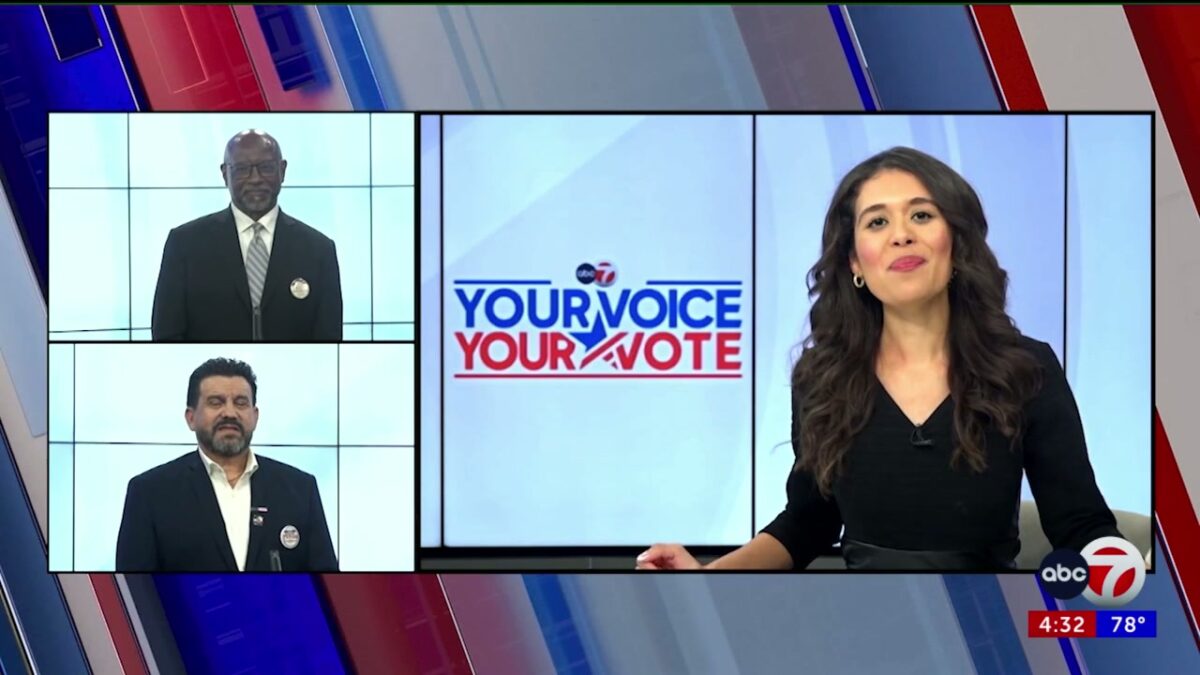
Candidates for El Paso County Commissioner Precinct 2 discuss Sheriff’s Office budget, property taxes

Rosemary Garcia

EL PASO, Texas (KVIA) — With early voting kicking off Monday in Texas, ABC-7 is sitting down with candidates in local races to help keep voters informed.

For El Paso County Commissioner Precinct 2, voters will see two candidates on their ballot. The race is between Republican Matt Sistrunk and Democrat Miguel ‘Mike’ Teran.

As ABC-7 has reported, the El Paso County Sheriff’s Office currently faces a $5.9 million budget deficit. ABC-7 spoke with both candidates about how they would address the shortfall while ensuring responsible use of taxpayer dollars.

The candidates were also asked what they would do to reduce property taxes in El Paso County.

You can watch the full debate Monday on ABC-7 at 4. To visit our full voter guide, click here.

Click here to follow the original article.