Idaho Falls Zoo among 30 facilities across the world to earn AZA accreditation

Danielle Mullenix

IDAHO FALLS, Idaho (KIFI) — The Idaho Falls Zoo at Tautphaus Park has earned accreditation from the Association of Zoos and Aquariums in the organization’s latest round of international reviews.

The AZA announced Tuesday that 30 facilities earned accreditation during its fall 2026 accreditation process. Three other facilities were denied.

For the Idaho Falls Zoo, the accreditation recognizes the facility for meeting AZA standards in areas including animal care, veterinary services, staff training, safety, education, and conservation.

The accreditation process includes a detailed application and a rigorous multi-day, on-site inspection by an independent team of zoo and aquarium professionals.

Inspectors review nearly every part of a facility’s operations, including animal care, veterinary programs, staff training, educational programs, conservation efforts, financial stability, safety, and guest services.

The process doesn’t end with the inspection. AZA’s Accreditation Commission reviews reports from the inspection team and the facility, then holds a formal hearing with zoo leaders before making a final decision.

AZA-accredited facilities must go through the accreditation process every five years to maintain their status. Three facilities were denied accreditation during this round: Baylor University Bear Habitat in Texas, the Indianapolis Zoological Society, and Wildlife Safari in Oregon.

The Idaho Falls Zoo is located at Tautphaus Park and is home to a variety of animals from around the world.

With the latest accreditation decisions, Idaho Falls is now one of the 255 AZA-accredited facilities in 12 countries.

Celebrate with the Zoo

Idaho Falls residents still have a few chances to visit the zoo before the regular season ends for the year.

The zoo’s regular season wrapped up September 27, but the gates will reopen for two special October weekends — October 2-4 and October 9-11, weather permitting.

The zoo will be open Friday through Sunday from 9:30 a.m. to 5 p.m., with the last admission at 4:30 p.m.

So if you’ve been waiting for one more fall visit, there are just six more regular admission days on the calendar before the zoo closes for the season. Boo at the Zoo will also be returning later this fall.

Click here to follow the original article.

Colorado Rockies win inspires Cleveland Guardians fans to donate more than $20,000 to Denver nonprofit

By Chierstin Roth

Click here for updates on this story

    DENVER (KCNC) — It’s hard to cap a 100-plus-loss season on a positive note. But the Colorado Rockies found a way to manifest a silver lining at the end of a losing season. It’s thanks to a pair of Hunter Goodman home runs, and a group of Cleveland Guardians fans with a stake in the team’s success in their final series against the Chicago White Sox.

Goodman’s bombs propelled Colorado to win, helping the Cleveland Guardians clinch the AL Central. That prompted fans from more than 1,000 miles away to rally behind the Rockies catcher.

“This is such a positive exchange of memory between two baseball clubs that you know had no reason to connect on a Saturday night in October, but a reason came up, and the fans loved it,” said Jim Kellogg, the team’s vice president of community and retail.

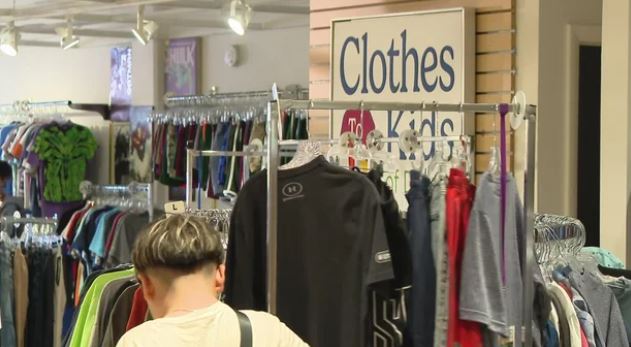
Through their excitement, fans decided to donate to a nonprofit of Goodman’s choosing. He landed on Clothes to Kids of Denver, and the donations started piling in.

“It was like a scene from a movie,” said Kathleen Phillips, the organization’s executive director. “It truly was, and now we’re up to more than 700 Guardians fans have donated so far, and more than $20,000.”

Clothes to Kids allows students to visit and shop every few months for a week’s worth of clothing — for free. “Clothe a child, change a life,” is the nonprofit’s motto.

The organization is on pace to serve more than 16,000 kids this year alone. The more than $20,000 in donations will be an enormous help.

“Knowing that we’ll have the funds to be able to keep our shelves filled, we’re just so incredibly grateful,” Phillips said.

And the donations keep rolling in. Clothes to Kids’ donation center is always accepting donations and is open every Tuesday to Saturday.

“It would say, ‘Guardians fans in gratitude to Hunter Goodman,'” Phillips explained.

Nobody could have expected the support that was received from Cleveland’s fan base, but it shows the beauty of baseball and the power of sports.

“It’s creating great memories, and it’ll be stories told in the future,” Kellogg said.

“I just can’t even express, of course, our excitement, but our sincere gratitude to be the beneficiary of their generosity and their excitement for their team,” Phillips added.

Please note: This story was provided to CNN Wire by an affiliate and does not contain original CNN reporting. This content carries a strict local market embargo. If you share the same market as the contributor of this article, you may not use it on any platform.

New “A Different World” series holds deep connection to Atlanta HBCUs

By Leondra Head

Click here for updates on this story

    ATLANTA (WUPA) — It’s been three decades since the show “A Different World” ended. Now a new generation is heading to the fictional HBCU Hillman College.

The new Netflix series was filmed on Atlanta HBCU campuses in the Atlanta University Center.

Actress Jasmine Guy is back as Whitley Gilbert. She’s now a mother watching her youngest child leave for college.

“I’m loving revisiting our roles from the original show, but also the interaction with our new Hillman class, the freshman class,” Guy said.

For Guy, the new series means big changes for her character.

“She’s 60 … 58 years old. I’m older than Whitley is,” Guy said. “She’s a mother of three. She’s had her own business as a beauty mogul. At this time in her life, this is her last baby that’s going away. She and Dwayne are not quite connecting.”

As the new students find their place at Hillman, the series also touches on challenges facing HBCUs.

“The struggle with HBCU funding is prevalent in our first season because it’s affecting scholarships, housing,” Guy said.

Kennedi Reece plays a student raised in church in a small town who’s now navigating college life and new relationships.

“It also just touches on friendships and relationships as you’re navigating being at college at the first time,” Reece said.

Reece filmed the show while attending Howard University.

“I experienced Howard, and then I experienced AUC, and then I also experienced Hillman, and they’re all connected. I just had so much support from the cast,” Reece said.

“She was finishing her senior year at Howard,” Guy said.

Chibuikem Uche plays a fashion entrepreneur with Ghanaian and Nigerian roots. He says the HBCU connection extended behind the cameras.

“Nearly 60% of our crew were current HBCU students or alumni. So just having that environment to work in just adds to the authenticity,” Uche said.

For Guy, Atlanta was the perfect city to shoot the new season in.

“We grew up across the street from Morehouse because my dad taught at Morehouse. I went to the Spelman Dance School. So it’s kind of a feeling of being back home. We didn’t feel this love shooting ‘A Different World’ in LA – let me just say that,” Guy said.

The cast hopes the show gives viewers a closer look at what an HBCU can mean to its students.

“I think that the difference in going to an HBCU in general is that your teachers are invested, the school is invested, and they’re not going to let you fall,” Guy said.

Please note: This story was provided to CNN Wire by an affiliate and does not contain original CNN reporting. This content carries a strict local market embargo. If you share the same market as the contributor of this article, you may not use it on any platform.

Tito “Hood Santa” Rodriguez starts free plumbing school in honor of his brother

By Rina Nakano

Click here for updates on this story

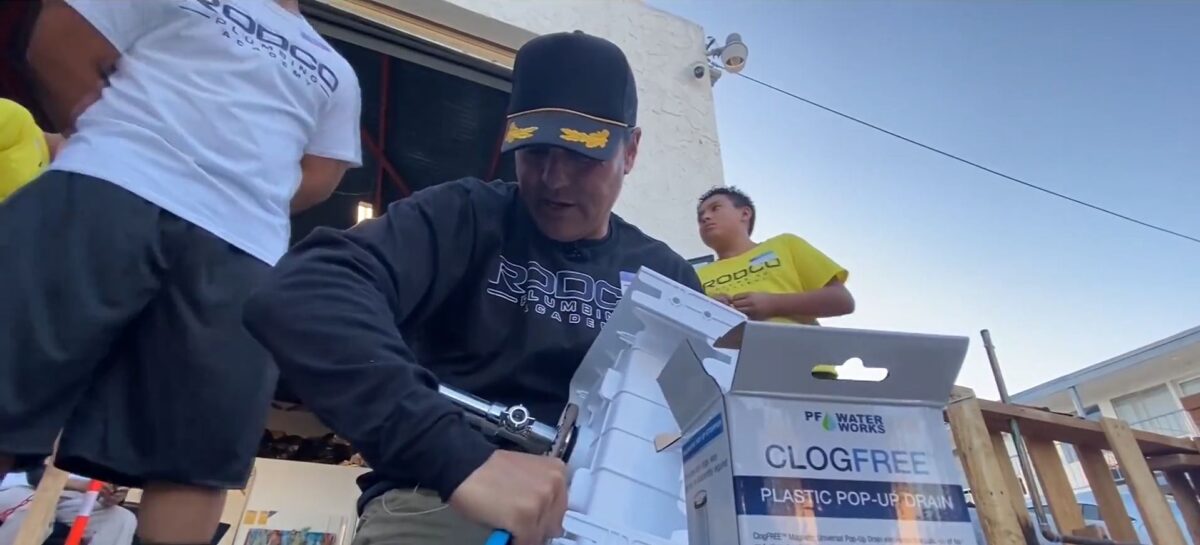
    LONG BEACH, California (KCAL, KCBS) — Tito Rodriguez, also known as “Hood Santa,” isn’t just giving gifts; he’s dropping knowledge.

College may not be the path for everyone, and new statistics are proving that. Many Gen Z and Millennial workers who joined the trades are experiencing the lowest unemployment in decades.

The founder of the Local Hearts Foundation grew up poor in Long Beach after his father died when he was just six years old. His older brother, Raul, helped support the family as a plumber.

“He taught me to be mechanical, to work hard. He told me, ‘bro, if you learn to work with your hands, you’ll never be broke.’ Those were his exact words,” Rodriguez said of his brother Raul.

He followed in his footsteps and worked as a plumber for 10 years. “Around that same time, I produced some platinum music for Snoop Dogg,” Rodriguez said.

Once music started paying the bills, he created the non-profit to give back to his community. But last year, his brother Raul died from cancer. In his honor, he launched Rodco Plumbing Academy, a free plumbing class for teens, taught and paid for by Rodriguez.

“You don’t really see girls plumbing … so I thought I’d try it,” student Mya Castillo said.

This comes just as a new analysis from the think tank Burning Glass Institute shows workers between the ages of 22 and 34 with no college degrees have the lowest unemployment rate in 20 years. They are choosing AI-proof trades

“Plumbing is the past, present, and the future. It ain’t never going to go out,” Rodriguez said.

“The streets are rough, tough, and dangerous. And it’s to give them something to think about. They don’t have to sell drugs. They don’t have to join a gang. They don’t have to follow a cousin that’s into nonsense. You can become a blue-collar worker, make money… and save your cousin, too.”

The Rodco Plumbing Academy always welcomes volunteers and donors to be part of the program. For more information, search “Local Hearts Foundation.”

Please note: This story was provided to CNN Wire by an affiliate and does not contain original CNN reporting. This content carries a strict local market embargo. If you share the same market as the contributor of this article, you may not use it on any platform.
Judge ends federal monitoring of Oakland Police Department after a record 23 years

By John Ramos, Carlos E. Castañeda

Click here for updates on this story

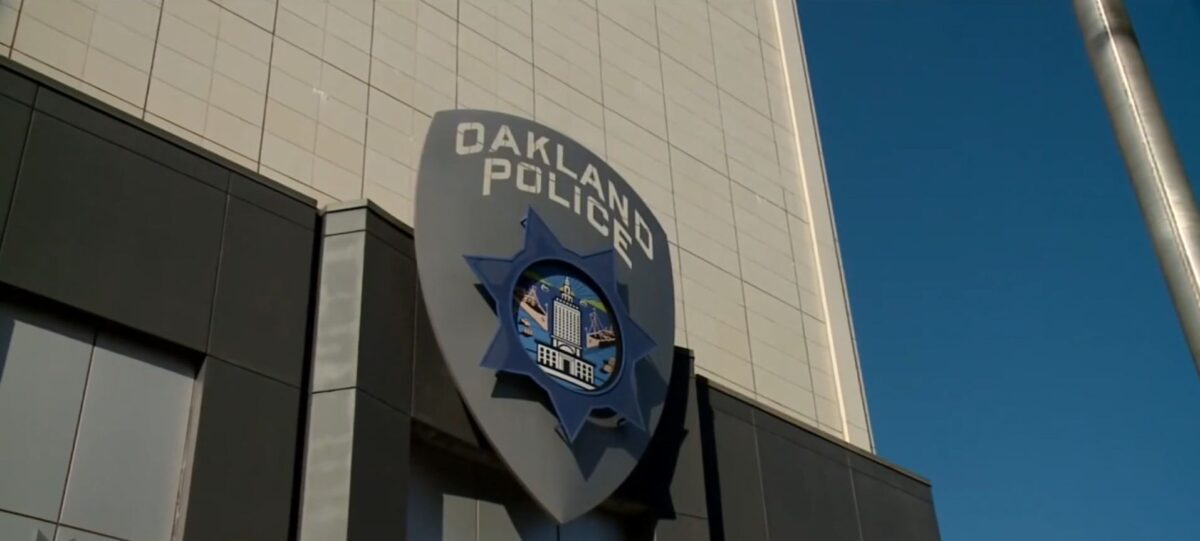
    OAKLAND, California (KPIX) — A federal judge on Tuesday ended a 23-year court monitoring of the Oakland Police Department, the longest federal oversight of a police department in the nation’s history.

At a hearing on Tuesday at U.S. District Court for the Northern District of California in San Francisco, Judge William Orrick ended the monitorship, saying that the decision brings oversight of the department “back where it belongs.” For many in the community, the actual dispute with the federal monitor has been a little confusing.

“The oversight never showed us what the police department is lacking on it,” said Ali Alvasiery, an Oakland resident and business owner. “Everything is just paperwork between him (federal monitor Robert Warshaw) and the police department. But there’s nothing that’s affecting the residents of Oakland.”

Alvasiery founded a community group called Oakland Safe. They gathered for lunch on Tuesday after petitioning the judge to end the longest police oversight case in the nation’s history.

“For 23 years, there’s probably half the police department that’s already retired,” said Alvasiery. “Those bad officers are already gone. So that doesn’t mean that the police department is bad. We cannot look at just the city of Oakland’s police department as bad. There’s bad officers all over the United States.”

But another group, the Coalition for Police Accountability, also sent the judge a letter urging that the oversight monitor stay in place. Millie Cleveland, who chairs the coalition, said recent events show that it is still needed.

“There are some questionable police scandals that are current that need to be investigated,” she said. “The police department cannot investigate themselves. They cannot oversee themselves. Either it’s a federal monitor, or it’s effective civilian oversight.”

Cleveland said that would require the city fully funding the operation of the city’s Inspector General, tasked with monitoring OPD’s ongoing compliance. And despite what she called ‘scandals’ happening while the oversight was in place, Cleveland said they could not afford to let it go.

“We have a situation where even today they are not in compliance,” she said. “So, if they’re not in compliance at this pivotal time, where they’re under scrutiny of the judge and the monitor, what would the behavior be if they feel nobody’s overseeing them?”

But back at Safe Oakland, local NAACP President Cynthia Adams said OPD has shown a lot of improvement under the mandate, and should get a chance to prove itself.

“Let us work together, work with the mayor, Barbara Lee, and show you what we can do as a community. And show how we have grown from 20 years under this,” Adams said. “If the community sees you out there and sees you doing what you’re supposed to do, you’re building a relationship with the community.”

But Cat Brooks wasn’t buying it.

“We get calls every single week about people that have negative encounters with the Oakland Police Department,” she said.

Brooks founded the Anti-Police Terror Project after the killing of Oscar Grant and said not much has changed–even with the monitor–for Black residents in East and West Oakland.

“The problem is we’re tinkering around the edges. We need to be adjusting from the inside. The whole thing needs to change,” said Brooks. “The culture is a problem. The people, individually, as they walk into that, are not the problem. But they get impacted by the culture. The culture is one of ‘subdue, suppress, force them to compliance.’ And it looks at the people in the flatlands as the enemy.”

The federal court monitoring began following the notorious 2000 “Riders” case involving officers who allegedly planted evidence, falsified police reports, and beat suspects. Although no officers were convicted after two lengthy trials, the scandal led to civil and financial settlements, along with a 2003 “Negotiated Settlement Agreement” requiring the OPD to carry out dozens of reforms having to do with use of force, racial profiling, officer discipline and department transparency, among other reforms.

Repeated high-profile police misconduct incidents continued to deepen mistrust between the department and the community, including the aftermath of the deadly BART police shooting of Oscar Grant, and a sex abuse scandal involving the underage daughter of a police dispatcher connected to law enforcement officers in Oakland and across the East Bay.

In June of 2016, Oakland went through four police chiefs in nine days. That November, voters established more oversight with a civilian police commission looking over the department. Over the years, the department made progress on its reforms, even as there was frequent backtracking.

At Tuesday’s hearing, John Burris, one of the original plaintiff attorneys in the Rider case, likened the work of obtaining federal compliance to the Greek mythological figure Sisyphus, condemned by the gods to roll a boulder up a hill, only to have it roll back and force him to start over.

“We have been involved in pushing that rock up the hill for 23 years and each time it got close it would fall back down,” Burris said. “We’ve pushed the rock as far as we can, but now it’s up to the city to take hold of this rock and see if they can not only push it to the top of the hill but to maintain it.”

Please note: This story was provided to CNN Wire by an affiliate and does not contain original CNN reporting. This content carries a strict local market embargo. If you share the same market as the contributor of this article, you may not use it on any platform.
Lindsay Clancy’s lawyer says there’s “no evidence” she admitted to killing her kids

By Kristina Rex

Click here for updates on this story

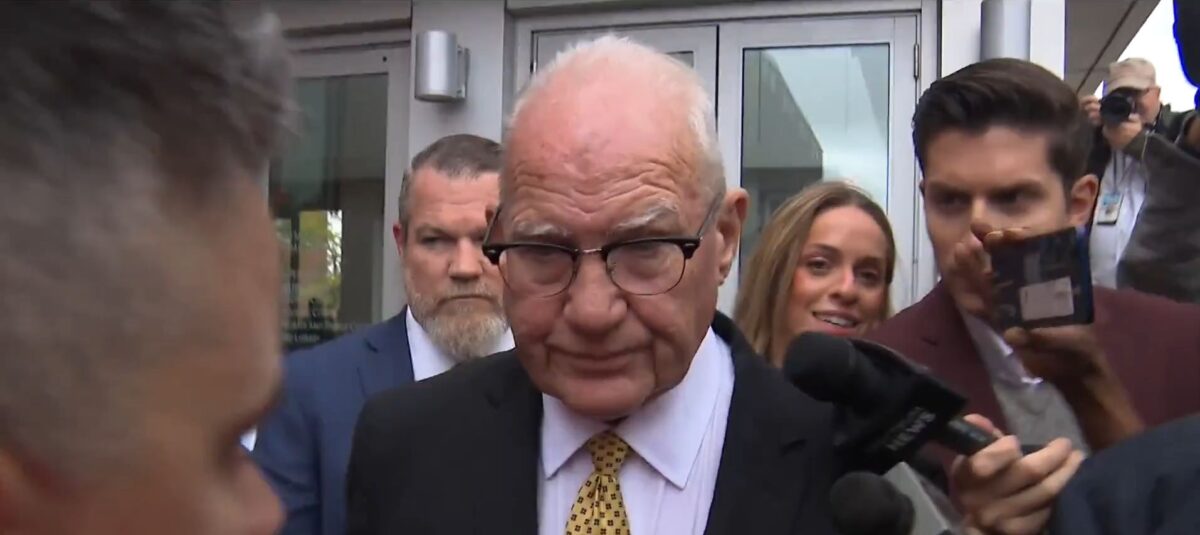
    BOSTON (WBZ) — In a surprising turn in Lindsay Clancy’s first hearing since her mistrial in early September, her lawyer, Kevin Reddington, argued that there was no evidence she killed her kids.

Reddington was arguing a renewed motion for a required finding of not guilty, asking the judge to find that the evidence presented at trial was legally insufficient for a rational jury to find Clancy guilty beyond a reasonable doubt.

Legal experts have told WBZ that the motion itself is a long-shot attempt to avoid a second trial. Prosecutors have not explicitly stated plans to retry Clancy.

On Tuesday, Reddington argued that prosecutors hadn’t met their burden – that Clancy killed her children beyond a reasonable doubt – at trial.

“Where is the evidence that she did this? Where is the evidence that she did this?” Reddington said. “This entire case is based on speculation. Where is the admission? Where does she say that she did this?”

Reddington launched into a list of evidence he said didn’t pass muster, including Clancy’s body temperature and testimony from her ex-husband, Patrick.

“There’s no evidence that she admitted she did this,” Reddington said.

Reddington’s argument Tuesday appeared to conflict with arguments he made repeatedly before and during the trial. In his opening statement in July, Reddington said Clancy “knows what happened to those kids.”

In a pretrial hearing back in June, Reddington said, “She takes responsibility. She, as the kids say, she owns it. She’s not running away from anything here. This whole case is an extreme tragedy.”

Reddington also offered to stipulate – in writing – that Clancy admits to killing her kids, in an April 2026 motion. In that motion, he had asked the judge to bifurcate the trial or split it in two: one trial for Clancy’s guilt and another for her mental state. That request was denied.

Reddington told the judge Tuesday that he was making his required-finding argument in two parts, consistent with his earlier request to bifurcate the trial. First, he argued prosecutors failed to prove that Clancy committed the killings beyond a reasonable doubt. He then argued they also failed to prove that she was criminally responsible for them. “You’re put in a conundrum when you have to admit culpability in order to raise a lack of criminal responsibility,” he explained to the judge.

Still, Reddington’s comments surprised prosecutors, too. “Now for the first time the defendant is arguing that there’s no evidence that she did this,” prosecutor Shanan Buckingham said in response. “I would suggest to you that the entire record is voluminous as to information supporting the fact that she did this.”

When asked outside of court to clarify whether he’s claiming Lindsay Clancy did not kill her kids, Reddington told WBZ-TV’s Kristina Rex, “Look, I argued that in the trial, I argued it on a motion for a required finding, it’s not new rocket science by any means. It’s the fact that [prosecutors] cannot prove a probable cause.”

WBZ-TV legal analyst Jennifer Roman said the strategy shift is very unusual. “It’s really bizarre to me that he’s completely changed his entire strategy and approach to this case, after the fact, on something as substantive as whether or not she actually killed the children,” Roman said.

Analysts say the move could be to pressure prosecutors not to retry the case.

“We’re doing a very thorough review right now,” Plymouth District Attorney Tim Cruz said outside court. “And we’re going to continue to do our job to make sure that we do what’s best for the interest of justice and the interest of the three children.”

The next hearing in the case is scheduled for Nov. 2.

Please note: This story was provided to CNN Wire by an affiliate and does not contain original CNN reporting. This content carries a strict local market embargo. If you share the same market as the contributor of this article, you may not use it on any platform.
Blood-soaked shoes, hidden handgun and alleged confession revealed in Cordova murder hearing

By Kayla Davis

Click here for updates on this story

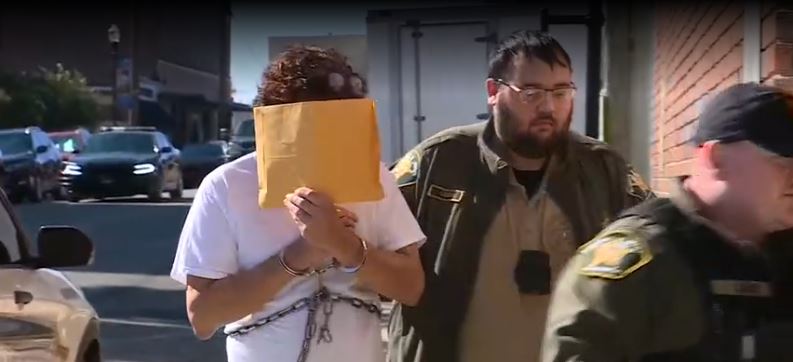
    WALKER COUNTY, Alabama (WVTM) — A bloody crime scene, a hidden handgun and an alleged confession detailing how he tracked his ex-girlfriend were among the new details revealed Tuesday in the Cordova capital murder case against Billy Wayne Reid.

Reid is charged with capital murder and accused of killing his ex-girlfriend Sandra Moore on Aug. 19. It happened just days after he was released on bond for charges of kidnapping, domestic violence and stalking.

The victim in that case was also Moore. Agent Daniel Haynes, a veteran law enforcement officer with over 20 years of experience, testified that Reid was under a court order to stay away from Moore and had previously been trespassed from her apartment.

Haynes says on Aug. 19, Cordova police discovered Moore’s body during a welfare check requested by her mother. Alabama State Bureau investigators found blood on the front porch, door, and door handle, along with signs of a struggle inside the apartment. The living room contained large amounts of blood on the floor, furniture, walls and ceiling, broken glass from a sliding door, bullet casings, and a bullet hole in the wall.

A drag pattern led from the living room to the bedroom, where Moore’s body was discovered under covers on the bed, surrounded by 12 photographs of her and Reid, with a cross placed on her body in a ritualistic manner.

Reid told investigators he lay in bed with Moore’s body for several hours after the murder and said he was, “not a cold-blooded killer.”

Haynes described Moore’s injuries, including disfigurement of her skull and face, blunt force trauma, puncture wounds, defensive wounds, broken fingers on her right hand, and cuts from glass.

Two notes were found in the apartment, one signed by Reid stating, “My wife’s truck is parked down by the school. Her blood is on Cordova police’s hand, they made me do this, I was good to her.” The second note listed Brandy Reid’s name and phone number and said, “Tell her I love her.”

Brandy Reid, Billy Reid’s niece, told police Reid confessed to killing Moore just hours after the murder. They met at the Jack’s in Trussville and sat in the car for hours while Reid detailed the murder. She said Reid described placing a GPS tracker on Moore’s car and following her Aug. 18, when he saw her with another man at a Taziki’s.

Reid’s phone, which investigators say he tossed in an abandoned Midfield building after the murder, pinged at Moore’s apartment at 1:56 a.m. on Aug. 19. Later that day, Reid snuck into Moore’s apartment through a sliding door and waited for her return. According to Brandy, Reid said Moore was scared when she found Reid in her home, got her handgun and shot nine times during the confrontation. Following the shots, Reid said to Moore, “You tried to kill me.”

That murder weapon, a pink 9-millimeter handgun purchased by Moore, was recovered after Reid revealed its location inside an AC return behind drywall. The gun, covered in blood and filled with blood in the magazine, was determined to have been used to inflict Moore’s blunt force trauma injuries. The doctor confirmed in the preliminary autopsy it was clear Moore was “pistol-whipped.”

Reid confessed to leaving Moore’s Jeep Liberty in a nearby school parking lot after Reid was located in Moody, Alabama, wearing a dark blue shirt and jeans at the time of his arrest.

A search warrant revealed Reid withdrew $9,500 from Wells Fargo on Aug. 18, with surveillance footage showing him wearing a gray t-shirt that matches the bloody gray T-shirt taken from Moore’s residence. Brandy confirmed Reid confessed to changing clothes and even wished he had changed his shoes as well.

Investigators found footprints matching Reid’s tennis shoe tread pattern throughout the scene. The tennis shoes were covered in blood when they were confiscated.

Investigators in the case interviewed two of Moore’s neighbors. They reported hearing loud banging noises the night of Aug. 18 and arguing the morning of Aug. 19.

The Walker County judge found probable cause in the case. Reid was ordered to remain in custody without bond.

The family and district attorney refused to talk Tuesday.

Please note: This story was provided to CNN Wire by an affiliate and does not contain original CNN reporting. This content carries a strict local market embargo. If you share the same market as the contributor of this article, you may not use it on any platform.
Surfer and fishermen rescue two people and a dog after boat capsizes

By John Perik

Click here for updates on this story

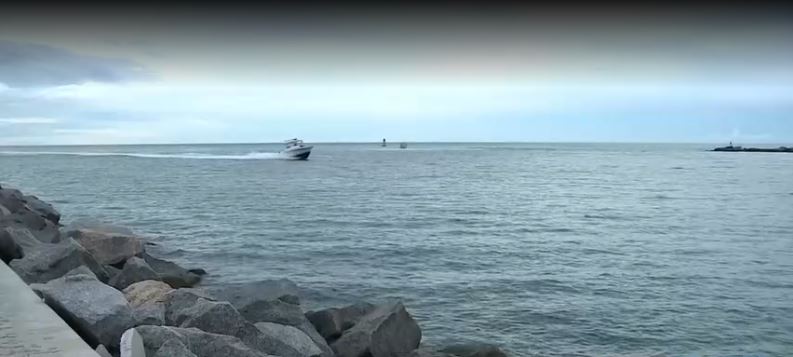
    PALM BEACH SHORES, Florida (WPBF) — A surfer and two local fishermen worked together Saturday to rescue two people and a dog after their boat capsized in rough waters off Palm Beach Shores.

AJ Castronovo, a surfer, witnessed the incident while riding waves.

“The second wave came; it was bigger, already breaking, and unfortunately, I noticed there was a boat,” Castronovo said. “It was right in front of the wave. That wave came and just absolutely rolled the boat over on its side. Both people were ejected from the boat.”

Castronovo quickly swam toward the capsized boat to help but found himself in danger as another wave approached.

“This boat is now coming at me. I figured this is about it for me; the boat is coming at me sideways, another wave behind it, nowhere for me to go,” he said.

Miraculously, Castronovo managed to swim underneath the overturned boat, where he found the two people in distress.

“They seemed like they were breathing in water, weren’t doing too well,” he said.

Castronovo pulled the pair onto his surfboard and began swimming them to safety. Soon, a local fisherman, Chad Smith, and his son arrived on a boat to assist.

“Chad Smith came up like he’s done it 100 times,” Castronovo said.

Together, they hoisted the man and woman onto the fishermen’s boat.

As the rescue concluded, Castronovo recalled a surprising moment.

“He starts pulling away, and we hear another surfer saying, ‘Hey, hey, what’s going on?’ He lifts his hand up in the air and says, ‘I got the dog,'” Castronovo said.

Authorities said the two people were taken to the hospital and are okay.

“If the people are out there, I hope you’re safe and get a new boat,” Castronovo said.

Riviera Beach Fire Rescue and the Palm Beach County Sheriff’s Office responded to the incident, too.

Please note: This story was provided to CNN Wire by an affiliate and does not contain original CNN reporting. This content carries a strict local market embargo. If you share the same market as the contributor of this article, you may not use it on any platform.
Eighth grader with Williams syndrome scores touchdown in middle school football game

By Jay Motiwala

Click here for updates on this story

    YADKIN COUNTY, North Carolina (WXII) — Gabe James, an eighth grader at Starmount Middle School in Yadkin County, took the field Tuesday night and scored a touchdown in a middle school football game, fulfilling a dream despite living with Williams syndrome, a rare genetic condition.

“It’s gonna get loud!” Gabe James said, eagerly anticipating the game.

Gabe’s excitement for football was evident throughout the day.

“Playing with my football players!” he said, when asked what he was most looking forward to.

His father, Rich James, shared how much Gabe loves the sport.

“He watches highlights, in the morning, of games from the past weekend or whatever,” Rich James said. “So he’s getting stoked about it.”

Grace Wells, Gabe’s teacher, expressed her joy in seeing him get this opportunity.

“I love that Gabe gets this opportunity, out on the football field, because football is his everything,” Wells said. “He talks about it daily.”

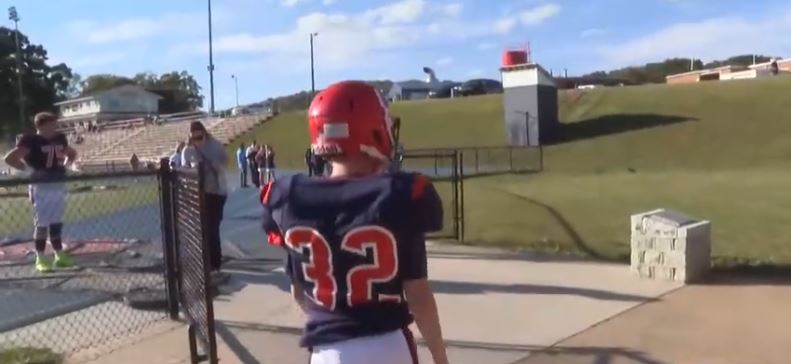
When the big moment arrived, Gabe suited up to play against Forbush Middle School. His excitement was clear as he greeted fans and teammates.

“Everybody loves that youngin. There is nobody that would say that they do not love that kid,” said Jeff Swaim, Starmount Middle School’s football coach.

He explained that the team wanted to give Gabe this chance because of how much it meant to him.

“Anytime we can do something like that to help one of our kids, we’re all for it,” Swaim said.

As the game began, Gabe ran through the banner and lined up on the field. Then came the moment everyone had been waiting for: he ran the ball into the end zone on the first play of the game.

The crowd erupted in cheers as Gabe scored. His mother, Ashley James, was overcome with emotion.

“I’ve been crying most of the day, like happy tears. This was a dream come true for him. Between this school and Forbush allowing this to happen, this is what it’s all about,” she said.

When asked who he dedicated the moment to, Gabe said, “For my whole family! And my band room! And my cheerleaders!”

Please note: This story was provided to CNN Wire by an affiliate and does not contain original CNN reporting. This content carries a strict local market embargo. If you share the same market as the contributor of this article, you may not use it on any platform.
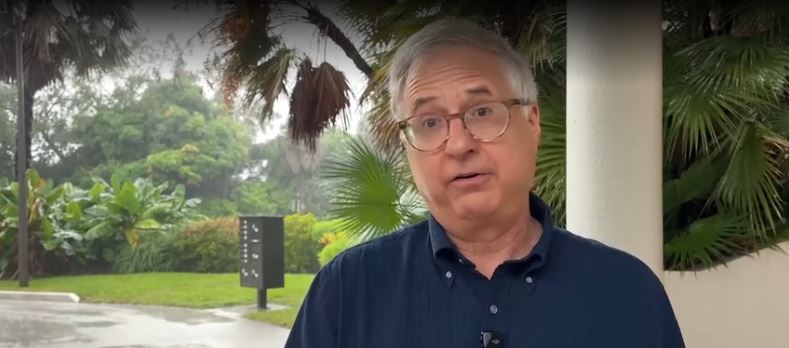
Boca Raton was ground zero for 2001 anthrax attack. Here’s what happened

By Rachael Perry

Click here for updates on this story

    BOCA RATON, Florida (WPBF) — Twenty-five years ago, Boca Raton suddenly found itself at the center of a terrifying chapter in American history.

Just weeks after the Sept. 11 attacks, an anthrax-tainted letter was opened inside the American Media Inc. building in Boca Raton, then home to publications including the National Enquirer. The attack killed photo editor Robert Stevens, sickened others and ultimately became part of what the FBI describes as the worst biological attack in U.S. history.

For Steven Abrams, Boca Raton’s mayor at the time, the memory remains remarkably vivid.

“It was a very scary one,” Abrams told WPBF.

He was just months into his first term as mayor when the city manager called him around midnight.

“He told me it was anthrax,” Abrams said.

Abrams called his father, a doctor, to ask what anthrax was.

“He was asleep. He said, why are you calling me about Amtrak? It’s a train, I don’t know,” Abrams said.

The moment would become the beginning of a crisis that stretched far beyond one Boca Raton office building.

The anthrax discovery came at an especially frightening time in the country.

The Sept. 11 terrorist attacks had happened less than a month earlier. Americans were already on edge when letters containing anthrax began appearing in the mail.

According to the FBI, five people ultimately died, and 17 others had gotten sick from the bacteria. The first victim was Stevens, who was exposed at the AMI building and died Oct. 5, 2001.

Abrams said Boca Raton’s first priority was dealing with the immediate threat.

“We had to respond to the immediate threat with our fire rescue and our police department,” he said.

Local first responders sealed off the area before federal agencies arrived.

“We were the first responders. People forget that it’s your local first responders that have to take immediate action,” Abrams said.

The FBI and Centers for Disease Control and Prevention eventually became involved, but Abrams said their roles created a difficult communication challenge.

“It was a health emergency” at the same time it was “a criminal investigation,” he said.

Public health officials wanted to communicate information to the public, while law enforcement wanted to protect information that could help solve the crime.

“Then, of course, the media descended, and there was a lot of confusion because of the conflicting information that was being given out by FBI and CDC,” Abrams said.

The fear wasn’t limited to the AMI building. Abrams remembers police and firefighters working inside the perimeter and seeing the uncertainty on their faces.

“Although they performed with great skill and bravery, you could definitely see in their eyes,” he said.

Postal workers were also among those Abrams wanted to reassure. And then there were residents demanding antibiotics.

He remembers people coming to him saying, “I want my Cipro shot. Where can you get me one?”

The response was happening as anthrax cases began appearing elsewhere in the country.

Letters were sent to media organizations and members of Congress in New York and Washington, D.C. The FBI ultimately recovered four anthrax-tainted parcels connected to the attacks.

Abrams said mayors in other communities began calling him for advice because Boca Raton had already been dealing with the crisis.

“Mayor, you have now experienced this for a couple of weeks. Do you have any advice for us?” Abrams recalled them asking.

The attack also created an unexpected problem for a city heavily dependent on tourism.

Television trucks lined the street outside the AMI building, while images of the building were repeatedly broadcast across the country.

“On national TV, 24 hours a day initially was a picture of that building with the heading Boca Raton, AMI Building Anthrax. That was a big problem,” Abrams said.

The effect was immediate.

“We rely a lot on tourism,” Abrams said.

The Boca Raton Resort, now known as The Boca Raton, began receiving cancellations.

“People just thought there was anthrax just floating all around the air in Boca Raton,” he said.

Abrams gathered local public relations professionals to help communicate a message he said was critical: The anthrax contamination was a confined problem, and Boca Raton remained open.

The city’s reputation eventually recovered. But the physical site of the attack would take years to fully return to normal.

The AMI building was contaminated and remained closed for years.

Abrams said city officials worked with local members of Congress and U.S. senators to pursue federal funding for cleanup before a private company ultimately took on the decontamination.

Once the work was completed, the building could return to the market.

“It was fortunate that the building did not have to be destroyed,” Abrams said.

Some pieces of history inside, however, were lost.

AMI had extensive archives, including historic photographs.

“There were National Enquirer archives in the building, like the original photo of Elvis in his coffin and other that ended up being destroyed when the interior of the building was decontaminated,” Abrams said.

The building itself survived.

Today, Abrams said, business continues there much as it did before but under new ownership.

“This has always been a very successful office park and so business goes on as usual, and our city continues to thrive,” he said.

The FBI investigation, known as Amerithrax, became one of the largest and most complex investigations in the agency’s history. Investigators conducted more than 10,000 interviews, executed 80 searches and collected thousands of pieces of potential evidence.

The FBI eventually identified Army biodefense researcher Bruce Ivins as responsible for the attacks. Ivins died by suicide in 2008, before charges could be filed. The Justice Department and FBI formally closed the investigation in 2010.

In the years after the attack, the family of Robert Stevens also sued the federal government, alleging the government failed to adequately safeguard anthrax at the U.S. Army laboratory where the FBI said the attack strain originated.

The case ended in a $2.5 million settlement in 2011.

A federal judge also questioned why certain records in the case remained sealed, including personnel records related to Ivins and documents concerning security procedures at the Maryland laboratory.

Abrams said he didn’t really have time to process what was happening in 2001.

“I was a young mayor. I was 40 years old, I think,” he said.

Events were unfolding so quickly that he was focused almost entirely on the next problem.

“At one point, things were progressing so quickly that you really didn’t have time to think about it,” Abrams said.

It wasn’t until months later that he could begin to contemplate what had happened.

“At the time, you’re just trying to deal with events that are occurring literally minute by minute, and you don’t have time to stop and think,” Abrams told WPBF.

Now, 25 years later, Abrams returned to the office park where the attack began, and the memories came rushing back.

“It was so long ago, yet when I stand here in front of the building it just seems like yesterday,” he said.

He said the building itself doesn’t look dramatically different, and that’s part of what makes the memory so striking.

“It does bring back all of these memories, and when it does, recreating the scene, it literally feels like it happened yesterday,” he said.

25 years later, Abrams said the anniversary should not simply be about the investigation or the headlines. Five people died, and Abrams said that should not be forgotten.

“We don’t want to forget them, and we don’t want to forget what occurred here,” he said.

The attack that began with a letter inside a Boca Raton office building quickly became a national crisis, but Abrams said one of the biggest lessons came from what happened locally.

“When there is a national incident, it’s really the local government and the first responders that are the answer, that come to the forefront and have to ensure that the public is safe,” he said.

And 25 years later, he believes the most fitting description of Boca Raton’s story is one word: “Resiliency.”

The city, he said, recovered, and the building where it all began is still standing.

Please note: This story was provided to CNN Wire by an affiliate and does not contain original CNN reporting. This content carries a strict local market embargo. If you share the same market as the contributor of this article, you may not use it on any platform.