Against All Odds: What Remains — The challenges facing our local Tribes


Angela Chen

PALM SPRINGS, CA (KESQ) – In Part 1 of Against All Odds, we looked at the role that tribal casinos have played in the Coachella Valley and how they have become a major part of the region’s economy and identity. But the pain behind the prosperity remains, with the bands now grappling to honor the culture and language.

Ravaged by disease in the 1800s, the Augustine Band of Cahuilla Indians in Coachella were federally recognized as the smallest tribe in the entire United States at just one woman in 1972 — Roberta Augustine. The numbers grew when she had children. But it was to be short-lived, because Roberta died, and all of her children died soon after.

Except for one — her daughter Mary Ann Martin.

And so, it was again, the weight of an Indian nation, solely on one woman’s slim shoulders.

“My mom’s biggest struggle was being alone. She didn’t have elders to rely on. She didn’t have people to guide her,” said Amanda Augustine, the Chairwoman of the Augustine Band of Cahuilla Indians.

Amanda, as a child, watched her mother grapple with that isolation.

“She missed her family. She struggled with having to learn everything by herself and understand everybody is not your friend,” said Augustine. “”The tribes are here. They’ve been here. They’re not going anywhere. We can’t go anywhere.”

Now, in 2026, they have boosted their numbers to 20, to become the second smallest tribe in the U.S.

Augustine is one of 9 bands of the Cahuilla tribe who have been here in the Southern California desert area — for decades — centuries — ruling the Coachella Valley long before white settlers — before Spanish conquistadors — before all else —

The Cahuilla are grouped into nine different bands; there are the Mountain Cahuilla, with the Ramon, Cahuilla, Santa Rosa and Los Coyotes bands and the Pass Cahuilla which encompasses the Morongo Band and the Agua Caliente as well as the Desert Cahuilla, which includes the Torres Martinez, the Cabazon Band of Cahuilla Indians, and the Augustine Band of Cahuilla Indians, whom Coachella Valley residents are most familiar with.

These bands spoke different dialects, but shared the same cultural traditions.

“Cahuilla clans spread out all over Southern California, and those independent clans would join together for different ceremonies and social gatherings, and Cabazon, both Cabazon the Elder and Cabazon the Younger, in this photo, they negotiated lands,” said Arkamez Blankenship, the Director of Cultural Affairs for the Cabazon Band of Cahuilla Indians.

For the past century, language and culture have been in danger of becoming lost to history entirely.

In the 1800s, kids were ordered to attend Indian assimilation boarding schools, like the Sherman Institute in nearby Riverside, where cultural eradication was the goal. The guiding philosophy by the founder of these schools, Richard Pratt, was “Kill the Indian in him and save the man.”

Native Americans today are still suffering the effects after being forced on to reservations about a century ago, facing the highest poverty rate at 19.3% of all racial groups, according to 2024 U.S. Census data. Reservations across the nation are often on isolated land that can be difficult to develop with few employment opportunities.

The wealth gap based on land location is apparent here in the Coachella Valley.

“One thing that I do want to say is that we’re Augustine, not Agua. I always get that,” said Augustine.

Most recently, young Indigenous people have lost interest. For some, it’s been an uneasy lifelong identity struggle, with elders sometimes refusing to teach the next generation. When asked about the resistance, Michael Mirelez, a lineal descendant of the Torres Martinez Desert Cahuilla, pinpointed one particular reason:

“Shame,” said Mirelez. “They were ashamed because they couldn’t answer once I got to a certain point of asking more in-depth questions. They were ashamed because they couldn’t answer, and it made them feel bad. They didn’t realize what they had was for us. We considered it gold. We do consider it gold. For them, they think ‘it’s not enough, it’s not enough,’ and so shame takes over, and then they get angry, and all it was a reminder of what they don’t know.”

The director of cultural affairs for the Cabazon Band is one of a handful of people in the world right now who can still speak Cahuilla.

“It’s a lot of loss, and over the years, you lose more and more, and eventually there aren’t a lot of people left to speak to or use the language,” said Blankenship.

But, in recent years: some hope. Blankenship says that young people here have begun expressing an interest in learning the Cahuilla language again.

As bands grapple with preserving tradition while managing modern living, misconceptions by outsiders are still rampant.

“And still to this day, people still think that we live in tipis and we all wear feathers, and that that one image encapsulates us all, and it’s not,” said Mirelez.

“I’ve been asked the questions: Where’s your long hair? How do you get your food? Do you live in a tent?” said Doug Welmas, the Chairman of Cabazon Band of Cahuilla Indians. “Certain things like that. I go to the store just like. I live in a house. I got to tell them they’re kind of shocked or surprised.”

“I think that most people think because there are so many casinos out here that we’re just bathing in money, we’re like Scrooge McDuck, just swimming in a vault of money, that is not true,” said Augustine.

These desert bands, who all own casinos, contribute robustly to the Coachella Valley with back-to-school drives, Thanksgiving meals and more.

“We also do a lot of donating, Martha’s Village, Coachella Valley Rescue Mission, Ophelia Project. We do a lot of donating around this valley, and so it’s not that we’re just enriching ourselves, but we’re enriching the families around us,” said Augustine.

“We try and help out as much as we can. We’ve helped with the Ronald McDonald House, the Hanson House, which is local, Martha’s Village and Kitchen,” said Welmas.

Still, in the face of so much loss of culture and history and language, there is resilience.

Amanda has been carrying out her mother’s dream. No longer the last of the Augustine — Amanda has led the expansion of the Augustine Casino in Coachella, opened Temalpakh Farms, and built a solar panel field.

“She just saw a vision, and she went for it. I know a lot of tribes do the resorts and big casinos,” said Augustine. “She wanted to do something else that would help strengthen our sovereignty, standing alone, not needing any other entity.”

A note from News Channel 3: the valley’s largest tribe, the Agua Caliente, is missing from this story.

They agreed to an interview in September, but canceled. They have rescheduled for mid-October.

To see more on the impact of the tribes on Coachella Valley’s history and economy — watch part 1 of anchor Angela Chen’s series “Against All Odds” — now online at kesq.com.

Click here to follow the original article.

Fish and Game investigating after poacher leaves bull elk carcass to waste

Seth Ratliff

BLACKFOOT, Idaho (KIFI) — Idaho Fish and Game is investigating after a bull elk was found shot and left to waste in Bingham County.

Investigators believe the animal was killed at night between September 4th and 5th. A member of the public later discovered the carcass. According to IDFG, the poacher shot the elk several times from the road using a centerfire rifle, a direct violation during an active archery-only season.

IDFG says the shooter removed only the bull’s antlers, leaving the entire carcass to waste.

Under Idaho law, using a firearm to take big game during an archery-only season is classified as a “Flagrant Violation” misdemeanor. If convicted, the state must revoke the violator’s hunting license, and the violator faces a fine of up to $1000 and 6 months in jail. In addition, a waste of game charge carries separate penalties of up to $1,000 in fines, 6 months in jail, and potential license suspension.

Anyone with information regarding the incident is urged to contact Fish and Game Senior Conservation Officer Mitch Newhouse at 208-576-1752 or the Citizens Against Poaching hotline at 1-800-632-5999. 

Callers can remain completely anonymous. Information leading to an arrest is eligible for rewards. For more information, click HERE.

Click here to follow the original article.

“Unconscionable”: Idaho officials condemn leak of unredacted Moscow student murder photos

Seth Ratliff

MOSCOW, Idaho (KIFI) — Idaho law enforcement and Latah County authorities are urging the public and media outlets not to publish or distribute alleged unredacted crime scene photos from the University of Idaho murders following a potential leak.

Police say the images, which allegedly include unredacted photos of the victims, were potentially leaked to journalists and social media commentators by an unknown source. In a joint press release, the Latah County Prosecutor’s Office, the Moscow Police Department, and the Idaho State Police expressed deep concern over the reported breach and urged the public not to publish the images out of respect for the victims and their families.

“Providing sensitive unredacted crime scene material for public dissemination is an unwarranted invasion of the victims’ privacy and demonstrates a profound lack of integrity and professionalism,” states the release. “Those entrusted with access to such material must safeguard it and violating that trust and any professional and ethical duties required by such position of trust, is unconscionable.”

The potential leak follows a late 2025 ruling by Second District Judge Megan Marshall barring the City of Moscow from releasing photos of the victims’ bodies unless they are fully blacked out. That ruling came after the victims’ families filed a lawsuit to block the images from being made public under state records requests.

While law enforcement officials acknowledged the public’s interest in transparency and accountability surrounding the case, they emphasized that releasing these photos serves no legitimate purpose.

“Our thoughts remain with the victims’ families, friends, and loved ones. No family should have to endure the added trauma of knowing images from a loved one’s final moments may be circulating publicly,” states the release. “Their grief should not be compounded by the display, discussion, or sharing of intensely personal and painful material.”

“These unredacted images should not be published, posted, shared, or otherwise distributed. Further dissemination would serve no legitimate public purpose and would only compound the harm to the victims’ families and the broader community.”

Click here to follow the original article.

EPCC professor explores Mexican American philosophy in new book

Mauricio Casillas

EL PASO, Texas (KVIA) — An El Paso Community College professor is launching a new book Wednesday, which examines how Mexican Americans connect with philosophy.

Professor of Philosophy Dr. Manuela Gomez’s book “Intersecting Worlds in Mexican American Philosophy: Teaching and Learning from the Border” draws on her personal experiences and work she put together over five years.

According to a news release from EPCC, the book examines the constant navigation Mexican Americans experience between two nations, two cultures and two languages.

EPCC will host a free event promoting the book for students, staff, faculty and community members from 5:30 – 7:30 p.m. Wednesday.

It’ll be at EPCC’s Valle Verde Campus (919 Hunter Dr.), AST Building Flexitorium, Room 150.

Click here to follow the original article.

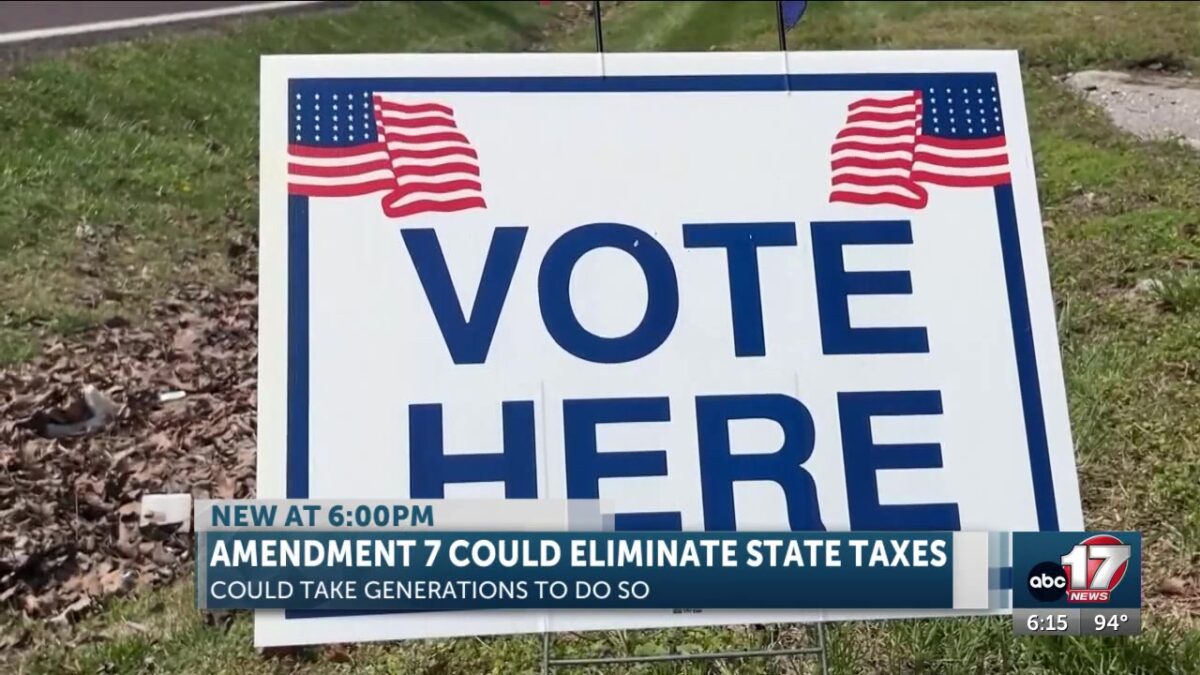
Amendment 7 could eliminate all state-imposed taxes, but the timeline is unclear

Alison Patton

COLUMBIA, Mo. (KMIZ)

Missouri voters will see Amendment 7 on the November ballot, and they’ll have to decide whether to create a permanent public endowment that will grow until it reaches an amount sufficient to eliminate all state-imposed taxes.

How much the fund would need to eliminate taxes and how long it could take are not clear.

Traci Gleason from the Missouri Budget Project said the bill that put Amendment 7 on the ballot requires lawmakers to define those things if it passes.

A “yes” would establish the “Show-Me Prosperity Fund,” and lawmakers would have to decide how much money to appropriate to the fund before the Missouri treasurer can invest the funds, according to the Senate Joint Resolution 95 bill summary. The funds will be invested in exchange-traded funds.

Missouri is facing a long-term $2 billion budget shortfall, according to Gov. Mike Kehoe, and the bill doesn’t provide a dedicated funding source, so the appropriation would need to come from the already stretched budget.

“Any state dollars put into that fund would mean real cuts to existing services – like education, healthcare, or services for older Missourians,” Gleason wrote in an email.

The fund would need to grow big enough to eliminate income tax, sales and use tax, corporate income tax and all other taxes, according to the bill. Income tax alone makes up about two-thirds of the state’s general revenue.

Gleason said the state generates more than $18 billion in taxes each year, and the fund would need to generate at least $600 billion, but it could be more based on what lawmakers define as “state-imposed taxes.”

“So there are a lot of unanswered questions about the fund. In any case, it would take decades – maybe generations – for it to grow large enough to eliminate state taxes,” Gleason wrote.

The law caps how much money can be taken out of the fund, which is where Gleason got the $600 billion number.

If the fund has enough money to eliminate taxes, the treasurer will notify the General Assembly, and then the fund can be used, according to the bill. The state won’t be able to impose taxes if the fund fully eliminates them, unless the program fails.

In August, Missourians turned down the Republican-backed plan to phase out the state income tax, known as Amendment 5. Critics said the amendment lacked a solid plan to eliminate and replace the revenue generated by the state income tax.

The Amendment 7 ballot language can be found on the secretary of state’s website.

Click here to follow the original article.

MU responds after alleged threat involving YikYak account shared online

Ryan Shiner

COLUMBIA, Mo. (KMIZ)

The University of Missouri has responded to more than one Republican group online over concerns of an alleged threat made on the social media website YikYak.

The threat involved a screenshot of an account called “Mizzou” involving Secretary of State Denny Hoskins’ campus visit planned for Wednesday with the school’s Turning Point USA chapter.

A screenshot from the Missouri Federation of College Republicans and Mizzou College Republicans shows the account asking if “they are going to Kirk him,” in a likely reference to Charlie Kirk, the TPUSA founder who was shot and killed last year during an event at a college campus.

The university responded to both tweets, stating that the “Mizzou” account shown in the screenshot is not affiliated with MU and that the post has been reported to authorities.

“We are aware of the post, which is not affiliated with the university, and have reported it to MUPD. Safety is our top priority, and we do not tolerate violence or threats of violence,” the responses from MU say.

MU sent the same statement to ABC 17 News.

We are aware of the post, which is not affiliated with the university, and have reported it to MUPD. Safety is our top priority, and we do not tolerate violence or threats of violence.

— Mizzou (@Mizzou) September 15, 2026

Click here to follow the original article.
Man charged in manslaughter, child sex crime case denied bond again

Ryan Shiner

COLUMBIA, Mo. (KMIZ)

A man described as a “cult-like” Amish leader who is accused of manslaughter and sex abuse was denied bond again.

Sam Shetler, 43, of Boonville, is charged with three counts of trafficking for the purpose of slavery/forced labor, a count of first-degree sodomy, first-degree sex abuse, four counts of kidnapping and one count of first-degree involuntary manslaughter.

He is being held at the Cooper County Jail. Shetler’s attorney filed a motion on May 26 to move the case. It was filed in Montgomrey County on Aug. 11.

The judge denied him bond again on Wednesday, Sept. 9. A case review is scheduled for 1 p.m. Wednesday, Dec. 16.

Shetler – who had been described in court documents as a “cult-like” leader of an Amish community –is accused of forcing teenagers to work at the Mercy and Truth-Amish and Mennonite Retreat without pay and rubbing oils on young females to “heal” them, court documents in previous reporting indicate.

Following his March arrest, more victims came forward and accused Shetler of posing as a doctor that gave a “lavender breathing treatment” to a baby who suffered from multiple viruses in 2025, including COVID-19, court documents in previous reporting say. The baby died on March 6, 2025.

Click here to follow the original article.

IID board unanimously approves large load tariff

Tommy Gallegos

IMPERIAL, Calif. —(KESQ) The Imperial Irrigation District Board of Directors unanimously approved a new Large Load Tariff Tuesday, establishing a formal framework for how the utility will evaluate and serve very large electricity users, including data centers and other high-demand projects.

The tariff applies to customers seeking at least 20 megawatts of electric demand and meeting an 80% minimum load factor.

Under the new framework, large-load customers will be responsible for the costs and financial risks associated with serving their projects. That includes infrastructure, power supply and other system improvements that may be necessary to provide electric service.

IID said the approach is intended to prevent costs associated with large new loads from being shifted to existing ratepayers while allowing the utility to evaluate opportunities for economic development.

The board’s action follows months of public review. IID received 243 comments on the proposed tariff before revising the proposal for consideration by the board.

The tariff also creates a formal process for determining whether IID can reliably serve a proposed large-load customer and what improvements to the electric system may be required before service can be provided.

IID’s review will focus on its ability to provide electric service and the conditions under which that service could be delivered. Decisions involving land use, zoning and project siting remain under the authority of local cities and counties.

The new policy comes as IID has seen increasing interest from customers requiring substantial amounts of electricity. When the draft tariff was released in May, the District reported nine large-load proposals or inquiries at various stages of evaluation.

The tariff builds on principles adopted by the IID Board in December 2025, including protecting existing customers, maintaining system reliability and ensuring that costs associated with new large loads are recovered while continuing to support economic development opportunities.

With Tuesday’s unanimous vote, IID now has a formal process for evaluating large electricity users and determining the financial and infrastructure requirements associated with serving them.

Click here to follow the original article.

Three teens arrested after making threats to Buena High School students

Caleb Nguyen

VENTURA, Calif. (KEYT) – The Ventura Police Department arrested three teenagers after they made threatening videos against Buena High School students.

VPD officers received videos depicting the “Cat in the Hat” character threatening students and schools Monday night.

These videos appeared to be part of a nationwide trend and VPD officers began investigating sources, connecting the videos to Buena High School.

VPD detectives and Buena resource officers then identified three Buena students as suspects in the creation and distribution of the videos.

VPD officers then arrested two 15-year-olds and a 14-year-old for making criminal threats and conspiracy to commit a crime.

Two of the three teens also received charges for destroying evidence, according to the VPD.

There is no current threat to the school or community, though the investigation remains ongoing. Those with more information are asked to contact the VPD.

Click here to follow the original article.
Suspect arrested after car chase in Imperial County

Abraham Retana

EL CENTRO, Calif. (KYMA) – One man is behind bars after leading police on a vehicle chase throughout the Imperial Valley.

The El Centro Police Department (ECPD) said officers attempted to make a traffic stop Saturday morning, but said the driver did not comply and sped off.

“They attempted a traffic stop. However, the driver failed to stop and led the officer on a chase throughout the city and ultimately in the County of Imperial, near Keystone [Road] and [Highway] 111,” said Officer Jason Flores with ECPD.

The car chase went through several El Centro streets, and ended near Brawley, where officers finally arrested the suspect.

“Unfortunately, I can’t say why he was [being chased] because it’s ongoing investigation. However, we can say there was no threats to the public, the public is fine and there is no immediate danger to the public safety or anything like that,” Officer Flores shared.

While there were no injuries reported during the chase, ECPD said the suspect is facing several charges, including assault on an officer and fleeing from law enforcement.

Click here to follow the original article.