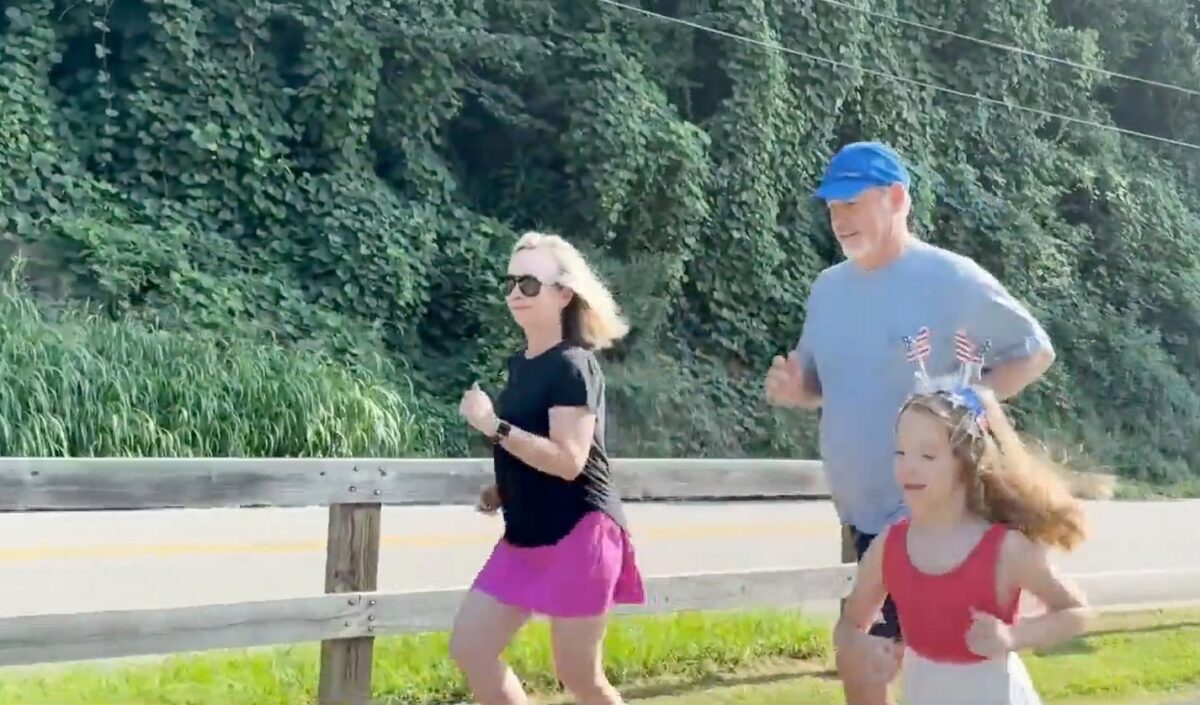
Palm Springs Fourth of July celebration

Dakota Makinen

PALM SPRINGS, Calif. (KESQ) – The City of Palm Springs is celebrating Independence Day with three days of family-friendly events, culminating in its annual Fireworks Spectacular on the Fourth of July.

The celebration includes a kickoff at VillageFest on Thursday. Today there will be a free Dive-In Movie Night featuring The Sandlot.

The city will host a full day of activities on Saturday, July 4, including a pool party, live music, the Palm Springs POWER baseball game, and a fireworks show at 9:15 p.m.

Many of the events are free and open to the public. You can find a full list of events on our website.

Stay with News Channel 3 for the latest updates.

Click here to follow the original article.

Yellowstone National Park offering free admission for Fourth of July Weekend

Danielle Mullenix

YELLOWSTONE, WY (KIFI) – With free admission for U.S. residents from July 3 through July 5, Yellowstone expects especially heavy crowds this weekend at entrance stations, popular attractions, road construction zones, and wildlife viewing areas. If you’re planning to celebrate Independence Day in Yellowstone National Park, officials are encouraging visitors to plan ahead as one of the park’s busiest weekends of the year gets underway.

Leave the fireworks at home

Fireworks are prohibited throughout Yellowstone and all national parks. National Park Service officials say even a single spark can ignite a large wildfire, especially during the busy summer season and ongoing drought conditions.

Instead of fireworks, visitors are encouraged to enjoy the park’s natural attractions, including geysers, waterfalls, wildlife, and scenic landscapes.

Practice campfire safety

Campfires are only allowed in designated fire rings within campgrounds and some backcountry campsites. Before leaving a campfire, park officials recommend following the “Soak, Stir, Feel, Repeat” method to make sure the fire is completely extinguished and cold to the touch.

The park’s current fire danger level is moderate, though officials say conditions can change quickly. Anyone who sees smoke or fire should notify a park ranger or call 911.

Expect delays and drive carefully

Traffic is expected to be heavy throughout the holiday weekend. Visitors should allow extra travel time, obey posted speed limits, and never stop in the roadway to view wildlife. Instead, use designated pullouts and make sure all four tires are completely to the right of the white line when parking.

Officials also remind drivers never to operate a vehicle under the influence of alcohol or drugs. DUI enforcement will be implemented by law enforcement around the region for the holiday weekend.

Give wildlife plenty of space

Don’t pet the fluffy cows.

Yellowstone’s wildlife is one of its biggest attractions, but it can also be dangerous. Visitors must stay at least 100 yards away from bears, wolves, and cougars, and 25 yards from all other wildlife, including bison and elk.

If an animal approaches, visitors should slowly back away to maintain a safe distance.

Stay on boardwalks

Park officials also remind visitors to remain on designated boardwalks and trails in thermal areas. Leaving boardwalks can result in serious injury or death from thin ground and scalding hot springs.

Plan before you go

Because campgrounds and lodging often fill months in advance, visitors should confirm reservations before arriving. Should park lodging be full, visitors can find

Officials also recommend checking current road conditions, weather forecasts, and operating hours before entering the park. Summer weather in Yellowstone can change rapidly, with warm sunshine giving way to rain—or even snow—within hours.

Visitors should bring plenty of water, rain gear, warm clothing, and extra layers.

For the latest road conditions, lodging information, and park updates, visitors can check Yellowstone National Park’s official website before traveling.

Park officials say patience and preparation will help visitors enjoy a safe holiday while protecting one of America’s most iconic national parks.

Click here to follow the original article.

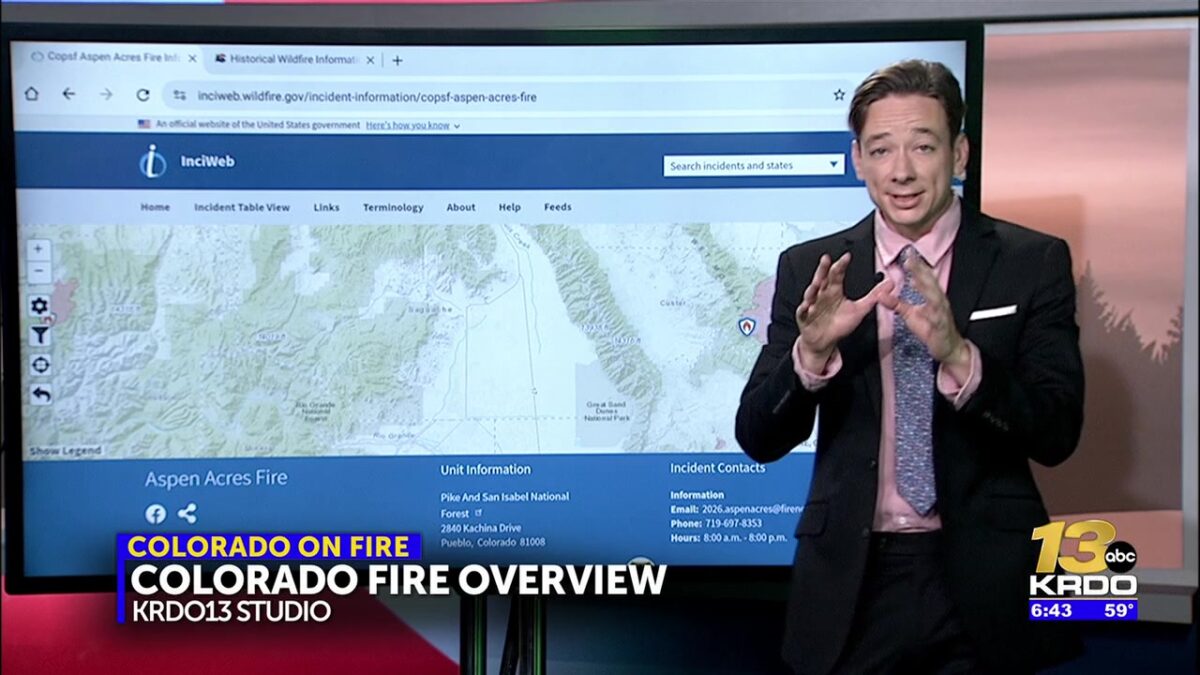
How large historically is the Aspen Acres Fire? We contextualize the blaze

Bradley Davis

RYE COUNTY, Colo. (KRDO) – As the Aspen Acres fire approaches the 10th largest in Colorado State history, KRDO13’s Bradley Davis breaks down how it matches up with the largest and most destructive fires in Colorado’s tumultuous past.

As of Thursday afternoon, the Aspen Acres fire has burned 50,186 acres. That puts it as the 11th largest Colorado wildfire in state history, five days in with 0% containment.

→ Follow more coverage and recent updates on the Aspen Acres fire

Governor Jared Polis said Thursday he believes over 150 structures have been lost, about a third of which are homes. Nearly 500 homes were lost in the 2013 Black Forest fire, and over 1000 homes fell in the 2021 Marshall Fire in Boulder County.

In his visualization, Davis uses fire maps to give us a sense of scale and contextualizes how the fire compares to a wide array of past tragedies

Click here to follow the original article.

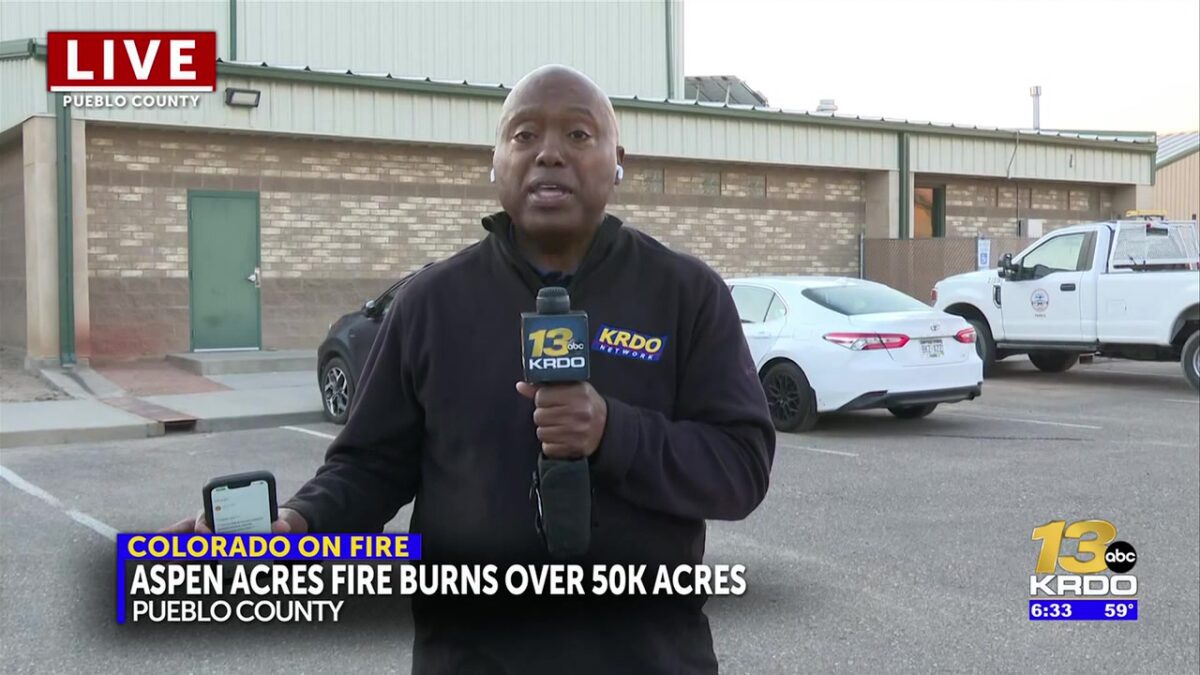
More evacuees arrive at Pueblo County shelter as authorities announce new evacuations in the ‘Aspen Acres’ wildfire

Scott Harrison

PUEBLO COUNTY, Colo. (KRDO) — A Red Cross supervisor said that “fewer than ten” new evacuees have arrived since the overnight announcement of a new evacuation zone on the fifth day of the “Aspen Acres” fire in Custer County.

LATEST FIRE STATS & EVAC ORDERS: https://krdo.com/news/2026/07/06/aspen-acres-wildfire-updates-evacuations/

“And we expect that more are coming,” the supervisor said just before 5 a.m. on Friday.

The new evacuees come from the east side of the fire zone, between Interstate 25 and the Colorado City area, which had been on pre-evacuation status.

The Pueblo County shelter is set up at the county’s recreation center, just south of the Pueblo city limits.

Earlier this week, the shelter’s director said that roughly half of the 40 beds assembled were in use, but he also said that the shelter has enough beds, food and other resources to handle more evacuees. The supervisor on Friday morning confirmed that is still the case.

The Red Cross also provides an animal shelter where evacuees can keep their pets.

At least one woman — possibly among the new evacuees — was sleeping in her car on Friday morning.

Some evacuees are staying elsewhere but come to the shelter for the three daily meals offered there.

KRDO13 spoke with one of the new evacuees, Boyd Townsend, who said that he was staying at a hotel while his house was being repaired after a kitchen fire earlier this year.

“I tried to put that fire out, and now it looks like the home may burn down anyway,” he said. “At the Days Inn, we knocked on doors to make sure everyone got out. It was full, and many of the people were fire evacuees. The manager there was really nice. Some of the people didn’t have to pay anything, because they just didn’t have it.”

Raechel Thompson evacuated from Beulah to the shelter several days ago with her son and brother.

“It made us feel special,” she said. “It made us feel that Pueblo cares about Beulah, Rye, Wetmore, and so many other places. It’s a good feeling. It makes me really love Pueblo. I didn’t love it as much before.”

One evacuee said that the flames came to within 75 feet of her home; another evacuee said that she lost her home, had to give up her pet, and is now looking for a new house in Pueblo.

Evacuees who thought the worst of the fire was over, will go into the holiday weekend fearing how much worse things can get.

Authorities have set up a checkpoint at the intersection of Highway 165 and Crow Cutoff.

Near the I-25 interchange, a liquor store had closed, leaving a note on the door for customers; a convenience store next door, however, remained open.

Click here to follow the original article.

Local woman reunites with biological family in Europe after being kidnapped at birth

By Kaitlyn Hart

Click here for updates on this story

    IDAHO FALLS, Idaho (eastidahonews.com) — After nearly two days of traveling, McKenna Christensen walked through the Chișinău International Airport in Moldova ready to change her life forever.

About six months before, Christensen, who was born in Moldova and adopted by an Idaho Falls couple, discovered shocking information about her adoption. She was never supposed to be adopted.

“There were a lot of illegal things going on (in Moldova) at the time with children. Children were very much a source of money,” Christensen told EastIdahoNews.com in December. “Pediatricians would tell parents, ‘Sorry, your child died, it was very sick.’ And then they would not release a body. This was a very common thing that happened over in the ’90s.”

For Christensen, she learned that her mother had been diagnosed with cancer while she was pregnant with her. She was very sick at the time of her birth, so the family was told that Christensen would be placed in a care facility while her mother regained her health.

But Christensen, who was originally named Marcela Ibrian, never saw her family again. Instead, she was apparently trafficked by the hospital, ending up at an orphanage and then adopted.

“I was targeted before I was even born. My mom checked into the hospital about a month before I was born, and the social services lady told her that she could leave me at the maternity ward to get some resources and to have some help while they navigated this diagnosis for her,” says Christensen. “At that moment, they actually put me into the system and said, ‘This baby is going to be available in February.’”

After discovering this life-changing information through her biological sister, whom she miraculously found through a Facebook group dedicated to reuniting separated Romanian families, Christensen traveled 5,750 miles across the world to find the people who had been looking for her for over 30 years.

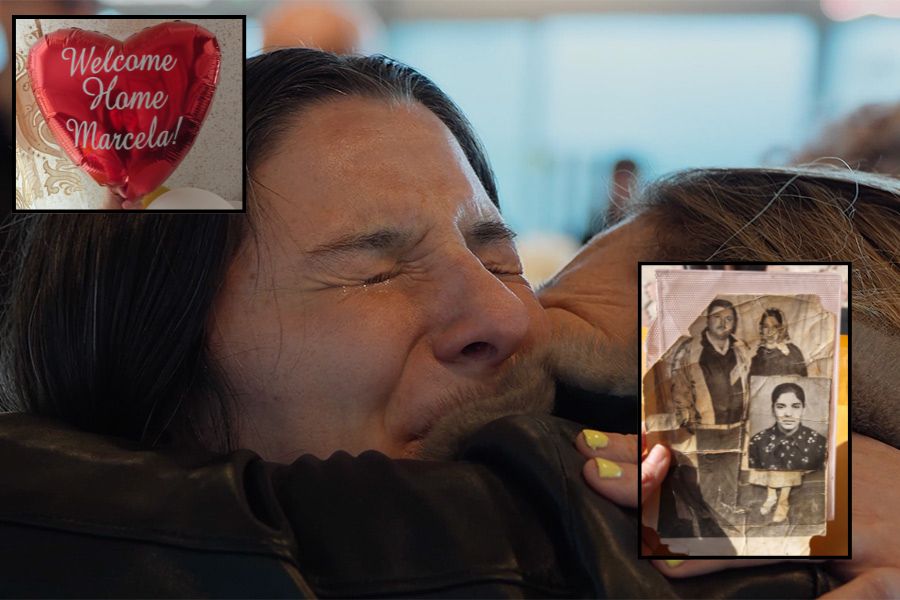
“I was standing in the airport looking for a sign and my two sisters, literally out of nowhere, just clamored me,” says Christensen. “We stood there, and we were all, obviously, bawling. But then they walked me out, and there were probably like seven or eight other people waiting for me in the lobby. (They) had had balloons and flowers — all the guys had bouquets of flowers for me — and all of them were bawling … it was a lot, but it was so good.”

Christensen says it was overwhelming in the best way to finally meet people who shared her DNA, even though they had met many times on video calls.

“It’s different when you meet in person, it’s so different,” says Christensen.

During her stay, Christensen said she was taken care of by her biological family as if they’d known her forever, going to family dinners, getting ready with her sisters, dancing with the neighbors, and even watching home videos of her biological parents, who have passed away.

“It’s just like, (they) want to do everything for you. There is this added level because they’ve wanted to do all of these things for me for 30-plus years,” Christensen says.

Christensen’s family all live on the same street in the same village, making it a very tight-knit community. When she first arrived, Christensen says she was getting ready for dinner when her sisters began giving her gifts and helping her with her hair and dress, something she was not accustomed to.

“I had picked out a dress, and I showered and got out, and my one sister hands me a completely different dress that she had bought me,” says Christensen. “Then one sister proceeds to blow dry my hair, and the other one is putting slippers on my feet, and the other is trying to feed me a sandwich. …It was so sweet, they just wanted to do all the things for me.”

The feeling of being pampered and fawned over was staggering for Christensen, though she knew much of it stemmed from her biological family not knowing what happened to her for so long and wanting to make up for lost time.

“I feel like you could really tangibly tell — or like feel in the air, and grab it — how badly they wanted this, which I was so happy to let them do all of that,” says Christensen. “I feel like a lot of this trip was so much for them, like more so for them than me, honestly, in some way. I’m just so glad that they got to have that.”

During the trip, Christensen says she noticed many similarities and shared traits between herself and her siblings, traits she never knew might be hereditary.

“For the Easter feast, I went over to my sister’s house just to kind of get away from people, and she was kind of setting up her feast. I remember she hopped on the counter to grab a dish that was on top of her fridge, and I remember thinking, ‘Oh my gosh, I do that!’” says Christensen. “We’re both really short, and we both get on the counter; it was little things like that. I was like, “Oh, I’m like these people.”

Throughout the trip, Christensen used AI headphones that translated Romanian, the main language in Moldova, into English so she could easily have conversations with locals.

“I had learned Romanian going into the trip, but they speak Russian Romanian, and there’s a Romani language that they speak as well,” Christensen says. “Amongst each other, they speak Romani, but if they’re speaking to a friend about something, they speak Russian. They would speak Romanian if they were talking directly to me, which I knew enough to get by.”

Through the technology and her own knowledge of the languages, Christensen was able to have conversations with people who knew her parents and were around when they lost her as a baby.

“People would just come up to me and cry when they saw me, because I think, some people told me on a translator, that I remind them of my mother, or I remind them of my father,” Christensen said. “They had heard so much about what happened to me, or people in the village and people that were related to me … people would just cry when they saw me, which was beautiful but also very overwhelming at the same time.”

After the first night, Christensen said she was overwhelmed with emotions of love and connection, needing to debrief and get lots of sleep before the rest of her incredible journey.

“I went back to the bedroom, called my husband, and bawled. I was just like, I don’t know, there is so much love with these people, and I have no idea how to give it back,” says Christensen. “I had never been taught how to receive so much love, and I was never told how to give it back. And that was both frustrating, but also I was just so grateful to them.”

Because she was in Moldova during Orthodox Easter, or Paștele Blajinilor (Easter of the Dead), as they call it there, Christensen got to experience her heritage and culture in ways she could’ve never imagined.

In what is often called the “most Moldovan tradition,” community members will gather at the cemeteries on the holiday to share large meals, clean graves, and exchange presents in honor of their deceased loved ones.

“Everyone in the village takes all these gifts, and you go to the cemetery with food and all these gifts, and you put them on the grave of your loved one. Then the father comes around, and he blesses all the graves like he did when they passed,” says Christensen. “You exchange gifts with people, but you do it in memory of the person that passed. So, people gave me T-shirts, cups, candy or dresses, and they’d be like, ‘This is in the loving memory of your mother.’ It’s so cool. It’s almost like the gifts are coming from your deceased loved one.”

At the cemetery one day, Christensen says she felt an overwhelming sense of calm as she studied her parents’ grave and thought about her ancestors.

“I recall this one moment that was really interesting. It may have only lasted a minute or so, but I stood there in front of (my parents’) graves, and I looked at my dad, and I feel like we look very similar. We have the same forehead, we have the same eyes. It’s like I was kind of noticing how we look alike. And then I panned over and looked at my mother, and I had this feeling like I knew who she was — not like from pictures, but almost like I had known her in a different time in my life, and I remembered it.”

Later in the trip, Christensen says her family showed her a video of her parents, which she says was fascinating to watch, as she had no memory of them.

“I look up at the screen, and they’re watching this video of my mom and dad, and everyone in the family hadn’t seen this video in years,” Christensen said. “It was just one of the big moments that was like, ‘Oh, we’re together as a family.”

Leaving Moldova was difficult, says Christensen, as she realized throughout her stay how different her life could’ve been if she had not been trafficked after birth.

“We all experienced our parents dying, and our outcomes were drastically different. My parents died, and I came to America and got an education, and I have a family,” says Christensen. “I never had to not know where my next meal was coming from. For them, their parents died, and their whole life fell apart for a while, and they really had to rebuild it.”

Though she says she deals with guilt over the differences in their situations, Christensen says she is focusing on returning to Moldova in the future, bringing her husband and children to meet her biological family.

“For a couple of days after I got home, I felt really guilty, almost, that I was able to have a good life, and they had to work so hard to have the life they have,” says Christensen. “I think I saw firsthand how hard their lives were, and I will never have a life that hard. And while I’m so grateful, I almost don’t know what to do with that information.”

As for now, Christensen says she feels a pull towards giving part of her life to helping trafficked adoptees connect with their families.

“I decided that the thing I want to do with the information that I have is dedicate a piece of my life to advocating for adoptees,” Christensen says. “These adoptees — whether their experience was good or bad, whether they’ve found their family or they haven’t — I always want to make sure that I’m a person who holds space for them in one way or another so they feel heard and understood. I don’t know what that will look like yet.”

Please note: This story was provided to CNN Wire by an affiliate and does not contain original CNN reporting. This content carries a strict local market embargo. If you share the same market as the contributor of this article, you may not use it on any platform.


Suspect in murder at El Paso Walgreens denied bond: Court records

Joseph Montero

UPDATE (July 20, 2026) — Court records said Nicholas Wells has been denied bond Friday during his bond hearing.

UPDATE (July 6, 2026) — Monday, the El Paso Police Department said it arrested and charged a 26-year-old man for allegedly murdering a man at a Walgreens in West El Paso.

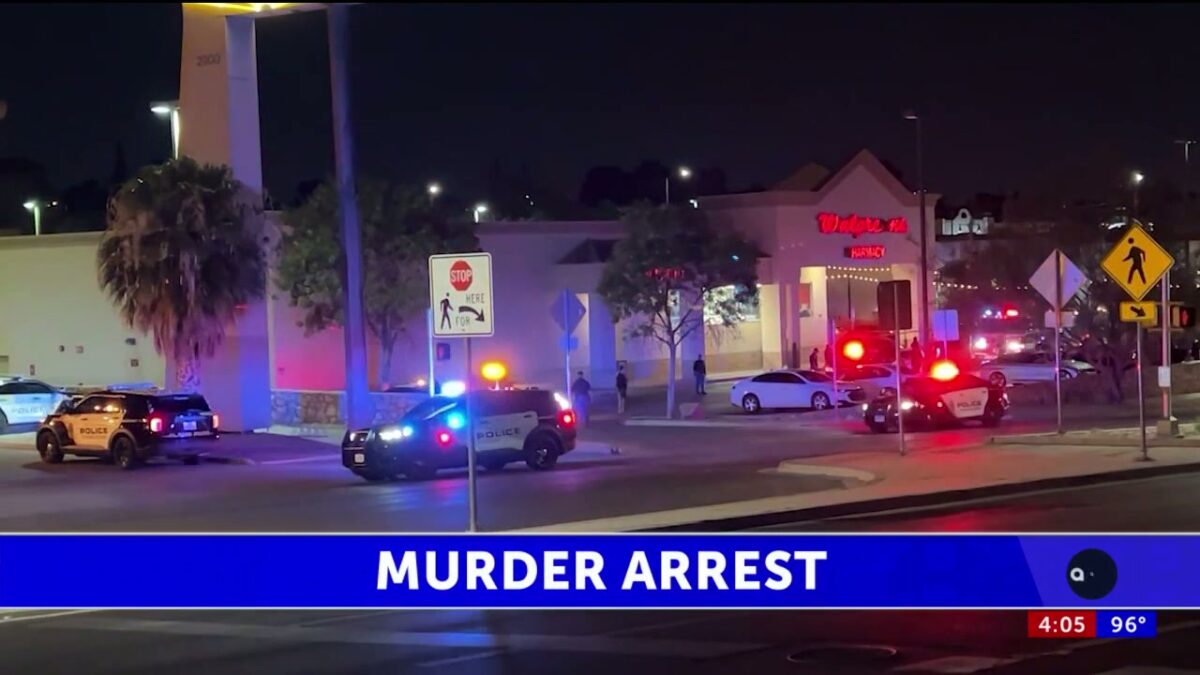
Police said officers went to the shooting scene at 11:34 p.m. July 2 at a Walgreens on N. Mesa across from the Don Haskins Center. The suspect, Nicholas Wells, was one of the 911 callers reporting the shooting.

Officers arrested Wells after he reportedly admitted to the shooting, a news release said. He also allegedly had two firearms on the hood of his SUV — a Glock handgun and a revolver — police documents said.

Inside the store, officers found 32-year-old Christopher Brandon Steven with gunshot wounds. The news release said he later died in the hospital.

Investigators said the shooting happened after an argument over a handicap parking space, EPPD said.

Police documents said Wells parked his SUV at the Walgreens. Later, Steven, his mother and sister tried to park in a handicap spot next to Wells.

Steven’s family reportedly said Wells yelled and asked why they parked next to him, documents said. The family then reversed and parked in a different spot.

Wells allegedly followed Steven and his family inside, and the fight reportedly turned physical, documents said. Wells allegedly hit Steven’s face, and the two men reportedly grabbed at each other, documents said.

Documents said Wells allegedly pointed a handgun at Steven’s head. He reportedly shot his abdomen, documents said. Steven fell to the ground, and Wells allegedly fired two other times.

Documents said Wells called 911 to report himself after Steven fell to the ground. He allegedly told police he confronted the family in the parking lot because they “drove erratically” and nearly hit him.

However, police documents said investigators found inconsistencies between surveillance video and Wells’ story. They said Steven’s family’s vehicle didn’t drive at a high rate of speed and didn’t put Wells in danger, according to police.

Documents said Wells alleged Steven kept attacking him while he fired the gun. Investigators said video footage showed Steven laying on the floor defenseless and bleeding out, according to documents.

Additionally, documents said an autopsy found the manner of death to be listed as a homicide. It said Steven had three suspected gunshot wounds to the abdomen.

Wells booked into the El Paso County Detention Facility on a murder charge.

EPPD said this is the eighth murder this year. At this time last year, police reported 15 murders.

EL PASO, Texas (KVIA) — The El Paso Police Department said the Crimes Against Persons unit is investigating a Thursday night shooting. Authorities said a 32-year-old man was sent to the hospital with serious injuries.

Police say the call came in at around 11:34 p.m. Thursday night from the Walgreens on Mesa Street near the University of Texas at El Paso.

ABC-7 did see the El Paso Fire Department on scene and saw one person airlifted by EPFD’s Fire STAR.

This is a developing story and we will bring updates as they become available.

Click here to follow the original article.

Georgia man keeps 5-decade Peachtree Road Race tradition alive: “A wonderful journey”

By Leondra Head

Click here for updates on this story

    ATLANTA (WUPA) — Saturday’s Peachtree Road Race is an Atlanta tradition. One Alpharetta man has built a tradition spanning over five decades of running in the race.

Seventy-four-year-old Russ Gill is preparing for his 54th Peachtree Road Race.

“Five decades! 1973 was my first Peachtree Road Race,” Gill said.

He and his wife, Kim, come to the Chattahoochee River Trail in Roswell three times a week to jog and prepare for the race, sometimes with their granddaughter.

“My wife has run 41 of them. All of my children have. I have three children, and they’ve all run in it at different times,” Gill said.

Gill is turning 75 next week. He runs a bit slower than he used to, but he says showing up is what matters.

“As you age, things start feeling different when you’re running,” Gill said.

His best time in the race?

“Thirty-eight minutes and so many seconds. That was early on, probably in the 1976 or 1977 timeframe,” Gill said.

In recent years, he’s developed a different pace.

“Because we are walk-running, it’s usually around an hour and 20 minutes, an hour and 30 minutes,” Gill said.

Gill says excitement and anticipation keep him coming back.

“Being able to do this with my family and friends and to check off another year. It’s been a wonderful journey so far,” Gill said.

He looks forward to continuing the tradition.

“As long as my legs will allow me to do it,” Gill said.

Please note: This story was provided to CNN Wire by an affiliate and does not contain original CNN reporting. This content carries a strict local market embargo. If you share the same market as the contributor of this article, you may not use it on any platform.

Family sues city of LA after officer kills their dog during Knicks championship celebration

By Matthew Rodriguez, Julie Sharp, Dean Fioresi

Click here for updates on this story

    LOS ANGELES (KCAL, KCBS) — A Los Angeles family filed a lawsuit against the city after an officer shot and killed their dog while they celebrated the New York Knicks’ championship win.

The lawsuit seeks damages and claims that the officer was negligent, used excessive force and lacked proper training when he fired multiple shots into the family’s 2-year-old dog named Jameson. Lawyers for Marie Marseille and her family wrote in the complaint that the officer, “killed Jameson in cold blood.”

The Los Angeles Police Department said it does not comment on pending litigation.

The deadly shooting happened at Marseille’s front door after two officers from the Los Angeles Police Department responded to a 911 call of a “screaming woman” on June 13. In a recording of the 911 call, a neighbor told the dispatcher, “there’s just screaming, as something horrible happened.”

Marseille’s son, Jeremiah Garcia, said his mother was celebrating the team’s first title in 53 years.

“It’s tearing my body apart, waking up and not having him at the foot of my bed,” Garcia said in June. “Everyone loved that dog.”

In body camera footage released by LAPD, Jameson barks as Marseille opens her door to talk to the officers. They ask Marseille to put the dog away as she shuts the door.

“Dude, that’s a big dog,” the officer who eventually killed Jameson said. “I ain’t getting bit by that, bro.”

Shortly after the officer said that, Marseille opened her door as Jameson slipped out. He barks and starts to run toward the officer, who already has his gun drawn. The 2-year-old St. Bernard, Golden Retriever, and Doodle mix was wearing a Knicks T-shirt when the officer fired multiple shots at it.

Garcia was FaceTiming his mom when the officer shot and killed Jameson.

“Soon as my mom opened the door to greet the officer, Jamo sprints out as an opportunity just to greet someone else and then, yeah, that’s what happened,” Garcia said. “When I was on the phone, I heard two shots.”

LAPD Chief Jim McDonnell described the shooting as “an incredibly tragic incident.”

“The loss of a pet is deeply personal. For many, a dog is not simply an animal; it is a companion, a source of comfort, and a member of the family,” McDonnell said in a statement.

LA Mayor Karen Bass echoed McDonnell’s sentiment and called for a review of LAPD’s use of force policy on dogs, “to determine best practices from around the country, and use this opportunity to update the LAPD’s overall tactics, policies, and training related to the use of lethal force to increase safety for everyone – officers, Angelenos and their pets.”

“While the investigation is ongoing, I am very concerned about why shots were fired and Jameson was killed,” Bass said. “This shooting makes clear that while LAPD provides officers with written guidance on the use of force and pets, this is not enough.”

Please note: This story was provided to CNN Wire by an affiliate and does not contain original CNN reporting. This content carries a strict local market embargo. If you share the same market as the contributor of this article, you may not use it on any platform.

Swimmer with arm injury rescued from Spitting Caves

By Jeremiah Estrada

Click here for updates on this story

    HAWAII KAI, Hawaii (KITV) — An injured swimmer was rescued from the waters of Spitting Caves on Thursday afternoon after he experienced difficulty swimming to shore.

The Honolulu Ocean Safety Department was called to the to popular Hawaii Kai spot at 5:04 p.m. on Thursday, July 2, to rescue a man after he jumped into the water. Crews learned he had an arm injury which made it hard for him to swim back to shore.

Before Ocean Safety arrived, three men who were bystanders quickly took action and threw a personal-use rescue tube into the water to help him swim.

“The Honolulu Ocean Safety Department commends the bystanders for their swift actions and recognizes the coordinated efforts of all responders that contributed to a successful outcome,” Ocean Safety said in a news release.

Please note: This story was provided to CNN Wire by an affiliate and does not contain original CNN reporting. This content carries a strict local market embargo. If you share the same market as the contributor of this article, you may not use it on any platform.

Source speaks out after woman’s death at senior living facility, Milwaukee woman convicted

By Mia Bearden

Click here for updates on this story

    MEQUON, Wisconsin (WDJT) — MEQUON, Wis. (CBS 58) — A Milwaukee woman has been found guilty in the death of a 76-year-old resident at a Mequon senior living facility, after prosecutors said a physical push led to a severe injury and a months-long medical decline.

A jury on Wednesday, July 1 convicted Abrianna Clark in the death of Rebecca Siefert, who lived at StoryPoint Senior Living in Mequon.

Prosecutors said the case began on Nov. 7, 2024, when Clark pushed Siefert to the ground inside the facility. One person close to the victim described the aftermath, saying, “Was left on the floor and fire carried to a chair; it’s disgusting.”

Siefert suffered a broken hip and serious complications that followed. The source said, “She suffered a femur fracture and was immediately admitted to St. Mary’s and had a rod put in her femur and she never walked again.”

Her condition deteriorated over the following weeks. “She lost 50 pounds over the next 10 weeks,” a source said, adding, “She never recovered. It was a perpetual decline and loss of being able to get better.”

Prosecutors said Siefert died about 10 weeks after the incident from complications related to the injury.

The source described Siefert as deeply respected in her community: “Nicest woman in the world. Respected 100% by the community, she really was willing to help anyone at any given time.”

During the trial, prosecutors said witnesses saw the push, while Clark denied responsibility. The source said, “She has painted herself as the victim and that’s disgusting.”

A source close to Siefert said Clark denied accoutnabilty as the verdict was read. “She was handcuffed, let out the doors screaming and crying that she was still innocent. She has absolutely no accountability,” the source said.

Despite the conviction, those close to Siefert said the outcome cannot undo the loss. “A lot of us will never be the same even if justice has prevailed,” the source said.

Please note: This story was provided to CNN Wire by an affiliate and does not contain original CNN reporting. This content carries a strict local market embargo. If you share the same market as the contributor of this article, you may not use it on any platform.