4th of July grilling safety; what you need to know

Kiera McKinney

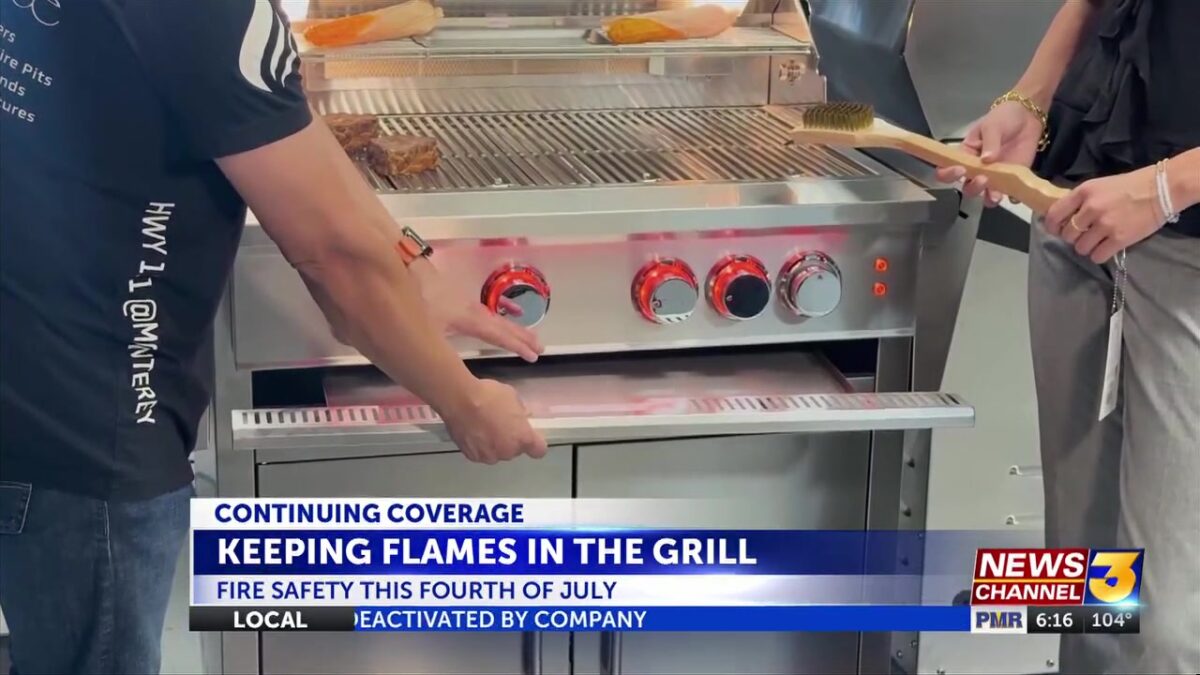
PALM DESERT, Calif. (KESQ)- The biggest grilling day of the year, the Fourth of July, it is also the busiest day for grill-related fires.

71 percent of grill for the holiday, followed closely by Memorial Day and Labor day. Grill fires cause an average of 10,600 home fires and 150 million in property damage every year. Grills also send about 21,000 people to the emergency room annually, with burns being the most common injury. July is the peak month for these dangerous accidents.

Mike Alejo, the lead sales rep at Fireplace in Palm Desert says, “The first thing people should do before grilling is make sure that their connections to gas. Secondly is just make sure that you have a good ventilated area.”

Cal Fire says not cleaning grills is one of the biggest causes of the fires they see when it comes to grill fires.

Captain John Clingingsmith Jr. of Cal Fire Riverside County said “Not having a clean grill, most of us don’t clean the grill property and enough so a lot of the build up leads to a lot of fires.”

Stay tuned for my full story at 6.

Click here to follow the original article.

National ICE arrest surge raises concerns among Coachella Valley immigrant families

Luis Avila

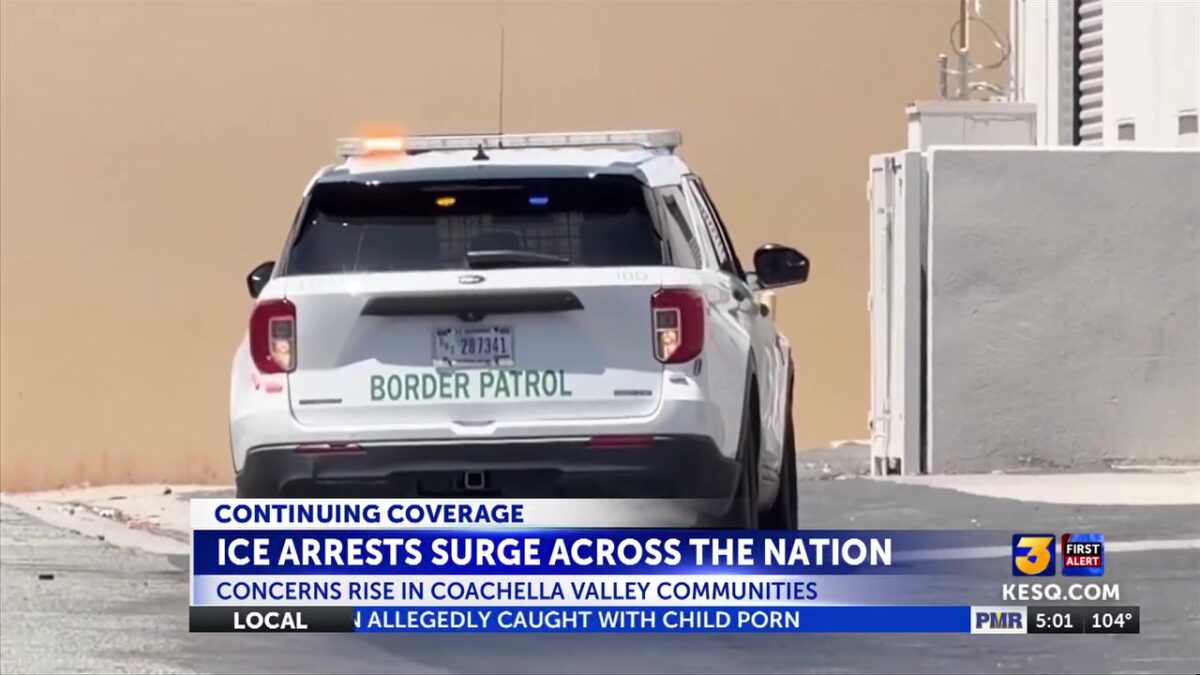
COACHELLA VALLEY, Calif. (KESQ) — Federal immigration officials have significantly increased enforcement efforts nationwide, with sources saying Immigration and Customs Enforcement (ICE) arrested about 10,000 people over a five-day period.

According to the report, ICE is now aiming to make at least 2,000 arrests per day as the Trump administration continues its immigration crackdown. The Department of Homeland Security says nearly 70% of ICE arrests involve people who have been charged with or convicted of a crime in the United States, though officials have not released details about those arrested in the latest operation.

The increased enforcement is drawing attention in the Coachella Valley, where in one local neighborhood, resident Norma Ortiz says fear of immigration enforcement has dramatically changed daily life.

“Right now, there’s no one out in the streets because of fear,” Ortiz said. “We’ve seen enforcement along this street and they just wait for people to come out and then trap them… they’re basically surrounding this community.”

Ortiz says the fear has also affected her own family.

“Last week, they took my nephew,” she said. “My son has autism. I’ve canceled my son’s appointments. I haven’t taken him in two months out of fear.”

Local immigration attorney Claudio Koren says the increase in enforcement is not unexpected following billions of dollars in new federal funding approved for the Department of Homeland Security earlier this year.

“This increase in detention and arrest operations, also here in the Coachella Valley, is not a surprise, but it’s impacting the community really bad,” Koren said.

Koren says recent court rulings have reaffirmed that people in the United States still have constitutional rights regardless of their immigration status.

“In general, we have to understand we still have a system that provides defense and assistance to the community at large, in particular to immigrants against abuse and things that are unlawful,” Koren said.

He encourages anyone with questions about their legal rights to seek guidance from a qualified immigration attorney or accredited legal representative.

It remains unclear whether any of the recent arrests occurred in the Coachella Valley. News Channel 3 reached out to U.S. Customs and Border Protection for information.

For resources, click here.

Stay with News Channel 3 for more.

Click here to follow the original article.

Shelter volunteers help keep dogs cool with cold treats

Rosemary Garcia

EL PASO, Texas (KVIA) — It’s a busy time for animal shelters across the Borderland. Many animals go missing during the summer, and that number only rises following the 4th of July celebrations.

Additionally, shelters are also dealing with added stress due to the hot temperatures.

ABC-7 spoke with officials at El Paso Animal Services. They said they are also forced to change operations to help protect the animals from the heat, especially since some shelter space is outside.

The Public Affairs Coordinator at El Paso Animal Services, Julie Newbold, explained some tactics they use to keep animals cool during the summer.

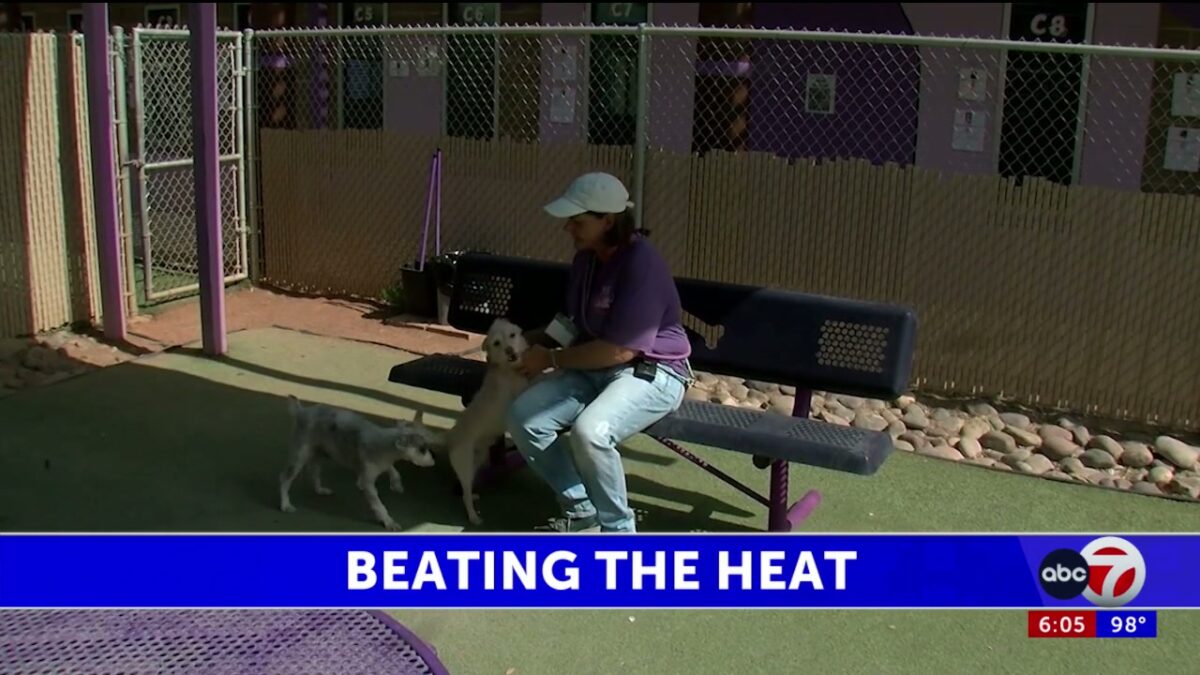
The shelter turns on misters for outdoor kennels and walks dogs during cooler parts of the day — typically between 8-11 a.m.

Longtime volunteer Colette Bowar is at the shelter seven days a week. She helps walk the dogs and takes them to a park. She said she doesn’t mind braving the heat.

“I have the means just to come and give back. I give back to the community, and I give back to the animals that are here,” Bowar told ABC-7.

She said that taking the dogs out for a few minutes, especially during the summertime, helps the animals de-stress.

“It makes all the difference in the world. It makes them. It gives them, it makes them happier. Even if it’s for those five or 10 minutes,” she said.

Shelter officials said dogs get excited when they see chilled treats volunteers make for them. One of the treats includes peanut butter on a frozen frisbee.

“Our freezers work over time during the summertime, just again, to keep our pets as comfortable as possible,” a shelter official said.

To learn more about El Paso Animal Services, click here.

Click here to follow the original article.

Audrain County hospital demolition underway; new city hall planned

Alison Patton

MEXICO, Mo. (KMIZ)

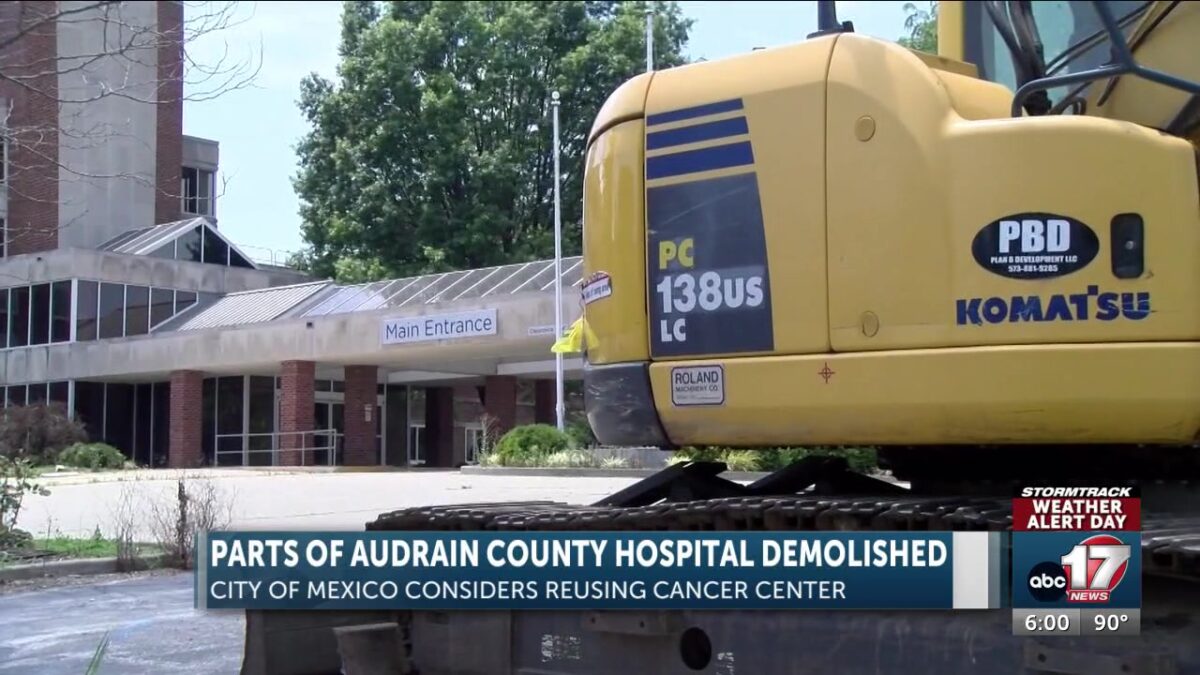
Parts of the Audrain County hospital are being torn down as the City of Mexico prepares to build a new city hall and public safety facility.

The county is taking charge of the demolition of the Stribling House and the former county health department building at the site, city manager Bruce Slagle told ABC 17 News.

Flowmaster Construction is working on the demolition and has notified the Missouri Department of Natural Resources of the asbestos at the site. The information online notes that demolition will be completed by the end of September.

The main hospital is also slated for demolition, but a timeline, cost and contractor haven’t been worked out yet. Slagle said the hospital needs to be rebuilt, and the city is negotiating with Boone Health.

“There continues to be good progress made, but we’re not at a point where we can release any information publicly,” Boone Health spokesperson Christian Basi said.

The city is also working on design plans for a new city hall and public safety facility in the former hospital’s cancer wing. Mexico Mayor Steve Haag said the city was considering building from scratch, but renovating the cancer center would save millions.

“That option allows us to save upwards of seven to $8 million of tax payer money,” Haag said.

He said city offices, along with the fire and police departments, would be housed there. It would take a couple of years before the building is move-in ready.

Mexico resident Benjamin Jeffery said a new city hall is necessary, since the old one often floods, but some people are caught up between public health and public safety.

“Yes, we need a new city hall, we need a new fire department and stuff like that. But then they’re also torn between we have no emergency care here,” Jeffery said.

He also said the nearest hospital is in Columbia, which is 45 minutes away, and it could take up to twice as long in an ambulance because there’s only so many of them.

“Any possibility of anything that could happen, am I going to need a hospital or not? And not having one–It scares a lot of us because we know we need to go to a hospital should an emergency like that arrive, but are we going to make it? Is the biggest fear most of this town has,” Jeffery said.

Mexico lost its hospital in 2022 after the Noble Health Group announced it was suspending operations in Callaway and Audrain County. ZivaMed later took over but also laid off workers and closed Audrain Community Hospital in early 2024. Noble Health owned a hospital in Fulton that also shuttered. 

Click here to follow the original article.

History speaks from the walls of the Missouri Capitol

Gabrielle Teiner

JEFFERSON CITY, Mo. (KMIZ)

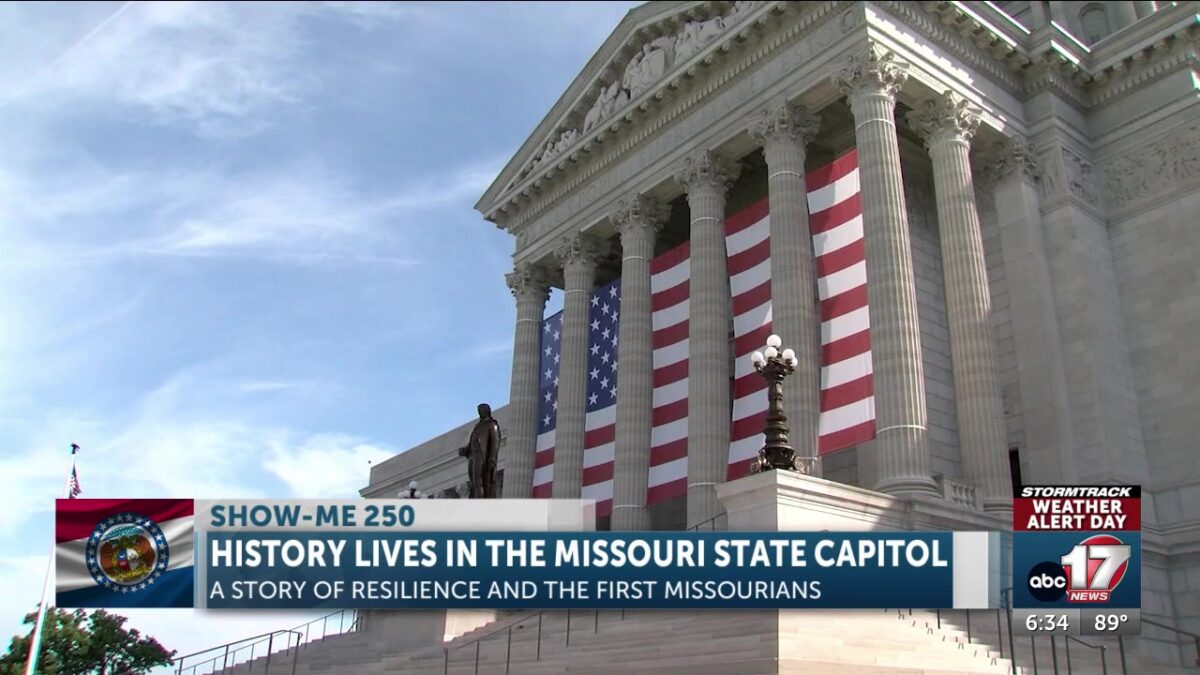
As America approaches its 250th birthday, few places capture the nation’s story quite like the Missouri Capitol, serving as more than just a space for governance.

Stepping inside the Capitol is like stepping into a time machine of Missouri ingenuity. Visitors are greeted by walls and floors made of limestone from southwest Missouri, red granite pillars from the St. Francois Mountains, an opulent chandelier made by a Guth Lighting Company out of St. Louis, and the great seal of the State of Missouri proudly sits in the center of the Rotunda floor, surrounded by stunning paintings.

And that’s only what you see just stepping inside. As visitors explore the wings and levels of the Capitol, more history silently reveals itself, spanning around 200 years and sharing the stories of how Missouri played a foundational role in American history and the founding ideals it upholds today.

Long before the Capitol became a landmark, it reflected a larger story: America’s westward expansion.

The Capitol standing in Jefferson City today wasn’t the first. In fact, without the Capitol, Jefferson City might never have existed at all.

From St. Charles to Jefferson City (and the smoky setbacks that followed)

Missouri officially became the 24th state in 1821 through the Missouri Compromise.

“When we applied, there were 22 states in the union, 11 of them were free states, and 11 of them were slave states,” said Sarah Jones, art historian with the Missouri State Capitol Museum. “Through the Missouri Compromise, Maine became its own state, it broke off from Massachusetts as a free state, and Missouri came in as a slave state.”

The first legislature met in St. Charles, where they wrote the state’s first Constitution, making that city the first Capitol of Missouri, as depicted in a lunette painting found on the second floor of the Capitol.

“Assembling of the First Legislature” by Rick Miller. St. Charles, Mo. 1821.

Jones says when the legislature was trying to decide where to put the state capitol, they wanted to be fair about where it was located.

“They wanted a brand new city,” said Jones. “They didn’t want to give it to a city that already existed because they thought that was playing favorites.”

At this time, like today, Springfield, St. Louis and Kansas City were the three big cities in the state. They’re spread out and hard to access, especially without trains and cars. Lawmakers wanted the Capitol to be easy to get to for everyone, so they decided it must be in the middle of the state.

Missouri has the benefit of rivers for steamboats to travel across, making travel easier and faster. This played such a significant factor in the legislature’s decision that they even wrote in the Missouri Constitution on page 15 that the State Capitol had to be along the Missouri River and within 40 miles of the mouth of the Osage River.

Missouri Constitution 1820Download

Lawmakers scouted a few places as potential sites, such as Sedalia and Boonville, but they found a small spot along the Missouri River, about 11 miles from the Osage River, that seemed like the perfect fit.

Jefferson City did not exist before lawmakers decided the land would house the state’s governing operations. All that was there was a steamboat landing along the Missouri River.

They didn’t have to start from scratch, but they didn’t have a town.

“It takes a while to build a town, so for the first five years, from 1821 to 1826, the legislature met in St. Charles,” Jones said.

Fast-forward to 1826, a town has been established, named the City of Jefferson after Thomas Jefferson’s pivotal role in purchasing the Louisiana Territory. It was decided that the Capitol would sit high on the bluffs of the Missouri River, dominating the skyline and acting as a beacon of hope and refuge for weary steamboat and land travelers.

“You could see the Capitol building from 8 miles in any direction, so if you weren’t coming by steamboat, if you were coming by land, it would be pretty easy to get to,” said Jones.

To this day, the Capitol Dome is one of the first things people notice when traveling by land or river.

View of the Capitol in the distance from the river and highway.

Jefferson City has hosted three Capitol buildings since its founding.

The legislature and governor moved into the first Capitol Building in 1826, which stood where the Governor’s Mansion is today. This didn’t last much longer than a decade.

In November 1837, the building burnt down, leading to the loss of all secretary of state records.

However, timing was on the legislature’s side. A few months before the fire, a new, bigger Capitol was already being built because the legislature had expanded significantly. Construction on this new building started on the same site as the current Capitol.

The second Capitol was still under construction in 1840, but the legislature moved in. It looked similar to our current Capitol, which has two wings and a big dome in the center, paying homage to the United States Capitol, which architects were trying to mimic to a degree.

It was remodeled in the 1880s, expanding the building and adding a bigger dome on top with a copper cap. But like its predecessor, the building had a fiery fate.

In February 1911, lightning struck the dome, starting a fire and burning the building to the ground. This time around, many state records were saved by hundreds of volunteers, prisoners, legislators and public officials.

A special election was held a few months after the fire. Architects told the legislature that it would cost about $3.5 million to build the Capitol. The legislature didn’t have those funds, so they raised money to build the building through a bond issue. They ended up raising $4.5 million for the project, while still staying on their original budget.

The attorney general at the time ruled that the extra million raised must be used towards the Capitol and not put into general revenue. That extra money went towards commissioning artists from around the world to decorate the building.

Two Capitol buildings lost to flames had lawmakers and architects needing to pivot. The third Capitol was built on the same site, but was built entirely of stone (Carthage Marble, also known as limestone) so it wouldn’t catch on fire. Construction lasted from 1913 to 1917.

“When they built this one, you could get to Jefferson City two ways — you could come by the river, but you could also come by the highway, which they built on the other side,” said Jones. “So they rotated the building 90 degrees. So technically, from an architectural standpoint, we have two fronts, two entrances.”

Today’s Capitol is 437 feet long and 300 feet wide at its center. Atop the dome sits Ceres, the Roman goddess of agriculture, who represents the importance of farming to Missouri’s people and economy.

She also protects the building from its fateful past.

“For our state’s bicentennial, they did a big restoration project of the outside, and they took Ceres down, and they took her to a restoration company in Chicago,” said Jones. “They estimate that she probably got struck by lightning about twice a year; she’s been up there for over 100 years, so that’s about 200 lightning strikes.”

While the current Capitol is only 109 years old, one room inside holds nearly 200 years of history.

Thomas Hart Benton mural

The House Lounge serves as the home of the famous mural titled “A Social History of the State of Missouri,” painted by Missouri native Thomas Hart Benton in 1936.

“It is a timeline, generally speaking,” Jones said. “It starts with the pioneers and Native Americans over here, and then we kind of go over here to this corner, and we get some statehood era, and then over this direction, the little smoke over here is the Civil War.”

The mural also transitions into the 19th century, showing farmers doing tasks by hand, then jumping to modern farming with tractors and silos. But Benton still nods to old farming technology, too, like using mule teams. Smoke painted in the distance is representative of the Industrial Revolution, lawyers in court, lawmakers debating, outlaws, slavery, the expulsion of Mormons, riverboats, the Great Depression and more are all featured on the mural, which covers every inch of the Lounge’s walls.

When the mural was finally unveiled to lawmakers, they were not too happy with it.

“It wasn’t what they were expecting,” said Jones. “They kind of thought Benton would paint like a big city, five-star generals, things like that.”

Benton argued that while those things were all well and true to Missouri’s history, the social history of the state is more about the people of Missouri who were foundational to making it the state it is today.

“The history of the people of the State of Missouri, so it’s a social history, people make up society and so that’s what they got,” said Jones. “And he wanted to be truthful, he thought history should be authentic and truthful, so he gave us the good, the bad and the ugly.”

Lawmakers wanted Benton to repaint the mural, but Benton’s work was protected by his contract. Originally, lawmakers wanted an oversight committee to review what he planned to paint beforehand, but Benton knew they needed him more than he needed them. He was able to get the oversight committee taken out of the deal.

“What we see in here is 100% Thomas Hart Benton telling us the story of Missouri, no other input,” said Jones. “He didn’t want anybody else to tell him how to tell the story, and he knew that they wouldn’t let him include things like the slave auction or the expulsion of the Mormons or ‘The Ballad of Frankie and Johnny’ or things that wouldn’t necessarily put Missouri in the best of light.”

There were even a few bills in the first few sessions at the new Capitol in the ’40s and ’50s to get rid of it, but nothing ever made it out of committee.

The people loved it, and lawmakers just had to get used to it because it wasn’t like Benton was going to budge.

Lawmakers today, like Rep. Rudy Veit (R-Wardsville), have a different attitude toward the mural than lawmakers back then.

“The more you learn about it and what it stands for, it is amazing that one man can think that all those things and the depth of it,” said Veit. “The baby is actually a live human being who came from here, Jeff City, and how the art reflects the different times and different levels and different values we put on society at the time.”

Veit says the mural and the many other art pieces found within the Capitol serve as a reminder that history must be preserved.

“When you know your history, you know what’s been happening in the past, you know what’s important,” said Veit. “You put value in and understanding that freedom just didn’t come overnight, and all the opportunities we have in the state have not just come overnight.

“We have a historical value in the Capitol, it shows the changes in time from the days of slavery and how important it is to know history so we don’t repeat the same mistakes.”

Along the second floor of the Capitol are 41 lunette (half-moon-shaped) paintings that illustrate Missouri’s natural and cultural resources and the state’s military history. A popular painting is of the Eads Bridge in St. Louis by Frank Nuderscher, which includes an optical illusion to make the painting appear three-dimensional. Sixteen lunettes include optical illusions.

In the House of Representatives, a large canvas in the east Visitors Gallery represents the glory of Missouri at war, created shortly after World War I. Lining the other walls are glass mosaics which represent the glory of Missouri and peace. Some notable items that can be found within the mosaic include Jesse Hall, steamboats and the Capitol Dome itself.

On the first floor of the building lives the Missouri State Museum, which includes Missouri’s natural resources, flora and fauna while also serving as a memorial for Missouri’s soldiers and sailors.

This year, in light of America’s 250th birthday, the Missouri State Museum has the “Stars, Stripes and Celebrations” exhibit, commemorating America’s major birthdays and how Missouri contributes to patriotism.

Visitors can spend an entire day and may still not have enough time to see all the historical art and artifacts that make up the Missouri State Capitol.

“The Artery of Trade/The Great Crossing” By Frank Nuderscher, 1922

Great Seal of the State of Missouri

The Great Seal of the State of Missouri was created by Judge Robert Wells and was formally adopted as the state seal in January 1822.

State seals are used to authenticate important documents, proclamations and laws, but also symbolically represent the history, origins and ideals of the state.

The Great Seal can be found in various places across the Capitol.

Hover over the black circles to see the meaning of different parts of the seal.

Veit says the state motto, “Salus Populi Suprema Lex Esto,” is an important reminder to him that lawmakers should consider all of the state’s residents in each decision they make.

“It’s important because otherwise people in positions of power can take over the law and not necessarily represent the people, the mass population, but their own self-interests,” said Veit.

Something like that did happen back in the day. The Great Seal of the State of Missouri was stolen.

“Gov.Claiborne Fox Jackson, who was the Missouri governor and a southern sympathizer at the beginning of the Civil War, stole the state seals and ran off to Texas and thought he could set up a provisionary government in Texas for Missouri,” said Jones. “It didn’t work; we had enough people back here to just continue business.”

New seal plates were made, and the official seal resides in the Secretary of State’s Office to stamp official bills and documents as they come through.

Preserving history while looking towards the future

Keeping the art and artifacts in good shape is no easy task, as something as small as leaving a window open can ruin an entire painting.

“Leaving windows open overnight can bring moisture, which can deteriorate pictures and photographs and structures, leading to mold,” said Veit. “Those are things we constantly have to stay on top of because once the harm is done, a lot of it’s irreparable.”

Veit serves as chairman of the Missouri State Capitol Commission, established in 1911, which is tasked with preserving, restoring and renovating the Capitol and the recording of its history. The Commission is also in charge of taking care of over 120 art pieces inside the Capitol.

Five years ago, the Capitol underwent extensive exterior restorations to help preserve and extend the life of the building and improve its overall appearance and stability.

“I think the fact that our Capitol Commission chooses to restore and respect the history that we have within these walls is so crucial to who we are as a people,” said Vice Chair of the America 250 Missouri Commission Pat Thomas. “And I think it says a lot about who Missourians are. We respect history, we respect where we come from, we learn from it, and we try to do better in the future.”

Speaking of the future, the Capitol Commission has been granted $104 million in the fiscal 2027 budget to renovate and improve the Capitol’s interior through the Missouri State Capitol Commission Capitol Preservation Fund.

“The Commission is planning on hopefully redoing the whole interior to bring it back to its original historic interior with the high ceilings, better heating and air conditioning, more access, get rid of the mezzanines, ADA accessible,” said Veit.

Veit said none of the artwork would be changed inside the Capitol; if anything, he says, they will be improved.

Click here to follow the original article.

Person airlifted to hospital after crash on Transmountain

Gabrielle Lopez

EL PASO, Texas (KVIA) — One person was airlifted to the hospital after a crash Friday morning, according to the El Paso Fire Department.

At 5:31 a.m., eastbound lanes on Loop 375 on Transmountain shut down for some time after the crash.

Click here to follow the original article.
Burgers, Backroads, and Budgets: How Idahoans are navigating a pricier 4th of July

Kaelyn Blessinger

IDAHO FALLS, Idaho (KIFI) — Fourth of July plans are seeing increased costs for both cookouts and travel this year, with inflation affecting family budgets.

Smart Substitutions at the Grill

The American Farm Bureau Federation estimates the average cost of a 10-person cookout in the West at $73.82, or about $7.38 per person, reflecting the highest price seen in a decade. Jesse Smith of Fred Meyer in Idaho Falls suggests substitutions could be the key to stretching your dollar.

“Let’s say you don’t want to do ribeye right. Ribeye is a little bit spendy…But if you don’t want to part ways that much, maybe stick with just hamburgers!” Smith said. He added that hamburgers can be just as delicious and are often easier for children to eat outdoors.

To keep costs down, Smith recommends Fourth of July shoppers look for discounts, coupons, digital deals, and store-brand items.

Record Travel Despite High Pump Prices

Meanwhile, travel plans also face increased costs due to high gas prices. Despite the costs involved, AAA projects that 72 million Americans — including over 400,000 Idahoans — will travel for the Fourth of July weekend, setting a new record for holiday travel.

“It’s going to be very busy no matter how you go,” said AAA spokesperson Matthew Conde.

Conde explained that while the current average price of gas sits at $4.06 a gallon, travelers are comparing it to the record highs of recent years.

“Just four years ago, it was $5.25 a gallon. That’s the highest we’ve ever paid,” says Conde. ” And so you can imagine that now, looking at $4.06… Our pain thresholds kind of move with the inflation.”

According to AAA, vacationers are now prioritizing the journey over minor holiday extras.

“People are a lot less fickle based on what the pump prices are doing; they still go. And if that means one fewer firework or one less, you know, Rocket Pop, they’re going to go ahead and spend the money on the gas. That’s the lifeblood of the trip. The rest will take care of itself.”

AAA recommends several strategies to make every gallon count, for example, lightening your vehicle’s load. Every 100 pounds of extra cargo can cause a 25% decrease in fuel efficiency on the interstate. For more information, click HERE.

Click here to follow the original article.
‘I’ll pay whatever it costs’: Idyllwild homeowners squeezed by soaring fire insurance as thousands arrive for July 4th

Garrett Hottle

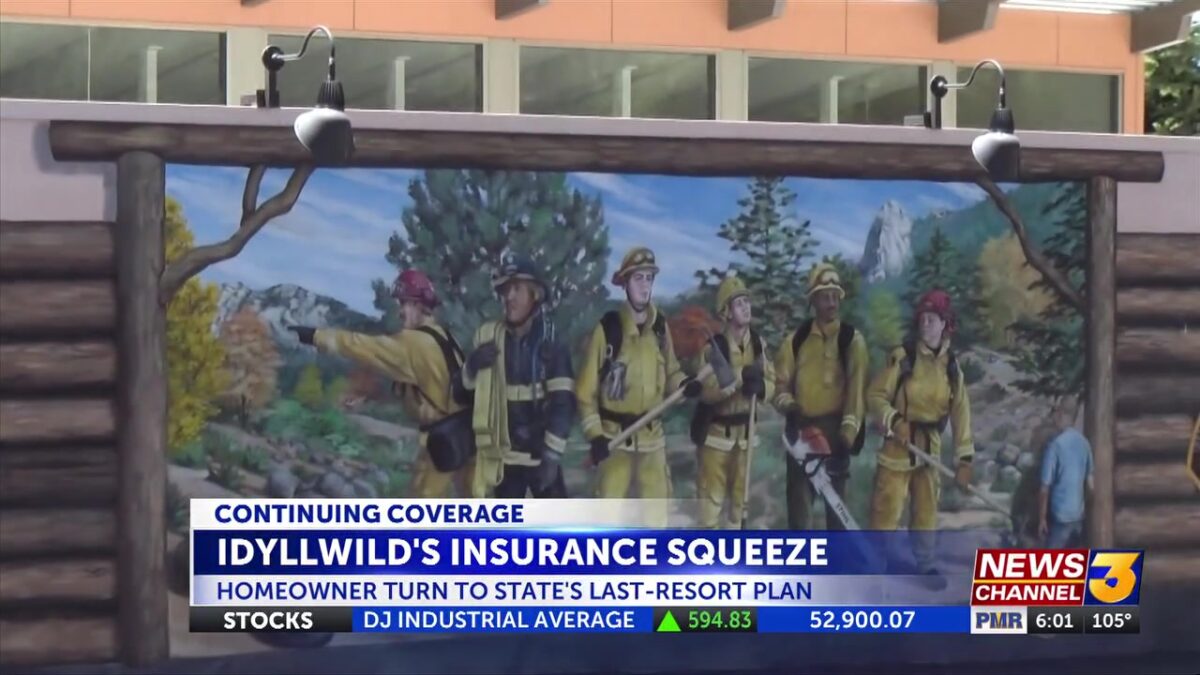
IDYLLWILD, Calif. (KESQ) As thousands of visitors head up the hill for Idyllwild’s Fourth of July parade this weekend, the people who live in the mountain town are paying more than ever to protect their homes from wildfire and many say they’re insuring for less than their homes are worth just to afford it.

Most homeowners News Channel 3 spoke with are on the California FAIR Plan, the state’s insurer of last resort. The plan covered 655,204 properties statewide as of March 31, 2026, according to FAIR Plan data nearly triple the number from 2021.

Tamara McFarlane is the manager at the local hotspot Red Kettle, and owns a property with three buildings in Strawberry Valley. She pays $1,700 a year for $350,000 in FAIR Plan coverage far less than she says her property is worth.

“I’d probably be able to rebuild maybe a one-bedroom house if I’m lucky,” McFarlane said.

She said she chose the lower coverage deliberately. “I didn’t want to spend $2,000 a month to have insurance,” she said.

Dora Dillman, a realtor in Idyllwild for roughly 30 years, said the common belief that the town is uninsurable is false, but acknowledged costs have climbed sharply.

“I hear people say, ‘Oh, it’s impossible to get insurance up here,’ and I want to just – excuse me, that’s not true. We can get insurance,” Dillman said. She estimated premiums have “easily doubled” over the past decade. “But I wouldn’t trade it. I’ll pay whatever insurance it costs.”

Dillman said the bigger danger is homeowners who don’t understand what their policies cover, pointing to friends who lost homes in the 2018 Cranston Fire and discovered the gap between insured value and the actual cost to rebuild. She said rebuilding on the mountain can run $450 per square foot or more while some homeowners carry policies written at $250.

The FAIR Plan is a named-peril policy centered on fire coverage. It does not include protections standard in a typical homeowners policy, such as theft, water damage or liability homeowners who want that protection must buy a second “wrap” policy, adding to the cost.

Donnie Browne, an insurance agent who writes policies in the area, told News Channel 3 that Idyllwild carries the highest wildfire risk scoring used by many insurers, and that carriers have pulled back from high-risk areas across Southern California including, in some cases, parts of Palm Springs. He said homeowners frustrated by rising bills should shop their policies but never let coverage lapse in protest, because carriers are unlikely to reinstate the old rate.

Susan Cowper, a longtime Idyllwild homeowner on the FAIR Plan, said her former carrier stopped writing policies in the mountain communities. She credits the local fire department with keeping past fires out of the village but said she’s made peace with the risk.

“Life is more important than possessions,” Cowper said.

News Channel 3 reached out to Assemblymember Greg Wallis whose district covers the hill and who is Vice Chair of the Assembly Insurance Committee, who provided us with the following statement.

“I hear the frustration of Idyllwild families every day, and they deserve a serious response. As Vice Chair of the Assembly Insurance Committee, I have spent the past year pushing the Sustainable Insurance Strategy and smarter policy to rebuild a private insurance market that can actually work in California. For too long, well intended but unwise regulations have driven carriers out of high risk areas. The FAIR Plan was designed as a last resort, not a primary option, and too many homeowners now have nowhere else to turn. That is not acceptable. Our goal is simple: bring carriers back so families in Idyllwild and across the state can get real, affordable coverage. I will not stop working until Californians have the protection they deserve.”

Assemblymember Greg Wallis -(R) California 47th District

On Saturday morning at 10am the 60th 4th of July Parade in Idyllwild will kick off. For more information on parade details and local events happening this weekend visit this link.

Click here to follow the original article.

2 dead, 1 injured in shooting at Fairlane Town Center in Dearborn, Michigan, police say

By Joseph Buczek

Click here for updates on this story

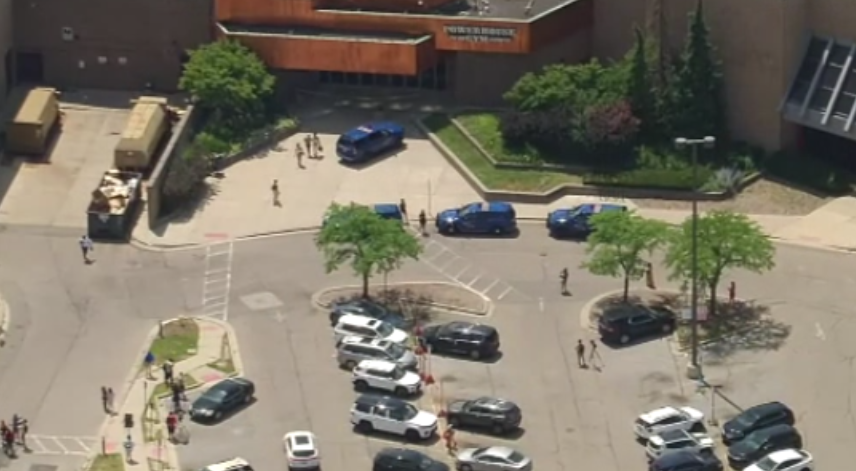
    DEARBORN, Michigan (WWJ) — Two people are dead, and one is injured after a shooting at Fairlane Town Center in Dearborn, Michigan, on Friday afternoon, police said.

Dearborn Police Issa Shahin said the shooting happened around 1:25 p.m. Friday, in what began as an argument between two groups and then escalated to a shooting. Police say both parties involved brought handguns to the mall and that this was not a random act of violence.

An employee who works at a business in Fairlane Town Center told CBS News Detroit that she heard at least four shots fired.

One person died at the scene, and another died at a local hospital, according to police. A third victim was injured in the shooting and is being treated at a local hospital. All three victims are young men, believed to be in their late teens or early 20s, Shahin said.

Police say there are no additional threats to the public.

“It’s completely unacceptable. For it to happen anywhere is unacceptable,” Shahin said. “The idea that it would happen in a public space, a mall, where people shop, is unconscionable. It’s just unbelievable.”

Several people involved are being questioned by Dearborn police, but Shahin could not say if a suspected shooter was one of those being questioned.

An investigation is ongoing, and there is no known motive at this time. Shahin said there is no evidence to suggest that a robbery was involved in the shooting.

A person who was running away from the shooting was hit by a car in the parking lot on the side of the mall opposite where the shooting occurred.

The mall is located at 18900 Michigan Avenue near Evergreen Road.

“The safety of our residents and visitors remains our top priority. Shootings and other acts of violence are entirely unacceptable, and we will hold everyone involved fully accountable,” Shahin said.

Anyone with information is asked to call the Dearborn Police Department at 313-943-2240.

This is a developing story and will be updated.

Please note: This story was provided to CNN Wire by an affiliate and does not contain original CNN reporting. This content carries a strict local market embargo. If you share the same market as the contributor of this article, you may not use it on any platform.

Good Vibes Only: Borderland students pen letters to veterans ahead of Independence Day

Rosemary Garcia

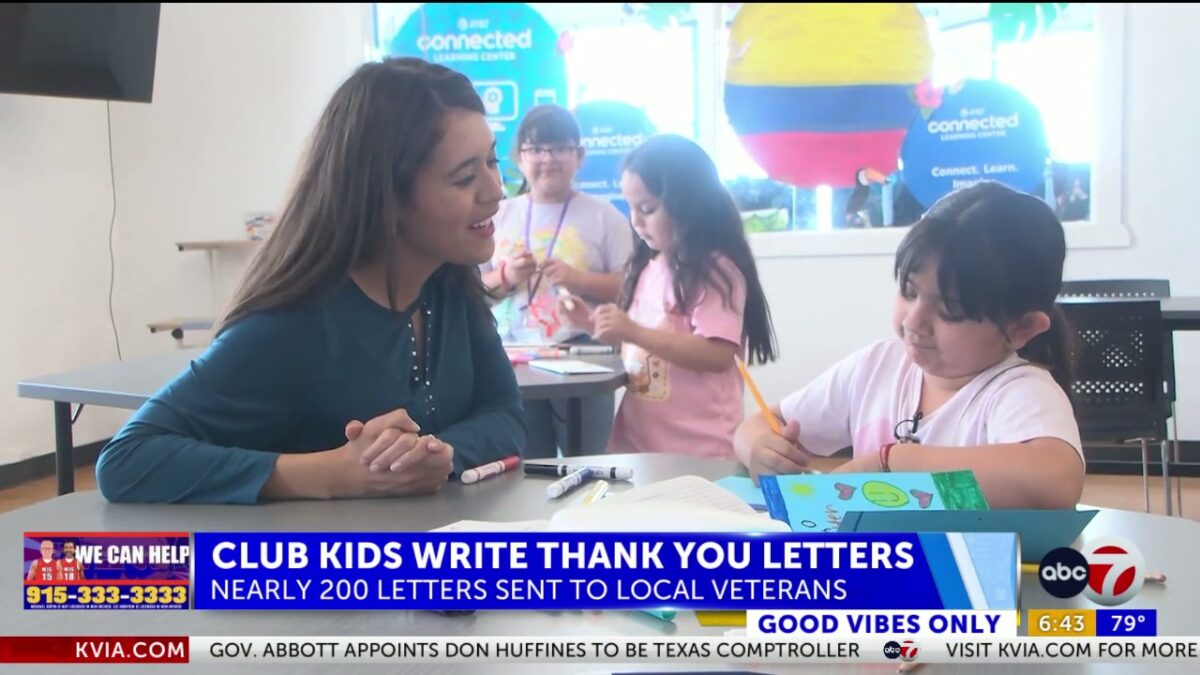
EL PASO, Texas (KVIA)— Students enrolled at the Boys and Girls Clubs of El Paso were hard at work ahead of 4th of July. They were tasked with writing thank-you letters to be delivered to local veterans as a show of appreciation. Students used markers, pens and colorful paper to express their gratitude.

The CEO of the Boys and Girls Clubs of El Paso, Anthony Tomasheski, said it’s important for club children to understand the true meaning of this holiday.

“We really want the children to be aware and have an understanding of why are we celebrating the 4th of July. What does that mean? And what is the impact? And there have been so many great veterans that are a part of everything that we do,” he added.

Tomasheski said it’s important that students are taught the meaning early on.

“Some of the kids think, it’s ‘Oh, that’s barbecues and fireworks.’ Well, true, but what is the meaning behind that? What is, what is the importance and why do we do that? And being able to share that and, and educate them so that they will grow up to be good, productive citizens that are helping and supporting our community and veterans and everyone else and just being aware of our community in the world.”

ABC-7 spoke with several students as they eagerly completed their letter. They said they were grateful to our soldiers.

“The soldiers protect us,” said one student.

Another girl wrote a letter for her dad, who is also a service member.

“My dad is my soldier, and he’s my hero,” she said.

Nearly 200 letters from students at the Boys and Girls Clubs of El Paso will be given to veterans across our community.

“So it’s just it’s a feel-good. And it’s, it’s interesting to hear the kids talk about what it means to them and how important it is to them. And you can see it in their hearts as they’re writing, and they’re taking the time to draw their best artwork and do all of that for our veterans,” Tomasheski said.

The CEO said this is just another way to pay it forward. He had read some of the letters and had been touched by their sincere words.

“It’s interesting to see that they’re so heartfelt and really how much they care. And just how they want to say thank you. They’ve got some of the biggest hearts.”

ABC-7 would like to thank all current military members and veterans for their service to our country.

If you have a Good Vibes Only story idea, please email rosemary.garcia@kvia.com.

Click here to follow the original article.