Local CBP officer receives prestigious Kiki Camarena Salazar Award

Lauren Duffel

YUMA, Ariz. (KYMA) – A local Customs and Border Protection (CBP) officer got a major honor Thursday. Law enforcement officers and Elks members gathered to honor the recipient of the Kiki Camarena Salazar Award.

“It’s such an honorable award to have received the Camarena Award. I’m very, very grateful, and thank you all very much,” Officer Adriana Prad of CBP said.

The Elks Lodge Number 476 in Yuma presented Officer Prad with the prestigious award.

Camarena was a DEA agent raised in Calexico, California. He was kidnapped, tortured, and murdered in Mexico in 1985 by members of the Guadalajara Cartel. His legacy continues to inspire drug-free living, and the Elks honor that commitment through this annual award.

Jody Brandt, leading knight officer for the Elks, said, “It’s about recognizing officers all over the states. It’s a very big deal in today’s world. These guys deserve it. They’re out here every day putting their lives on the line.”

The Camarena Award is presented to law enforcement members who best exemplify the qualities and principles for which Agent Camarena gave his life.

Prad has exemplified these qualities and has graciously donated her award money to the Humane Society of Yuma.

“I am very happy because they’re constantly needing donations, and just to be able to help out a little bit means a lot. I feel very happy,” Prad said.

The Camarena Award not only celebrates Officer Prad’s work, but also keeps Camarena’s legacy alive.

Click here to follow the original article.

CREEED’s Educator Externship provides electric experience for El Paso teachers

Rosemary Garcia

EL PASO, Texas (KVIA) — This summer break, a select group of El Paso educators will take part in a unique, real-world training and take their findings back to the classroom.

Since 2023, Council on Regional Economic Expansion and Educational Development’s (CREEED) Educator Externship Program has partnered with regional businesses to provide educators with a one-week paid externship.

Between 15-20 teachers place into regional businesses, immerse themselves in the daily operations, gain insights into workforce trends, and observe skills that are needed to succeed in these types of fields.

Eric Garcia, a teacher of principles of applied engineering at Coronado High School, was among those selected this year. ABC-7 was there as he toured El Paso Electric’s Montana Power Plant.

“It’s amazing to me. Yeah. I’m like a kid at Disneyland right now,” he told ABC-7.

Garcia said he was excited to be participating in this program. The high school teacher explained he has applied several different times before. He was pleasantly surprised when he learned he was selected this year.

He said, “I was excited when I saw the email that I was actually able to come in and be a part of the program!”

CREEED’s Choose to Excel Director, Nadia Tellez, said this externship allows teachers to take their experiences from the field and embed it into their teaching.

“This is like a flip on career day. So when you have a career day, we have these great businesses go out to schools and talk to kids. This flips it on its side and really gives a professional development to our teachers so that our teachers learn the ins and outs, and now they’re making content connections,” she said.

Garcia was able to interact with experienced professionals at El Paso Electric.

Aimee Saldivar, the senior organizational development training specialist at El Paso Electric, explained this is the third year the utility company has partnered with CREEED for this externship.

“I just spoke to their teacher right now, and I asked them, ‘What do you think so far?’ And this is only day two. And he’s like, I’m so overwhelmed. I looked probably like a deer in headlights with headlights. So I think a lot of this is all kind of connecting the dots, too, in terms of how it connects with the subject that he’s teaching,” said Saldivar.

This upcoming school year, these teachers will return to the classroom and provide students with examples of what they learned in the field, and how it directly relates to what they’re learning.

“Educators are lifetime students. And so you’re already seeing him make connections to not only the content that he teaches, but those soft skills that he’s going to embed,” said Tellez.

After spending a week at their respective businesses, teachers then create a lesson plan based on what they learned.

“I would hope that all the information that they take back with them, to fit into the curriculum with the students, that it’s something innovative or something that they didn’t know before or something that they never included in their classes. So it’s really something that’s new to the students when they hear it for the first time,” Saldivar said.

Garcia was able to visit various departments at El Paso Electric. He learned about system operations, power generation, distribution design, etc.

The high school teacher said he was eager to get back into the classroom and tell his students all about what he learned, so they will be able to use it one day in their future careers.

“I’m trying to open up my eyes so I can open up the students’ eyes as well,” Garcia added.

Participating teachers also get a $750 stipend. Other businesses taking part in this externship include: El Paso Chamber of Commerce, El Paso Electric, the El Paso Hispanic Chamber of Commerce, El Paso Inc., First Light Federal Credit Union, GECU, Pizza Properties, The Hospitals of Providence, among others.

To learn more about CREEED’s Educator Externships, click here.

Click here to follow the original article.

El Paso youth soccer leader talks about ties to Pepe, Zendejas

Max Zepeda

EL PASO, Texas (KVIA) — The Team USA soccer group is back on the pitch Friday afternoon after a thrilling 4-1 victory over Paraguay in last week’s World Cup match.

El Pasoans will gather to witness what the team has in store for the match against Australia.

During the match, ABC-7 spoke with FC Dallas El Paso Director Mike Lopez.

He helped organize a youth soccer camp in East El Paso once attended by Ricardo Pepi and Alex Zendejas, who are both playing for Team USA in the World Cup!

“I was super proud of Pepe. He’s always been a hard worker since he was a little kid,” Lopez told ABC-7. “So he deserves every chance he’s gotten, every opportunity he deserved it. He’s a hard worker.”

For Lopez, the purpose of his initiative isn’t solely driven on every young player trying to become the next Pepe and Zendejas.

“Try to teach the kids what it is about soccer,” he said. “Like I tell everybody — you have to practice every day. Every skill we do at the campus for them to train, practice at home, and hopefully they become a national team player like Ricardo and Alejandro Zendejas.”

Lopez said he plans on seeing both Pepe and Zendejas in person in Los Angeles. That’s where they’ll have their final World Cup group match on Thursday against Turkey. 

Click here to follow the original article.

Freed Black Americans add to Mid-Missouri’s story

Jazsmin Halliburton

COLUMBIA, Mo. (KMIZ)

In the year 2026, the United States of America celebrates its 250th anniversary of freedom and independence.

However, on July 4, 1776, not everyone in this country was free.

It was another 82 years before the South was ordered to free all slaves when President Abram Lincoln issued the Emancipation Proclamation at the end of the Civil War.

The Emancipation Proclamation was to go into effect in the Confederate States starting Jan. 1, 1863. Lincoln had issued a preliminary Emancipation Proclamation on Sept. 22, 1862, as a warning to Southern states that all enslaved people must be freed starting January 1863. According to Sean Rost of the State Historical Society of Missouri, both dates became early emancipation celebrations in Missouri.

“Jan. 1 gets molded into Missouri into Jan. 11, which is the date in 1865 when, in the state of Missouri, the General Assembly issued its edict declaring that slavery is abolished in the State of Missouri,” said Rost.

Rost said that in various parts of Missouri, Aug. 4 was also celebrated and tied into the emancipations and the end of slavery in the British West Indies in 1834. That date became a rallying cry, a celebration and an inspiration for enslaved Black Americans in the decades before the Civil War.

Rolla Herald-Democrat, 21 July 1904 in Phelps County, courtesy of the State Historical Society of Missouri.

Several newspaper clippings from across the state and Mid-Missouri that previewed multiple Emancipation Day celebrations in January, August and September still exist. These select dates began to mold into the more commonly known date of June 19, when Union soldiers traveled to Galveston, Texas, in 1865 to notify enslaved Black Americans of their freedom, two years after the Emancipation Proclamation.

Clipping from Miller County Autogram, 17 July 1890, courtesy of the State Historical Society of Missouri

Ste. Genevieve Fair Play, 3 September 1892, courtesy of The State Historical Society of Missouri.

From Little Dixie to Lincoln University

In the 1810s, ’20s and ’30s, settlers from the Upper South, such as Kentucky, Tennessee and Virginia, moved to Missouri and brought slaves with them. A small slave-holding economy was established in Mid-Missouri, and because of the growing Southern identity, a strip across the middle of the state got the name “Little Dixie.” “Little Dixie” is the area primarily along the Missouri River Valley.

A graphic showing the Little Dixie region of Mid-Missouri. The darker counties are those with higher populations of enslaved people.

After the Civil War, newly freed slaves stayed in the Little Dixie region, which consisted of several counties and cities in Mid-Missouri and northeastern Missouri. “Some of the statistics show us that there are a number of schools and churches, primarily catering to African-American populations in places like Pike County and places like Lincoln County,” said Rost.

Black Americans began to re-identify and grow communities in the region of Little Dixie. Black communities formed churches, organizations and schools, bringing on a new history in a white-dominated society during the Jim Crow era.

The story of Lincoln University in Jefferson City begins shortly after the Civil War, in 1866, when freed Black Union soldiers founded the school. Soldiers of the 62nd and 65th Colored Infantry learned how to read and write while in the service. An educated officer taught the men of the 62nd and 65th how to write and recognize their names and how to do simple math, according to Lincoln University spokeswoman Misty Nunn.

After the Civil War, the soldiers of the 62nd and 65th Infantry decided to start the Lincoln Institute for newly freed Black Americans in Missouri, which would later be known as Lincoln University in 1921.

As the country celebrates America 250, it is important to learn about the men of the 62nd and 65th Colored Infantry, who fought in the Civil War for their freedom, Nunn said. “They knew that they were citizens of this nation, whether somebody gave them credit for that or not. And so they fought,” said Nunn. “They fought for this country. They fought for their freedom, and they earned it.”

Lincoln University archivist Mark Schleer said Lt. Richard Baxter Foster helped educate these soldiers. “Richard Baxter Foster, who is the lieutenant that came up with the idea of giving these guys an education not only to make them good soldiers, but to get them ready for a life of freedom which they’d never experienced before,” said Schleer.

Foster was an abolitionist and a reverend with several connections to assist the men of the 62nd and 65th after they raised $6,000 to start the Lincoln Institute in Jefferson City. In 1866, the institute started with two students; that number swelled to over 200 the following year, said Schleer.

In 1867, Missouri became the 17th state to ratify the 14th Amendment of the U.S. Constitution, which, among other things, overturned a ban on the education of slaves. Schleer says that ratification meant that every town in Missouri that had a certain population had to have a school for Black residents. This opened the doors for Black Missourians to have an education; however, there weren’t any teachers to teach them. According to the Lincoln University website, in 1870, the school started to receive funding from the state for teacher training.

“Our founders lived through a bad era,” Nunn said of the men who started Lincoln. “They lived through a time where people honestly believed that because of the color of your skin, that you were less than, that you couldn’t learn, that you couldn’t become anything … and so it is important for [students] to understand where Lincoln started, how Lincoln started, so that they know they can overcome anything.”

Business owners in the city

In Columbia, areas such as Sharp End were vital to the Black community during the Jim Crow era, ahead of desegregation. Sharp End was a majority Black-owned business district when Black Americans were not allowed in businesses in certain areas of downtown.

Dawson Shoe Repair Shop, Boone Theatre, and Midwest Auto Stores on North Eighth Street, courtesy of The State Historical Society of Missouri.

Sharp End was an area where Black Americans could get anything they needed. “From morticians to general stores, clothing stores, grocery items, doctors, everything like that,” said Rost. “All would have been African-American-owned, and they would have been catering to the African-American community.”

Frank Gardner, 81, was born and raised in Columbia, and he remembers growing up in town and the Sharp End. Gardner talked about the doctor’s office on Third Street and a dentist’s office, and how those places were needed in a time of segregation.

“We didn’t go to many other places back in the day because it was segregation, and we couldn’t go in any of the places,” said Gardner. He went on to mention that when Sharp End was there, it supplied the Black community with whatever was needed, because there weren’t many places to go during that time in Columbia.

Gardner was around 12 or 13 years old when he visited the Sharp End. The businesses consisted of some clubs and pool halls. He wasn’t old enough to go in these places, but he considered himself a “roamer,” and that’s why he knew what was down there at the time.

Gardner said many businesses downtown would not let Black people inside, and other areas of the city were best avoided. “We didn’t want to go too far, you know, we might get jumped on,” Gardner said. “We couldn’t sit down at the places downtown. We could buy and spend our money, but we weren’t allowed to sit in any of those places back then.”

“Sharp End”, Club Twenty One, courtesy of The State Historical Society of Missouri.

When segregation ended and public accommodation laws came into effect, the businesses in areas like Sharp End began to struggle. During this time, the end of segregation brought new opportunities for Black Americans that were never there before, but it is also hurt Black businesses.

Busy Bee Barber Shop & Chambers Royal Tire, 217 North 8th Street, courtesy of The State Historical Society of Missouri.

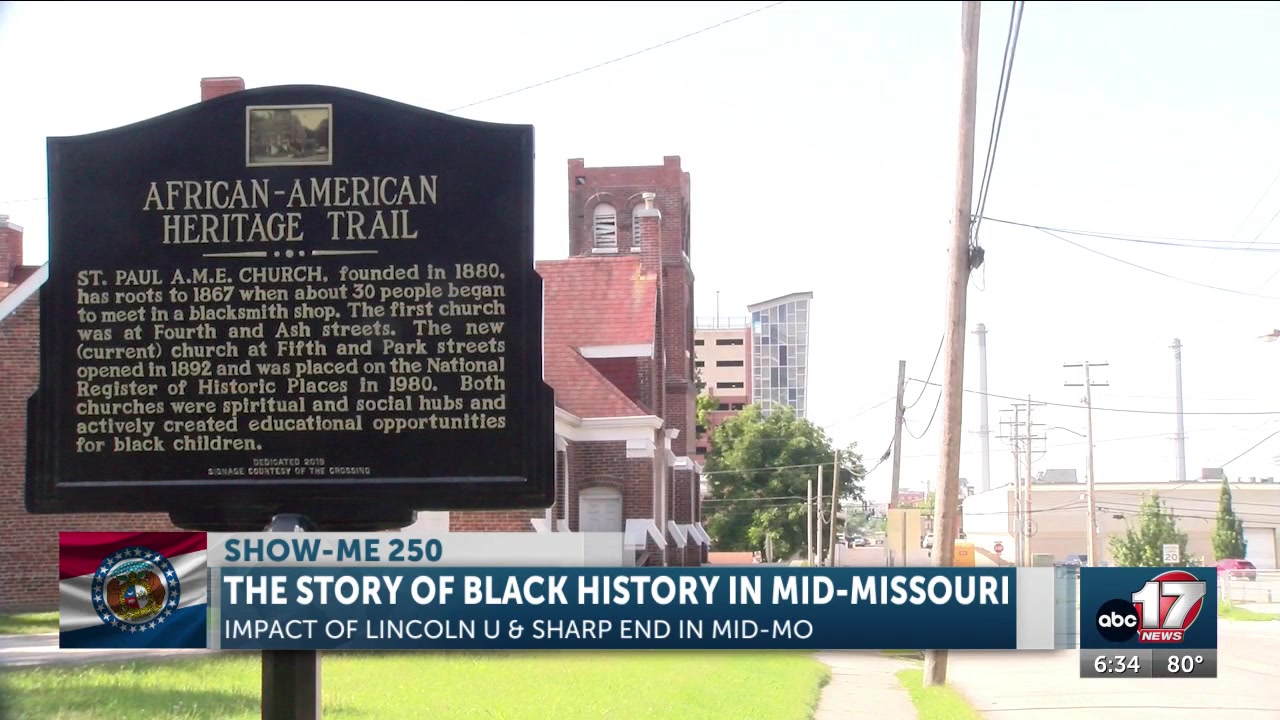
Over the years, there has been a rise in historic preservation, documentation and the recording of oral histories of the Black population in Mid-Missouri, such as the African American Trail in Columbia and Boone County. Certain documentation includes the preservation of the Blind Boone Home and the Second Baptist Church.

Blind Boone

John William “Blind” Boone was a nationally recognized musician who lived in Columbia during the Victorian Era and whose home holds historical significance. Boone is a symbol of African-American achievement and was active in the community. According to the secretary of the Boone Foundation, Greg Olson, Boone was active in the Freemasons, among several other philanthropic groups, and donated money to several institutions.

Blind Boone Home at 10 N. 4th Street

Over time, Boone navigated the dangers of the Jim Crow era, appealed to people across raical lines, and brought pride to the citizens of Columbia, Olson said. However, when traveling, he was not allowed to stay in certain towns.

“He was able to navigate race. He was able to navigate blindness,” Olson said. “Really, it is just tenacity, his talent, and his ability to overcome a lot of obstacles, I think, was a real story that really resonated with a lot of people.” 

Blind Boone was born at a Union Army camp near Miami, Missouri, and when he was a year old, his eyes were removed after he was diagnosed with what was considered to be meningitis. Boone grew up in Warrenburg, Missouri, and was sent to a school for the Blind in St. Louis where he taught himself instruments. When his talents grew, he was exploited by a number of managers over the years.

Boone moved to Columbia around 1889 and met John Lang Jr., who helped him become a famous ragtime musician.

Click here to follow the original article.

How much do Coachella Valley residents know about Juneteenth?

Dakota Makinen

COACHELLA VALLEY, Calif. (KESQ) — As communities across the country prepare to celebrate Juneteenth, News Channel 3 took to the streets to find out how much local residents know about the holiday and its significance in American history.

Some events taking place this weekend to celebrate Juneteenth:

Juneteenth Pageant

Join the Palm Springs Black History Committee for the 2026 Juneteenth Pageant: A Century of Black History Commemorations an evening celebrating Black culture, history, excellence, and community.

The event takes place June 20, 2026th, Doors Open at 5:30 PM, with the pageant Beginning at 6:00 PM at the James O. Jessie Desert Highland Unity Center.

This special event serves as a fundraiser supporting the Palm Springs Black History Committee’s ongoing community initiatives and programs. Tickets are available online and at the door.

Juneteenth Concert

Music, Culture & Community Take Center Stage at Sunset Music and Education Foundation’s Joyful Juneteenth Celebration at XOXO Palm Springs.

The Sunset Music and Education Foundation’s (SMEF) Juneteenth Celebration during XOXO Palm Springs, is bringing an afternoon of music, storytelling, poetry, dance, live jazz, and community spirit to Revolution Stage Company on Saturday, June 20, from 2–4 PM.

Doors open at 1:30 at the Revolution Stage Company.

Stay with News Channel 3 for continuing coverage of Juneteenth celebrations and the latest updates.

Click here to follow the original article.
Trailer fire in Heber prompts large response

Jessamyn Dodd

HEBER, Calif. (KYMA) – A semi-trailer truck caught on fire at the West Wind Parking & Storage, just off of the 111 Highway and Heber Road.

The facility also houses a tire shop and trailer repair shop where multiple trailers are stored.

The Imperial County Fire Department (ICFD) was called to the scene at roughly 2:40 p.m. Tuesday.

“[Upon] arrival, we encountered a single trailer that was on fire, with an extension into the local business here. This is a tire shop. That was my concern. Second and third alarm were dispatched to the incident,” Deputy Chief of Operations for Imperial County Fire Department told KYMA.

The crews fully extinguished the fire and began releasing some of the engines.

No injuries or other damages were reported and the cause of the fire is under investigation.

Click here to follow the original article.

Proposed indoor swap meet raises concerns among nearby senior residents

Adrik Vargas

YUMA, Ariz. (KYMA) – Some residents in Yuma’s Desert Lakes community are raising concerns about a proposed indoor swap meet planned near their neighborhood.

The proposed project would be built on a lot next to the 55+ community near the Civic Center. Earlier this week, residents received notices from the City of Yuma stating that Vega and Vega Engineering PLC is requesting approval to develop the site as an indoor swap meet.

Residents say they are worried about how the project could affect the area.

“There’s other places that they could put it,” resident Brenda Reed said. “Why does it have to be so close to this neighborhood?”

Neighbors say they are concerned the development could increase traffic, noise, and crime.

Those concerns were discussed during a neighborhood meeting at City Hall, where residents heard details about the proposal.

During the meeting, representatives from the engineering firm explained plans for the building, including its location, distance from nearby homes, and proposed conditions related to lighting and noise.

Resident Kathy Kanase said she attended to better understand why the location was selected, especially because her home borders the proposed site.

“I’m very concerned about the crime that it might bring into the community,” she said.

A public hearing is scheduled for July 27 at City Hall before the Planning Commission. Residents say they plan to attend and ask for additional conditions to help reduce noise and traffic concerns.

Click here to follow the original article.

Hospitals of Providence names new CEO for Memorial Campus, Children’s Hospital

Gabrielle Lopez

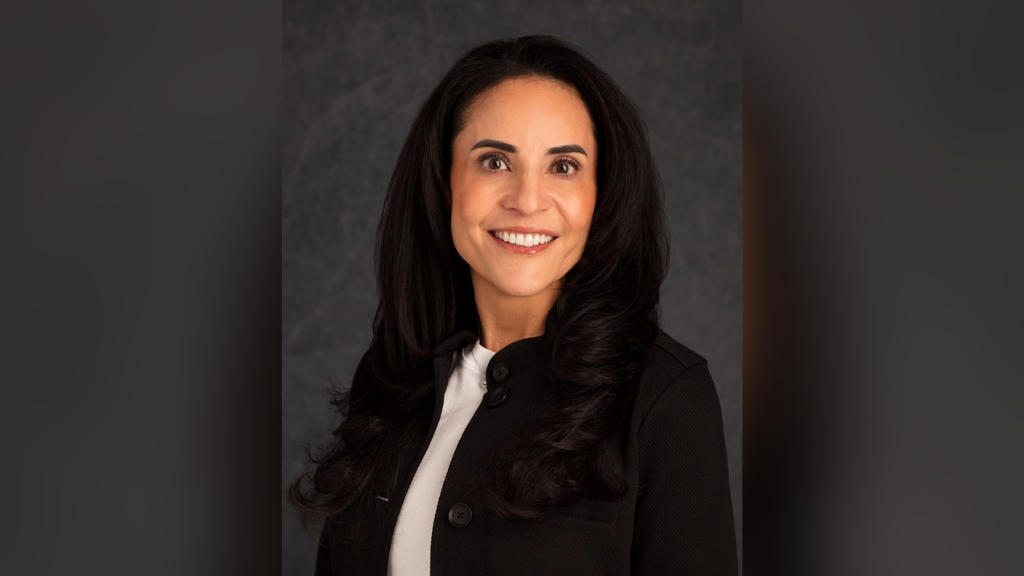
EL PASO, Texas (KVIA) — The Hospitals of Providence on Friday named Victoria Gonzalez as its new chief executive officer for the Memorial Campus and Children’s Hospital.

Gonzalez has worked for THOP since 1995, the hospital said. She served in several leadership roles, including group chief financial officer over the El Paso market.

She graduated from the University of Phoenix with a business and accounting degree and from Trinity University with a master’s degree in healthcare administration, according to THOP.

“As a native El Pasoan, Victoria brings a deep understanding of our community and a personal commitment to improving access to high-quality care. We are very excited for the next chapter at the Memorial Campus and Providence Children’s Hospital under her leadership,” said Nicholas Tejeda, Western Group President for Tenet Healthcare.

Click here to follow the original article.

Las Cruces mobile home catches fire twice within a month

Gabrielle Lopez

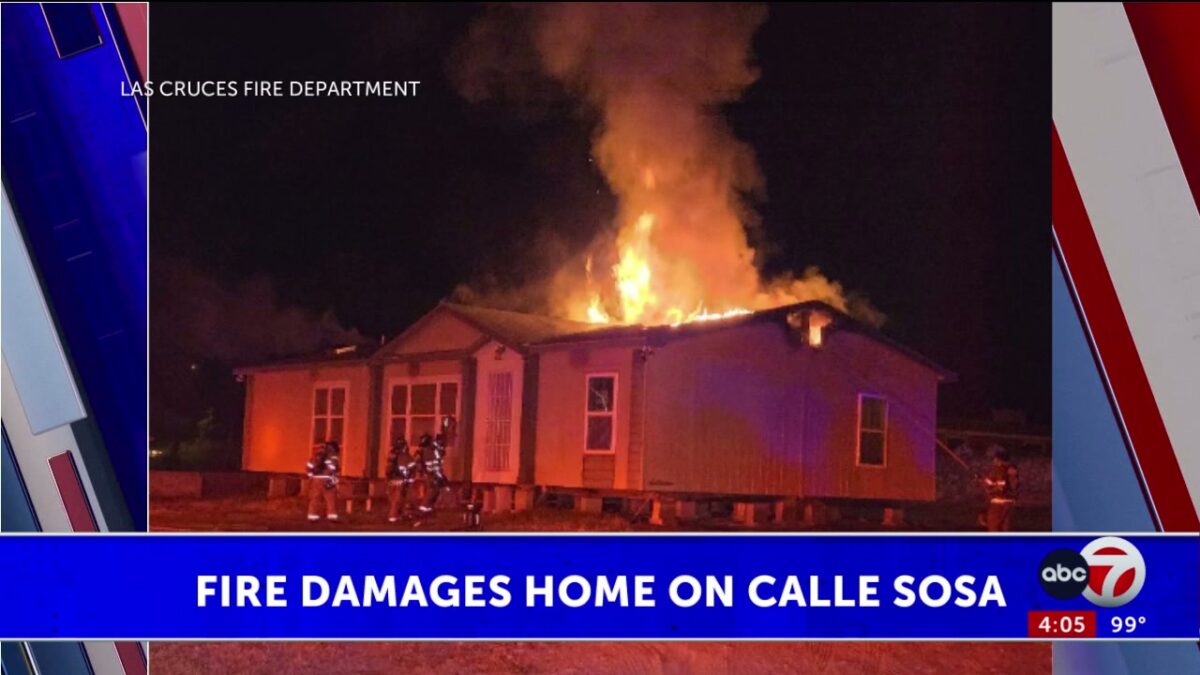
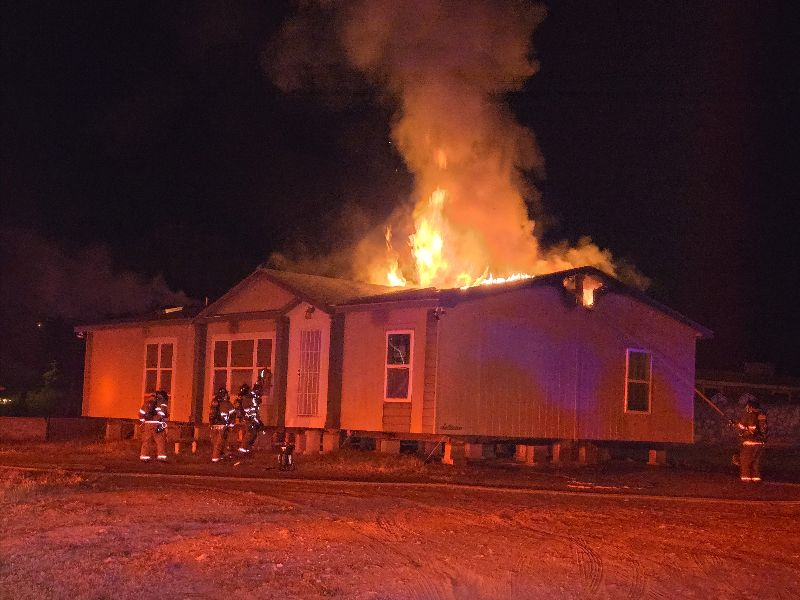
UPDATE (July 9, 2026) — For the second time within a month, Las Cruces firefighters put outa fire at an abandoned mobile home on Calle Sosa Thursday, according to a news release.

Firefighters went to the home just after 4:15 a.m. and saw fire venting through the roof. Crews controlled it within 10 minutes.

The Las Cruces Fire Department said no one was inside and reported no injuries.

ABC-7 previously reported the home caught fire June 19.

(Courtesy: LCFD)

LAS CRUCES, N.M. (KVIA) — A fire damaged a Las Cruces mobile home, according to the Las Cruces Fire Department Friday.

Thursday afternoon, firefighters went to the mobile home at 1300 block of Calle Sosa near Encino Avenue at 3:30 p.m., LCFD said.

Crews found a double-wide trailer with fire coming from the attic, according to the fire department. Firefighters went into the home and controlled it within 13 minutes, eventually putting it out.

LCFD said nobody was injured and the fire’s cause is under investigation.

Click here to follow the original article.

Mosquitoes in Imperial County test positive for viruses that causes serious illness

Skylar Heisey

IMPERIAL COUNTY, Calif. (KYMA) – Imperial County health officials are urging residents to take precautions after mosquitoes tested positive for viruses that can cause serious illness.

The imperial County Public Health Department says a mosquito pool in the Winterhaven area tested positive for West Nile Virus while a mosquito pool in the Bard area tested positive for St. Louis Encephalitis Virus.

The samples were collected on June 11, and mark the first positive tests of both viruses in Imperial County this year.

Health officials say mosquito activity increases during the warmer months, raising the risk of mosquito-borne diseases.

Symptoms can include fever, headache, body aches, fatigue, nausea, and rash.

In some cases, the viruses can cause serious neurological illness, especially in older adults and people with weakened immune systems.

Officials are encouraging residents to use insect repellent, wear long sleeves and pants when outdoors, and eliminate standing water around their homes where mosquitoes can breed.

The county’s vector control program says it will continue monitoring mosquito activity and treating affected areas.

To learn more about this, read the press release, written in English and Spanish, below.

NewsRelease_MosquitoPoolDetections _EnglishVersion_061826Download

NewsRelease_MosquitoPoolDetections _SpanishVersion_061826Download

Click here to follow the original article.