Silver Alert canceled after 90-year-old Columbia woman found safe

Ryan Shiner

COLUMBIA, Mo. (KMIZ)

A Silver Alert has been canceled after a 90-year-old woman who has dementia was found safe.

The Columbia Police Department said on Facebook that Nancy Thrower was home safe in Columbia on Thursday afternoon.

The department thanked the public and other agencies for their help.

“We would also like to thank BCSD, MUPD, Ashland PD, MSHP and Boone County Fire for their assistance in the search,” the post stated.

A social media post from CPD says Nancy Thrower, of Columbia, was last seen at noon Wednesday in the 1000 block of Westwinds Court. A Missouri State Highway Patrol press release says she walked away from her residence “in an unknown direction.

Police say she was wearing a blue blouse and a black jacket. The MSHP release says she is 5-feet tall, weighs 120 pounds, has gray hair and blue eyes.

An emergency alert that was sent to smartphones in the area says she was also wearing shorts and black shoes. She has a cane and was last seen hiding in bushes, the alert says.

A CPD spokesman told an ABC 17 News reporter after 8 p.m. that police were asking for residents to check any cameras they may have outside their home, including surveillance cameras and RING doorbell cameras. The spokesman cited the lack of daylight as it gets later.

Click here to follow the original article.

Man charged for aggravated robbery at Segundo Barrio store

Gabrielle Lopez

EL PASO, Texas (KVIA) — El Paso police charged a 57-year-old man for aggravated robbery at a store in Segundo Barrio near the Paso del Norte Port of Entry. ABC-7 reported live from the scene when police thought the man was barricaded in the store.

The robbery happened May 6 at Levcomm International, which sells phones at 908 S Stanton.

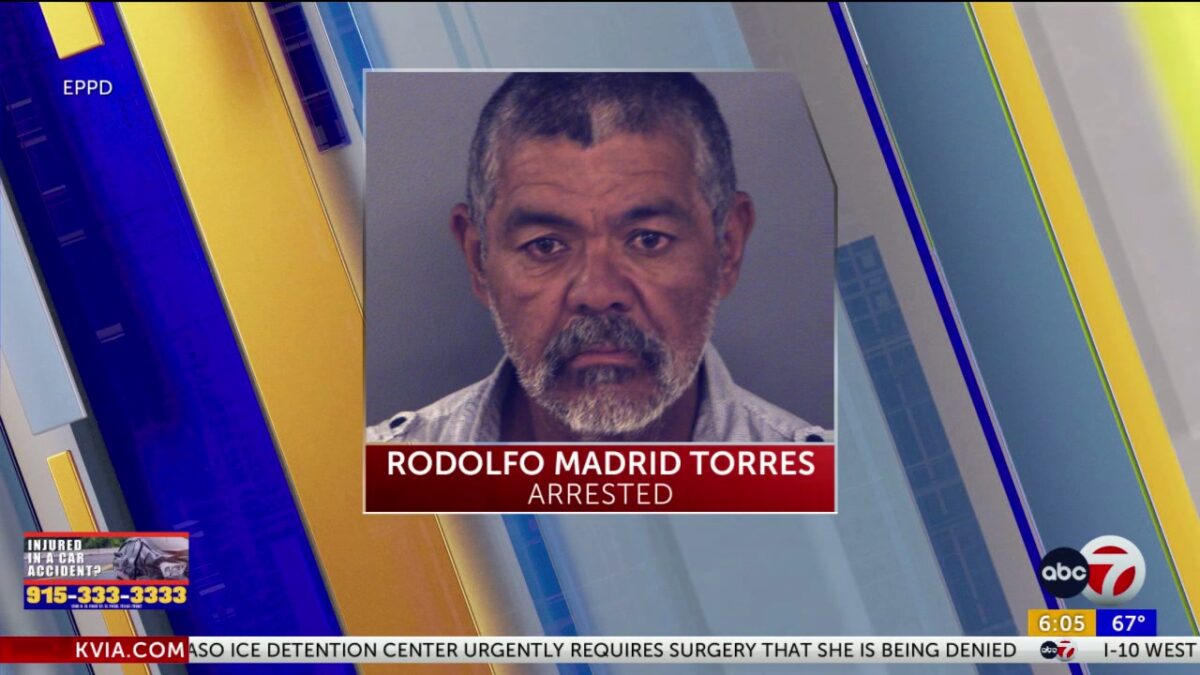
EPPD said Rodolfo Madrid Torres entered the business, assaulted the owner and demanded money. The owner broke free and locked Torres in the building.

When officers arrived, they believed Rodolfo was inside, but he left the building before they got there, police said. Investigators said he stole cash and the owner’s wallet.

Officers arrested and booked Torres into the county detention facility Monday.

Click here to follow the original article.

YUHSD associate superintendent selected for Flinn-Brown Fellowship

Dillon Fuhrman

YUMA, Ariz. (KYMA) – Yuma Union High School District (YUHSD) says Associate Superintendent Lilian Campa was selected for the Arizona Center for Civic Leadership’s 2026 Flinn-Brown Fellowship.

According to a press release, the fellowship “brings together civic leaders from throughout Arizona to help expand their knowledge, skills, and networks to address Arizona’s long-term issues,” and Campa is one of 24 people across the state to earn the fellowship.

“Being selected is both an honor and a responsibility,” Campa said. “I see it as recognition that the work I have been doing in education and leadership has value beyond my immediate role. I wanted to be part of the fellowship because meaningful change happens when people understand systems, build relationships, and engage in thoughtful dialogue — especially with people who may see issues differently. In education, many of the challenges we face are deeply connected to public policy, and I wanted to grow my ability to advocate effectively for students, educators, and communities.”

As a Flinn-Brown Fellow, YUHSD says Campa will participate in policy discussion that are focused on the following issues affecting Arizona:

Education

Water

Economic development

Healthcare

Infrastructure

State government

In addition, YUHSD says the fellowship provides opportunities to speak with policymakers, subject matter experts and leaders throughout the state.

“I plan to use what I learn to strengthen my leadership and deepen my understanding of how policy decisions impact schools and communities,” Campa added.

To learn more about Campa being selected as a Flinn-Brown Fellow, read the press release below.

PR – Yuma Union High School District Associate Superintendent selected for Flinn-Brown FellowshipDownload

Click here to follow the original article.

“100 Safest Days” could be the new trend as Memorial Day approaches

Stephanie Lucas

IDAHO FALLS, Idaho (KIFI) – The period between Memorial Day and Labor Day is traditionally known as the “100 Deadliest Days” because Idaho’s highways see their highest number of crashes.

In an effort to remind drivers to be more vigilant, the state’s Office of Highway Safety is joining national partners to shift the narrative from the “100 Deadliest Days” to the “100 Safest Days of Summer,” and the year-to-year numbers being used look positive.

Idaho fatalities during the summer months 2021-2025:

2021 – Memorial Day to Labor Day: 100

2022 – Memorial Day to Labor Day: 81

2023 – Memorial Day to Labor Day: 93

2024 – Memorial Day to Labor Day: 82

2025 – Memorial Day to Labor Day: 87

Since 2021, Idaho has seen a reduction in crashes during the summer months. Five Idaho counties — Camas, Franklin, Gem, Teton, and Lewis — had zero traffic fatalities during 2025. 

“Everyone wants zero fatalities for their family, and that is only possible when Idahoans make safe choices behind the wheel,” said Josephine Middleton, Office of Highway Safety Manager. “We want drivers and passengers to be proactive about their safety as we head into the summer season.”

Idaho also saw strong improvements in safety for people walking, biking, and rolling. After an unusually high year in 2023, pedestrian and bicyclist fatalities fell by more than half.

Still, officials emphasize that seat belt use and speeding remain critical areas for improvement. People not buckling their seat belts made up 47% of all people killed in passenger vehicles in 2024. Aggressive driving and speeding continue to contribute to nearly half of all crashes.

“As families and teens spend more time on the road, the safest choice is still the simplest one: buckle up, slow down, and stay focused,” Middleton said. “Together, we can make this Idaho’s safest summer yet.”

For more information on Idaho crash trends and safe-driving resources, visit shift-idaho.org

Click here to follow the original article.

ABC-7 Xtra Investigation: Can the City of El Paso collect debt from Trump campaign rally without this key document? 

Lesley Engle

EL PASO, Texas (KVIA) — Seven years after thousands crowded the El Paso County Coliseum to see then-President Donald Trump campaign for re-election, the El Paso City Council has renewed its efforts to collect on a half-million-dollar bill for services related to the rally.

However, collecting payments may be more complex than they thought.

Records obtained by ABC-7 reveal that the City of El Paso did not discuss costs with President Trump’s campaign prior to his 2019 rally. The finding comes despite ongoing discussions among city leaders and elected officials about the $569,204.63 the city says the campaign still owes it. 

At a March council meeting, District 7 Representative Lily Limon requested an update on the outstanding Trump campaign debt and called for quarterly reports.  

Following that meeting, ABC-7 filed an open records request to determine whether any cost discussions or agreements existed before the February 11, 2019, rally.   

We reviewed the records the city sent, which did not show any discussions with the campaign, including cost estimates, quotes, draft agreements, or contracts, prior to the rally. ABC-7 found the city still does not have a formal cost-recovery plan in place for events such as political campaign rallies. 

“You cannot make people pay for things after the fact,” Carliss Chatman said. “If the city didn’t anticipate it, the city assumed the risk.” 

Carliss Chatman, a professor of law at the SMU Dedman School of Law, told ABC-7 that many cities fail to account for the scale of political events beyond basic venue rental fees. When a city provides services without a contract, the law may view the work as a “gift” or an “accord and satisfaction,” leaving the municipality responsible for the expenses. 

“It’s disappointing because we went into that and now we’re suffering the consequences,” Rep. Limon said. “But the good thing is it may lead to change. Those are important questions to ask—were we prepared, were we ready? I think we’ll be smarter moving forward.” 

The bill the Trump campaign did pay

Donald Trump announced his visit to El Paso on February 6, 2019, just five days before the rally. His “Make America Great Again” event filled every seat available inside the El Paso County Coliseum, with thousands more gathered outside.  

Records show the campaign paid a $5,000 rental fee and an additional $1,000 non-refundable deposit for the Coliseum, and ABC-7 obtained a copy of the wire transfer confirming the payment.

“I think that the one really critical person in this Trump visit was Brian Kennedy. He was the president of the Sports Commission, who, pretty much four hours before, said ‘hey if we don’t get payment by such a time your event is cancelled,’” Representative Lily Limon said. 

Kennedy told ABC-7 he negotiated a contract in advance with the Trump campaign. Under that agreement, the campaign was required to pay before Trump stepped on stage. The commission, which manages the Coliseum for El Paso County, also required the campaign to cover all venue-related expenses. 

No agreement with the City of El Paso 

A day after the Feb. 11 rally, city officials confirmed to ABC-7, in response to the station’s inquiry, that taxpayer resources were used to support the event. At the time, officials said costs were still being calculated and would be billed to the campaign once finalized.

The city billed Trump’s campaign more than $470,000 a month after the event, according to city records obtained by ABC-7 at the time. A one-time 21% delinquency fee later increased the total bill to nearly $570,000. 

Records show reimbursements covered a range of costs, including equipment, personnel and services such as security, cleanup, setup and logistics.  

According to City of El Paso billing records for the rally, the police department incurred the highest costs at $380,942.12, followed by the fire department at $60,630.84, Sun Metro at $15,577.52, Streets and Maintenance at $6,452, the Department of Aviation at $6,286.57 and the Health Department at $528. 

Security alone drew 476 officers from the El Paso and Anthony police departments and the El Paso and Socorro independent school districts, according to the itemized bill reviewed by ABC-7. That was in addition to El Paso County sheriff’s deputies and Secret Service personnel. 

ABC-7 asked to interview City Manager Dionne Mack and City Attorney Karla Nieman to walk us through the bill, explain how the city develops cost estimates for larger events, discuss how it plans to collect payment without an agreement, and any plans to create a policy to guide future event planning. 

City spokeswoman Laura Cruz-Acosta declined, saying there were no new developments to warrant additional interviews. “You’re welcome to reference prior interviews and KVIA’s previous coverage as the most current information available,” she wrote in an email.

City Representative Limon told ABC-7 she was not aware that the city had no prior agreements or documented discussions with the Trump campaign when asked. She described efforts to collect the outstanding amount as “uphill” but worth pursuing.

She said she placed the issue on the March 3 agenda to ensure the debt is not forgotten, and questioned why such a large amount of money has been left unpaid, comparing it to unpaid traffic violations or parking meter fees that are always collected. 

Chatman, the SMU professor who specializes in contract law, corporate governance, legal ethics, and fiduciary duties, said when cities host large rallies, they must look beyond simple venue rentals to consider the costs of additional security and the size of expected crowds.  

“The first is just a contract with the terms between the city or the county, whatever municipality is hosting and the organization that is hosting the rally,” Chatman said. 

Chatman says contracts for these events typically include provisions for police support that go beyond everyday operations, including the cost of closing or barricading roads to manage traffic.  

Chatman said some cities include clauses that allow them to charge more if the scale of the event exceeds what was originally anticipated. She said without those written terms, a city may have no legal mechanism to recover those costs. 

El Paso does not have a formal policy for recouping costs associated with large campaign events like Trump’s in 2019, according to city spokesperson Laura Cruz-Acosta. 

“So, there is no formal policy that is in place as it relates to it, but we do have procedures and forms that are filled out for special events, for example.” She said the city has a special events form where people can describe the event’s footprint and whether there will be a need for street closures for things like parades.   

“So, there’s really no one-size-fits-all when it comes to the process, but at the very minimum there’s a starting point in terms of filling out a form in order to capture all of the details and information related to that kind of special event,” Cruz-Acosta said. 

Cruz-Acosta said creating a formal policy for campaign events would require City Council action. She noted the council hired the Law Offices of Snapper L. Carr, which was in November of 2022, according to city records. We asked Cruz-Acosta how much it cost to hire the Austin-based law firm, which also serves as the city’s lobbying group during Texas legislative sessions, and she said an open records request would be required.

According to the records we obtained through our request, the city hired the firm on a contingency basis—meaning the law firm is paid only if it recovers money on the city’s behalf.

Limon believes cities need to become “smarter” about securing payment for services. She noted that providing services for campaigns is a “tremendous drain on public service,” particularly on first responders. She said if the $570,000 were recovered, it would directly benefit departments, which she said are often in need of funding. 

Limon stressed the need for a clear policy outlining expectations for campaigns. 

“We can’t just say, ‘well, welcome to the city and we’ll be there, we’ll protect you, um, we’ll close roads, we’ll do whatever is necessary, and then afterwards we’re going to send you a bill and we hope that you’ll pay for it,'” Limon explained. She affirmed the city’s responsibility to offer protection but asserted that entities using city services should pay for them, regardless of the campaign. “It’s — You have received a service from this city, and you should be paying for that service that you received. Whether it’s Bernie Sanders, whether it’s Donald Trump, it doesn’t matter who it is,” Limon said. 

Professor Chatman said large cities often have standardized protocols and checklists in place for event permits to ensure every host is treated the same regardless of their political affiliation. Chatman noted that smaller cities may lack these procedures because they do not regularly host large-scale events.  

“Best practices are to have checklists and standards and protocols in place so that you eliminate human error and human judgment and human bias. That’s what you want to do,” Chatman said. 

Chatman recommended that municipalities use a “360 approach” for future event planning, including evaluating the profile of speakers, the potential for counter-protests and the total burden on city resources.  

“Once it happens the first time and you see what a burden it is on a city budget, then you have to put protocols in place and have best practices for hosting these sorts of events,” Chatman said. 

In Tucson, Arizona, the city declined to pursue about $80,000 in public safety costs from a 2016 Trump rally and about $40,000 from a Bernie Sanders rally that same year, concluding legal action would cost more, Andy Squire, public information officer in the City Manager’s Office, told ABC-7. When Trump returned in September of that same year, however, the city required his campaign to prepay estimated public safety and facility rental costs—a total of $145,222, including nearly $116,000 for police. 

“In the end it came down to modifying the language in the facility use agreements at the Tucson Convention Center, which is city owned and operated under contract with Legends Global,” Squire said in an email response to ABC-7. 

ABC-7 reached out to the Republican National Committee seeking comment on the costs related to President Trump’s campaign rally in El Paso. A former campaign official said, “All questions related to local law enforcement and first responder costs we defer to the U.S. Secret Service.” 

A Secret Service spokesperson told ABC-7 that the agency coordinates security planning with local law enforcement partners but “currently lacks a mechanism to reimburse local governments for their support during protective events.” 

The spokesperson added that the agency will continue working with Congress to seek resources for state, county, and city law enforcement agencies assisting in security operations. 

Click here to follow the original article.

Man charged with 2 felonies after south Columbia chase with deputy

Ryan Shiner

COLUMBIA, Mo. (KMIZ)

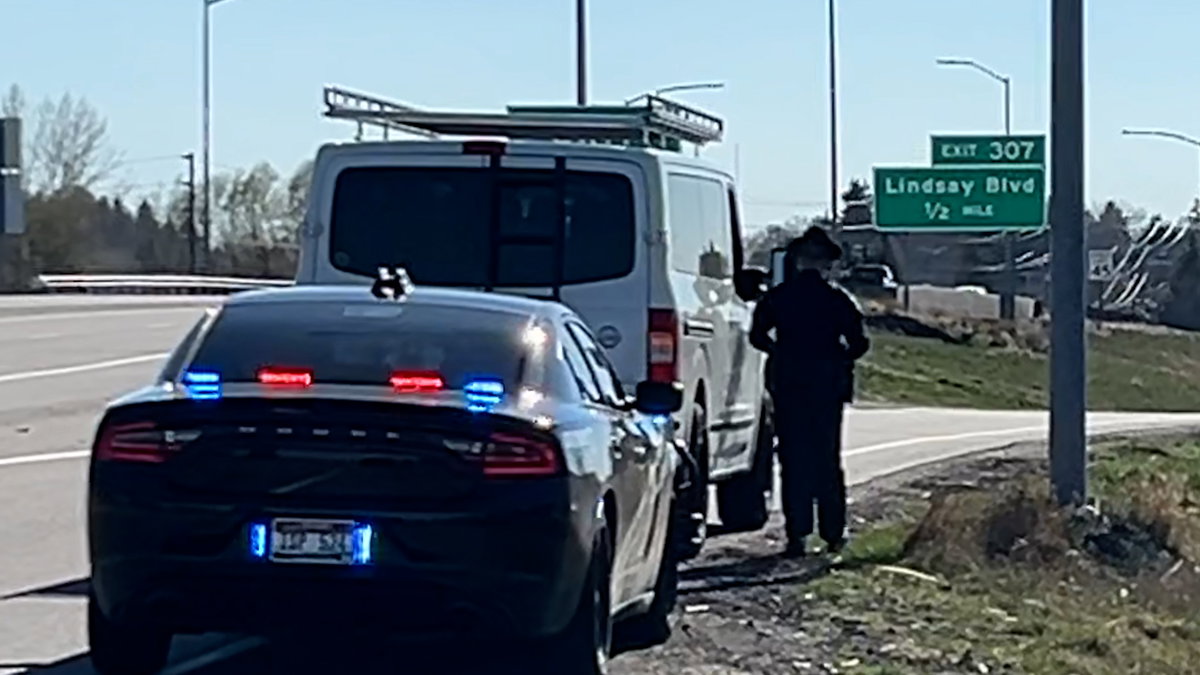
A man was charged with a couple of felonies after he was accused of leading a deputy on a high-speed chase Monday in southern Columbia.

Arthur James Hill, 38, was charged with aggravated fleeing and driving while revoked. He is being held at the Boone County Jail on a $10,000 bond.

The probable cause statement says Hill fell asleep at the wheel around 4:30 p.m. Monday while at the intersection of Providence Road and Stadium Boulevard, and his vehicle started rolling through a red light at the intersection.

A deputy turned on his emergency lights and Hill stopped in the intersection before heading south, the statement says. The chase then went to the Green Meadows Road intersection at a speed of 91 miles per hour, the statement says. The chase made its way to Southampton Drive, where Hill eventually stopped, court documents say.

Hill allegedly got out of the vehicle, but then ignored the deputy’s commands as he searched for a “roach,” court documents allege.

Click here to follow the original article.

Kehoe, Google tout $15 billion investment to accompany data center

Erika McGuire

HIGH HILL, Mo. (KMIZ)

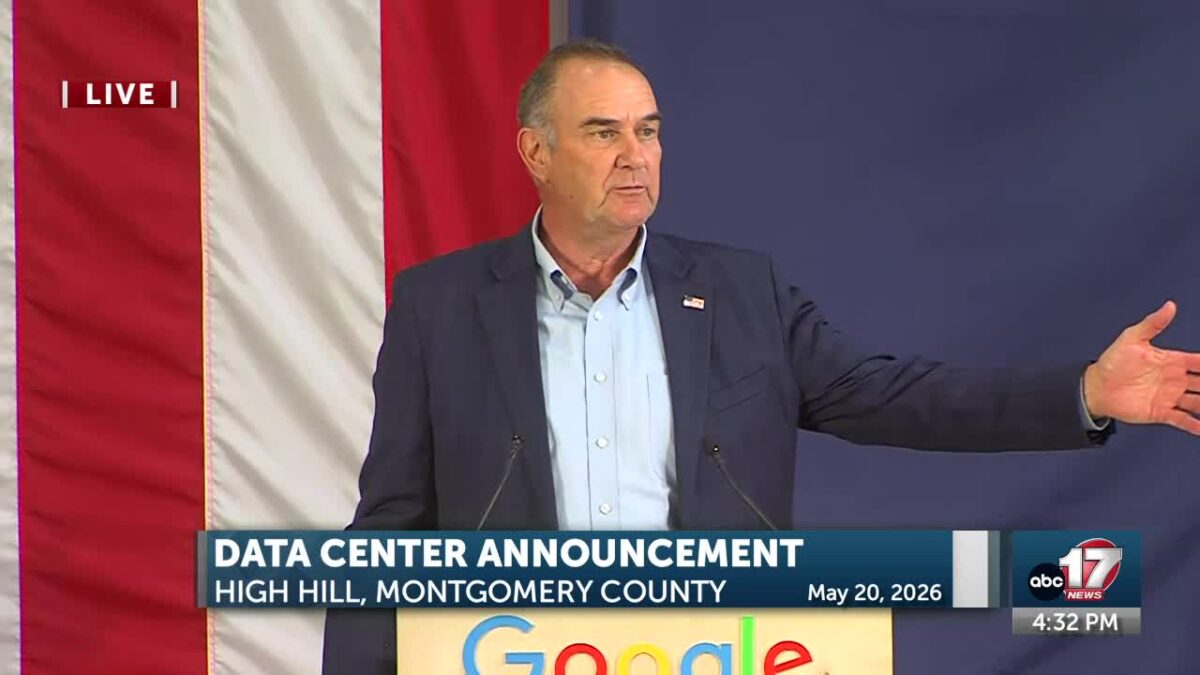
Gov. Mike Kehoe and leaders from Google unveiled a data center project Wednesday that includes a $15 billion infrastructure investment from the tech giant.

Kehoe joined local officials and Google executives at the Laborers and Contractors Training Center in High Hill on Wednesday afternoon. Speakers touted the jobs the project will bring and sought to dismiss concerns about data centers’ use of electricity and water resources.

“This data center will create thousands of construction jobs as it is being built and hundreds of full-time jobs once it is operational,” said Ruth Porat, Alphabet and Google president and chief investment officer. Each of those hundreds of jobs will create nine others, she said.

The new investment comes as residents in Montgomery County have expressed concerns over data centers since they are known to use a large amount of energy and water.

However, state leaders say the facility will operate differently than others.

“This is an air cooled facility so the only water usage will be from kitchens and bathrooms,” Public of Affairs Manager for the state of Missouri Trystine Payfer said.

Kehoe said the investment came with a commitment from Google to build up local infrastructure and expand energy affordability programs.

Google also announced a $20 million energy impact fund to support programs to drive down monthly energy bills to households in Missouri.

“Not only are we paying for own infrastructure and services we need to fund this facility we are paying a premium on top of that to put down pressure on peoples rates to make sure we are negativity affecting any rate payer,” Payfer added.

The $15 billion announcement comes as construction is underway on an Amazon Web Services Data Center on Hudson Road near New Florence. The Google Data Center Campus is off Interstate 70 on Tree Farm Road.

Google’s data center will be about 900 acres and will have to buildings along with a hub.

Payfer says Montgomery County was picked as a location due to several factors.

“Cost, effectiveness, reliability and community fit and this region is situated perfectly, we have a great talent pool, strong community partners and a excited community,” She said.

“Project Spade” is expected to bring in over 2,000 construction jobs and hundreds of full-time position once the facility is complete.

Kehoe said the project is about connectivity and creating jobs for Missouri families.

“The county has done a great job addressing those concerns, there has been a lot of misinformation, google is committed to making sure they understand faces go with these jobs, people and families go with these investments,” Kehoe said.

Project Spade, a codename for the Google data center campus, obtained two permits under Kinetic Site Ventures LLC that were issued in February of this year.

The permits are for data center complexes, with additional permits expected as the project continues.

The project is currently in the pre-construction phase and is set to be completed in the next two years.


Click here to follow the original article.

Water woes: Boating season cut short at Seagull Bay

Hadley Bodell

AMERICAN FALLS, Idaho (KIFI) – With the water levels on the American Falls Reservoir rapidly nearing 50 percent capacity, the Seagull Bay Yacht Club is pivoting to alternative summer activities and asking for the public’s help in donating to a summer season.

Due to the dry winter in eastern Idaho, there has been little snow runoff to add to local reservoirs. The American Falls Reservoir is currently at 61 percent capacity and is dropping four inches daily. The Palisades Reservoir is also low, sitting at about 40 percent.

“Launching and docking boats is at your own risk,” said Tiffany Dansie, Secretary of the Seagull Bay Yacht Club. “Our water year is about over as far as boat activities go out here. But that doesn’t mean you still can’t bring your paddleboard and go out, but it is a dangerous year for boating with the water levels going down so quickly.”

President of the club, Shane Howell, said all boats must be pulled when the reservoir hits 50 percent. He said he’s hoping for another couple of weeks of the season and assured dock users they would be alerted about the deadlines for pulling boats.

Seagull Bay has a clubhouse available for rent for events, barbeques, camper slots, and plenty of recreational areas for outdoor sports. Dansie said the options are endless in the beautiful area, and managers aren’t backing down in the wake of low water.

“Throughout the summer, we’re looking to put on several events for both members of the yacht club and for visitors,” Dansie said. “We have fishing all summer, paddleboarding, and are happy to set up volleyball, cornhole, pickleball, horseshoes, and croquet.”

Many visitors come to enjoy the view of the water and the legendary Seagull Bay sunsets. Howell said the summer events will hopefully supplement funds with a short boating season.

“We are looking for donations from the public to get events going, and we’d love to hear from others what events they’re wanting to have,” Dansie said.

Some current ideas are farmers’ markets near the water, a food truck rally, water slide rentals for a family fun day, and a cornhole tournament. To pitch your ideas or donate to the yacht club, you can visit their Facebook page at Seagull Bay Yacht Club or call directly at 208-226-2088. The property caretaker is also on site if you make the drive to contact them directly.

Whether it’s for enjoying the views, camping for a weekend, or enjoying the water itself for fishing, kayaking, and paddleboarding, Seagull Bay is far from closing this summer despite the low water level.

“Just because we don’t have water doesn’t mean people can’t get out and enjoy the place,” Howell said.

Click here to follow the original article.
No charges will be filed against Columbia officers who shot man on Christmas Day

Ryan Shiner

COLUMBIA, Mo. (KMIZ)

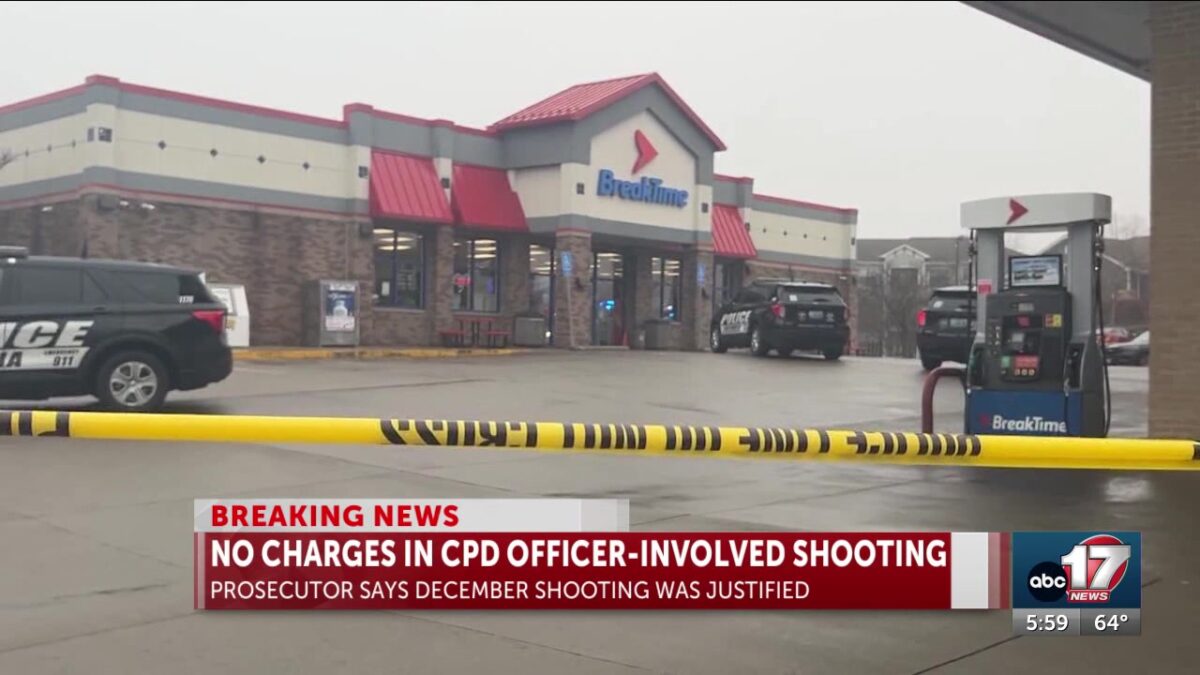
No charges will be filed against Columbia Police Department officers who shot a man on Christmas Day.

Audrain County Prosecutor Jacob Shellabarger – who was named the special prosecutor in the case — wrote in a letter to the Boone County Circuit Court that he will not file charges against the officers.

“I have reviewed all reports, evidence and information regarding the December 25, 2025, shooting of Marc Lucas by the Columbia Police Department. I have found that the shooting was justified and proper under Missouri law, and although tragic, will not result in any criminal charges or further proceedings,” the May 15 letter says.

The names of the officers were not revealed. Shellabarger confirmed that two officers fired shots.

Lucas was charged in Boone County with first-degree arson, misdemeanor first-degree trespassing, two counts of unlawful use of a weapon and a pair of misdemeanor fourth-degree assault counts. Boone County Prosecutor Roger Johnson confirmed Lucas died and his charges have since been dropped.

Court documents in previous reporting say Lucas allegedly set a couch on fire at the Courtyard by Marriott hotel at Grindstone Parkway and Highway 63.

He then allegedly got into a fight with Holiday Inn Express employees after he was denied a room at that hotel, previous reporting indicates. He had also allegedly pulled out a knife during some point in the encounter.

Lucas then allegedly walked to a nearby Break Time gas station, pulled out the knife and threatened to assault someone while officers were there, the statement says.

Officers allegedly tried to use a stun gun while detaining Lucas, but Lucas then allegedly tried to attack one of the officers with a knife and he was shot, police wrote in a December press release.

Lucas was put into hospice care earlier this year.

Check back for updates.  

Lucas Marc OIS – SPA for CPD – Decline to Court 5-11-26Download

Click here to follow the original article.

Robbery suspects in Imperial County back in court

Jessamyn Dodd

IMPERIAL COUNTY, Calif. (KYMA) – The man who was arrested for robbery, posted bail and was then arrested again as he was leaving jail appeared in court Wednesday in Imperial County.

24-year-old Emmanuel Javier Contreras faced a judge, alongside his co-defendants, in a violent robbery case, which left the victim hospitalized.

According to the complaint, Contreras, Elijah Roberts and Ernest Martinez used a handgun while allegedly committing the crime, which is a felony in the state of California.

Contreras was also arrested with resisting arrest.

The cases were combined and the preliminary hearing has continued for later this month.

“In the interest of judicial economy, the three of us who represent the three co-defendants, who came in earlier to the case, agreed to continue the preliminary hearing,” said Veronica Henderson, defense attorney.

The suspects are due back in court next Wednesday. To read the complaint in full, see attached file.

05062026_Complaint_Download

Click here to follow the original article.