California king salmon returns to San Francisco markets after 3-year shutdown


By John Ramos

Click here for updates on this story

    SAN FRANCISCO (KPIX) — Seafood lovers in San Francisco were rejoicing on Saturday as sales resumed of fresh-caught Chinook, or “king salmon.”

It’s been three years since local commercial fishermen were able to cast their lines off the California coast because of declining numbers. While there is optimism for the future, some experienced fishermen say there are plenty of challenges ahead.

Sarah Bates rummaged through a large cooler, searching through her prized catch — a catch that she said had been a long time coming.

“This is a California king salmon,” she said, holding up a 28-inch fish, weighing in at about seven pounds. “It’s May. So, these fish are three years old, but they are about half the size that they’re going to be in September.”

Bates has been operating out of San Francisco’s fishing wharf for a long time, so when the state shut down the commercial industry in 2023, it was a heavy blow.

But now it looks like the population has rebounded somewhat, and Bates was once again selling fresh Chinook salmon from the dockside market at Fisherman’s Wharf. The catch came from an area off Point Arena, far north of San Francisco Bay.

The state’s three-year ban was prompted by an alarmingly low number of juvenile salmon entering the bay during the last drought. Salmon live in a three-year life cycle, so most of the fish being caught today first entered the bay in 2023.

“This is the first salmon of the season in San Francisco. Opening day was last week, and so this is the first delivery that we’re seeing in San Francisco,” said Bates. “We’ll have fresh fish through May and June. Later in the season, we may have frozen fish, but we should have salmon. We should have whole salmon. We should have fillets all summer long.”

A customer named Susan B. saw the announcement on Instagram and went out to be one of the first to enjoy California’s long-delayed catch.

“I love it,” she said. “I love the idea that it’s caught sustainably, fresh salmon. I love salmon. I love this whole scene.”

While the news is certainly positive, some don’t share the sense of optimism. Ron Koyosako and David Crumpler are also commercial salmon fishermen, or at least they were until things got so bad.

Koyosako now does sport-fishing charters and bay cruises on his boat, the Nautilus. He said the changing water temperatures off the coast, coupled with warmer, inadequate flows from the delta into the bay, create an environment that will make it hard for the fish to ever really come back.

“I’m going to retire this year, hopefully. I hope,” he said, looking out onto all the silent fishing boats moored at the wharf. “A lot of boats sold. A lot of boats have changed, you know? These guys are all doing parties now. That’s their main industry. It’s called ‘Book My Boat’ and they have parties on them. There’s no more… fishing is a small portion of their business now.”

Koyosako may be considering retirement, but Crumpler can’t. He’s crewing on the Nautilus on weekends and has taken a weekday job ferrying tourists to Alcatraz. But he loves fishing and it hurts that it doesn’t feel like a viable career choice anymore.

“Yes, I’m making more money, but at the same time, I’m like…I’m still torn on the inside,” he said. “I’m working now. I’m working for a living, you know? I’ve got a 9-to-5 job. I’ll be able to survive and pay my bills, but doing the stuff that I love doing, I’ve been fishing since I was 4 or 5 years old–it just changes everything.”

The fish are back this year and that’s certainly a good thing, but there are no guarantees for the future. And while being a fisherman has always required an optimistic spirit, the lack of hope many are feeling has become hard to shake.

Please note: This story was provided to CNN Wire by an affiliate and does not contain original CNN reporting. This content carries a strict local market embargo. If you share the same market as the contributor of this article, you may not use it on any platform.

Event honors Japanese Americans once detained at WWII assembly center

By Irene Gonzalez

Click here for updates on this story

    STOCKTON, California (KOVR) — In Stockton, a day of reflection was held inside an old building at the San Joaquin County Fairgrounds. It’s the site of a World War II detention facility that once housed thousands of Japanese Americans from California’s Central Valley.

Organizers said the gathering’s intent was to right a wrong. Mixed emotions filled the air inside the Stockton Assembly Center.

During the height of World War II, the federal government began to detain people of Japanese descent under President Franklin D. Roosevelt’s Executive Order 9066.

Like most Japanese Americans, Allyson Aranda’s grandparents complied with those orders.

“[My grandparents] ended up getting married right when the evacuation orders came down so that they wouldn’t be separated,” she said.

Aranda grew up knowing their hardship.

“It’s very heartwarming to see all of these people, but also it’s very infuriating thinking what happened to them,” she said.

The Stockton Assembly Center was one of 13 temporary detention sites built in California. It housed an estimated 4,200 Japanese Americans from San Joaquin County before they were sent to internment camps.

Susan Wong’s dad once owned land along the Sacramento-San Joaquin River Delta.

“When Executive Order 9066 was issued, Dad had to hurry and sell the land,” she said.

Wong also shared how her parents got married at the Stockton Assembly Center and wonders what life was like for them.

“It’s kind of painful in a way that,” she said. “It’s painful for me to think about what pain they went through.”

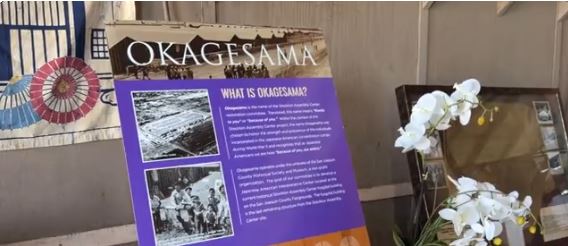
Saturday’s event is the work of Okagesama, a community-based project that aims to restore the site and turn it into a Japanese American interpretive center.

Wong hopes that sharing her family’s story can stop history from repeating itself.

“It’s not just the Japanese Americans’ story,” she said. “It’s every minority’s story.”

In total, 120,000 Japanese Americans were held in internment camps. It would take nearly 50 years for the U.S. to formally apologize when President Ronald Reagan signed the Civil Liberties Act of 1988.

Please note: This story was provided to CNN Wire by an affiliate and does not contain original CNN reporting. This content carries a strict local market embargo. If you share the same market as the contributor of this article, you may not use it on any platform.
Minor league baseball team fetches its own full-time bat dog

By Rina Nakano

Click here for updates on this story

    LAKE ELSINORE, California (KCAL, KCBS) — No one is more excited about getting on base than Omaha. The Golden Retriever is just doing her job, and loving it, fetching bats for a professional Lake Elsinore baseball team.

The Lake Elsinore Storm is the Single-A affiliate of the San Diego Padres, and the only team on the West Coast to employ a full-time bat dog.

“She is a big star here every time she goes out. Especially the first time of the night, she gets a huge cheer from the fans,” Justin Pickard, Lake Elsinore Storm marketing manager said.

Omaha’s dad, David Lamm, says he was inspired by a documentary to rescue a Golden Retriever mix. As the manager of a collegiate baseball summer league, Lamm says it was only natural to train a bat dog of his own.

Named after the home of the College World Series, Omaha debuted as an amateur bat dog in 2024. One year later, she signed an exclusive, pro contract with the Storm.

It took time to work out Omaha’s job description, and in the first couple of rookie seasons, there was a lot of trial and error.

“When players either walk or get hit by a pitch, they typically throw their baseball bat back to the on-deck circle. And then they’re taking off their elbow guard and ankle guard, and they’re throwing these things — and she was just all over the place,” Lamm said.

Now, Omaha only retrieves bats when players get a hit. Other situations are reserved for her human colleagues.

Major League Baseball doesn’t allow for bat dogs due to safety concerns and a need to maintain a strict professional setting. But in the minors, it’s a popular fan engagement strategy.

“At our level, we have lots of roster changes. It’s constant. Because they may be here half a season, one full season, very rarely more than that. And so we make sure to put people or animals in place that are here year after year so that our fans have something to connect with,” Pickard said.

After her field duties, Omaha always hosts a meet and greet with her fans, who get a shake and an Omaha baseball card.

Baseball isn’t Omaha’s only sport; she’s actually pretty good at soccer, too.

“This 3-and-a-half-year-old dog, who is just doing what comes naturally to her, has brought so much joy and happiness to other people, that’s what I really want out of it,” Lamm said.

Please note: This story was provided to CNN Wire by an affiliate and does not contain original CNN reporting. This content carries a strict local market embargo. If you share the same market as the contributor of this article, you may not use it on any platform.
Quick response leads to stroke survivor’s miraculous recovery

By Christa Swanson

Click here for updates on this story

    COLORADO (KCNC) — May is Stroke Awareness Month, a reminder that everyone needs to recognize the warning signs. One Colorado resident made a miraculous recovery following a stroke thanks to his wife’s quick action.

According to the Mayo Clinic, the average age of a stroke patient is about 70, but doctors say a stroke can happen at any age, and how quickly someone responds can make all the difference.

In Jefferson County, CBS Colorado spoke with a stroke survivor and medical experts at Lutheran Hospital about what to watch for.

In February, Mike Studeny collapsed while getting his children ready for school.

“I just got faint and went down on the ground, and then I was kind of a little disoriented,” he said.

He soon realized something was seriously wrong. Studeny said he could not feel or move his right arm.

“I thought, ‘Oh, this is bad. It’s probably time to call out to someone,'” he said. “Then I couldn’t talk. I was trying to make the noises, and it barely happened.”

His son found him and alerted Studeny’s wife, Linda Lou Studeny, who immediately called 911.

“I had it in my mind, I’m not going to be a widow today,” she said. “That’s not going to happen, that’s not in my cards.”

Doctors say her quick response set the course for his recovery.

“Time is brain,” Linda Lou Studeny said, recalling what she had heard repeatedly.

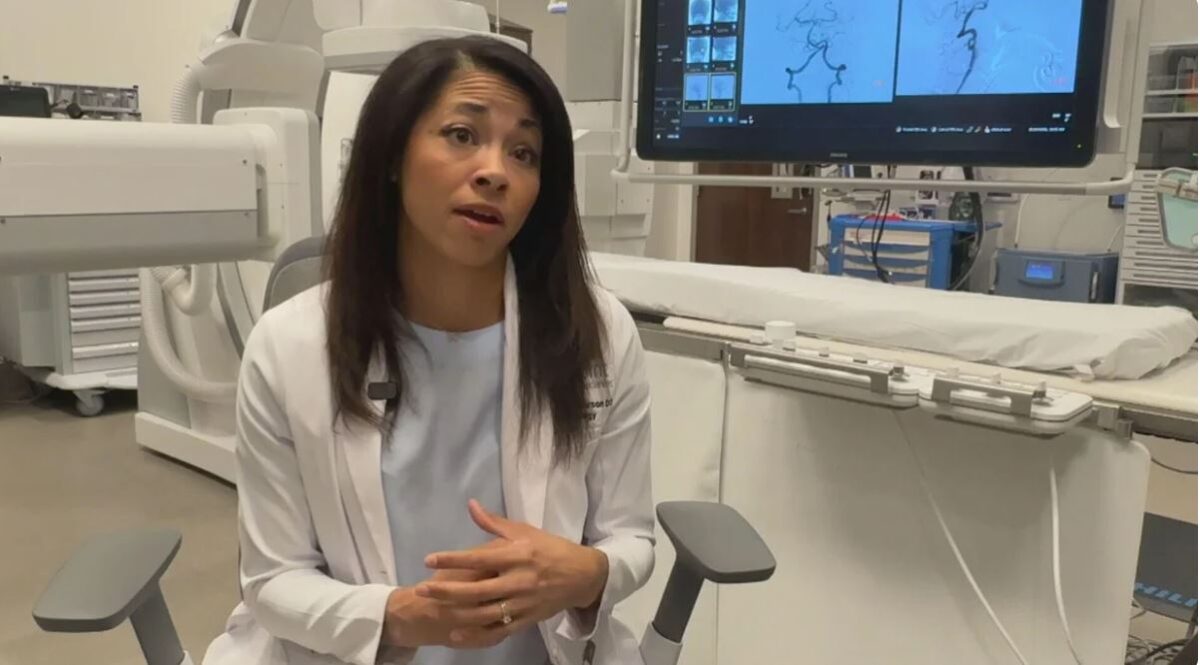
“Every minute, you are losing about two million brain cells during a stroke,” said Dr. Cynthia Dickerson, a stroke neurologist at Lutheran Hospital.

Dickerson was the first physician to treat Mike Studeny, who was diagnosed with a non-bleeding stroke.

“There are two main categories of stroke,” Dickerson said. “The most common, about 80 to 85%, are caused by a blockage of a blood vessel. If you think about a heart attack as a blockage in the heart, a stroke is essentially a heart attack of the brain.”

Within minutes of arriving at the emergency room, Mike Studeny was scanned, and a clot was found. He was treated with medication and then taken into surgery.

“Within 12 minutes of him being on the table, the clot was removed,” Dickerson said. “When I saw him in the ICU about 30 minutes later, he felt back to normal. He was talking and moving. Both he and his wife were extremely grateful.”

Dickerson said Mike Studeny’s outcome could have been much different.

“This is a young individual who, had he not come in quickly and received those treatments, could have been paralyzed potentially for the rest of his life,” she said.

At 55 and in good health, Mike Studeny is not a typical stroke patient. Still, doctors stress that strokes can affect anyone. Dickerson urges people to remember the acronym “BE FAST.”

“B is for balance, an inability to walk straight,” she said. “E is eyes, such as vision loss. F is facial drooping. A is arm weakness or numbness. S is speech difficulty. And T is time, don’t wait.”

While Mike Studeny says he feels almost fully recovered physically, he says there is still emotional healing underway.

“If I’m playing a song and singing it, that’s all I’m really thinking about,” he said. “I’m not thinking about all the other stressors.”

And for him, that focus is helping strike the right chord in recovery.

Please note: This story was provided to CNN Wire by an affiliate and does not contain original CNN reporting. This content carries a strict local market embargo. If you share the same market as the contributor of this article, you may not use it on any platform.
Restaurant offers free meals to people grieving their moms this Mother’s Day

By Tori Mason

Click here for updates on this story

    DENVER (KCNC) — A Denver restaurant is doing something special for those grieving their moms this Mother’s Day.

For many families, Mother’s Day means flowers, brunch and phone calls home. But for those grieving their mothers, the holiday can feel especially lonely.

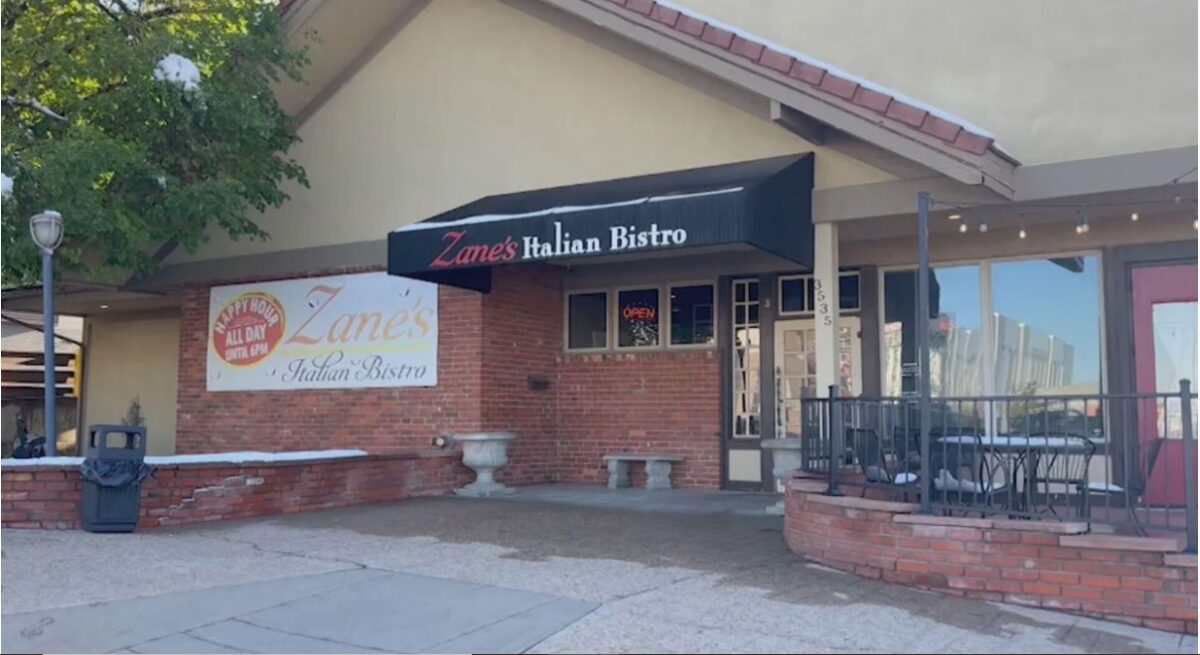
In honor of Mother’s Day, Zane’s Italian Bistro is offering free meals through Saturday to anyone who has lost their mother.

What began as a TikTok post quickly turned into something much bigger.

“I’m going to buy anyone who has lost their mom dinner at my restaurant,” owner Zane Anderson said in the social media video.

Since posting it, Anderson said hundreds of people grieving their mothers have walked through the doors. Some brought photos, others shared stories. One woman even brought her mother’s ashes.

The idea came from Anderson’s own experience losing his mother, Gayle, in 2019.

“It’s a hard time of the year,” Anderson said. “If I could make somebody happy and make them feel special during this hard week, it’s worth it.”

For many diners, the free meal became more than dinner. The restaurant transformed into something closer to a support group for grieving sons and daughters trying to navigate a holiday centered around mothers.

“There are people out there that care and there’s others that are going through the same thing,” Anderson said.

Among those diners were Dan Snider and his wife, Adrienne, who came after seeing Anderson’s post online.

Dan Snider said his adoptive mother, Jean, changed his life after taking him in from foster care as a child. He said losing his mother was one of the hardest experiences of his life.

“She’d always pick up that phone, and she’d be so happy to hear from me,” he said. “My mom was my world.”

His wife, Adrienne Snider, said Mother’s Day can feel especially painful, even while raising her own children and grandchildren.

“Mother’s Day week is hard, especially the day of,” she said.

Instead of brunches or celebrations with their mothers, she said many grieving families spend the holiday visiting cemeteries.

Adrienne Snider says food often becomes deeply tied to memory and grief because so many mothers show love through cooking.

“I love my mom. She was an amazing cook, an amazing baker,” she said.

Anderson said the emotional response to the free meals has surprised even him. The longtime restaurateur said he understands firsthand how lonely grief can feel, especially on holidays built around family traditions.

“You never know what someone sitting next to you is going through,” Anderson said.

Even as restaurants across Denver struggle with rising food, labor and operating costs, Anderson said some things are bigger than money.

“It’s worth everything,” he said.

And the giving will continue beyond his dining room. Anderson said on Saturday he is also teaming up with a local organization to provide meals for about 35 mothers and families in need ahead of Mother’s Day, including families experiencing homelessness.

For Dan Snider, the experience served as a reminder to cherish every conversation and every moment with loved ones while you still can.

“Spend as much time with her as you can,” he said. “Love her.”

And while he says the Italian food was comforting, he admitted some things can never truly be recreated.

“It’s good,” he said with a smile. “But it’s just not my mom’s.”

Please note: This story was provided to CNN Wire by an affiliate and does not contain original CNN reporting. This content carries a strict local market embargo. If you share the same market as the contributor of this article, you may not use it on any platform.
University of Michigan program pairs college students, older adults to combat loneliness

By Meredith Bruckner

Click here for updates on this story

    DETROIT (WWJ) — Perfect Pair was founded by a University of Michigan student in 2020 to curb social isolation during the pandemic.

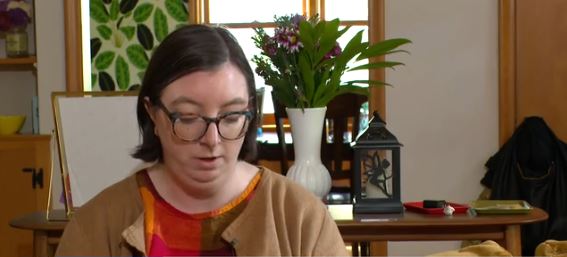
Emily Lerner came up with the idea to pair students with older adults living in assisted living facilities in the Ann Arbor area.

They meet weekly, and, over the years, many have forged lasting friendships.

Since then, Perfect Pair has expanded to 35 campuses in 23 states, and more than 40 “pairs” meet on a regular basis.

A new grant from the Government Employees Health Association, Inc. will help the nonprofit strengthen its current chapters in Ann Arbor, Boston, Columbus, Denver and Seattle and launch new chapters in Baltimore, Washington, D.C., Miami, Phoenix and Salt Lake City.

“Six years ago, I witnessed first-hand the impact of the real friendships Perfect Pair created between older adults and college students, with decreased social isolation and loneliness for both groups,” said Lerner. “I feel so lucky to have G.E.H.A’s support to expand that access across the country.”

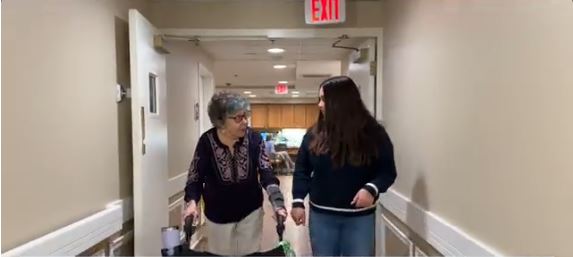
Student Alyssa Jaster and retiree Anita Rochefort began meeting in the fall of 2024.

“It’s just been the highlight of my week coming here,” said Jaster. “I love talking to Anita.”

“It’s the highlight of my week, too,” said Rochefort.

As part of a leadership role at U-M’s chapter, Jaster matches students and residents in the Ann Arbor area based on a number of factors.

“Hobbies, interests, even similar career paths,” Jaster said. “Anita worked in medical technology, and I’m in pre-med, so matching us together was kind of a no-brainer.”

“No matter how busy she is, she makes sure she comes for that hour a week,” said Rochefort.

Rochefort shared that she and her husband had no children, so she has no grandchildren.

“For me, this was sort of like that experience,” she said.

They said it’s refreshing to be friends with someone from a different generation.

“We’ve really become great friends,” said Jaster.

“It’s made a big difference in my life,” said Rochefort. “It really has.”

Please note: This story was provided to CNN Wire by an affiliate and does not contain original CNN reporting. This content carries a strict local market embargo. If you share the same market as the contributor of this article, you may not use it on any platform.
Building Bridges Choir using music to help seniors with memory loss

By John Lauritsen

Click here for updates on this story

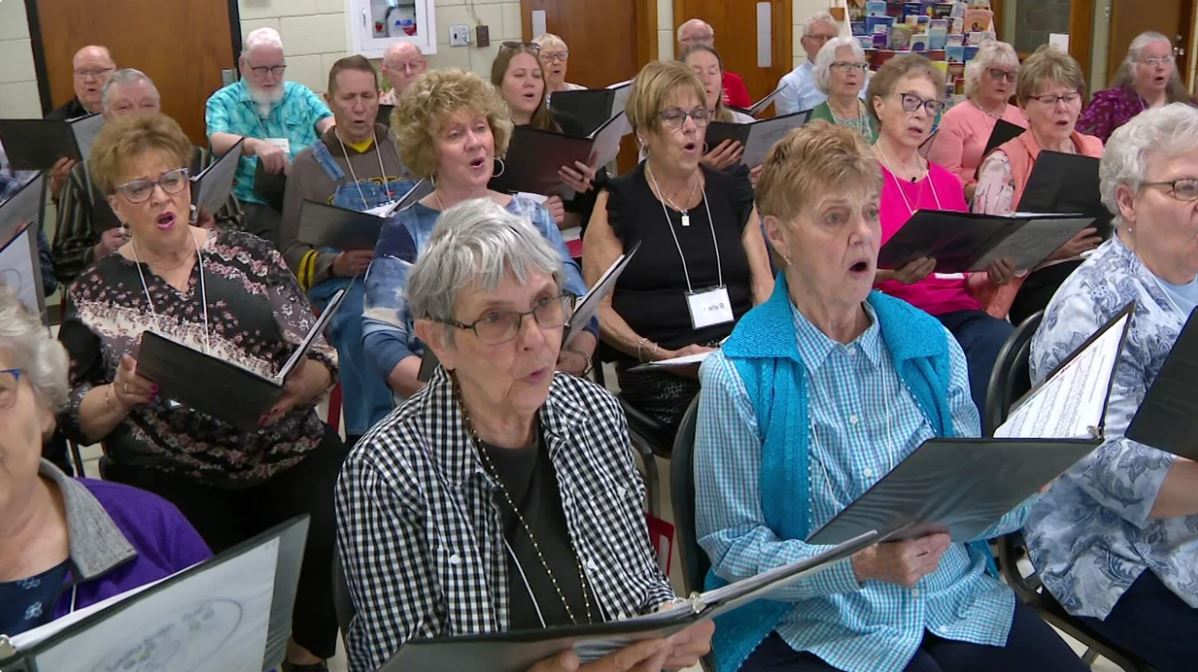
    GRANITE FALLS, Minnesota (WCCO) — When a loved one starts to lose their memory, it creates new challenges for family members. But in a western Minnesota town, they’re battling Alzheimer’s disease and dementia with music.

Jan Lerohl is the music director for Building Bridges Choir in Granite Falls.

“We have people who maybe lost a spouse, and socialization is important. And we all know the more you sing, it stimulates your memories, it keeps your memories alive,” Lerohl said.

It’s the method behind the music. Besides singing, nearly everyone here has something in common. Either they, or a loved one, have suffered from some form of memory loss.

Lerohl has watched the choir more than double in size over the past decade. Her mother was even part of the choir before passing away from a form of dementia.

“She enjoyed the fellowship and friendships, even though she was struggling,” Lerohl said.

The fellowship is what appealed to Danny and Rosalene Mooney.

“We like singing together, so we enjoy it very much,” said Danny Mooney.

The Mooneys were high school sweethearts and have been married for 62 years.

“Danny has Parkinson’s and some dementia, so I’m his wife and caregiver,” said Rosalene Mooney. “It’s been a real good support for me as well.

The songs we sing, and that, bring back memories,” said Danny Mooney.

Research shows that musical memories are the last memories to leave you, so the choir performs church hymns and patriotic songs at senior living facilities and veterans homes.

“We’ve gotten standing ovations, yes we have,” Lerohl said. “A sense of belonging, that they are important, that they still have something to contribute.”

It’s a different kind of trip down memory lane; one that every person in this choir is happy to take.

“We’re a family. I don’t know how else to describe it. We have become a family. It’s been wonderful over the years to see how they care for one another,” Lerohl said.

The Building Bridges Choir practices every Thursday morning at St. Paul Lutheran Church in Granite Falls.

Please note: This story was provided to CNN Wire by an affiliate and does not contain original CNN reporting. This content carries a strict local market embargo. If you share the same market as the contributor of this article, you may not use it on any platform.
Take a journey from pioneer life to present day at Farmamerica

By John Lauritsen

Click here for updates on this story

    WASECA, Minnesota (WCCO) — For nearly 50 years, Farmamerica has been sowing agricultural knowledge near Waseca, Minnesota.

Jessica Rollins lives on one farm and works on another.

“I am always surrounded by farm life. I would not have it any other way,” Rollins said.

But her day job goes far beyond her regular chores.

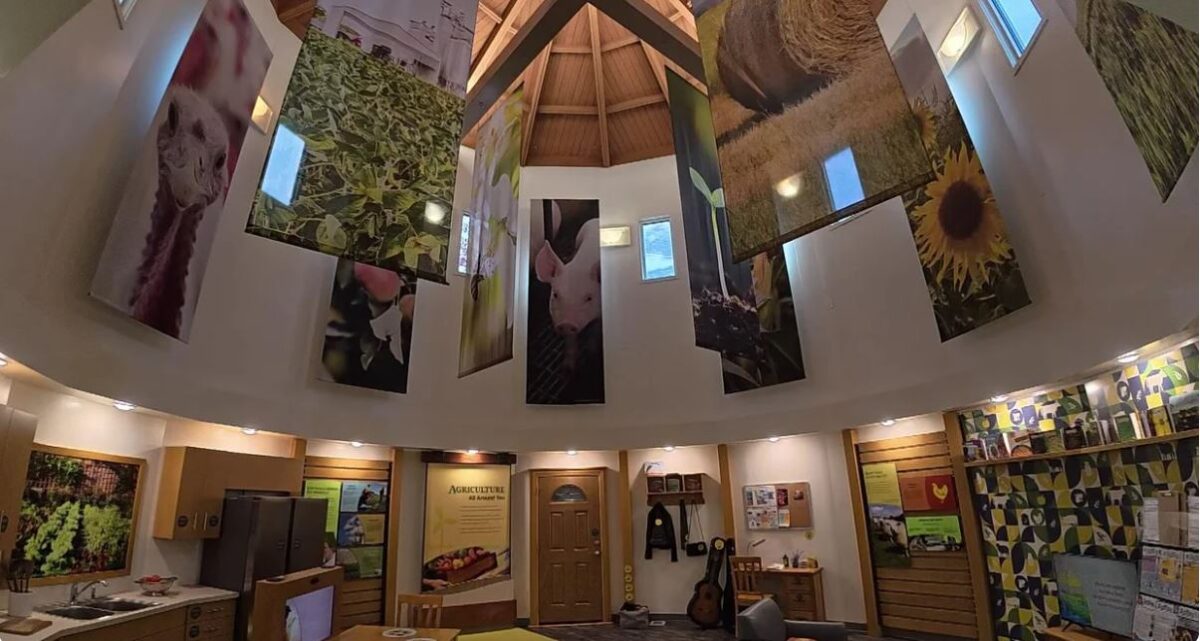
“Farmamerica is Minnesota’s agricultural interpretive center,” she said.

She’s the executive director of Farmamerica. The state opened the center in 1978, thanks to a land donation from the Lukken family.

Traveling the Farmamerica path is like going for a stroll back in time.

“This is what it would look like in the 1850s, when folks would’ve started to call this location home,” she said.

There’s a dugout on the side of a hill that pioneer families would have lived in before they eventually upgraded to a sod-roof house. And then if they were lucky, a log cabin — giving this part of Farmamerica a “Little House on the Prairie” feel.

On this farm, you can travel from the 1850s to the 1930s by walking a few hundred feet.

“Electricity was the main excitement on the farm in the 1930s,” Rollins said. “Farmers in the 1930s were still using horses quite a bit, but they were starting to introduce the tractor.”

Each of the buildings on site is an original, though they may have been relocated from other parts of the state. That includes a 172-year-old Baptist church that was carefully brought in from Nicollet County. There’s also a blacksmith shop.

“These are horseshoes, and that was the No. 1 job for a blacksmith in this time is providing horseshoes for farmers as well as sharpening plow blades,” said program director Kari Wadd.

But the main attraction is the animals. There are a dozen different species of animals at Farmamerica. That includes Ferdinand, a 2-year-old mini highlander.

“He is very shy. Yep, easygoing,” Wadd said.

There are goats, chickens, piglets and two famous turkeys named Peach and Blossom.

“They went to Washington, D.C., were pardoned by President Biden, driven back to Farmamerica and they have been here for two plus years,” Wadd said.

Baby chicks and ducklings can be found inside the Interpretive Center, but the real purpose here is to highlight farming today to show just how far we’ve come.

It’s immersive, interactive and an educational harvest for people of all ages.

“Our goal is to help people understand and respect and be excited about the story of agriculture and all that it can bring into the future,” Rollins said.

Farmamerica is a nonprofit and sits on 360 acres of farmland, and they grow their own crops. Over 1,000 Minnesota students visit each year.

Please note: This story was provided to CNN Wire by an affiliate and does not contain original CNN reporting. This content carries a strict local market embargo. If you share the same market as the contributor of this article, you may not use it on any platform.

NAMI, family of young Annunciation shooting victim call on Minnesota lawmakers to pass gun violence bill

By Derek James

Click here for updates on this story

    MINNEAPOLIS (WCCO) — Brittany Haeg is living with the deep scars of gun violence. Her three children attend Annunciation Catholic School in Minneapolis, and her 6-year-old son David was hurt during the deadly mass shooting on Aug. 27, 2025.

“If you had asked me seven months ago what healing was, I would say Aug. 26. That’s the goal. I want to be on Aug. 26,” Haeg said.

Her son’s recovery includes numerous medical appointments as bits of shrapnel are still in his body.

“It’s hard to disentangle the physical and the mental. You know, disrupted sleep is physical, but it is also a mental health question,” Haeg said.

NAMI Minnesota, the National Alliance on Mental Illness, is among those providing healing and mental health recovery following the Annunciation shooting and other recent traumas related to gun violence.

“In order to heal and recover, we first need to get to a place where we feel safe enough to begin that process,” said Calista Wery, family peer education coordinator at NAMI Minnesota.

NAMI provides support through education, support groups and advocacy. But all of us have a role as well.

“Being a good listener and just listening and offering that support,” Wery said.

Haeg says those conversations are the most impactful.

“People who have listened, and they have heard me and they have not tried to solve the problem,” Haeg said.

For the Haeg family, part of their healing is redefining hope not as a feeling but as a choice.

“A choice to not be stuck on Aug 27. To let Aug. 27 be a part of our lives,” Haeg said. “But it’s not our endpoint. It is a moment, and there’s a lot of story that comes after that.”

Haeg and NAMI are among those calling for the Minnesota House to pass the comprehensive gun violence bill that passed Monday in the state Senate.

Please note: This story was provided to CNN Wire by an affiliate and does not contain original CNN reporting. This content carries a strict local market embargo. If you share the same market as the contributor of this article, you may not use it on any platform.

Police investigating reports of gas being stolen from vehicles

By Reg Chapman

Click here for updates on this story

    ST. PAUL, Minnesota (WCCO) — St. Paul police are looking into a recent rash of people stealing gas. Not from the pumps — the thieves are drilling holes in gas tanks to get it.

It’s happening in several St. Paul neighborhoods in the middle of the night. Thieves drill a hole in the gas tank, making off with what’s inside.

“Most of them are trucks because there is more room to get under and they take it into must be a huge container because I had a full tank of gas,” John Holzem said.

Holzem says his Chevy Silverado was targeted late at night about two weeks ago.

He didn’t notice until he was on the highway heading home from a doctor’s appointment.

“All of a sudden, it went weird, and it was slowing down, and I’m looking in my mirror and traffic was behind me. I had just enough fumes to get off to the side,” Holzem said.

He called AAA, and when someone arrived, he learned his truck had stopped because it had no gas in it.

“He went and got more gas, he poured the gas right in and it ran right out,” Holzem said.

Holzem had to have the truck towed.

“I had it towed to St. Paul Automotive, and they said it was the third one they brought in there like that,” Holzem said.

St. Paul Automotive says it is working on four vehicles, all with the same problem: someone drilled a hole in the gas tank and took the gas.

St. Paul police say they have about a half dozen reports of these gas thefts.

The thieves are hitting targets along the Mississippi River, the west end, the west side, and St Paul’s central neighborhoods.

“By the time it was all said and done with the towing, it was $600,” Holzem said.

Holzem and his neighbors are now on alert, and they want others in St. Paul to be as well.

“They are going to do it at night. You are sleeping and no one is going to sit up all night and watch them. Since then, I put a security system in,” Holzem said.

Investigators are looking for any video or information about these thefts. If you have any information, call the St. Paul Police Department.

Please note: This story was provided to CNN Wire by an affiliate and does not contain original CNN reporting. This content carries a strict local market embargo. If you share the same market as the contributor of this article, you may not use it on any platform.