Fire heavily damages La Pine home, no injuries; cause may be tied to bank of solar power batteries

Barney Lerten

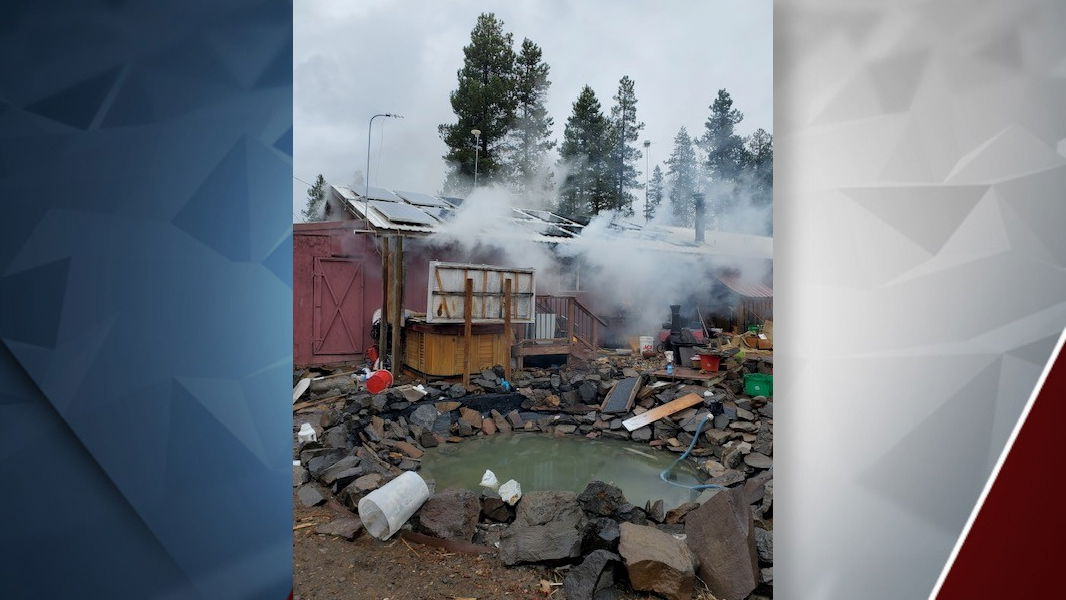
La PINE, Ore. (KTVZ) — A fire possibly tied to a battery bank from solar panels heavily damaged a La Pine home Wednesday afternoon, but no injuries were reported.

The fire that began in the home’s laundry room and began to spread was reported around 12:15 p.m. in the 16000 block of Buena Vista Drive.

About 25% of the single-story home was damaged by the fire, which began in the laundry room, but there was heavy smoke damage throughout the structure, the La Pine Rural Fire Protection District said.

The fire district had 14 crew members on scene, with two engines, three water tenders, a support service vehicle and two command vehicles. Sunriver Fire assisted with an engine and three more firefighters, while Crescent Fire helped with an advanced life support ambulance.

Photos courtesy of La Pine Rural Fire District

Officials said a potential fire start might be connected to a battery bank in the laundry room from solar panels.

Smoke detectors were reported working in the home.

Click here to follow the original article.

Former astronaut from Missouri speaks on Artemis II space launch; students talk about its impact

Olivia Hayes

COLUMBIA, Mo. (KMIZ)

History was made Wednesday after NASA launched a crew to the moon for the first time since the 1970s Wednesday in its Artemis II mission.

The rocket launched from the Kennedy Space Center in Florida. The last mission this close to the moon was the Apollo 8 mission.

NASA astronauts Reid Wiseman, Victor Glover and Christina Koch, alongside Canadian Space Agency astronaut Jeremy Hansen, took off on their journey in the Orion spacecraft around 5:30 p.m. central time. The 10-day mission will loop the astronauts around the moon — but they won’t touch down on its surface. In their return back to earth the spacecraft will land the astronauts into the Pacific Ocean.

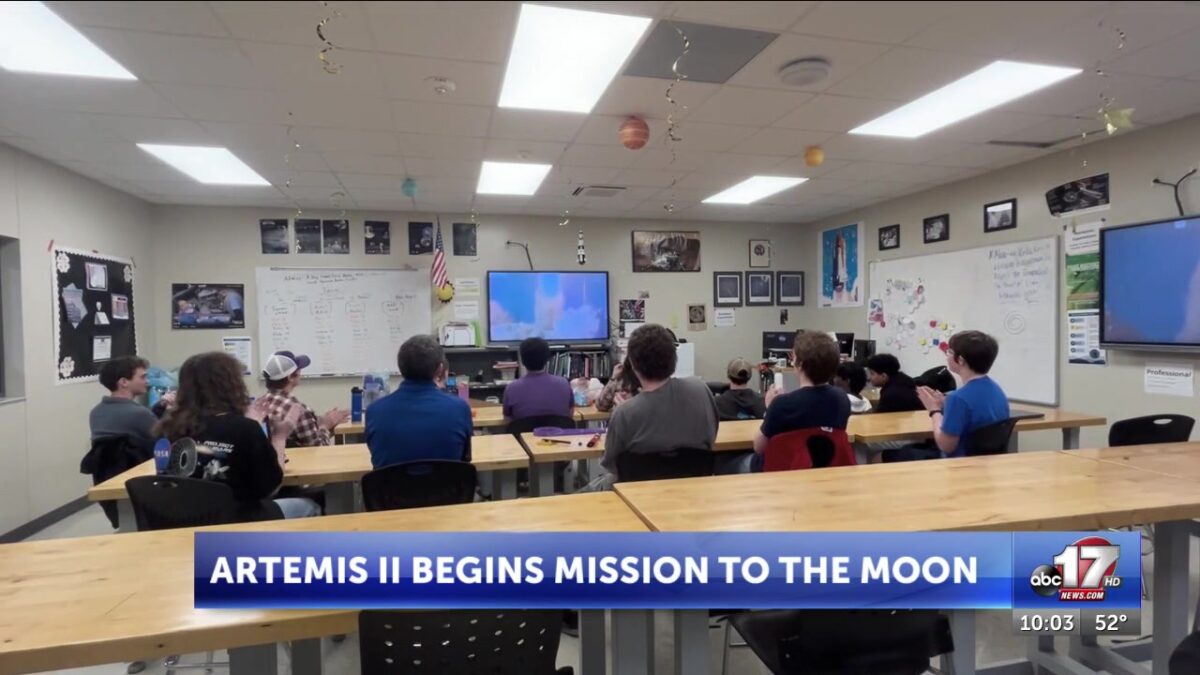
Students with the Columbia Aeronautics and Space Association gathered to watch the launch. Some of told ABC 17 News an event like Artemis II is something they thought they’d only ever read about in history books, until today.

“This is the first time I’ve ever actually seen a rocket even on TV,” said Em Robinson, a freshman apart of CASA.

“This is, of course, the Apollo of our day,” said Logan Allen, a senior apart of CASA.

Linda Godwin — a Missouri native who is a former astronaut and professor emeritus at the University of Missouri — during her 30-year career spent more than 38 days in space and more than 10 hours outside the shuttle on spacewalks with NASA. During went to the International Space Station during her final mission.

Godwin said while the path Artemis II astronauts are taking is similar to the Apollo 8 mission, astronauts this time are planning to look at different things. Apollo 8 was the mission where astronauts first left Earth’s atmosphere and reach the moon’s orbit. That mission occurred in December 1968, seven months before the Apollo 11 mission touched down on the moon.

“For Apollo [8], they mainly wanted the side that faced Earth to be lit because that’s the surface they landed on,” Godwin said. “On this mission, they’re kind of more interested in when the lunar lighting is shifted so they can see more of the back.”

Godwin said the astronauts will also be tasked with a number of different experiments.

“What’s changing in their own body, they’re gonna be looking a lot of tests and radiation measuring equipment,” Godwin said. “The things they are going to do to really help us understand that whole environment for the next crew.”

Eventually NASA has its sights set on putting boots back onto the moon’s surface. However, Godwin said recent changes may not make that possible until Artemis IV.

“The next mission, it’s going to be in low-Earth orbit and they’re hoping to have some landers available to to cruise and can practice and practice operations,” Godwin said.

Until then, Godwin hopes historical events like Wednesday’s launch will inspire the next generation. Students told ABC 17 NEws it’s done exactly that.

“It motivates me to keep me to stay focused and locked in on my career and my aspirations,” said Advik Vikas, a sophmore apart of CASA.

“I want to hopefully be the leader of Rocket Club next year,” said Samuel Merz, a homeschooled student apart of CASA and the Columbia Area Career Center.

Godwin said the Artemis II mission will also help them stay on top of maintenance while the moon lander is being built. This is especially important after issues found during Artemis I.

“The heat shield was the big one,” Godwin said. “They saw some evidence that it didn’t quite act like they thought it would and they spent some time really figuring it out, understanding what was wrong and also realizing that they could change the way Artemis II comes back into the atmosphere a little bit.”

She said NASA engineers are confident with the updated heat shield and adjusted reentrance point for Artemis II. Godwin added that the astronauts have practiced various mock failure scenarios in preparation.

“They and Mission Control are tied in together in these simulations to talk about and respond to failures and what they would do and particularly on ascent, it might have to be a quick response,” Godwin said.

She said there’s always the unknown in the back of an astronaut’s mind, but that’s where the repetition and practice come into play.

“There are certain abort modes they can execute, just like if they lose thrust at a certain time,” Godwin said. “You think about all the failures you can react to, you do everything you can to prepare for that and then you got to get ready for launch day and you’ve made it as safe as you can, you’ve trained as much as you can.”

The spacecraft will make its return to earth April 10.

Click here to follow the original article.

Columbia Board of Education candidates focus on transparency, policy improvements when addressing bullying

Marie Moyer

COLUMBIA, Mo. (KMIZ)

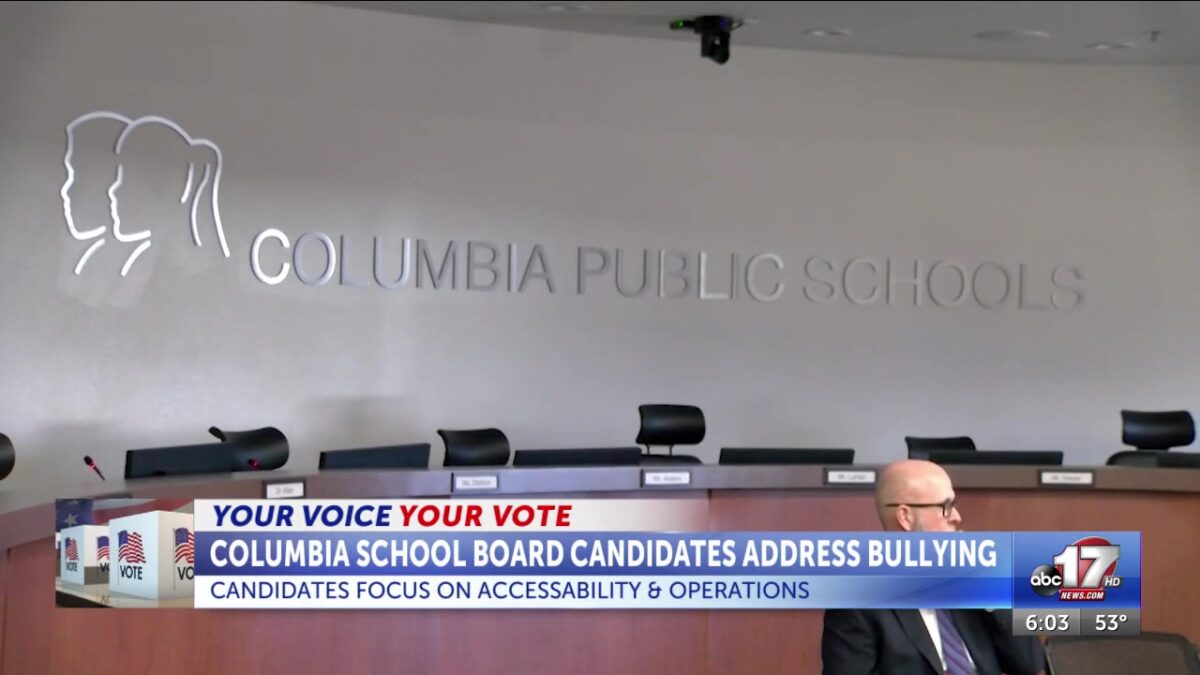
Three seats are up for grabs in the Columbia Board of Education election with all four candidates highlighting bullying as a major issue in the district that needs to be addressed.

Four people are running for three spots. Board President John LymanVice President Paul Harper and Boardmember April Ferrao are trying to retain a spot on the board, while Dr. Keary Husain is looking to get on the board for the first time.

According to a survey for the 2025-26 school year, About 65% of students surveyed say bullying is not tolerated, but that enforcement was not consistent. The survey says 63% of responding students said their school atmosphere was mostly encouraging, but wanted more inclusiveness and fairness.

Lyman considered the bullying policy as “one place I’d like to see the district get better at.” Lyman added that he wants to make bullying reports more accessible and make the process of following investigations clearer.

“It’s moving the bullying report that’s kind of hidden right now on our website to and up front and top of mind,” Lyman said. “Something that’s easier to access for our families so that they know, ‘hey, if this is happening, this is where you go, this is what you do, these are the next steps, these are the things that happen after you’ve done that report, so that there can be resolution.”

LINK: Full interview with John Lyman

Husain similarly wants clearer ways to report bullying and more transparency in reporting data. He says this would be to make sure policies are being enforced equally across buildings.

“If you are reporting everything in a transparent fashion, you can see that, maybe 20 incidents were reported, but we’re only seeing data on the outcome of two,” Husain said. “Not everyone comes to the board meeting, not everyone streams the board meeting, not everyone is privy to the data or has a computer at home, just making this, ‘this is what’s happening in CPS.'”

LINK: Full interview with Keary Husain

Ferrao said the district’s bullying policy is something the Board of Education wants “to get right.” Ferrao adds she wants to make sure the policy is enforced and is well-documented

“Making sure that parents are informed, also making sure that there’s resources given to both the victim and the accused bully, making sure that we have data, making sure that if something is reported, it is written, it is documented it, so we can make data-driven decisions on that,” Ferrao said.

LINK: Full interview with April Ferrao

Harper said that he believes bullying isn’t being reported on as well as it should be. He similarly wants to make sure the district has adequate resources for student and parent support. Harper added that along with improving the policy, operations and district culture should also be addressed.

This includes setting clear expectations for staff and adding more procedures to clear up confusion.

“Making sure students who are bullied are supported, ensuring that the staff is doing what they need to do to process those things,” Harper said. “We need to make sure we’re supporting them [students] whether or not it actually fits under the definition of bullying, so we’re we’re making a policy so that all of those things happen.”

LINK: Full interview with Paul Harper

Click here to follow the original article.
Judge names interim prosecutor in Miller County

Ryan Shiner

COLUMBIA, Mo. (KMIZ)

An associate judge has named Jeff Smith as the interim Miller County prosecutor.

The order appointing Smith was made by 26th Judicial Circuit Presiding Judge Aaron G. Koeppen. Smith will take on the roles until Gov. Mike Kehoe makes an appointment.

The appointment was necessary after Prosecutor Matthew Howard died on Monday. He was 64.  

The prosecutor position is up for election in the Aug. 4 primary. The last day to file was Tuesday. County Clerk Clinton Jenkins told ABC 17 News that one person, Robert Seek, filed to run on Tuesday.

Click here to follow the original article.

Deliberative democracy takes center stage at Central Oregon summit

Harley Coldiron

BEND, Ore. (KTVZ) — The Central Oregon Civic Action Project will host the region’s first Civic Action Summit from April 7 to April 9, 2026, at Central Oregon Community College campuses in Redmond and Bend. The 2.5-day workshop is designed to build local expertise in civic assemblies and deliberative democracy.

The event is hosted by the Central Oregon Civic Action Project (COCAP) in partnership with several regional and national organizations. The summit reflects a growing regional commitment to building civic infrastructure intended to empower community members and strengthen trust in government.

The summit begins April 7 at the COCC Redmond campus with a free public presentation explaining how civic assemblies work and their potential application in the region. The session is open to elected officials, civic leaders, youth and the general public. An institutional session on assembly design will follow that afternoon.

Josh Burgess, executive director of COCAP, said the summit is a foundational step toward creating a permanent resource for the community. “This is an important event as we launch a new regional Civic Action Network that will provide resources and expertise for institutions in Central Oregon to build more trust and civic muscle through deliberative problem solving,” Burgess said. “We are excited to bring together community members, institutional leaders and national experts to lay the groundwork for a permanent civic assembly hub in our region.”

The second day of the event on April 8 features a full-day institutional design workshop at the COCC Bend campus. This session is tailored for government, education and civic representatives, covering topics such as governance models, deliberative facilitation and the practical steps of building a civic assembly.

The summit concludes April 9 with moderator training led by the organization Healthy Democracy. This half-day session is designed to equip 25 to 30 Central Oregon residents with the skills to facilitate constructive dialogue on complex community issues. Registration is required for both the institutional workshop and the moderator training.

Organizers will also use the summit to launch the Deliberative Solutions Initiative on the Impacts of Artificial Intelligence on our Communities. This project represents the next stage of COCAP’s engagement efforts in the region.

The Federation for Innovation in Democracy – North America, the Bloom Project and Healthy Democracy are facilitating the event alongside COCAP. The summit is co-organized with the Central Oregon Intergovernmental Council.

COCAP is a civic action network dedicated to deliberative democracy that previously hosted the 2024 Deschutes County Civic Assembly on Youth Homelessness. The organization’s mission focuses on improving governance outcomes and creating trust between community members and public institutions.

Registration and further information for the summit are available at cocap.us/registration.

Click here to follow the original article.

Downtown Bend Visitor Center receives ‘sensory-inclusive’ certification, offering calm, supportive space

Barney Lerten

BEND, Ore. (KTVZ) — Visit Bend said Wednesday it has partnered with KultureCity, a national nonprofit advancing sensory accessibility and inclusion, to become a certified “Sensory Inclusive” organization at its downtown visitor center.

The organization said that means the Bend Visitor Center is better prepared to serve people with sensory sensitivities and invisible disabilities, including autism, dementia, PTSD, ADHD, and other cognitive or neurological conditions.

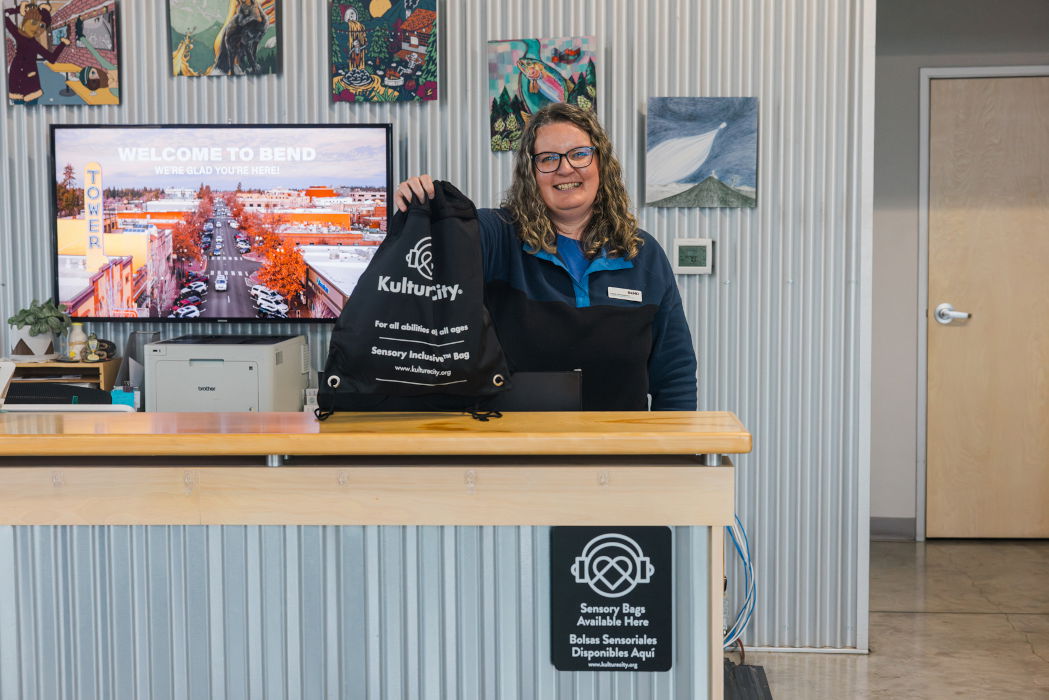
Guests who may feel overwhelmed, for example, during busy downtown events can step inside the visitor center at 750 NW Lava Road to find a calm, supportive space, with free equipment to help them reset.

Visit Bend noted that April is Autism Acceptance Month.

It’s Bend’s third organization to become KultureCity-certified, joining the High Desert Museum and the Tower Theatre.

To receive certification, Visit Bend staff completed specialized training to recognize and support guests with sensory needs. The welcome center now offers free-to-use sensory bags that include noise-canceling headphones, fidget tools, cue cards, and weighted lap pads, along with a relaxing space for visitors who may need a break from overstimulation.

The Bend Visitor Center is also listed on the KultureCity app, allowing travelers to review available accessibility features in advance.

 “This partnership reflects our commitment to making sure Bend is welcoming and accessible to all,” said Daniel Elder, Visit Bend’s operations director, who led the certification effort.

“Destination management is about so much more than promoting visitation. It also means making sure the experience works for families, veterans, older adults, and neurodivergent travelers who want to enjoy everything our community has to offer,” Elder added.

Visit Bend said the initiative is part of its broader effort to leverage tourism in ways that strengthen residents’ quality of life while enhancing the visitor experience.

By expanding accessibility, Visit Bend supports inclusive travel, multigenerational trips, and year-round visitation aligned with Bend’s values and long-term sustainability goals.

In March, Visit Bend reinvested nearly $250,000 generated by visitor-paid taxes to help local organizations like Oregon Adaptive Sports, Central Oregon Trail Alliance, Deschutes Trails Coalition, and The Onward Project expand accessibility. That builds on past investments that helped create accessible kayak launches at Miller’s Landing Park and expanded mountain bike access for adaptive riders. 

###

About Visit Bend

Visit Bend is a nonprofit, non-membership destination-management organization dedicated to stewarding and promoting Bend, Oregon, as a premier year-round destination. Through balanced, sustainable tourism practices, community partnerships, and strategic reinvestment of lodging-tax revenue, Visit Bend works to enhance quality of life, protect our natural assets, and sustain long-term economic vitality.

About KultureCity

KultureCity is a national nonprofit organization recognized for creating sensory-inclusive environments across public venues and destinations. The organization has certified more than 1,000 sensory-inclusive locations in six countries.

Click here to follow the original article.

Pilot Grove awarded $4.8 million from DNR for wastewater treatment improvements

Ryan Shiner

COLUMBIA, Mo. (KMIZ)

A Cooper County town was awarded $4.8 million in financial assistance from the Missouri Department of Natural Resource for upgrades to its wastewater treatment system, according to a Wednesday press release from the DNR.

It will cost a total of $6.28 million to upgrade Pilot Grove’s system and the city expects the project to be completed by May 2027, the release says. The project is designed to improve the water quality in Petite Saline Creek “by reducing pollutants and untreated discharges to the creek,” the release says.

Funding from the DNR consists of a $2 million loan and a $2.76 million grant through the Clean Water State Revolving Fund, the release says.

There will also be $700,000 in city funds and $750,000 through a Community Development Block Grant, the release says. Funding is expected to save the city $1.5 million in interest during the loan’s 30-year period, the DNR says.

Click here to follow the original article.

Moberly School District eyes storm shelter, upgrades in April bond vote

Mitchell Kaminski

MOBERLY, Mo. (KMIZ)

The Moberly School District is looking to add a storm shelter as part of a slew of planned renovations, but will need help from Randolph County voters on April 7 to do it. 

In December, the Moberly Board of Education approved language to add a ballot measure that would authorize the issuance of $11.5 million in bonds to the district for facility improvements. The district is prioritizing adding a storm shelter and locker rooms to Spartan Fieldhouse and renovations to the middle school and elementary school buildings. 

“Just as the athletics side of it, we’re able to get locker rooms that are attached to the fieldhouse,” Moberly Director of Activities Anthony Vestal said. “Right now we’re still using our other locker rooms, which is a little bit to get through the Spartan way here. But attaching that here would be huge.” 

Under the ballot language, if the measure is approved, the bonds would not increase the current property tax levy of $1.143 per $100 of assessed value.

According to Moberly Superintendent Cristina Wright, the measure would renew an existing bond issue that is on a five-year cycle, allowing the district to continue making improvements without raising taxes.

“That money is earmarked for that purpose alone. It cannot be transferred over to teacher salaries or school supplies and vice versa,” Wright told ABC 17 News. “Our operating budget would have to be used if it were not approved to cover things like renovations and construction, which would be really prohibitive for us with a district this size and eight school sites.” 

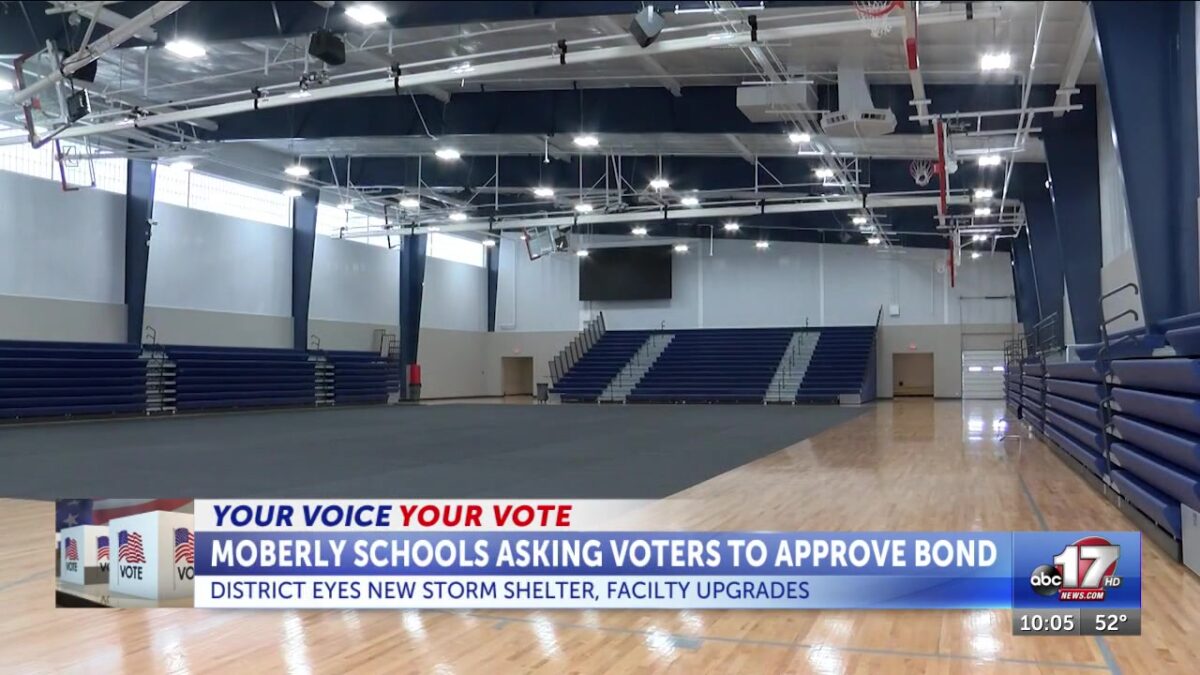
During the 2021 bond issue, the district used the funds to expand its Early Childhood Learning Center, build the Alternative Center for Educational Success, and build the Spartan Fieldhouse, a $7 million facility that opened last February. 

“We wanted to build the biggest building we could with the money that we had,” Vestal said. “Everyone has had great things to say about it. You know, they come in here, they look at the facility, and it’s just kind of the wow factor. You know, our LED scoreboard is second to none in the state of Missouri. The seating on all four sides. I think it’s a place that we’ve set the bar high.” 

The Spartan Fieldhouse is now the center of the district’s plans, if the measure is approved. According to Wright, adding a storm shelter has been part of the plan since the facility was first designed. 

“This was designed as Phase 2 from the beginning of the concept for this field house in Phase 1. So [it was] always an idea. This is a special-event space right now, based on building code. So that means that approximately 1,600 people can fit into this space, but it can’t be used during the school day because it’s a special-event space without a storm shelter,” Wright said. “So, by adding this storm shelter with enough square footage for everyone that might be in attendance,  we are able to then have that much space to tuck folks away in a very safe spot.” 

The City of Moberly does not maintain a public storm shelter system, but officials have not yet determined if the shelter will be open to the public, if inclement weather hits. 

“It’s in discussion, and we would need to iron that out with the city of Moberly just for our practice and protocol,” Wright said. “But it certainly is part of the discussion.” 

However, City of Moberly spokesman Scott McGarvey said there have been no discussions with the city or other entities about constructing or operating a public storm shelter.

But Wright also said a new storm shelter would also allow the district to use the Spartan Fieldhouse to host classes during the school day. 

“We have emergency operating plans or EOP, and right now we’re sheltering in place for high winds or tornadoes,” Wright said. “But that doesn’t mean that there aren’t places where there’s glass or there are doors, and those have to be considered in how much space we have to tuck students away.” 

If voters approve the bond, the district says construction could begin this summer, with work starting shortly after the school year ends.

“The biggest benefit is if we have high winds or a tornado, we have a place to put students and staff and visitors who might be here for a special event. And since we’re hosting events that take a large number of community members,1,600 is a large number inside our community, we can offer that safety aspect,” Wright said. “So it really is a huge benefit to everyone, especially if they’re coming to support our students in contests, whether they be athletic or otherwise.”

Click here to follow the original article.

USDA to move Forest Service Headquarters to Salt Lake City

News Team

SALT LAKE, Utah (KIFI) — In a landmark shift for federal land management, the U.S. Department of Agriculture (USDA) announced Tuesday that the Forest Service will move its national headquarters from Washington, D.C., to Salt Lake City, Utah.

The USDA stated the move aims to place agency leadership closer to the forests and communities they oversee, especially in the West, where nearly 90% of Forest Service lands are located.

The move is a centerpiece of the administration’s broader effort to decentralize federal agencies. USDA Secretary Brooke L. Rollins emphasized that the relocation is essential to the agency’s core mission.

“Moving the Forest Service closer to the forests we manage is an essential action that will improve our core mission while saving taxpayer dollars and boosting employee recruitment,” Rollins said.

Utah leaders call it a big win for the state and say it will boost jobs and speed up decisions on issues like fire management and forest health.

“This isn’t symbolic. It means better, faster decisions on the ground,” said Utah Governor Spencer Cox. “Everyone who depends on our public lands, from hikers and campers to ranchers and timber producers, will benefit. Moving away from a regional model to a more state-focused approach strengthens federalism.”

While the move is celebrated in the West, critics warn the relocation could strip the agency of experienced staff unwilling to move and hamper its access to Congressional leadership and the appropriations process, potentially impacting long-term funding.

The USDA expects the relocation to be fully complete by Summer 2027.

Click here to follow the original article.

Idaho’s Medical Marijuana debate: Voters push for medical access as lawmakers dig in

Par Kermani

IDAHO FALLS, Idaho (KIFI) — A renewed push to legalize medical Marijuana in Idaho is gaining traction — but it is also facing pushback from lawmakers at the statehouse. A recent legislative resolution outlines concerns with legalization, while supporters work to get the issue on the ballot.

The Idaho Legislature recently introduced Senate Concurrent Resolution 127. It’s a formal “no” from the Statehouse, claiming that legalization in other states has led to “increased cartel activity, human trafficking, and crime.”

Advocates, however, argue that the legislature is ignoring the will of the people.

“For years, Idahoans have tried to engage the legislature in a serious conversation about medical cannabis access,” says Amanda Watson of the Natural Medicine Alliance. “Those efforts resulted in no action. Our polling shows strong support across the state. The claims in the resolution pertain to illegal practices that are not relevant to the lawful framework proposed in our initiative.”

For many Idahoans dealing with chronic illness or mental health struggles, the debate isn’t political—it’s personal. Layne Bowen, who lives with bipolar disorder, says traditional pharmaceuticals failed him for years.

“I spent years on nine different antidepressants and various anxiety medications, all of which led to severely bad outcomes,” Bowen shared. “I want to know: if this is proven to work for me, what is the answer? If we don’t legalize the one thing that works, what are people like me supposed to do?”

Concerns Over Regulation and Scale

But others see a grim reality beneath the surface. Opponents of the initiative, such as Victor Miller, argue that the proposed framework is far too broad and could lead to de facto recreational use. Miller points to the high possession limits and the variety of conditions that qualify for a card as primary red flags.

“You can get up to a quarter pound of smokable marijuana every month. That’s 240 joints, eight joints a day. And you can also alternatively get 20g of total THC to vape, which is about 25 cartridges at 80% pure THC. Or you can get 2000 tablets chewables pills per month,” said Miller. “Because you get the pills, they’re only allowed to be ten milligrams, and you’re allowed to get 20g. That just sounds crazy to me. And then you can have 12 marijuana farms, eventually 36 dispensaries, and even they will tell you they expect that they will only take in about $3.9 million of net money to the state. That’s .00 7% of the government’s $5.6 billion budget.”

The “Geographic Island”

With every neighboring state except Wyoming now offering some form of legal access, Idaho remains a geographic outlier in the Mountain West.

The fate of the policy may rest with the people. If the Natural Medicine Alliance gathers enough signatures, the decision will move from the halls of the Capitol to the ballot box this November, leaving Idaho voters to decide.

Click here to follow the original article.