Residents say postal workers won’t deliver mail on their street due to turkey takeover

By Duaa Israr

Click here for updates on this story

    WAUWATOSA, Wisconsin (WDJT) — Whether it’s the birds chirping or flowers blooming, spring has a way of showing up. In Wauwatosa, it strutted in and took the mail with it.

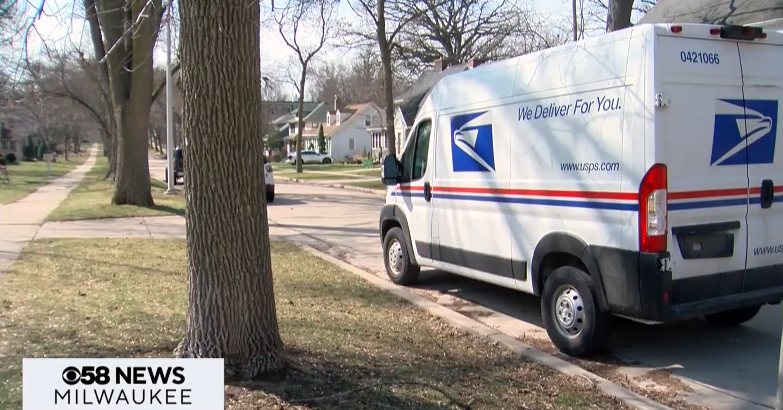
The United States Postal Service (USPS) is reportedly no match for the Wauwatosa turkeys on Church Street.

“Terrorizing? No man, they’re crazy! They’re fun,” said Kevin Pulz, a Wauwatosa resident. “It’s the truck, it’s the uniform. Watch out. They’re gonna dog you.”

Some people in Wauwatosa say their mail is no longer being delivered because turkeys are attacking their mail carriers.

“He tripped on the curb, fell into the street, which was really unfortunate, so of course we came running out with brooms and sticks to chase them away,” said Pulz.

We reached out to USPS for comment but didn’t hear back.

“We just consider them like our little pet of the area,” said Grant Schroder, a Wauwatosa resident. “Usually they leave us alone, but according to my mail man, who won’t deliver my mail anymore, they’re too much to handle.”

There is one final line of defense: Tater Tot, the dog.

“Oh, absolutely, she’s the protector of Church Street,” said Keenan Pulz, Wauwatosa resident and Tater Tot’s owner.

So now, if you live here, you have to pick your mail up at the post office – at least for the time being.

“They just roam around, sometimes peck at people. They got a lot of personality,” said Schroder.

Please note: This story was provided to CNN Wire by an affiliate and does not contain original CNN reporting. This content carries a strict local market embargo. If you share the same market as the contributor of this article, you may not use it on any platform.

A scenic escape along Louisiana’s Creole Nature Trail

By Shannon Brinias

Click here for updates on this story

    SULPHUR, Louisiana (KTBS) — If gas prices or long airport lines have you rethinking your spring travel plans, there’s a getaway in Louisiana that offers a refreshing change of pace—and a whole new perspective on the Bayou State.

Just south of Lake Charles lies the Creole Nature Trail, an “All-American Road” that stretches all the way to the Gulf. It’s a bit more than a one-tank trip from Shreveport, but travelers quickly discover this is no ordinary road journey. The experience is steeped in Creole culture and natural beauty from the very start.

Many visitors begin at the trail’s interactive visitors center in Sulphur, where maps and guidance help set the tone for the adventure ahead. From there, the route heads south through expansive marshlands, where the scenery alone makes the drive worthwhile.

Along more than a dozen stops on the trail, nature takes center stage. The area is known for some of the best birdwatching in the United States, with more than 400 species recorded. Among them are striking roseate spoonbills, easily recognized by their vivid pink coloring. Visitors can use public viewing magnifiers or bring binoculars for a closer look.

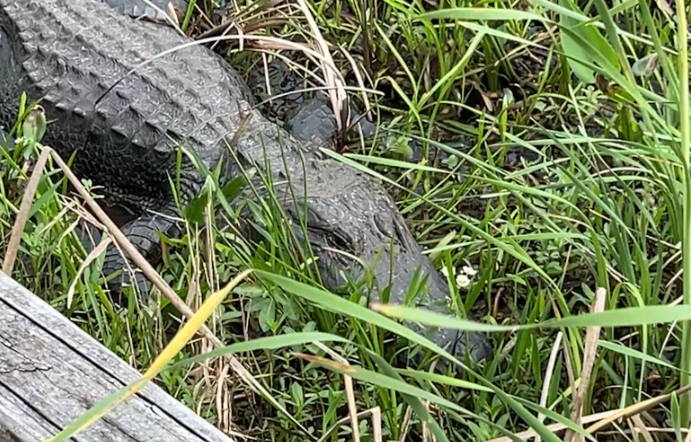
Wildlife sightings aren’t limited to birds. Alligators are a common presence in the marshes—something to keep in mind while exploring on foot. Still, for many, the thrill of spotting these creatures in the wild is part of the experience.

The trail also offers opportunities to stop and fish or crab, adding a hands-on element to the journey. Eventually, the road leads to the Gulf, where travelers can dip their toes in the water and take in the coastal views.

Frequent visitors say they return for the peaceful atmosphere. “We come down a couple of times a year. It’s relaxing—really cool,” Nebraskan Joan Coleman shared.

And the journey doesn’t end at the shoreline. Coastal roads take you to the Rockefeller Wildlife Refuge, while traveling the opposite direction leads to a string of beaches and beauty spots known for sand, surf, and seashell hunting.

For some, it’s the sense of freedom that stands out most. For others, it’s the abundance of birdlife. Either way, the trail offers a chance to slow down, take in a Gulf breeze, and reconnect with nature.

The Creole Nature Trail is one of just 57 All-American Roads across the country—making it not just a local treasure, but a destination worth discovering. More information is available here: Creole Nature Trail All-American Road.

Please note: This story was provided to CNN Wire by an affiliate and does not contain original CNN reporting. This content carries a strict local market embargo. If you share the same market as the contributor of this article, you may not use it on any platform.
Suspect in cold case murder and rape of Georgia woman arrested over 40 years later, GBI says

By Dan Raby

Click here for updates on this story

    ATLANTA, Georgia (WUPA) — Over four decades after a Ware County woman was found strangled to death near a home in Waycross, the Georgia Bureau of Investigation says they’ve made an arrest in the case.

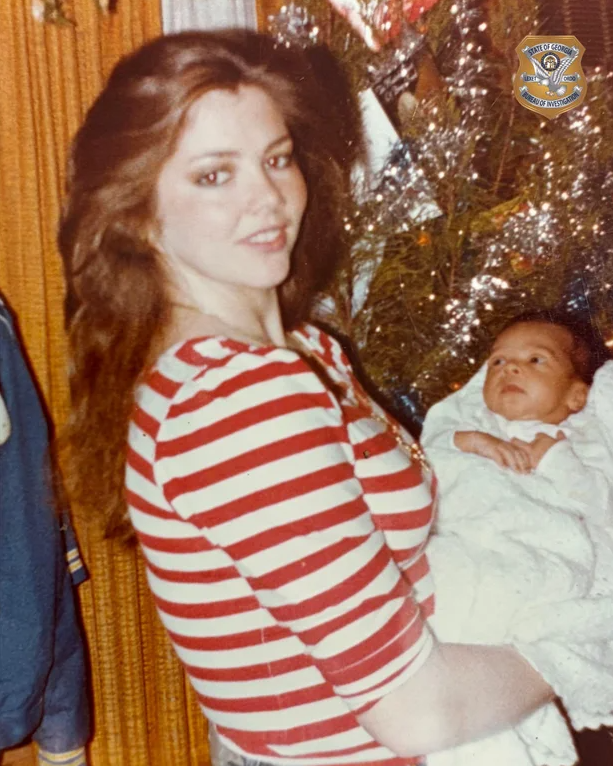
The Georgia Bureau of Investigation announced that DNA testing helped them identify 68-year-old Freddie Lee Granger Jr. as the suspect in the murder and rape of 22-year-old Sandra Kaye Davis.

Authorities say on Sept. 1, 1984, officers with the Waycross Police Department found Davis’s body beside a home on Kollock Street. Investigators said that she had been strangled. With no suspect identified, the police department requested help from the GBI.

In the years since, officials say they have continued to follow leads and look for the truth behind Davis’s killing. Thanks to advances in DNA testing, authorities say they found their link.

Officers arrested Granger on Tuesday and charged him with rape, aggravated assault, malice murder, and two counts of felony murder. He remains in custody at the Ware County Jail.

The investigation remains ongoing. Authorities are asking anyone who may have any information about the case to call the GBI Regional Investigative Office in Douglas at (912) 389-4103 or submit an anonymous tip by calling 1-800-597-8477 or through the GBI website.

Please note: This story was provided to CNN Wire by an affiliate and does not contain original CNN reporting. This content carries a strict local market embargo. If you share the same market as the contributor of this article, you may not use it on any platform.
Man accused of killing grandmother with skateboard in Massachusetts

By Riley Rourke, Aaron Parseghian

Click here for updates on this story

    HUDSON, Massachusetts (WBZ) — A man has been charged with murder after allegedly killing his grandmother with a skateboard in Hudson, Massachusetts.

Middlesex County District Attorney Marian Ryan said that a 911 call came in just after 3 p.m. on Tuesday from Munson Street from a woman who said her brother was attacking her with a skateboard.

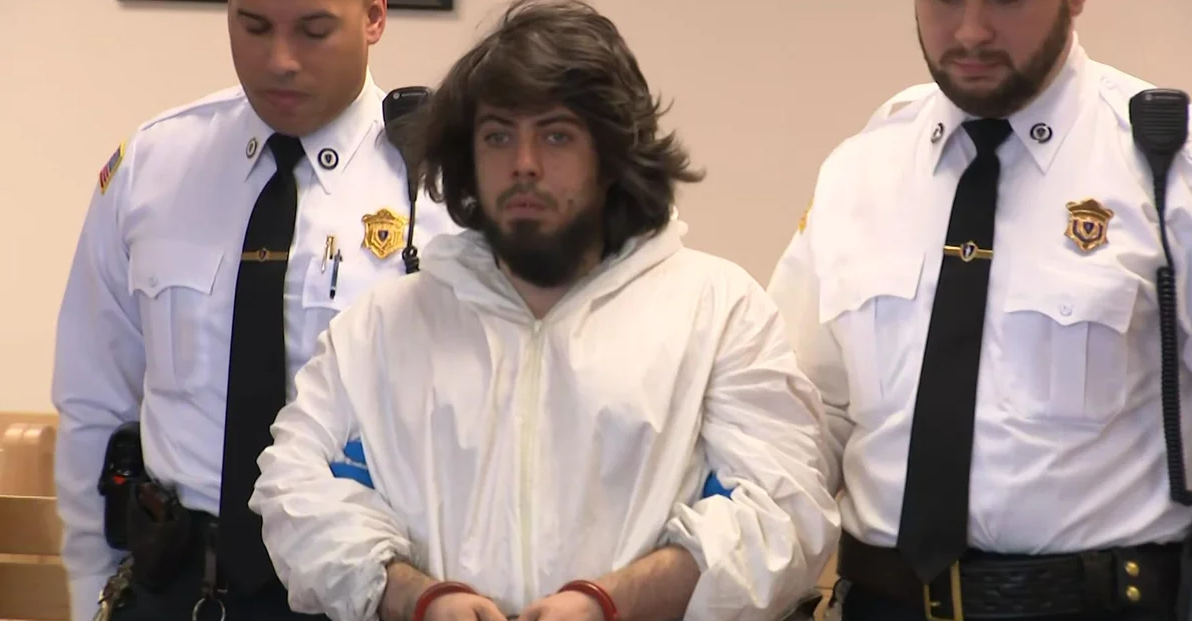
Moments later, another call came in saying that he had begun to allegedly attack their 90-year-old grandmother with the skateboard. Ryan said that the man, identified as 29-year-old Devin Dube, attacked his grandmother, his sister, and his father, who all lived at the home. Dube fled before officers arrived.

About 45 minutes after the first 911 call came in, Dube was reported running around a property on Tower Street. He was found hiding in a van and arrested.

All three victims were taken to nearby hospitals. Dube’s grandmother, identified as Elaine Dube, died from her injuries at UMass Memorial Medical Center in Worcester. The sister and father suffered non-life-threatening injuries to their faces and upper torso and have since been released.

“This is a senseless tragedy and our thoughts are with everyone impacted during this incredibly difficult time,” said Hudson Police Chief Richard DiPersio.

Neighbors said that Elaine Dube was a “sweetheart.”

Ryan said the whole family lived in the home on Munson Street in separate apartments. She said that Hudson Police had been in contact with Dube before, and specified that it had never been domestic.

Dube was charged with murder, two counts of assault and battery with a dangerous weapon on a person over 60, and one count of assault and battery with a dangerous weapon. Dube was arraigned in Marlboro District Court on Wednesday and underwent a psychological evaluation by forensic psychologist Dr. Hilary Novak. Dr. Novak said that Dube has a history of schizophrenia and was experiencing auditory hallucinations during her evaluation.

Dr. Novak said she was unsure that Dube was competent to stand trial at this point. As a result, he will undergo a 20-day evaluation at Bridgewater State Hospital. Dube will return to court on April 17.

Police Chief DiPersio said that the attack was not random. It is not clear what led up to the altercation. The investigation is ongoing.

Please note: This story was provided to CNN Wire by an affiliate and does not contain original CNN reporting. This content carries a strict local market embargo. If you share the same market as the contributor of this article, you may not use it on any platform.
Police chief announces retirement days after footage released of shooting of man with autism

By Adam Thompson, Dennis Valera

Click here for updates on this story

    BALTIMORE, Maryland (WJZ) — Howard County Police Chief Gregory Der announced his retirement days after body-worn video was released showing several officers shooting and killing a man with autism outside of an apartment complex in Columbia.

Der served more than four years as the police department’s chief. The retirement is effective beginning June 1.

“After four and a half years of serving as Chief of Police, I am announcing my retirement with a deep sense of gratitude and pride,” Der stated. “I would like to extend my sincere thanks to County Executive Calvin Ball for his steadfast support, leadership, and commitment to public safety. This partnership has been invaluable, and I am grateful for the trust he placed in me and in this department.”

Man with autism shot by police

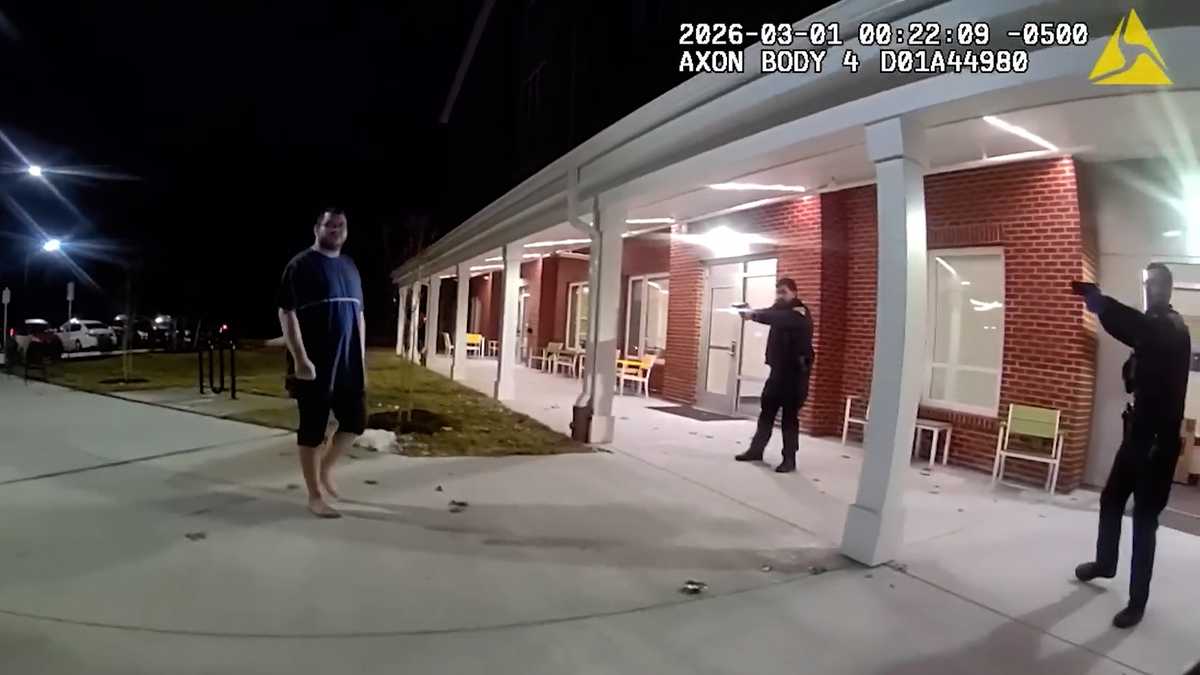
The police chief’s retirement comes after mounting backlash, including a call for removal, after 25-year-old Alexander LaMorie was shot by officers at the Patuxent Commons in Columbia, an apartment complex that includes units for seniors and people with disabilities.

Police said officers responded to a welfare check at the apartment complex, when officers were met by LaMorie, who refused to drop a knife.

Body-worn video released on Monday, March 30, shows LaMorie walking toward the officers with a knife before several officers fired shots, killing him.

The officers were identified as 2-year veteran Officer Joel Rodriguez, six-year veteran Officer Cody Bostic, and 10-year veteran PFC Joseph Riebau.

The Attorney General’s Independent Investigations Division is investigating the shooting.

Growing backlash

From the beginning, the police shooting was under heavy scrutiny from residents, community leaders, and elected officials.

For Liz Walsh, a Howard County Councilmember and candidate for County Executive, the police shooting was the tipping point for her concerns with policing in the county.

She sent two letters to Ball on Tuesday, one of which called for Der’s removal as police chief. In that letter, she brought up the county’s officer-involved crash from January, the departure of police leadership, as well as her public back-and-forth about ICE activity.

Her second letter asked questions about what’s been done since Lamorie’s shooting.

In a statement on Monday, Ball said since Lamorie’s death, the county has bought 200 tasers. He also ensured police have been caught up on, and are reviewing policies, to better respond on these incidents in the future.

Deb Jung, another Howard County Councilmember running for County Executive, posted on Facebook that she hopes these measures really help.

Del. Vanessa Atterbeary, another County Executive candidate, said there should have been more investments in mental health response training and non-lethal tools before this shooting even happened.

“I think it is very unfortunate that it took a tragedy to ensure now that the Howard County Police Department and all of the officers have tasers. They should’ve already been equipped with those tasers,” Atterbeary said.

The fourth County Executive candidate, Bob Cockey, said he’d like to see more community engagement with policing in the county.

“I think the police would like to get out of their car, too,” Cockey said over the phone. “When you’re engaged with the community, it’s a good vibe for everybody. Not just for the community, but also for the officers.”

At a news conference nearly two weeks after the shooting, Ball and Der assured the public they were making sure something like Lamorie’s death wouldn’t happen again.

Gregory Der as Howard County police chief

Der started his duties as Howard County Police Chief on January 1, 2022. He was the second appointed by Howard County Executive Calvin Ball.

He joined the Howard County Police Department in 1999, after starting his law enforcement career as a narcotics detective and patrol officer in Easton, Maryland.

In Howard County, Der has served as a school resource officer, hostage negotiator, property crimes detective, and fire and explosives investigator.

Der also assumed the role of Chief Deputy with the Maryland State Fire Marshal.

“I have known Chief Der for nearly 20 years, and he has always stood out as a thoughtful, determined, and effective leader,” Howard County Executive Calvin Ball stated. “This has remained the same during his tenure as Police Chief during the last four and a half years.”

Ball added, “during his tenure, Chief Der has remained a steadfast leader in helping to move our police department and our community forward. His leadership traits and his ability to build strong bonds with the community made him the right person for the job, and I’m grateful for his service to our community. I wish him the absolute best in his future endeavors.”

According to the county executive’s office, Der was instrumental in adding more authorized positions, recruitment efforts, body-worn camera program, taser program, establishing more security at the Mall in Columbia, cold case successes, expansion of the traffic management division. enhanced the crime analysis divisions, and launching crime and safety dashboards.

Please note: This story was provided to CNN Wire by an affiliate and does not contain original CNN reporting. This content carries a strict local market embargo. If you share the same market as the contributor of this article, you may not use it on any platform.
Quadruple amputee accused of Maryland murder acted in self-defense, attorney argues

By JT Moodee Lockman

Click here for updates on this story

    BALTIMORE, Maryland (WJZ) — A quadruple amputee who is accused of murder in Maryland acted in self-defense, his attorney argued during a hearing Wednesday, according to the Charles County State’s Attorney’s Office.

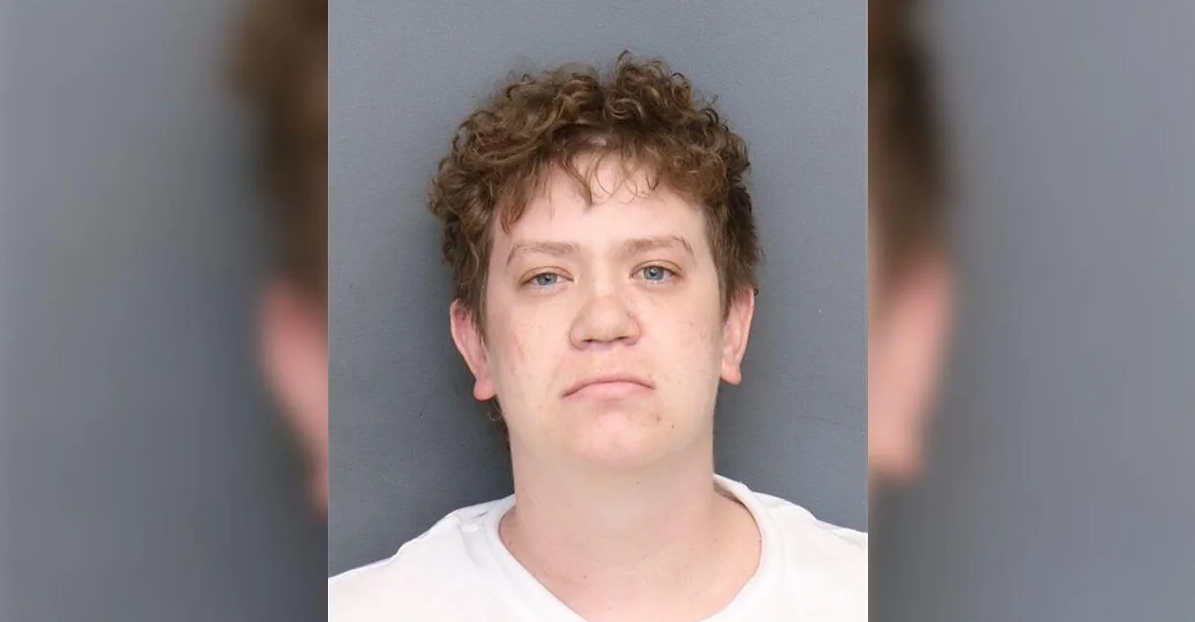
Dayton James Webber, 27, was charged with first- and second-degree murder in connection with the deadly shooting of Bradick Michael Wells, 27, who was found dead in a yard in Charlotte Hall in late March.

Webber was arrested in Charlottesville, Virginia, and extradited to a detention center in Charles County, Maryland. On Wednesday, a judge ordered that he be held without bond.

WJZ has reached out to Webber’s attorney for comment, though he has previously declined to comment on the case.

Witnesses report deadly shooting Wells was found dead after two people flagged down Charles County Sheriff’s deputies and said they witnessed a fatal shooting.

According to charging documents, the witnesses told deputies that they were in the back seat of a car when the driver, who they said was Webber, allegedly shot and killed a passenger during the arguments.

The witnesses said they refused to help remove the body from the car. They reported that they left the scene as Webber fled with the man’s body in the car, charging documents allege.

Wells’ body was found about two hours later.

Quadruple amputee charged with murder

Webber’s case has gained national attention. Videos online show him firing weapons and depict him as a cornhole champion.

Webber is known as a professional cornhole player who competed with the American Cornhole League. Though the league said he has not been active since 2024.

Webber had his arms and legs amputated at a young age after he contracted a bacterial infection that led to sepsis when he was 10 months old, his family said in an ESPN profile.

Please note: This story was provided to CNN Wire by an affiliate and does not contain original CNN reporting. This content carries a strict local market embargo. If you share the same market as the contributor of this article, you may not use it on any platform.
Lunar liftoff: Artemis program boosted by ISU researchers at Craters of the Moon

David Pace

ARCO, Idaho (KIFI) – As millions of eyes watched the take-off of NASA’s first manned space flight around the moon in more than 50 years, an Idaho State University (ISU) scientist and National Park Ranger celebrated in awe at the Craters of the Moon Visitor’s Center.

ISU scientists researching at Craters of the Moon National Monument played a critical role in the development of the Artemis program.

“We are so close to being able to send humans to the surface of the moon for the first time since the early 70s,” said Shannon Kobs Nawotniak, a NASA-funded researcher and ISU Geosciences Department Chair. “This is the first crewed flight for Artemis. The Artemis I was an uncrewed, test run. Now we’ve got Artemis Two. It’s going to have four astronauts that are going to go around the moon.”

The flight will be the first human orbit of the moon since Apollo 17 landed on lunar soil in 1972.

“They’re going to be looking for impact flashes on the far side of the moon, where we don’t really have a view otherwise,” she explained.

NASA is aiming to land a crewed mission on the moon in 2028.

“Artemis II is going to be another sort of test bed for some of the robotics,” Kobs Nawotniak said. “That was a decision that came in February preparing for Artemis IV – sending humans to the South Pole of the moon, where we’ve got areas where we think we even have water deposits in permanently shadowed craters at the South Pole.”

Craters of the Moon National Monument in east Idaho played a vital role in NASA’s research.

“Craters of the Moon is such a unique environment,” said Craters of the Moon National Monument Chief of Interpretation and Education Michael Irving. “It’s about 750,000 acres. That’s about 1,200 square miles of just lava that is out here in the middle of the Idaho desert.”

NASA’s Lunar Test Bed in Idaho

Idaho’s famous national monument played a critical role in NASA training for Apollo 14.

Dr. Kobs Nawotniak and her team have continued NASA research at the location since 2014.

“We’ve now more than a decade of continuous research out here with NASA to be able to use this as a test bed for the moon, Mars and beyond,” Kobs Nawotniak said.

The rock composition at Craters of the Moon closely resembles the geology of the moon.

“Lavas that we have at Craters of the Moon are chemically really similar to the lavas and volcanoes that we have on the moon,” she said. “I don’t think people realize how similar that is, and how cool it is that we have this right here in our backyard that we can study things here to better understand the features we have on the moon.”

She says that Idaho and its unique environment are vital to understand what is happening on the moon.

“We can practice here, so that way we can be more efficient and effective for the work we do on the moon,” Kobs Nawotniak said. “[We’ll] be able to make sure we get the best possible research out of what we’re going to get from Artemis.”

Local News 8 will follow up with additional coverage about her research in days ahead.

ISU Geosciences Professor Shannon Kobs Nawotniak’s research directly contributed to the Artemis II mission.

Click here to follow the original article.

Family over flash: Brayden Dorman’s CSU Pueblo reset

Dylan Foreman

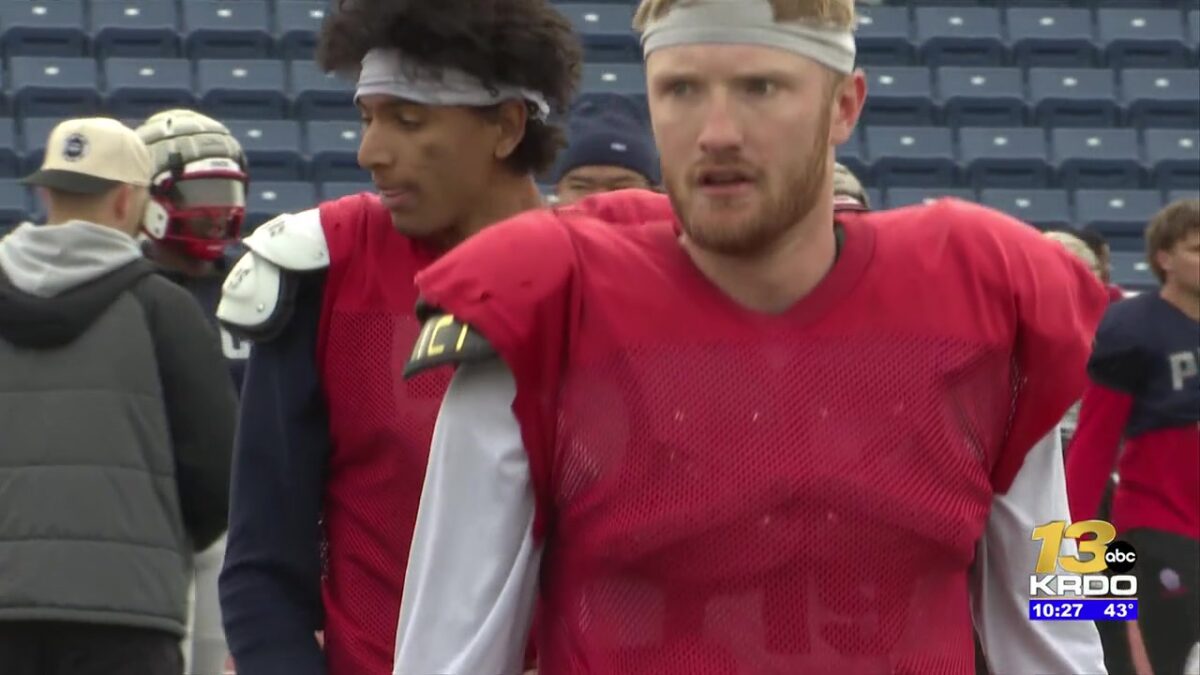
PUEBLO, Colo. (KRDO) — After a 10–2 season, CSU Pueblo football isn’t taking any time off. Spring ball is underway as the ThunderWolves prepare for another run in the fall, and one of the most intriguing storylines comes at the quarterback position.

Senior Brayden Dorman’s journey to Pueblo has been anything but ordinary.

Once one of the highest-recruited quarterbacks in the country, the former Vista Ridge standout is now competing for the starting role at CSU Pueblo, embracing a fresh start closer to home and a new definition of success.

The ThunderWolves roster features no shortage of local talent from Pueblo and Colorado Springs. Players like Dylan Hurne of Rye and Vista Ridge alum AJ Jordan — an All-RMAC defensive end — are just a small sample of the program’s strong Colorado footprint.

“We just keep working to get better day by day,” Hurne said. “Best team in the country at getting better.”

Dorman, also a Vista Ridge product, enters his second year in the program and brings with him a Power Conference background.

Dorman’s high school success made him one of the nation’s most coveted recruits. That stardom landed him at the University of Arizona, where he envisioned a clear path toward elite football.

“It just felt like almost like an NFL prep school,” Dorman said. “And that was something that drew me to that school.”

But the transition to Division I football came with a steep learning curve.

“You know, like welcome to college,” Dorman said. “For me it was just like, wow, this is really fast… a lot different than Colorado high school football.”

After two seasons, the realities of modern college football, coaching changes, the transfer portal, and logjams at key positions made him reconsider his path.

“The nature of college football now is just crazy,” Dorman explained. “When you have that many guys in the portal and that many guys with playing experience, it becomes very tough.”

That’s when a familiar opportunity emerged. Before the 2025 season, Coach Phil Vigil called with a chance to return home and help one of the Division II’s most consistent winning programs compete for championships.

“It’s about being a part of something bigger than yourself,” Dorman said. “Yeah, people want to play, but Division II, I see the same kind of football.”

Now battling for the QB1 spot heading into August, Dorman has embraced a mindset shaped by experience.

For Dorman, the move to CSU Pueblo wasn’t about stepping down; it was about finding the right fit.

“Honestly, finding a place where you feel comfortable, where you feel a true family connection,” he said, “is way bigger than playing at whatever kind of school you’re looking at.”

As the ThunderWolves continue spring workouts, Dorman’s message resonates beyond the locker room: make the most of where you are, stay true to yourself, and success will follow.

Click here to follow the original article.

Pocatello Looking at Future of University Area Neighborhoods

Dylan Carder

POCATELLO, Idaho (KIFI)- The city of Pocatello is working on developing a 10-year plan for the residential area within the University area. That includes the Bonneville, Historic University, and Upper University neighborhoods near the campus of Idaho State University.

Jim Anglesey is the long-term planner for the city of Pocatello. He says the city wants the citizens of the Gate City to be a part of this process.

“We want to know what’s in your neighborhood. We want to know what’s going right, what you’d like to improve, and what the city should focus on as we, look towards ten, 20 years into the future. What do you want your neighborhood to be?” 

The University Area Plan is part of the overall 2040 comprehensive plan. It emphasizes communities that are authentic, affordable, and reflective of the city’s history. The goal is to create neighborhoods that are complete and unique, offering a strong sense of identify while remaining accessible to residents of different backgrounds and income levels.

The University Area Plan is intended to establish a shared vision for these three neighborhoods and guide future decisions related to development, affordable housing, transportation options, public amenities, and other priorities growth.

Anglesey says these neighborhoods are unique because of their proximity and connection to Idaho State University.

“Those are strong ties that we want to make sure that we preserve as the city grows. We want to protect that heritage, but also find ways that we can encourage, people to live here as well.” 

An open house was held at the Senior Activity Center on Wednesday, April 1. For those who didn’t make it, there is still a chance to have your say.

There is currently an online survey where people can identify which of the three neighborhoods they live in and then give feedback on what they value most where they live and what improvements, updates, and amenities the would like to see. The survey will run until the end of April.

People can also learn more about the plan and give their opinion at the city offices. Once the data is collected, the city will release a draft of the plan for citizens to view and to give comment.

Click here to follow the original article.

ISU President Wagner Delivers State of the University Address

Hadley Bodell

POCATELLO, Idaho (KIFI) – Idaho State University President Robert Wagner delivered the State of the University address this afternoon at Frazier Hall. Students, faculty and staff from the university attended the speech.

Coming off of a stressful Fall semester, the president didn’t shy away from mentioning the challenges ISU has been through in the last several months.

“We have faced budget reductions, restructuring, job loss and changes that touch nearly every corner of this university,” Wagner said. “For some, this can feel like a shift in professional or institutional identity. Certainly, ISU is evolving, adapting and changing in this dynamic landscape.”

Choosing to hold the State of the University Address in Frazier Hall was purposeful. It’s the oldest building on the campus, standing as a pillar of resilience through the test of time. President Wagner said it’s a reflection of the journey and ability to adapt that ISU has shown since 1901.

“This building has seen our institution face recessions, wars and conflicts, depressions, enrollment shifts, global pandemics, political change and a myriad of uncertainty,” Wagner said. “In the midst of all these changes, however, departments and colleges were created, disbanded, reorganized, and restructed as the institutions in need of the state changed.”

One thing is clear: ISU has endured changes before, and change does not equate crisis. While the administration endured the pain of letting employees go earlier this year and reworking the budget according to statewide cuts, the mission of the university remains a top priority.

Last semester, President Wagner revealed the Bold Path Foward initiative, a plan for keeping the university united through uncertainty with shared goals. Today, he explained a new framework for the future of ISU, “The Contract for Idaho.”

“The contract is not a response to change. It’s a declaration of purpose and impact. It’s our public promise to the people we serve, and will continue to serve for another 125 years,” Wagner said. “I hope that each of you here will see the valuable role you play in at least one of these areas.”

The following are the ten promises included in the Contract for Idaho.

We Will Train Idaho’s Workforce

We Will Keep College Accessible and Affordable

We Will Support Students for Success

We Will Expand Medical Education in Idaho

We Will Strengthen Rural Idaho

We Will Power Idaho’s Energy Future

We Will Partner, Not Compete

We Will Strengthen Idaho’s Economy

We Will Be Accountable and Transparent

We Will Lead with Integrity, Service and Civic-Mindedness

President Wagner asserted that everything begins here, at ISU. The root of the university is its purpose in helping students obtain an education that transforms their lives and benefits many of Idaho’s industries.

The president also shared statistics which reflect the success of Idaho State over the last year. Undergraduate enrollment is at its highest level since 2016.

“This enrollment growth supports Idaho’s workforce needs. In 2025, Idaho State University awarded more than 2,000 degrees in certificates in high demand fields such as health professions, business, education, engineering, computer science and career and technical education,” Wagner said.

ISU’s administration is also proud to announce that undergraduate tuition and fees are 22% lower than peer Idaho institutions. At the same time, in 2025 alone, they awarded $52.8 million in scholarships, discounts and waivers for students.

“Our job is not simply to admit students,” Wagner assured. “Our job is to walk with them across the finish line and learn of their impact within our growing family of Bengal alumni.”

President Wagner said the final pillar of the Contract for Idaho underscores all the others. Integrity at the university means making difficult decisions when necessary, and remaining transparent about those choices. Service means remembering who the university exists to serve, and succeeding with civic-mindedness means to model respectful engagement during moments of disagreement.

“These traits are reflected in everything we do from teaching, research, creative works, to keeping our grounds and facilities clean, serving in our dining halls, advising and supporting our students and employees in many aspects of their busy lives, in times of change,” he said. “Culture matters. We must continue fostering integriy and community inclusivity, teamwork, shared responsibility and learning.”

The address today ensured the audience and community that ISU is focused on reinforcing alignment with their mission and the long-term strategic plan. The Contract for Idaho is not only rhetoric, but a reality the university and its affiliates aim to live by in the years to come.

“You all are making a difference in making this contract a reality for the state of Idaho, and I am so proud to do it with you,” Wagner said.

Click here to follow the original article.