ABC-7 Xtra Sunday – 30 years of El Paso Inc.

Andrew J. Polk

EL PASO, Texas (KVIA) — A lot has changed in El Paso and the Borderland over the last few decades, including how we report on it.

Our news partners at El Paso Inc. are marking 30 years of focus on the business community and news currents of the region and beyond.

The print and news industry itself has seen some major changes in that time as well.

So what are some of the biggest stories of the last three decades, and what’s on the horizon for reporting on the decades to come?

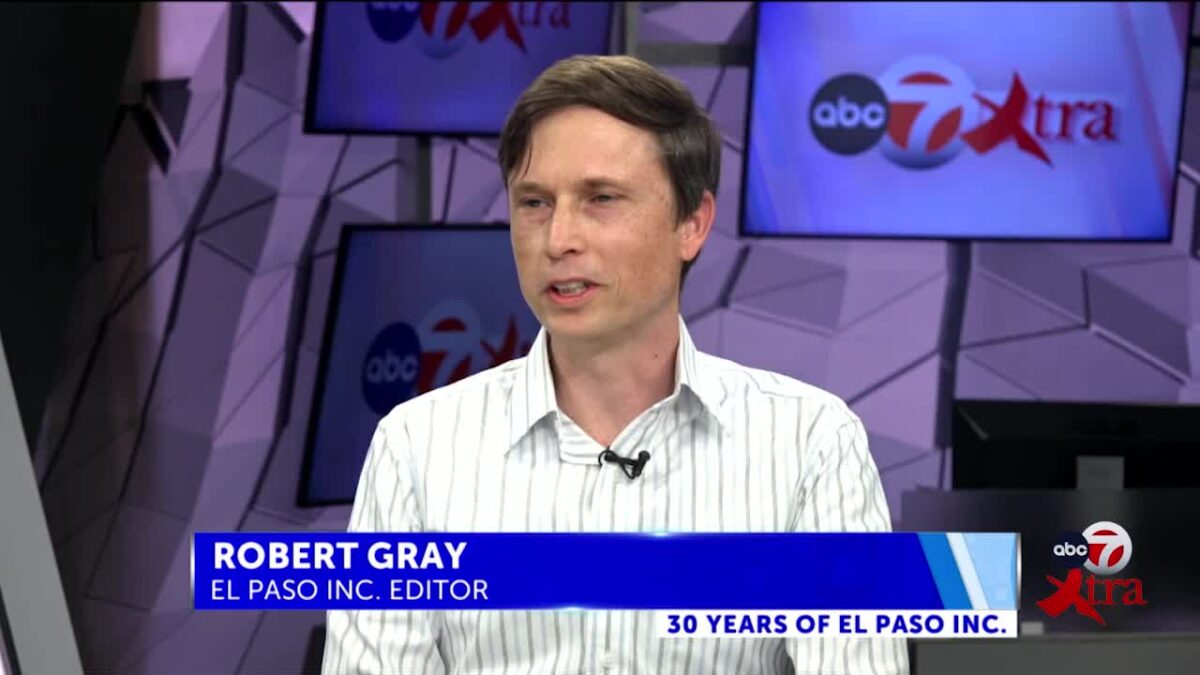
Join host Andrew J. Polk as he speaks with Publisher Secret Wherret and Editor Robert Gray of El Paso Inc. as they talk about the reporting trends, big stories, and keeping the business going in an ever-changing media landscape. Tune in Sunday at 10:35 p.m., right after ABC-7 at 10 Weekend.

Click here to follow the original article.

ABC-7 at 4: Holiday Myths Debunked

Nichole Gomez

Click here to follow the original article.

How to wrap pipes before winter freezes create leaks, bursts

Nicole Ardila

When temperatures hit freezing point at 32°F or below, pipes can freeze, where it leaks, bursts or water doesn’t even run water through your home.

But El Paso Water says, even overnight temperatures or cold fronts can cause a mess, and they do not respond to homes reporting pipe bursts — so residents need to wrap their pipes.

“We’re really encouraging our customers to make sure that they’re protecting their home ahead of time, because El Paso water does not respond to those in that event,” said Denise Parra, El Paso Water’s public affairs officer. “Those are just some of the potential things that could happen. But you would have to call a plumber to come to your home. And as we know, that also can be costly.”

In order to do that, you can go to a hardware store and buy insulation from a hardware store like a faucet protector, or foam and duct tape. Or if you’re in a pinch, you can even use cardboard, cloth, a towel or t-shirt that you find at home.

In the video, you’ll see a demonstration on how it should look.

Your pipes inside can also freeze, so it’s best to leave your cabinet doors under sinks open to allow your pipes to access warm air from your home.

El Paso Water says in case of a leak or burst, it’s important to know how to turn off your water, and where it’s located.

“That’s always located at the meter, in many homes, it’s typically located at the front of the home,” said Parra. “You’ll have either a metal lid, some customers have metal lids right now, or you’ll see a blue water lid. And you have to make sure you uncover that.”

All you need to do is turn the knob 90 degrees to shut it off.

El Paso Water does not wrap pipes for residents.

Click here to follow the original article.

Juárez traffic police officer highlights unusual incident while patrolling at international bridge

Heriberto Perez Lara

JUÁREZ, Chihuahua (KVIA) — On December 9, Oliver Rivera Peña, an officer with the Road Safety Coordination Department in Juárez (CGSV), was monitoring the line at the Bridge of the Americas (BOTA) when he was asked to perform an unusual task.

Officer Rivera was directing traffic when a child and a woman asked him to assist their aunt/sister, who was about to give birth and was waiting to cross into El Paso, Texas, for a medical checkup.

The woman informed Officer Rivera about her sister’s situation. However, because the line was too long, there wasn’t enough time to cross into the United States, so she sought assistance to take her sister to Star Médica Hospital, located south of the city.

Due to the circumstances, Officer Rivera requested an ambulance; when it arrived, the paramedics performed the necessary procedures for the delivery of the baby.

A baby boy was born in good health and then the mother and child were transported to a local hospital for further examination.

“The agency is working “For a better road safety culture,” to reduce incidents and promote awareness and responsibility when traveling on the various roads of our city,” said CGSV in a statement.

ABC-7 spoke exclusively with Officer Rivera to learn more about how he conducted rescue and assistance tasks while the woman was in labor before first responders arrived at the bridge.

More updates in later newscasts.

Click here to follow the original article.

RAM boom raises device prices

Olivia Vara

EL PASO, Texas (KVIA) — RAM prices are rising as AI data centers increase their demand for memory, narrowing the supply that is available to customers. A tighter supply could increase prices for PCs, smartphones, gaming consoles and other devices that rely on RAM.

ABC-7 spoke with Manuel Caballero, owner of EP Electrocenter, to hear firsthand how rising RAM prices are affecting repairs and consumer electronics.

“Spend a little more upfront to get it now before prices rise further,” Caballero advised. “Or wait to see if another company offers alternative RAM options. Right now, there isn’t an easy fix, and prices are higher.”

Major AI data centers, including operations associated with OpenAI, Meta and Google require rapid memory to run larger models.

Stores are passing on these rising costs to shoppers, with many now opting to buy pre-built PCs.

If demand remains high, prices could also remain high for consumers going forward. The broader impact on consumer prices will depend on how quickly memory supply can ramp up and how manufacturers manage pricing going forward.

Click here to follow the original article.

ABC-7 at 4: Keeping teens safe from 764

Nichole Gomez

Click here to follow the original article.

ABC-7 at 4: ReadyOne Industries

Nichole Gomez

Click here to follow the original article.

ABC-7’s Paul Cicala dresses up as Santa for Pebble Hills Elementary students

Paul Cicala

EL PASO (KVIA) — ABC-7 anchor Paul Cicala represented KVIA by surprising a group of kids in the Ysleta Unified School District by appearing as Santa Claus.

Students at Pebble Hills Elementary, on El Paso’s east side, got an early Christmas visit from “Santa’s helper” as they received gifts and holiday cheer.

Paul Cicala also read a holiday book to the kids, before leaving the school with all smiles.

Click here to follow the original article.

Mexican industry, maquiladora leaders ask Environmental Commission to keep commercial traffic at Bridge of the Americas

Heriberto Perez Lara

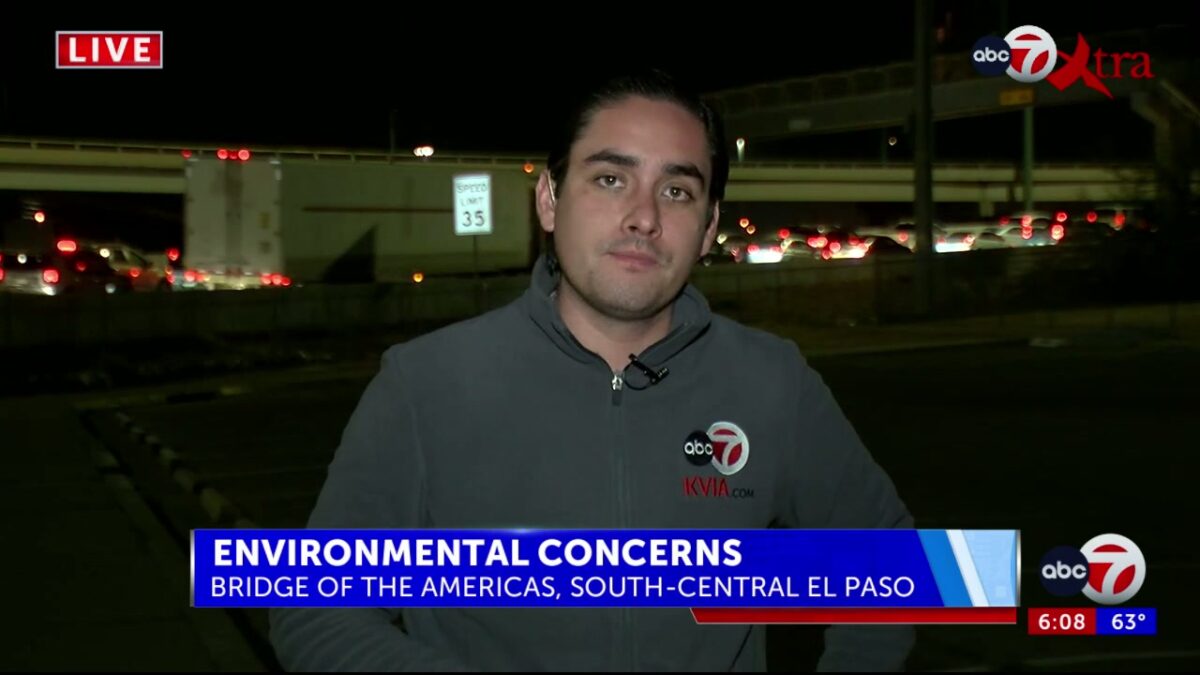
CIUDAD JUÁREZ, Chihuahua / EL PASO, Texas (KVIA) — The Mexican National Association of Importers and Exporters (ANIERM) sent a letter/complaint to the Commission for Environmental Cooperation (CEC) to oppose the removal of commercial cargo crossings from the Bridge of the Americas (BOTA).

The CEC is a trinational organization working in the United States, Mexico, and Canada to protect the environment across all three countries. It was created to coordinate efforts under the environmental provisions of the USMCA trade agreement.

State delegate Marcelo Vázquez argues that moving around 190,000 trucks that cross through BOTA each year could simply shift environmental hazards and pollution to other areas in the region, including communities near the Ysleta-Zaragoza bridge in El Paso’s Lower Valley.

Here is the full letter sent to the CEC:

Comunicado ANIERM CCA.docxDownload

ABC-7 also spoke with Familias Unidas del Chamizal, a local nonprofit fighting for years to have the BOTA commercial crossing removed, to hear their thoughts on the claims made south of the border.

One community organizer said the letter was a moot point because the industry on the Mexican side has never followed its obligations, and bringing up the ‘La Paz’ agreement is a double standard.

“The Bridge of the Americas is out of compliance; it was never built for the maquiladoras industry, and it was never designed to carry such heavy commercial trucks,” said Cemelli De Aztlán. “The ‘Puente Libre,’ the Bridge of the Americas, was granted through the Treaty of Chamizal, and it’s the only free port of entry along the US-Mexico border from San Diego to Brownsville because it’s for the people, not for the ‘maquiladoras’ or ‘transportistas’ to cross for free.”

“We have been fighting for generations to get these commercial trucks off the bridge,” De Aztlán added. “They should never have been here in the first place, and they have worn out the ‘puente libre,’ it needs renovation with the $700 million federal funding coming now.”

ANIERM claims the U.S. violated a binational environmental agreement, the ‘La Paz’ Treaty, signed in 1983 by then-presidents Ronald Reagan of the U.S. and Miguel de la Madrid Hurtado of Mexico. This treaty says that any change affecting the environment within 100 kilometers of the border must be properly communicated and analyzed by both governments. In this case, ANIERM says the U.S. did not provide any analysis of how closing the commercial crossing at BOTA might impact Mexico.

“By them, co-opting the narrative to continue to use the only free port of entry on the US-Mexico border is because it’s the share of transnational billionaires, Fortune 500 billionaires who still want to make a dime off of our dollar and off our backs at the expense of our health.” “It’s not right, it’s not just, and it’s about time that it stops. That’s why we are asking State Senator Blanco and our city reps to support this investment wholeheartedly because it’s coming from the people and it’s long overdue.”

Familias Unidas del Chamizal also told ABC-7 that they never wanted all commercial traffic to go through the Ysleta-Zaragoza POE. Instead, they prefer that all semi-trucks be directed to the Marcelino Serna POE in Tornillo, Texas.

“It (Tornillo POE) was built specifically to handle this heavy truck traffic; they’ve never used it, and they need to start using it now,” De Aztlán said. “The ‘Puente Libre’ is a safety hazard, was never built for trucks, and it has always been free for the people.”

“We want cooperation on both sides of the border to get the trucks out,” said community organizer Celia Aguilar from Familias Unidas del Chamizal. “We know these trucks create problems and hearing that there is concern now on the Mexican side shows that they recognize these trucks are causing environmental and health issues.”

“We’re not trying to shift the problem elsewhere; we want the trucks out of urban areas. We want them sent to Tornillo because, ultimately, this is a health crisis that must be addressed,” Aguilar added.

“We are trying to prevent the closure of BOTA to cargo traffic, and at ANIERM we have not given up; we continue to seek all resources available to prevent the cargo crossing from closing at BOTA,” said Marcelo Vázquez, the state delegate in Chihuahua for ANIERM.

Click here to follow the original article.

‘Museo Juan Gabriel’ in Juárez happy with recent documentary release

Heriberto Perez Lara

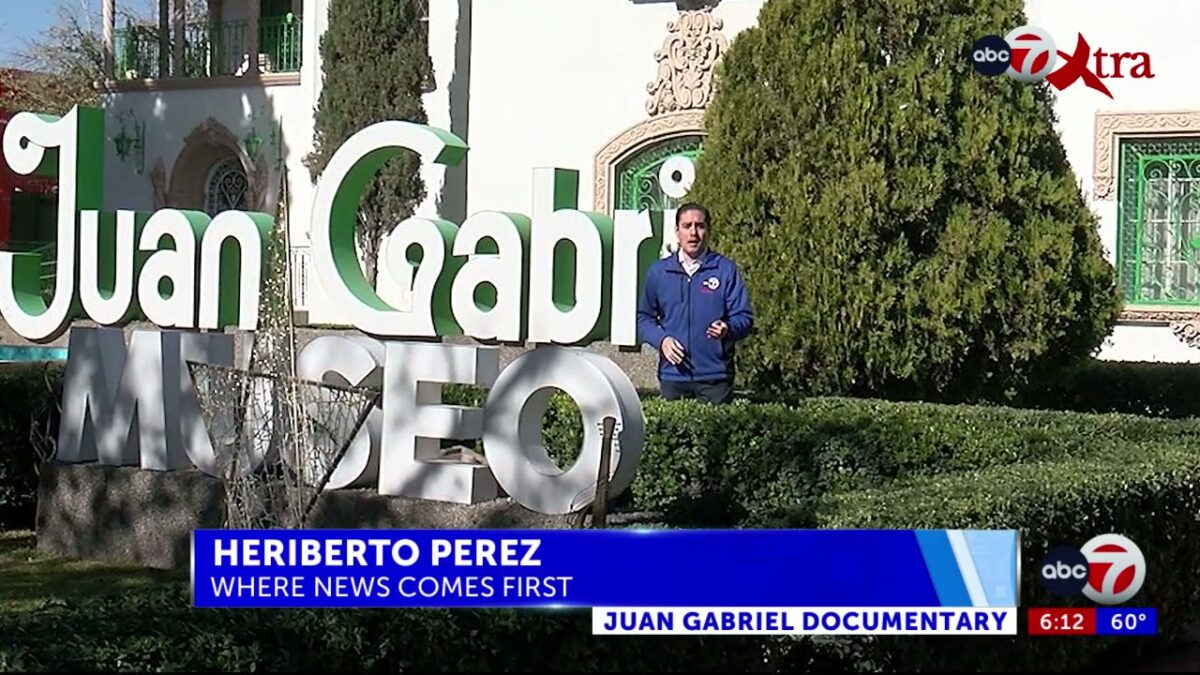
CIUDAD JUÁREZ, Chihuahua (KVIA) — ‘Museo Juan Gabriel’ opened its doors over a year ago, where local and international residents could experience how the late Juan Gabriel used to live just south of the border in Ciudad Juárez.

Now, after a Netflix documentary was released this year, the museum’s director says they are happy to know that “JuanGa’s” memory is still alive. Since the museum opened in August of this year, its director says they have received visitors not only from Juárez and El Paso, but also from all across Mexico and other parts of the U.S., such as California, Chicago, Texas, New York, as well as other Central and South American countries.

“We are very grateful for the great affection that you continue to express to our beloved artist Juan Gabriel and especially for your interest in coming to Ciudad Juárez to learn about Juan Gabriel’s city,” said Felipe Rojas, director of the Juan Gabriel Foundation.

“Well, the truth is that Juan Gabriel never ceases to amaze us, especially because it’s a very special documentary, because he himself tells his story,” director Rojas said. “Of course, the great work done by the documentary’s director and her team, María José Cuevas, is very important, but we’re talking about archives film that were built from videos that Alberto Aguilera Valadez (Juan Gabriel) himself recorded since he was 17 years old.”

The newest Netflix documentary was released on October 30th, and director Rojas says visits to the museum have increased since then.

“We’re talking about him having a vision for the future, wanting to tell his story. He already knew or foresaw that his story was going to be important, and he documented all these videos at a time when having a camera wasn’t as easy as it is today, like carrying one on your cell phone or recording yourself in different ways, right?” director Rojas added.

The Juan Gabriel museum south of the border advises anyone wanting to go and visit to book in advance because they already have several very busy days, with many visitors arriving right at tour times, and our tours are already full.

The museum recommends booking in advance on its website. The museum is open Tuesday through Sunday, with the first tour at 10:00 a.m. and the last at 6:00 p.m.; tours last approximately two hours.

Full story in later newscasts.

Click here to follow the original article.