What to expect at the El Paso airport as Memorial Day weekend travel nears

Gabrielle Lopez

EL PASO, Texas (KVIA) — Wednesday, the Transportation Security Administration (TSA) and the El Paso International Airport shared advice for those flying for the summer.

Cassandra Davisson, the airport’s marketing and air service development manager, said Memorial Day weekend is usually the signal for a busy travel season as more people fly out of the airport.

She reminded travelers there’s a new parking system at the airport. Instead of a ticket system, new technology scans license plates and prompts travelers to make an account to pay.

Travelers should arrive early since wait times at the airport can peak unexpectedly, Davisson said. She suggested arriving at least two to four hours before your flight takes off.

Eric Guthier with the TSA suggested taking an extra two or three minutes to get your real ID ready before going through security.

TSA ended a rule where travelers had to take their shoes off at security. Guthier said some people may need to take their shoes off in some cases, but an officer will let them know if it’s necessary.

While the El Paso airport doesn’t have international fights, Guthier suggested arriving at least three hours before departure if you’re flying out of the country.

Guthier said the El Paso airport typically sees rish hours between 4-7 a.m.

He said listening to TSA officers’ orders can help make your security experience smoother.

“We just ask everyone to pack their patience,” Guthier said. “The officers are doing the best they can to get everyone through safely and securely, and that’s what we’re going to do.”

Click here to follow the original article.

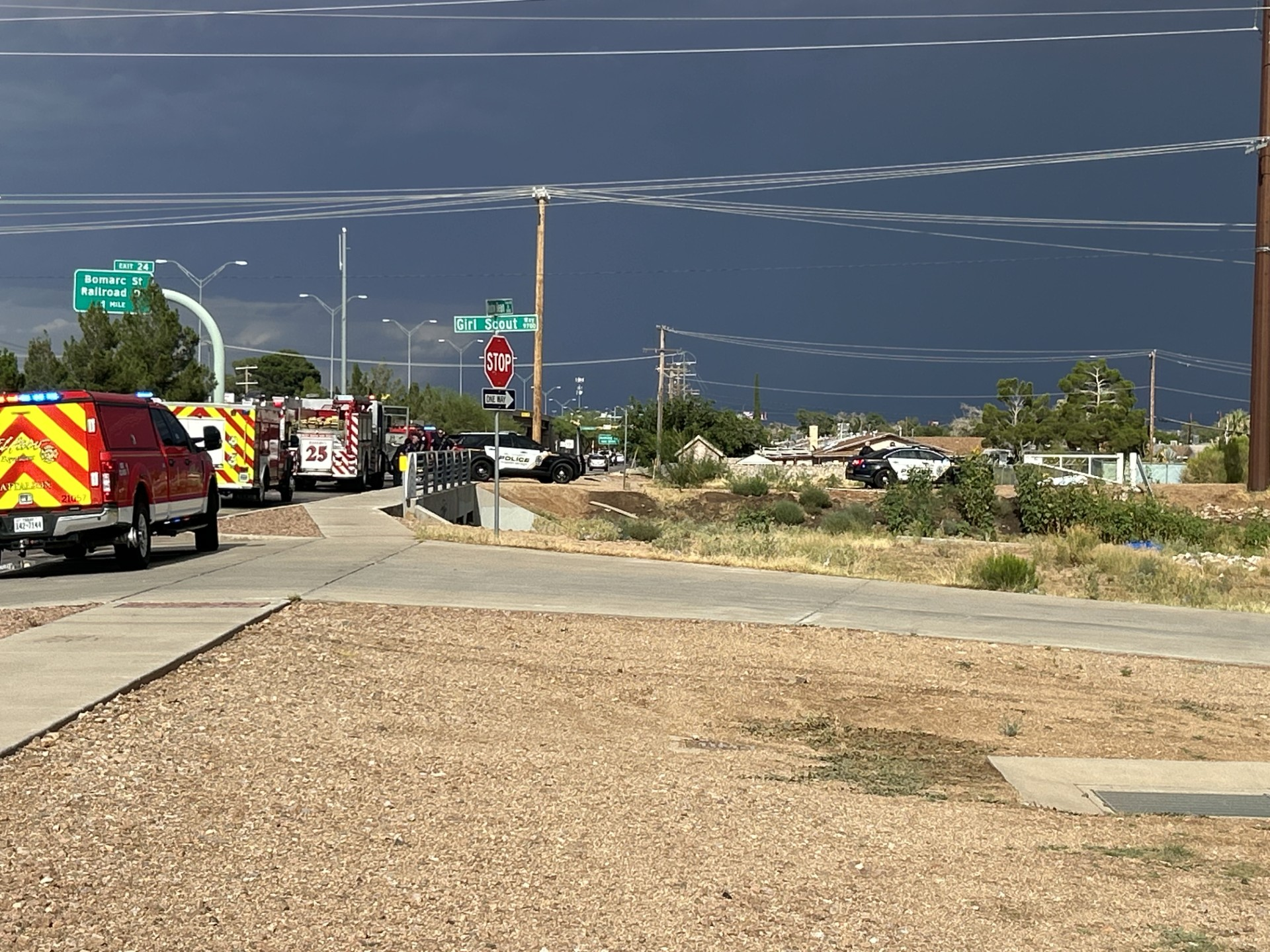
Ysleta ISD facing $16.7 million budget deficit

Rishi Oza

EL PASO, Texas (KVIA) — The Ysleta Independent School District is facing a budget deficit of $16.7 million. The district discussed its quarterly report during their Board of Trustee meeting Wednesday.

The district said there was an issue with a software system across the state with certain Central Appraisal Districts. The state implemented a new methodology to calculate any losses that happened from that error.

It impacted many districts across the state including YISD, and left it with a loss of $11 million in state revenue and a budget deficit of $16.7 million.

The state also has a decrease in funding given to districts and it leaves YISD with cash flow challenges. It said they need a short-term loan this month.

District CFO Lynly Cambern said the district has an issue of spending it’s unassigned fund balance. As of now, they have $35 million in unassigned fund balance, but it’s been getting lower over the past 5 years.

Cambern said the district has been using that fund balance to help get the deficit down, when it should be used for other issues. This year, if they use the fund balance for their deficit, they’ll only be left with $13 million.

“My goal in June is to bring you a comprehensive plan for addressing fund balance, for making hard choices, so that in three years, you are back to a surplus in your fund balance,” said Cambern during the meeting.

Hard choices can mean a lot of things, but Superintendent Xavier De La Torre said layoffs are premature to talk about right now.

“It’s too early to run around and say that the sky is falling,” said De La Torre. “We still have opportunities to gain revenue and significantly cut expenditures.” 

De La Torre said that’s the plan and options will be exhausted before the budget needs to be finalized this upcoming June.

Click here to follow the original article.
Jury finds man not guilty in road rage death involving brother, father

Yvonne Suarez

EL PASO, Texas (KVIA) – A jury found Jose Alberto Orozco not guilty of murder Wednesday. The verdict comes nearly three years after Orozco, his brother and father were charged with murder after what police described as a road rage incident with another driver in El Paso’s Upper Valley. 

The elder Orozco, Raul Alberto Orozco, was driving on Doniphan when he started chasing Marco Fino Jr. 

Police records show Orozco called his two sons, Christian Bradley Orozco and Jose to help him “trap” Fino. 

Fino was in a car with three other people. One of Orozco’s son blocked Fino in front and the other in the back, and got into a fight with a passenger. 

The fight turned physical, and Jose Albert is accused of shooting Fino.

The men all drove off after the shooting and did not call police according to court records. Fino’s passenger, meanwhile, tried to drive Fino to the hospital, but stopped to flag down an officer

Click here to follow the original article.

Ciudad Juárez hosts free Xocerball Americup 2026 matches

Heriberto Perez Lara

JUÁREZ, Chihuahua (KVIA) — The Xokerball AmeriCup 2026 kicked off Wednesday with 16 national soccer teams set to play in Ciudad Juárez all week.

The tournament began at 9 a.m. and an opening ceremony will take place at 8 p.m. Following the ceremony, there will be a featured match between Mexico and the U.S.

This soccer federation tournament, which will be held for the first time in the border region of Juárez and El Paso, has already taken place in other Mexican cities, and even in some South American and European countries.

The tournament will feature national teams from Mexico, the United States, Canada, Brazil, Costa Rica, Honduras, Panama, Colombia, Argentina, Chile, Uruguay, Guatemala, Haiti, Bolivia, Paraguay, the Dominican Republic, and Belgium.

The matches began today and will continue until Sunday, when the finals will be played.

The president of the Xokerball Federation, Sergio Ibarra Molina, a native of Juárez, told ABC-7 he’s happy the Americup is happening here because he wanted to bring this type of event to the border for the community.

“I’m from Juárez, and I don’t expect anything different from what I’ve always experienced: warm, friendly, and enthusiastic people who believe in the projects we’re seeing and, above all, who embrace us,” Ibarra said. “We rarely have the opportunity to hold these kinds of events, and I’m sure the people of Juárez will embrace it as their own and take ownership of it. I have no doubt that the people of Juárez will react in a responsible and warm manner.”

Juárez and the Xokerball Federation say it’s not easy to bring events like this one home, and want this to be the first test of many to come.

“When we tried to promote the event, we didn’t sell Juárez, we sold the region along with El Paso, the unique and different appeal of the border, the lifestyle and the community that exists here,” Ibarra said. “The way of life here creates a bit of unease for others who live in other parts of the world, and when we brought it up, they didn’t understand.”

Both Xokerball and the city of Juárez invite the binational community to watch the free matches, located at the big Juárez red ‘X,’ next to the border.

“I hope people enjoy it, that they have a different experience, that they leave here happy and say, ‘I didn’t expect this,'” Ibarra said. “If we can bring out that side of people, mission accomplished.”

“Beyond the sporting aspect, I want people to see that it’s an organized event, a safe event, an event where anyone from the region can come together without any divisions, and where the rest of the world can see what this region is really like; unique, that we present a true image of life here, and that people from other countries say they didn’t expect this from Juárez.”

ABC-7 also spoke with the Mexico National Xokerball team head coach, Sergio López, with some of his players and with former Mexican pro-soccer player, Jonny Magallón.

The Mexico team has won this cup back-to-back in the past two years and for this year’s edition, the goal is clear: be champions again for the third time.

You can click here for more information about the event.

Click here to follow the original article.

Man charged for aggravated robbery at Segundo Barrio store

Gabrielle Lopez

EL PASO, Texas (KVIA) — El Paso police charged a 57-year-old man for aggravated robbery at a store in Segundo Barrio near the Paso del Norte Port of Entry. ABC-7 reported live from the scene when police thought the man was barricaded in the store.

The robbery happened May 6 at Levcomm International, which sells phones at 908 S Stanton.

EPPD said Rodolfo Madrid Torres entered the business, assaulted the owner and demanded money. The owner broke free and locked Torres in the building.

When officers arrived, they believed Rodolfo was inside, but he left the building before they got there, police said. Investigators said he stole cash and the owner’s wallet.

Officers arrested and booked Torres into the county detention facility Monday.

Click here to follow the original article.

ABC-7 Xtra Investigation: Can the City of El Paso collect debt from Trump campaign rally without this key document? 

Lesley Engle

EL PASO, Texas (KVIA) — Seven years after thousands crowded the El Paso County Coliseum to see then-President Donald Trump campaign for re-election, the El Paso City Council has renewed its efforts to collect on a half-million-dollar bill for services related to the rally.

However, collecting payments may be more complex than they thought.

Records obtained by ABC-7 reveal that the City of El Paso did not discuss costs with President Trump’s campaign prior to his 2019 rally. The finding comes despite ongoing discussions among city leaders and elected officials about the $569,204.63 the city says the campaign still owes it. 

At a March council meeting, District 7 Representative Lily Limon requested an update on the outstanding Trump campaign debt and called for quarterly reports.  

Following that meeting, ABC-7 filed an open records request to determine whether any cost discussions or agreements existed before the February 11, 2019, rally.   

We reviewed the records the city sent, which did not show any discussions with the campaign, including cost estimates, quotes, draft agreements, or contracts, prior to the rally. ABC-7 found the city still does not have a formal cost-recovery plan in place for events such as political campaign rallies. 

“You cannot make people pay for things after the fact,” Carliss Chatman said. “If the city didn’t anticipate it, the city assumed the risk.” 

Carliss Chatman, a professor of law at the SMU Dedman School of Law, told ABC-7 that many cities fail to account for the scale of political events beyond basic venue rental fees. When a city provides services without a contract, the law may view the work as a “gift” or an “accord and satisfaction,” leaving the municipality responsible for the expenses. 

“It’s disappointing because we went into that and now we’re suffering the consequences,” Rep. Limon said. “But the good thing is it may lead to change. Those are important questions to ask—were we prepared, were we ready? I think we’ll be smarter moving forward.” 

The bill the Trump campaign did pay

Donald Trump announced his visit to El Paso on February 6, 2019, just five days before the rally. His “Make America Great Again” event filled every seat available inside the El Paso County Coliseum, with thousands more gathered outside.  

Records show the campaign paid a $5,000 rental fee and an additional $1,000 non-refundable deposit for the Coliseum, and ABC-7 obtained a copy of the wire transfer confirming the payment.

“I think that the one really critical person in this Trump visit was Brian Kennedy. He was the president of the Sports Commission, who, pretty much four hours before, said ‘hey if we don’t get payment by such a time your event is cancelled,’” Representative Lily Limon said. 

Kennedy told ABC-7 he negotiated a contract in advance with the Trump campaign. Under that agreement, the campaign was required to pay before Trump stepped on stage. The commission, which manages the Coliseum for El Paso County, also required the campaign to cover all venue-related expenses. 

No agreement with the City of El Paso 

A day after the Feb. 11 rally, city officials confirmed to ABC-7, in response to the station’s inquiry, that taxpayer resources were used to support the event. At the time, officials said costs were still being calculated and would be billed to the campaign once finalized.

The city billed Trump’s campaign more than $470,000 a month after the event, according to city records obtained by ABC-7 at the time. A one-time 21% delinquency fee later increased the total bill to nearly $570,000. 

Records show reimbursements covered a range of costs, including equipment, personnel and services such as security, cleanup, setup and logistics.  

According to City of El Paso billing records for the rally, the police department incurred the highest costs at $380,942.12, followed by the fire department at $60,630.84, Sun Metro at $15,577.52, Streets and Maintenance at $6,452, the Department of Aviation at $6,286.57 and the Health Department at $528. 

Security alone drew 476 officers from the El Paso and Anthony police departments and the El Paso and Socorro independent school districts, according to the itemized bill reviewed by ABC-7. That was in addition to El Paso County sheriff’s deputies and Secret Service personnel. 

ABC-7 asked to interview City Manager Dionne Mack and City Attorney Karla Nieman to walk us through the bill, explain how the city develops cost estimates for larger events, discuss how it plans to collect payment without an agreement, and any plans to create a policy to guide future event planning. 

City spokeswoman Laura Cruz-Acosta declined, saying there were no new developments to warrant additional interviews. “You’re welcome to reference prior interviews and KVIA’s previous coverage as the most current information available,” she wrote in an email.

City Representative Limon told ABC-7 she was not aware that the city had no prior agreements or documented discussions with the Trump campaign when asked. She described efforts to collect the outstanding amount as “uphill” but worth pursuing.

She said she placed the issue on the March 3 agenda to ensure the debt is not forgotten, and questioned why such a large amount of money has been left unpaid, comparing it to unpaid traffic violations or parking meter fees that are always collected. 

Chatman, the SMU professor who specializes in contract law, corporate governance, legal ethics, and fiduciary duties, said when cities host large rallies, they must look beyond simple venue rentals to consider the costs of additional security and the size of expected crowds.  

“The first is just a contract with the terms between the city or the county, whatever municipality is hosting and the organization that is hosting the rally,” Chatman said. 

Chatman says contracts for these events typically include provisions for police support that go beyond everyday operations, including the cost of closing or barricading roads to manage traffic.  

Chatman said some cities include clauses that allow them to charge more if the scale of the event exceeds what was originally anticipated. She said without those written terms, a city may have no legal mechanism to recover those costs. 

El Paso does not have a formal policy for recouping costs associated with large campaign events like Trump’s in 2019, according to city spokesperson Laura Cruz-Acosta. 

“So, there is no formal policy that is in place as it relates to it, but we do have procedures and forms that are filled out for special events, for example.” She said the city has a special events form where people can describe the event’s footprint and whether there will be a need for street closures for things like parades.   

“So, there’s really no one-size-fits-all when it comes to the process, but at the very minimum there’s a starting point in terms of filling out a form in order to capture all of the details and information related to that kind of special event,” Cruz-Acosta said. 

Cruz-Acosta said creating a formal policy for campaign events would require City Council action. She noted the council hired the Law Offices of Snapper L. Carr, which was in November of 2022, according to city records. We asked Cruz-Acosta how much it cost to hire the Austin-based law firm, which also serves as the city’s lobbying group during Texas legislative sessions, and she said an open records request would be required.

According to the records we obtained through our request, the city hired the firm on a contingency basis—meaning the law firm is paid only if it recovers money on the city’s behalf.

Limon believes cities need to become “smarter” about securing payment for services. She noted that providing services for campaigns is a “tremendous drain on public service,” particularly on first responders. She said if the $570,000 were recovered, it would directly benefit departments, which she said are often in need of funding. 

Limon stressed the need for a clear policy outlining expectations for campaigns. 

“We can’t just say, ‘well, welcome to the city and we’ll be there, we’ll protect you, um, we’ll close roads, we’ll do whatever is necessary, and then afterwards we’re going to send you a bill and we hope that you’ll pay for it,'” Limon explained. She affirmed the city’s responsibility to offer protection but asserted that entities using city services should pay for them, regardless of the campaign. “It’s — You have received a service from this city, and you should be paying for that service that you received. Whether it’s Bernie Sanders, whether it’s Donald Trump, it doesn’t matter who it is,” Limon said. 

Professor Chatman said large cities often have standardized protocols and checklists in place for event permits to ensure every host is treated the same regardless of their political affiliation. Chatman noted that smaller cities may lack these procedures because they do not regularly host large-scale events.  

“Best practices are to have checklists and standards and protocols in place so that you eliminate human error and human judgment and human bias. That’s what you want to do,” Chatman said. 

Chatman recommended that municipalities use a “360 approach” for future event planning, including evaluating the profile of speakers, the potential for counter-protests and the total burden on city resources.  

“Once it happens the first time and you see what a burden it is on a city budget, then you have to put protocols in place and have best practices for hosting these sorts of events,” Chatman said. 

In Tucson, Arizona, the city declined to pursue about $80,000 in public safety costs from a 2016 Trump rally and about $40,000 from a Bernie Sanders rally that same year, concluding legal action would cost more, Andy Squire, public information officer in the City Manager’s Office, told ABC-7. When Trump returned in September of that same year, however, the city required his campaign to prepay estimated public safety and facility rental costs—a total of $145,222, including nearly $116,000 for police. 

“In the end it came down to modifying the language in the facility use agreements at the Tucson Convention Center, which is city owned and operated under contract with Legends Global,” Squire said in an email response to ABC-7. 

ABC-7 reached out to the Republican National Committee seeking comment on the costs related to President Trump’s campaign rally in El Paso. A former campaign official said, “All questions related to local law enforcement and first responder costs we defer to the U.S. Secret Service.” 

A Secret Service spokesperson told ABC-7 that the agency coordinates security planning with local law enforcement partners but “currently lacks a mechanism to reimburse local governments for their support during protective events.” 

The spokesperson added that the agency will continue working with Congress to seek resources for state, county, and city law enforcement agencies assisting in security operations. 

Click here to follow the original article.

Questions grow over EPISD’s $52 Million budget deficit

Ilyhanee Robles

EL PASO, Texas (KVIA) – El Paso ISD is facing a projected $52.8 million budget shortfall, prompting concerns about possible staffing cuts, school consolidations, and financial oversight within the district.

District leaders said declining enrollment, rising costs, and payroll overruns contributed to the deficit. Officials reported nearly 900 fewer students than projected, reducing state funding by an estimated $6.1 million.

Consultants also recommended EPISD consider declaring “financial exigency,” a rare designation similar to bankruptcy for educational institutions.

The district’s former chief financial officer, Martha Aguirre, resigned earlier this month amid the district’s financial struggles.

EPISD leaders say they are now working on a financial stabilization plan while parents and teachers question what impacts the budget crisis could have on students and schools moving forward.

Below is a financial analysis looking into EPISD’s executive budget.

EL PASO ISD Board Brief (1)Download

Click here to follow the original article.

Parents react to El Paso ISD’s plan to ‘stabilize financial standing’

Carpio Griego

EL PASO, Texas (KVIA) — Following the El Paso Independent School District Board of Trustees meeting Tuesday night that detailed a plan to recover from a budget deficit of $52 million, parents share concerns of how their students stand to be directly impacted from any resulting school closures or staff cuts.

A group of parents addressed the board during Tuesday’s meeting with concerns about future campus closures to stabilize the district’s finances.

ABC-7 is asking parents if they feel confident the board will make the correct decisions for the district as well as their children.

ABC-7 has also reached out to the district’s teachers association seeking their input on proposed cuts in spending affecting the amount of teachers in schools.

This is a developing story. ABC-7 will continue to provide updates as more information is received.

Click here to follow the original article.
UTEP seeks attorney general ruling on ABC-7 Coliseum records request

Lesley Engle

EL PASO, Texas (KVIA) — The University of Texas at El Paso (UTEP) is seeking an opinion from the Texas Attorney General’s Office on whether it must release records requested by ABC-7 related to discussions with El Paso County about managing the County Coliseum and Sports Tourism program.

The records request follows a tip ABC-7 received involving concerns over discussions between the county and UTEP regarding Coliseum management and Sports Tourism.

The El Paso Sports Commission has also questioned whether county officials discussed a potential role for UTEP before formally opening the bidding process for Coliseum management services — a sequence the Sports Commission says could have compromised the fairness and transparency of the county’s procurement process.

The Sports Commission currently manages the Coliseum and Sports Tourism program under a contract that began in 2003 and runs through September 2027, according to Tony Rodriguez, director of events for the El Paso Sports Commission.

County Judge Ricardo Samaniego has said the court felt it was appropriate to seek new bids after more than two decades. He also said discussions with UTEP did not amount to any agreement or concessions, and that it is legal for the county to have such conversations with another government entity, such as UTEP, when considering interlocal agreements.

Records request and attorney general review

On April 28, ABC-7 requested communications between El Paso County and UTEP officials, including UTEP’s Executive Director of Special Events, Jorge Vasquez; UTEP President Heather Wilson; County Chief Administrator Betsy Keller; County Executive Director of Operations Melissa Carrillo; all commissioners; and the county judge.

We also requested reports, presentations, and memos related to the management of the Coliseum exchanged by people on that list.

In a May 11 letter to the Texas Attorney General’s Open Records Division, University of Texas System Associate General Counsel Audra Gonzalez said UTEP intends to withhold certain records while seeking a ruling, citing several legal exemptions.

Those exemptions include competitive or bidding information that could advantage a competitor if disclosed; attorney-client privileged communications; and work product materials prepared in anticipation of litigation or trial.

Additionally, UTEP’s Office of the Vice President for Business Affairs said it needs additional time to review and compile any records not exempt from disclosure—meaning it can release them without an Attorney General ruling—and expects to either release the information or provide a cost estimate to ABC-7 by June 3.

At the time the request was filed with UTEP, there was no active bidding process for Coliseum management or Sports Tourism services. The request for proposals (RFP) was not approved by El Paso County Commissioners until May 11—nearly two weeks after ABC-7 requested the records.

When a ruling is sought, the Texas Attorney General generally issues an opinion within 45 business days.

ABC-7 has written to Attorney General Ken Paxton asking him to release the records to the public.

Questions raised about discussions before formal bidding process

At a May 4 Commissioners Court meeting, the El Paso Sports Commission submitted an unsolicited bid to the county following its quarterly presentation.

Janet Vargas, president of the El Paso Sports Commission, said the commission is prepared to invest $12 million of its own funds in the Coliseum. Cory Herman, owner of the El Paso Rhinos hockey team, also spoke in support of the proposal, saying he would personally fund the construction of a new ice rink attached to the events center and, later, a new field house.

Tony Rodriguez also spoke at the meeting. He said the unsolicited bid was prompted by concerns over rumors about the Coliseum’s future management, including reports that the University of Texas at El Paso was expected to take over operations.

“When you hear it from one or two people, that’s one thing. When you hear the same thing from four people, it’s not a coincidence,” Rodriguez said on May 4.

He added that the ongoing rumors created an uneven playing field and made it necessary for the Sports Commission to submit a proposal.

During the same meeting, Judge Samaniego raised concerns with the county’s assistant attorney.

“Anna, the fact that we didn’t know anything about it and it’s out there—um—is that something we can discuss in executive session? Because that sort of throws us off, to say if there’s been a discussion about that, but it’s never come through Commissioners Court,” Samaniego said on May 4.

County Commissioners Iliana Holguin and Sergio Coronado told ABC-7 that Chief Administrator Betsy Keller informed them last year that UTEP was interested in managing the venue. They said the May 4 Commissioners Court meeting was the first time they had heard of any update or “promise” regarding UTEP being awarded the contract.

Fast-forward a week later, the court approved opening a competitive bid process for the Coliseum and the county’s Sports Tourism program.

In an interview with ABC-7, County Commissioner David Stout defended the county’s decision to pursue an RFP and said discussions with UTEP were legal and appropriate.

“We have not had any negotiations with any governmental entity, whether it be UTEP or anybody else, to enter into an interlocal with them,” Stout said on May 11. He also criticized suggestions that the county acted improperly, calling the allegations “unfounded accusations.”

Rodriguez said the commission formally submitted its proposal to county officials on May 14 after publicly presenting the unsolicited bid at the May 4 meeting. He said the commission has not received a response from the county.

Released records show months of county-UTEP communications

Previously released records obtained by ABC-7 through an April 20 open records request to the county show months of communications between County Operations Executive Director Melissa Carrillo and UTEP Special Events Executive Director Jorge Vasquez, spanning September 2025 to April 2026, about Coliseum management.

The records included discussions about meetings, lunches, and contract materials related to the venue. In one Sept. 18, 2025 text message, Carrillo proposed a “possible collaboration between UTEP and the County.”

In January 2026, Vasquez requested the current Coliseum contract to complete a report, according to the records. Carrillo later suggested he watch the Sports Commission’s Feb. 9 presentation to Commissioners Court.

Carrillo’s assistant sent Vasquez several contracts, including the Sports Commission’s management and tourism contracts, as well as budget information, records show.

County officials decline follow-up interviews

ABC-7 has repeatedly requested interviews with Chief Administrator Betsy Keller and Executive Director of Operations Melissa Carrillo regarding discussions between Carrillo and Vasquez.

Both declined through County spokesperson Desiree Gonzalez, who requested that questions be submitted in advance so they could better understand what we wanted to know. Gonzalez told ABC-7 by phone last week that all relevant information had already been discussed publicly by commissioners and the county attorney.

On Monday, we renewed our request to interview Keller and Carrillo.

In an email response to ABC-7 Monday afternoon, Gonzalez said “they will not participate in an interview,” but she provided a written statement from Keller on behalf of the county.

Keller said, in part, “Thank you for the invitation to be interviewed. Now that the RFP has been published, we will only provide a written comment. We do appreciate the opportunity to provide facts, which we hope will include a more complete story.”

Keller said the county is “committed to conducting a fair, transparent, and competitive process regarding the future management of the El Paso County Coliseum.”

She noted the current management agreement has not been competitively bid in more than 23 years, adding that Commissioners Court directed staff to explore options, including a Request for Proposals (RFP).

As part of early due diligence, Keller said staff held preliminary discussions with the University of Texas at El Paso (UTEP), but emphasized that “at no time did the County negotiate or enter into an interlocal agreement with UTEP regarding management of the Coliseum,” and that “no decisions have been made and no preferential treatment has been provided to any entity.”

She rejected allegations of wrongdoing, saying that “exploring options and gathering information prior to initiating a formal procurement process is both responsible and appropriate public administration,” and said the county will proceed with a “lawful, fair, and competitive process” focused on taxpayer value.

Keller said the Sports Commission’s contracts end this year, a claim Assistant County Attorney Erica Rosales Nigaglioni also made during the May 11 public meeting.

However, county records show commissioners approved the extensions on July 8, 2024. The documents state the agreements were extended through Sept. 30, 2027, with an effective date of July 8, 2024.

ABC-7 has asked the county about the discrepancy.

Commissioner Iliana Holguin told ABC-7 there was ‘an error in prior county correspondence’ and confirmed the contract ends in September 2027.

ABC-7 also reached out to UTEP Monday, renewing its request for an interview. We have not heard back, however, UTEP Assistant Director of Media Relations Victor Arreola declined ABC-7’s request for an interview with Vasquez last week, instead referring to a university statement. He said, in part: “We are currently unaware of any published Request for Proposal (RFP) from the County regarding the El Paso County Coliseum. If an RFP is published that aligns with UTEP’s mission, we will evaluate whether submitting a proposal makes sense for UTEP and make a decision at that time.”

Questions grow over UTEP Coliseum bid role

Brian Kennedy, an El Paso attorney who formerly directed the El Paso Sports Commission, questioned the interaction between the county and UTEP.

“You have that person who wrote the bid, will help analyze the bids, the recommendation of the bids, the negotiation of the contract, and the oversight of the contract, and all I’m going to say is anybody catching that? ‘Houston, we have a problem.’ People that scream transparency have become not exactly a beacon of transparency and my question was, what’s going on here?,” Kennedy told the county commissioners during their May 11 meeting during public comment.

Kennedy told ABC-7 that a company he founded after he left the Sports Commission would submit a bid to manage the Coliseum.

Commissioner Stout rebuffed allegations of wrongdoing.

“It saddens me, it’s disappointing to me that after so many years of having had a strong partnership with the commission, that they would come with these unfounded accusations, trying to insinuate that we’re doing something that is illegal,” said Stout. “We have not done anything that’s illegal, and it’s important, I think, for us to point out that it’s inaccurate.”

Click here to follow the original article.

Summer shuttle takes travelers to Elephant Butte Lake, hot springs in New Mexico

Gabrielle Lopez

SUNLAND PARK, N.M. (KVIA) — Just in time for summer holidays, the South Central Regional Transit District launched a new shuttle service to take travelers to popular destinations like Elephant Butte.

Wednesday, SCRTD said the Blue Summer Route will operate Fridays and Saturdays starting Memorial Day weekend through Labor Day. The shuttle will run from 8 a.m. to 8 p.m. with departures every 45 minutes.

The shuttle will run May 23 to Sept. 1, SCRTD said.

The seasonal shuttle connects popular tourist places like Elephant Butte Lake, Truth or Consequences and the Hot Springs District in Sierra County.

According to the SCRTD’s website, there are fare-free rides until June 30.

Click here to follow the original article.