TxDOT Reminds Drivers: Speeding Isn’t Worth the Risk—Slowing Down Saves Lives

Nichole Gomez

El Paso, TX (KVIA-TV) Getting to your destination a few minutes faster as a result of speeding isn’t worth a lifetime of consequences.

Choosing to slow down is one of the simplest ways to protect yourself—and everyone else on the road.

Lauren Macias-Cervantes has helpful tips to keep you and your family safe.

CLOSURES ( TXDot El Paso):

Artcraft Project

9 p.m. – 6 a.m. (Nightly)

Sunday, July 26 – Thursday, July 30

Sunday, August 2 – Thursday, August 6

I-10 east and westbound between Loop 375 (Transmountain) and Artcraft full closure

Crews will be placing steel girders.

Loop 375 Rehabilitation Project

Sunday, July 26 – Thursday, July 30

8 p.m. – 6 a.m. (Nightly)

Loop 375 (Border Highway) westbound between Fonseca and Oregon full closure

Loop 375 (Border Highway) westbound entrance ramp from US-54 full closure

Loop 375 (Border Highway) westbound entrance ramp from Delta full closure

Loop 375 (Border Highway) west and eastbound between Fonseca and Oregon alternate lane closures

Crews will be working on paving.

Saturday, August 1

6 a.m. – 4 p.m.

Loop 375 (Border Highway) westbound between Fonseca and Oregon full closure

Loop 375 (Border Highway) westbound entrance ramp from US-54 full closure

Loop 375 (Border Highway) westbound entrance ramp from Delta full closure

Loop 375 (Border Highway) west and eastbound between Fonseca and Oregon alternate lane closures

Crews will be working on milling and paving.

Horizon/Darrington Reconstruction Project

Monday, July 27 and Tuesday, July 28

9 a.m. – 5 p.m.

Horizon Boulevard Full westbound lane closures between Horizon Boulevard and Homestead Drive.

Crews will be conducting paving operations

Guardrail Repair

9 a.m. – 4 p.m.

Monday, July 27

I-10 westbound between Mesa Park and Sunland Park left lane closed

Alameda Avenue Westbound right lane closure from Oil Mill Drive to Valle Verde Street

Tuesday, July 28

US-54 North between Pershing and Cassidy right lane closed

I-10 Eastbound Lee Trevino Entrance Ramp complete closure

I-10 Eastbound right lane closure from Lee Trevino Exit Ramp to Zaragoza Exit Ramp

Wednesday, July 29

Loop 375 (Transmountain) westbound between US-54 and Main Gap picnic area right lane closed

Gateway East right lane closure from Horizon Exit Ramp to Horizon Intersection

Thursday, July 30

I-10 westbound between Los Mochis and Vinton right lane closed

Zaragoza Southbound right lane closure from Escobar Drive to Cristo Viene Drive

Friday, July 31

SH-20 (Doniphan) at FM-259 right lane closed

Post and Cable Repair

Friday, July 31, 2026

9 a.m. to 4 p.m.

I-10 Eastbound left shoulder closure from Clint Exit Ramp to Fabens Exit Ramp

Crews will be working on post and cable repairs.

Maintenance

Sunday, July 26

4 a.m. – 5 p.m.

Ramp K between US-54 South and I-10 West closed

Entrance ramp between Trowbridge and US-54 South closed

Crews will be working on bridge joints.

Monday, July 27 – Friday, July 31

9 a.m. – 4 p.m.

US-54 north and southbound between Diana and Sun Valley alternate lane closure

US-54 North at Diana entrance ramp closed

US-54 North at Sun Valley exit ramp closed

US-54 South at Sun Valley entrance ramp closed

Crews will be working on the bridge.

Loop 375 (Transmountain) westbound between Tom Mays Park entrance and Paseo Del Norte right lane closed

Crews will be working on shoulder.

Spur 601 east and westbound between Chaffee and US-54 alternate lane closures

Spur 601 westbound at Chaffee entrance ramp closed

Spur 601 eastbound at Chaffee exit ramp closed

Crew will be doing crack sealing.

Thursday, July 30

9 a.m. – 4 p.m.

Loop 375 (Border Highway) westbound at Exit 62 full closure

Spur 1966 entrance ramp to Loop 375 closed

Crews and Signal Shop will be removing signs.

Click here to follow the original article.

Socorro Nonprofit Unites Community Through Arts and History

Nichole Gomez

El Paso, TX (KVIA-TV)-A new nonprofit in Socorro is bringing people together through theater, music, and art.

Jornada Del Muerto takes place after the Pueblo Revolt of 1680 and shares the story of the Piro people and Spaniards who left New Mexico. Based on real events, the play explores the personal challenges and cultural conflicts faced by refugees crossing the Jornada Del Muerto desert. The people in this story later founded the Socorro Mission and helped build the communities that are now part of El Paso’s Mission Valley.

Actors are invited to audition for this production.

Click here to follow the original article.

Children explore the ‘mighty machines’ helping build the Fox Cancer Center

Gabrielle Lopez

EL PASO, Texas (KVIA) — Friday, Texas Tech Health El Paso held a special event where children of university employees and cancer patients discovered heavy construction equipment used to build the future Fox Cancer Center.

Beyond construction, the children visiting got to look at other specialty vehicles, such as the El Paso Fire Department’s firetruck and a cement truck.

“Every day these machines help us build the future Fox Cancer Center,” said Adam McDavitt, project manager. “It’s exciting to pause for a morning and let children experience them up close. We hope they leave with great memories while gaining a better appreciation for the teamwork that goes into building something that will benefit our entire community.”

The Fox Cancer Center will be the first comprehensive cancer center to serve the Borderplex region, according to Texas Tech Health El Paso. It’s expected to open in 2028.

One mother told ABC-7 the cancer center is something her family always prayed for so they could stay close to home while receiving treatment.

“This month we’re actually traveling three times. So we’ve traveled to so having Texas Tech and a cancer center here, bringing it to our home, it is life changing for us,” Crysta Lerma, a former oncology patient.

While the event took place on a hot day, one of the trucks sprayed water for the children to play and cool off in.

Click here to follow the original article.

Simple ways to save money, energy this summer: Texas Gas Service

Gabrielle Lopez

EL PASO, Texas (KVIA) — The Texas Gas Service offered tips for people to save money and energy this summer. It encouraged people to manage household energy costs and focus on simple steps to keep those numbers down.

One simple tip was to change the direction of your fan so it spins counter-clockwise. That will push the air down toward you.

Other small actions include sealing doors and windows to keep cool air within your home.

Additionally, TGS suggested dusting your vents frequently.

Another tip was to keep the stress off your cooling system.

“Your air conditioning is running at its peak during the hottest hours of the day. Running other appliances like your dryer and your dishwasher after dark kind of reduces the stress on your cooling system when you do that,” said TGS Public Relations Manager Safeena Khanmohamed.

TGS suggested running dryers, dishwashers and other large appliances after dark.

If you want to take an extra step, TGS said upgrading to high-efficiency natural gas appliances can keep you cool while saving money.

A low-flow showerhead can also reduce water and energy use.

Click here to follow the original article.

Woman shot, killed in front of her daughter outside Juárez OXXO

Gabrielle Lopez

CIUDAD JUAREZ, Chihuahua (KVIA) — A woman was shot and killed in front of her daughter while leaving an OXXO convenience store in Juarez last Wednesday.

Days before her death, she posted videos saying she feared for her life.

The victim was identified as 31-year-old Zaira Viridiana Beltrán.

A photo of Zaira Beltrán(Courtesy: Channel 44)

The shooting happened between Vicente Guerrero and Articulo 31 in the Segunda Burócrata neighborhood.

According to initial reports, Beltrán and her 11-year-old daughter went out to buy items. While leaving the store, an unidentified armed person shot her at least five times.

Beltrán’s body was left lying on the sidewalk in a pool of blood.

Authorities from various agencies arrived at the scene, including the Mexican National Guard.

The area was closed off for several hours while municipal officers attended to Beltrán’s daugther.

Click here to follow the original article.

PHOTO GALLERY: Miss New Mexico 2026 pageant in Las Cruces

Gabrielle Lopez

LAS CRUCES, N.M. (KVIA) — Over the weekend, pageant enthusiasts watched two women’s crowning moments at the New Mexico State University Center for the Arts.

Cara Rgnonti won Miss New Mexico USA while Olivia Biggs took the crown for Miss New Mexico Teen USA.

Rgnonti and Biggs after being crowned Miss New Mexico USA and Miss New Mexico Teen USA.(Courtesy: Borderland Productions)

For Miss New Mexico, Carla Carfoa won first runner-up and Melanie San Roman won second-runner up.

For the teen pageant, Addisyn Jaramillo won first runner-up while Kylie Williams won second-runner up.

You can see more pictures from the pageant below.

Click here to follow the original article.

Otero County man tests positive for West Nile virus

Gabrielle Lopez

OTERO COUNTY, N.M. (KVIA) — An Otero County man in his 30s tested positive for West Nile virus, the New Mexico Department of Health reported Friday. Another woman in her 70s also tested positive in Bernalillo County.

The man is recovering at home while the woman is in the hospital, NMDOH said.

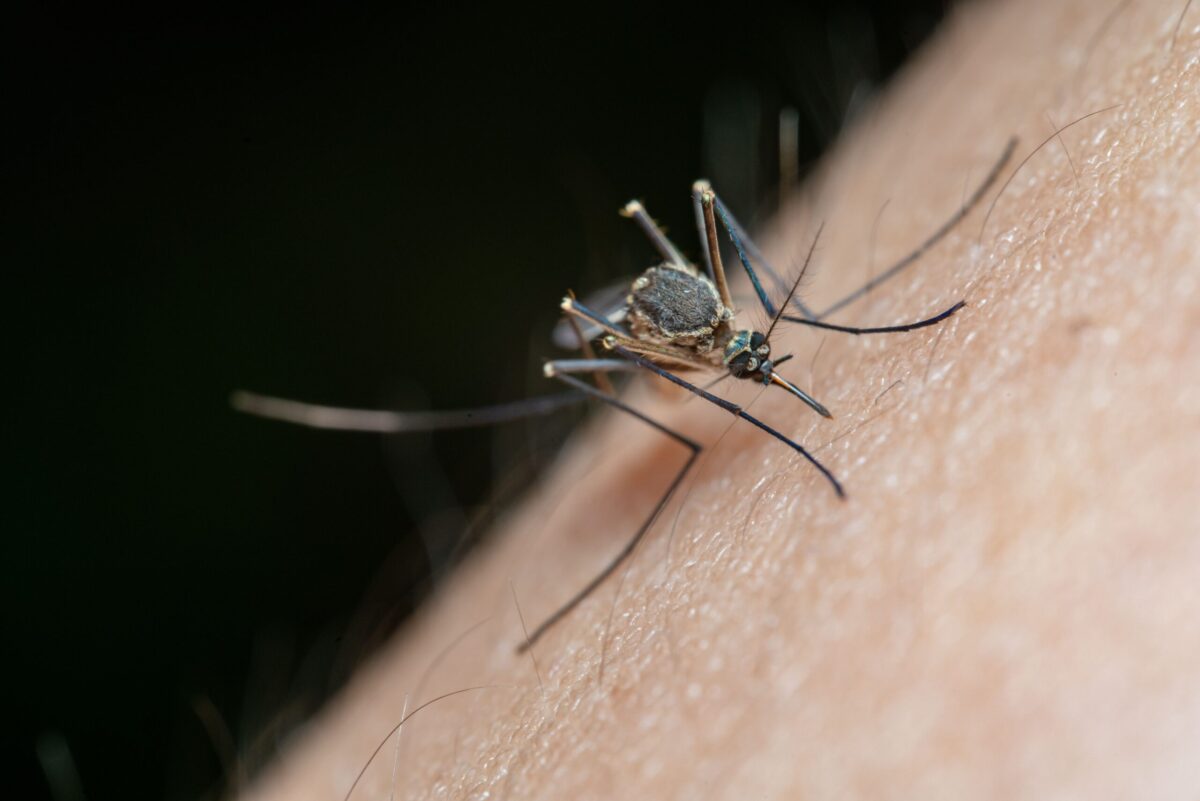
West Nile virus spreads by mosquitos and can cause severe illness in people, horses and birds. NMDOH said people should protect themselves from mosquito bites, especially in the summer.

Symptoms of West Nile virus includes a headache, fever, muscle and joint aches, nausea and fatigue.

NMDOH said most people with West Nile virus have a mild illness or no symptoms. About 1% of people have a more serious infection with symptoms like neck stiffness, disorientation, coma and even paralysis.

NMDOH said to contact a healthcare provider if you experience those symptoms.

There are no medications to treat West Nile virus and no vaccines to prevent infections in humans, NMDOH said.

Those 50 years and older and those with health issues are at higher risk of becoming seriously ill or dying when infected with West Nile virus, NMDOH said.

Over the last five years, NMDOH said the state averaged 41 cases of West Nile virus per year.

El Paso Doctor Hector Ocaranza recommended the “Four Ds” to prevent mosquito bites and to keep mosquitos from breeding in your home:

DEET: Use insect repellents that have the DEET ingredient.

Dress: Wear long sleeves, long pants and socks when outside.

Dusk & Dawn: Avoid outdoor activities from dusk to dawn, when mosquitos are more active.

Drain: Drain any standing water from flower pots, gutters, buckets, pool covers, dog bowls, etc.

Click here to follow the original article.

Mexico faces critical USMCA talks as manufacturing shifts threaten Juárez

Heriberto Perez Lara

UPDATE (3:30 p.m.): A joint call from the Mexican presidency and U.S. Trade Rep. Jamieson Greer to strengthen supply chains has prompted a “rallying cry” for domestic sourcing within Ciudad Juárez, Chihuahua.

This initiative comes during the third round of USMCA renegotiations, highlighting the maquiladora industry’s annual expenditure of more than 540 billion pesos on inputs, predominantly sourced from Asia.

Industrial production across the region largely operates under the maquiladora model. However, Mexico historically failed to establish local production of inputs as originally envisioned, allowing Asia to become the primary supplier.

As a result, more than 70% of the inputs used by the maquiladora industry in the Juárez area originate from Asia, with less than 4% of the total currently sold locally.

Marcelo Vázquez Tovar, delegate for the National Association of Importers and Exporters of the Mexican Republic (ANIERM) in Chihuahua, noted that the United States is now seeking Mexican inputs instead of Asian ones.

“Today, the United States no longer wants Asian inputs; it wants Mexican inputs, yet there are no manufacturers,” delegate Vázquez Tovar said.

He explained that due to an ongoing tariff war, it is no longer profitable for manufacturers to continue importing components from Asia, where quality was often inferior to what Mexico previously offered.

The maquiladora industry in Ciudad Juárez represents a colossal market, valued at more than 540 billion pesos annually.

Vázquez Tovar highlighted that necessary factories were never developed and the few that existed in the 1980s ceased innovating as Asian imports became cheaper.

“This USMCA renegotiation represents a crisis that can turn into an opportunity to do what we failed to do for nearly 40 years: sell inputs to the maquiladora industry,” Vázquez Tovar also said.

To address this historical lag, Tovar proposed focusing initial efforts on components that are easier to produce and are in high demand.

These include simple parts, machined components, stampings and circuit boards for the electronics sector, which is currently experiencing a boom in the region. Delegate Vázquez Tovar also outlined a coordinated strategy to achieve this shift.

The first step involves enlisting support from the government and maquiladoras to precisely determine needed products and components that are no longer cost-effective to import from Asia.

The second aspect calls for strategic working sessions with the federal Secretariat of Economy and the State Government’s Secretariat of Innovation and Economic Development (SIDE) to facilitate the creation and expansion of Mexican factories jointly.

Finally, the strategy emphasizes consolidating lobbying efforts, agreement-building and investment to instill confidence in the business community and foster necessary dialogue between the private sector and authorities.

“Juárez has faced many crises of all kinds and has overcome them all and now is the time to take whatever steps are needed to create and strengthen factories that produce inputs,” delegate Vázquez said. “It is not impossible; here in Juárez, anything is possible.”

CIUDAD JUÁREZ, Chihuahua (KVIA) — As the third round of United States-Mexico-Canada Agreement (USMCA) renegotiations begins in Mexico City, ANIERM delegate Marcelo Vázquez Tovar warned of critical challenges facing Chihuahua’s industries.

To counter U.S. pressure and labor disputes, experts urge Mexico to prioritize domestic input substitution and technological development to reclaim industrial sovereignty.

The third bilateral round of USMCA renegotiations between Mexico and the United States took place this past Tuesday, Wednesday and Thursday in Mexico City.

This week, the U.S. Trade Representative/Ambassador Jamieson Greer testified in front of the Senate Finance Committee, where he said during the review process, it is clear from President Trump’s perspective that if the US wants to have a beneficial trading relationship with Mexico and other arrangements, this must happen:

“They also need to be playing ball on this issue; obviously, there are border security issues, there are a variety of issues that aren’t right in my wheelhouse, but the president is going to have a hard time agreeing to renewal or even revisions if Mexico isn’t playing ball and all areas in the water treaty are one of them.”

Ambassador Greer then traveled to Mexico City to meet with Mexican Secretary of Economy Marcelo Ebrard and with Mexican President Claudia Sheinbaum.

Negotiating teams addressed critical issues including metal tariffs, automotive sector rules of origin, transshipment and labor conditions; other key issues include declining automotive exports affecting local maquiladoras.

These discussions hold significant implications for local economies in regions like Juárez and Chihuahua.

Marcelo Vázquez Tovar, delegate for the National Association of Importers and Exporters of the Mexican Republic (ANIERM) in Chihuahua, called for an analysis of the risks and opportunities facing the local industry ahead of the negotiations.

According to Vázquez Tovar, the agenda’s key topics directly impact the region’s economic stability.

The trade in steel and aluminum, along with their derivative products, has significantly impacted maquiladoras and local workshops south of the border.

These entities, which produce machined parts and other inputs for export or local supply chains, are struggling to source these materials because Asia remains the primary supplier.

The automotive industry in Juárez and Chihuahua has seen its exports fall directly due to tariffs; this has led to a sharp decline in automotive employment in Juárez.

Japanese automakers like Honda and Toyota have modified operations to avoid these tax burdens.

North American economic security and the issue of transshipment are also under discussion.

The United States seeks to prevent inputs from outside the USMCA region from indirectly benefiting from the agreement.

More than 80% of the inputs imported into Juárez originate in Asia, making the region a significant bridge between Asian inputs and finished products for the United States.

The United States aims for everything to be produced within the USMCA region, which requires Mexico to rebuild its domestic industry, as almost half of Mexico’s industrial employment is within the maquiladora sector.

In Juárez, maquiladoras account for more than 70% of industrial employment, a trend that Mexico needs to reverse as the domestic industry has eroded due to the growth of this sector, according to Vázquez.

Labor conditions and compliance with union commitments are another key negotiation point.

A study by the Baker Institute for Public Policy indicates that a worker in the United States earns $307 a day, while the same job in Mexico pays only $32 a day.

The United States has invoked a Rapid Response Mechanism 48 times and prevailed in every instance, resulting in rising wages and benefits in Mexico.

U.S. Trade Rep. Jamieson Greer made it clear that Washington will seek greater benefits for U.S. manufacturers, farmers, ranchers, workers, service providers and companies. For Mexico, the negotiations put at stake millions of jobs, investments, exports, automotive plants, agricultural enterprises and industrial supply chains that depend on favorable USMCA conditions.

The automotive industry, once a source of pride in Juárez, could face new demands regarding component origin.

The steel and aluminum sectors will remain under scrutiny and agricultural producers will need to comply with stricter controls.

Mexican companies and maquiladoras may be required to prove their goods genuinely meet North American rules of origin; this third round will serve as a test of strength for both governments.

“Mexico needs to defend its exports and jobs, while the United States seeks to tighten rules and protect its own industry,” said ANIERM delegate Vázquez. “Regardless of the negotiation outcomes, Mexico’s path forward involves relearning to produce by revitalizing its industry, starting with simpler inputs like plastics, springs and screws, and developing technological capabilities to supply U.S. companies.”

Click here to follow the original article.

Crash closes Calgary Avenue in Northeast El Paso

Gabrielle Lopez

EL PASO, Texas (KVIA) — Friday, the El Paso Police Department said a crash in the Northeast closed Calgary Avenue. It happened at Prince Edward Avenue and Alcan Street.

The crash happened near Andress High School.

The department’s Special Traffic Investigators are responding to the crash, which they learned about at 10:15 a.m.

Click here to follow the original article.

Neighbors upset over trees cut down at Album Park

Lauren Bly

EL PASO, Texas (KVIA) — Neighbors around Album Park in East El Paso are upset trees were cut down on Thursday.

Some residents reached out to ABC-7 and said they were “not told this was going to happen.”

Dr. Katherine Lawson has watched the trees at Eastwood Park grow for more than 50 years. Now, seeing some of them come down is heartbreaking.

“All of them have a story. Every single tree here has a story,” Lawson said.

Lawson said the park has long felt like home. She recalled helping care for the trees decades ago.

“It was 1973. The park asked Mr. Nathan and I to water the trees for them,” Lawson said. “He would have a cup of coffee and I’d have a cup of cocoa. Then we would make our rounds and water all the trees.”

That’s why watching crews remove some of the aging mulberry trees has been so emotional.

“It’s like losing a part of your life,” Lawson said.

While she understands the trees pose safety concerns, she said the removals have still been difficult.

“I wasn’t prepared for it,” she said.

City parks officials said not every tree inspected had to be removed. Assistant Parks and Recreation Director Emigdio Gonzalez said crews were able to trim dead branches from most of the mulberry trees to help extend their lifespan.

“Part of trying to extend the life of some mulberries here at Eastwood Park,” Gonzalez said.

Gonzalez said the city conducts the work every year to keep visitors safe and improve tree health.

“Deadwood up in a tree is dangerous with wind. A person walking underneath could be at risk,” Gonzalez said. “It’s also detrimental to the tree. It can be a way for disease to enter the tree.”

Still, officials determined 14 mulberry trees were beyond saving and needed to be removed.

“When we get to the point where there’s not enough leaf coverage and it is a hazard for safety, then we remove those,” Gonzalez said.

The city plans to replace the lost canopy by planting two new trees for every one removed. The replacement trees will not be mulberries.

“Our plan this offseason is to build back 30,” Gonzalez said.

Lawson said she believes the city will follow through on its promise to replant, but she knows it will take years for the park to regain the shade that generations have enjoyed.

“The happiness that it brought to everybody, to walk and have the shade,” Lawson said. “All of us grew up with the trees being this tall and then so huge and protecting us.”

Click here to follow the original article.