Mia Tricarico
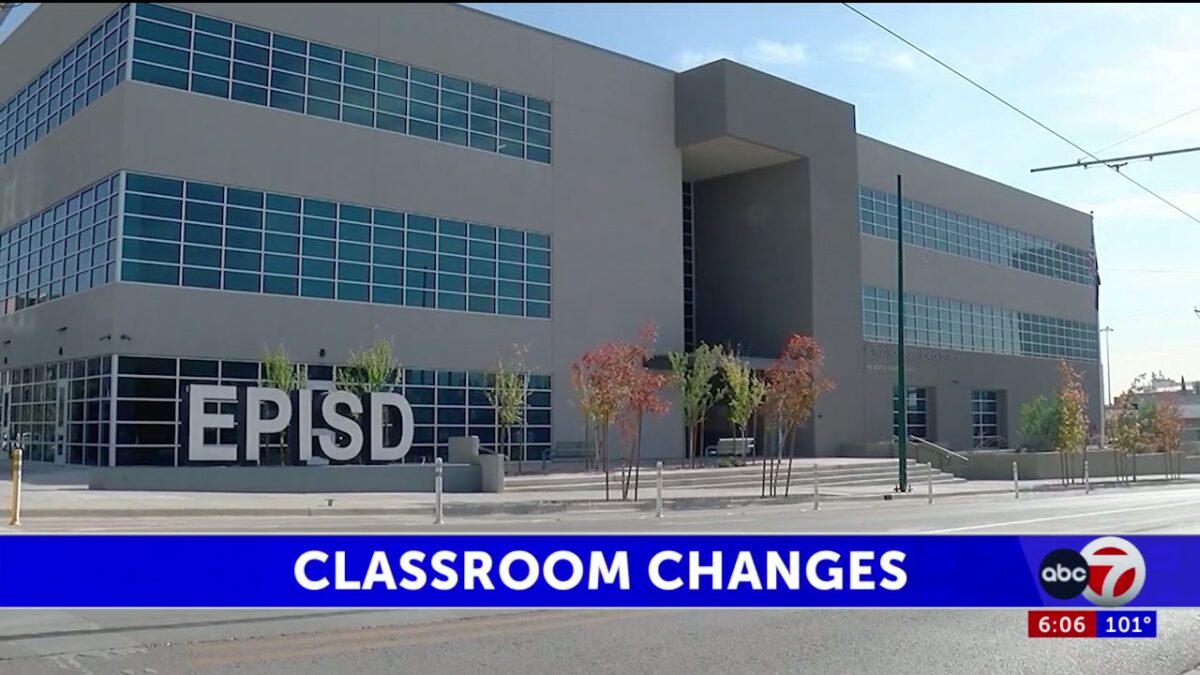
EL PASO, Texas (KVIA) — As teachers, students and parents prepare for the first day of school with last-minute supply shopping, classrooms across the Sun City may look drastically different this academic year.
Staffing cuts and rising teacher turnover across the Borderland means fewer educators will be greeting students when doors open. EPISD eliminated 40 contract employees and 54 campus positions, including teachers.
Data from the Texas Education Agency shows that approximately 820 teachers across El Paso’s three major school districts—EPISD, Socorro ISD, and Ysleta ISD—either retired, resigned, or were terminated during the last fiscal year. That figure represents nearly 10% of the entire teaching staff across the three districts.
“We have teachers that never really thought about their job security that are now worried, which I mean, I don’t blame them. You know, it’s scary.” Said Kara Cervantes President of the El Paso American Federation of Teachers.
The job cuts follow a severe budget deficit that rocked EPISD internal operations. Internal communications and an official audit obtained by ABC-7 revealed that district leaders blew past their approved budget by roughly $21 million for the 2025–2026 fiscal year—driven by overspending, flawed enrollment assumptions, an $8.3 million revenue shortfall, and unmanaged financial risks.
Though district financial officers publicly reported a manageable $6 million deficit early in 2026, internal chats showed top officials were aware of a ballooning $21 million payroll deficit months before the full scope of the collapse became public.
For veteran educators in the community, the sudden financial fallout has raised serious administrative questions.
“It’s unbelievable that the budgets weren’t accurate the way they are now,” said Margie Molina, a retired El Paso teacher with 40 years of classroom experience. “I can’t believe that tax dollars and money given by the state are not being taken serious enough by the local administrations.”
Molina noted that staffing shortages are already forcing schools to scramble, sometimes asking educators to teach outside their primary certifications, such as reassigning social studies teachers to cover reading intervention courses.
The trend reflects a broader multi-year decline. Over the last seven years, full-time equivalent teaching positions across EPISD, SISD, and YISD fell by 10% to roughly 8,400 positions. Total district employment dropped 8% over the same period to 18,200 staff members.
Its not only teachers noticing these changes, but the parents and local business owners too.
“It is concerning, I mean, not only from my my line of work, but as a, as a parent and as a, as a citizen. it gives a little bit of doubt with their school districts to make sure that, you know, our tax dollars are going where they need to go, and making sure our kids are being cared for as well.” Said Daniel Perez, Supervisor of the school supply store Bell 2 Bell.
The significant drop in teaching positions raises immediate concerns inside the classroom and across the regional economy:
Classroom Workload: Remaining educators face potential increases in class sizes and additional administrative burdens.
Quality of Education: Parents are questioning how reduced staffing will impact individualized instruction and specialized programs.
Economic Ripple Effects: Local economists warn that hundreds of lost educational jobs reduce overall household incomes, local spending, and municipal tax revenue across the region.
The increased workload is a concern President Cervantes told ABC-7 she’s heard far too often.
“That’s the concern that a lot of them have is what extra work besides my class load besides, grading papers and assessments and all that. Because you have more students already, you know, you have less teachers. And so they’re kind of worried about that. Like, am I going to be able to do all the extra stuff that they’re asking of me and give my class the attention it needs? That’s that’s always a concern.”
ABC-7 will continue to monitor staffing levels and district resource distribution as the new school year begins.
Click here to follow the original article.




 Tommy Jay McCorkle
 Keith Baker
 Bobby McGilveary
 Wesley Frye
 Ronnie Wayne Padgett
 Alberto Lujan
 Sydney Bryant

 A photo of Kit Allen McKenzie, who police say is missing.(Courtesy: EPPD)