BendFilm unveils first 22 competition features for 2026 festival

Lance Campbell

BEND, Ore. — The countdown to the 23rd annual Bend Film Festival is underway, with organizers announcing the first 22 competition features selected for this year’s event.

BendFilm announced the competition feature lineup Friday morning, including eight narrative features, eight documentary features, three environmental and outdoor features and three Indigenous features.

The newly announced films include Take Me Home, State of Firsts, Union County, Hanging by a Wire, A Life Illuminated, The River Remembers, The Lake and Aanikoobijigan (Ancestor), among others.

BendFilm Managing Director of Programming and Artistic Vision Selin Sevinç said this year’s selections explore the human experience.

“I think this year’s fest offers a slate of films that boldly examines the human heart,” Sevinç said. “My hope is that the festival once again will gift the audience a space to pause and allow expansion of the imagination, empathy, and compassion.”

Friday’s announcement is only the first portion of the 2026 lineup. BendFilm says additional announcements covering shorts, spotlights, Local Focus selections and more will be released over the next several weeks.

Festival passes and ticket packs are already available. Ticket reservations begin Sept. 11 for BendFilm members, followed by sponsors and All Access passholders Sept. 15 and Full Film and Student passholders Sept. 17. Individual tickets become available to everyone Sept. 18.

The 23rd annual Bend Film Festival runs Oct. 7–11 in Bend.

KTVZ’s Lance Campbell is working to learn more about this year’s selections and what audiences can expect from the festival.

Click here to follow the original article.

Oregon Working Families Party nominates Gov. Tina Kotek for reelection

Adrielle Hasara

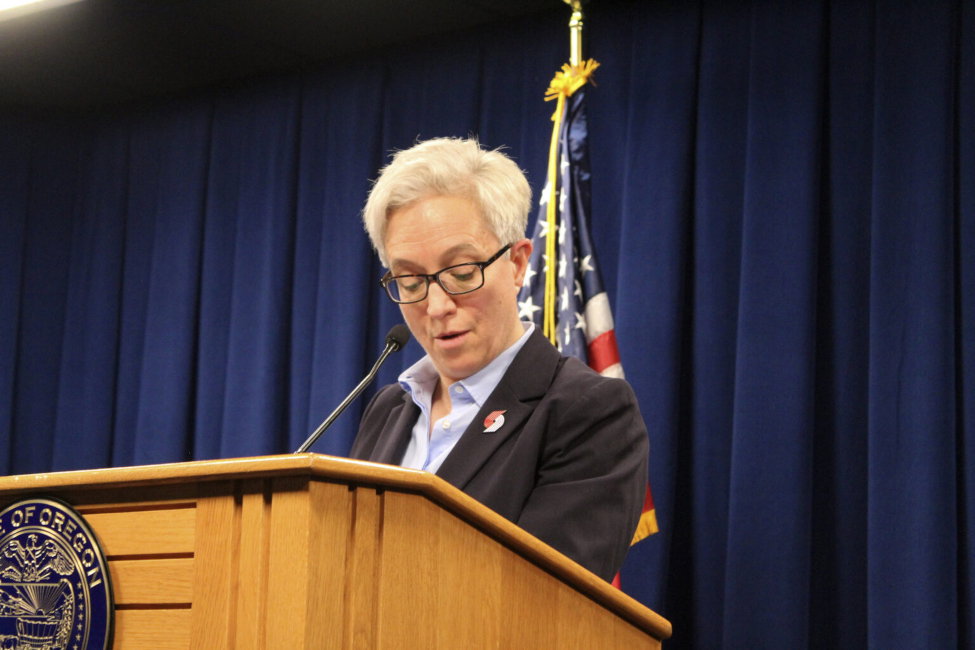
Bend, ORE. (KTVZ) — The Oregon Working Families Party has cross-nominated Democratic Gov. Tina Kotek for a second term in the state’s gubernatorial race.

The decision follows a party vote backing candidates who agree to specific policy commitments focused on working-class families.

Oregon utilizes a fusion voting system, which allows more than one political party to nominate the same candidate on an election ballot.

The nomination was finalized following a vote at the party’s convention on Aug. 16 at the ILWU Local eight Union Hall in Portland, which brought together more than 200 members, elected officials and organizational representatives from across the state.

Gov. Kotek accepted the cross-nomination during the event, emphasizing economic priorities for working residents. “Thank you to the Oregon Working Families Party for inviting me to your convention and for the honor of earning your cross-nomination,” Kotek said. “Oregonians deserve a governor who will defend frontline communities from immediate attacks and deliver on a better future. My opponent does not share our vision for Oregon and I refuse to let us go backward. But this election is not only about what we are fighting against – it is also about what we are fighting for: an Oregon where working people can afford a home, quality child care and the basic costs of living; where they can join a union, raise a family and retire with dignity. I’m proud to earn this cross-nomination by re-committing to that work.”

As part of the cross-nomination, Kotek agreed to a set of policy commitments. These include enforcing state sanctuary protections and the Immigrant Justice Package, maintaining farmworker overtime rules, protecting climate measures and expanding universal preschool statewide using the model established by Multnomah County’s Preschool For All. Her commitments also include holding corporations accountable when receiving public funds, expanding higher education access, increasing campaign finance transparency, investing in restorative justice programs, creating jobs through clean energy and infrastructure projects and meeting with the Working Families legislative caucus during legislative sessions.

Party leaders characterized the endorsement as an agreement built on specific policy benchmarks. Annie Naranjo-Rivera, state director of the Oregon Working Families Party, highlighted the significance of candidate commitments to working-class voters. “Across the country we see candidates winning when they stand with working people. By attending our convention and committing to working people’s issues, Gov. Kotek is grounding herself with the priorities of Oregon’s multiracial working class,” Naranjo-Rivera said. “The Governor made commitments that give working people across Oregon concrete policy goals to organize around and fight for in the November election.”

Naranjo-Rivera noted that the cross-nomination followed detailed discussions with party members about challenges facing Oregon families. “Our members have sent a clear message: they will support candidates who can point to a concrete plan for working people,” Naranjo-Rivera said. “This cross-nomination is not a favor. It is the result of Gov. Kotek being in dialogue with members of our party, hearing what multiracial working-class families in Oregon are up against and putting her name on commitments that working families can hold her to.”

The policy commitments will serve as focal points for the party’s organizing efforts leading up to the November election.

Click here to follow the original article.

Wyden and Merkley introduce bill to block domestic abusers from buying guns

Adrielle Hasara

Bend, ORE. (KTVZ)— U.S. Sens. Ron Wyden and Jeff Merkley joined Congressional colleagues Friday to introduce legislation aimed at preventing domestic abusers from legally obtaining firearms.

The Lori Jackson-Nicolette Elias Domestic Violence Survivor Protection Act would prohibit individuals subject to temporary restraining orders from purchasing or possessing firearms. The bill also extends federal protections to domestic violence survivors who have been abused by dating partners.

The legislation is named in memory of Jackson, a mother killed by her estranged husband who legally purchased a handgun while under a temporary restraining order. It also honors Elias, a mother murdered in front of her children by her former husband after he refused to surrender his handgun despite active restraining and stalking orders.

U.S. Sen. Richard Blumenthal, D-Connecticut, and U.S. Rep. Jim Himes, D-Connecticut, are leading the bicameral bill alongside Wyden and Merkley. The measure has drawn 18 Senate cosponsors, including Sens. Angela Alsobrooks, D-Md., Tammy Baldwin, D-Wisconsin, Cory Booker, D-New Jersey, and Dick Durbin, D-Illinois

Sen. Wyden, D-Oregon, advocated for the legislative change to protect survivors. “Keeping guns out of the hands of domestic violence abusers is common sense,” Wyden said. “It’s past time to help end the cycle of gun violence and provide domestic violence survivors with bare minimum protection against their abusers and our bill is the way to do it.”

Sen. Merkley, D-Oregon, emphasized the risks survivors face when attempting to leave abusive situations. “Common-sense measures to ensure abusers and violent offenders are barred from accessing firearms are the least we can do to protect the safety of both domestic abuse survivors and our broader communities,” Merkley said. “Domestic abuse survivors shouldn’t have to worry that their abusers can obtain a gun either during or after they escape abusive situations.”

Numerous national advocacy and public safety organizations have endorsed the bill. Supporters include Brady, Sandy Hook Promise Action Fund, GIFFORDS, Newtown Action Alliance, Everytown, Jewish Women International, March for Our Lives, the National Domestic Violence Hotline, the National Network to End Domestic Violence, the National Resource Center on Domestic Violence and the CT Coalition Against Domestic Violence.

Click here to follow the original article.

Oregon approved for own health insurance marketplace starting Nov. 1, 2026

Adrielle Hasara

Bend, ORE. (KTVZ) — Oregon has received conditional approval from the Centers for Medicare & Medicaid Services to launch Explore Health, a new state-based health insurance marketplace.

The platform will replace Health care.gov for Oregon residents starting Nov. 1, 2026.

The marketplace is designed for residents who do not have health coverage through an employer or government programs such as the Oregon Health Plan, Medicare or Veterans Affairs. The transition moves Oregon from a federally managed platform to a state-run marketplace.

Through Explore Health, Oregonians will be able to shop for health coverage, check eligibility for financial assistance and enroll in individual plans.

The development of Explore Health follows the passage of Senate Bill 972 by the Oregon Legislature in 2023. State officials said the transition was shaped by feedback from consumers, community organizations, health care partners, insurance companies and agents across Oregon.

Chiqui Flowers serves as director of the Oregon Health Insurance Marketplace. Flowers noted that the approval allows the state to tailor the platform to local needs.

“This approval is an important step toward improving the shopping and customer service experience for people in Oregon who use the Marketplace,” Flowers said. “Explore Health will give Oregon the flexibility to design a Marketplace experience around the needs of our diverse communities and respond to local data, feedback and changes in federal policy.”

Additional information about Explore Health, open enrollment details and consumer assistance resources will be published in the coming weeks at ExploreHealthOR.gov.

Click here to follow the original article.

Friday Night Races at Mount Bachelor, “What’s Your Wild Ride” Car Show in Redmond, The River’s Place Free Swing Lesson

Adrielle Hasara

Are you looking for something to do this weekend in Central Oregon? Adrielle Hasara highlights three local events, from the Friday Night Races at Mount Bachelor, “What’s Your Wild Ride” Car Show in Redmond, The River’s Place Free Swing Lesson

For many more and to submit your own events, visit https://events.ktvz.com.

Click here to follow the original article.

COCC student government offers paid leadership roles

Adrielle Hasara

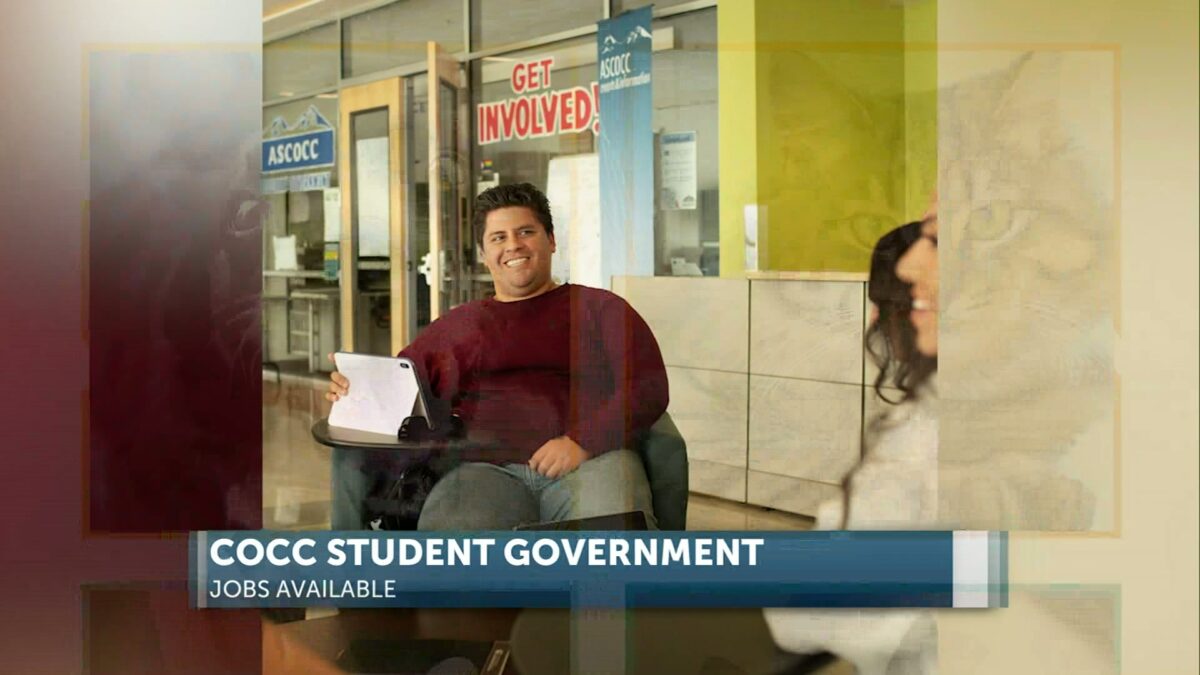
Bend, ORE. (KTVZ) — Central Oregon Community College student government will offer several paid positions for students seeking to develop leadership skills and represent their peers on campus. Interested individuals can learn more and apply through the college’s student life website.

Click here to follow the original article.

Healing Reins expands therapeutic services in Central Oregon, guided by new mission

Kelsey Merison

TUMALO, Ore. (KTVZ) — For some Central Oregon families, healing can come from an unexpected place–the back of a horse.

At Healing Reins in Tumalo, equine-assisted therapy and outdoor-based services are helping people facing physical, mental and emotional challenges.

The nonprofit has served Central Oregon since 1999, but leaders say the organization has experienced significant growth over the past two years after moving into its new 30-acre home in Tumalo.

“It’s the only place that you can drive up to and park and be greeted by goats, chickens, pigs and surrounded by 24 horses that are just waiting for you to interact with,” said Polly Cohen, the executive director. “The location is absolutely amazing for us to reach so many different, rural communities.”

Cohen said moving into the organization’s new home has allowed Healing Reins to listen more closely to the community and adapt its services to meet changing needs.

“Healing Reins has grown a lot,” Cohen said. “Settling into our forever home here in Tumalo has been absolutely a gift, and one that has allowed us to really listen to the community, to what they need, and be able to adapt our services and grow.”

That growth includes mental health services, outdoor occupational therapy, horsemanship programs, as well as services for veterans and people experiencing brain changes.

Adaptive Horsemanship Fall Registration is now open, you can visit the website to fill out an application. 

The organization is also putting that expanded focus into words with a new mission statement:

“Healing Reins provides adaptable equine and outdoor based therapeutic services that support healing, growth and belonging.”

That mission can be seen throughout the ranch.

Four miniature horses are currently in training to potentially visit memory care facilities, hospitals, and other locations.

“These two, actually, there’s four of them in total, are in a training program to be able to go off site to memory care facilities, hospitals in different locations because they’re so kind and sweet and less intimidating than a large horse,” Cohen said.

The miniature horses are already becoming popular around the ranch, but caring for them — along with 24 horses and the organization’s other animals — comes with significant costs.

Healing Reins says community support is critical as demand for its services grows.

“It’s a challenge to be a nonprofit these days. There’s a lot of variables. Life. It’s expensive. Caring for animals is expensive,” Cohen said. “And so we’re very thankful to the foundations who are supporting us, the community.”

One opportunity to support the organization is through its annual Diamonds and Dust Gala, which takes place September 26th. The Western-themed event will include opportunities to meet the horses, a special unveiling, and other activities.

“Our Diamonds and Dust Gala event will be absolutely amazing,” Cohen said. “And so much fun and a great opportunity for people to learn more about us.”

Healing Reins says its gates are open to everyone. As the organization continues to grow, leaders say its new mission will help guide the next chapter.

“We’ve really enjoyed this location and really have enjoyed providing the care that is needed by the community,” Cohen said. “We have a bilingual therapist that provides mental health services here. Our two amazing outdoor occupational therapists. The goals for these children are being accomplished here on this beautiful property. And we’re thrilled.”

For more information about Healing Reins, its services or ways to get involved, click here.

To learn more about KTVZ’s 21 Cares for Kids partners, click here.

Click here to follow the original article.

Deschutes County opens managed homeless camp in Redmond

Tyson Beauchemin

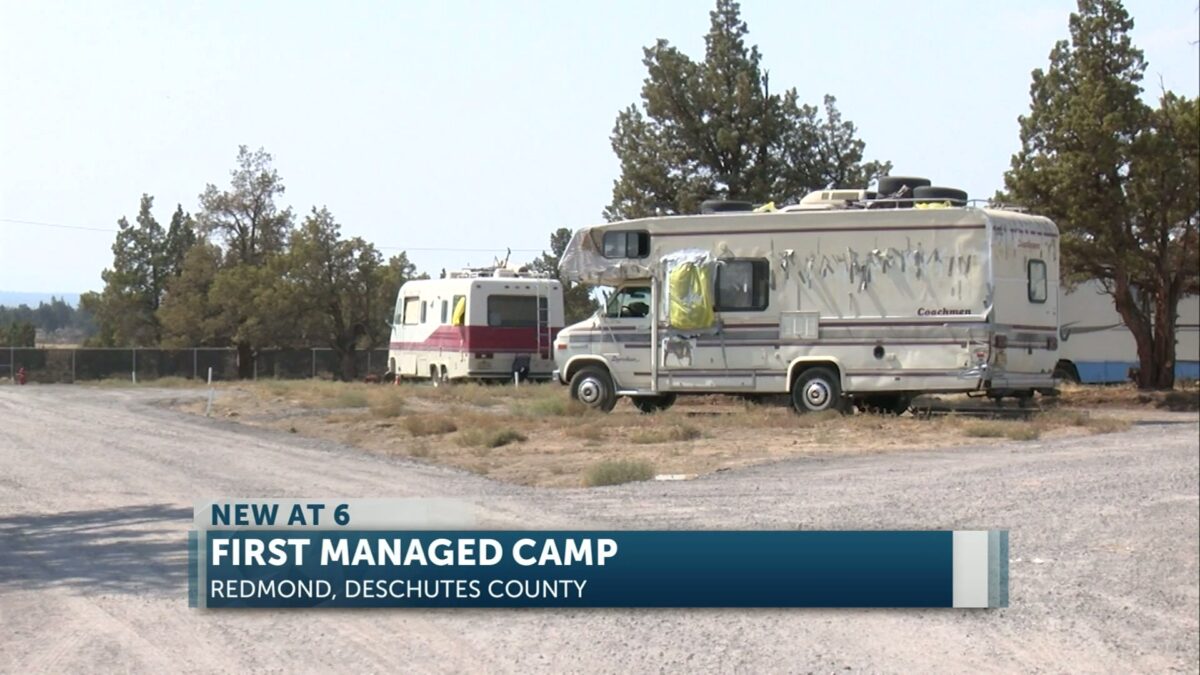
BEND, Ore. (KTVZ) — Deschutes County has opened its first managed homeless camp in Redmond. The new site will serve around 36 people.

Located next to Oasis Village, another transitional housing program, the site offers an alternative approach to assist individuals who are unable to access traditional shelters or other resources.

The camp is managed by First Light, a Bend-based nonprofit organization. The group calls the program “A Healing Village” and aims to provide residents with the space and protection necessary to stabilize while working with each person to develop an individual path forward.

Deschutes County Administrator Erik Kropp outlined the expectations for residents living at the site. “The rules really fall into four main categories. The first is for people to, be safe and keep others safe, be a good neighbor, keep their campsite clean and have a plan to get out of homelessness and work toward that plan,” Kropp said.

First Light is slowly moving people into the area, and there may be room to expand the program in the future.

Click here to follow the original article.

Problem Solvers: More Central Oregon residents than ever without irrigation water following driest winter on record

Claire Elmer

BEND, Ore. (KTVZ) — The battle over water is a tale as old as time. In Oregon, just how much time has passed since a water right was established can determine who gets water — and who goes dry.

“Mark Twain said, ‘Whiskey is for drinking and water is for fighting over’,” said Tumalo resident Jerry Kosman.

For Kosman, that familiar saying is no longer figurative.

He has lived in Tumalo for 60 years and said he never had trouble getting irrigation water from the nearby Deschutes River until this year, following the driest winter on record and amid severe drought.

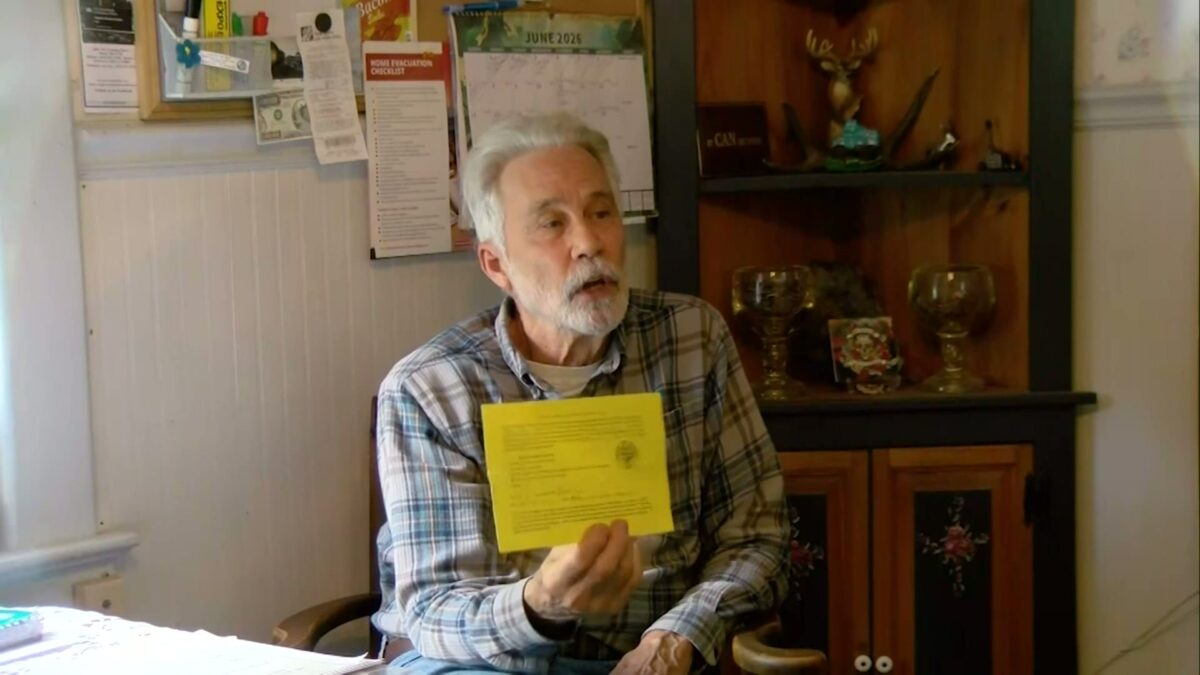
“Out of the blue, we got smashed in the face with this: cease all water pumping out of this pump,” Kosman said. “No notice, no nothing. Walk down and that’s on our pump. I thought I had deeded water rights. And here I am in the middle of fighting for my water rights.”

Kosman believed the irrigation right serving his property dated to the early 1900s. After digging further into the property’s history, he learned its priority date was actually from the 1950s.

That difference proved decisive this year.

The Deschutes is flowing about 25% to 30% below historical levels, according to Deschutes River Basin Watermaster Jeremy Giffin. Water officials have curtailed rights dating back to 1900 — deeper than ever before.

“We’re cutting back deeper than we’ve ever cut back before,” Giffin said. “We’re back to 1900.”

“First in time, first in right”

The decisions are based on a system known as prior appropriation, often summarized as “first in time, first in right.”

To use water in Oregon, a person or entity must have a water right issued by the Oregon Water Resources Department. Each right carries a priority date that determines its place in line during a shortage.

“In times of shortage, such as now, we curtail the usage by priority date, shutting off the junior users — most recent users — first, and working our way down to senior users,” Giffin said.

The state does not decide based on whether the user is a homeowner, farmer, or large business.

“We don’t look at the type of use, but we look at the priority date,” Giffin said. “The priority date drives who gets the water and who does not get the water.”

The system dates to the settlement and development of the West, when access to land and water was used to encourage people to move into the region. More than a century later, those early claims still determine who is protected first when there is not enough water for everyone.

“We were already over-appropriated, maybe even in the 1800s,” Rep. Emerson Levy, D-Bend, said. “And so water rights have continued, but we’re out of water. There’s nothing left to appropriate, to assign.”

Emily Cureton Cook, a reporter and editor for Oregon Public Broadcasting who investigated the region’s water system with ProPublica, described prior appropriation as a bedrock concept of Western water law.

“When you own land with the oldest water rights attached to it, you are first in line to get that water in times of shortages,” Cook said. “And people who are behind you in line, if you have the senior water rights, they have to cut back to protect your share.”

For Kosman, being farther back in that line has meant being shut off completely. He said he is not asking for his full allotment — only an alternative that would allow junior users to share in the shortage.

“When they had drought, they would tell people, ‘We’re going to cut your water back. Start conserving,’” Kosman said. “Me, flat cut. Not even one day, four hours a day, one day a week — nothing.”

“Use it or lose it”

Oregon water law includes another longstanding principle: To retain a water right, the holder must put the water to “beneficial use” without waste.

That requirement is commonly called “use it or lose it.” Because water rights can increase a property’s value, critics say the rule can encourage landowners to use water even when they do not need it rather than risk losing the right.

“In order to keep your place in line, you have to put that water to beneficial use without waste,” Cook said. “What I didn’t know was that Oregon has almost never defined waste.”

Cook said the scarcity of water increasingly amplifies the value and influence of senior rights.

“In the West, water is power,” she said. “And as the climate changes, and there are more droughts, and there’s less water to go around, that power is increasingly consolidated in the people with senior water rights.”

Water protected in the river

Kosman also questions whether water once available to landowners is now being kept in the river for fish, wildlife and recreation.

Giffin said environmental protections have changed how water is managed in the basin. Historically, water that remained after out-of-stream rights were satisfied stayed in the river and supported habitat. In recent decades, more rights have been converted to legally protected instream uses.

Those protections are one reason some users who had never previously lost access are now being regulated, Giffin said, but they are not the only reason.

“We have a lot of water that’s protected in-stream for fish, wildlife, and recreation that we didn’t have 25 to 30 years ago,” Giffin said. “So that’s the reason that we’re starting to regulate off users that probably have never been regulated off before — that, and the prolonged drought bringing in these incredibly low flows.”

Where does the diverted water go?

The OPB and ProPublica investigation also examined how efficiently water diverted from the Deschutes is used.

The Central Oregon Irrigation District holds rights to more than half the river’s volume. Cook said the investigation, using state satellite data, found that only about one of every four gallons diverted by the district was absorbed by crops.

COID rejected that analysis, saying it did not trust the state satellite data used by the news organizations. Cook said she later found estimates in a state report of the amount of water COID’s crops require that aligned with the investigation’s finding.

Cook also emphasized that inefficient use is not necessarily illegal under the current system.

“I should be very clear that what I’m describing has the state’s blessing,” she said. “There are very few restrictions on what you can grow or how efficient you have to be, as long as you are within the letter of your water rights.”

COID points in part to open canals built through porous volcanic rock more than a century ago, where water is lost before reaching customers.

Piping those canals could conserve a significant amount of water, but Cook said the work could take 50 years and cost more than $700 million. Piping alone would also not address how much water is delivered to customers or what they use it to grow, she said.

“It won’t stop COID from delivering more water than its customers need, or from delivering a lot of water to residential properties that are mostly growing grass and pasture,” Cook said.

Could a water bank help?

Another proposed solution is the Deschutes River Water Bank, a pilot program intended to let some senior users temporarily lease water to others without permanently surrendering their rights.

Under Oregon law, a deeded water right is attached to the property. Levy said the water bank could create more flexibility within that structure.

“If that senior water right has enough water, they could lease that water,” Levy said. “You can lease that water for a certain amount of time, but it still is owned by that senior water right.”

The program is also intended to reduce the incentive to use water solely to protect a right.

“Through the water banking bill, they get to keep their beneficial use,” Levy said. “And so you can maintain your water right while still helping out your neighbor.”

Levy said any changes must protect the rights and financial value held by senior users while finding ways to get water to those farther downstream.

“The system we have is really archaic. It dates back to settling the West, but we’re still balanced with those original terms,” Levy said. “We need to make sure people downstream can get water. And we can do that through water banking and through water leasing. But it really will take collaboration from everyone in the various basin to do that.”

The Deschutes River Water Bank pilot went into effect January 1st, 2026, and sunsets in January 2034.

Piping, leasing, and better measurement could all help stretch the available supply, but none offers immediate relief to residents who have already been shut off.

For now, a system built around who got here first continues to decide who receives water. Time will tell whether new approaches are enough when what nature provides is too little.

Click here to follow the original article.

Oregon voters may decide on hunting and farming protections by November 2028

Kelsey Merison

OREGON (KTVZ) — A proposed constitutional amendment protecting hunting, fishing, and other traditional activities is moving forward in Oregon.

Initiative Petition 25, known as the Oregon Freedom Amendment, has been sent to Oregon Attorney General Dan Rayfield to draft a ballot title and summary.

Supporters say the measure would protect rights to hunt, fish, farm, ranch, trap, grow food, and manage wildlife.

If it qualifies, Oregon voters could decide on the amendment in November 2028.

Click here to follow the original article.