The District to hold off on presenting letter for Columbia ‘urban camping ordinance’ until next month

Ryan Shiner

COLUMBIA, Mo. (KMIZ)

A press release from The District states that it will hold off on presenting its letter supporting an “urban camping ordinance” to the Columbia City Council until Aug. 17.

A letter expressing support for the proposed ordinance was signed by nearly 70 downtown business owners and organizations. The District Executive Director Nickie Davis previously stated that it was expected to be presented at the July 20 meeting.

“This decision was made after thoughtful conversations with community partners and supporters. We believe allowing a few additional weeks will provide the best opportunity for this important conversation to receive the attention and consideration it deserves,” the Friday press release says.

The release claims it is being delayed until after the August election because the District “heard concerns that some members of the public may mistakenly connect” the ordinance and a proposed 1% public safety sales tax.

“We want to be clear that this request is not connected to the proposed sales tax and is not an effort to increase policing of homelessness,” the release says.

The length of Monday’s City Council agenda was also cited in the release, though there was no listing for The District or the ordinance on the agenda. It also states it would “like to allow several recently launched safety initiatives… to begin demonstrating their impact before adding another policy discussion to the conversation.”

The proposal has been met with criticism online, with some questioning the effectiveness of similar rules around the country.

A full list of the businesses in support of the ordinance can be viewed in the document below.

Letter of Support – UC SignaturesDownload

The letter can also be viewed below.

Letter of Support – Camping (2)Download

Click here to follow the original article.

Callaway County Presiding Commissioner candidate interview: Larry Robinson

Euphenie Andre

Three Republicans are competing in the August primary for Callaway County Presiding Commissioner. In contention is Rob Barnes, Larry Robinson and former Sheriff Clay Chism. ABC 17 News sat down one-on-one with each candidate to discuss their priorities for the county, the proposed data center in northern Callaway County, planning and zoning, government transparency, and why they believe they are the best choice for voters. Mike Conner is running unopposed in the Democratic primary.

COLUMBIA, Mo. (KMIZ)

EUPHENIE ANDRE: Welcome, everybody, to ABC 17 News’ Your Voice, Your Vote segment for the Voters’ Guide of August 2026. I’m Euphenie Andre, and I’m here with Larry Robinson. Larry, thank you so much for being here today. Can you please start by introducing yourself and what you are running for?

LARRY ROBINSON: My name is Larry Robinson, and I’m running for Callaway County Presiding Commissioner for 2026.

EUPHENIE ANDRE: Sounds good. So you’re trying to go back into office after trying to run for the Western District Commissioner back in 2024? Can you please tell me the different approach, if you made one, from 2024 to this year?

LARRY ROBINSON: Well, I learned a lot during that campaign, but I want to try to do my best, and you learn and you succeed from all that you can. The approach has been I go door-to-door. I still go door-to-door and talk to people.

EUPHENIE ANDRE: So both roles have been commissioner roles. Why is that so important for you to obtain that role?

LARRY ROBINSON: I grew up in Callaway County, and I’ve seen Callaway County at its best and at its worst, and I think that Callaway County can be built stronger for our future, for a younger generation coming up. I’d like to do my best to give back to the community that raised me.

EUPHENIE ANDRE: What are your three-top priorities if you are elected the next Callaway County Presiding Commissioner?

LARRY ROBINSON: I would like to see manufacturing or distribution work come back to Callaway County because we used to have it, and we lost it, and we’re stuck, well, we’re not stuck, but we are in between Cole County and Boone County, and everybody goes to these counties to work, and they spend their money there. If we could get a developer involved to see how we can entice companies to come to Callaway County and build and employ not just a handful of people, but three or four or five hundred people so that they can possibly move to Callaway County, build in Callaway County, live here, raise their family, and support their whole family. I’d say what they spend here also. We got downtown Fulton, and we got different places to go in Callaway County, Holt Summit, Auxvasse.

EUPHENIE ANDRE: What are your other two?

LARRY ROBINSON: A lot of people hasn’t hit this part, but I’m out and about. I have a dump truck business, and I talk to dozens of people every day. Not just one or two. Out in the county, people are worried about the infrastructure of Callaway County. Roads and bridges, and that’s one of my specialties anyway. Excavating and concrete work. The road boss that’s there now, he’s doing a real good job, but I think it could run a little bit smoother if you get people in there that has had experience and maintain stuff like that. Not just fixing it, but maintaining it. That’s a concern to a lot of people out in the rural part of the county, not so much in the towns. Another part is we got to give back to our youth and our communities. They are the future of Callaway County. In 15-to-20 years, it seems like a long way away, but it isn’t, and these children, young adults, a lot of them don’t know the life experience out here.

They got to know the technology that is out here now. They’re in front of their phones and iPads. They don’t leave the house often. They don’t even know what type of birds are in their front yard, and they’re 12- and 13-years-old. My wife is [at] the state-licensed day care in Fulton. I see these children grow up every day, and a lot of times I see, just walking around like in Walmart, parents give their kids, little kids, their phones just so they’ll be quiet. But we need to get something set up for our communities all through Callaway County, not just Fulton, but involve Holt Summit, New Bloomfield, Mokane and work with the schools and volunteers and get the youth out here. Get out of those and experiencing life as a child should. I’m for that because they are our future. They’re the ones that’s going to be taking all this over. So we got to build a Callaway County stronger and better for the future.

EUPHENIE ANDRE: If elected, do you see any similarities or differences from how the current commission is being run to how you would run it, if elected?

LARRY ROBINSON: Gary Jungermann, he’s done a real excellent job in his three terms. The commissioners right now, they’re doing their best. They have fought with the solar farm that came through Kingdom City, and now they’re dealing with the data center. The data center is a big subject in Callaway County right now, and the commissioners really don’t know a lot going on because there is no planning and zoning in Callaway County. They don’t even have to come to the courthouse to turn in a set of blueprints or talk to a commissioner. That’s private landowners selling to a private company. Since there is no planning and zoning, and I’m not for planning and zoning, but if we had some type of restriction set up for X amount, the size of a building being built, that it would have to go through the commissioners to get permits. Like if a business wanted to come in, they build a building, say 30,000 square feet, they need to get a permit through the commissioners and go through engineers’ blueprints so that everybody’s on board with everything.

EUPHENIE ANDRE: But isn’t that planning and zoning?

LARRY ROBINSON: You can keep the restrictions and ordinances away from the planning and zoning, but you’d have to put it out in front of the voters to vote on it. That would keep the planning and zoning part out of it. A lot of people want to say, “Well, that is part of it, planning and zoning.” No, it’s restricted to large buildings. It could be passed as a 50,000 square feet building like these data centers there in Kingdom City. There’s somewhere around 800,000 square feet, but if there was something like that set up, they’d have to go through the commissioners, being transparent so the public would know what’s going on. Nothing’s hidden, and they’re dealing with that right now, but they don’t know a lot going on. I can believe that because I’ve worked in towns and cities that have planning and zoning, and most people are always open about it.

EUPHENIE ANDRE: Why are you against planning and zoning?

LARRY ROBINSON: It’s a rural community and farmers. They’re always having to make a quick fence for cattle, for horses, for whatever livestock they got. Planning and zoning, there was different parts of it, but they’d have to go get a permit before they could set up a fence to keep their livestock if a flood came through and it took out a big section of the fence, or just keep the cost down for people that’s doing repairs on their farm. But that’s what entice a lot of people to come to Callaway County, no planning and zoning.

EUPHENIE ANDRE: Someone would say, with the lack of planning and zoning that Callaway County has, is a reason why the data center is being built there. We’ve seen Boone County has all these restrictions, so it’s not easy to come into Boone County and build a data center.

LARRY ROBINSON: Yes, I will agree to that. If we did have planning and zoning, it would be harder for them to come in, and if you look at the solar farms that came through, like Montgomery City, Callaway County, to me, it feels like it was just a step to see what they could get by with, and since there was restriction, I mean, people fought against a solar panel, but there isn’t nothing they can do about it. It’s an uphill battle, and I’ll be there to the end. If I’m elected, I will fight for the people out here, but it’s going to take more than just going to the county. It’s going to take going to the capital.

EUPHENIE ANDRE: Are you in support of data centers?

LARRY ROBINSON: No, I oppose data centers. Yes, we need them, but on this larger scale and so fast, people don’t know what’s going on, and that’s what’s scaring people. If they had a total understanding of why, we’ve had the center since the 1940s. Here in the last few years, they have just supersized, and they’re eating up all our resources, electric. If we didn’t have electric in the power grid two years ago for the electric cars that were introduced, how can we have all this grid now? It’s coming hard and quick, and people are confused.

EUPHENIE ANDRE: They had their initial stages earlier this week. They had an open house yesterday in Callaway County about the data center, so it’s going to be in progress, and whoever is the next Callaway County presiding commissioner, that is a study that they are going to have to tackle. How can you ensure that you are transparent with the residents of Callaway County of what is going on each step of the way?

LARRY ROBINSON: Well, transparency, I’m open about everything. I think everybody should know what’s going on because you’re working for the people in the county. You’re not just pleasing yourself. You got to talk to communities, and at the courthouse, I know they give you a 24-hour notice when they have a meeting, but I think that needs to be up until like 40 hours so the working people can get up there because sometimes it’s hard to find a babysitter or your employer won’t let you take off. But if you’re given enough ample time, you can get off so you can go up there to listen to what’s going on. Even though it is recorded, you can listen to it and watch on the Internet, but I think it’s more informed if you’re there in person.

EUPHENIE ANDRE: Do you think data centers provide any opportunities for Callaway County at all?

LARRY ROBINSON: Oh yeah, it will for part of the infrastructure and stuff to bring in taxes. The revenue, it could help drastically in different areas in the county that have shortfalls in it, like the emergency personnel, the 911 commission. I mean, stuff like that could be rebuilt, relocated. I don’t know if we could get a new hospital or not there in Fulton that everybody wants, a Callaway hospital, but I don’t know what the revenue would be coming in on it yet. I have to go through the figures when this was all finalized to see what can be done, but it could help Callaway County at the same time.

EUPHENIE ANDRE: The residents that are opposed to it, they say that it will increase electricity bills, that it will waste water, taxes will be upheld on them. Are those the same fears that you have as well?

LARRY ROBINSON: Yes, big, big corporations. Sometimes they tell you what you want to hear and not the truth, like the water usage. This one in Callaway County they’re proposing is smaller than the one in New Florence, and the proposed is 1.4 million gallons of water usage a year. Even though it’s a closed-loop water system, that still scares me with all the big data centers going on around here, and they draw down to our main aquifer. If there’s 10 of them and they’re using millions of gallons of water, it can start draining that and hurting the residential deep wells around here.

EUPHENIE ANDRE: Why should voters choose you over your opposing candidates?

LARRY ROBINSON: I had the experience, not so much in politics because I’m no politician, but I am a blue-collar working person. I get up every morning, go to work, come home every night, talk to the whole community every day, have the experience in the construction field, and work getting permits in different states, in different locations, talking to the public out here before you start a project because the neighbors want to know what’s going on and taking place also, so you got to inform them what you’re doing. So I know how to talk to the people out here and listen to their concerns, and I just want to get back to the community that gave it to me all my life.

Click here to follow the original article.

Callaway County Presiding Commissioner candidate interview: Rob Barnes

Euphenie Andre

Three Republicans are competing in the August primary for Callaway County Presiding Commissioner. In contention is Rob Barnes, Larry Robinson and former Sheriff Clay Chism. ABC 17 News sat down one-on-one with each candidate to discuss their priorities for the county, the proposed data center in northern Callaway County, planning and zoning, government transparency, and why they believe they are the best choice for voters. Mike Conner is running unopposed in the Democratic primary.

COLUMBIA, Mo. (KMIZ)

EUPHENIE ANDRE: Welcome, everybody, to the ABC 17 segment of Your Voice Your Vote voters’ guide for August 2026. I’m Euphenie Andre, and thank you for joining us today. I’m here with Callaway County presiding commissioner candidate Rob Barnes. Rob, thank you so much for joining us here today.

ROB BARNES: I appreciate the invitation.

EUPHENIE ANDRE: Please introduce yourself and tell me why you would like to be the next Callaway County presiding commissioner.

ROB BARNES: Certainly. A little bit about myself. Long, longtime resident of Callaway County. Sixty years old, getting to be an old man. Fifty-five years in the county. Always called it home. Can’t see myself anywhere else. Been fortunate, I suppose, in some ways; have had a couple of really good jobs in the county, so I was able to stay close to home, and not everybody can share that same story. So I’ve been blessed in that regard. Currently, I’m heavy into a broadband project, or we’re kind of on the tail-end of a broadband project.

I’m a telecommunications guy. Technology nerd, so to speak. That’s what I’ve done most of my career and, fortunate again, to be able to have done that in Callaway County. So, you know, kind of on the tail-end, I guess I’m not ready to go to pasture, but kind of on the tail-end of a lot of hardwork. And I’ve always been connected to the community through boards, civic organizations, community functions and events. I’ve always had that connection to the community.

As I’m kind of starting to enter a new chapter in my own life, I thought this was a great opportunity to give back in a different way. And that’s really why I stepped forward to run for the presiding commissioner position. What else you want to know about me?

EUPHENIE ANDRE: There is a proposed data center that will be built in northern Callaway County that would take about 14 acres of land in your county. What are your thoughts about that?

ROB BARNES: Well, I mentioned just a second ago, I’m kind of a technical nerd. Maybe I’ve grown out of that phase just a little bit as I’ve evolved into the business world. I rely, I suppose, in my daily life, personally and work functions. You know, data centers are not something new. I rely on them every day as a person, as an employee. And while it’s a bit surprising, I suppose, that a data center would be located in Callaway County. We’ve also seen other counties kind of dealing with the same topic. I guess I would stop short of saying, you know, ‘welcome with open arms.’ It’s certainly something very different, in a very rural part of Missouri. But it is a topic to be dealt with.

There is, as you put it, a proposed data center. We don’t know whether that will come to fruition or whether that’s just chatter at this point. But there’s a good possibility, again, based upon what we’re seeing around us, that could very likely happen. If I can jump in to maybe, thinking as a presiding commissioner, how to handle or deal with that scenario. Unlike Boone County, which does have planning and zoning, and building permits, and land use applications, and a very structured environment, Callaway County, some years ago, formally said through a ballot issue, no, we’re not interested in those sorts of things, and planning and zoning was pretty soundly defeated some 25 years ago or so.

And what’s that really done, I suppose, in some ways, is it kind of set up Callaway County, again, to, I guess, the concept of open arms. We basically say, you know, whatever you want to do in Callaway County, welcome aboard and enjoy. I’m not trying to be flip about this particular scenario because some people are very passionate one way or the other. But it certainly is a tough issue to address when the Callaway County government is, by nature, weak government, and I don’t mean that in a bad way. It’s just the limits in the control, or lack thereof, that the citizens gave to the county, or didn’t give to the county.

In this particular case, just about any business that comes to Callaway County can start construction, do almost anything they want, as long as it’s within the legal confines of state law and federal law. They don’t even have to call the commissioner’s office to say, hey, we’re doing this, because, again, there’s really no planning or permitting process involved. I hope we’ll delve into maybe this topic just a little bit more as we go through this conversation.

EUPHENIE ANDRE: Yeah, we could do that now. Is that something that you are interested in looking into when you take, if you are given that term?

ROB BARNES: Well, I think one thing that I have committed to, for those folks that I have had conversations with, where this is a very disturbing development, sort of, so to speak. It’s a neat, fancy word. It’s neat to see people that still care about others and neighbors and what they do on their land through their property rights, how it might affect others. And that’s clearly, I think, one of the things that those who are not so much in favor of data centers, that’s one of the things they’re very passionate about. And I understand that. I try to be careful of how I might affect my neighbor as well. I think that’s just how you live life, so to speak. The absence of planning and zoning, which, again, has existed in our county for a long, long time, I think is worthy of a conversation.

Are there certain things that can come to a county that simply need to be controlled? I think, while we never fathomed, I don’t think, a data center coming to Callaway County, this might be one of those examples of not having anything. Is that the right thing? And so that’ll get a lot of the property rights people excited when I say that. It’s certainly not something that I would, directly; it’s not part of my campaign platform, but I think it’s worthy of a conversation. Are there certain limits when something reaches a certain scale that you don’t just get to do everything that you want to do? So I’m all for a reasonable conversation relative to planning and zoning, not to make it so restrictive that people can’t build that barn on their property. But I think it’s at least worthy of a good conversation that really hasn’t been discussed. Much like I said, 25-to-30 years. That’s one of the things that I have expressed to folks. I’ll have that conversation. We’ll see where it goes.

EUPHENIE ANDRE: Are you in support of the data centers?

ROB BARNES: I figured that was going to be a question that would be asked, and that’s certainly a tough one to answer, based upon the limits that county government has. It’s hard to say that I’m in opposition to a data center when there’s little that I could do from the presiding commissioner seat to shut that down. If it can’t be one, then I kind of got to be the other. It’s hard. It’s hard to be in the middle. As I sit here today, again, thinking about the limitations on government, it’s likely going to happen. There are some things that can be done to maybe restrict, or control, or add some balance to a development of that size. You may have this question to ask, but that gets into almost another interesting topic, and I choose the word interesting for a reason. It’s a difficult topic, and that’s tax abatement. Many people, they don’t want somebody getting off the hook from paying their fair share.

I understand that. I completely get that. If Callaway County is going to impose any sort of restrictions on a data center, it’s going to be through a tax-abatement arrangement. That’s the only play that the county really has. Because once you open that discussion and enter into a contract on how much tax might be abated, it’s a negotiation process. Well, for this percentage of abatement, we’ll give you, or we want, we being the county, we’re going to want A, B and C, and the county would have the latitude to define what A, B and C are. That could be the ability to inspect property, to validate water usage. It could also be the sort of thing where, and I haven’t heard this talked about anywhere else, but it could be the requirement of a data center. You’re going to have to store water in some sort of a lake, pond, or storage tank.

You’re going to harvest rainwater that comes off of a million-square-foot building. I don’t know how big of a building we’re talking about, for sure, but you certainly start thinking in that realm, and that’s certainly a way to start mitigating or limiting the amount of groundwater that might get consumed by one of these. So that tax abatement conversation, again, not very popular a lot of times, but again, it’s a way for the county to gain some control over a process that they have really no control over. It’ll be interesting to see. I’m sure our current commissioners are already having these sorts of conversations. And exactly what’s being discussed, I’m not fully tuned in, but I would be surprised if these conversations aren’t already going on.

EUPHENIE ANDRE: That definitely flowed into the following questions. Many are not even opposed to it, just have more questions about what the data center has to offer to the county, and that they will waste water, as you mentioned. It will increase electricity bills. Taxes will be taken out for taxpayers to pay for the structure. The loud noises, it will ruin the community and the environment of what they know and love. So, what is your response to those residents that have all those fears?

ROB BARNES: You gave me about eight different things, and I don’t know if I’ll remember all of them. So, keep me honest here. I think, first of all, I don’t know if we know everything that we need to know. One of the commissioners had said so, so I won’t steal his statement. But one data center is not exactly like another data center. There’s a variety of engineering that can go into a development like this, and not all of them follow the same cookie-cutter approach. I believe that, from a water consumption perspective, we’re talking about a closed-loop system, which is massively better than something that’s just using a lot of water and discharging a lot of water. So, it’d be interesting to find out exactly, from a water consumption perspective, what are we talking about?

The noise element. There are state standards that have to be met at the property line. Exactly what are those? I just, I don’t know exactly what the noise level can be leaving the property, but I know there are standards in place that a development would have to follow. And again, it’d be interesting to understand what is projected. That’s a tough thing to undo after the fact. Although, if you’re exceeding noise levels, the developers are going to have to do what’s necessary to comply with the law.

I think citing a location is extremely important. I can’t see a data center right on the edge of an incorporated community. I think that’s difficult. The rumors, as many people have heard, is the northern part of the county, that the development would likely be located pretty squarely in that area where a couple thousand acres of solar are already deployed. Are there homes within certain proximity? From my recollection, if the rumors are correct as to where the location might be, I don’t know of any that are close. And those may be words I have to pedal back because, honestly, I just don’t know. With so much being hypothetical, nothing being firm yet, it’s kind of like we’re talking a lot about things, and we’re trying to answer some questions, but we really don’t know all of the details yet.

I think you probably had something else there that I did not comment on?

EUPHENIE ANDRE: The electricity bills.

ROB BARNES: I really don’t think that we’re going to see an increased cost to consumers for electricity. Now that I’ve said that, I think there are going to be others. I think there’s a particular utility right now that is proposing something like a 13% increase. We have to be careful. Is that directly related to that, to a data center, or is that the cost of improving a network that hasn’t been, let’s say, maybe it hasn’t been maintained to standards for a while? I don’t know. I think that particular entity will have to ask, answer a lot of questions in front of the Public Service Commission, right, in this realm, because I think they’re going to be very interested. Is the rate increase directly attributable to a data center, or is it for some other purpose?

I know since COVID, really before data center development was happening in this area, there was a massive increase in transformer costs, wire, poles. I know, from the electric perspective, there’s just been heavy inflation, probably much more so than we’ve seen in our homes. Some of it could be attributed to that as well. But again, it’s understanding the facts, getting to the facts, and the information that can truly be trusted and verified. Again, some of these questions are kind of hard to respond to. I’m making guesses in some realm based upon what I know.

EUPHENIE ANDRE: Do you see any benefits and opportunities for the county with having a data center?

ROB BARNES: Development will employ lots of people. I don’t think that, at least in Callaway County, and again, I know a little bit about what’s going on in Montgomery County, I would not expect a lot of jobs to come out of a data center development. So, is there a benefit? Yeah. I would think, when you think about our schools being somewhat poorly funded, if I can be so bold to say, at the state level, I don’t know when the last time public schools saw full funding from the state, state dollars, so that leaves the local, so to speak, to pick up the tab. And I think when you start looking at a school district where a data center could be located, I think it’s going to bring a lot of dollars into the school. The side to that equation that we have to remember is: those additional dollars that are flowing into the school, do you have a direct benefit to us as taxpayers? They’re paying school taxes; you might see, we probably would see, your levy go down.

For some folks, that could be saving annually three- or four- or five- six-hundred dollars, all depending. It could be more. I don’t know. It just kind of depends. Everyone’s kind of going to be unique on the amount of school taxes that they’re paying. I guess it’s a benefit. I want you to think that a data center development is just not going to run the county in total. Yes, we’re giving up farmland. I’m not a fan of that. I’m probably less of a fan of having 2,000 acres of solar that is taking up some pretty good farmland. Managing the data center development, I think, is a critical piece, and again, in a county with very little controls, I think it comes back to that whole contractual relationship that you can enter into, that if a development wants to save money through their taxes, again, what are you going to give up? You’re going to give us something, and we expect to have some control over at least a portion of what you’re doing.

EUPHENIE ANDRE: You have mentioned a lack of control that you can really control with this new development if it happens, but what can you say and do to ensure to residents that have fears, or they are going through this process with you, that everything—or what can you tell them, at least, for this major development about this major development?

ROB BARNES: One of the things that come to mind, many of the people that I have visited with seem very cynical, and I think rightfully so, of the information. There’s a great deal of misinformation. I think we just have to go to social media and see a lot of that. Some of it is miss-marked greatly, for those who are concerned. I think, let’s try to do our homework. Let’s try to find the real facts, and I think, ultimately, at least I will be thinking from the presiding commissioner position, is I’m not sure I will not just trust. There always has to be a verification process, and it’s getting those controls in place. I think they’re extremely critical. I would just, and again, it kind of comes back to the whole limit of county government, at least in Callaway County. I go back to the occasional four or five, six years ago, I lose track of time, those confined feeding operations, a very contentious topic of some years past. A lot of people were upset about them. Fortunately, in Callaway County, I only know of one that was ever built. There may be others. I only know one, and I think, as citizens that didn’t particularly love that as a concept, I think we just said, well, it’s nothing that we can do, and we kind of forgot about it. A couple of years go by, and now thousands of acres of farm ground are being consumed with solar, and many forfeited, so to speak. Another topic that really kind of demonstrates the fact that the county government is weak by design or by nature. Development happened, and we fought the fight, and nothing more.

I think if we’re serious about these things that really, we feel like, disturbed our community, and we raise our voice, and maybe we’re heard. I like to think, in the current county administration, I know we’re heard, we’re being heard, but I think conversations got to continue on. Well, it happened. Welp, it happened, and you know, I alluded to that earlier. I’m not a huge fan of planning and zoning in Callaway County, but again, is it a time to have a conversation? I think maybe that’s how I would encourage some folks, that if a data center comes to Callaway County, which it looks like it could very well happen, don’t drop the conversation. And if I’m the presiding commissioner, I’m all ears. I’ll have that conversation again. In 25, 30 years, it may be time to re-ask that question.

I think that would be partially my advice to folks. This is a really disturbing topic. I get the reasons for it, but let’s continue that conversation. Let’s just not say we lost; we couldn’t do anything. Let’s see what’s down the road and continue on discussing it because there will be the next unexpected thing that’ll walk into Callaway County before too long, and we’ll be right where we are today.

EUPHENIE ANDRE: What are your top-three priorities, if elected?

ROB BARNES: Callaway County, I think, is in pretty good shape. Prior commissions have done a phenomenal job. We got a beautiful justice center, a new facility. Part of the commission’s responsibility is to oversee facilities, so from that end, there’s not, to me, a lot of problems. I think the EOC, our 911 Dispatch Center, needs some attention. Those poor folks are asked to do an extremely tough job, and they’re sitting in a basement with no sunlight. It just makes a tough job even harder. That’s a priority. Continuing to support our Sheriff’s Department, I think Sheriff Maylee is doing a good job. I think his deputies are doing a good job. Jail facilities run well. How can I support them? It’s not my job to oversee them, per se, because Sheriff Maylee, that’s his job. I want to support the sheriffs in every way I can, make sure they got the resources, and then, of course, the big topic. It’s what has to be a priority, is those lethal potholes.

We got 800+ miles of gravel road in Callaway County. I somewhat feel for those guys. That’s a lot of work. I don’t know that they ever get done. From a heavy rain season, washout roads, it’s evaluating where we’re at with road and bridge. What do we need to do different? How can I help them? I don’t know if that was a total of three priorities, but those are important things to me. Very boring things, in some ways, but at the core, very, very important to citizens. I’d like to see some more housing in the county.

There’s a few developments that have happened, and that has filled some of the void, but I think we need more. I talk to people quite frequently that they’re lucky to find a job in Callaway County, but they can’t find a place to live, and most of us want to live pretty well where we work. We don’t want to drive 30–45 minutes. Well, in Callaway County, that can be a bit of a problem. I don’t know that it’s a big role for the commission. We’re not going to build houses, but again, if a developer wants to come to the community, what can we do to help them?

Make sure that they know they get the support that they need. Those are some of the things that are important to me. I’m not running on a platform of changing the world. I just want to keep our great county running as it is. We’ll make some improvements along the way.

Click here to follow the original article.

Man charged in 2000 Columbia murder case to be in court for counsel status hearing

Jazsmin Halliburton

COLUMBIA, Mo. (KMIZ)

A man charged in connection with a 26-year-old Columbia murder case is set to be in a Boone County Courtroom Friday afternoon.

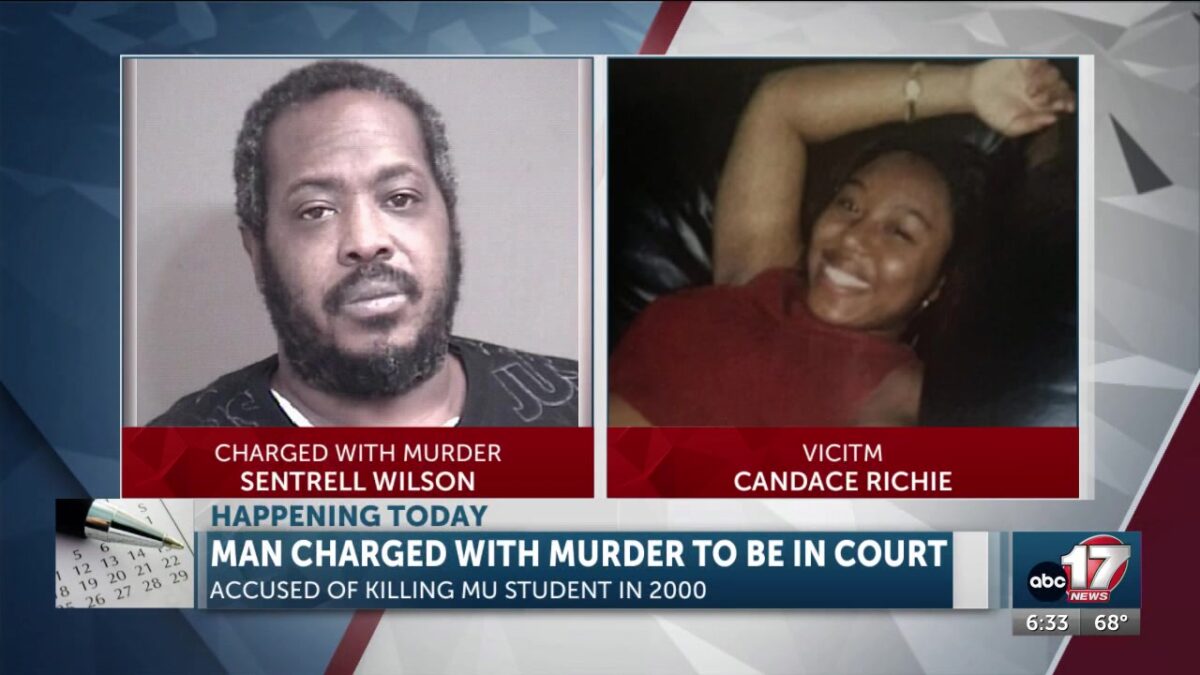
Sentrell Wilson, 45, of Spartanburg County, South Carolina, is charged with first-degree murder for the 2000 death of University of Missouri student Candace Richie. Wilson was arrested in South Carolina earlier this year on Feb. 23 and was extradited to Boone County in April.

After Wilson’s extradition, there has been little progress in the case due to multiple hearings in which Wilson was without counsel. The court appointed a public defender to determine eligibility in June, according to online court documents.

On Friday at 1 p.m., Wilson is expected to be transported to the Boone County Courthouse from the Boone County Jail for a counsel status hearing with Judge Stephanie Morrell.

A joint investigation by the Missouri Attorney General’s Office Cold Case Section and the Columbia Police Department led to Wilson’s arrest nearly 26 years after Richie’s death.

Police were called to the 2300 block of Whitegate Drive in February 2000 for a death investigation, where they found Richie dead. After receiving the report from the medical examiner’s office, police determined the death was a homicide.

CPD interviewed Wilson in 2000, but an arrest was not made at the time due to concerns about the ability to establish a clear medical cause of death.

A bond motion claims Wilson asphyxiated a woman and left her body where it was not found for several days.

Click here to follow the original article.
No injuries reported after Jefferson City Gerbes evacuated

Ryan Shiner

COLUMBIA, Mo. (KMIZ)

A fire in an empty building near a grocery store in Jefferson City led to the Gerbes on West Truman Boulevard to be evacuated on Thursday afternoon.

A press release from the Jefferson City Fire Department says the grocery store was temporarily evacuated and no injuries were reported. The store has since reopened.

“Upon arrival, the first responding company encountered heavy smoke coming from a vacant commercial space adjacent to the main grocery store,” the release says. “The space was previously occupied by Happy Garden. Based on conditions observed, the incident was immediately upgraded to a commercial structure fire, prompting the response of additional resources.”

Crews were called after a customer smelled smoke, the release says. The fire was brought under control within 10 minutes after crews arrived at 3:49 p.m., the release says. No one was in the “involved space,” the release says.

Click here to follow the original article.
Cleanup finished for downtown Fulton building that collapsed last month

Melissa Houston

FULTON, Mo. (KMIZ).

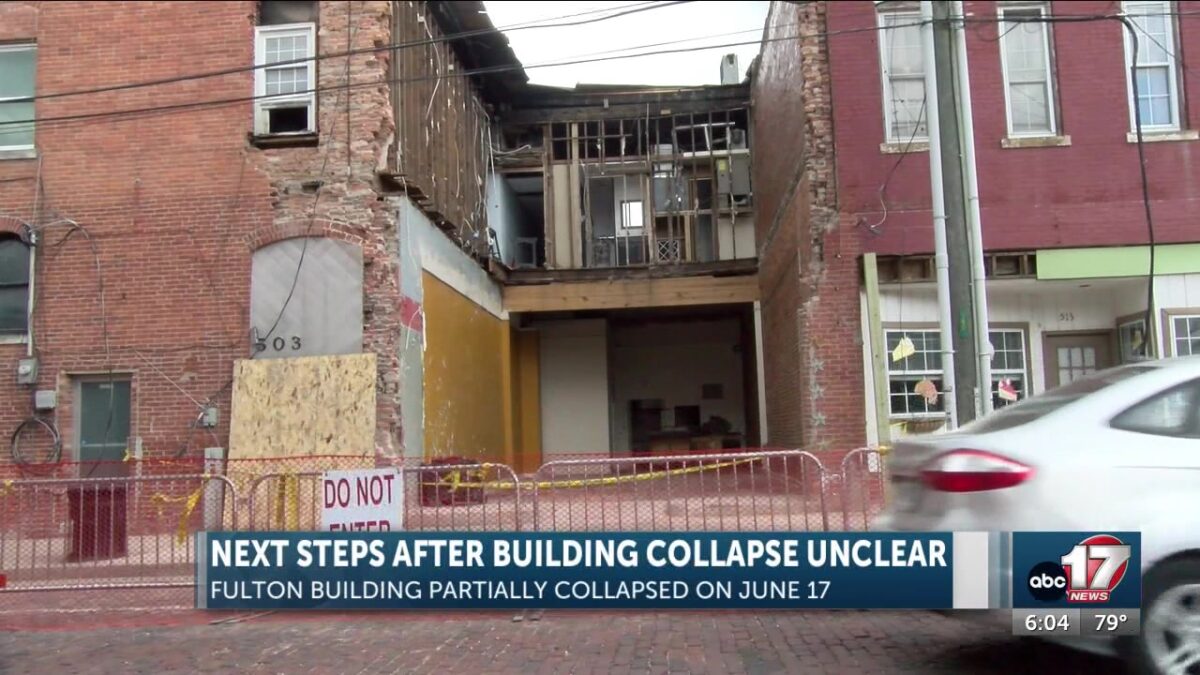
The downtown Fulton building that collapsed on June 17 has had its debris cleaned up, but the city still has the space the building occupied blocked off.

ABC 17 News spoke with Fulton city leaders, Callaway County leaders and the Fulton Fire Department, but they were unable to provide any information on the status of the building at 503 Nichols St.

Fulton spokeswoman Doris Pirmantgen said because it is a privately owned building and there has been no communication with the City of Fulton, Pirmantgen was not able to make any comment on any updates for rebuilding.

The building owners were contacted but no comment was made.

Neighboring tenant Sylvia Caldwell said her building, The Studio, was affected by the collapse and has been in contact with the building owners to get an update on when construction will start.

Caldwell said building owners informed her that construction for repairs will occur, but she was not informed of a date for when that would start. She is still waiting for her electricity to be turned back on because, after the collapse, it was shut off.

Audra Gray, the woman who lived on the top floor of the building that collapsed, was reached out to on Facebook about whether she had received any information on the status of her apartment.

“Unfortunately, I have not heard anything about what they are going to do with the building moving forward from the clean up,” Gray said.

Right now, Caldwell said that she will be “playing the waiting game” to hear any updates on the building and if when her power will be turned back on.

Click here to follow the original article.
Inspection report of JC senior care facility reveals improper medication disposal and storage, former employee speaks out

Olivia Hayes

COLUMBIA, Mo. (KMIZ)

An April inspection report obtained by ABC 17 News from the Missouri Department of Health and Senior Services shows improper medication disposal and storage at Heisinger Bluffs Senior Living in Jefferson City.

A Jefferson City man filed a wrongful death lawsuit last week against the facility with claims of medical negligence, not ensuring employees were properly trained and not properly monitoring her food and water intake. Heisinger Bluffs recently settled a separate 2023 wrongful death lawsuit on May 13.

A lack of clarity around job duties always was present in the report, with employees allegedly not knowing about proper storage and disposal procedures. The report details facility staff failing to dispose of discontinued medications for four residents and destroy medication for two discharged residents.

Heisinger Bluff’s Medication Storage policy, is cited in the report as preventing the facility from using anydiscontinued, outdated, or deteriorated drugs.

The report goes dates back to Jan. 15 when investigators found the medication room containing Resident 1’s medication cards. The cards showed a Remeron prescription that had discontinued in November.

On April 15, Resident 2’s medication cards — located in the medication room — showed a Trazadone prescription that had ended in October and a Quetiapine prescription that discontinued in January.

Resident 3’s medication card also showed a Quetiapine prescription that discontinued in October, according to the report. Resident 4’s medication cards for two Haldol prescriptions had discontinued in February, the report says.

Resident 100’s medication cards with prescriptions for Divalproex, Trazadone and Memantine showed it discontinued in March, per the report.

Resident 101’s medication cards included Sertraline, Medroxyprogesterone and Quetiapine prescriptions with a discontinue date in February.

Christine Keeton, a former Level One Medication Aide at Heisinger Bluffs, echoed what was found by investigators with her own experiencing as an employee. Keeton started in February 2025 and worked until the end of April 2025.

“There was some meds that the name had been marked off the bottle and I thought that was unusual for that to be in a med cart because it didn’t belong to any of the residents that I gave medications to,” Keeton said. “Each person has their own medication with their own name on it and if their name is not clearly on it, it cannot be given to them.”

Keeton also detailed being assigned to duties she was not qualified for.

“Showering, dressing clients, toilet toileting them, none of that I was supposed to be doing,” Keeton said.

Keeton said she brought her concerns to higher ups multiple times.

The medication room also contained two baskets of 56 medication cards and a cabinet that contained 12 prescription bottles that were discontinued by the physician or from residents who had been discharged or expired from the facility.

According to the Patient Safety Network, failure to discontinue a medication that a clinician wants to discontinue can result in serious, if not fatal consequences, particularly with high-risk medications. If a medication is discontinued, the patient should be instructed to no longer take the medication.

Under Missouri law, medications need to be destroyed within a nursing facility by a pharmacist and a licensed nurse or by two licensed nurses. When two licensed nurses are not available two workers who have authority to administer medications can also destroy medications, but one has to be a licensed nurse or a pharmacist.

A record of what’s destroyed is also required and needs to include the resident’s name, date, medication name and strength, quantity, prescription number, and signatures of the individuals destroying the medications.

inspection reportDownload

Following the January and April discoveries, investigators interviewed employees. In the first interview with ‘Level One Medication Aide A’, the employee said the unit manager is responsible for the discontinued and discharged medications, per the report. According to the report, the Aide said they put expired or discontinued medications in the medication room, but were not allowed to destroy them. The report says the Aide claimed two people are required to destroy medications, usually the unit manager and a nurse.

According to the next interview detailed in the report with ‘Certified Medication Technician C’, the employee said they were not sure how soon medication is supposed to be destroyed after being discontinued. CMT C said the reason the medications were left in the medication storage room is that the nurse only comes down to the unit once a week, per the report. The CMT C also claimed in the report there is no set schedule that they follow to monitor or check the medication room for medications that need destroyed.

In a third interview in the report, ‘Licensed Practical Nurse D’ allegedly said they were not aware they were supposed to monitor the medications in the storage room or make sure they are destroyed.

The final interview cited in the report was with the facility administrator. The administrator allegedly told investigators they were not aware of the discontinued medications in the medication storage room. Theadministrator said it takes two staff to destroy medications and the nurse and CMT are responsible for making sure that is done.

The administrator explained in the interview that it is their responsibility to oversee it is done, but currently there is no process in place to monitor. The administrator claimed the expectation is for discharged and expired resident medications to be destroyed or sent back to the pharmacy within a week.

The report said all discontinued medications discovered were destroyed by the nurse and CMT during the April 15 visit. All 56 medication cards and 12 prescription bottles in the medication storageroom that had been discontinued were also destroyed.

It was also requested that the Nurse Manager and all CMT’s be educated on the expired/discontinued medication policy that requires the medications to destroyed within 30 days. The administrator was tasked with auditing the medication room weekly for four weeks and monthly for three months.

Heisinger Bluffs has not returned multipe requests for comment.

Click here to follow the original article.
Show-Me State Games organizers prepare for summer heat

Ellyse Edwards

COLUMBIA, Mo. (KMIZ)

Thousands of athletes will compete in Columbia Friday through Sunday for the Show-Me State Games, and organizers say keeping everyone safe in the summer heat is their top priority.

Bruce Ungles with the Show-Me State Games said it has been working with MU Health Care to monitor weather conditions and follow heat-safety guidelines throughout the weekend. If temperatures become too hot, games can be shortened.

“If it’s hot enough, we will shorten games,” Ungles said. “Trying to keep them [athletes] out of the heat, that’s our biggest concern.”

Ungles said baseball and softball are among the sports organizers monitor most closely because players and officials spend long periods outdoors while wearing protective equipment.

Water will be available at all events, and concession stands will be available aswell. Emergency medical personnel and athletic trainers will be available to respond if someone becomes ill.

Organizers expect about 6,000 athletes to compete during this weekend’s events and encourage participants and spectators to stay hydrated, watch for signs of heat-related illness and take breaks indoors when possible.

MU Health Care has provided numerous ways for athletes to stay safe during this years Show Me State Games. [Courtesy MU Health Care]

Click here to follow the original article.

Sheriff’s Office: Man shot dead after breaking into Miller County home on Monday

Ryan Shiner

COLUMBIA, Mo. (KMIZ)

The Miller County Sheriff’s Office is investigating a shooting from Monday that left a 35-year-old man dead.

The identity of the shooter and victim have not been released.

The press release from the sheriff’s office says it was called at 6:30 p.m. Monday to a residence on Big Oak Lane near Brumley “following a report of a home invasion and shooting.”

The release says that a woman at the residence stated her ex-husband kicked in the door of the home while he was armed with a rifle. A man inside the home shot the ex-husband, the release says.

The ex-husband was found dead by first responders with a gunshot wound. The case is being forwarded to the prosecuting attorney’s office, the release says.

“Due to the ongoing nature of the investigation and out of respect for those involved, the Sheriff’s Office will not be releasing the identity of the deceased at this time. This was an isolated incident, and there was no threat to the public,” according to the release.

Click here to follow the original article.
Callaway County deputy shoots dog while serving warrant

Ryan Shiner

COLUMBIA, Mo. (KMIZ)

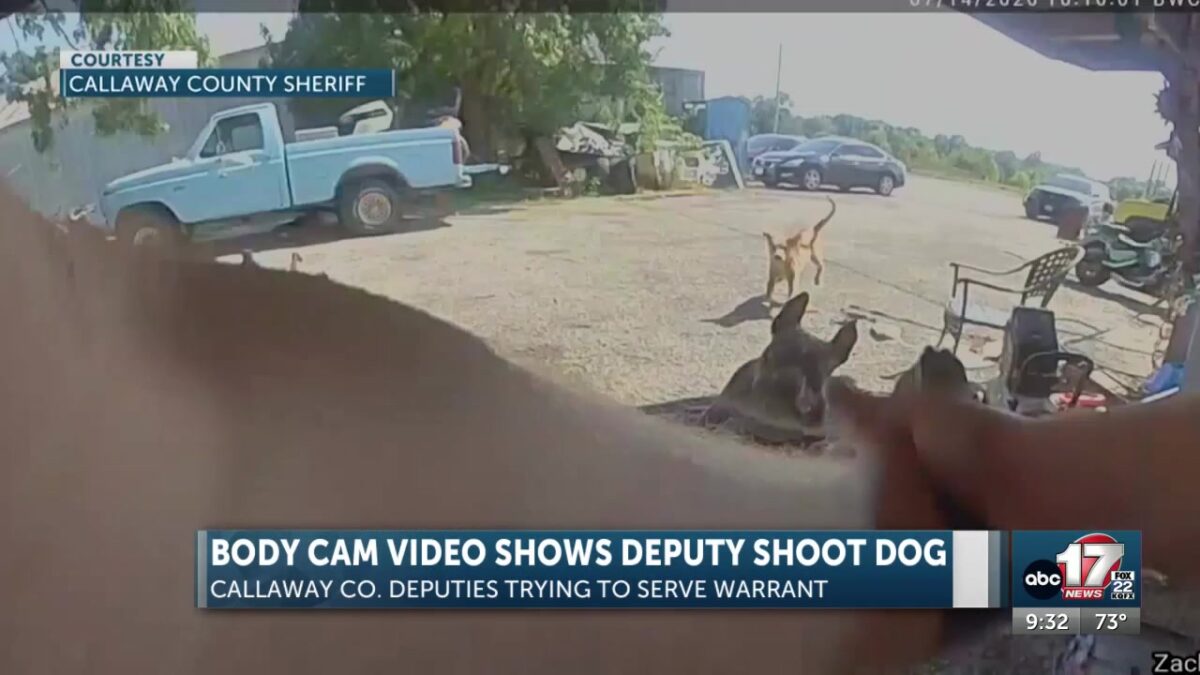
A Callaway County deputy shot a dog on Tuesday while serving a warrant near Auxvasse.

The Callaway County Sheriff’s Office announced in a Thursday social media post that Deputy Zach Hubbard shot a dog on Tate Drive near Auxvasse. The sheriff’s office showed body camera footage of the two responding deputies that ends right before a shot is fired. ABC 17 News has requested footage of the full incident.

Callaway County Chief Deputy Curtis Hall said the sheriff’s office decided to release the body camera footage after a social media post from someone caring for the dog gained traction online. Hall claimed the information in that post “was not accurate,” prompting the department to release its own video.

“It spread like wildfire on social media. But, people were starting to message deputies, threaten deputies and post their photos. It was just getting out of hand,” Hall said. “It just became excessive. If you want to criticize the Sheriff’s Office, you want to send us nasty messages, they want to call and cuss us out, we’re used to it. It’s fine, it happens. But finding them on social media, sending things, their email address when they’re not even on duty, threatening them. It just has to stop.”

Hall added that another factor in the decision to release the body camera footage was that the incident was not part of a criminal investigation.

Video footage online shows Hubbard arrive at a residence in his patrol vehicle and is greeted by a growling dog after he steps out of his vehicle.

The sheriff’s office wrote that Hubbard pepper-sprayed the dog. The dog in the video is then seen running off, and the OC spray is seen in Hubbard’s left hand. Footage from Deputy Chad Wimmer’s body camera shows Hubbard using the spray.

Both deputies then walk up to the door of the residence and two other dogs are seen on camera. Another dog – which the sheriff’s office claims was the dog that was sprayed – runs at Hubbard. The deputy is seen pulling out his gun and the video cuts.

Hall said he does not recall receiving any specialized training for handling dog encounters when he attended the police academy 23 years ago. However, he said law enforcement has since placed a greater emphasis on de-escalation techniques.

“We don’t have any specialized training we put deputies through besides the five-month FTO, where they’re with a field training officer,” Hall said. “We deal with dogs on a daily basis. It is very infrequently that we’ve ever had to shoot a dog. Most of the time deputies carry OC spray, not so much for the people that are resisting arrest or are uncooperative; they’re mainly for dogs.”

James Crosby — a canine aggression expert, retired police officer and research associate with Harvard University’s Canine Brain Project — argues many departments do not adequately prepare officers for encounters with dogs, adding that specialized dog encounter training is available to law enforcement agencies through a free program developed with the National Sheriffs’ Association and approved by the U.S. Department of Justice.

“I think the officers deserve all the tools that a department can provide and the best package we have now is that free training that’s available on the National Sheriffs Association website,” Crosby said. “It’s good that they’re getting something that’s better than nothing. But again, for the officers, I think they deserve to have access to the full set of tools that’s going to keep them safe, the public safe and the pets safe.”

In the release, the sheriff’s office says Hubbard believed “the dog posed an immediate threat of injury to his safety.”

The sheriff’s office then wrote that a female resident opened the door and law enforcement explained what happened. The father of a youth who allegedly was taking care of the dog placed a blanket over the dead animal, the sheriff’s office wrote.

The office wrote that deputies were trying to serve an arrest warrant to Michael Smith, who was wanted on suspicion of carjacking, tampering with a vehicle, harassment, fourth-degree assault and second-degree property damage. Charges did not appear on Casenet on Thursday afternoon. The dog allegedly belonged to Smith.

“After confirming the dog had passed, the father of the juvenile respectfully covered the animal with a blanket. Deputies remained at the residence, from a distance, until a [l]ieutenant arrived who was briefed on what had happened. Deputies left the residence at approximately 4:45 PM,” the release says. The sheriff’s office claims it was not releasing “the complete body-worn camera footage at this time because it contains images of a juvenile female who was not fully clothed,” the release says.

“The body cameras were active from the time that they got there until the time they left, 45 minutes,” Hall added. “So let’s just show unedited video so everybody can see the exact same video at the exact same time.”

Law enforcement went back to the residence at 11:20 p.m. and detained Smith, who bonded out of jail on Wednesday. The sheriff’s office told ABC 17 News that Hubbard has been with them since 2021 and Wimmer started last year.

“No deputy comes to work thinking, ‘this is the day that I’m going to shoot a dog’. Both deputies are seasoned deputies. One’s been here for over a year, and he’s had a lot of military experience before coming here,” Hall told ABC 17 News. “The other has been here for five years and they are both great with the public, great with people.”

Hall added that he believes the deputies responded according to their training, explaining that deputies are taught to use OC spray during encounters with aggressive dogs. But once the spray wore off, the deputy was forced to act in self-defense. 

“We have sympathy for the owner of the dog and the female that was taking care of the dog. But at the same time, deputies don’t sign up to get bitten on a daily basis by dogs. They have a right to protect themselves,” Hall said.

Crosby — who reviewed the edited body camera videos released by the sheriff’s office — said the deputies initially appeared to follow techniques taught in his training program. However, he said the video cuts off too soon to determine whether the shooting could have been avoided.

“They started on real good footing. First officer gets out, dogs come up to him, he backs off and then he pulls out his pepper spray and puts it in his weak or his non-gun hand and then comes walking forward. The other officer gets out of his vehicle and immediately puts his pepper spray in his hand so they both still have access to their guns,” Crosby said. “The officers seem that they did begin the process of responding exactly like we teach, but then it went off the rails. 

“The studies we’ve got show that pepper spray, if it’s deployed right in the dog’s face, is highly effective. Those dogs that came from off camera, those two dogs were facing directly towards him. So I think the rest of the video will help us understand the story.”

Hall does not expect any additional investigation into the deputies’ actions.

“The body camera speaks for itself. I fully backed the deputies and what they did, and ultimately I feel for the family that had their dog shot and killed. But we stand by the deputies and what they did. There is a use of force that will have to go through the proper channels but at this time there will be no further investigation as far as anything related to the deputies and how they handled the situation.”

While Crosby said releasing body camera footage quickly was a positive first step, he said he hopes additional footage will eventually be made public to provide further context. 

“I think that releasing the video in a timely manner like this was a good start,” Crosby said. Are they going to follow through? I don’t know. I would really like to see the unredacted video and hear what was going on all the way through the incident.”

Click here to follow the original article.