3 naloxone vending machines set up in Sedalia

Ryan Shiner

COLUMBIA, Mo. (KMIZ)

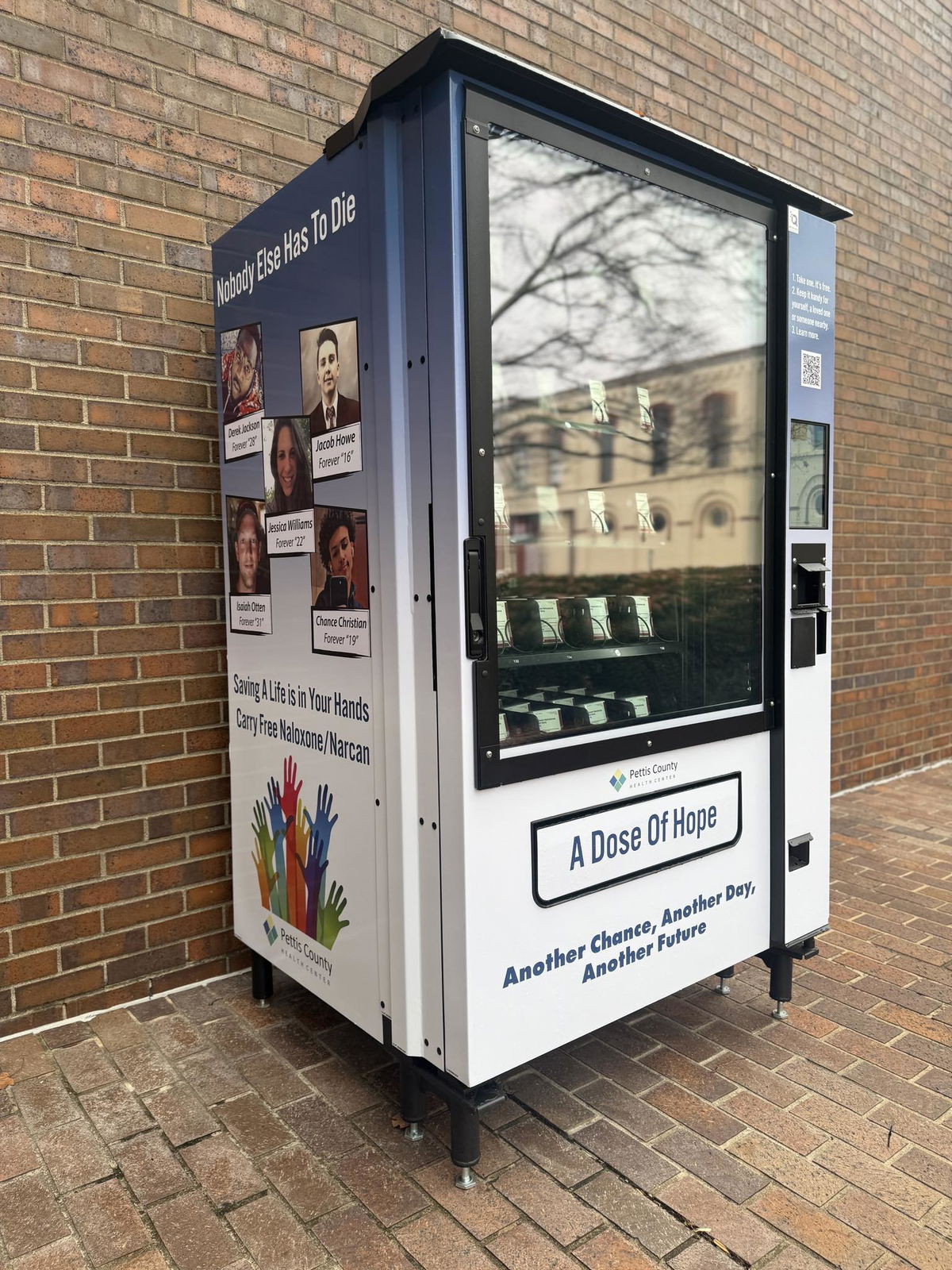
The City of Sedalia announced in a Tuesday social media post that the Pettis County Health Center has set up three naloxone vending machines for public use.

Naloxone – also known by its brand-named version Narcan – is used to reverse the effects of opioid overdoses.

One machine is outside the Pettis County Health Center, another is north of the entrance to the Sedalia Municipal Building and a third is near the Fielding Building at State Fair Community College, the post says.

All three can be accessed for free 24 hours a day, the post says.

“With all three machines now operational and maintained by the Pettis County Health Center, the machines give residents one more tool to use in an emergency, similar to the way defibrillators, fire extinguishers, and first aid kits are placed in public spaces as precautionary safeguards,” the post says. “The overarching message shared by project partners and families is simple. Being prepared saves lives, and having Naloxone accessible to everyone gives the community one more way to care for one another.”

A similar program was introduced in Columbia last month.

Click here to follow the original article.

CoMoHelps continues relief efforts as requests for emergency assistance top $113,000

Mitchell Kaminski

COLUMBIA, Mo. (KMIZ)

With the federal government shutdown over and SNAP benefits restored, local nonprofits say the demand for emergency assistance remains, and CoMoHelps will continue taking requests for at least another week.

The collaborative relief fund — relaunched in October as SNAP benefits were halted — has now allocated nearly $60,000 to 11 agencies, according to emails from Boone County Commissioner Kip Kendrick. Kendrick said the fund — supported by the Veterans United Foundation, United Way, and the Community Foundation of Central Missouri — raised an additional $23,000 in community donations.

CoMoHelps leaders say the need has expanded beyond food. Shutdown-related uncertainty pushed many families into difficult choices about basic expenses.

“We intentionally tried to make sure that we were very thoughtful about the money that was given for the requests that were coming in,” Heart of Missouri United Way President and CEO Talia Jackson said.”What we saw early on is that organizations were maybe trying to look at what they were going to need between the time of the shutdown, all the way until the end of the year or beyond, and we wanted to take a conservative approach, not knowing how much fundraising we were going to be able to bring in.” 

Jackson added requests have continued even after the shutdown ended. In all, organizations submitted close to $113,000 in requests, which went far beyond food assistance. Some agencies sought help to stock diapers at daycare centers or cover tuition for parents who couldn’t afford it, while others requested gas cards for families struggling to get to work.

“People were having to make decisions. ‘Do I put gas in my car or do I go get food?’ And sometimes you might have to prioritize getting gas so that you can get to the job and have money to be able to still have some food on the table,” Jackson explained. “We saw things like gas,  rent, and utility requests. We saw child care diapers. So it was a lot of the what we’re calling basic needs on top of just food.” 

The Columbia Housing Authority was among the agencies that applied for assistance. Chief Executive Officer Randy Cole told ABC 17 News the Columbia Housing Authority received $2,500 to support on-site food access at Paquin Tower and Oak Towers. The funding will help provide food for roughly 200 households at Paquin and another 146 residents at Oak Towers.

“We get direct engagement and feedback from 30-to-40 residents on a monthly basis and food access comes up often as a topic of concern,” Cole said. “With the SNAP benefits having some uncertainty,  some of our residents as well as our staff, saw that as a need. And so we want to make sure we have a  really good amount of food access onsite, knowing that there’s colder winter months coming too, so it might be harder for some of our elderly disabled population to get out.” 

Cole said the CHA has received notice of its award and is still waiting on final paperwork, but expects the funding to arrive soon. The agency plans to spend a portion of the money each month over the next two to three months to help stretch the support through the winter.

“We’re an organization with a lot of needs that serves a lot of residents. So we’re going to continue to look for resources for a variety of needs,  including additional rent assistance or other basic needs that our residents might need help with,  additional food security,  all types of things that we can help our residents maintain that stability,” Cole said. 

CoMoHelps is continuing to monitor requests and feedback they are receiving through at least November. Since not all the initial requests were fully funded, Kendrick says the group may go back to the nonprofits that were only partially funded to see if they still have additional needs.

“We’re just going to kind of allow the community to tell us what is needed in terms of how long we need to keep it open. But if those requests dry up and we still have dollars in the hopper, we haven’t quite decided how we’re going to deal with that,” Jackson said. “The beauty about the collaborative effort that these five organizations came together and did is that we meet all the time. We’re always having conversations.” 

Even before the shutdown, food insecurity was already a significant issue in Boone County. More than 15,000 residents rely on the Supplemental Nutrition Assistance Program, and more than 15% report experiencing food insecurity, according to county officials.

“Our residents feel the community support,” Cole said. “Columbia is a great town with a lot of people that care about our most vulnerable populations, and people feel that at the ground level and we regularly hear a lot of positive feedback from our residents.”

Click here to follow the original article.

‘Warrant sweep’ operation that led to 19 indictments named after ‘Mr. Brightside’

Ryan Shiner

COLUMBIA, Mo. (KMIZ)

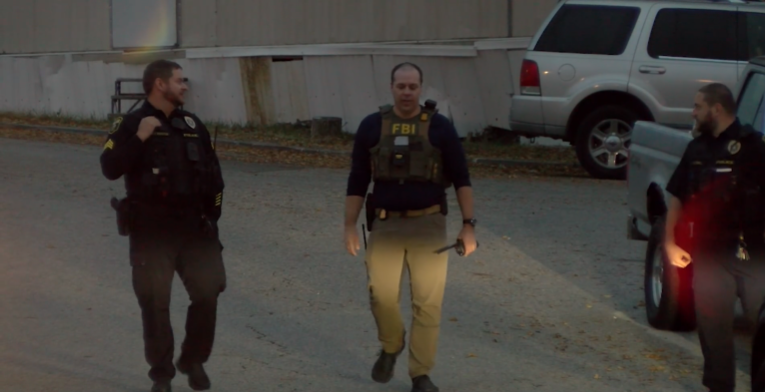
The Department of Justice confirmed on Tuesday that the name of a law enforcement operation that led to several arrests in Columbia last week was named after a song by The Killers.

Operation Brightside — which resulted in 33 arrests and 19 indictments for mostly illegal gun possession – was named after “Mr. Brightside,” according to an email from US Attorney R. Matthew Price. The song by the alternative rock band was released in 2004 and has become a staple at home football games for the Missouri Tigers and other teams in the past several years.

“The name of the operation is based upon the song by the Killers ‘Mr. Brightside’ as this song is associated with the University of Missouri, and by extension Columbia in that the students will sing it in unison at Mizzou sporting events,” Price wrote in the email. “This act of unison among the student body is reminiscent of all of the federal, state, and local law enforcement agencies who participate in the VCAT speaking with one voice, through their actions, to say ‘enough is enough’ and we will act to confront and reduce violent crime in the Columbia area to make it a safer community.”

Various law enforcement agencies were seen on Thursday and Friday around Columbia to conduct what officials referred to as a “warrant sweep,” where people with federal warrants were arrested. Most of the charges the defendants were arrested for were being a felon with a gun, though some were also arrested on drug charges.

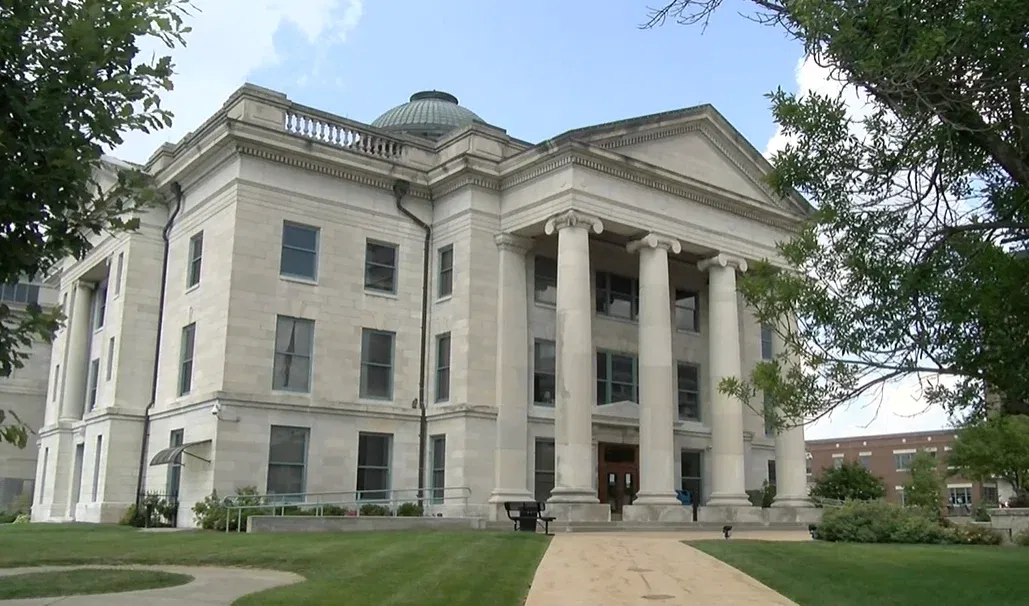
Federal, state and local law enforcement agencies held a press conference Monday at Columbia City Hall, and said all but one arrest were for felony warrants. Eight law enforcement agencies were involved in the operation.

Click here to follow the original article.

Holts Summit man pleads guilty in 2024 hammer attack, sentenced to 13 years in prison

Ryan Shiner

COLUMBIA, Mo. (KMIZ)

A Holts Summit man pleaded guilty on Friday to three felonies in a January 2024 hammer attack at a Columbia bar.

Kurtis Hoener pleaded guilty to two counts of first-degree assault and one count of armed criminal action. He was sentenced to 13 years in prison for the charges.

Court documents in previous reporting say Hoener allegedly pulled out the hammer while speaking with the other man and an argument started Jan. 31, 2024, at Black and Gold Bar.

Hoener then hit two men with the hammer in the head and face several times and stood over one of them while hitting him “full force approximately eight more times,” court documents say.

The statement says Hoener then got on his motorcycle and left. Court documents note that he was not attacked in the video prior to hitting the men with a hammer.

Hoener was identified by the owner of the bar because he left his credit card at the establishment, court documents in previous reporting say.

Click here to follow the original article.

Pilot Grove tornado report recommends communication improvements

Erika McGuire

PILOT GROVE, Mo. (KMIZ)

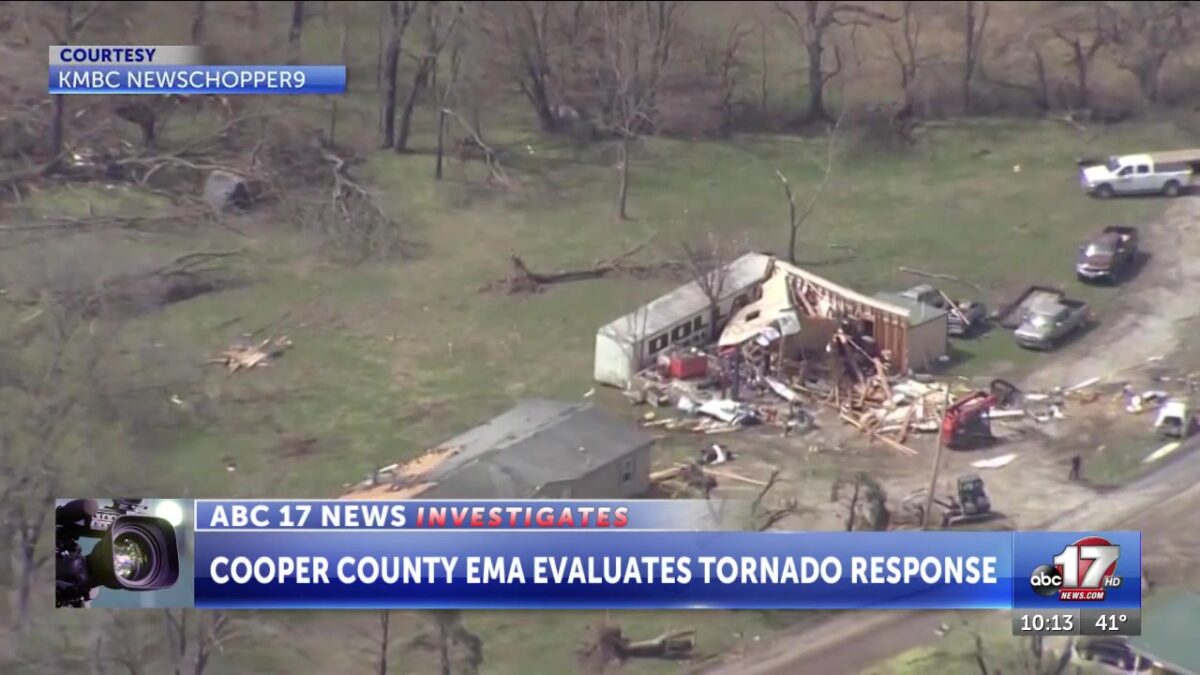
The response to an EF-2 tornado that damaged or destroyed dozens of buildings in Pilot Grove was hampered by some first responders not being able to communicate with each other using radios at the scene.

A four-page “after-action report” drawn up by the Cooper County Emergency Management Agency gives insight into the response before and after an EF-2 tornado touched down in Pilot Grove on April 2.

Technology and communication issues caused problems, but the overall response, officials say, was swift and largely effective. ABC 17 News obtained the report through a Missouri Sunshine Law request.

The document outlines how county officials prepared for the threat, how first responders mobilized as the storm developed, and what challenges they faced once the tornado hit.

“We knew what we were doing, it’s just that we were rusty,” Cooper County Emergency Management Director Larry Oerly said.

Pilot Grove tornado reportDownload

Severe weather and tornado warning

The day began under dangerous conditions, as the National Weather Service had issued a rare high-risk alert for severe thunderstorms across multiple states. A severe line of storms developed in southwest Missouri and moved through Cooper County, eventually producing a tornado in Pilot Grove.

Oerly said outdoor warning sirens were activated, but they failed to sound.

The siren, described as a “Cold War–era” model on the Pilot Grove water tower, relies solely on electricity and is the only one of its kind in the county. By the time it was activated, the tornado had already damaged power infrastructure. For the siren to be activated, a call needs to be made to 911 dispatchers, who then activate the siren.

“From the time the initial weather service alert comes out to the time that the sirens get activated, going through the different channels that it has to go through, there may be anywhere from one minute to two or three minutes, depending on the incident,” Oerly said.

According to previous reporting, the siren was triggered a second time, but Oerly was unsure if that attempt was successful. Cooper County EMA protocol during a tornado warning is to sound the siren as soon as the warning is issued, then attempt a second activation eight to 10 minutes later if the warning remains in effect.

Oerly said a $26,000 battery-powered siren was ordered before the tornado but had not arrived due to delays. The siren arrived in mid-May and was installed next to Pilot Grove City Hall.

On-scene communications

The report identified several areas for improvement, including on-scene communications. The report found that communication at the scene was “less than ideal” because law enforcement was operating on the Missouri Statewide Interoperability Network, while fire and EMS crews were using VHF radios.

The report says that as storms and warnings continued, it was recommended to activate radio tones to advise multiple agencies of new weather warnings.

Because the two systems aren’t directly compatible, responders sometimes couldn’t talk to each other in real time. Oerly says first responders were on different frequencies because the county couldn’t afford the equipment to fix the problem.

However, he emphasized that the communication issues did not affect the quality or speed of the response.

“It had no impact on the response itself, other than the units weren’t able to communicate with each other,” Oerly said. “Once the command center was set up, we were able to get sheriffs, fire and EMS in one location as a joint command for better coordination.”

Before the tornado, Oerly said, improvements to the county’s communication system were already underway and are expected to be completed by the end of this year or early next year. The $2.7 million project, funded through American Rescue Plan Act funds, will upgrade radio infrastructure across the county.

“It will give more repeated frequencies, and repeated frequency means there will be seven towers listening for this when somebody keys the mic. Right now we only have one,” Oerly said. “By having seven towers, when a responder keys the mic on a repeated frequency, everyone will be able to hear it. Law enforcement also monitors the VHF frequency, so this means we can assign one of those repeated frequencies to an incident, everyone can talk, everyone can hear, which we weren’t able to do at that time.”

A complete overhaul of Cooper County’s communications system began in 2021, even before a combine sparked a wildfire in Wooldridge in 2022, burning over 3,000 acres and destroying at least 23 buildings.

Oerly said Cooper County EMA lacked funding, putting the project on hold. Now the county’s 911 system is being upgraded, with a consultant helping figure out where communication systems are needed and how to improve infrastructure.

“We purchased two towers, getting ready to build a third one. We utilized a lot of what we already had, but we’re adding to it,” Oerly said. “The whole center’s redone. We went with the next generation 911 system in it … This already happened before the tornado.”

Mobile command center

The report also noted that it took too long to set up a mobile command center. Oerly said Cooper County EMA spent nearly an hour deciding that a command post was needed. Once the decision was made, it took about 20 to 30 minutes to set it up on Highway 135, along which much of the damage was located.

“The biggest delay was that it hadn’t been used in a while. So when you go to pull it out, the tires need a little bit of air. They weren’t flat, they were low,” Oerly said. “So it took a little bit to get it out. It is a trailer, so it had to be hooked to a truck and brought out, had to get a generator set up for it.”

One member of Cooper County EMA and the county’s presiding commissioner set up the command post.

The Cooper County mobile command center. (Courtesy Cooper County Emergency Management Agency)

Oerly said Cooper County EMA has conducted two school shooter drills with law enforcement that required setting up and breaking down the command post twice in one day at two different locations. The practice helps make the setup faster, he said.

Cooper County EMA has been approved for a grant to add another radio inside, the command center. The upgrade will allow first responders to talk with one another on a repeater or a microphone.

Response and damage assessment

Shortly after the EF-2 tornado hit Pilot Grove, Cooper County EMA began checking homes and buildings to assess the damage see if anyone was hurt. Buildings, door knobs and mailboxes were marked with caution tape to show buildings had been checked, with first responders going back and rechecking.

The report recommended training all agencies on the same system to eliminate redundant building checks.

“One thing we talked about was getting some supplies and our mobile command center or even some of the response vehicles that they can, it’s like a sticky piece of paper that shows that this has been checked and who checked it, and putting it on the buildings themselves,” Oerly said. “The caution tape did its job. We could have done better with the forms that stuck to the building, where people could have said ‘Oh, such and such was here.'”

The report also said the Missouri Department of Transportation needed a better way to monitor and control traffic. The report noted MoDOT could not verify if people requesting access had business in the affected areas.

“Many of the volunteers didn’t have a name tag or anything with them. So when they would pull up, to go in to get past a roadblock, the person working the roadblock didn’t know them and wasn’t going to allow them in, and that slowed some of that down,” Oerly said.

To improve this, Oerly said name tags were made for everyone in the fire department, with copies made to go inside their fire gear and their vehicles.

Electrical safety was also listed as an area for improvement. The report says first responders should assume all downed power lines are live until they’re told the lines are grounded. As part of the improvement plan, the report said the county will review training on electrical safety for all first responder agencies.

What went well

The report identified some strengths:

Initial search and rescue operation in the affected area

Utility companies’ response and shutting power down to damaged lines

Power was restored within 16 hours of the initial incident. Fifty utility poles were replaced, along with 1.19 miles of electric and fiber lines.

Agencies worked well together.

Command post personnel kept accurate records for accountability purposes.

Community support.

The tornado traveled for 6.3 miles with a width of 200 yards and estimated winds of 115 mph. It was on the ground for six minutes.

According to the report, the twister hit 16 homes, 12 commercial buildings and two public buildings.

“I know there was around $300,000 done on public infrastructure,” Oerly said. “It was due to all the electrical lines that were down, all the power poles that were down.”

The twister also damaged vehicles, farm equipment and trees. No injuries were reported.

A total of 29 different agencies responded to the aftermath.

Getting back to normal

Since the tornado struck Pilot Grove, residents have been working to clean up debris and rebuild.

Mike Schupp and his 83-year-old mother have lived in the community for decades. His mother was home during the storm and decided to take cover in the basement once she saw a chair fly through the air.

Her home remained standing after the storm, but Schupp later learned it was no longer safe to live in.

“It was unbelievable what we saw,” Schupp said. “Structurally, it didn’t look that bad, but then the insurance company showed up and said, ‘Yeah, this house is demolished. It has to be torn down.'”

The ranch-style house suffered significant damage, especially to the roof.

“There were no trees left, no buildings left, the roof was pretty much off the house, and there was nothing left. Where do you start?” Schupp said.

The house was eventually torn down, and Schupp built his mother a new one on the same land with safety upgrades.

“We’ve put a safe room right into the garage, concrete walls and ceiling so that she’s protected in case she has that happen in the future,” he said.

One of the issues Schupp faced with the rebuilding process was being underinsured. The cost to rebuild was over $100,000, he said.

“You never have enough insurance, and that’s just the way it is. Things have gone up so much in terms of cost,” Schupp said. “I had one grain bin at the time. It blew away, and I had to pay for another one.”

About a week after the tornado struck, the community came together to help with the cleanup.

Schupp said it wouldn’t have been possible without help.

“We just piled it all in a big pile. We had hundreds of people show up to help clean up and couldn’t be more thankful for the community that we live in,” Schupp said.

Brenda Harrian has been living in Pilot Grove for 16 years. She is an assistant with Cooper County EMA and works with the Columbia Fire Department. She was out of the country when she learned about the tornado through a friend.

“She’s like, ‘Yhe house is really bad, and everything around is gone,'” Harrian said.

She returned home two days after the tornado hit.

“Some of the trees, the first things I planted when we moved in, were gone. I had big walnut tree that uprooted and was gone, and the greenhouse was devastated,” she said. “Another shed was blown off the foundation and ripped away … and the back of the shop had a huge hole in it.”

A large shed on Harrian’s property was unusable for more than four months because of the damage. She faced the same issue Schupp did: being underinsured.

“I only had it insured for what we paid for it when we moved in several years ago, so it’s nowhere near what it costs.

She said she spent $30,000 to rebuild the shed. “My fault for not being insured enough,” Harrian said.

Harrian’s greenhouse, a sentimental item, was also badly damaged. She said it measured 30 by 78 feet and was a landmark in Pilot Grove; neighbors would tell visitors they were in the right spot if they were across from it.

“My little place just to relax, I would plant so much every year. I miss it,” She said.

Harrian has repaired her shed, but the greenhouse is no longer standing. She wants to get another one in the future.

Click here to follow the original article.

Jefferson City woman accused of attacking victim with knife, phone

Ryan Shiner

COLUMBIA, Mo. (KMIZ)

A Jefferson City woman was charged with multiple felonies on Tuesday after she allegedly used a knife to attack another woman.

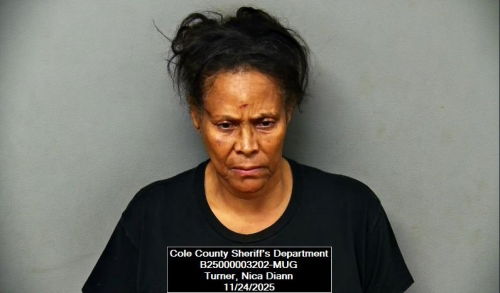
Nica Turner, 64, was charged with second-degree domestic assault, unlawful use of a weapon and armed criminal action. She is being held at the Cole County Jail without bond. An arraignment is scheduled for 11:30 a.m. Wednesday.

The probable cause statement says police were called on Monday afternoon to a home on Madison Street for a reported assault. Turner – after allegedly trying to spit on officers – told police the victim had hit her with a phone and cut her with a knife, the statement says.

Police spoke with the victim, who allegedly told them that she and Turner got into an argument about the victim’s toddler-aged children, which led to Turner throwing a phone at the victim’s head and punching her, the statement says.

The victim locked her and her two children in a bathroom to protect themselves from Turner, the statement says. The victim then left the bathroom to find her phone so she could call police, court documents say.

Turner then grabbed a knife and started making a slashing motion and ended up cutting two of the victim’s fingers as she braced for impact, documents describe.

Click here to follow the original article.
Man accused of shooting gun at Boonville intersection charged with domestic assault, other felonies

Ryan Shiner

COLUMBIA, Mo. (KMIZ)

A man who was accused of firing a gun Monday at a Boonville intersection has been charged with several felonies.

Dorian Gardner, 37, of Boonville, was charged on Wednesday with first-degree domestic assault, armed criminal action, illegal gun possession and endangering the welfare of a child. He is being held at the Cooper County Jail on a $200,000 bond. A court date has not been scheduled.

The probable cause statement says Gardner and the victim had been arguing all day and the victim was driving Gardner back to his residence when he told her to stop the car “or else.”

Gardner then allegedly took the victim’s cellphone and stepped outside of the car, the statement says. He then threatened to shoot the victim and pointed a gun at her before turning the gun toward the intersection and firing straight ahead near the intersection of 6th and Locust streets, the statement says.

The shell casing of the bullet was found within 100 yards of Laura Speed Elliott Middle School, court documents say.

Police eventually found Gardner and he initially denied being involved in the incident before admitting to having and firing a gun, the statement says.

He was sentenced to probation in 2023 after he pleaded guilty in Boone County to first-degree burglary. He completed a 120-day program and was ordered to five years of probation, along with a 10-year suspended sentence. 

He also pleaded guilty in 2021 to first-degree tampering with a vehicle. He was sentenced to five years of probation in that case, along with a seven-year suspended sentence.

Click here to follow the original article.
University of Missouri strangling suspect had criminal history before coming to Columbia

Haley Swaino

COLUMBIA, Mo. (KMIZ)

A University of Missouri student recently accused of strangling another person at a residence hall after being blocked on a social media app had a history of crimes against other people, according to Kansas court records.

Maxwell Warren, 18, was charged Nov. 3 with first-degree burglary, second-degree domestic assault, first-degree domestic assault and misdemeanor fourth-degree assault on allegations that he strangled another person in a residence hall after the victim blocked him on Snapchat.

It’s not the first time Warren has been in the criminal justice system.

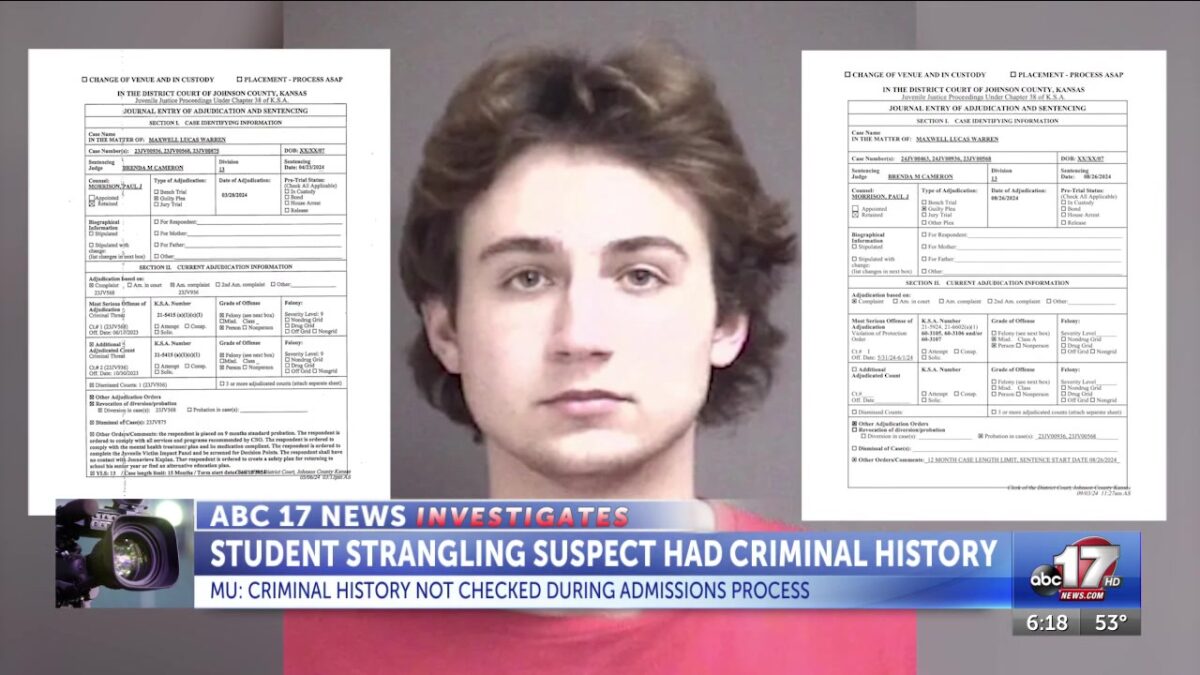
Sentencing documents from previous cases in Kansas show Warren had a criminal record before the MU choking allegations.

Warren pleaded guilty in April 2024 to being a criminal threat, a felony. He was sentenced to nine months’ probation and ordered to comply with a mental health treatment plan. He also had to complete a juvenile victim impact panel, a program where young offenders hear personal stories from victims of crime to help understand the consequences of their actions.

On top of $1,000 in restitution, Warren was barred from having contact with the victim in that case.

He pleaded guilty in August 2024 to violating a protection order and was sentenced to six months of probation.

MU does not check criminal history during the admissions process, a spokesman wrote in an email. Spokesman Christopher Ave wrote that MU received 27,000 admission applications for fall 2025, and many states close juvenile criminal records to the public.

Warren’s attorney, Andrew Popplewell, deferred questions to MU.

“I am not licensed to practice law in Kansas,” Popplewell said. “In Missouri, juvenile records are confidential. Even if I knew anything about any Kansas records, I am bound by ethical considerations to not discuss.”

About 70-72% of four-year colleges in the United States require applicants to disclose their criminal history. This percentage varies by institution type. A 2019 study found 81% of U.S. private colleges required such checks, 55% of public colleges and 40% of community colleges.

Columbia College, a private school, asks applicants if they’ve been convicted of any crimes, according to its website.

Applications require a “Yes” or “No” answer to the question: “Have you ever been convicted of a felony or a misdemeanor?” The College says a “Yes” is not an automatic denial of admission, but will initiate a review process.

The MU victim had blocked Warren on the social media application Snapchat on Sept. 26, according to the probable cause statement. Warren went to the victim’s residence hall to confront the victim the same day. When the victim cracked open the door, Warren forced his way into their dorm room, the statement says.

He then allegedly strangled the victim while demanding that they add him back on Snapchat immediately. The victim unblocked Warren after the assault, the statement says.

Warren allegedly sent a message to the victim on Instagram acknowledging the assault on Sept. 28 and then threatened to hurt the victim again on Sept. 30, court documents say. Warren then allegedly assaulted the victim in their dorm room again on Oct. 29, the statement says. That time, the victim allegedly lost consciousness after they were strangled.

In a separate probable cause statement, a witness reported seeing Warren assault a woman near the Virginia Avenue garage on MU’s campus. Warren claimed he was assaulted first, but video footage supposedly did not support his claim, the statement says.

Researchers say not many studies have looked at whether screening college applicants for criminal history reduces crime on campus.

Warren is being held at the Boone County Jail without bond, and Ave said he has been banned from MU’s campus.

He appeared for a hearing on Nov. 5 by video from the jail where he waived his arraignment and pleaded not guilty, according to court records. A preliminary hearing is scheduled for 9 a.m. Dec. 9.

Click here to follow the original article.
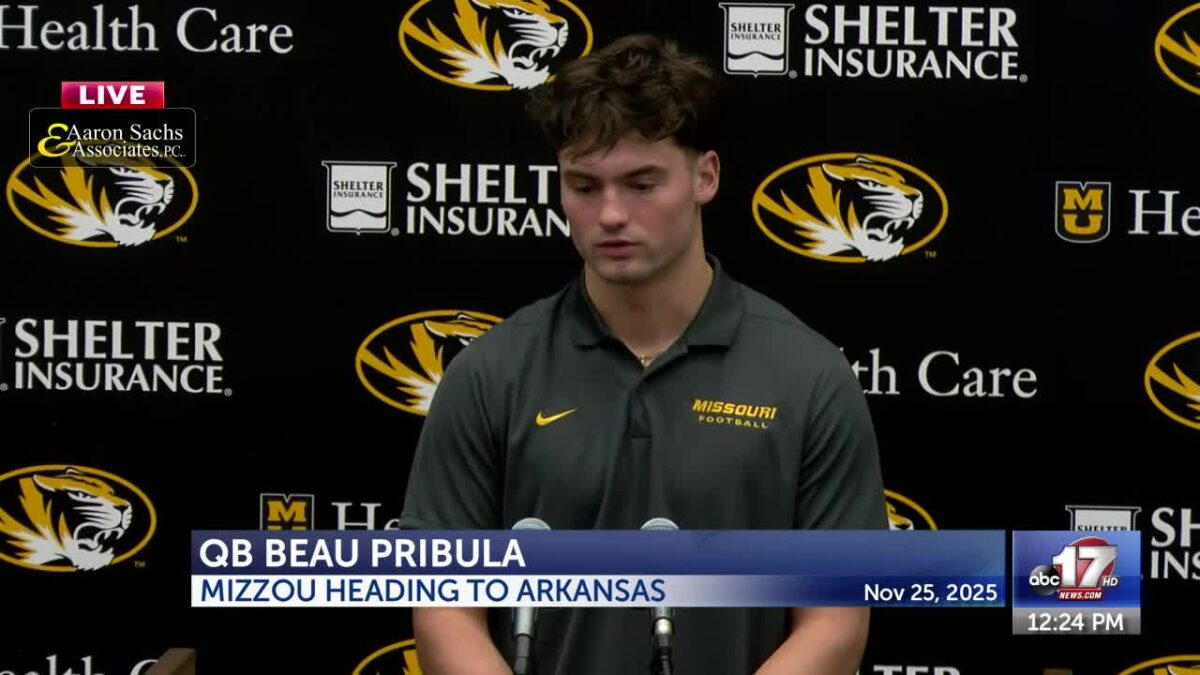
WATCH: Mizzou football news conference ahead of Arkansas rivalry game

Matthew Sanders

COLUMBIA, Mo. (KMIZ)

The Missouri Tigers are looking to get back in the win column to close the season.

The 7-4 Tigers will travel to Fayetteville on Saturday to take on Arkansas at 2:30 p.m. in the Battle Line Rivalry game. The Tigers are coming off a loss to Oklahoma last weekend in Norman.

Watch a news conference with Coach Eli Drinkwitz and players here.

Click here to follow the original article.
MoDOT to lay out Highway 63, Route CC intersection improvements at public meeting

Madison Stuerman

COLUMBIA, Mo. (KMIZ)

The Missouri Department of Transportation is working to improve a Boone County intersection after more than 11 crashes over the past five years.

The agency said in a release that a meeting is scheduled from 4:30 to 6 p.m. Dec. 9 at the Sturgeon City Hall.

MoDOT stated that it plans to remove the crossover between the northbound and southbound lanes of the highway. Both Route CC and Roy Barnes Road will have acceleration and deceleration lanes added.

The road will stay open during construction.

An exact date has not been set, but work is planned for 2026.

Meeting attendees will be able to speak with project team members, view exhibits outlining the planned work and proposed detour, ask questions and leave comments.

An online comment period started Tuesday and runs through Dec. 23.

Click here to follow the original article.