Boone County Sheriff’s Office warns residents after AI swatting call

Alison Patton

COLUMBIA, Mo. (KMIZ)

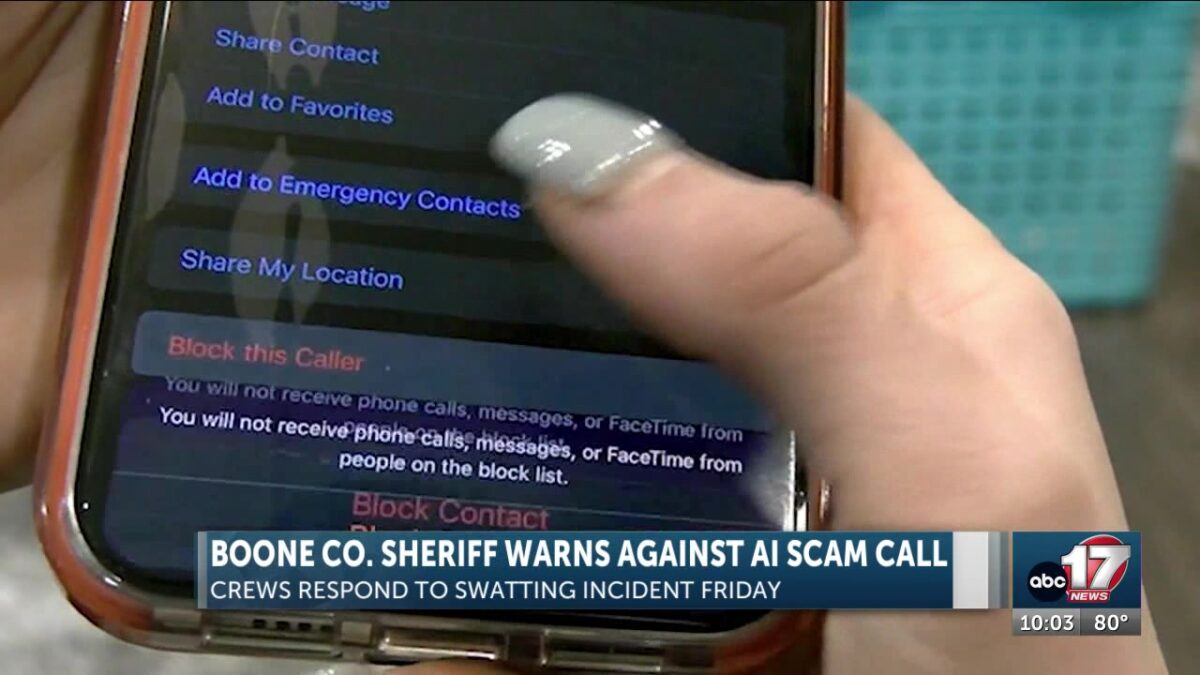
A scam that makes people believe their loved ones are in danger using artificial intelligence has hit Boone County, and the sheriff’s office is warning people after a resident reported a call.

According to a Facebook post, the Boone County Sheriff’s Office said the victim received a call Friday that showed their daughter’s contact name and number. The caller allegedly had the daughter’s voice and told the victim she had been kidnapped at gunpoint before another voice demanded money, essentially asking for a ransom.

“It was later determined the person they were speaking with was not the daughter but rather an AI generated voice that sounded like their daughter,” the post says.

A coordinated law enforcement response found the real daughter in Jefferson City, unaware of the scam.

The office said this is the first time a scam like this has happened in the county. People are urged to use caution should they encounter a similar situation.

“If you receive such a call, try to verify the loved one’s identity through questions to which only they would know the answer(s) or try to contact the person through other means, such as calling them from another phone,” the post says.

BCSO Captain Brian Leer said that this is the first time the department has encountered a call using AI voice impersonation.

Adding that scammers will often play on the emotions of people they are trying to scam.

“Scammers so often play on the emotions; they play on the emotions of people through fear, or you know panning. That’s the sad reality of these situations,” he said.

Leer said this type of scenario is not common in Boone County.

“Very rarely do we see a true what we call a swatting incident where they call in and say that something’s happening at a specific address or that a specific crime is in progress.

Adding that this call generated a large law enforcement response and attempted to extort someone.

“This did both. They generated a large response for a law enforcement agency trying to, you know, basically scare everybody and get everybody on edge, and then they try to extort and scam people,” he said.

When it comes to the investigation, Leer said these cases are difficult to solve.

“They are not able to be tracked back really well. They know that if they route things back through other countries and back into the United States, a lot of times it’s impossible to come back and pinpoint who it was,” he said.

Additionally, Leer believes that these types of scenarios will become more common as technology advances.

“Our detectives were already aware of this happening, and certainly in some jurisdictions, but this is the first time it’s happened locally. You know, as they were looking at it and researching it yesterday, they were able to find several other common scams, swatting incidents that were out there,” he said.

The Better Business Bureau suggests people have a safe word that they keep private to use in case an emergency happens. If a caller doesn’t use the safe word, then hang up and call the person directly.

People should also report any similar calls to local law enforcement. A suspect hasn’t been identified or arrested, according to the Boone County Sheriff’s Office.

The FBI reported Americans lost over $893 million to AI scams in 2025, and Missourians lost $233 million in total to all scams, including AI.

Click here to follow the original article.

University of Missouri pulls dining hall lettuce over cyclospora risk

Haley Swaino

COLUMBIA, Mo. (KMIZ)

The University of Missouri has pulled its dining hall lettuce for possible contamination with Cyclospora, the parasite causing thousands of cases of diarrhea across the United States.

MU spokesperson Travis Zimpfer told ABC 17 in an email Saturday that there was a recall for the Cross Valley Farms-branded lettuce served at the university.

The brand is owned by US Foods, one of the largest food service distributors in the country. The company announced that a “limited number” of products from its Cross Valley Farms brand, including iceberg lettuce, were affected by the recall and began reaching out to customers on Friday.

“Campus Dining Services immediately followed standard recall protocol,” Zimpfer wrote in an email.

The recall is tied to a national Cyclosporiasis outbreak that the Centers for Disease Control and Prevention linked to the supplier, Taylor Farms. The multi-state parasite outbreak came from lettuce grown in central Mexico, according to the CDC, and was distributed to 27 states, including Missouri.

Click here to follow the original article.

Man arrested after shots fired in Columbia, one person injured

Alison Patton

COLUMBIA, Mo. (KMIZ)

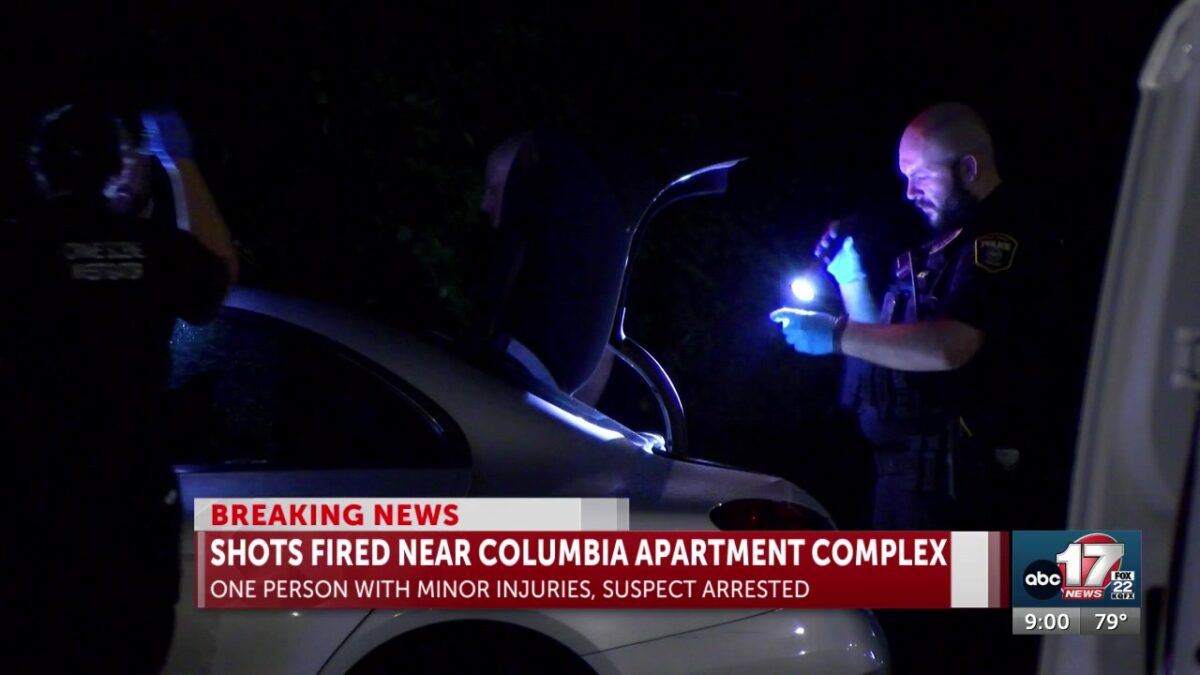
A 26-year-old man was taken to the hospital with minor injuries early Sunday morning after shots were fired at a Columbia apartment complex.

According to a press release from the Columbia Police Department, 22-year-old Columbia man Lorenzo Toledo was arrested on suspicion of first-degree assault, armed criminal action and unlawful use of a weapon.

CPD Lieutenant Derek Moore told an ABC 17 News reporter on scene Sunday that officers responded to a shots-fired call near the intersection of Old 63 South and East Broadway around 2 a.m.

Law enforcement found the man with head injuries that were not life-threatening, Moore said. He couldn’t confirm if the victim was shot.

Toledo was taken into custody shortly afterward, Moore said. A Boone County Sheriff’s deputy located his vehicle near McKee Street and Orchard Lane.

An ABC 17 News reporter arrived on scene around 3 a.m. and saw the Columbia Police Department’s crime scene investigations van and three cruisers. Officers were seen taking pictures of a sedan in the parking lot of the Cliffside Manor Apartments that appeared to have one busted window behind the driver’s side.

The scene cleared around 3:30 a.m.

Check back for updates.

Click here to follow the original article.

Man seriously injured in Miller County Crash

Marie Moyer

COLUMBIA, Mo. (KMIZ)

One man was seriously injured in a car accident in Miller County Friday afternoon.

According to a Missouri State Highway Patrol Crash report, at around 12:15 p.m. yesterday, a 38-year-old Richmond, Missouri man was driving a 2020 Ford F-550 and waiting to take a left turn on State Route 52 near Meadowbrook Road.

This was when a 29-year-old Sunrise Beach man driving a 2004 Ford Taurus drove forward and hit the back of the F-550, getting seriously injured in the process.

The Taurus was totaled, and the 29-year-old man was flown to the University Hospital.

Click here to follow the original article.
Man drowns in Truman Lake

Marie Moyer

Sedalia man died this Saturday morning after drowning in Truman Lake.

According to the Missouri State Highway Patrol, the 36-year-old was swimming in the Shawnee Bend Recreation Area Beach in Benton County at around 8:20 a.m. when he went under the water and did not come back up.

The man’s body was recovered by the water patrol, and he was pronounced dead on scene. Next of kin have been notified.

Click here to follow the original article.
Columbia Fire Dept. blames roof solar panels for southwest house fire

Marie Moyer

COLUMBIA, Mo. (KMIZ)

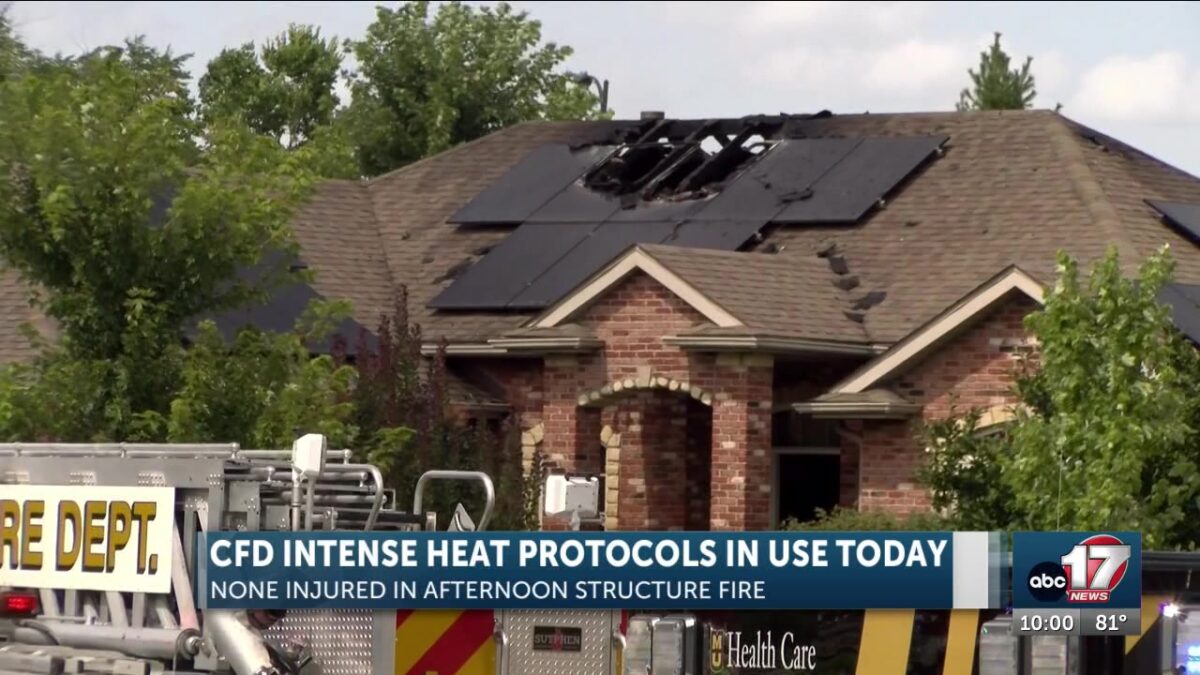
No injuries were reported from a structure fire in southwest Columbia on Saturday.

An ABC 17 News Reporter arrived at the 4900 block of Craydon Drive at around 4 p.m. Saturday, where they saw Columbia Fire Department crews responding to a home with a hole in the roof and smoke showing.

The reporter also saw at least two Columbia Fire Department engines and at least 5 CFD vehicles on scene. An MU Health Care ambulance was also in the area.

According to a CFD press release, the fire has been determined to be an accident, with crews saying the cause was determined to be electrical and related to roof-mounted solar panels.

Columbia Fire Chief Brian Schaeffer said that crews were dispatched around 3 p.m. Saturday, and upon arrival, saw a working fire on the roof of the house.

Schaeffer adds that the home is occupied by a family of 4.

“Two were inside. Two were outside, just pulling into the driveway. As they pulled in, they saw the fire, alerted the two who were inside,” he said.

Chief Schaeffer said that the 2 who were inside said that they did not notice the fire, and the fire alarms did not activate.

Adding that once the first crews arrived, CFD decided to update the fire to a second alarm.

“Because of the fire progression throughout the attic when we opened it up. And simply, it is absolutely hot today,” he said.

Additionally, Chief Schaeffer said due to solar panels that were on the roof of the house, the fire created a toxic, noxious smell

Schaeffer said that the heat also played a factor in the additional response.

“So our firefighters are going through several bottles. Those bottles, all those bottles, are filled with air that has been dehumidified. So, as much water as we drink, we sweat it right out,” he said.

Adding that the loss was predominantly confined to the attic area.

“We did everything we could to stop damage on that first floor,” he said.

With temperatures in the low 90s this afternoon CFD put in place protocols to ensure that all of their firefighters were safe in the heat.

Chief Schaeffer said that the heat does not take long to start having consequences on crews’ bodies.

“Our firefighters are going through several bottles. Those bottles, all those bottles, are filled with air that has been dehumidifier. So as much water as we drink, we just sweat it right out,” he said.

Additionally, he said having extra crews on scene allowed CFD to rotate firefighters to prevent overheating.

“Our firefighters, when we get this hot, we rotate and limit work cycles and hydrate as much as possible. Plus, that second alarm gave us well over 30 firefighters. So we have the bench strength to take care of our people,” he said.

During intense heat, Scheaffer said that crews work in cycles of around 30 minutes. Once the cycle is up, crews then go into what’s called “formal rehab” to ensure they do not overheat.

“They’re monitored by our partners at the ambulance services, as well as a battalion chief who’s managing that area. They’re just making sure that they get hydrated and their vitals are taken,” he said.

Adding that once they are determined to be okay, they are then able to go back to work.

Scheaffer said that this protocol is very routine for structure fires like the one that occurred today.

Click here to follow the original article.
Rallies across Mid-Missouri on Saturday against Amendments 4 and 5

Alison Patton

COLUMBIA, Mo. (KMIZ)

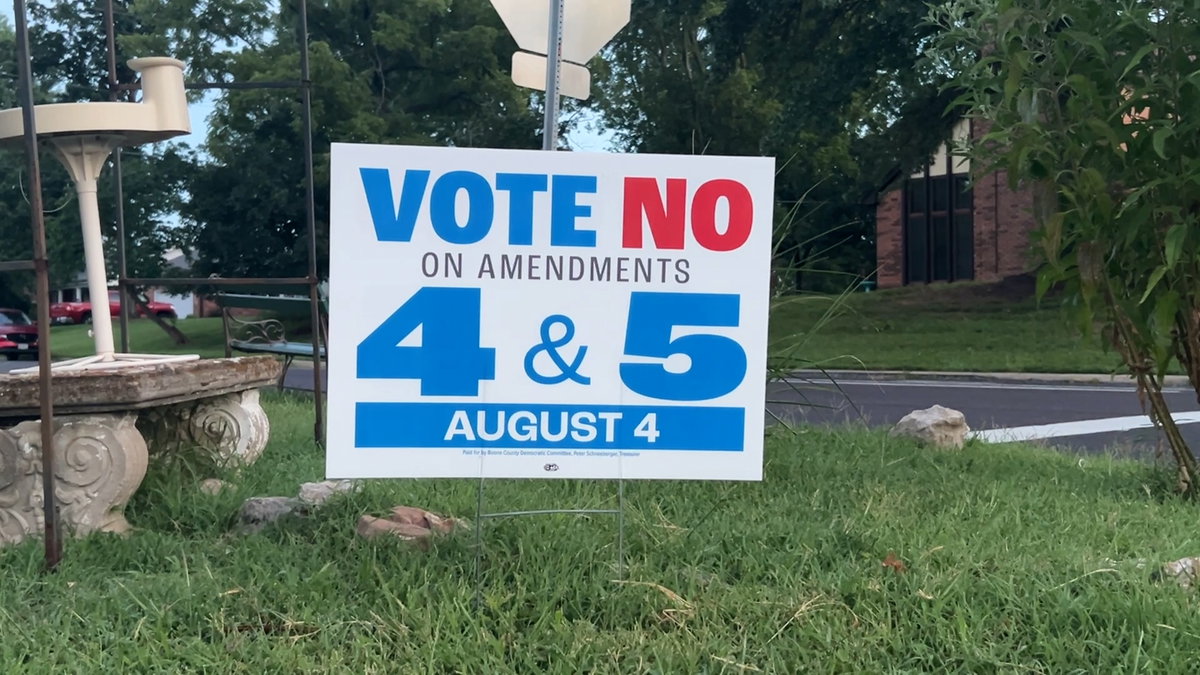
Some left-leaning political organizations are getting together on Saturday for a “Get Out The Vote” rally advocating that voters turn down August ballot Amendments 4 and 5.

If passed, Amendment 4 would require a majority of voters in all eight of Missouri’s congressional districts to approve the initiative petition on the ballot. People in opposition argue that it is too strong to pass an initiative petition because only one district needs to vote it down.

“The public in Missouri needs to read that amendment so they understand that 5%–that’s how they’ve written it–5%. Any district can go against a majority vote,” Abortion Action Missouri volunteer Peggy Neale-Lewis said. “That’s ridiculous. I mean, there is no logic, and it’s written that way.”

Amendment 5 is a proposal to phase out the state income tax. Before lawmakers can adjust any taxes, voters need to approve the measure. Some people, including some Republicans, are hesitant to give immediate support because Amendment 5 asks voters to trust lawmakers in the 2027 legislative session to create a plan to phase out the income tax.

Laborers’ International Union of North America Local 955 deputy business manager Andrew Hutchinson said rejecting Amendment 5 at the ballot box protects Missouri consumers from the “everything tax.”

“If Amendment 5 passes, this would allow them [lawmakers] to not only raise sales taxes but apply it to services that have never been taxed before. Everything from haircuts to labor charges at the auto shop to healthcare to prescription medicine,” Hutchinson said.

He also notes that both Republicans and Democrats are against the measure.

“Partisanship doesn’t play that big of a role,” Hutchinson said. “We have a lot more Republican, conservative-leaning members [of LiUNA] in Kirksville, and I think they’re fully clear that passing Amendment 5 would do harm to the state.”

In Columbia, groups including Abortion Action Missouri, Missouri Jobs with Justice Voter Action and other grassroots organizations will gather at noon at the Unitarian Universalist Church, located at 2615 Shepard Blvd.

Another rally called “Good Trouble Lives On” in Jefferson City started at 10 a.m. at the Capitol and will be followed by a march downtown.

Click here to follow the original article.
Kehoe planning federal disaster declaration request for July 9-11 storms

Steven Lambson

COLUMBIA, Mo. (KMIZ)

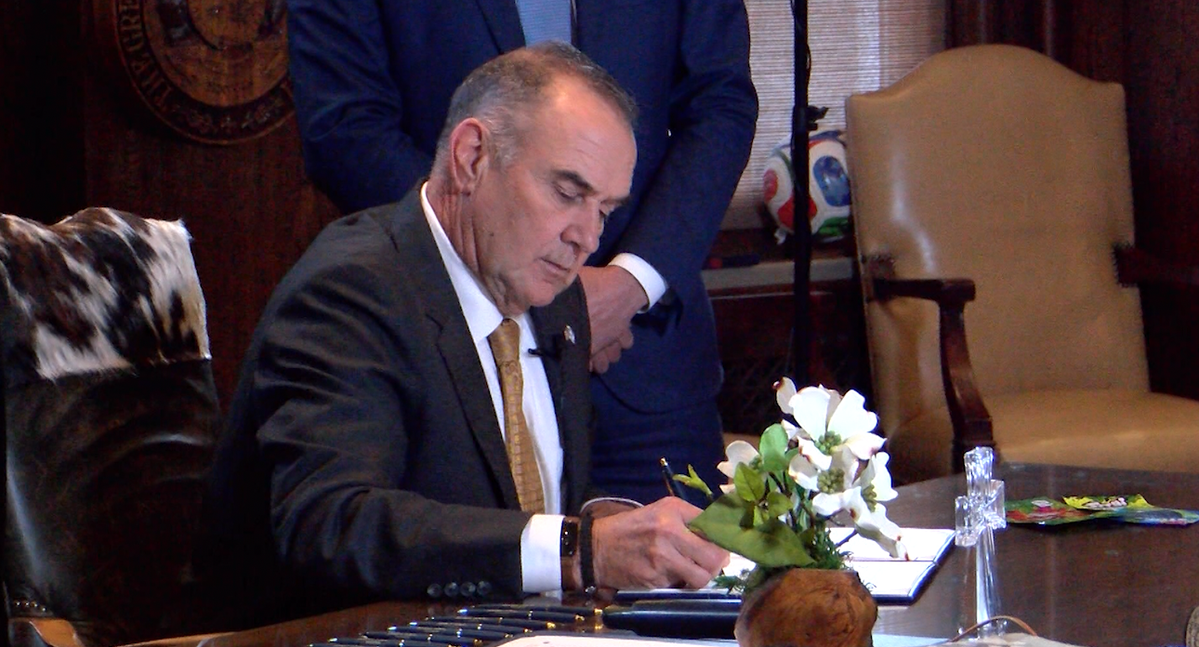
Governor Mike Kehoe announced Friday that he is asking for local, state and federal damage assessments from flash flooding and storms over July 9-11.

The request comes in advance of an expected request for a federal disaster declaration. Kehoe said in a news release that the State Emergency Management Agency (SEMA) and Federal Emergency Management Agency (FEMA) will join up for damage assessments in nine counties.

“These joint damage assessments with FEMA will verify damage to roads, bridges, and other infrastructure in support of a request for a federal disaster declaration and federal assistance,” Kehoe said in the news release. “This is an important next step as we continue working to assist our impacted communities.”

The counties to be assessed include Bollinger, Crawford, Madison, Morgan, Reynolds, Ripley, Washington and Wayne. The news release said more counties could be added as damage documentation continues.

Missouri Task Force 1 deployed to Reynolds County after heavy flooding in areas along the Black River. Floods left one person dead and forced evacuations, including more than 200 campers and staff from Camp Taum Sauk in Lesterville.

The news release said SEMA’s Emergency Human Services section is working with local and state agencies and organizations to form a Multi-Agency Resource Center (MARC) in Reynolds County. MARCs are central locations where recovery and support resources can get to those who need them, including cleaning supplies, legal services, financial aid and insurance information.

Click here to follow the original article.
Missouri election officials assure voting systems are safe, reliable

Sutton Parker

COLUMBIA MO. (KMIZ)

After a national address from President Donald Trump at the White House, in which the president claimed declassified documents revealed vulnerabilities in the country’s election systems, some election officials in Missouri are reassuring the systems are secure.

In his speech, President Trump claimed there were more than a quarter of a million non-citizens on voter rolls, but did not provide specific evidence that any votes or election outcomes in 2020 had been altered.

Trump used his speech to also urge Congress to pass the SAVE America Act, which would include new voter I-D requirements. The act has stalled in the Senate, and Republicans said they don’t have the votes.

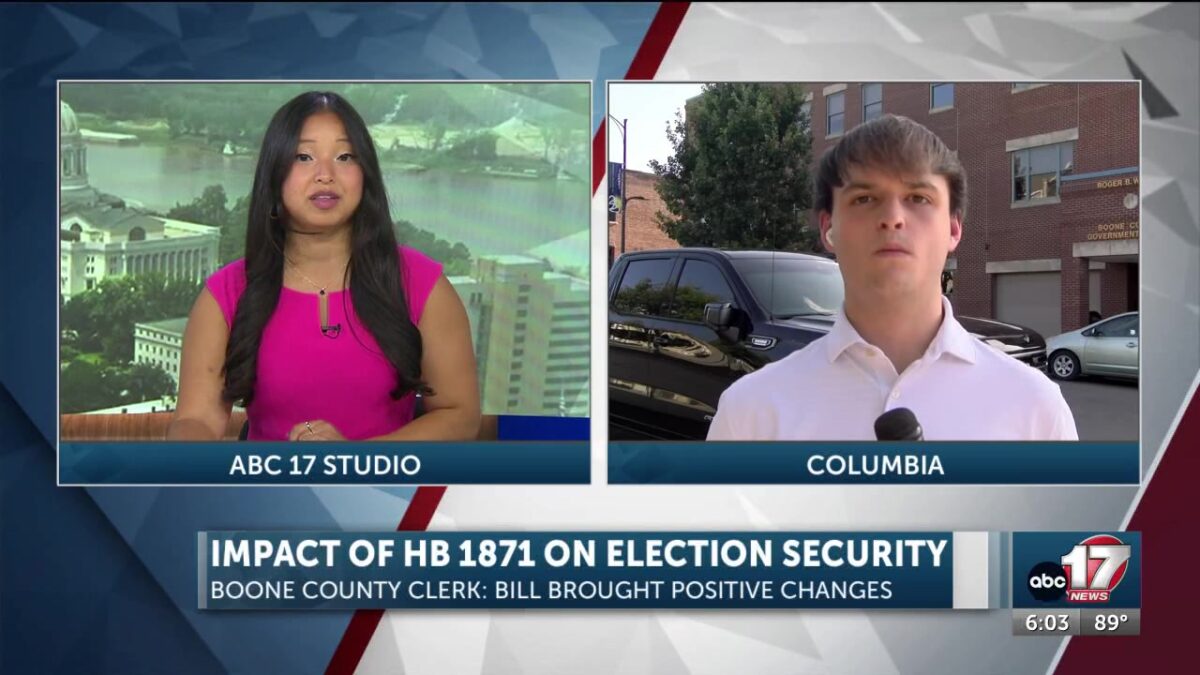
Boone County Election Clerk Brianna Lennon said that she did not pay much attention to the President’s speech, but expressed confidence in election laws in Missouri.

“You know, I think given that elections are so decentralized and how little role the federal government has to play in our local elections, I don’t think very much of what the federal government is doing in terms of, like, elections administration has an impact on Boone County,” Lennon said.

Lennon added that in past legislative sessions, the state has actually strengthened election laws.

That includes House Bill 1871, a newly-signed law that will specifically target election scheduling, voter access rules, and candidate requirements.

The bill will also allow people who show up to vote in-person absentee without an I-D to cast a provisional ballot.

Lennon said that while the average voter might not notice the effects, the bill has very positive election administrator changes.

“It allows us to make sure that people can access provisional ballots during absentee voting. It allows us to make sure we’re serving military and overseas voters in a more consistent way,” Lennon said.

Additionally, Lennon adds that the Boone County Clerk’s Office has been hard at work ensuring the upcoming August 4th election goes smoothly.

Lennon said they just finished logic and accuracy testing of voting equipment. She added that every voter uses a paper ballot—marked either by hand or via an accessible touchscreen—which is then processed by a tabulator that bipartisan teams thoroughly test before each election.

Lennon said the clerk’s office is also in the process of training election judges ahead of the election.

When it comes to voter registration in the state, Missouri does not require voters to show proof of citizenship when registering to vote.

Clinton Jenkins, the President of the Missouri Association of County Clerks and Election Authorities, said that the state only requires voters to check “yes” to indicate that they are a citizen.

“The only thing that’s on there for an application for registration is it just asks, are you a citizen of the United States, yes or no? So right now, we really don’t have the authority to ask for proof of citizenship when somebody registers to vote,” Jenkins said.

Lennon said she believes the process is a great way to ensure voters are attesting their citizenship.

“I think checking yes or no is a great way to ensure that people are doing what they are supposed to do, because they’re testing under penalty of perjury,” she said.

Lennon said that despite national rhetoric, illegal voting is practically nonexistent in local elections.

“I have not experienced, nor do I think any of my colleagues have experienced a vast number of people who are not eligible to cast ballots in the state of Missouri,” she said.

Both officials agree that if any changes are made to existing voter registration regulations, they would want to ensure it does not make the election process harder for citizens or clerks.

“I think if we’re going to talk about doing verification or additional requirements on voters or additional requirements and elections administrators, we need to make sure that what we’re doing doesn’t make the voting process harder,” Lennon said.

“We don’t want to add any hurdles to, you know, American citizens applying and registering for their right to vote,” Jenkins said.

Click here to follow the original article.

CPD considering new drone program if proposed public safety sales tax is approved

Mitchell Kaminski

COLUMBIA, Mo. (KMIZ) 

The Columbia Police and Fire departments held their final scheduled Public Safety Sales Tax meeting Friday, making one last push to convince voters to approve a 1% public safety sales tax during the Aug. 4 election.

The meeting at Daniel Boone Regional Library marked the sixth and final public session held across Columbia’s wards between July 9 and 17, as city officials continued efforts to educate voters about the proposed tax.

If approved, the additional 1% sales tax is expected to generate an estimated $38 million annually, with the revenue dedicated exclusively to the Columbia Police and Fire departments. City officials estimate about one-third of that funding would come from sales made in the downtown area.

CPD says it plans to use the extra funding to help hire an additional 50 police officers, build a new headquarters and modernize its public safety tools. 

The push to upgrade the department’s technology is designed to help bring new tools to officers in the field. On Friday, CPD officials said they are considering updated body-worn cameras that could reduce reliance on written reports, along with translation technology already used by larger cities to help officers communicate more effectively with residents who speak different languages.

This comes after Columbia Police Chief Jill Schlude told ABC 17 News in May that technology investments the department has already made, including Flock cameras, have helped improve the department’s clearance rate.

“I don’t think the leveraging of the technology can be understated. The expansion we’ve done with everything from the body-worn camera program to in-car cameras to the Flock system has just really increased our I think, our efficiency and our accuracy in our investigations,” Schulde said. “The folks that are boots on the ground doing the work tend to have the best ideas about what they need and what the scope is of what they need. And so we would definitely have that conversation as a department again.”

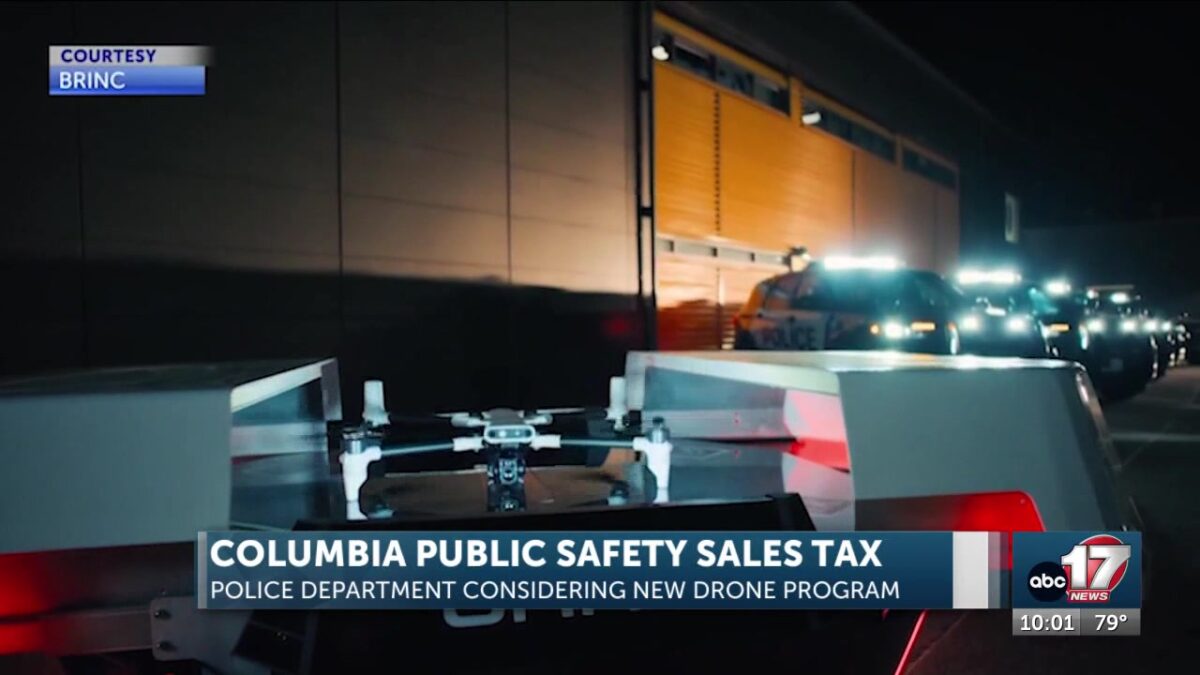
If the sales tax is approved, Schlude said another tool the department is exploring is the use of first responder drones.

“That’s something we’re definitely interested in here. The officer safety aspect of that is very compelling, as well as getting eyes up early to see whether or not someone really has a gun or do they have a stick or a cell phone. I mean, all those things are really helpful to officers responding to a call,” Schlude told ABC 17 News in May. 

Police and fire agencies across the United States are rapidly adopting “drone as first responder” programs, with dozens of departments now launching drones to 911 calls before officers arrive. 

The small unmanned aircraft are equipped with zoom and thermal cameras, lights and real-time communications that launch from stations or rooftop docks to stream live video to dispatchers within minutes of a call.  

Seth Fallik, chair of the University of Missouri-Kansas City’s Department of Criminology, said while drones may not solve every crime, they can provide valuable information during active situations.

“These are traditional drones as we know them, but they have the ability to, in the first responder program, get to the scene earlier. Now, there’s a bit of a background here. We know that most crimes won’t be solved if law enforcement response time was even zero. But that doesn’t mean that we still can’t glean something from responding to traffic or other types of incidents that are ongoing,” Fallik told ABC 17 News. 

The concept grew out of public safety drone use that began in the early 2010s, but formal Drone as First Responder programs took off in the late 2010s and early 2020s and have since spread to cities in Missouri, including Blue Springs, St. Charles County and O’Fallon, with St. Louis police also pursuing a citywide program. 

Fallik says the Kansas City Police Department has already seen early returns in helping improve officer safety. 

“I think they’re big fans of it in terms of the officer safety component. It basically just provides an understanding of the landscape prior to arrival, which offers this sort of big question for law enforcement in their responses. I think we’re still early on in terms of how it could be used for a whole host of things,” Fallik said. “Think about large events. We just hosted the World Cup here. Being able to have drones in the sky can help with crowd control as well.”

While the concept of using the first responder drones is still relatively new, Fallik believes it will continue expanding in larger communities.  

“I think it’s an adapt-or-die situation for folks that are in urban spaces. But if you’re policing in rural America, which is the bulk of law enforcement agencies, it’s not necessarily something that you’ve got, one, the resources to support or the crime to sort of respond to it. So I think certainly our larger cities are going to have to move into these spaces,” Fallik said.

Columbia falls into the category of communities where officials believe additional technology could help keep up with growth. Since 2000, the city has added roughly 49,000 residents and more than 15 square miles of land, increasing the area officers are responsible for covering. As the city continues to grow, so has the demand for emergency responses.

However, Fallik said departments need to make sure residents are part of the conversation before implementing technology that increases surveillance. CPD faced some pushback when it first introduced Flock cameras, with some residents arguing that the technology could compromise privacy. Fallik said those concerns highlight why departments need community support before adopting new tools.

“I always sort of caution anytime you’re putting up a camera or you’re sort of providing some sort of surveillance, you get the approval of the community before you do that,” Fallik said. “You want it to be a welcome technology as opposed to one that’s being imposed. I think, for what it’s worth, these are often reactive as opposed to proactive. So people are calling 911 and asking for law enforcement assistance. This is a tool at their disposal.”

Click here to follow the original article.