Columbia Police Department educates public ahead of July 1 start of median restrictions

Erika McGuire

COLUMBIA, Mo. (KMIZ)

Public education efforts are underway by the Columbia Police Department as the city’s new median ordinance is set to take effect July 1.

CPD Lt. Clint Sinclair, who is overseeing the implementation, said education efforts began the first week of April, providing a three-month window before the law takes effect.

“I think we’re somewhere between 60 and 70 officers on patrol,” Sinclair said. “We pushed our directive saying, ‘Hey, if you’re on patrol and you see conduct that will violate the ordinance when it goes into effect, go ahead and stop and have a conversation with them,’ and then we also have some of our specialty assignments that work with community partners,”

Officers have been provided with a flyer they can distribute, and resource providers are also using the materials as part of the public education effort.

A flyer used to educate the public on the city’s new median ordinance created by the City of Columbia.

The city has also created a webpage outlining the ordinance’s criteria and identifying the areas where it applies, along with sharing videos on CPD’s social media pages.

“We’ve been working on reducing pedestrian fatalities for a long time, and this is another step in that direction,” Sinclair said.

When enforcement begins on July 1, Sinclair said officers will focus on warnings and education before issuing citations for repeat violations.

“We’re always looking for voluntary compliance first, and I would anticipate, as with most things, we try to get people warnings, and it’s the repeated behavior, the repeated conduct that then we’re looking at maybe a citation,” Sinclair said. “Part of the early campaign now is to maybe give those warnings now and give time for people to prepare for the ordinance to come into effect,”

Sinclair said the ordinance is not based on what a person is doing while standing on a median, but rather on their location. City leaders have been adamant about that aspect of the law so that it withstands First Amendment scrutiny.

“It doesn’t talk about panhandling or protesting or demonstrating. It’s just strictly where you are in the roadway, and it doesn’t matter what you’re doing in a median,” Sinclair said. “If you’re asking for money, if you’re protesting something, if you’re fundraising, none of that matters.”

According to the city’s website, remaining on a narrow median after two light cycles will be considered a violation. Officers will address violators and ask for voluntary compliance before writing a ticket.

Sinclair said officers will not put handcuffs on people or take them into custody just for violating the ordinance.

High-priority areas

The 47 identified crash areas where data shows the highest risk of pedestrian-vehicle crashes are where officers will prioritize enforcement, according to the city.

Some of those areas include:

College Avenue and University Avenue

College Avenue and Rollins Avenue

Stadium Boulevard and Monk Drive/Champions Drive

Business Loop 70 and Providence Road.

“We anticipate this being a complaint-driven or work-driven ordinance, meaning that people will be calling in non-emergency or reporting violations,” Sinclair said.

Those who violate the ordinance can face a fine up to $500, but Sinclair says no one would face jail time for a violation.

ABC 17 News rode along in Sinclair’s patrol vehicle to observe the city’s education efforts. During the ride-along, Sinclair contacted two people on medians that would be off-limits under the ordinance. Both said they were already aware of the ordinance and its requirements.

Zachary Gramke, who said he relies on medians to get by day-to-day, said he learned about the ordinance through word of mouth. While standing on a median on College Avenue, which would be in violation of the ordinance, he questioned the policy, saying it limits access to public space.

“It’s a public space, it would be against my rights to remove me unless I’m breaking the law,” Gramke said. “It definitely puts me in touch with people I wouldn’t be able to get in touch with anyway,”

Gramke said he makes anywhere from nothing to $40 a day on medians and will need to find a new location once the ordinance takes effect.

“I may find a different place, but I guess it comes down to how hungry I am. I have 95 cents in my pocket, and my next meal is not promised. I guess I would do whatever I have to do to eat,” Gramke said.

Gramke believes the city should be focused on bigger issues rather than a median ordinance.

‘I think we’ll have to keep them busy with something else. We should be worried about bigger things like downtown shootings and things like that,” Gramke added.

The Columbia City Council passed the ordinance Feb. 2 on a 5-2 vote. Ward 1 Councilwoman Valerie Carroll and Ward 2 Councilwoman Vera Elwood voted against the measure, while Mayor Barbara Buffaloe was among those who voted in favor.

The ordinance regulates road crossing and traffic islands for both motorists and pedestrians at intersections with speed limits of 35 mph or higher, average daily traffic volumes of at least 15,000 vehicles, or medians narrower than 6 feet.

A City of Columbia map pinpoints medians greater than 6 feet wide and marks roads with higher speeds and traffic volumes.

Several intersections in the city are affected, with the five busiest intersections being:

Providence Road and Stadium Boulevard

Providence Road and Broadway

Broadway and Stadium Boulevard

Broadway and College Avenue

Broadway and Old Highway 63

Drivers can no longer hand items to pedestrians from their vehicles. The ordinance also prohibits drivers from stopping in travel lanes in a way that creates a traffic hazard or allowing occupants to exit a vehicle in a travel lane or major corridor intersection, except during an emergency.

Motivated by safety

The city first proposed the ordinance after hiring George L. Crawford & Associates to conduct a street and intersection safety study.

According to the study, between 2019 and 2023, Boone County experienced 3.1% of the state’s pedestrian fatal crashes. During the same period, 20.4% of deadly crashes in the county involved pedestrians, which is above both the national average of 18.7% and the state average of 11.9%.

In Columbia, between 2019 and 2023, the study found the city experienced 2.6% of all pedestrian deaths within Missouri, representing 76% of Boone County pedestrian deaths. It also found that 32% of deadly crashes in Columbia were pedestrian-related, well above both state and national rates.

Local Motion, a Columbia-based group that advocates for transportation equity, said it was initially against the ordinance and was not in favor of its naming.

The group said it is encouraged by the city’s focus on pedestrian safety but believes the ordinance does not address some of the community’s biggest transportation needs, and there were better approaches to improving pedestrian safety rather than regulating pedestrian behavior.

“In our opinion, the ordinance didn’t include some of the things that we felt like were the biggest priorities for improving that like, Complete Streets policy update, which is happening now,” Local Motion CEO Mike Burden said. “Improving and investing more in sidewalks and sidewalk infrastructure, having leading pedestrian intervals that really prioritize pedestrians getting through intersections, having larger refugee island so that folks who need more time crossing a major intersection have an adequate space.”

Click here to follow the original article.
Man seriously injured in Pulaski County crash

Jazsmin Halliburton

COLUMBIA, Mo. (KMIZ)

A 26-year-old Dixon man was seriously hurt in a Pulaski County crash just after 2 p.m. Tuesday.

According to a Missouri State Highway Patrol crash report, the man was driving a 2012 Ford F150 south on Highway 28 at Highway O when he went off the right side of the road.

The truck returned to the road and began to skid. The truck then went off the left side of the road, hit a ditch and overturned before hitting a construction sign and a culvert. The truck came to a stop on its top.

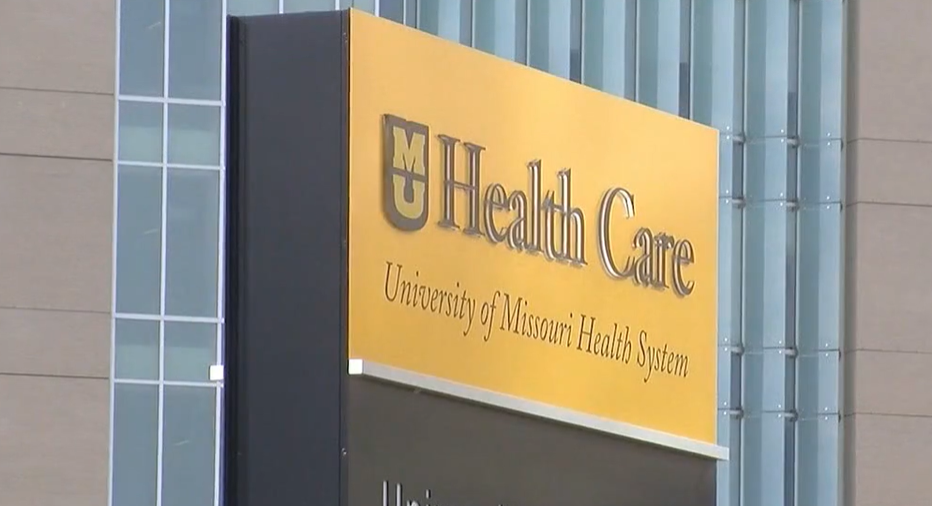
The man was flown to University Hospital with serious injuries. The report states the man was not wearing a seatbelt at the time of the crash.

Click here to follow the original article.

Columbia and Boone County holds a joint work session on homelessness and housing study

Jazsmin Halliburton

COLUMBIA, Mo. (KMIZ)

City of Columbia and Boone County officials met for a joint work session Wednesday morning regarding homelessness and a housing study.

Boone County and Columbia officials met at Boone Electric Cooperative at 9 a.m. Wednesday.

According to the meeting agenda, officials discussed the Homeless Strategic Plan, Housing Continuum Update, Cross-Jurisdictional Collaboration and Housing Study Recommendations Crosswalk Updates.

Regarding the Homelessness Strategic Plan, staff is working on a public engagement plan in order to gather data that will be shared with city council members by the end of the year.

The Housing Study Recommendations Crosswalk Updates summarizes the steps taken by Boone County and the City of Columbia since the release of the October 2024 housing study. Some updates from both Boone County and Columbia include:

Boone County staff are researching ways to make a sustainable housing trust fund.

Passing zoning updates to support the creation of affordable housing after the Boone County Commission passed zoning updates back in March.

A revised definition of “family.”

General dimensional standard revisions for all previously platted lots before March 2017.

Boone County and City of Columbia officials will have another joint work session scheduled on Sept. 9.

Click here to follow the original article.
QUESTION OF THE DAY: Will Columbia’s median ordinance improve pedestrian safety?

Matthew Sanders

Columbia’s police department has been at work educating people on a law taking effect July 1 that will make it illegal to linger in medians at busy city intersections.

The law is like those in several other cities, and by its letter, looks to prevent collisions between pedestrians and vehicles at busy medians. However, critics see it as a blatant way to move panhandlers, many of whom are homeless, out of public view.

At least one pedestrian safety group also says it’s not an effective approach to making roads more pedestrian-friendly.

Do you think the new law will make roads safer for pedestrians? Let us know by voting in the poll.

Click here to follow the original article.
Columbia 4th Ward candidates make case to voters at public forum

Mitchell Kaminski

COLUMBIA, Mo. (KMIZ) 

Candidates vying to fill Columbia’s vacant Fourth Ward City Council seat laid out competing visions for growth, government efficiency, housing and public safety during a forum Tuesday hosted by the Columbia Board of Realtors.

The forum, held at 311 Bernadette Dr., featured former Columbia Utilities Director Dave Sorrell, attorney Sharon Jones and social services attorney Ryan King. The election will be held Aug. 4, with the winner serving the remainder of former Councilman Nick Foster’s term through April 2028.

Candidates were asked to address some of the city’s biggest challenges, including housing affordability, homelessness, infrastructure and city finances.

King, a social services attorney, judge advocate in the U.S. Army Reserve and member of Columbia’s Affordable Housing and Community Development Commission, said his campaign centers on preserving Columbia’s identity while managing growth intentionally.

“We need to to make sure we’re building around parks and we’re not building around the sprawl,” he said. “I like to think of St. Louis County for example, of what we’ve got to avoid, even though I love many places in St. Louis County. Let’s have parks be the center and let’s not have the big-box retail at the center. Let’s be deliberate about how we build our infrastructure, especially with our budget issues.”

King also framed himself as an alternative to the current structure at city hall.

“As a candidate, I feel like I’m largely outside of the city government city hall system, but I think we need someone who’s, outside of the machine,” he said.

On city finances, King said Columbia should avoid expanding faster than revenues allow.

“I think we just need to be more careful not to get too big too quickly. I think it’s nice to build things out in terms of other employees and make sure everyone’s paid but at the same time,” King said. “We need to wait for revenues to catch up.”

King also focused heavily on housing and homelessness, saying Columbia should encourage denser housing options and remove barriers to accessing services.

“I think we can emphasize multifamily [homes]. You know, what’s better than one home on a lot? Two homes on a lot, maybe three,” he said

King said homelessness requires solutions beyond expanding shelter space.

“In my experience, I know that a lot of, unhoused people would qualify for public benefits if they could just get through the application process. And, that’s a big hurdle. When you’re homeless, you don’t have, a mailing address. You probably don’t have all these things, and so much is still done on paper through the mail. So, one of the things I’d like to focus on is working with nonprofits to, take more of a social work aspect. It’s an approach that won’t cost the city any money we can apply for grants to try and get people approved for public benefits that they otherwise would qualify for.”

Jones, who is a lobbyist and currently serves as the chair of Columbia’s Planning and Zoning Commission and has lived in Columbia for 26 years, said she entered the race after being encouraged by city and county leaders following Foster’s resignation.

She said her understanding of city processes and willingness to challenge decisions sets her apart.

“If you want someone who will ask the tough questions and make the tough calls, who understands our ordinances, how they’re made, and how the processes of city government work, and it’s going to do all of that, will protect the things that make Columbia an amazing place to live, then I think you should vote for me,” she said.

Jones identified private sewer systems and utility capacity as major issues facing the Fourth Ward and said the city should be more “intentional” when evaluating future projects. She also argued Columbia could better manage its budget by relying less on outside consultants.

“I know that at least two plans where we spent, a couple of million dollars each, if not more, to hire these consultants, only to not use the plans that they presented,” she said. “So I think that’s one easy place to go. And consultants may sometimes be the right answer, and sometimes you can’t do that in-house. But I think a lot of times we jump to that, especially if we think it might be a controversial issue rather than having the wherewithal to say we know it’s not popular, but it has to be done.”

Jones also proposed structural changes to city government, saying Columbia would benefit from a full-time City Council.

“I think that the answer is that you need a full-time City Council. The problem isn’t that we’ve got too much public engagement, or that our discussions are too lengthy, or that we’re getting too much into the weeds on important questions,” Jones said. “The problem is that we have a limited number of meetings a month, and that we have to fit all of these things into that limited number of people.”

Without a charter change, Jones suggested increasing work sessions and allowing virtual meetings. She also argued delays from city leadership contribute to lengthy meetings.

“I think often they take so long because the top-level staff are delaying answering the questions they’re getting from City Council, and the City Council doesn’t want to vote until their questions get answered,” she said. “So I think this goes back to what I was saying about we need to fix that balance, because right now we’re in a place where our city council is asked by the voters to make policy decisions, and when they ask questions and when they seek information, they’re getting stonewalled.”

Jones also said she viewed the city’s new median ordinance as unconstitutional and would have voted “no” because it targets the homeless. 

Sorrell, who has worked for the city for 24 years as an engineer in the public works department, said his experience delivering city services gives him a unique perspective.

He said his campaign priorities include infrastructure, public safety and housing density ,and emphasized that he would approach the council as a policymaker rather than an activist.

“The things I think is really important are responsible financial management, reliable core services, and planning for our future,” Sorrell said. “Those are the things that guided my 24-year career with the city. I spent my entire career working on the practical side of government and have helped deliver the services that our resident depend on. I understand how the government works. I understand the challenges the city faces because I’ve seen it firsthand.”

Sorrell also criticized the city’s use of utility revenue transfers.

“I think that the huge transfer of funds from the utility revenues to the general fund is not very responsible,” he said. “That’s such a large transfer on an annual basis that the general fund has become dependent upon those transfers, and it just dries up our utility rates.”

On decision-making, Sorrell said the council should focus on evaluating proposals based on long-term benefits rather than opposition from vocal groups.

“Every project or program that you propose, you’re going to have people that are in favor of you and people that are opposed to it,” he said. “What we need to do as a council, is evaluate the project for the program for its merits. And is it in best long term interests of community? And if it is, it should be approved over some local injection or a small group of people that very vocal.”

Sorrell also supported the city’s median ordinance, citing concerns about pedestrian safety, and said council meetings could become more efficient by focusing more heavily on policy discussions and moving public hearings later in the agenda.

The forum also included a discussion on Proposition 1 featuring Columbia Police Chief Jill Schlude, Fire Chief Brian Schaeffer and Third Ward Councilwoman Jacque Sample. The measure asks voters to approve a new sales tax to support public safety, with city leaders saying the funding would go toward facility upgrades, new technology and staffing improvements.

Click here to follow the original article.

60-year-old man dies after vehicle backs into river in Miller County

Ryan Shiner

COLUMBIA, Mo. (KMIZ)

A 60-year-old man died Tuesday after his vehicle went into the Osage River in Miller County, according to a crash report from the Missouri State Highway Patrol.

The report says a 60-year-old man from Clark, Missouri, backed a 2016 Dodge Ram and a trailer to a boat ramp. A pedestrian – a 66-year-old woman from Clark – pulled the boat back onto the trailer and then walked up to the front of the boat to secure it, the report states.

The report then says “for an unknown reason,” the Ram and trailer started backing into the river, which caused the woman to fall between the vehicle and trailer.

Both the vehicle and trailer became submerged while the man was still in the truck, the report says. MSHP wrote the man was not able to get out of the truck.

The man was pronounced dead at the scene by the Miller County Coroner, according to the report. The woman had minor injuries and was brought to Lake Regional Hospital by ambulance.

MSHP reports do not name those involved in crashes.

Click here to follow the original article.
Jefferson City group hosts public hearing on housing needs

Marie Moyer

JEFFERSON CITY, Mo. (KMIZ)

In a partnership with the City of Jefferson City, the Capital City Housing Task Force is looking for public comment on the state of housing in the city Tuesday evening.

The Capital City Housing Task Force worked with the consulting group Housing Innovations Group LLC to create the Jefferson City Housing Supply Strategy, a housing study that outlines steps the city and its partners can follow to improve housing stock.

Part A — City of Jefferson Draft Housing Supply Strategy_2026_05_28_for Distribution to CCHTF (1)Download

The study has found the housing shortage is mainly due to a lack of variety in housing supply and affordable housing options. The value of a typical Jefferson City home increased from about $158,000 in 2019 to approximately $270,000 in 2026, an increase of roughly 73%.

The group also reports low vacancy rates for both rental and owner-occupied housing. Of the homes that are available, many are not affordable or well-suited for low-income or single-person workforce households.

“There just isn’t enough housing,” Capital City Housing Task Force Chair Susan Cook said. “People are just struggling to be able to find housing that they can afford and just to be able to find housing in general.”

Housing growth is part of the city’s larger “Race to 50” initiative. In 2023, Mayor Ron Fitzwater created the plan and set a goal to increase Jefferson City’s population to 50,000 residents. Planning for the project was also directly tied to the 2019 tornado that destroyed around 152 housing units in the city, with 95% of those being rentals.

The city has been working on adding to the housing stock, including affordable housing developments in Stronghold Landing and off Rock Ridge Road.

“We saw 30 units a year being permitted and all of a sudden, now we’re up to like 120, 150 in 2015, so it’s real progress,” Jeff Lubell, Founder of Housing Innovations Group LLC said. “On the other hand, it’s still about half the household growth rate that we see nationally.”

The housing supply strategy is broken up into three development phases, which would take place over several years. Lubell told ABC 17 News the group will be accepting public comment on the plan for the next few months, and then it will be presented to the City Council for approval.

“The whole purpose of this strategy was, ‘Can we develop a road map that the city can then implement?’ And so we’ve developed the draft, and we’re getting input on the draft, we’re going to revise it based on that input, and then hopefully the city will put it into action and see some progress in the next year or two,” Lubell said.

Part B — City of Jefferson Draft Housing Supply Strategy_2026_05_28_for distribution to CCHTF (1)Download

Phase 1 will start with development in downtown Jefferson City. This includes adding new housing and renovating older locations.

“There’s a lot of potential, a lot of demand, a lot of interest in living downtown, a lot of people coming into the city,” Lubell said.

Lubell added the plans for the convention center and river market would grow interest in the downtown, and the area has many opportunities for federal grants.

“Federal incentives like new market tax credits and opportunity zones, you have called a basis boost for low-income housing tax credits and you have a lot of historic tax credits,” Lubell said. “All of these are subsidies that you can use to create more housing.”

Phases 2 and 3 would focus on the outer areas of Jefferson City and will develop based on momentum from Phase 1, and need more infrastructure to support them.

“Phase 2 is more about scaling some of the more promising ideas that were piloted in phase one, then Phase 3 is kind of longer term, bigger issues around infrastructure, around the borders of the city,” Lubell said.

The Housing Supply Strategy also looks to more unconventional and economic housing solutions.

“This plan recommends a range of strategies, including developing more housing in a range of price points, including using factory-built housing and other lower cost housing types, but also thinking about ‘can we, maybe expand the boundaries of the city to bring more parcels into the city and subject them to the city’s development incentive?'” Lubell said.

Residents who missed Tuesday’s meeting are invited to read the recommendations and give input to the City of Jefferson City Planning Division at jcplanning@jeffersoncitymo.gov.

Click here to follow the original article.
Bond denied again for man accused of smothering woman, putting body in trash bin

Ryan Shiner

COLUMBIA, Mo. (KMIZ)

A Columbia man who is accused of murder and other charges was denied bond again during a hearing on Tuesday.

Andrew Acton, 53, is charged with abandoning a corpse, tampering with evidence and second-degree murder. He is being held at the Boone County Jail.

Court documents from previous reporting indicate Acton is accused of smothering a 47-year-old woman to death between Oct. 1, 2025-May 10, 2026. Previous reporting shows he was in a relationship with the woman, though her identity has not been publicly revealed by officials.

Acton is also accused of putting the woman’s body in a City of Columbia roll cart and dumping it in Perche Creek.

Acton was arrested in May during a traffic stop after law enforcement found his Chevrolet S-10 pickup truck matched a similar vehicle seen entering the Eagle Bluffs Conservation Area on May 11. A security camera in the area observed that the truck was carrying a City of Columbia trash bin.

A fisherman initially recovered the trash can at the Providence Road boat access.

Click here to follow the original article.

MSHP warns of scam using patrol’s likeness

Ryan Shiner

COLUMBIA, MO. (KMIZ)

The Missouri State Highway Patrol’s Division of Drug and Crime Control is warning the public of a new scam that is using MSHP’s likeness.

The release says scammers are using social media to contact targets and telling the victims that they had sent a package to their residence.

The victim will then receive a fake notice on the social media messaging application WhatsApp that includes MSHP’s logo, stating the package was “seized for inspection,” by a “VIP Delivery Transit Program,” the statement says. The message will then ask for a “processing fee” by using gift cards, the release says.

“The Patrol does not have a ‘VIP Delivery Transit Program,’ and citizens who have received a similar notice should report the scam to their local law enforcement agency,” the release says. “As a reminder, the Patrol will never solicit funds, demand fines, or request payment for any services provided. The Patrol will not utilize email, social media, or chat platforms to contact/converse with individuals.”

Click here to follow the original article.

Missouri school districts facing state budget cuts ahead of the 2026-27 school year

Sutton Parker

COLUMBIA Mo. (KMIZ)

School districts around the state are bracing for budget cuts after the state opted not to increase the public school foundational formula.

Now the Department of Elementary and Secondary Schools is short $190 million in revenue, leading some school districts to have to cut back their budgets.

Last night, the Southern Boone County R-1 School Board approved a $26,193,875 operating budget for the upcoming school year.

The final fiscal plan navigates a projected $936,199 reduction in state funding due to the lower State Adequacy Target.

To manage the budget constraints and match student enrollment, the district will eliminate open positions through normal turnover rather than laying anyone off, while also implementing a 2% baseline cost-of-living increase across all employee salaries.

“The district is taking a measured approach to managing the reduction in state funding while continuing to prioritize classroom instruction and student services,” the district wrote in a statement.

In Kingdom City, the North Callaway R-1 School District faces a projected $350,000 loss in state aid for the 2026-27 school year, driven by funding shortages and proposed state budget cuts.

The deficit comes despite strong local support, including the recent passage of two tax propositions that funded teacher salary increases and a new elementary school. According to a district press release, the anticipated shortfall comes from a drop in the State Adequacy Target and reduced transportation reimbursements in the state budget.

Missouri currently ranks 49th nationally in the percentage of school funding provided by state sources, forcing local taxpayers to absorb nearly 60% of North Callaway’s per-pupil costs.

In Jefferson City, the Jefferson City School District’s proposed budget for this upcoming school year has revenue growing just 0.4%, while the district’s expenses are projected to grow 5.7%.

Todd Filler, a spokesperson for the Missouri State Teachers Association, said the timing of the cuts could not have been worse.

“It’s frustrating for school districts throughout the state. And it puts school districts in a position where, over the summer, they are trying to reconfigure budgets,” he said.

Fuller adds with the shortfall in the budget, there could be cuts to programs and staff across the state.

“We have already seen school districts start to outline those situations for their different communities across the state,” he said.

When it comes to what areas will be affected most by the cuts, Fuller said that it will vary by community.

“It’s just going to vary from community-to-community. I think that in small school districts, there is a reliance on the formula. The expectation is that the money should be there, making it more challenging for those smaller schools,” he said.

Missouri State Rep.Ed Lewis (R-Moberly), who helped craft the most recent state budget emphasized there was no cut to funding, but just no increase.

“You can not calculate your budget on a proposed increase that the governor had no intention of and signaled he was never going to give the extra 190 million dollars,” he said.

He added the additional funding was not in the House budget, the Senate budget, or the governor’s appropriation.

“The governor indicated way back in his State of the State address that he had no indication of increasing over what the state had increased in the previous year,” he said.

Lewis added in the previous year, the state increased funding by more than $500 million in the public school foundation formula.

Click here to follow the original article.