Woman accused of crashing into trailer, fence, tree charged with assault

Ryan Shiner

COLUMBIA, Mo. (KMIZ)

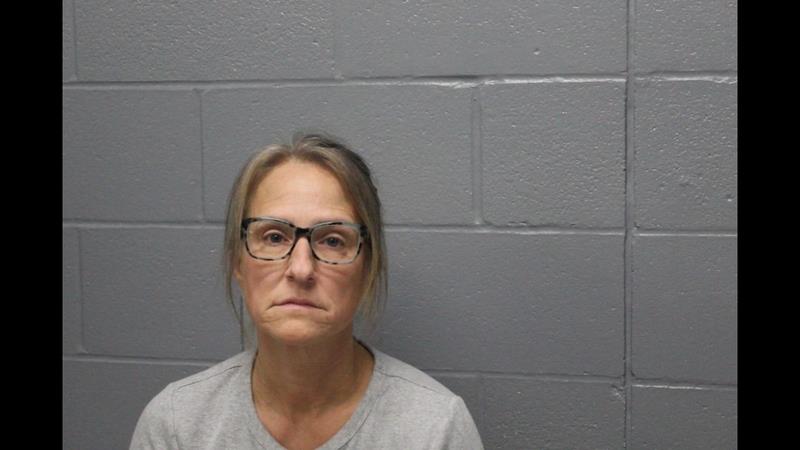
A woman who was accused of repeatedly crashing her 2004 Honda Pilot on Friday night was charged on Monday with a misdemeanor and three felonies in Boone County.

Cassandra Albright was charged with misdemeanor driving while intoxicated, two counts of first-degree assault and a count of leaving the scene of an accident. Police wrote in a press release that she is from Kingdom City, but court information says she is from Columbia. She is currently at University Hospital and is in fair condition. A no-bond warrant was ordered.

The probable cause statement says Albright drunkenly crashed the vehicle into a residence on Stevendave Drive that contained several children and two adults before crashing into a fence and a tree.

The statement says Albright was upset that one of the victims did not allow her to drive her child and tried to stop her from driving in general because she was drunk. Albright then punched the victim in their face before getting into the driver’s seat and crashing the vehicle, the statement says.

Multiple people, including youth, told law enforcement about seeing the crashes, the statement says. After crashing into the home, she allegedly drove westbound on Stevendave Drive and crashed into the fence, the statement says.

Police wrote that they found Albright lying on her back outside the vehicle.

Click here to follow the original article.

Columbia City Council approves Downtown Ambassador Program

Olivia Hayes

COLUMBIA, Mo. (KMIZ)

The Columbia City Council unanimously approved moving forward with a proposed Downtown Ambassador Program.

The program will cost $504,390.03 per year and will be split three ways between the City of Columbia, the University of Missouri and the Downtown Community Improvement District. Each party will pay $168,130.01, according to meeting documents.

The city began having meetings regarding downtown safety, including bringing up the ambassador program, after a Stephens College student was shot and killed downtown in September 2025, according to previous reporting.

The uniformed and unarmed ambassadors employed by Block by Block will help law enforcement to patrol the downtown area and serve as additional eyes and ears for public safety concerns, meeting documents say. The Downtown CID will serve as the primary program administrator, managing day-to-day operations and providing quarterly reports to the city and MU. The group will be seen walking and riding bicycles downtown.

Ambassadors will also help to conduct outreach with homeless individuals to connect them with appropriate service providers, give after-hours safety escorts for downtown employees or visitors when requested, provide documentation of incidents or concerns to law enforcement, and document things like graffiti, trash, or other concerns.

The idea was first introduced to city officials on a staff retreat to Columbia, South Carolina. Other cities apart of the Block by Block Ambassador program include: Gainesville, Florida; Iowa City, Iowa; Fort Worth, Texas; Little Rock, Arkansas; Louisville, Kentucky; Columbus, Ohio; Austin, Texas; and Pasadena, California.

The city believes the program will increase a visible presence in the downtown district, improve coordination between the City, CID, and MU, provide a structured documentation of quality-of-life concerns and fixes in the area and allow sworn officers to remain focused on higher-priority enforcement needs.

Downtown CID Executive Director Nickie Davis said earlier this year that the ambassadors would have to go through training. She also said they’ll work to ensure all street lights downtown are working properly and that all streets are lit. Davis also previously said the District was also considering getting businesses “No Trespassing” and “No Concealed Weapons” signs

The contract will run through March 31, 2027, with the option of four renewal periods through 3031.

Click here to follow the original article.

Former West Middle School teacher charged with more counts of child porn possession

Ryan Shiner

COLUMBIA, Mo. (KMIZ)

A former West Middle School teacher who was charged with statutory sodomy and a slew of other child sex crimes is now charged in another case.

Zachary Hutchinson, of Columbia, was arrested on Friday and charges appeared on Monday in his new case. He is now charged with three counts of child porn possession. He is being held in the Boone County Jail without bond. A hearing in his new case has not been scheduled, but one for his original case was set for Monday morning.

His was charged in his first case from January with three counts of second-degree statutory sodomy, one count of child enticement, sexually exploiting a minor, misdemeanor giving porn to a minor, second-degree promoting child porn and 10 counts of child porn possession.

He was originally put on house arrest after he bonded out of jail on Feb. 4.

The probable cause statement in his new case say police put in a search warrant request of Hutchinson’s Discord account, which is an app used for messaging. Police received information from Discord on April 3, which appeared to show seven videos and 16 pictures of child porn, the statement says.

The probable cause statement in his original case says Hutchinson encouraged the victim to go into his vehicle to perform sexual acts. The victim’s mother allegedly found nude photographs of Hutchinson on the victim’s phone and additional messages appeared to show Hutchinson making plans to meet with the youth.

Text messages described in court documents took place over the course of several days and showed explicit conversations and details of illicit photos between Hutchinson and the victim.

Authorities have repeatedly said that the victim in that case did not meet Hutchinson “as a result of his employment, nor did any known contact occur on school property.”

Click here to follow the original article.
WATCH IN FULL: President Trump discusses aviators’ rescue, Iran war and Venezuela at White House

ABC 17 News Team

President Donald Trump held a news conference from the White House on Monday afternoon.

The president began by talking about the operation to rescue two downed pilots from an F-15E in Iran before moving on to topics like the Iran war in general and the operation to bring Venezuela’s president to the United States for trial.

Watch it here.

Click here to follow the original article.

MU students pack auditorium during town hall after news of funding cuts

Marie Moyer

COLUMBIA, Mo. (KMIZ)

Identity-based student organizations at the University of Missouri held a town hall on Monday after the university said it would stop funding them.

The affected groups are the Asian American Association, Association of Latin American Students, Four Front, Filling in the Space, Legion of Black Collegians and the Queer Liberation Front.

Hundreds of students packed into the auditorium at the Arts and Sciences building on Monday night.

View this post on Instagram

A post shared by Legion of Black Collegians (@mizzoulbc)

“We are moving from outrage to action. We cannot allow this ”intentional erasure’ to happen in silence,” according to a social media post announcing the meeting.

The QLF also made a post announcing the town hall.

According to a release from the University, starting during the fall 2026 semester, the five groups will be losing their designated funding and instead will be considered Recognized Student Organizations, that are the primary title for student organizations on campus. The majority of organizations were informed on Friday, while Filling in the Space was told Monday.

Designated funding for the groups will end in July.

RSOs can also apply for other funding. According to the release, this funding is “on an equal basis with the vast majority of other student organizations.”

According to several of the impacted organizations, the funding application is not guaranteed. Funding also limited to $1,500 per event with a $3,000 cap each semester and a $2,000 travel expense cap each year.

AAA as well as ALAS mentioned hosting annual events like the Asian Night Market and Trip Around Latin America, costing more than $10,000 and $5,000, respectively. Both feature many tables with activities and food for hundreds of attendees.

“It is a significant loss and it is a significant difference because there’s no guarantee that what we plan will happen,” AAA Secretary Chelsea Trieu said. “There’s no guarantee of how much we’ll have, so it’s just hard to anticipate what next year is going to look like.”

The LBC also told ABC 17 News its annual budget was around $60,000 for similar events open to students across the university.

“Our events regularly have hundreds of people coming to it,” LBC Vice President Desmond Jones said. “Having resources and having ways to pull from that to nothing, I think shows the lack of consideration for that organization.”

Jones added that funds are regularly used.

“It’s not fair if every organization isn’t given the opportunity to operate in the way that in the capacity that they have,” Jones said. “We have $60,000 because we’re using it consistently, we’re having those meetings, we’re going to places and we’re doing things that pushes the student body further into more camaraderie.”

All three groups are also umbrella organizations, overseeing and funding special interest and nationality clubs that fall under their association.

Dance group Freestyle Your Expression is one of the few dozen clubs that operates under the LBC. The group is typically given a budget of around $500 each year for event costumes from the LBC’s overall funds.

“We’re using the funding this year to pay for our costumes for the yard show, so that way students don’t have to go so deep in their pockets,” Freestyle Your Expression representative Patience Gamell said. “There’s a difference between recognized student organizations and LBC funding, because with LBC, you know that, either way, you will still be receiving your funding.”

ALAS similarly has eight other multicultural and Latino clubs they help oversee and fund. AAA also has eight additional clubs under its leadership.

“I’ve honestly been crying since Friday,” ALAS Vice President Mia Ramirez said. “We were founded in 1991 and we have done so much since then and this just feels like all the work that they have put in and all the work that they’ve done was for nothing.”

In statements on Instagram, Filling in the Space, Four Front and the Queer Liberation Front pushed back against the decision.

“It disrupts pipelines. It pulls the floor out from under communities that were just finding their footing and it lacts the support that we are trying to give to studets. And it does so without apology,” Filling in the Space said in a statement on Instagram Monday.

“This decision will cause real harm not just to Four Front’s recent progress, but also to the nine underorganizations we serve, many of whom depend on this funding to keep their own organizations running,” Four Front said in a statement on Instagram Monday.

“This decision will cause real harm not just to Four Front’s recent progress, but also to the nine underorganizations we serve, many of whom depend on this funding to keep their own organizations running,” QLF said in a statement on Instagram Sunday.

The move is coming nearly two years after MU dismantled its diversity division amid pressure from Republican political leaders who had promised to end diversity, equity and inclusion, commonly referred to as DEI.

“We will do our best to comply with it because we can’t endanger the funding that really drives our academic and our research pursuits,” MU spokesperson Christopher Ave said.

The Legion of Black Collegians clashed with administrators at the start of this school year, canceling an event after MU officials said the students had to strip Black from its name. A similar dustup happened in 2024.

Click here to follow the original article.
Both sides ready to proceed with Boone County dog breeder’s trial

Jazsmin Halliburton

COLUMBIA, Mo. (KMIZ)

Both sides said Monday that they’re ready to move forward with the trial of a Boone County dog breeder suspected of abusing several animals.

Melissa Sanders, 26, of Columbia, appeared via WebEx in front of Judge Joshua Devine on Monday at the Boone County Courthouse. The state and the defense are ready to proceed with Sanders’ jury trial, which is set to begin April 28. Another pre-trial hearing is scheduled for 9 a.m. April 23.

Devine granted the defense’s motion to endorse.

As of Monday morning, Sanders was listed on the Boone County Jail roster, being held on no bond.

Sanders ran Magnum Opus German Shepherds, where several dead dogs, including a dozen dog skulls, were found on the property when law enforcement served a search warrant in November, according to court documents. Several malnourished dogs were also found at the property.

Court documents say at least two living dogs that were found were on the brink of death. Several dogs have been returned to their owners or are being fostered.

Click here to follow the original article.

Boone County Democrats to hold ‘Empty Chair’ town hall

Jazsmin Halliburton

COLUMBIA, Mo. (KMIZ)

The Boone County Democrats are hosting an “Empty Chair” town hall in Columbia Monday night to discuss citizens’ concerns regarding health care and more.

The town hall will run from 6-8 p.m. in the Columbia Senior Activity Center on East Business Loop 70.

This town hall with empty chairs is supposed to symbolize a void left by representatives who have declined to hold in-person forums.

Community members will have the opportunity to ask questions, demand answers and share their stories regarding concerns with the current state of health care in the U.S., including access, cost and coverage. Residents will also be able to speak on other pressing issues directly to the empty chairs symbolizing the representatives.

A press release for the event states, “while the chairs reserved for elected officials remain empty, the voices of Boone County residents will not be.” Additionally, local democratic party leadership is expected to speak.

Anyone who wishes to speak at Monday’s “Empty Chair” town hall is asked to email the Boone County Democrats in advance at Boonecountydemocrats@gmail.com to be added to the agenda.

Click here to follow the original article.

QUESTION OF THE DAY: Are you voting in the election on Tuesday?

Matthew Sanders

The yearly local elections are here (the first Tuesday in April), and hundreds of candidates and issues will be up for a vote across Mid-Missouri, including every county.

We’ve created a voter guide to help you know what’s on the ballot in your city, school district, or other local government district. For a few races, we were able to interview candidates and explore their positions on key issues.

You can read and watch more on our Your Voice, Your Vote voter guide page.

Local elections are the easiest way to influence meaningful government policy — those policymakers are close to home (sometimes they live next door). Yet so few participate. In Boone County’s 2024 municipal elections, just 16.37% of voters marked ballots.

Are you voting this year? Let us know by voting in our poll.

Click here to follow the original article.
Jefferson City Task Force calls for more shelters, centralized resources, and affordable housing

Euphenie Andre

JEFFERSON CITY, Mo. (KMIZ)

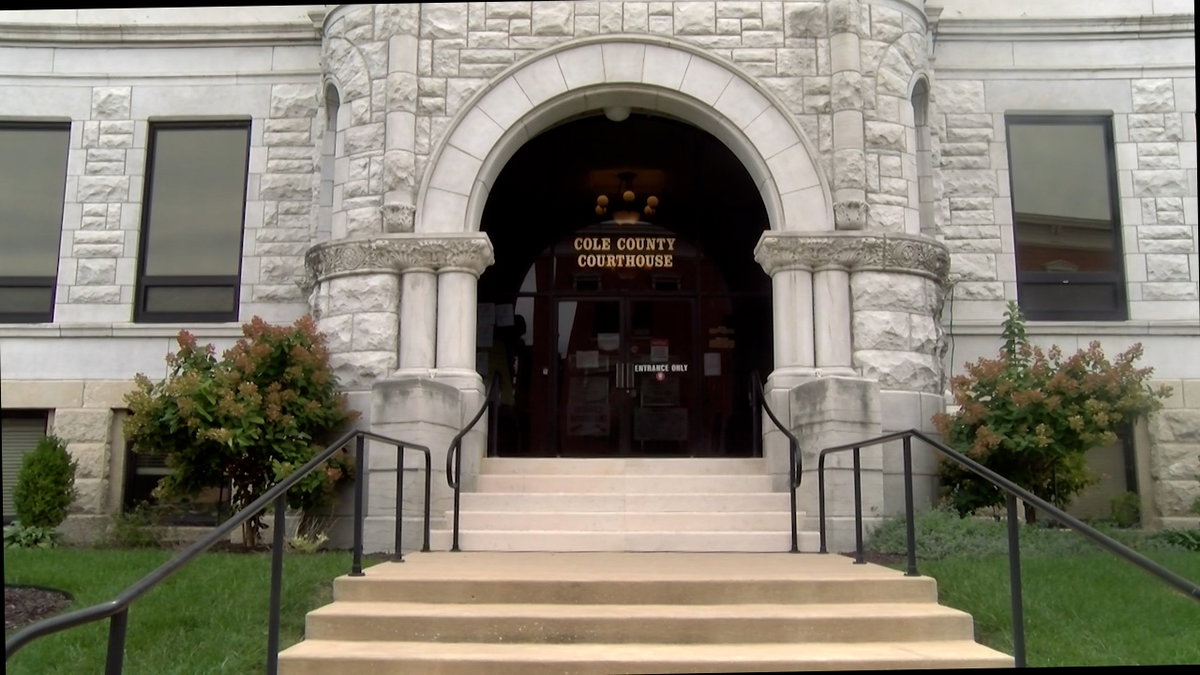
The Jefferson City Task Force is set to present its homelessness action plan to the city council Monday.

In a 10-page report, the group outlines several key priorities, including expanding shelter access, increasing affordable housing, strengthening employment support, enhancing mental health and safety services, and raising public awareness.

According to Missouri Coalition Against Trafficking & Exploitation, Cole County has several local homeless shelter options.

HALO Home serves youth ages 16 to 21, allowing stays of 18 to 24 months, with a capacity of 24 beds.

Rape and Abuse Crisis Service offers 32 beds, with length of stay varying by individual, though it typically ranges from 40 to 60 days.

The Michael W. Prenger Family Center serves juveniles in state custody, ages 12 to 17, providing a two-week emergency care program for those in need of temporary shelter.

The Salvation Army Food Pantry is open Tuesday through Friday from 9 to 11:50 a.m., and again from 1 to 1:50 p.m.

The Task Force is asking the city to support a centralized “Homeless Resource Center” or at minimum, an online hub that maintains a regularly updated directory of shelters, food programs, healthcare, employment, and outreach services.

The group is also calling for expanded shelter options, including the development of at least one low-barrier emergency shelter that could operate short-term or year-round. They recommend using public or community spaces for daytime respite, rather than relying solely on the library.

Bergen Blakeman has lived in Jefferson City for the past three years and is currently unhoused. He said he often has to travel to Columbia to access basic resources.

Still, Blakeman chooses to stay in Jefferson City, stating it’s more ‘peaceful and quieter’ than Columbia, but he wishes there were more resources available.

“Places where people can be at during the day time, where they don’t have to feel like they look like homeless people,” Blakeman said. “People can feel more like people, and shelters or overnights and stuff like that,”

Blakeman’s a regular at Common Grounds, which he said has been a big help, offering things like bus passes, vouchers, Social Security assistance, certificates, and identification. However, the most impactful support, he said, is the $200 provided toward a first month’s rent.

The task force recommends using federal and state grant funding to support coordination efforts and expand staffing.

Under its affordable housing findings, the task force said the city lacks enough units for low and moderate-income households. It also notes that existing incentive programs and zoning policies have not produced sufficient affordable housing development and adds that the city lacks a comprehensive long-term housing strategy.

According to a 2022 Jefferson City Housing Study, renter households in the city face higher levels of cost burden than homeowners, a gap expected to worsen as rents rise faster than incomes.

The report shows that in 2020, about 46% of renters had an annual income at or below 50% of the area median income, no more than $30,700 per year. This salary would allow them to afford only about $768 per month in rent.

For a more recent perspective, Empower Missouri released a study in July 2025 showing that the housing wage for a two-bedroom apartment is $21.61 per hour, while a one-bedroom apartment requires an hourly wage of $17.02.

The study showed the former state minimum wage of $13.75 per hour, which has now bumped up to $15, someone would have needed to work 63 hours per week to afford a two-bedroom apartment, or 52 hours per week to afford a one-bedroom.

Moriah Frazier is a student at Lincoln University and works part-time as a waitress at a local restaurant. She says she earns $10 an hour, plus tips, but on that income alone, she wouldn’t be able to afford living on her own.

“I live comfortably, but that is because I live with my mother and grandmother,” Frazier said.

Frazier believes the rising cost of living isn’t just a local issue, it’s happening nationwide.

“It cost so much to live anywhere,” Frazier said. “But, we have a housing crisis because people are just charging too much to be able to live.”

The task force is recommending that the city develop a ‘Housing Strategy Plan’ for low and moderate-income families. They suggest adjusting existing housing incentive programs to encourage the development of affordable units through public-private, mixed-income partnerships.

The group also recommends revising city codes to allow a wider variety of housing types, such as duplexes, tiny homes, and accessory dwelling units. Additionally, they propose creating developer incentives, including zoning or density bonuses for including affordable units in larger projects.

According to the plan, the city has roughly 1,782 registered rental properties, totaling about 6,000 rental units. The report notes that some of these units are aging and deteriorating, creating unsafe conditions for tenants. However, many tenants do not report issues out of fear of retaliation from landlords.

The task force is recommending that the city also explore a landlord incentive program to encourage participation from landlords who might otherwise hesitate to rent to tenants with damaged credit, limited rental history, insufficient deposits, or Housing Choice Vouchers.

The city council meeting is set to meet 6 p.m. Monday.

Click here to follow the original article.
MU to stop providing designated funds to five student organizations

Olivia Hayes

COLUMBIA, Mo. (KMIZ)

The University of Missouri will stop providing designated funding to five of its student organizations, according to University of Missouri spokesman Christopher Ave.

The clubs include: the Asian American Association (AAA), Association of Latin American Students (ALAS), Four Front, Legion of Black Collegians (LBC) and Queer Liberation Front. Ave said the university has to comply with restrictions issued by the U.S. Department of Justice on “allocating university resources such as funding or space based on protected demographic characteristics.”

The move should also allow the university to avoid jeopardizing crucial funding for student financial aid, research and other university programs.

Ave wrote in an email that based on input from stakeholders and an external consultant, the university is also updating how student organizations are classified. Beginning when re-registration opens in July and effective for the Fall 2026 semester, student organizations will be classified in one of the following categories:

Recognized Student Organizations (RSOs): This is the primary classification for student organizations at the University of Missouri. RSOs have access to specific university resources and operate under the direction of the student members in accordance with the organization’s constitution. RSOs must follow the Organizational Resource Group (ORG) registration process each year and comply with policies and guidelines.

Sponsored Student Organizations (SSOs): SSOs are affiliated with the University of Missouri through a formal process with a sponsoring university unit. SSOs operate under the direction of the student members with guidance from the assigned University administrator. Students provide organizational direction and retain a high level of engagement with the University to ensure policies and guidelines are followed.

University Programs: University programs are created for the benefit of  students and the institution. These are typically educational, academic or administrative programs, and the university has supervision of its members and operations.

Ave said the five groups losing their designated funding will be classified as RSOs beginning in Fall 2026, which means they can apply for Organization Resource Group funding on an equal basis with the vast majority of other student organizations.

Click here to follow the original article.