Kayaker dies after becoming trapped in Marsh Creek; 8 others rescued

Bailee Shaw

CUSTER COUNTY, Idaho (KIFI) — A kayaker lost their life in Marsh Creek, Custer County, this week after they became trapped under logs while their party was rafting down the river. The incident began on May 5, 2026, prompting a multi-day search and rescue operation to extract the eight other members of the rafting party.

The Custer County Sheriff’s Office was notified just before 8 p.m. on May 5, 2026, by the Valley County Sheriff’s Office, which had received 911 texts reporting the trapped kayaker. Custer County Search and Rescue was dispatched within minutes, and by 8:39 p.m., members of the kayaking party had already begun CPR.

Courtesy: Custer County Sheriff-Idaho

Air St. Luke’s Medical Helicopter was dispatched from Wood River but could not land at the scene due to the terrain. The helicopter flew one mile away and dropped off two crew members who hiked to the scene to assist while rescuers called in assistance from the Idaho National Guard.

The Idaho National Guard quickly reached the group and rushed the kayaker to an awaiting ambulance at the Boundary Creek parking lot along Highway 75. However, despite the efforts of emergency responders and the group on the scene, they were unable to revive the kayaker.

Search and Rescue teams spent the next two days working with the Spokane County Sheriff’s Office to extract the remaining eight members of the rafting party.

The name of the kayaker has not been released at this time as law enforcement works to notify their family. “Our condolences go out to the family and friends of the victim,” said the Custer County Sheriff’s Office in a Facebook post.

Click here to follow the original article.

Judge declines to boot cameras from courtroom for Charlie Kirk murder suspect’s trial, delays upcoming hearing

CNN

Originally Published: 08 MAY 26 07:00 ET

Updated: 08 MAY 26 18:00 ET

By Andi Babineau, CNN

(CNN) — Cameras will continue to be allowed in the high-profile trial of Tyler Robinson, the Utah man accused of fatally shooting Charlie Kirk, a judge ruled Friday.

Utah Judge Tony Graf also granted a request to delay Robinson’s preliminary hearing, which was originally scheduled to begin later this month, after Robinson’s lawyers argued they needed more time to examine DNA analysis of some of the evidence.

Kirk was fatally shot in front of a large crowd during a Turning Point USA event at Utah Valley University last September. After a 30-plus-hour manhunt, Robinson turned himself in to authorities, accompanied by his father and a family friend.

His defense attorneys argued media coverage has been largely prejudicial to Robinson and requested that cameras be excluded from the courtroom. Prosecutors, meanwhile, said keeping them is the best way to combat misinformation about a case centered on the public assassination of the prominent conservative activist.

Robinson appeared virtually from jail with his camera off Friday – a common request from his attorneys for remote hearings.

He has not yet entered pleas for the charges he faces, including aggravated murder, felony use of a firearm, obstruction of justice and witness tampering. Prosecutors intend to seek the death penalty.

The preliminary hearing is now set to begin July 6, the judge said Friday.

Arguments for and against cameras in court

In his oral ruling, Graf determined “defendant has not shown that a categorical ban on electronic media coverage for all proceedings in this case is allowed by Utah law.”

“No evidence was presented by either party showing a media outlet using live media coverage to educate the public about the progress of the legal proceedings or the justice system as a whole,” Graf said. “This court is not so cynical as to conclude that just because the parties did not present evidence of responsible journalism, none exists.”

The defense team filed for the camera ban back in January and argued during an April hearing that Robinson’s “fair trial rights will be jeopardized” if cameras remain in court because the jury pool could be tainted.

Prosecutors took an opposing stance, with Deputy Utah County Attorney Chad Grunander saying: “Mischief lurks in the dark or in secret.”

“Conspiracy theories abound, and the antidote is the actual, real proceedings,” he said during his closing argument.

A coalition of news outlets, including CNN, and Kirk’s widow Erika Kirk were also in favor of keeping the proceedings open to cameras.

Three witnesses were called during the April hearing – two for the defense and one for the prosecution.

The defense witnesses, trial consultant Bryan Edelman and cognitive psychologist Christine Ruva, testified extensively about the reasons they believed media coverage had negatively impacted Robinson’s case so far.

“Speculation and sensationalism,” is how Edelman described the reports he saw, while Ruva said she reviewed “overwhelming anti-defendant” material.

Prosecution witness Cole Christensen, a Utah County Sheriff’s Office Investigator, introduced a report he compiled showing news coverage skewed in many directions, including coverage prejudicial toward Robinson, prosecutors and both Charlie and Erika Kirk.

The defense’s effort to ban cameras stems in part from violations of a decorum order that have occurred over the course of the case so far, including a pool videographer at a December hearing picking up audio of conversations between Robinson and his lawyers and a different videographer in January capturing close-up images of Robinson.

Defense asks to postpone preliminary hearing

Graf postponed Robinson’s preliminary hearing, previously scheduled to begin on May 18, after all four of Robinson’s attorneys told the court in April they felt unprepared to “render effective assistance of counsel” based on the discovery they had received up to that point.

Among the documents they said they haven’t been able to examine is the DNA analysis of some of the evidence, including the rifle Robinson allegedly used to shoot Kirk.

Prosecutors argued the full reports are unnecessary for the limited scope of a preliminary hearing, which is to establish enough probable cause to justify the charges Robinson is facing.

In the interest of keeping the case on schedule, prosecutors also later filed a document saying if the court intended to grant the defense’s request and postpone the preliminary hearing because of the incomplete DNA evidence, they would not introduce it at this stage.

The other evidence they plan to introduce – categorized during the hearing as surveillance footage, confessions Robinson allegedly made after the shooting and circumstantial evidence they say connects Robinson to the area – “is more than sufficient to establish probable cause,” the document says.

Prosecutor Ryan McBride also indicated postponing the hearing would delay proceedings by at least six months and violate Erika Kirk’s right to a speedy trial, as the widow of the victim.

The-CNN-Wire™ & © 2026 Cable News Network, Inc., a Warner Bros. Discovery Company. All rights reserved.

Click here to follow the original article.
What we know about the Canvas hack that has impacted thousands of schools

CNN Newsource

By Hanna Park, Ramishah Maruf, Emma Tucker, CNN

New York (CNN) — A cyberattack shut down an education platform used by universities and K-12 schools across the US Thursday, depriving students and teachers of essential classroom materials — at a time when many are taking or preparing for final exams.

Canvas, a popular, cloud-based digital hub for classrooms, has more than 30 million active users globally, with more than 8,000 institutions as customers, parent company Instructure says on its website.

Large public school systems and top universities like Columbia, Princeton, Harvard and Georgetown reported a ransom note signed by a hacking group had appeared on the homepage of their schools’ Canvas sites Thursday.

The hack came after the group believed to be behind it warned Instructure in a ransom note to “pay or leak,” saying it had accessed data from millions of users, including students, teachers, and staff.

The FBI has mobilized resources in multiple states to assist victims of the hack, a source familiar with the matter told CNN.

The FBI confirmed Friday the agency was aware of the platform service disruption and advised concerned students and faculty to wait for official guidance from their school “regarding the scope of the incident and the nature of any affected data.”

The agency warned impacted individuals to be wary of potential scammers claiming to have their data.

“By receiving a message, that does not necessarily mean your personal information has been compromised,” the FBI statement said, explaining scammers often exaggerate or lie about their access to data in order to get money from victims.

Instructure said Friday morning Canvas was “fully back online and available for use.” Multiple universities and school districts throughout the country reported their Canvas pages were back up and running on Friday, though some schools had already extended deadlines and changed finals schedules because of the hack.

Here’s what we know.

How the Canvas hack unfolded

A University of Washington student who tried to log into Canvas around noon Thursday was greeted by a message from the hacking group ShinyHunters, which claimed to have “breached” the platform’s parent company, according to a screenshot obtained by CNN.

The note, reported by different student news outlets, demanded ransoms to prevent data leaks from the platform.

A student at the University of Pennsylvania said he was logged out of his Canvas account while studying for finals. Professors had to scramble to send class materials in other ways, the student said.

Universities across the country, including Columbia University, Rutgers, Princeton, Kent State, Harvard and Georgetown issued statements alerting students to the hack impacting institutions nationwide. School districts in California, Florida, Georgia, Oklahoma, Oregon, Nevada, North Carolina, Tennessee, Utah, Virginia, Texas and Wisconsin also reported being affected.

This was the second school data breach claimed by ShinyHunters this month. In Thursday’s ransom note, the group claimed it had hacked Instructure “again” and faulted the company’s response to the previous attack: “Instead of contacting us to resolve it they ignored us and did some ‘security patches.’”

On May 1, Instructure said it “experienced a cybersecurity incident perpetrated by a criminal threat actor.” The company said the breach had been “contained” the next day but usernames, email addresses, student ID numbers and communications from some institutions appeared to have been exposed.

ShinyHunters claimed in a ransom note shared on May 3 by Ransomware.live, which tracks ransomware attacks and groups, that it had breached 275 million individuals’ data and had access to “several billions of private messages,” giving a May 6 deadline for Instructure to reach out.

In a note Thursday, the hacking group gave a May 12 deadline for impacted schools “to negotiate a settlement.”

During the Canvas interruption, Instructure said on Thursday it put the platform in “maintenance mode” as it investigated the issue. Later that night, it announced Canvas was available again “for most users.”

On Friday morning, Instructure announced an “unauthorized actor” exploited an issue related to the company’s Free-For-Teacher accounts.

“As a result, we have made the difficult decision to temporarily shut down our Free-For-Teacher accounts. This gives us the confidence to restore access to Canvas, which is now fully back online and available for use,” the company said in a statement.

Cyberattacks on educational platforms are not new. Software provider Finalsite suffered a ransomware attack in July 2022. The websites of about 5,000 schools were impacted.

During the pandemic, ransomware attacks interrupted remote learning for a number of schools in the US, including an incident that forced Baltimore County Public Schools to temporarily close in November 2020.

The risk for students and faculty impacted by the attack, retired FBI special agent Richard Kolko says, is they could be victims, “not only today, but later.”

“You need to follow up…because they have this information on these students now and a couple (of) years from now, they may use some of that information to attack them,” Kolko told CNN’s Boris Sanchez.

The FBI has advised anyone who may have been affected by Thursday’s cyberattack to not engage with anyone who claims to have their data, including by responding to demands or sending payments.

“We encourage individuals to be cautious of unsolicited emails, calls, or texts claiming to be from your school, the (learning management system) provider, or law enforcement and to verify the contact through known channels before responding,” the statement added.

Who is ShinyHunters?

Little is publicly known about the hacking group that claimed responsibility for the Canvas outage, but cybersecurity researchers and federal authorities have linked the ShinyHunters name to several instances of high-profile data theft.

The group claimed responsibility for hacking Ticketmaster and attempting to sell user data on the dark web in 2024, CNN previously reported.

Earlier this year, Mandiant, a cyber-intelligence firm owned by Google, reported an increase in activity consistent with prior “ShinyHunters-branded extortion operations,” saying the attackers use sophisticated voice phishing and fake, company-branded login pages to harvest employee credentials before stealing sensitive data from cloud-based platforms for ransom.

In 2024, the US Department of Justice announced the sentencing of a member of what prosecutors described as a notorious international hacking crew tied to the ShinyHunters name. Authorities said a user operating under that moniker posted stolen data from more than 60 companies for sale on dark web forums and at times threatened to leak sensitive files if victims did not pay.

Court documents tied to the member who was sentenced show US-based victims included technology, entertainment, communications, clothing and fitness companies, as well as a video game developer.

How students and schools reacted

Melanie Topchyan, a senior at the University of California, Riverside, said she missed a quiz Thursday because of the outage and worried about staying on track. She said she has a midterm next week for a demanding course and relies on Canvas to revisit lectures and notes.

“It is a little bit of a freakout,” she told CNN.

Anish Garimidi, the University of Pennsylvania junior who was logged out of Canvas while trying to study, said he immediately felt a surge of anxiety.

“The biggest cause of fear and anxiety in me is that I was deprived of significant resources to study and do the best,” Garimidi told CNN.

For many students, the disruption landed at the worst possible moment. Georgetown sophomore Minhal Nazeer had returned home to Kentucky because all of her remaining coursework was online through Canvas.

But while some of her classmates were “freaking out,” she saw an upside in the extra time they got after professors extended deadlines.

“I was already in a good spot to finish all my papers, so I’m not too bothered by it, but I do see it is helping me a little because I have gotten some extension. I just have more time to look over my things,” she said.

A Columbia University senior, who declined to be named, said the outage came at the “most inopportune time” — just as many students were shifting from celebratory end‑of‑year events to serious exam preparation.

That was particularly difficult, he said, for those who had only just begun compiling notes and study guides after having “pushed off the thought of having to take exams in the following week.”

James Madison University moved some exams scheduled for Friday to Wednesday, the school said in an announcement.

The episode has underscored how deeply embedded Canvas has become in academic life at many institutions, not only as a submission portal but as a central communications tool.

Kent State said Friday it is “very concerned” about further disruptions as finals conclude.

The university said the disruption also affected areas like tuition billing and financial aid. “We are currently in contingency planning with all of those areas,” the statement said.

At the Massachusetts Institute of Technology, Allison Park, a junior, said professors were scrambling to locate students’ email addresses after losing access to Canvas’ announcement feature.

“The fact that this one website was the link between teaching staff and students outside of class — I didn’t realize how big of a dependency we had on it until they were scrambling to find our emails,” she said.

Liane Xu, another MIT student, said her courses rely on Canvas to collect assignments and manage grading. Although some professors host course materials on separate websites, she said critical resources, lecture videos, notes and study documents are often stored within the platform.

As the semester draws to a close, she said, access to those materials is essential.

“It’s unfortunate and we’re sort of the victims of this,” said the Columbia senior.

This story has been updated with additional information.

The-CNN-Wire™ & © 2026 Cable News Network, Inc., a Warner Bros. Discovery Company. All rights reserved.

CNN’s Ramishah Maruf, Sarah Hutter, Ray Sanchez, Maria Aguilar Prieto and Jillian Sikes contributed to this story.

Click here to follow the original article.

Classes will continue at Compass Academy on Friday

Abi Martin

IDAHO FALLS, Idaho – Compass Academy will be open again tomorrow, May 8. 

The school was closed on Thursday after a student received a general threat against the school. 

The investigation by Idaho Falls Police remains ongoing. 

And as an added measure of caution, officers from the Idaho Falls Police will be present at Compass Academy Friday morning.

Click here to follow the original article.

Mother Grizzly with cubs believed responsible for Yellowstone mauling that injured two hikers

Curtis Jackson

YELLOWSTONE NATIONAL PARK, Wyo. (KIFI) — Investigators in Yellowstone National Park believe a mother grizzly bear is responsible for mauling two hikers on Monday, May 4, 2026.

In a news release issued on Thursday, park staff believe the female grizzly had two or three cubs in their first year of life.

A 28-year-old man and a 15-year-old boy were mauled by the bear while hiking along Mystic Falls Trail.

The two hikers were airlifted to EIRMC in Idaho Falls for medical attention. The Mystic Falls Trail and the surrounding backcountry area remain closed to the public following the attack.

The Geyser Basin Boardwalk area, however, remains open to visitors.

Click here to follow the original article.

EICAP ‘actively’ looking for homes to weatherize

Dylan Carder

IDAHO FALLS, Idaho (KIFI)- The temperatures may be rising, but now is the time to think about getting your home ready for winter. Eastern Idaho Community Action Partnership (EICAP) is looking for homes that need to be weatherized. Typically, there is a years-long waiting list just to get the months-long process started. That is not the case this year.

“We’re looking actively for people to work on their homes,” says EICAP CEO John Radford. “We do need people’s homes to work on right now.”

The weatherization program provides assistance to eligible households to help homes be more energy efficient in order to lower energy costs. According to EICAP, over 20 percent of American households have reported reducing or forgoing necessities such as food or medicine to pay an energy bill.

Radford has seen this in his own family. “I had an aunt a few years ago. She had a $400 utility bill that went down to somewhere in the $170’s. So, if you can get $200 or $300 back a month and you’re living on the edge already, then maybe you can buy some pharmaceuticals that you need, or you can get some food that wasn’t something that you could get before.”

To start, a professionally trained auditor will conduct a comprehensive analysis of the home to determine possible areas of concern. If the home qualifies for help, a customized work order will be created. It’s not always about heat. It’s also about health.

“We’ve had at least one experience where a little gal was really sick and couldn’t find out why,” explaines Radford. “We came in, did our audit, found this heat exchanger and replaced that furnace. Within a few weeks she was back to being this happy, healthy young woman.”

Seniors are especially a concern for EICAP. Radford recalled a case where a senior citizen was still cutting wood and heating their home with their fire place. It was becoming too much physically.

“The alternative probably would have been to see them go to assisted living.” Radford adds, “So this program really saves federal tax dollars.”

The weatherization program is meant for low income households that at 200% of the poverty income guidelines. For example, a family of four with a monthly income of $5,200 would qualify. The full eligibility requirements can be found at eicap.org.

Radford says those who do not meet the financial requirements, should still come in and see what is available.

“What we don’t want to do is have people suffer and then not ask, because it’s not like we’re the only option. We can also help people get connected to other places in the community that also offer help.”

Those who need their home weatherized are encouraged to sign up now while the waiting list is so short. The full process can take a few months, so homes should be ready for next winter. People can fill out applications in person at 935 E. Lincoln Road in Idaho Falls.

Click here to follow the original article.

Idaho recognized as a “no kill” state – The common misconception of no-kill animal shelters

Kaelyn Blessinger

BLACKFOOT, Idaho (KIFI) – Idaho was just recognized as a no-kill state for animal shelters by Best Friends Animal Shelter, but that doesn’t mean there aren’t any animals humanely put down.

“Today we get to declare Idaho as one of the largest, one of the first in the West to achieve the goal of no kill,” Nick Lippincott, The Mountain West Regional Director of the Best Friend Animal Society, said. “Which means that, we can confidently say, based on the data we’ve received and the work they’re doing, that every shelter, is achieving the goal of saving every healthy and treatable and savable pet within their shelters.”

So, through the hard work of the many animal shelters and volunteers across Idaho, they were able to qualify. In order to be considered a no-kill shelter, an organization must achieve and maintain a 90% or more of animals leave rate; whether through adoption, return to their owner, or transfer.

A common misunderstanding is these no kill shelters have no deaths. Euthanasia is still utilized, but only for incurable medical suffering (such as severe injury, severe cancer, etc.) or dangerous behavior.

“Unfortunately a lot of times when an animal, a smaller animal, is hit by a car, they break their back or their hips or something like that,” The Director of the Blackfoot Animal Shelter, Amanda Severin, said. “That’s detrimental.”

“So it’s inhumane not to euthanize them, then let them sit here and suffer,” Stacy Davies of the Blackfoot Animal Control added.

No kill cannot be 100%. Sometimes, for an animals sake, Euthanasia is more humane than letting them suffer.

Click here to follow the original article.

McCammon issues immediate Boil Order

News Team

McCammon, Idaho (KIFI) — The City of McCammon has issued an immediate boil water order following a loss of pressure in the municipal water system earlier today.

According to an official Facebook post, during a regular water line repair, crews were required to shut off several valves in order to keep conditions safe and sanitary. City officials confirmed that the situation is under control, but it has led to a loss of pressure.

The City will send affected residents a boil order notice shortly.

“Thank you for your patience as we work through this unplanned inconvenience,” states the post.

Click here to follow the original article.

ISU and BYU-I students locked out of Canvas following major cyber incident

News Team

UPDATED: 9:23 p.m.

POCATELLO, Idaho (KIFI) — Students at Idaho State University, Brigham Young University-Idaho, and the College of Eastern Idaho are among the thousands across the nation that have lost access to Canvas after a confirmed cybersecurity incident. Canvas works as a digital platform, allowing students to submit assignments, images, videos, and take tests or exams.

The timing could not be worse, as students at ISU navigate the exams and assignments in the final days of the Spring 2026 semester. The university sent a note out to students tonight saying, “all final exams scheduled after noon today have been canceled and will not be rescheduled or counted toward final grades.”

ISU officials confirmed that Instructure, the parent company of the Canvas platform, fell victim to a “cybersecurity incident perpetrated by a criminal threat actor.” ISU’s Information Technology team and Instructional Technology Resource Center are actively monitoring the situation.

Instructure provides Canvas services to thousands of K-12 schools and colleges across the nation. A report by The BYU-Idaho Scroll confirms that the breach has disrupted Canvas at other regional schools and potentially over 9,000 institutions nationwide, including: BYU, BYU-I, and the College of Eastern Idaho.

Many of the schools reported a ransom note on the homepage of their Canvas sites. The hacking group “Shiny Hunters” has claimed responsibility and is demanding ransoms to prevent further data leaks.

This is a developing story. Local News 8 will provide additional updates as we learn new information.

Click here to follow the original article.

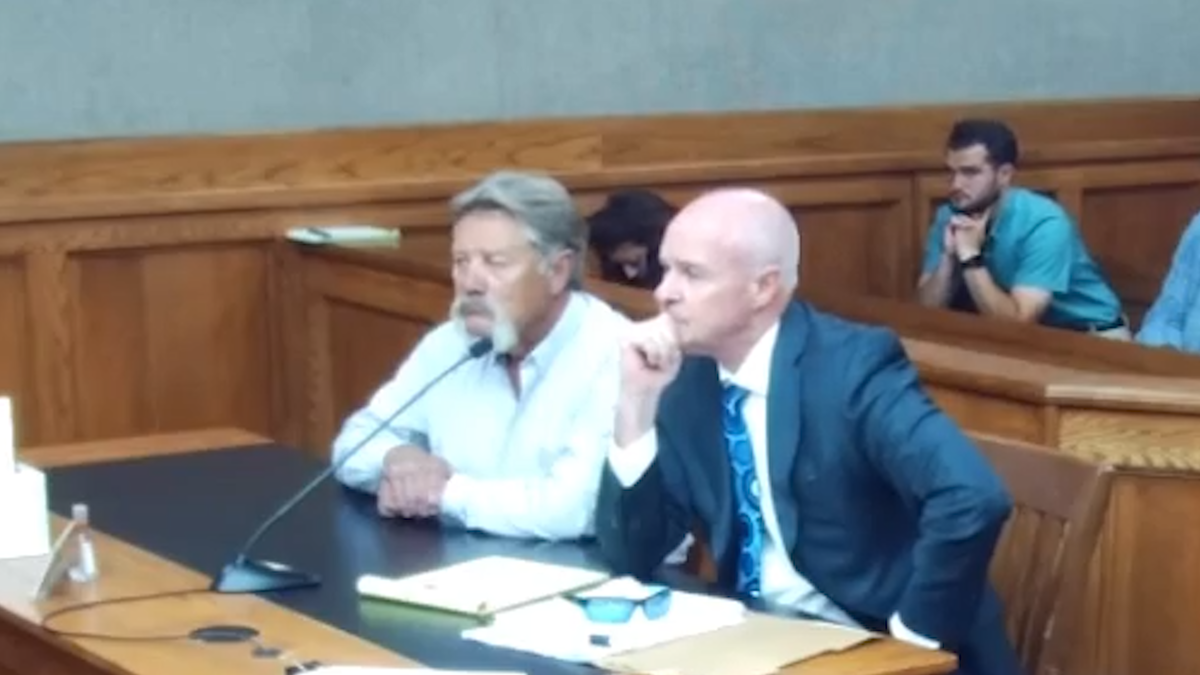
Ex-City Council candidate remains jailed on child porn charges; AG Labrador highlights ICAC success

Seth Ratliff

IDAHO FALLS, Idaho (KIFI) — A former Idaho Falls City Council candidate, Christopher Brunt, remains in custody on a $1 million bond following his arrest by the Idaho Internet Crimes Against Children (ICAC) Task Force last month. The arrest was part of a larger multi-agency sweep in April that Idaho Attorney General Raúl Labrador is highlighting as a major success in the ICAC Task Force’s partnerships with local law.

Brunt was apprehended on April 8 by the ICAC unit in partnership with the Bonneville County Sheriff’s Office, the Idaho Falls Police Department, the Madison County Sheriff’s Office, Jefferson County Sheriff’s Office, Pocatello Police Department, and Chubbuck Police Department.

The investigation began with a “CyberTip” from the National Center for Missing and Exploited Children (NCMEC) after Google flagged several files of disturbing content. According to court documents, the flagged material was uploaded between 2022 and 2025 from an account tied to a verified email address and a registered phone number belonging to Brunt.

RELATED: Ex-city council candidate charged with 12 counts of child exploitative material

Thursday, May 7th, Attorney General Raúl Labrador listed Brunt’s arrest as one of four significant ICAC cases handled across several counties in April:

Andrew Avelar (Canyon County)

Avelar, 29, was arrested on April 6, 2026, on two counts of possession of child sexual exploitation material. The ICAC Unit was assisted by the Nampa Police Department, Canyon County Sheriff’s Office, Boise Police Department, and Meridian Police Department.

Daniel Loretto (Canyon County)

Loretto was arrested on April 14, 2026, on three counts of possession of child sexual exploitation material. The ICAC Unit was assisted by the Nampa Police Department, Meridian Police Department, Homeland Security Investigations (HSI), Canyon County Sheriff’s Office, and Boise Police Department.

Michael Arnold Jr. (Latah County)

Arnold, 43, was arrested on April 28, 2026, on six counts of possession of child sexual exploitation material and one count of enticing a child through use of the internet. The ICAC Unit was assisted by Moscow Police Department and Probation and Parole District 2.

Labrador emphasized that these partnerships safeguard Idaho families.

“I’m grateful for the partnerships we’ve built with local law enforcement that make this work possible,” said Attorney General Labrador. “These arrests reflect the dedication of our team and the agencies working together to keep Idaho families safe.”

The charges listed above are merely accusations. All defendants are presumed innocent until and unless proven guilty in a court of law.

Click here to follow the original article.