Aslett Foundation Plans to Expand Museum of Clean Building

Hadley Bodell

POCATELLO, Idaho (KIFI) – The Aslett Clean World Foundation in Pocatello formed to carry on the legacy of Don Aslett, founder of the beloved Museum of Clean. Following his passing, the foundation has plans to expand the museum building into a community center filled with all kinds of experiences for guests.

The foundation held an open house this afternoon at the Museum of Clean library for community leaders and guests to hear about the plans of the foundation. Their mission is to continue inspiring guests through the vibracy and uniqueness of the Museum of Clean while carrying forward the opportunities the building provides.

Samantha Stoddard, Executive Director for the Clean World Foundation, stated “What we’re trying to do as an organization with the foundation is to carry on that legacy that Don created, for future generations to come. We’re really trying to create spaces for families and children in our community, and be a place that is a mecca of good things.”

Currently, only three of the five floors of the Museum of Clean building are in use. The foundation hopes to partner with local businesses to fill the unused floors with fresh ideas and new experiences for guests. Idaho Coffee Company, through local business Glean Coffee, has already set up a mini market within the museum.

Leaders of the foundation spoke about large companies like Micron and the possibilities their technology may bring to the experiences of the building. Because of this expansion project, the building will be renamed within the next couple of months. Rather than simply the Museum of Clean and the Children’s Discovery Museum, the building will serve as a melting pot within the community for adults and youth alike.

The property contains a large event center, which the foundation plans to renovate and turn into a fully functional event space with a sound system, so that local businesses can rent the space. They compared the vision for the campus to that of JUMP in downtown Boise-a hotspot for every kind of event and a local place for children to go for educational, artistic and cultural enrichment.

“The purpose is so that we can invite other organizations and opportunities into the building and it can really have a lot of other aspects, not just one thing,” said Stoddard. “We are asking for the community’s help in the renaming of the space so that it can really be a little more conducive to the overall objective of the building.”

The foundation hosts the beloved “Touch-a-Truck” event for children in the community, which will be hosted this year on June 9th. They will also host their second annual Potato Festival on August 22nd.

If you’re interested in helping to rename the Museum of Clean building, you can visit museumofclean.com and navigate to the renaming survey.

Click here to follow the original article.

Blackfoot Animal Shelter rescues 46 dogs from hoarding situation.

Par Kermani

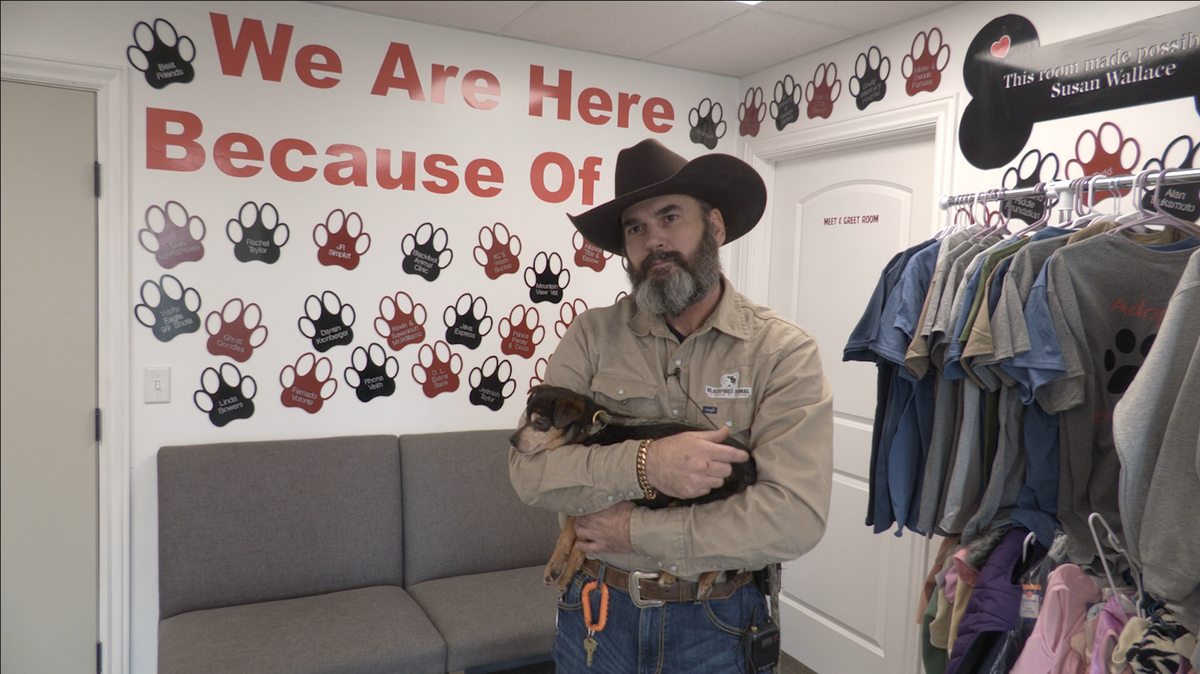
BLACKFOOT, IDAHO(KIFI) – Tucked away at Blackfoot Animal Shelter 15 tiny Chihuahuas are waiting for their forever home. Only 15 remain from the oriignal 46 dogs, recently pulled from a severe hoarding situation, arrived at the facility completely unsocialized and paralyzed by fear.

For shelter technician Nigel Worley and his team, the mission isn’t just about finding them houses—it’s about undoing years of trauma.

“None of them are vicious. If anything, they’re terrified,” Worley said, while holding one of the dogs named Cosmo, who still trembles at the sight of a leash. “But once they learn that they can trust a human, then they’re full of love. And that’s all that they want”.

While a recent group of 17 puppies was adopted in just three days, these hoarding survivors require a much slower, more dedicated approach.

Every Saturday, volunteers arrive specifically to sit with the “scared ones,” providing the companionship necessary to build confidence.

Worley emphasizes that the shelter’s primary challenge isn’t just the animals, but the lack of education among owners.

“99% of dogs and cats are good animals. It’s the people that make the mistakes,” Worley said. “Adopting animals is a lifetime commitment… it’s not just a fad”.

Senior dogs also experience a lot of age discrimination according to Worley who has been at the shelter for over two years.

“So there’s age discrimination. People come in and say that dog’s too old, I want something young. We had them in here the other day. They wanted a dog that was eight months old or younger” Worley said

The shelter remains open for adoptions without appointments, encouraging families to bring their current pets for “meet and greets” to ensure a permanent fit. Adoption fees are $160 for dogs and $110 for cats, covering all essential medical care including spaying, neutering, and microchipping.

Click here to follow the original article.
Rexburg revisits police bond with $3.9 million cost cut to ease tax burden

Ariel Jensen

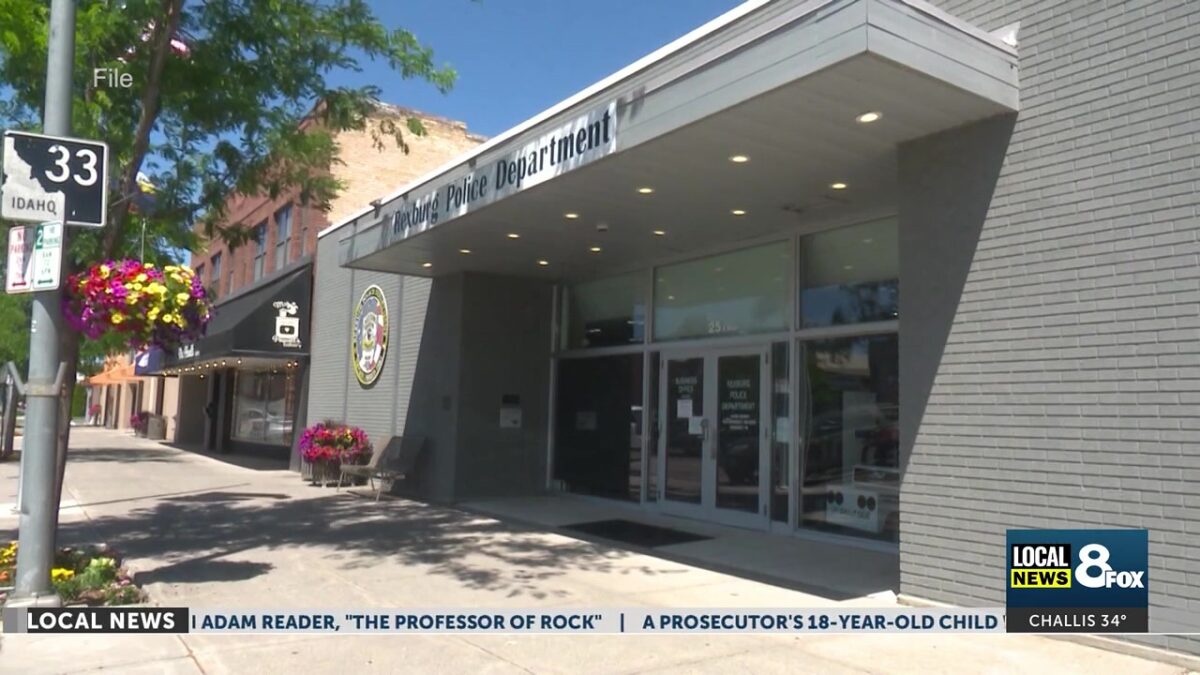
REXBURG, Idaho (KIFI) – Rexburg is once again talking about a new police station. 

Rexburg police have outgrown their building, and the city is making adjustments to reduce the cost for a new one by about $3.9 million including interest.

The current facility has only one interview room, insufficient evidence storage and limited space for training and education.

But the proposed new station would be 27,000 square feet, more than double the department’s current 11,000-square foot footprint.

“We’ve felt a lot of support as we’ve continued through the planning process of building a new police station,” said Rexburg Police Chief Joshua Rhodes. “We understand it is an increased cost to the members of the community, and it’s our goal to continue to provide the best services possible and keep Rexburg the safest community.”

In the last local election, the police bond got the majority vote, but not the super-majority required for a bond in Idaho.

Last month, people living in Rexburg were asked to take a survey to find out why the bond failed.

The top three reasons were that some people thought the tax impact was too high, the city should seek to reduce existing debt, and the city should take a phased approach to the project.

Matthew Nielson, Rexburg’s Chief Finance Officer, tells Local News 8 that the city has no general obligation debt, but there is debt from school bonds and library bonds.

“With the new ordinance that would put this on the ballot, you know, the things that we’re really trying to address is we’re trying to reduce the initial cost, which reduces the impact on property tax. And then we’re trying to defer when it would take effect so that all of these other bonds that are impacting your property tax could have expired or removed, right? And so we’re trying to reduce the tax impact on the resident,” said Nielson.

In its February 4th meeting, the Rexburg City Council voted unanimously to put the police bond on the May 19th ballot.

“We will continue to do the best we can to be fiscally responsible as we go through the design process and move this project forward,” Rhodes said.

Click here to follow the original article.
Idaho Falls airport receives $12 million federal grant for expansion project

Danielle Mullenix

Idaho Falls, ID (KIFI) – Idaho Falls Regional Airport will soon be getting a major upgrade, thanks to $12 million in federal funding secured by Congressman Mike Simpson. This money, part of the recently passed Consolidated Appropriations Act, 2026, will help start the airport’s terminal expansion project.

Congressman Mike Simpson said the airport expansion is important as Idaho Falls continues to grow. He believes the project will help serve the community better, support local jobs, and make the city more attractive to travelers and businesses.

“As Idaho Falls continues to grow, it is essential that the airport grows with it,” said Rep. Simpson. “Expanding the Idaho Falls Regional Airport will better serve the Idaho Falls community, support local jobs, and enhance the city’s status as a top destination for travelers and economic opportunities. I have been a steadfast supporter of our local airports, and I am pleased that this funding will facilitate these necessary improvements.”

Idaho Falls Mayor Lisa Burtenshaw said the $12 million is a key investment for the airport’s future. She said it will help the airport handle more travelers, work more efficiently, and improve the experience for everyone who flies in and out of Idaho Falls.

“This $12 million in Community Project Funding is a vital investment in the future of the Idaho Falls Regional Airport,” said Idaho Falls Mayor Lisa Burtenshaw. “As our city grows, this funding ensures the airport can meet increasing demand, improve efficiency, and provide a better experience for travelers. We are grateful for Representative Simpson’s support in helping IDA remain the regional airport of choice for Eastern Idaho and a gateway for economic growth in our community.”

This funding would be used for Phase 1 of IDA’s terminal expansion. Phase I of this project, baggage expansion, will provide the necessary space for outbound baggage operations and additional space for future operations. It will improve safety by providing adequate space to load baggage carts and by improving operational efficiency with a new conveyor system. This expansion also provides additional ticket queueing and counter space to accommodate additional air service and will provide a second-level space for future passenger hold areas. This phase will also provide alterations to existing space to allow for the future expansion of the security screening checkpoint, which is the next constrained space in the terminal building.

While some people criticize these kinds of federal projects, supporters say Community Project Funding is a way to make sure Idaho tax dollars are used for local needs, not sent to other states. The airport expansion has strong support from the Idaho Falls community.

Congressman Simpson is the only member of Congress from Idaho on the appropriations committee, giving him a unique ability to bring money back for projects like this.

The Idaho Falls Regional Airport Terminal Expansion Project is now officially funded and will begin soon. The project was signed into law by President Trump as part of the 2026 federal budget.

Click here to follow the original article.
Rigby High School to perform with Foreigner at Mountain America Center

Danielle Mullenix

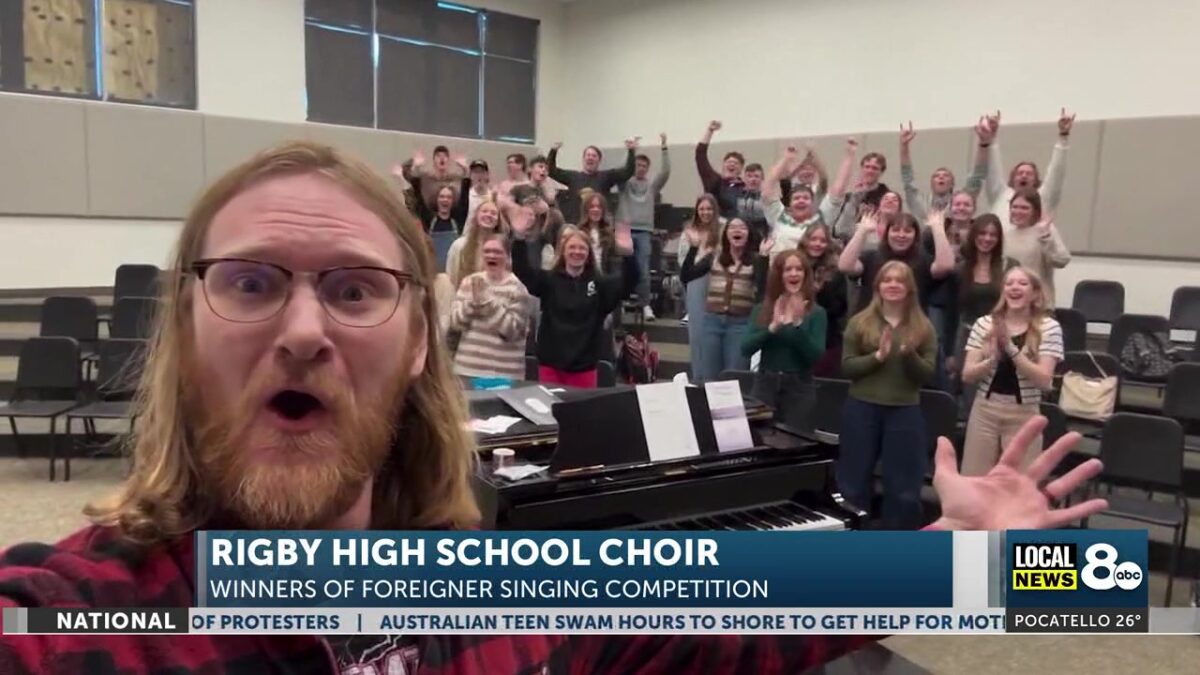
Rigby, ID (KIFI) – Congratulations are in order for the Rigby High School choir, which has been selected to perform alongside the legendary rock band Foreigner at the Mountain America Center. This exciting opportunity follows the annual competition for local high schools, hosted by 94.9 and 104.5 “The Pick,” where students had the chance to submit their covers of iconic 80s songs.

The school choir received exciting news yesterday afternoon when local radio DJ Shaggy from 94.9 “The Pick” made the announcement. The students will take the stage at the Mountain America Center to deliver an incredible performance of the classic rock ballad “I Want to Know What Love Is.”

The Rigby High School choir will also receive a generous $500 donation in support of their program.

Foreigner, a legendary rock band and a proud member of the Rock & Roll Hall of Fame, will be performing at the Mountain America Center on Wednesday, March 25. Join them for an unforgettable evening of classic rock hits. With 10 multi-platinum albums, 16 Top 30 singles, and more than 80 million albums sold globally, Foreigner remains one of the most celebrated rock bands in history.

To purchase tickets, you can visit Ticketmaster, visit in person at the Bingham Healthcare Box Office, or visit the Mountain America Center website here.

Click here to follow the original article.
Idaho House advances One Big Beautiful Bill tax cuts

David Pace

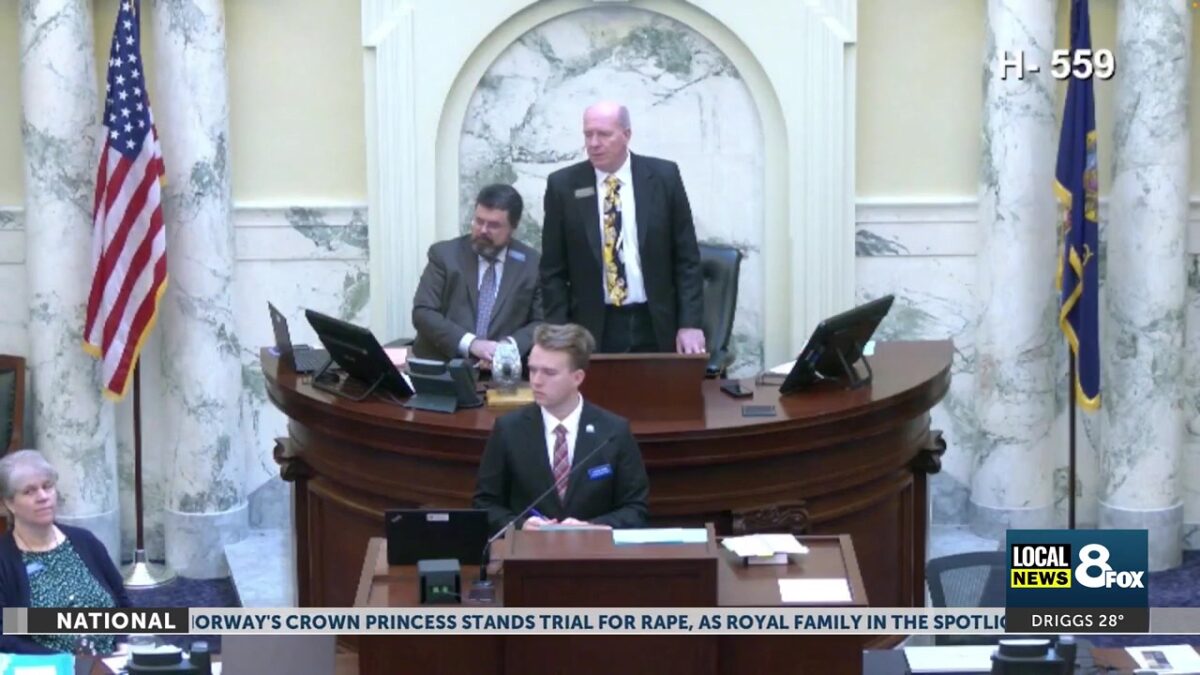
BOISE, Idaho (KIFI) – The Idaho House of Representatives voted overwhelmingly Tuesday to adopt the federal tax cuts in the One Big Beautiful Bill.

In a 59 to 9 vote, the Idaho House agreed to implement the federal tax cuts in Idaho as part of its annual tax conformity bill House Bill 559.

The tax cuts include no taxes on tips, no taxes on overtime, a $6,000 deduction for seniors and a permanently doubled child tax credit.

Republicans argued the measures will spur job creation and put more money back in the hands of working Idahoans to further stimulate the economy.

“John F. Kennedy, when he talked about taxes, he said that one of the single largest barriers to full employment was higher taxes,” said Assistant Majority Leader Rep. Jason Monks R-Meridian. “… Do we want to reduce these taxes for people who are working for people who are earning overtime? People who are working overtime are people getting paid by the hour. These aren’t our high corporate executive jobs. People who are making a living by receiving tips – these are our working class individuals. So are we going to increase their taxes, give them less incentive to work, or are we going to give them more incentive to work?”

Democrats argued that every penny cut from the state budget by adopting these cuts will take away from vital services.

“When we pull hundreds of millions of dollars out of the amount of money we have, particularly when we’re already in a hole, this is going to come dollar for dollar – penny for penny – out of police, teacher pay, special ed, road and bridge repair, water and infrastructure projects, Meals on Wheels. colleges and universities,” said Minority Leader Rep. Ilana Rubel, D-Boise. “Tuition is going to go up. Fewer kids are going to be able to go to college. It’s coming already out of nursing care for people with disabilities, coming out of critical mental health care for people having mental health crises.”

The estimated total cost of the tax cuts in Idaho is $155 million this fiscal year and $175 million in fiscal Year 2027.

Two exceptions to the federal legislation were not included in Idaho’s legislation – bonus depreciation and research and experimental expenditures from 2022-2024.

The bill is co-sponsored by east Idaho legislators Rep. David Cannon, R-Blackfoot, and Senator Doug Ricks, R-Rexburg.

The legislation now advances to the Idaho Senate for further consideration.

Click here to follow the original article.
Bonneville County Take Ownership of Plumbing and Electrical Permits

Par Kermani

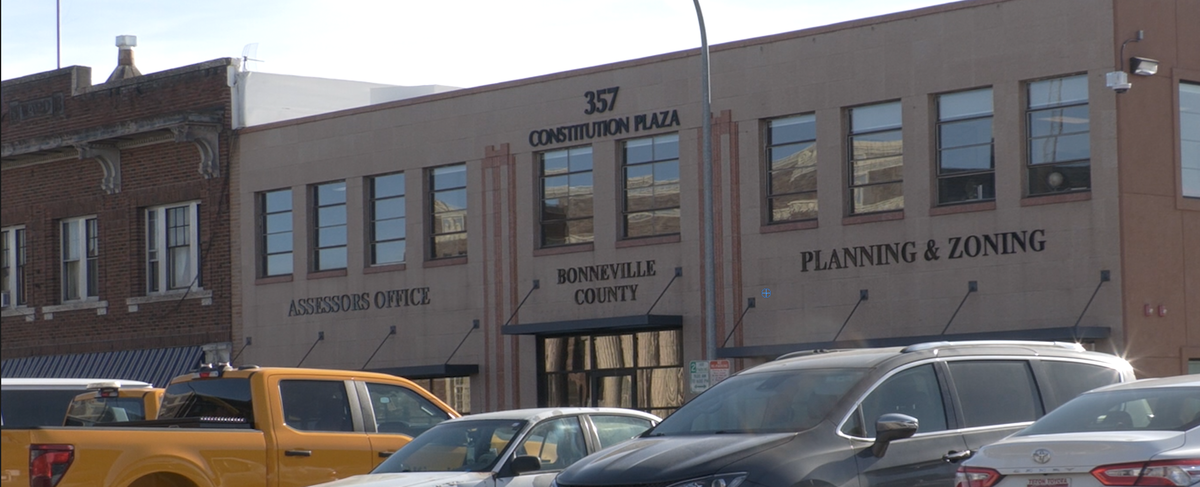
IDAHO FALLS, Idaho — Bonneville County has officially taken over the issuance and inspection of all electrical and plumbing permits, a move supporters of the decision say will speed of the processing times to obtain those permits.

As of Jan. 20, the county began processing these permits in-house. No other county has joined Bonneville but Jefferson county is in the process of making a similar change.

Previously, builders were required to coordinate with the state for electrical and plumbing inspections while simultaneously working with the county for structural permits.

Naysha Foster, Bonneville County Planning and Zoning Director, said the change was sparked by community members seeking a more efficient alternative to the state’s processing times.

Under the new system, Bonneville County will employ its own inspectors who are dedicated specifically to the local area, rather than relying on state inspectors who often cover multiple counties. Officials noted that this dedicated local oversight is expected to significantly reduce wait times for project inspections.

“We can probably turn a permit around within a few days. And then do the inspections within a few days, or at least 24 hours, 48 hours at the time the the inspections been requested through our permitting portal. So the applicant would, go through the process of applying for the permit, and then they would also, schedule an inspection through that same permitting portal.” Foster said

Contractors and residents are now required to submit all new permit applications through the Bonneville County online permitting portal. Work started without the necessary local permits will be subject to double fees, according to county notices.

For projects with permits issued prior to the Jan. 20 cutoff, the State of Idaho will continue to handle any remaining inspections until those specific projects are finalized. All new construction projects moving forward must go through the Planning and Zoning Dept in Bonneville County.

Click here to follow the original article.

Victor plans to move forward on building its own wastewater treatment facility

Curtis Jackson

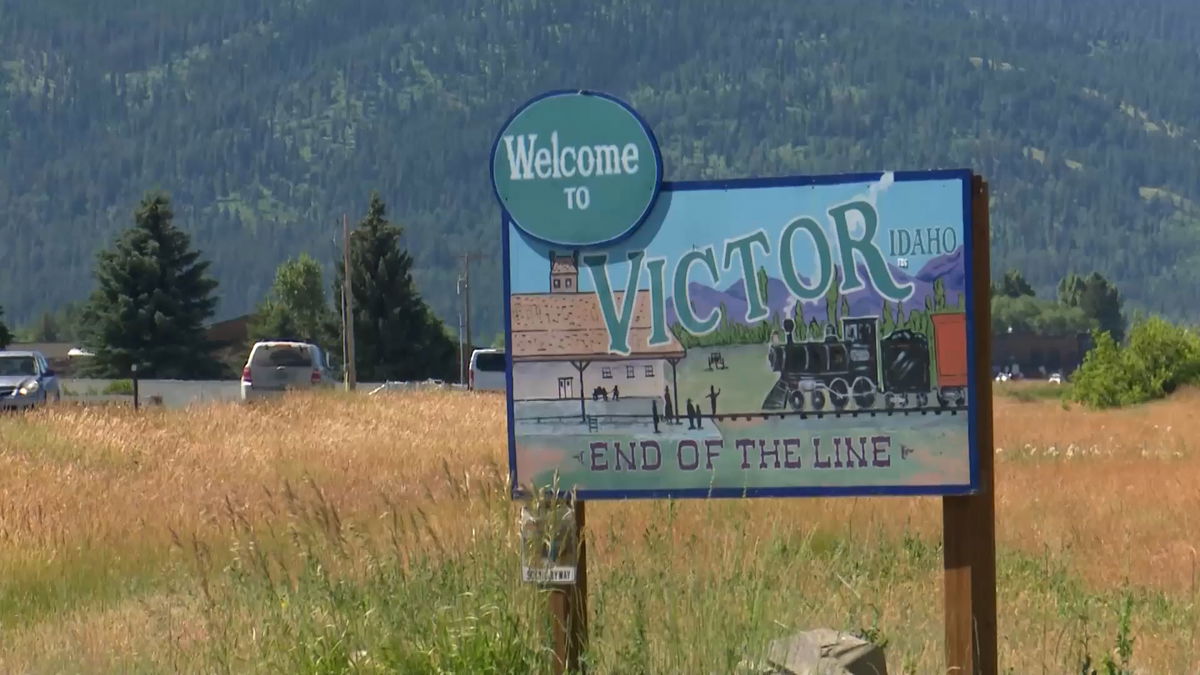
VICTOR, Idaho (KIFI)— The City of Victor announced Tuesday they will move forward in constructing its own wastewater treatment facility.

In a news release sent by the City Clerk, Michelle Smith, on Tuesday, it said the decision came after mediation with the City of Driggs on a shared wastewater system “did not produce a viable path forward.”

The Victor City Council decided to separate from the Driggs treatment facility back in March 2025. Following comments and outcry from city residents about the treatment plant’s cost and location, City leaders said they would seek to negotiate with Driggs on a regional solution. But after several meeting, city leaders decided to move forward with its original plan.

“Council remains committed to transparency, environmental stewardship, and constructive engagement with our residents and neighbors,” the news release said. “To that end, the City has engaged an engineering firm with the stated intent of building a Class A facility, ensuring treated water will meet or exceed the highest standards.”

You can read the full news release here.

Click here to follow the original article.
Police chase ends with 2 people arrested in Idaho Falls

Curtis Jackson

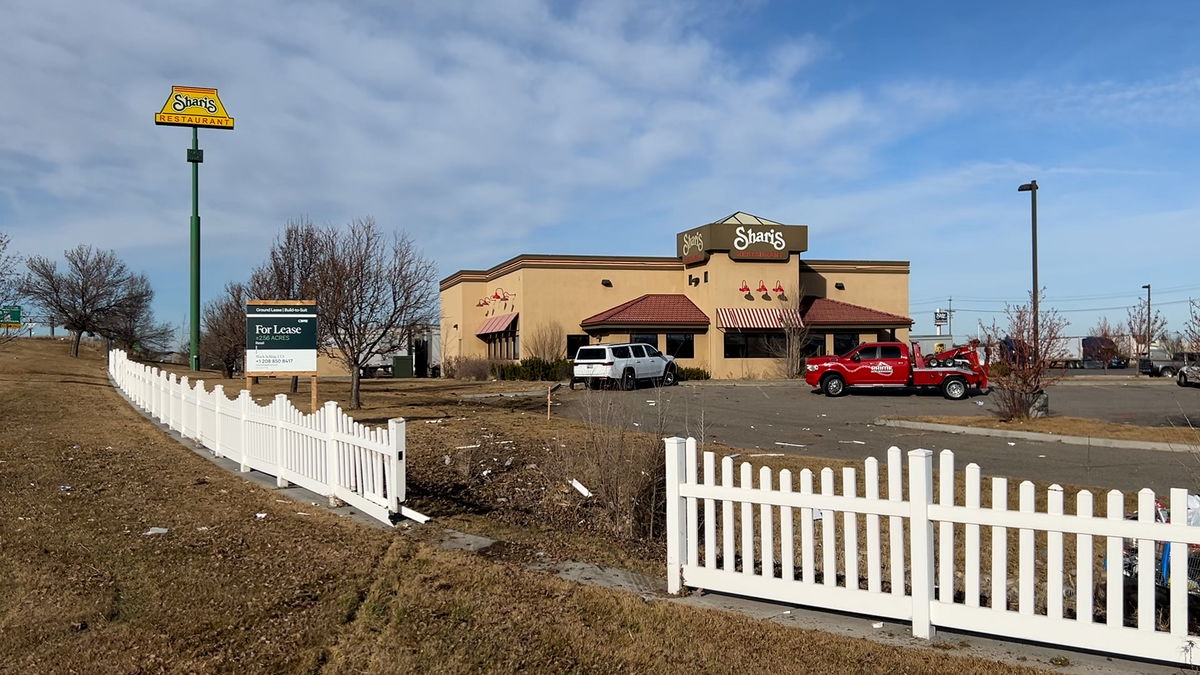
IDAHO FALLS, Idaho (KIFI) – A high-speed chase on I-15 ended at the Broadway off-ramp in Idaho Falls near the former Shari’s Restaurant on Tuesday afternoon.

Idaho Falls Police spokeswoman Jessica Clements said around 2 p.m., Idaho State Police stopped a white SUV was stopped on I-15 between the Hells-Half Acre Rest Area and Shelley exit. Suddenly, the vehicle sped away north on the Interstate. The trooper then chased after them, requesting help from Idaho Falls Police.

Clements said the vehicle took the Broadway exit and crossed the intersection, running through a fence near the Idaho Falls welcome sign and came to rest on the sidewalk just outside the Shari’s building.

Clements said police quickly arrested the driver and a passenger. They are calling it a drug investigation even though they haven’t said if any illegal drugs have been located.

An SUV is searched after a high speed with Idaho State Police on Feb. 3.

This is a developing story and will be updated as more information becomes available.

Click here to follow the original article.
Skijoring: The wild blend of horses and skis that was the Winter Olympics’ first ever demonstration sport

CNN Newsource

By Jack Bantock, Patrick Sung Cuadrado, Frank Nunns O’Connell, CNN

(CNN) — On Friday, a highly-anticipated winter sporting competition with a rich history will get underway – and it’s not just the Winter Olympics in Italy.

Over 5,400 miles away from the opening ceremony in Milan, thousands will flock to the Ford Idaho Center in Boise, Idaho to watch skiers hurtle around a course of jumps, rings, and gates.

Some of these competitors will reach speeds of 40 miles an hour – an impressive feat given they are essentially racing on a flat course. Though these skiers have a trick up their sleeve – or, more accurately, a trick galloping at the other end of their rope.

Yeehaw! Don your cowboy hat and canter into the wild world of western-style skijoring – otherwise known as “Ben Hur on snow.”

History

Exhibited at Chamonix, France in 1924, skijoring holds the honor of being the first ever demonstration sport at a Winter Olympics, yet the discipline’s origins extend well beyond its Games debut.

Practiced differently across continents, the history of skijoring is a complex one. Fortunately, there exists a one-woman fountain of knowledge for all things skijoring in Loren Zhimanskova, President of SkijorUSA and Skijor International.

A key coordinator for American skijoring and central to the sport’s growing reputation in the region, Zhimanskova’s passion for skijoring is matched only by her seemingly endless knowledge of its history and its people.

Born in Europe, skijoring has taken many forms over the years. It began with skiers being pulled by reindeer in Lapland, before trying their hand behind horses, dogs and – popularized in the 1950s – behind motorcycles and cars.

Zhimanskova has even heard of skijorers being towed by airplanes, though she insists that skiers let go before take-off.

St Moritz’s frozen lake – host to the glitzy annual White Turf event since 1907 – has been described as the sport’s spiritual home, but skijoring took a trip across the Atlantic not long after and has since blossomed into an ever-growing discipline in America.

To rider or not to rider?

The central difference to the European version of skijoring is that in the US, the horse has a rider.

While in Switzerland many competitors grow up on horse ranches and ski, in the US most are either very accomplished horse riders or very accomplished skiers.

For many American riders and skiers, the start line will be the first time they meet each other.

“They just put their talents together and give it their best shot – it’s fun that way,” Zhimanskova told CNN Sports in 2022.

At White Turf, competitors race twice around a full, flat, oval track – leaving gates at the same time – whereas the Western style sees skijorers navigate an obstacle course spotted with jumps, hoops to collect, and gates to pass through in a time-trial format.

White Turf has been described as the “playground of the rich and famous,” with sponsors ranging from BMW to Credit Suisse, and Zhimanskova finally realized her dream of experiencing the glamor first-hand in 2016.

“When I walked onto that frozen lake, I felt like this was hallowed ground,” Zhimanskova said.

“As a historian, I’m really here and I’m really going to see this. And it was every bit as spectacular as I had imagined.”

It also gave Zhimanskova the opportunity to share with locals how the sport was being done differently in the US.

Their reaction? “You’re crazy.”

“They had no idea how we were skijoring here,” Zhimanskova said.

“And I said, ‘Well that’s funny you say that because when I describe how you do skijoring in Switzerland … we think you’re crazy!’ So we had a good laugh.”

Professional Western-style skijorer Megan Smith agrees with the Swiss assessment of the variation.

“An average person couldn’t do it. This is crazy,” Smith told CNN Sports earlier this year.

“It’s super risky. Anything to do with animals is risky. You know, the horses really get into it, and they go really, really, really, really fast, and the skiers sometimes get tangled up in the rope.

“So you have to be a certain kind of skier that’s willing to do some crazy things too. Like I said, I don’t think the average person could do it.”

American hospitality

Despite some old events like Leadville, Colorado – a 77-year-old venue that sees competitors race through the town’s main street – the US does not have a showpiece event like White Turf, yet this is by design.

The soul of American skijoring is its sprawling diversity and uniqueness from venue to venue. While White Turf takes place once a year across three Sundays in February, the US skijoring season runs from early January to mid March with venues spread from Calgary down the spine of the Rocky Mountains to Ridgway.

While racers can expect a broadly similar format in terms of track length and snow depth, all races are independently run – each sculpted to the desires of the organizers.

Some events, like Leadville, are run down a main street. Others – like the Boise event on PRO Skijor’s Frontier Tour – take place in a horse park, hay field or rodeo grounds. The key, though, is the emphasis on the crowds of spectators.

“The more you interact with the crowd, the more they holler. And I think that’s fun,” Smith said. “So you know, racing, and you can kind of look over and give a big smile, and people root and root for you. The announcers are there; there’s lots of music playing.”

All have different prize pots – ranging as high as $40,000 to a simple jackpot made up of registration fees. Some races will even reward the victorious skijorer with a horse or custom saddle.

Incorporating skijoring as the centerpiece of a wider weekend festival – flushed with food and live music – is an increasingly popular trend, but two-day, standalone racing formats remain.

“Everybody really does want to do it their way … I respect this, it is the nature of sport in the US to be supple,” Zhimanskova said.

“I think as a community we’re very united, it’s just that all of our events need to have their own local flavor.”

Cowboy camaraderie

As such, Zhimanskova and SkijorUSA acts as the coordinating central hub of skijoring in the region.

Supported by Zhimanskova’s relentless efforts, skijoring in the US has enjoyed a golden age over the last decade. Thirty-one races – in addition to two exhibitions and one event for 6-14 year olds – are slated for 2026, with even more events planned in 2027.

The rapid growth of the sport originally suprised Smith, who describes it as a “wild ride, literally and figuratively.”

“The sport has grown so exponentially in the last two years, it’s almost unrecognizable. I mean, it went from nobody knows about it to we’re talking (about the) Olympics,” she said.

“We’re talking professional athletes. My friends have sponsors. I have a company that sent me clothes and ones they want me to wear during my races.

“It’s becoming a huge deal, and I think there’s no glass ceiling on it. We have had most of our races switch to invite only because the registrations were filling in 15 minutes.”

Despite skijoring’s expansion and the swathes of new faces, the core community remains incredibly tight knit. For Zhimanskova, permanently on the road, this camaraderie lies at the heart of her love for the sport.

“When I travel, I don’t like to feel like a tourist,” Zhimanskova told CNN Sports.

“I like to integrate, I like to be able to hang out with people at the local bar and just chat about life in that town. Everybody’s having a great time and everybody’s helping each other, which is wonderful.

“Yes, it’s a competition, but it’s that kind of rodeo cowboy culture where you need to have your buddy’s back because you never know when your horse trailer is gonna break down and you’re going to need somebody to help you.”

Operation Olympics

While Zhimanskova is doubtful that skijoring would ever be slated on the official Olympic schedule – citing reasons surrounding the Games’ complicated relationship with animals – she would be keen to reignite the demonstration tradition or incorporate it into the opening ceremony for a forthcoming Games.

Not least because 2024 was the 100th anniversary of skijoring at the Olympics and Salt Lake City having been named the host city for the 2034 Games.

Picture the scene: a cowboy or cowgirl riding a horse into the opening ceremony bearing the American flag, followed in tow by a skier carrying the Olympic torch.

“I think it really represents the American spirit,” Zhimanskova said.

“The freedom, the love for the outdoors and the environment, the ability to come together from different backgrounds, different worlds and compete as a team.

“Of course, the horse is also just an iconic animal that’s been so important to our growth as a country.”

For Smith, nothing is impossible and she sees the Olympics as a realistic goal if the skijoring community comes together.

“If we can come together as athletes and figure out what we want our sport to be, we can do that. It would be amazing to be able to show that to the world and what talent we have here in the United States, that the Wild West is still thriving,” she said.

“Like I said, I don’t think there’s a glass ceiling on it. People are working on it. There are a lot of good things in progress right now.

“I think it’s just more conversations, and we’re right there knocking at getting it done.”

The-CNN-Wire™ & © 2026 Cable News Network, Inc., a Warner Bros. Discovery Company. All rights reserved.

Click here to follow the original article.